12 Colonial Dining Room Ideas With Traditional Character
Look beyond modern trends and discover twelve colonial dining room ideas that blend authentic historical charm with timeless elegance you’ll absolutely love.
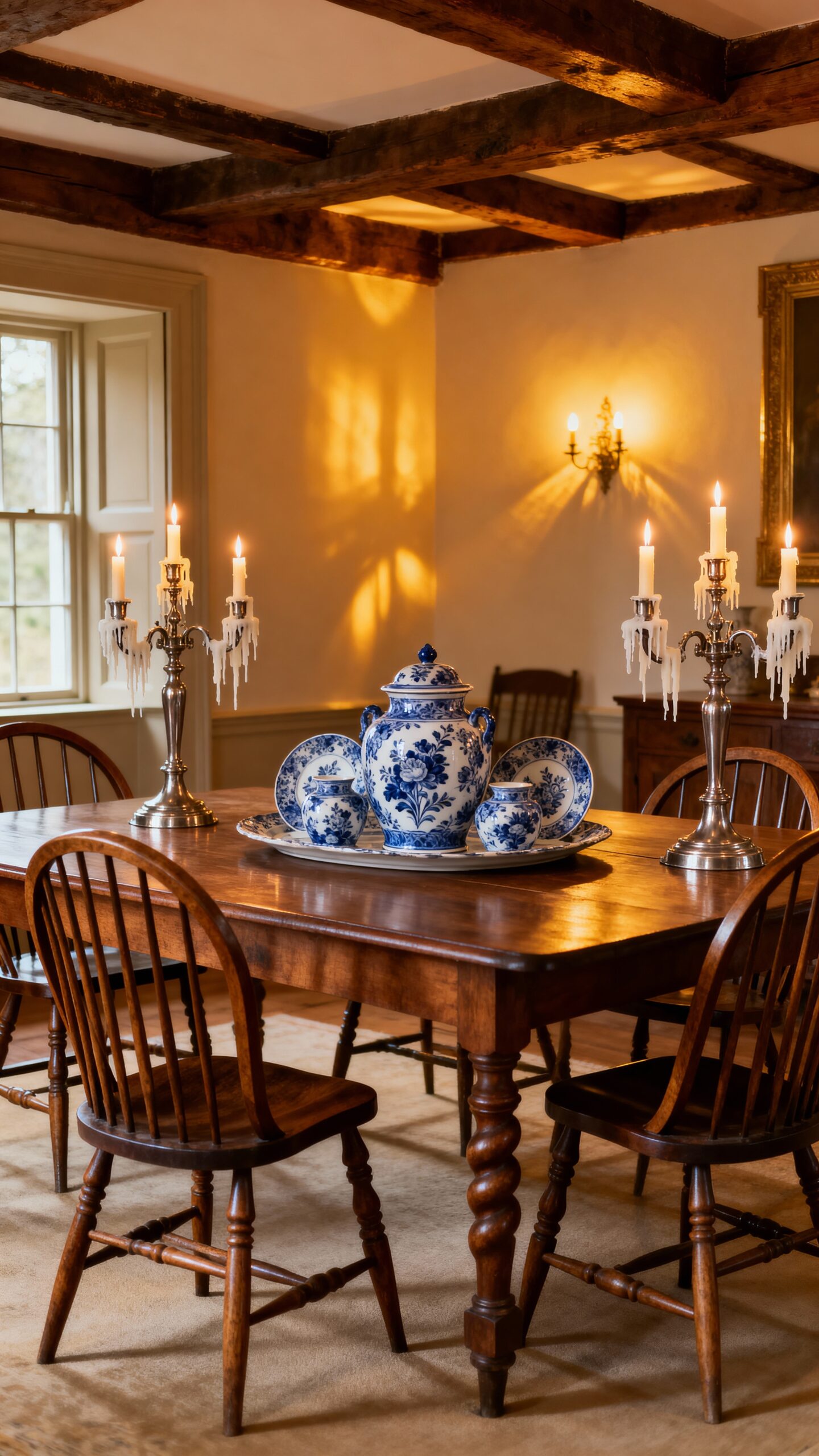
You’ll uncover your dining space into a timeless haven when you welcome authentic colonial design elements that blend historical charm with everyday functionality. These carefully curated ideas showcase how rustic wood furniture, traditional textiles, and period-appropriate accessories can create an inviting atmosphere that honors America’s rich heritage. From weathered farmhouse tables to handcrafted Windsor chairs, each element works together to establish the warm, welcoming character that defines colonial style. Explore how these twelve distinctive approaches will entirely reinvent your dining experience.
Choose Rustic Wood Tables for Authentic Colonial Appeal
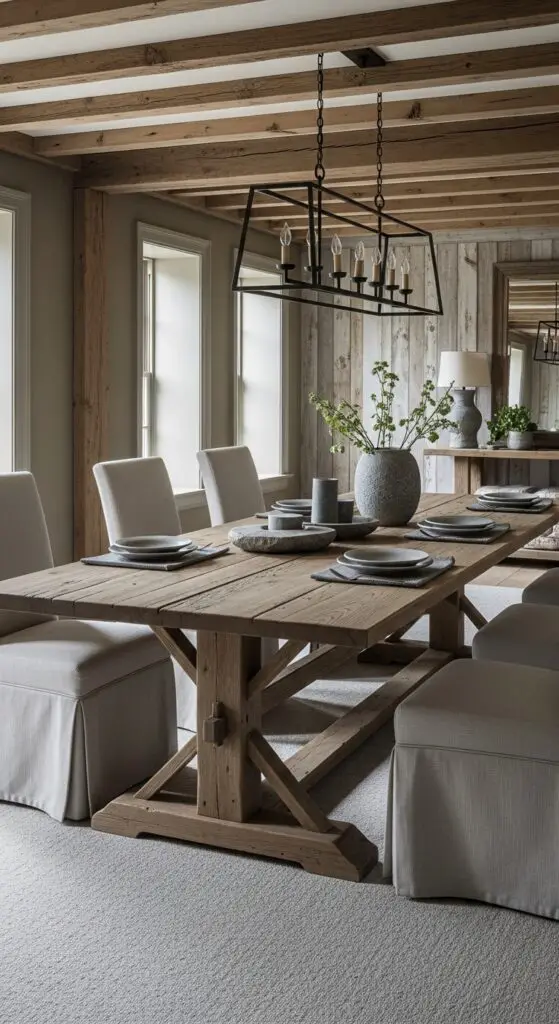
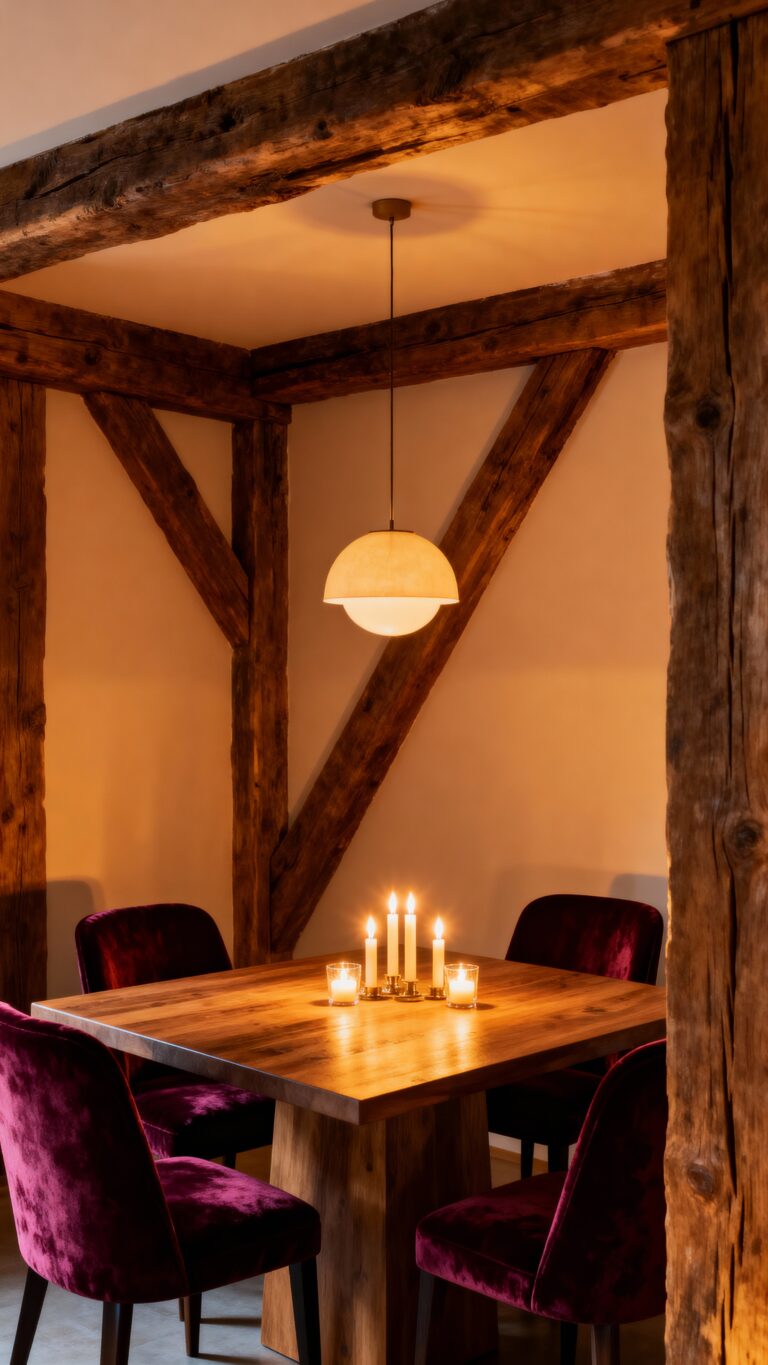
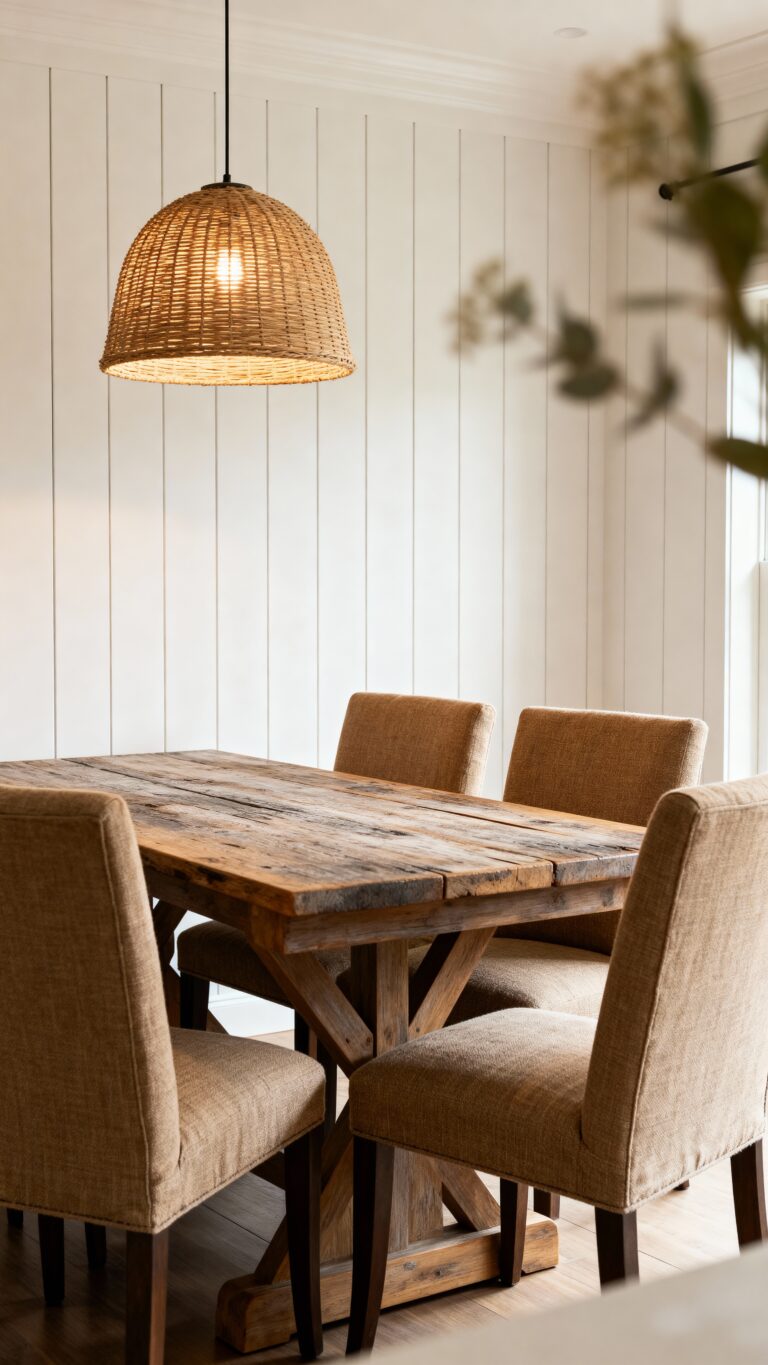
When selecting furniture for your colonial dining room, a rustic wood table serves as the perfect centerpiece that anchors the entire space. You’ll want to choose tables made from reclaimed oak, pine, or maple that showcase natural grain patterns and weathered finishes.
These authentic materials complement rustic wood beams overhead and pair beautifully with distressed wood paneling on your walls. Look for tables with sturdy trestle bases or turned legs that reflect traditional craftsmanship. The imperfections in distressed finishes aren’t flaws—they’re character marks that tell stories and create the timeless, lived-in atmosphere you’re seeking for your colonial retreat. Consider incorporating stone accents through natural stone placemats or serving pieces to enhance the rugged charm and connect with nature’s raw beauty.
Create Warmth With Traditional Windsor Chairs
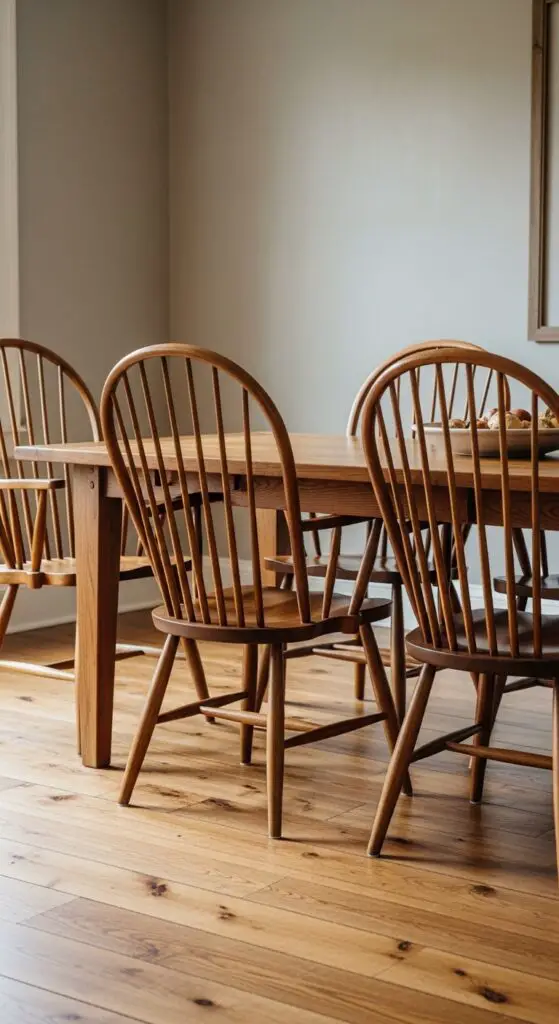
Traditional Windsor chairs frequently become the heart and soul of colonial dining rooms, bringing both comfort and historical authenticity to your space. You’ll find these iconic pieces feature stately turned spindles that create visual interest while maintaining the period’s characteristic craftsmanship.
Their refined slatted backrests provide excellent support during long family meals and entertaining.
Select Windsor chairs in rich wood tones like maple or cherry to complement your rustic dining table. You can mix different Windsor styles—armchairs for head positions and side chairs around the table’s perimeter. This arrangement creates hierarchy while preserving the relaxed, welcoming atmosphere that defines true colonial hospitality.
For a complete farmhouse aesthetic, consider pairing your Windsor chairs with chunky wooden tables that echo the rustic charm and vintage-inspired elements of traditional colonial design.
Layer Rich Fabric Textures in Deep Colonial Hues
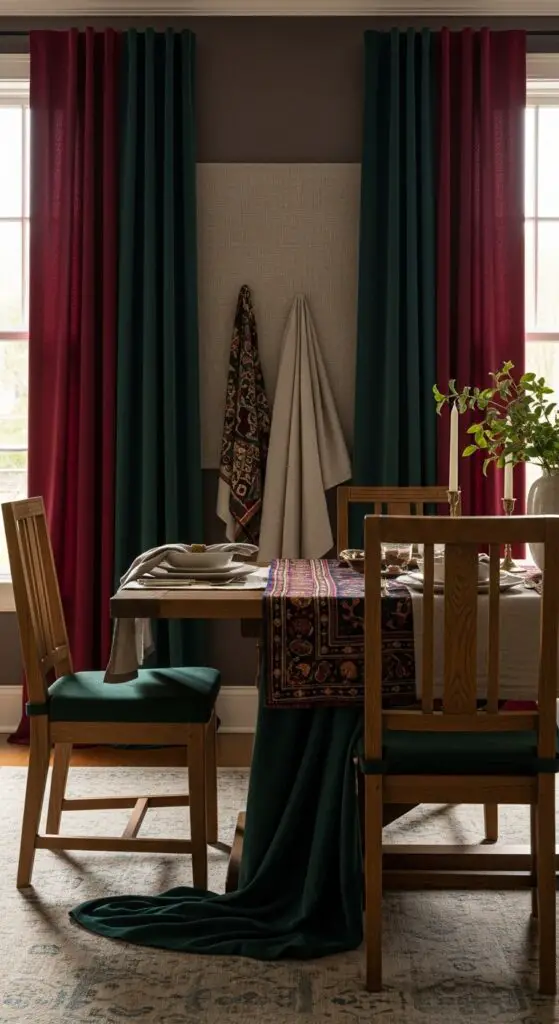
Rich fabrics in deep, saturated colors will alter your colonial dining room into a space that feels both historically grounded and luxuriously inviting. You’ll want to employ luxurious silk draperies in burgundy, forest green, or navy blue to frame your windows with authentic colonial elegance. These heavy fabrics create natural privacy while filtering light beautifully throughout your dining space.
Incorporate antique textile accents through table runners, chair cushions, or wall hangings featuring traditional patterns like florals or geometric designs. Layer different textures by combining velvet seat cushions with linen placemats, creating visual depth that captures the sophisticated comfort colonial families cherished during formal gatherings. When selecting fabric options for your dining room windows, consider how different materials can enhance the overall colonial aesthetic while providing the right balance of light control and privacy.
Display Pewter and Copper Accessories for Period Authenticity
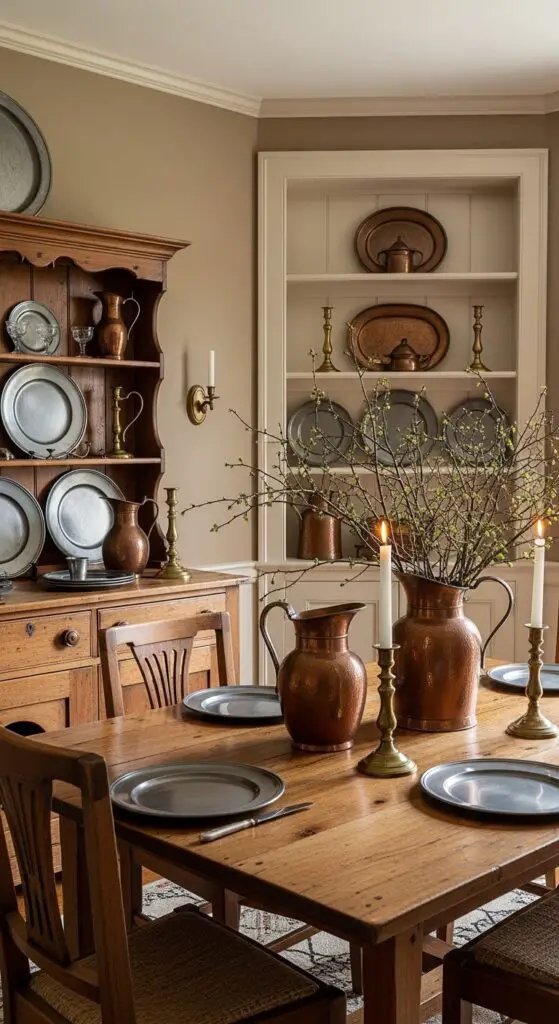
Nothing complements a colonial dining room’s authentic atmosphere quite like the warm gleam of pewter and copper accessories strategically placed throughout your space. Display antique brass candlesticks on your dining table or sideboard to create intimate lighting that mirrors historical practices. Position hammered metal pitchers filled with seasonal branches as centerpieces that showcase traditional craftsmanship.
Arrange pewter plates along open shelving or hutch displays to add visual weight and period character. Consider incorporating a traditional hutch style that combines display space with functional storage to showcase your metallic collections while maintaining the room’s organized appearance. You’ll achieve maximum impact by grouping these metallic elements in odd numbers while varying their heights and textures for fluctuating arrangements.
Install Classic Lantern-Style Lighting Fixtures
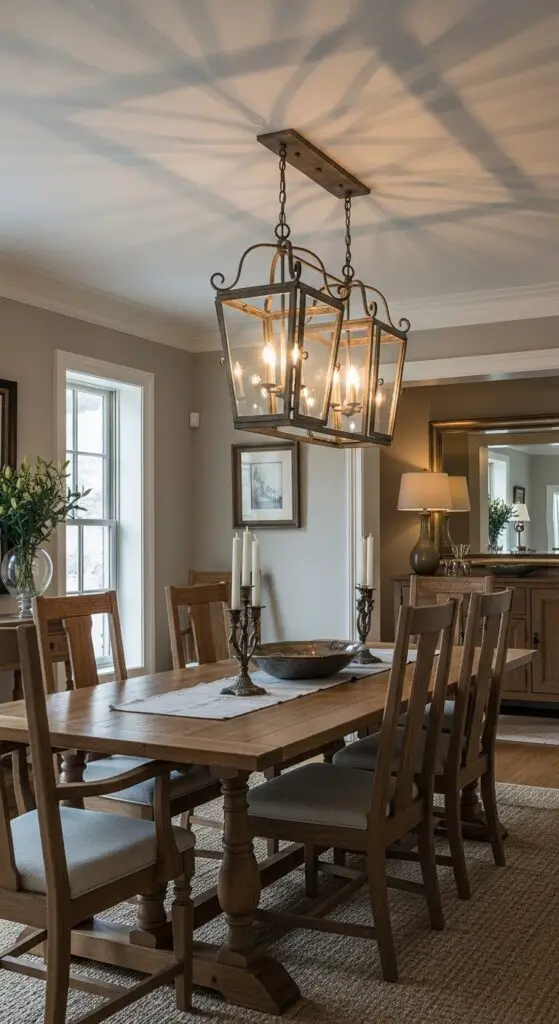
Lantern-style lighting fixtures serve as the perfect complement to your carefully curated metallic accessories, bringing authentic colonial charm to your dining room’s overhead illumination. Choose weathered iron lanterns with glass panels to create that essential period atmosphere you’re seeking. These fixtures provide warm, diffused lighting that enhances intimate dinner conversations.
For grander spaces, incorporate antique chandeliers featuring multiple lantern elements suspended from wrought iron frames. Look for fixtures with hand-forged details and aged finishes that mirror colonial craftsmanship. Position these statement pieces centrally above your dining table to establish a commanding focal point that anchors your room’s traditional design. These chandelier designs transform your dining room ceiling into a stunning showcase of colonial elegance.
Paint Walls in Muted Earth Tones and Soft Pastels
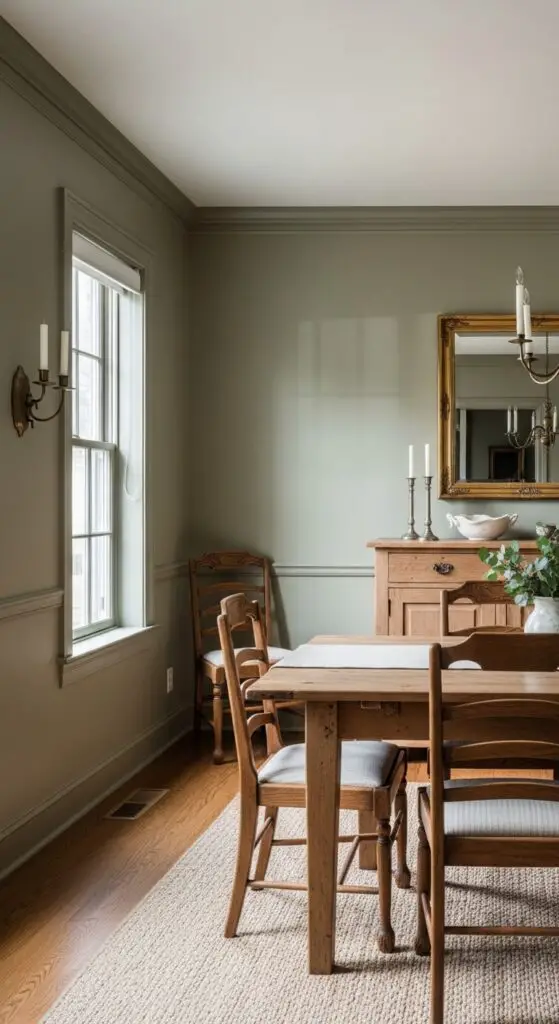
While bold colors dominated Victorian interiors, colonial dining rooms welcomed nature’s subtle palette through carefully chosen muted earth tones and soft pastels. You’ll find freedom in selecting warm neutral tones like sage green, dusty blue, or cream that create timeless appeal without overwhelming your space.
Consider soft muted hues such as buttery yellow or gentle gray-beige for walls that complement natural wood finishes beautifully. These colors provide the perfect backdrop for antique furniture and period accessories while maintaining authenticity. For an especially refined approach, sage green offers both the muted earthiness that defines colonial style and the sophisticated elegance that makes dining spaces feel effortlessly polished.
Paint your dining room in these calming shades to establish a serene atmosphere that encourages leisurely meals and meaningful conversations with loved ones.
Add Built-In Corner Cupboards for Storage and Display
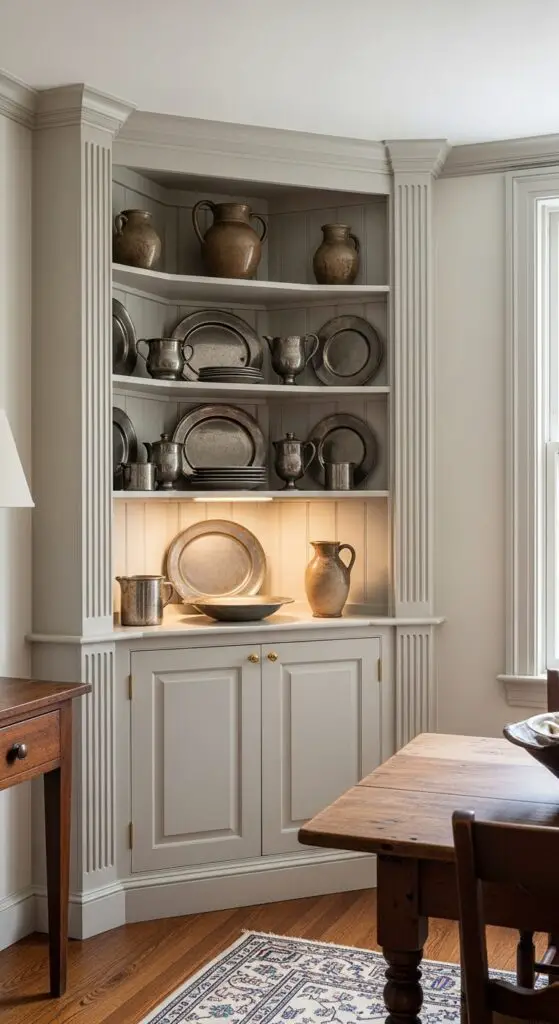
Two stylish corner cupboards can alter your colonial dining room by maximizing storage while showcasing cherished china and period-appropriate accessories. You’ll maximize storage capacity by incorporating floor-to-ceiling designs with adjustable shelving for dishes, linens, and decorative pieces.
Choose traditional raised-panel doors with brass hardware to maintain authentic colonial character. Open upper shelves let you display heirloom pottery and pewter collections, while closed lower cabinets conceal everyday items. These built-ins highlight designer features by drawing attention to room corners and creating visual balance. Paint them to match your trim work for seamless integration that enhances your dining room’s traditional appeal.
Incorporate Handwoven Rugs and Natural Floor Coverings
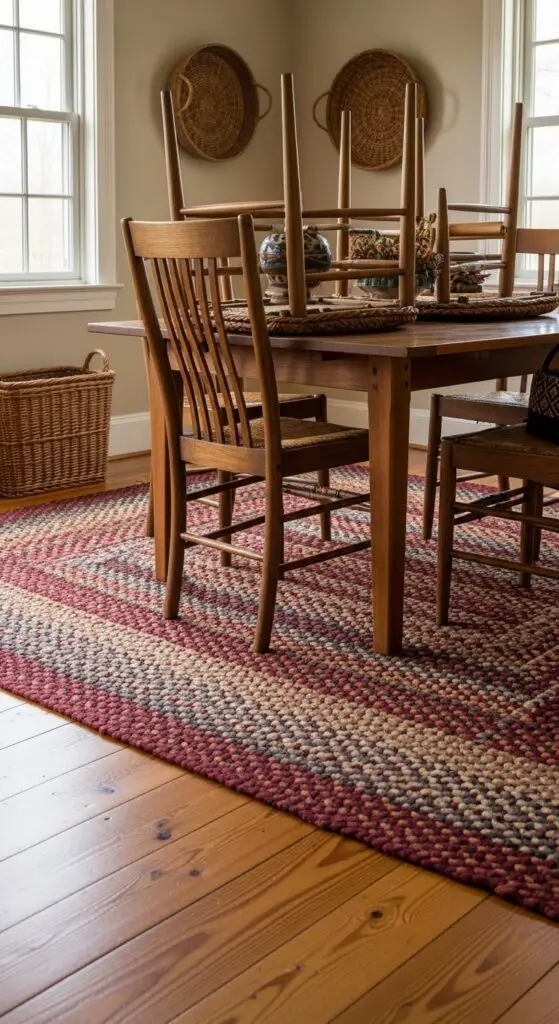
Handwoven rugs and natural floor coverings provide the perfect foundation to complement your newly installed corner cupboards and complete your colonial dining room’s authentic atmosphere. Choose braided wool rugs in deep reds, blues, or earthy tones that mirror colonial color palettes. Use natural fibers like jute, sisal, or hemp for durability and period-appropriate textures.
Position larger rugs beneath your dining table, extending at least two feet beyond chair edges. Layer smaller accent rugs near doorways or serving areas. Incorporate woven baskets along room perimeters for additional storage while reinforcing the handcrafted aesthetic that defines genuine colonial style.
Use Simple Window Treatments With Timeless Appeal
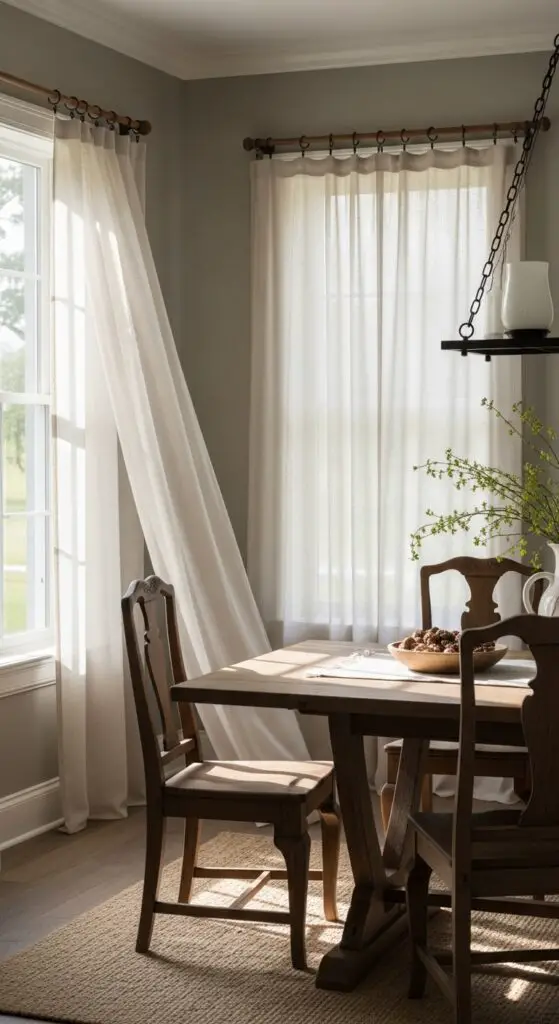
Simple window treatments capture the essence of colonial design by emphasizing clean lines and natural materials over ornate embellishments. You’ll want to choose minimal curtain styles that don’t compete with your dining room’s designer features or furniture pieces.
Sheer fabric panels work beautifully in colonial spaces, allowing natural light to filter through while maintaining privacy during meals. Consider linen or cotton materials in neutral tones like cream, sage, or soft gray. Mount simple wooden rods or wrought iron hardware for authentic appeal.
Avoid heavy drapes or elaborate valances—instead, let the fabric’s natural texture and movement create visual interest that complements your colonial dining room’s timeless character.
Showcase Colonial-Era Artwork and Historical Prints
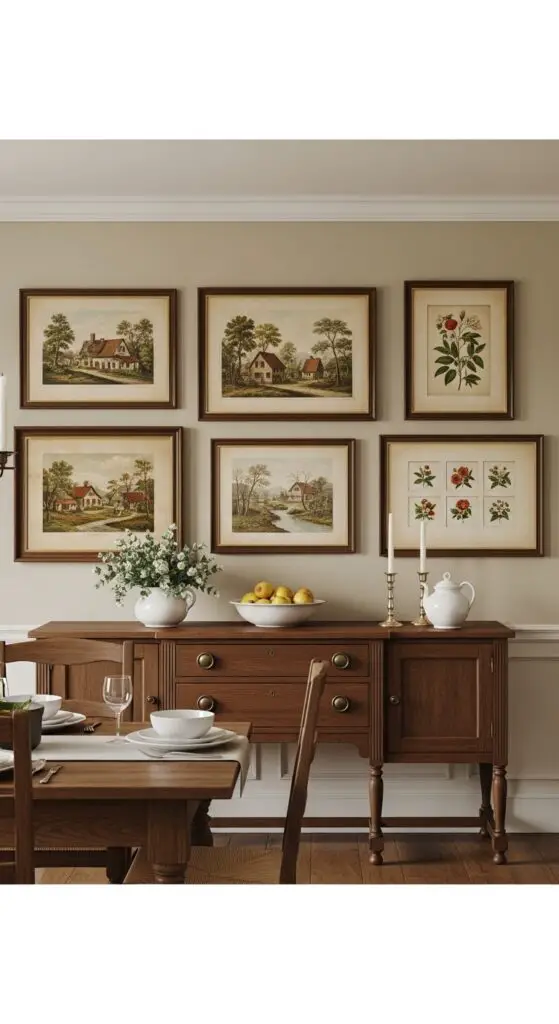
Just as your window treatments frame the view outside, the artwork you display frames your colonial dining room’s historical narrative and cultural identity. You’ll want to spotlight antique paintings featuring pastoral scenes, maritime compositions, or still-life creations that reflect America’s early agricultural and trading heritage. Consider displaying botanical prints showcasing native plants and flowers that colonists would’ve encountered.
When you highlight colonial portraits, choose pieces depicting period figures in authentic dress and settings. Position artwork at eye level using simple wooden frames with dark finishes to maintain historical authenticity while creating captivating focal points throughout your space.
Design Cozy Seating Areas With Wooden Benches
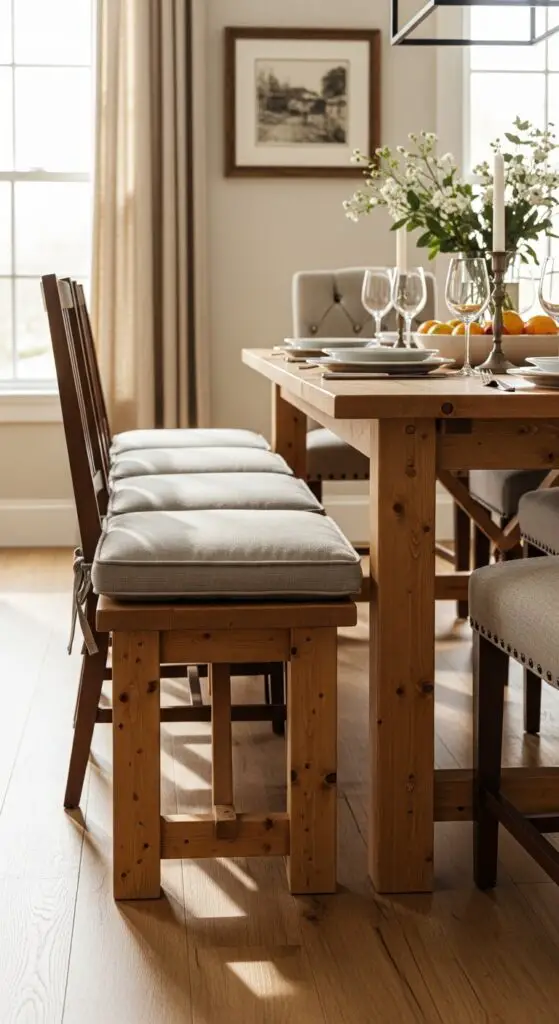
Wooden benches convert your colonial dining room into an authentic gathering space that captures the communal spirit of early American households. You’ll create flexible seating that accommodates large family meals and holiday celebrations while maintaining period-appropriate aesthetics.
Choose solid oak or pine benches with simple, sturdy construction that reflects colonial craftsmanship. Custom bench designs allow you to match existing furniture finishes and accommodate your room’s specific dimensions perfectly.
Add cozy bench cushions in neutral linen or cotton fabrics to enhance comfort during extended dining sessions. Position benches along one side of your table to maximize seating capacity while preserving the rustic, communal dining experience.
Blend Modern Comfort With Traditional Colonial Elements
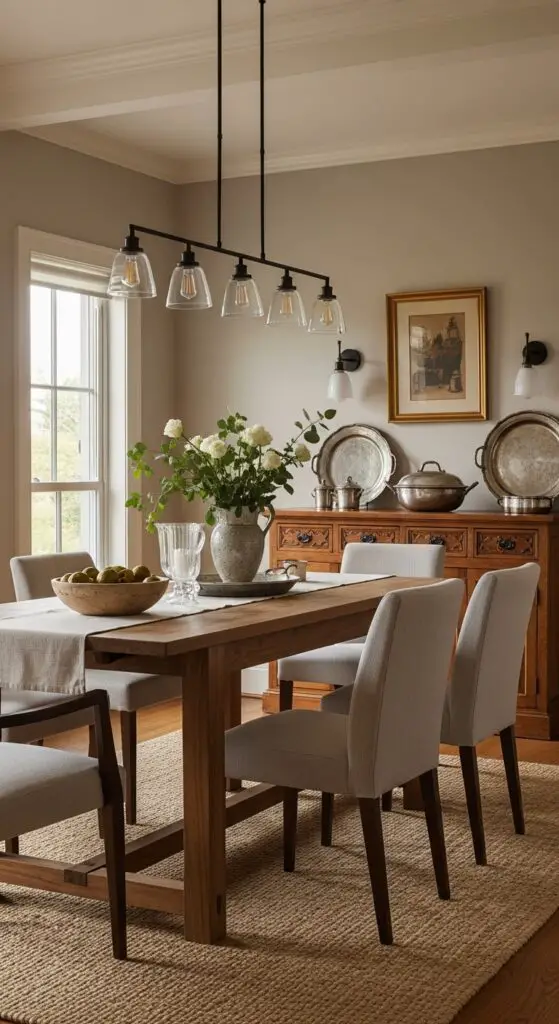
Successful colonial dining rooms welcome contemporary conveniences while preserving the timeless charm that defines this beloved American design style. You’ll create an authentic yet livable space by pairing modern upholstered chairs with rustic farmhouse tables.
Showcase hand carved furniture as statement pieces while adding contemporary lighting fixtures for improved functionality. Install modern climate control systems discreetly behind traditional wood paneling. Integrate antique serving pieces alongside updated kitchen appliances for seamless entertaining.
Smart storage solutions hidden within period-appropriate cabinetry maintain the room’s historical integrity while meeting today’s organizational needs. This balanced approach honors colonial heritage without sacrificing twenty-first-century comfort.
Conclusion
You’ll create a dining space that honors America’s colonial heritage while serving your modern lifestyle needs. These traditional elements—from rustic wood tables to pewter accessories—work together to establish authentic period character. Don’t hesitate to blend historical charm with contemporary comfort for daily functionality. Your colonial dining room will become a gathering place that celebrates timeless design and creates lasting memories for family and guests alike.