14 DIY Home Office Ideas You Can Easily Create at Home
Create a productive workspace on any budget with these clever DIY home office solutions that transform forgotten spaces into functional areas.
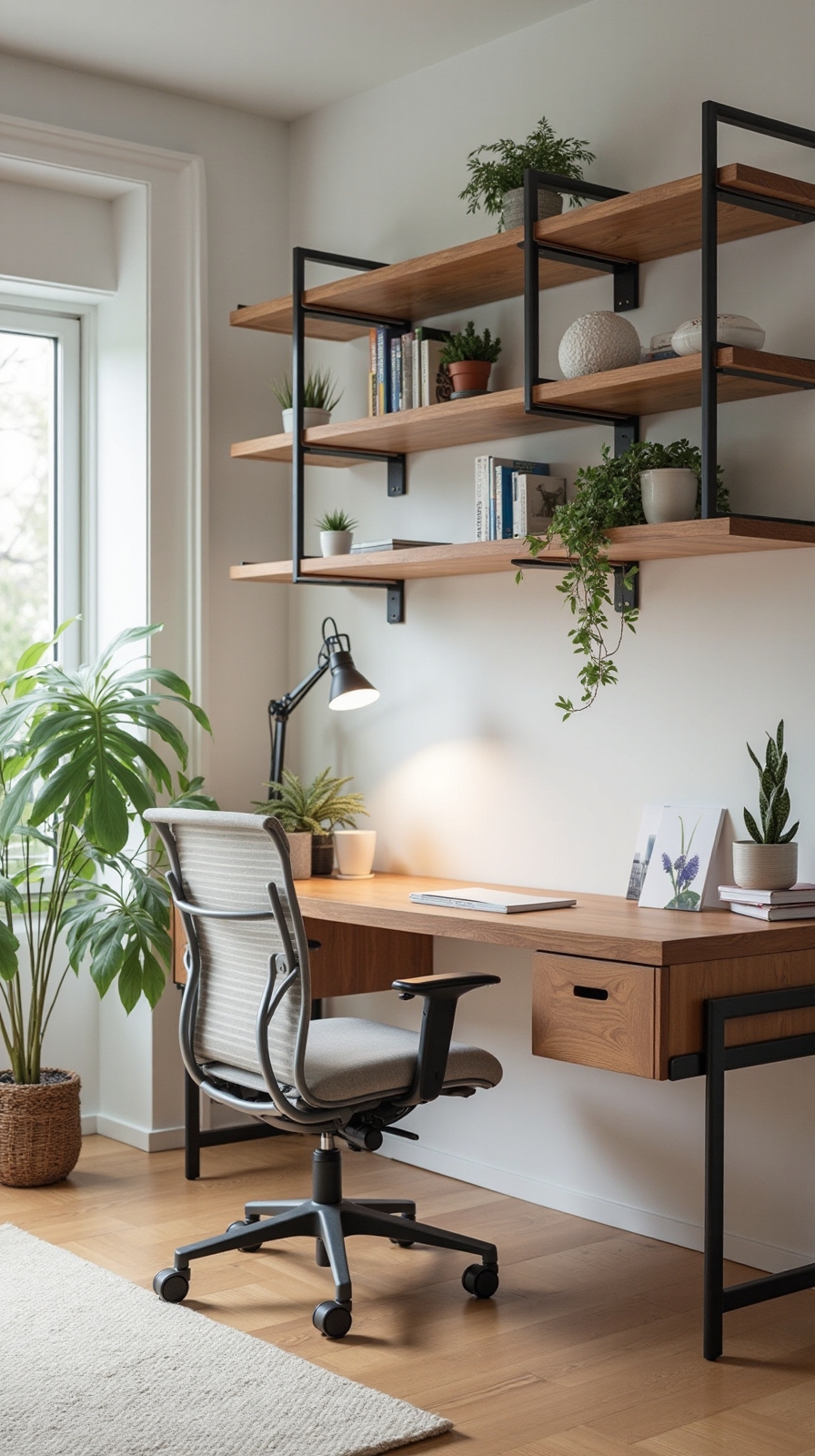
You don’t need a hefty budget or professional contractor to create the perfect home office space. With some creativity and basic DIY skills, you can alter forgotten corners, repurpose existing furniture, and maximize every square inch of your home into a productive workspace. Whether you’re working with a spare closet, an awkward nook under the stairs, or just need better organization in your current setup, these practical solutions will help you design a functional office that perfectly fits your needs and style preferences.
Transform a Closet Into a Compact Workspace
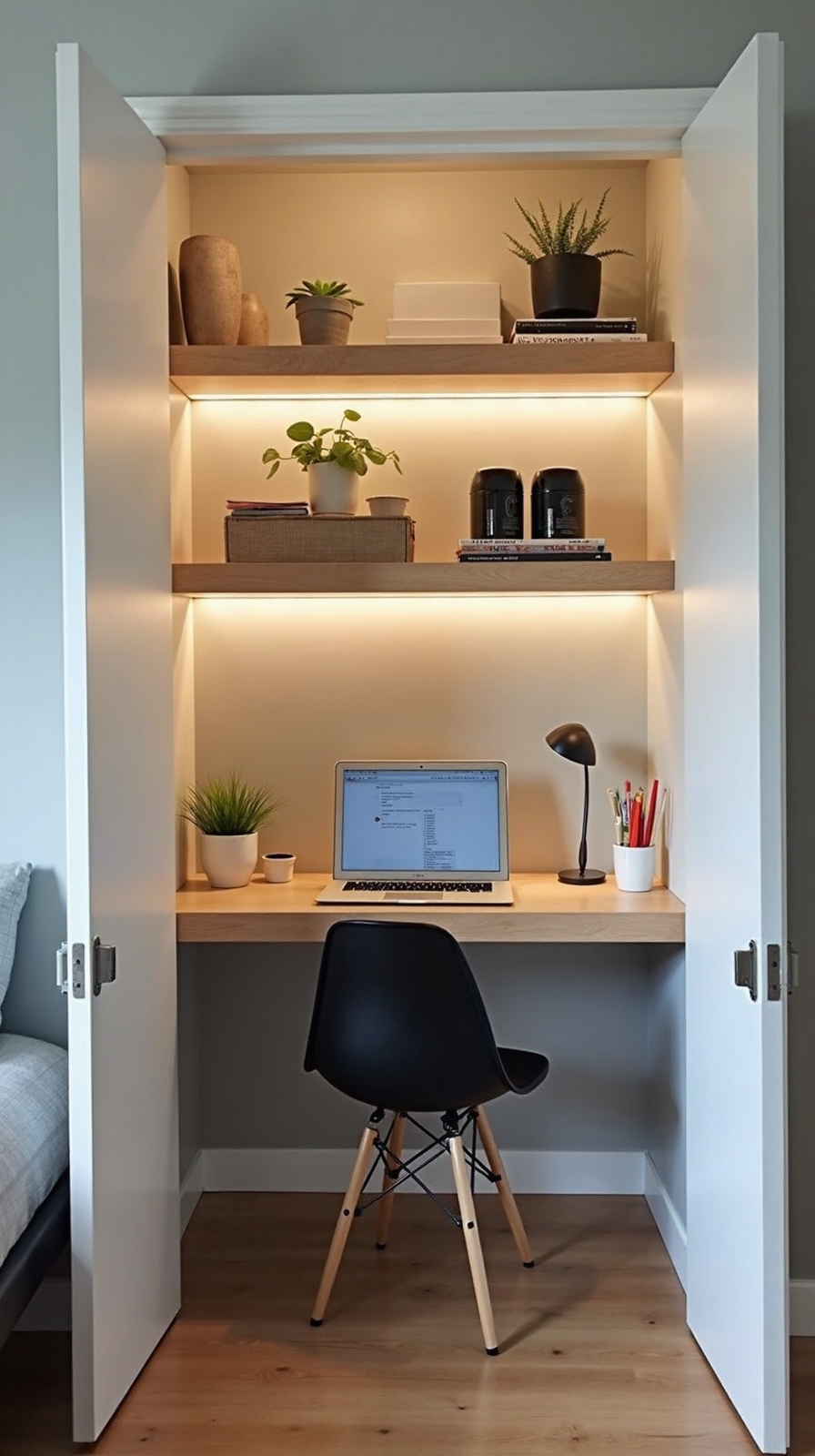
When you’re short on space but need a dedicated work area, converting an unused closet offers an ideal solution for creating your perfect home office. You’ll gain complete control over your workspace design while maximizing every square inch available.
Start by removing existing closet fixtures and installing customized shelving solutions that match your specific workflow needs. Mount floating shelves at eye level for frequently used supplies, then add a fold-down desk surface that won’t overwhelm the compact area.
Create hidden storage compartments behind decorative panels to keep clutter out of sight while maintaining easy access to essential items. Install adequate lighting with LED strip lights under shelves and a small desk lamp for focused tasks.
You’ll find this transformation gives you the freedom to work productively without sacrificing precious living space elsewhere in your home.
Build a Floating Desk Using Wall-Mounted Brackets
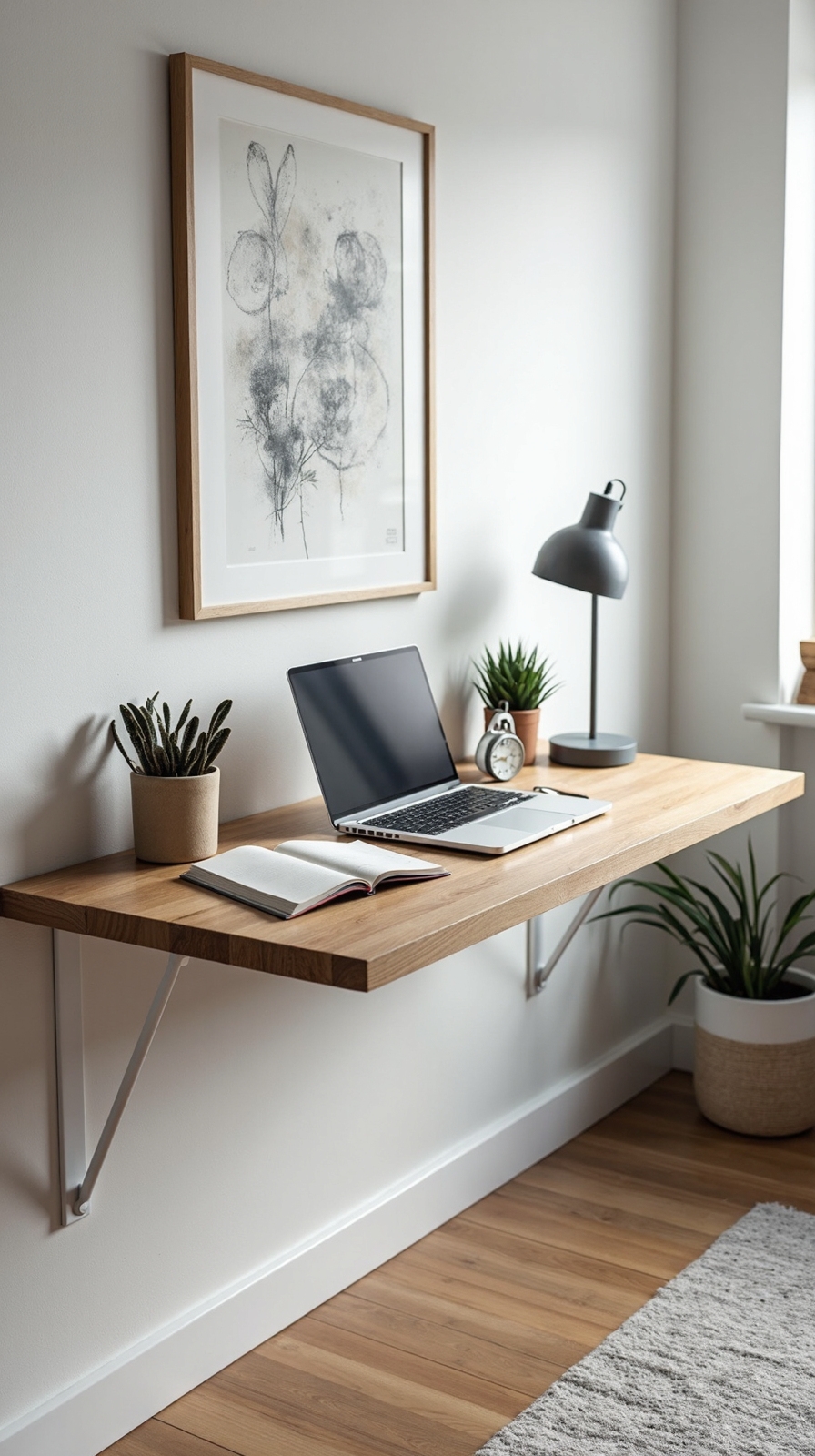
Building a floating desk with wall-mounted brackets delivers maximum workspace while preserving precious floor space in your home office setup. You’ll create an uncluttered environment that adapts perfectly to your productivity needs without sacrificing style or functionality.
Start by selecting heavy-duty floating shelf supports rated for at least 50 pounds to guarantee your desk handles computers, books, and daily essentials safely. Choose wall mounted desk hardware with sturdy steel construction and appropriate wall anchors for your specific wall type.
Mount brackets 24-30 inches apart for ideal stability, then attach a 1.5-inch thick wood slab or butcher block countertop. This design eliminates bulky legs while providing ample legroom underneath for comfortable seating arrangements. You’ll enjoy newfound flexibility to rearrange your space whenever inspiration strikes.
Create a Room Divider Office With Bookshelf Units
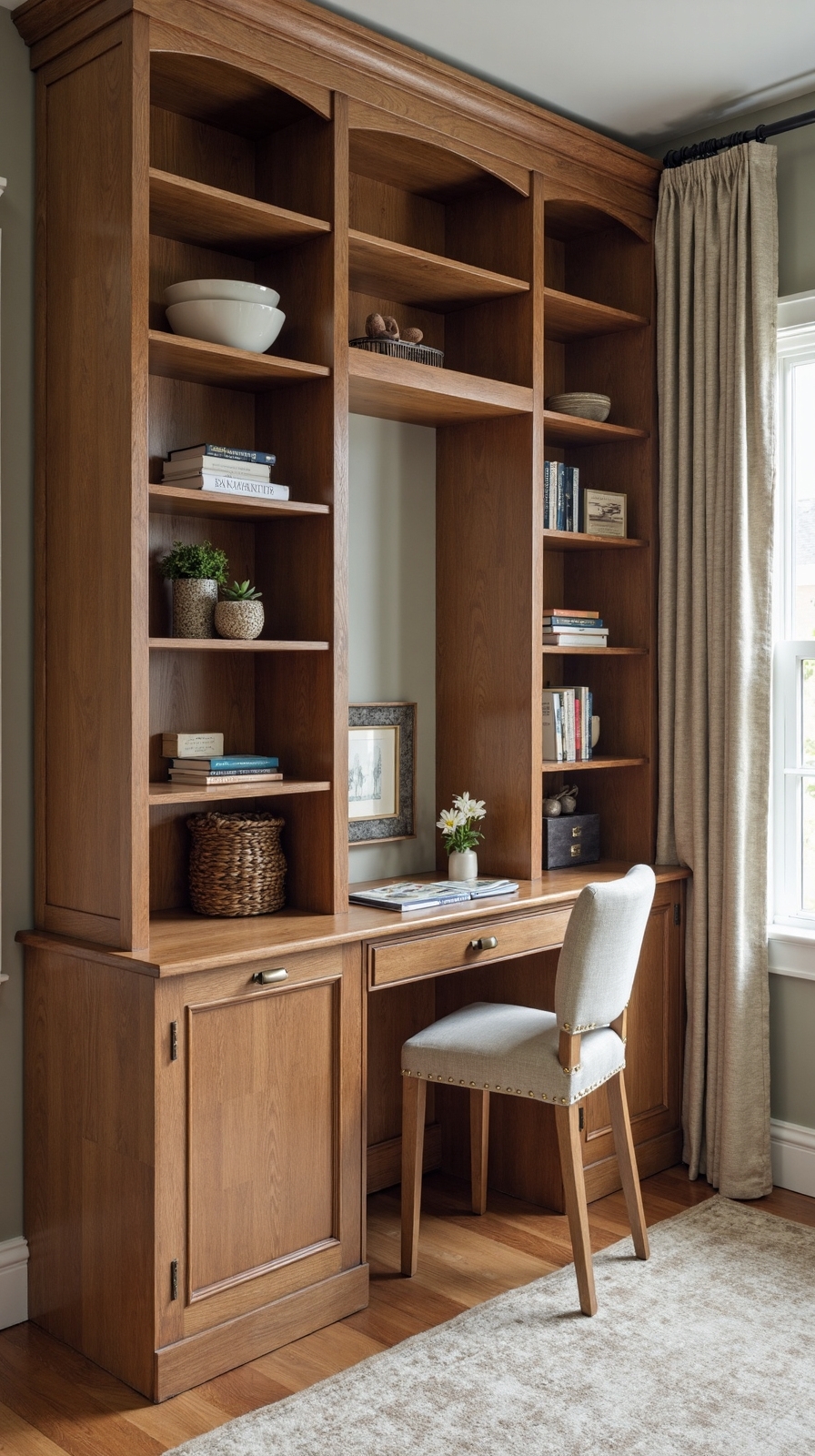
Open floor plans convert effortlessly into functional dual-purpose spaces when you strategically position tall bookshelf units as natural room dividers. You’ll create instant privacy while maintaining the airy feel that makes your home comfortable and unrestricted.
Choose sturdy, floor-to-ceiling units that won’t require permanent installation. Position them perpendicular to walls, creating defined work zones without blocking natural light flow. Install corner shelving units where your new office meets existing walls, maximizing storage potential in tight spaces.
Mix solid storage boxes with open shelving to balance privacy needs with visual connection. Incorporate decorative room dividers by alternating books with plants, artwork, or office supplies. This approach modifies basic shelving into stylish, functional architecture that adapts to your changing lifestyle and workspace requirements.
Repurpose a Kitchen Cart as a Mobile Workstation
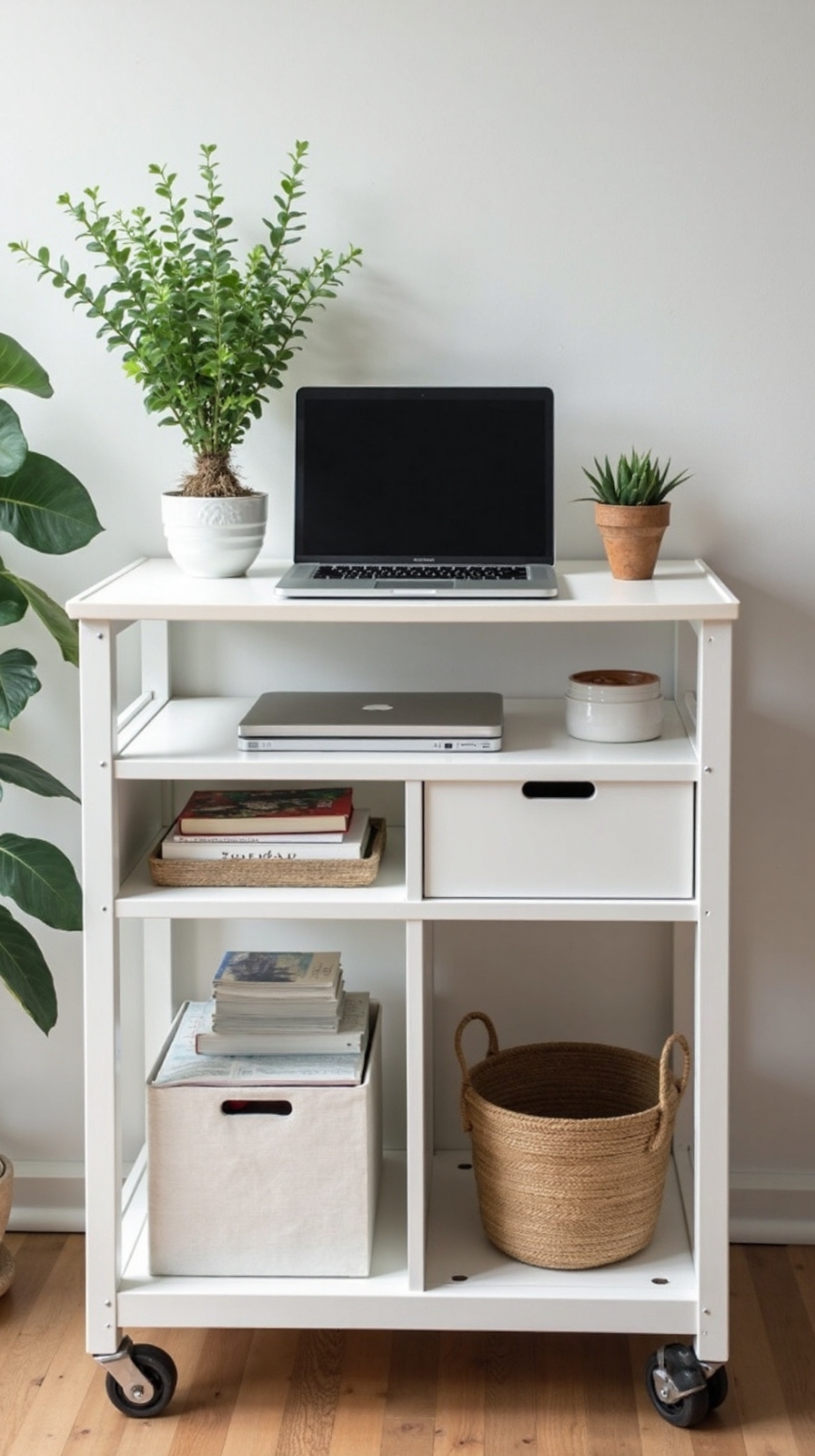
Kitchen carts offer remarkable versatility as portable office solutions that adapt to your workflow throughout the day. You’ll transform an underutilized piece into an agile workspace that moves wherever you need it most. Select a cart with multiple shelves and sturdy wheels for ideal functionality.
Configure the top surface as your primary work area with laptop space and essential supplies. Use lower shelves to organize documents, books, and office materials in labeled containers. You can even repurpose unused kitchen appliances like small drawers or compartments for storing pens and cables.
Maximize vertical space by installing wall mounted hooks for storage near your cart’s regular parking spot. This creates a designated charging station for devices while keeping cords organized and accessible for your mobile office setup.
Design Under-Stair Storage and Office Combo
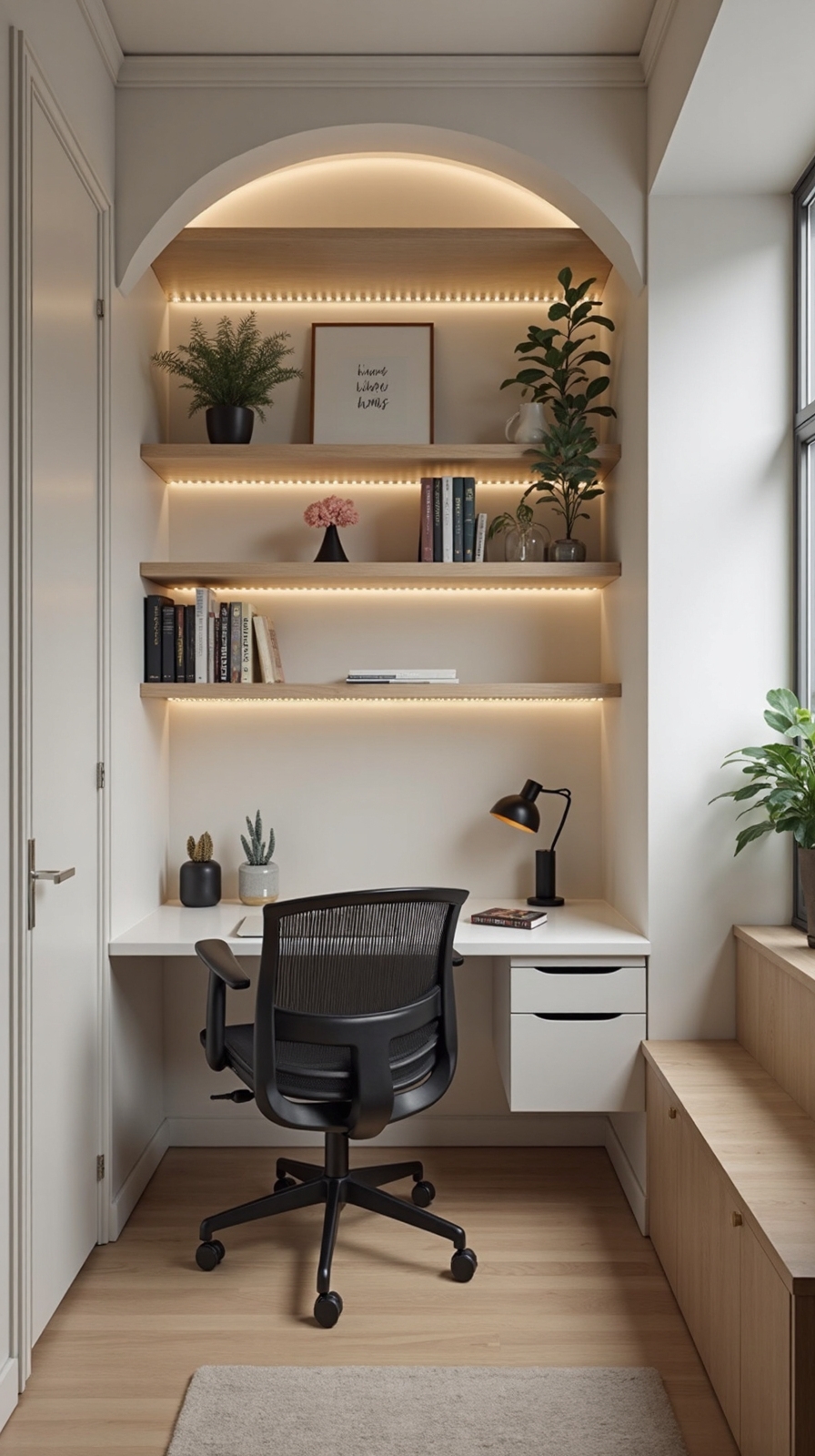
When you’re dealing with limited square footage, that awkward space beneath your staircase becomes prime real estate for a cleverly designed office nook. Start by measuring the height and depth to determine your under stair office layout options. Install floating shelves along the slanted ceiling for books and supplies, maximizing vertical storage without crowding the workspace.
Position a compact desk that fits comfortably under the highest point, ensuring you’ve got adequate headroom when seated. Add a comfortable chair that slides completely under the desk when not in use. To maximize under stair space effectively, incorporate pull-out drawers in the deepest sections and use the lowest areas for filing cabinets or storage bins. Install proper lighting with LED strips or a desk lamp to create an inviting, productive workspace.
Convert a Dresser Top Into a Standing Desk
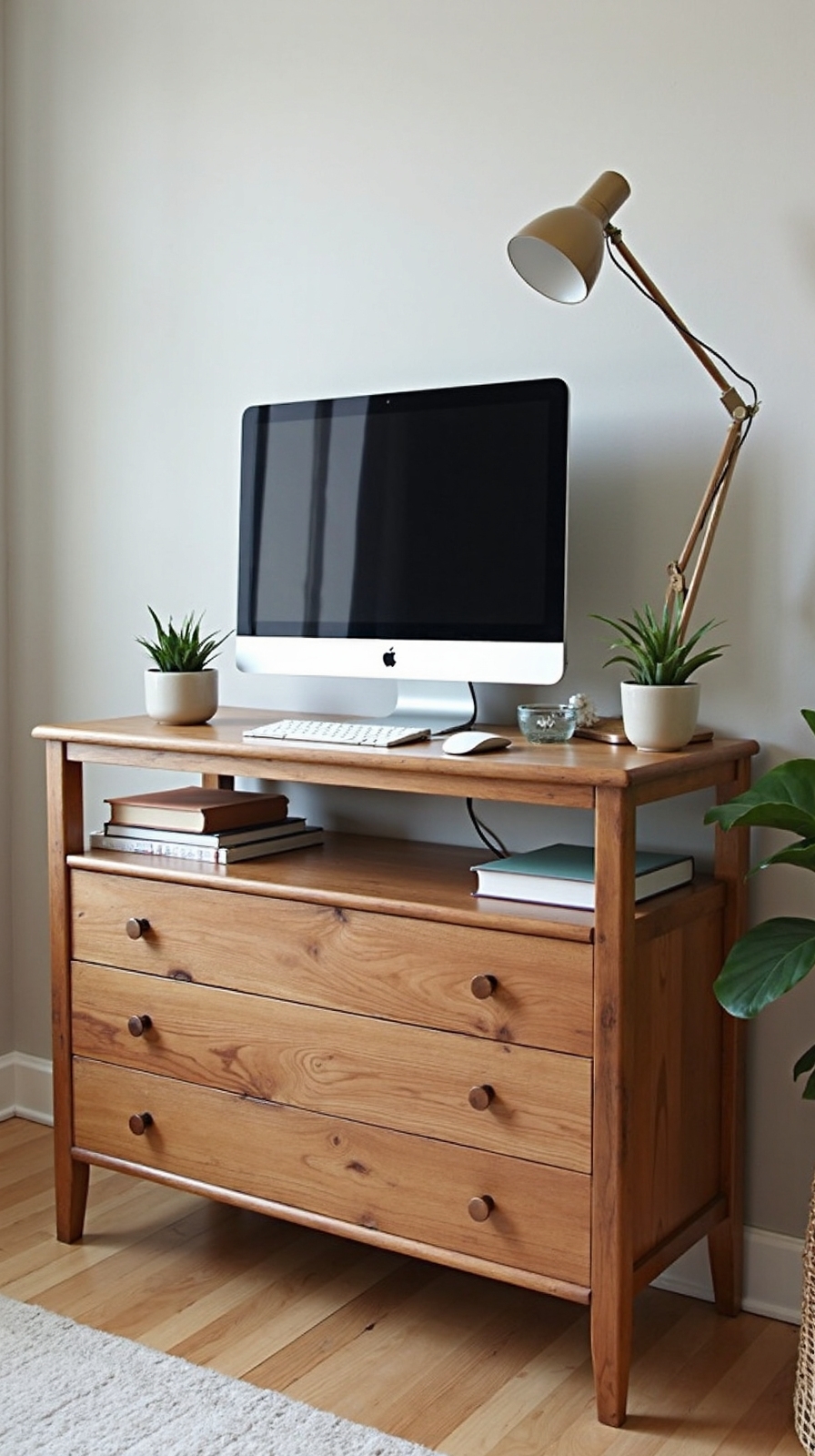
Why spend hundreds on a new standing desk when your existing dresser can convert into the perfect ergonomic workspace with minimal effort? Convert an old dresser to a standing desk by measuring the height to guarantee it reaches your elbow level when standing comfortably.
Clear the dresser top completely and clean the surface thoroughly to establish your new workspace foundation. Position your laptop or monitor at eye level to maintain proper posture throughout your workday.
Incorporate adjustable shelving for supplies by utilizing the dresser’s existing drawers for office materials, cables, and equipment storage. Add a small shelf above the dresser for additional vertical storage space.
This budget-friendly solution modifies unused furniture into a functional standing workspace while preserving your home’s existing aesthetic and maximizing your available square footage.
Construct a Murphy Desk That Folds Away
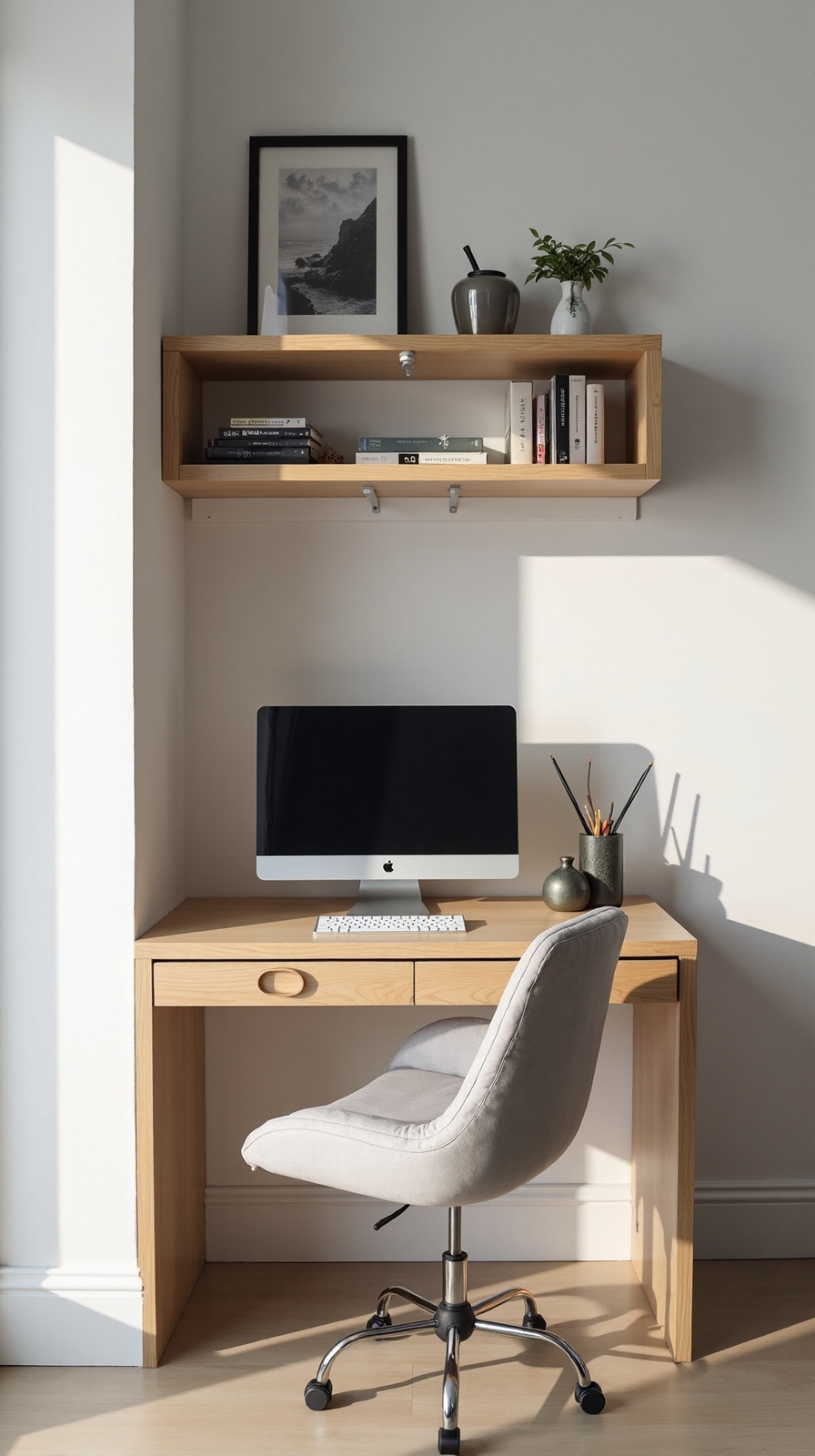
Space-saving Murphy desks offer the ultimate solution for homes where square footage comes at a premium and flexibility remains paramount. You’ll uncover that building your own adaptable wall mounted design transforms any room into a functional workspace within minutes.
Start by selecting a sturdy wall location and installing heavy-duty hinges that’ll support your desk’s weight. Mount a piano hinge horizontally at your desired height, then attach a rectangular desktop that swings down smoothly. Add fold-down legs or brackets for stability when the desk’s in use.
These space saving fold up options work perfectly in bedrooms, hallways, or living rooms. You can customize the size to fit your specific needs and paint it to match existing décor, creating a seamless workspace solution.
Use Pegboard Walls for Vertical Organization
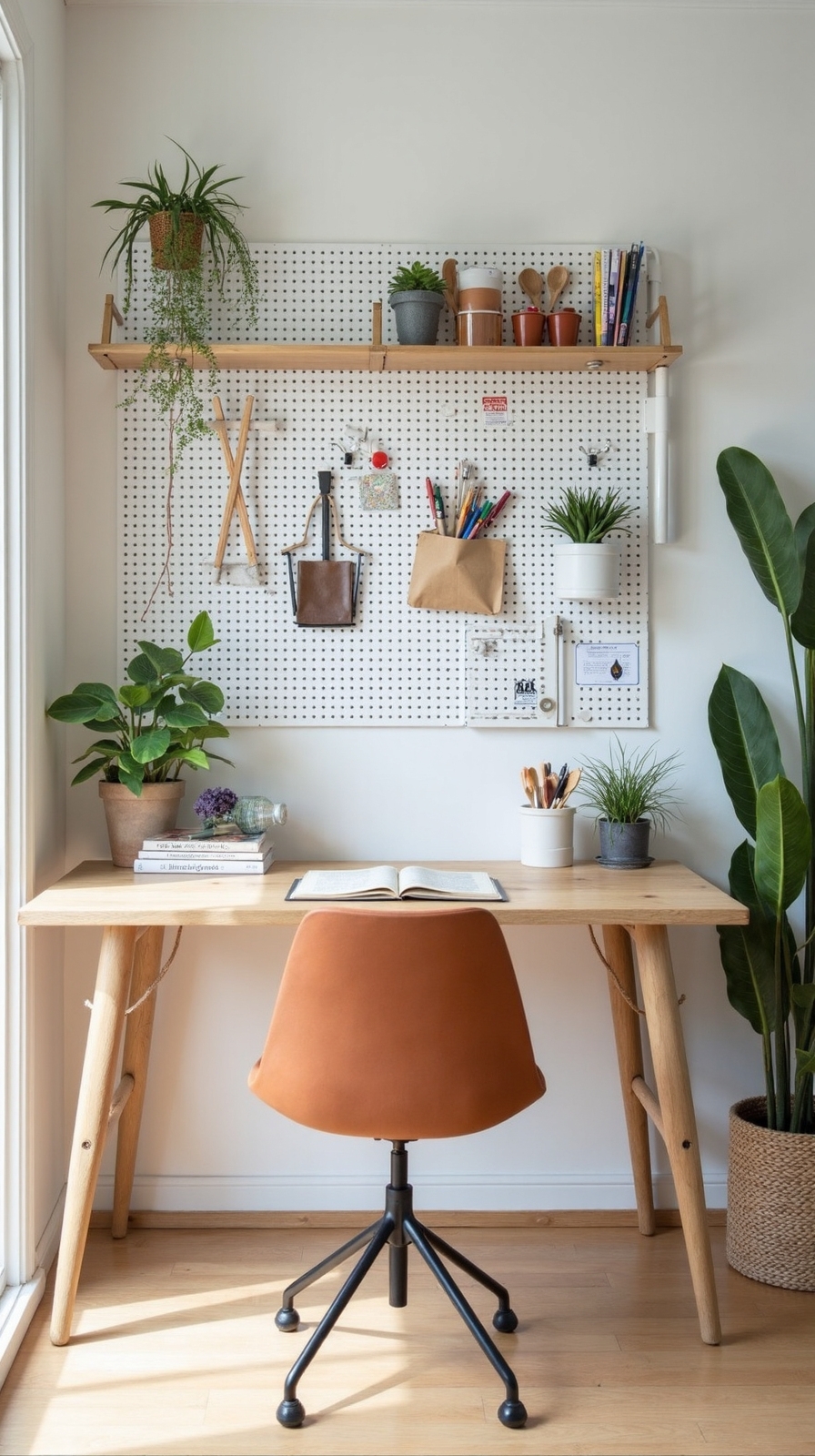
Alter your home office into an organized powerhouse by installing versatile pegboard walls that maximize every inch of vertical space. You’ll metamorphose cluttered surfaces into streamlined workspaces while maintaining complete flexibility in your storage solutions.
Start by mounting a large pegboard panel above your desk area, securing it firmly to wall studs. Choose from various hook sizes, small bins, and shelf brackets that accommodate your specific needs. Modular pegboard accessories allow you to reconfigure your setup instantly as projects change.
Create dedicated zones for different supplies: writing tools in one section, cables in another, and reference materials nearby. Customizable pegboard organization means you’re never locked into one arrangement. Add magnetic containers for small items like paper clips, and install narrow shelves for books or binders within easy reach.
Build Custom Shelving With Cinder Blocks and Wood
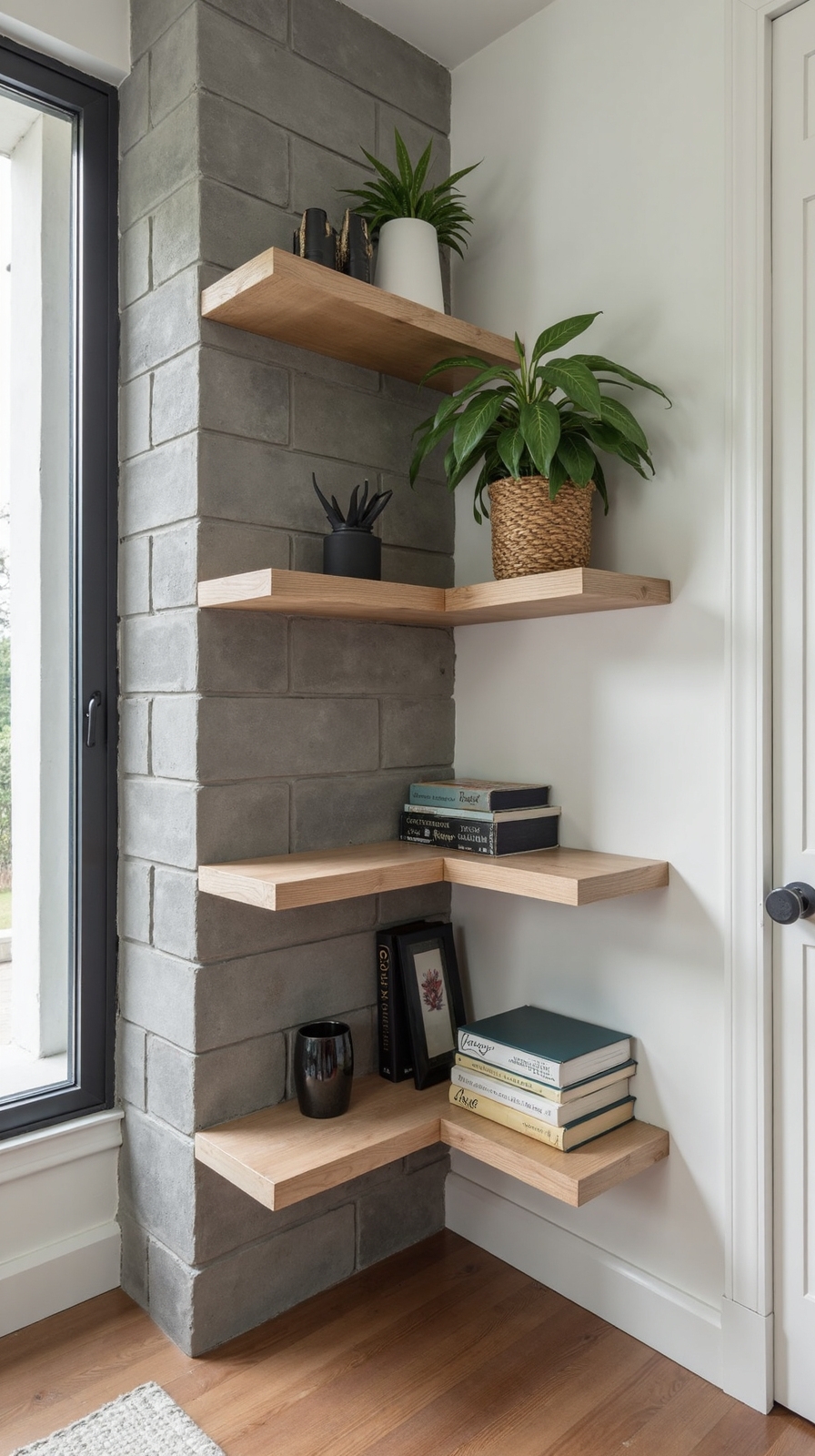
Building budget-friendly shelving becomes incredibly simple when you combine sturdy cinder blocks with wooden planks to create custom storage solutions. This approach lets you design exactly what your workspace needs without expensive built-ins or complex tools.
Start by selecting cinder blocks and wooden boards that match your office’s dimensions and weight requirements. You can leverage reclaimed materials like salvaged barn wood or repurposed construction lumber to reduce costs markedly. Stack the blocks to your desired height, then place boards across them to form shelves.
This modular system adapts easily as your storage needs change. You’ll incorporate natural elements that add warmth to sterile office environments while maintaining complete creative control. Adjust spacing between shelves for books, binders, or decorative items that reflect your personal style and professional requirements.
Turn a Dining Nook Into a Dual-Purpose Office
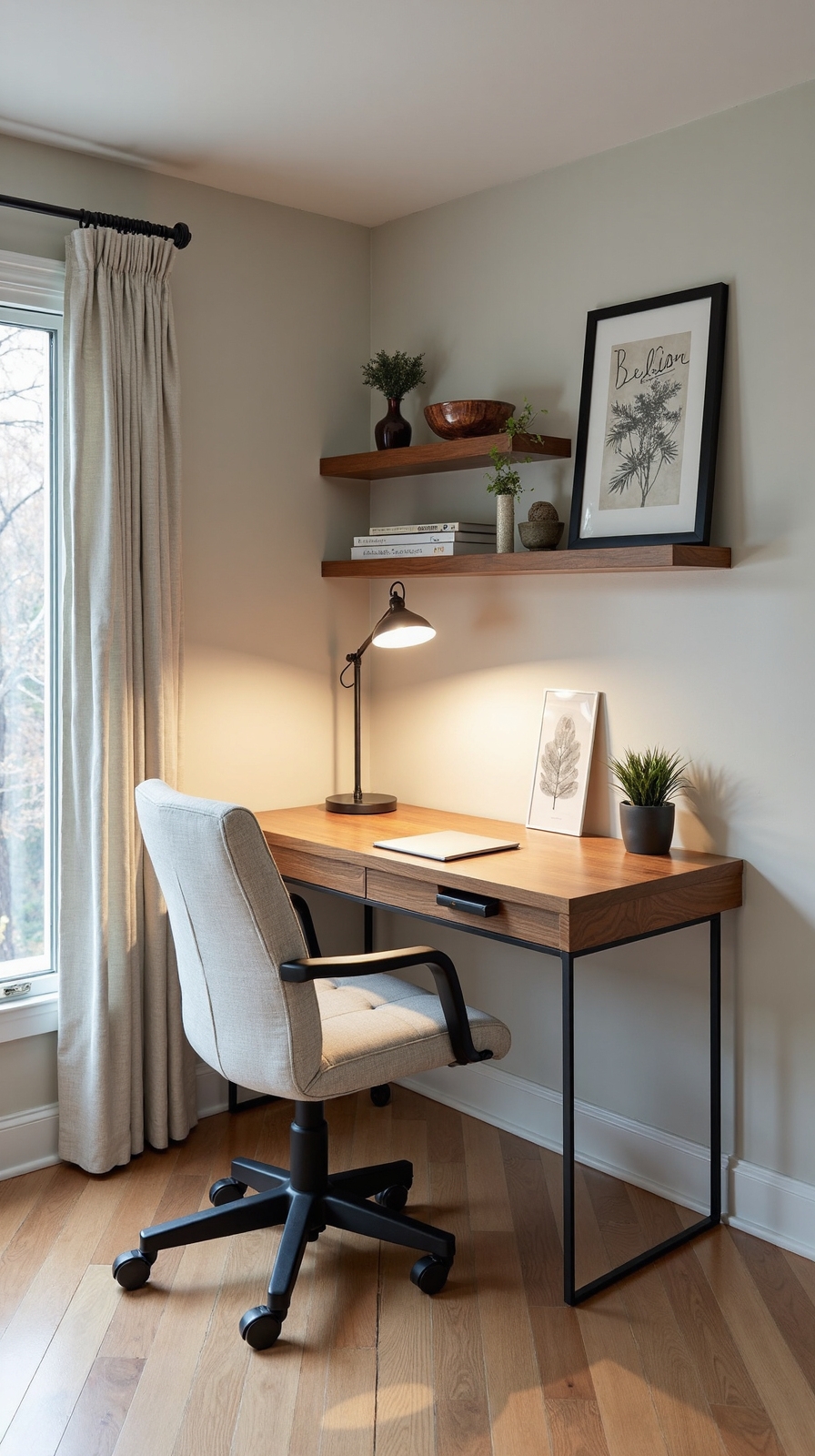
Convert your underused dining nook into a productive workspace that seamlessly shifts between professional tasks and family meals throughout the day.
A successful dual purpose nook layout starts with choosing furniture that serves both functions effectively. Install a sturdy table that accommodates laptops during work hours and dinner plates during meal times. Consider a round or oval table to maximize seating flexibility.
Create designated storage zones for office supplies that can be quickly tucked away when moving between work and dining modes. Wall-mounted shelves or a nearby cabinet keep work materials organized and accessible.
Your dining area conversion should include proper lighting for both activities. Add a desk lamp for focused work tasks while maintaining ambient lighting for comfortable dining experiences. This strategic approach gives you the freedom to work from home without sacrificing precious living space.
Create Cable Management With DIY Cord Organizers
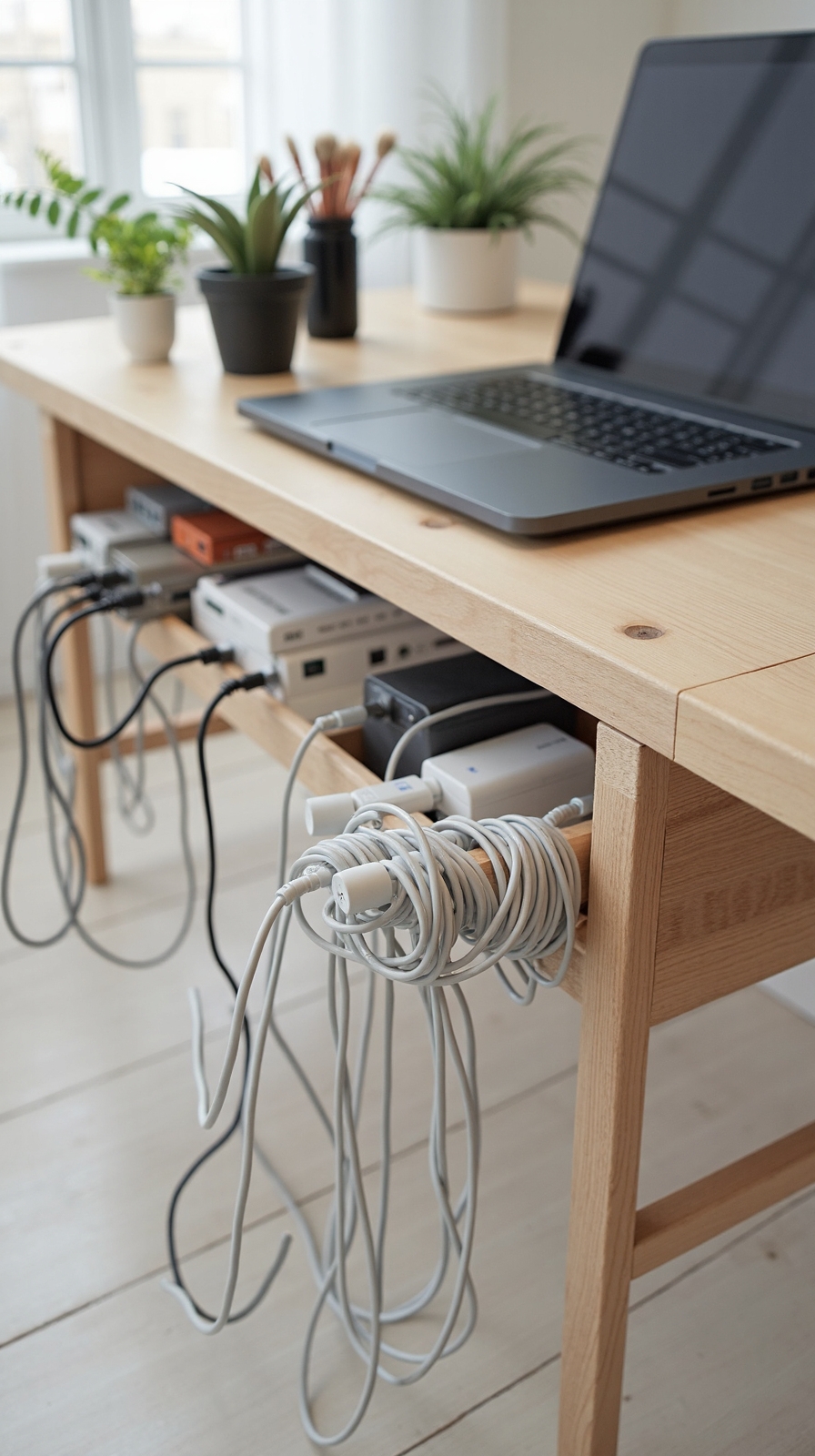
Tangled cables and loose wires can quickly alter your organized home office into a chaotic mess that hampers productivity and creates visual clutter. You’ll regain control by crafting simple DIY cord organizers that convert your workspace into a streamlined sanctuary.
Start with zip tie cable organizers by grouping similar cables together and securing them with adjustable zip ties. This creates clean bundles that route easily along desk edges or wall baseboards.
For removable solutions, attach velcro cable clips underneath your desk surface to hold individual cords in designated pathways.
Create custom organizers using empty toilet paper rolls or small boxes with holes punched for cable routing. Label each organizer to identify power cords, USB cables, and ethernet connections. These budget-friendly solutions give you the freedom to maintain a professional appearance without expensive cable management systems.
Design a Portable Office in a Rolling Storage Cart
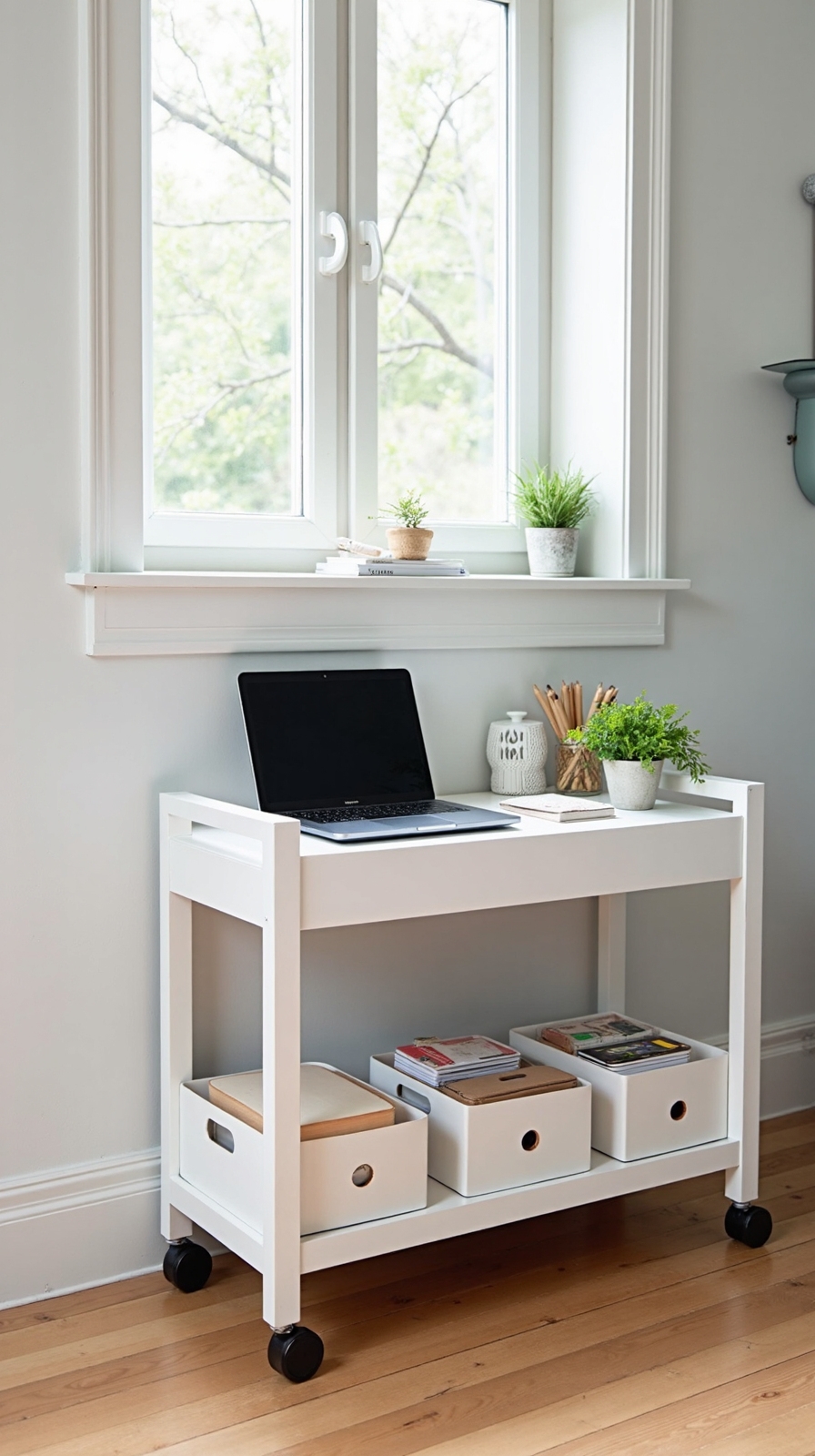
When your home office needs to adapt to changing spaces and tasks, a rolling storage cart transitions into the perfect portable workstation solution. You’ll alter any room into your temporary headquarters while maintaining complete organizational control.
Start with a three-tier rolling cart and customize each level for specific functions. The top tier becomes your active workspace with a laptop stand and essential supplies. Middle shelves hold modular storage components like drawer organizers and file holders that you can reconfigure based on current projects.
Create vertical storage by attaching small wall mounted shelving units to nearby surfaces where you’ll park your cart. This expands your workspace without sacrificing mobility. Add hooks along the cart’s sides for headphones and charging cables, ensuring everything moves together seamlessly when you relocate.
Build Window Seat Storage With Built-In Workspace
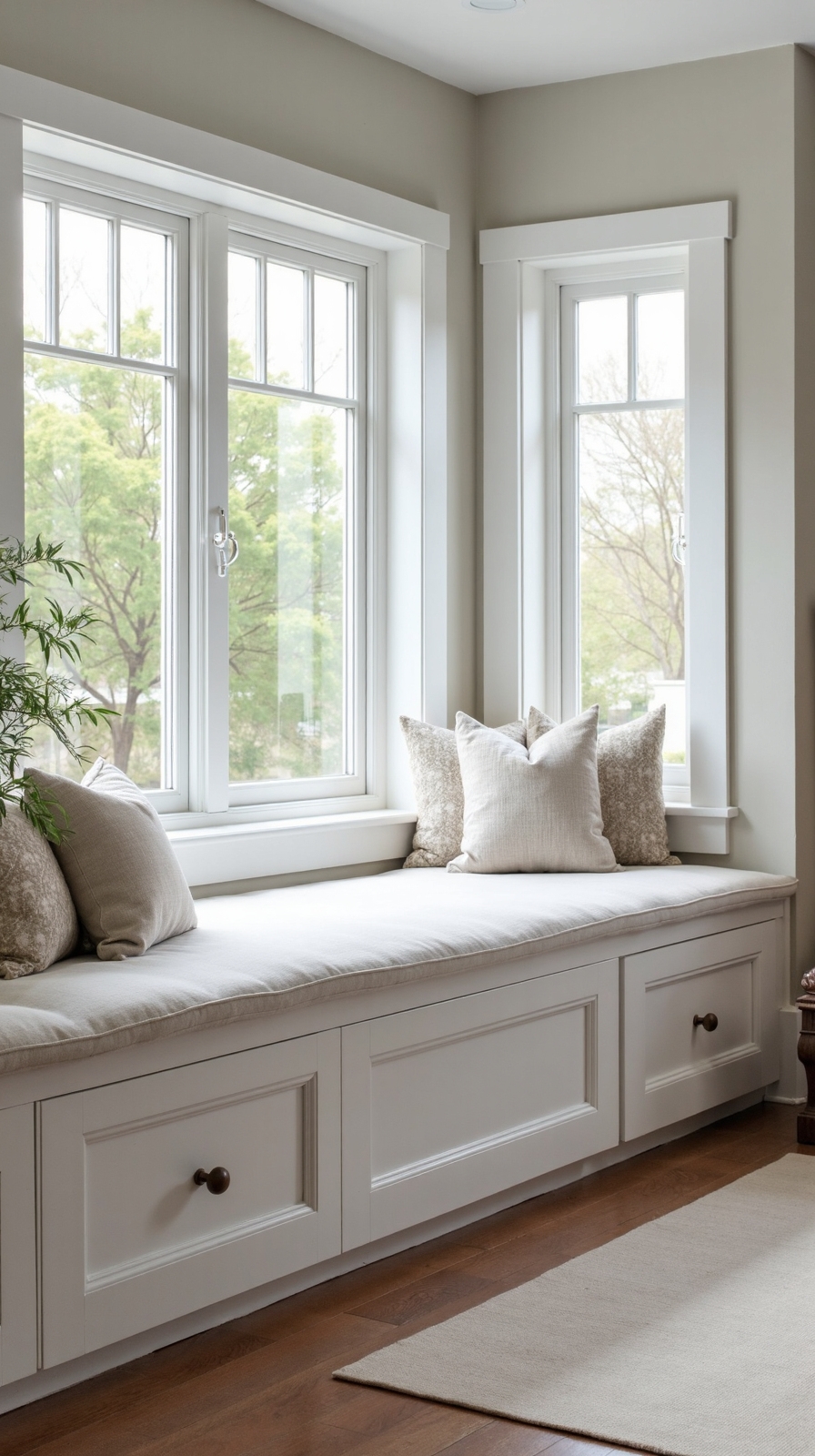
Modify an underutilized window area into a multi-functional workspace that combines comfortable seating with hidden storage and a built-in desk surface. This custom window seating alters any room into your personal retreat while maximizing every square foot.
Start by measuring your window’s width and depth to determine your seat dimensions. Build a sturdy frame using 2×4 lumber, then add hinged storage compartments underneath for office supplies, documents, or seasonal items.
Create a fold-down desktop that extends from the seat’s front edge when you’re ready to work. Install an integrated charging station with USB ports and power outlets within easy reach of your seating area.
Add comfortable cushions and proper task lighting to complete your cozy workspace. You’ll have created the perfect spot for focused work sessions or relaxing breaks.
Craft a Personalized Command Center With Cork and Magnets
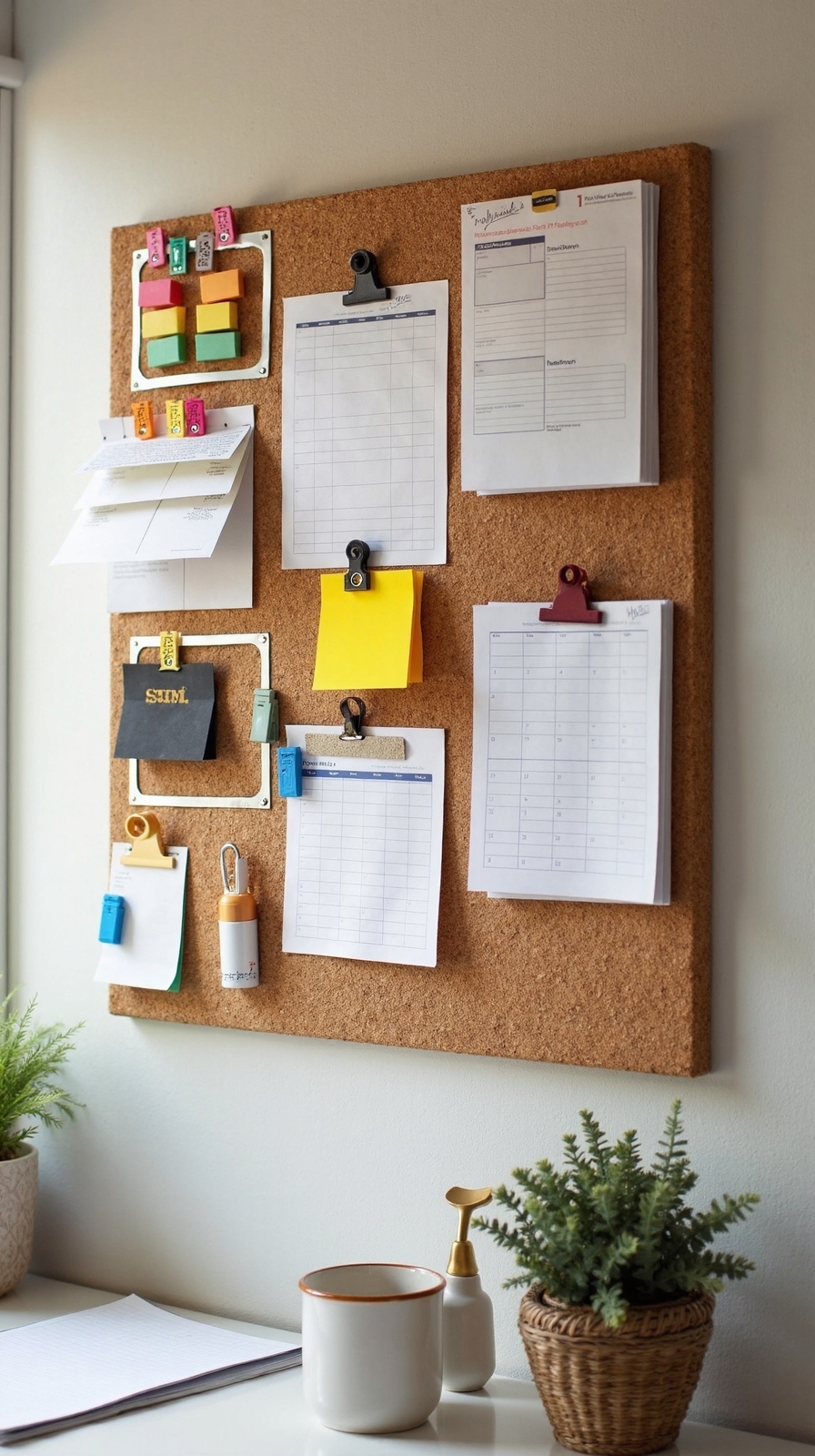
Your home office needs an organizational hub that keeps important papers, schedules, and cues visible and accessible throughout your workday. Create a versatile wall mounted memo board using cork tiles and magnetic strips for ultimate desk accessory organization flexibility.
Mount large cork squares directly onto your wall, arranging them in your preferred pattern. Install thin magnetic strips between cork sections to hold metal clips, small containers, or magnetic accessories. This dual-surface approach lets you pin documents, photos, and notes while magnetically attaching lightweight tools.
Customize your command center by painting cork edges in accent colors or covering sections with fabric. Add small magnetic cups for paper clips, pushpins for calendar pages, and colored string to connect related items. You’ll modify blank wall space into a functional workspace that adapts to your changing organizational needs.
Conclusion
You’ve got everything you need to create a phenomenal home office without breaking the bank. These DIY solutions let you reconfigure any space into a productive workspace using items you already own. Start with one simple project that fits your needs and available space. Remember, the best home office is one that reflects your style while supporting your work habits. Begin building your ideal workspace today.