14 Kitchen Dining Room Ideas That Blend Cooking and Comfort
Harness these 14 brilliant kitchen-dining combinations that solve your space struggles and create the perfect culinary sanctuary your family actually wants to gather in.
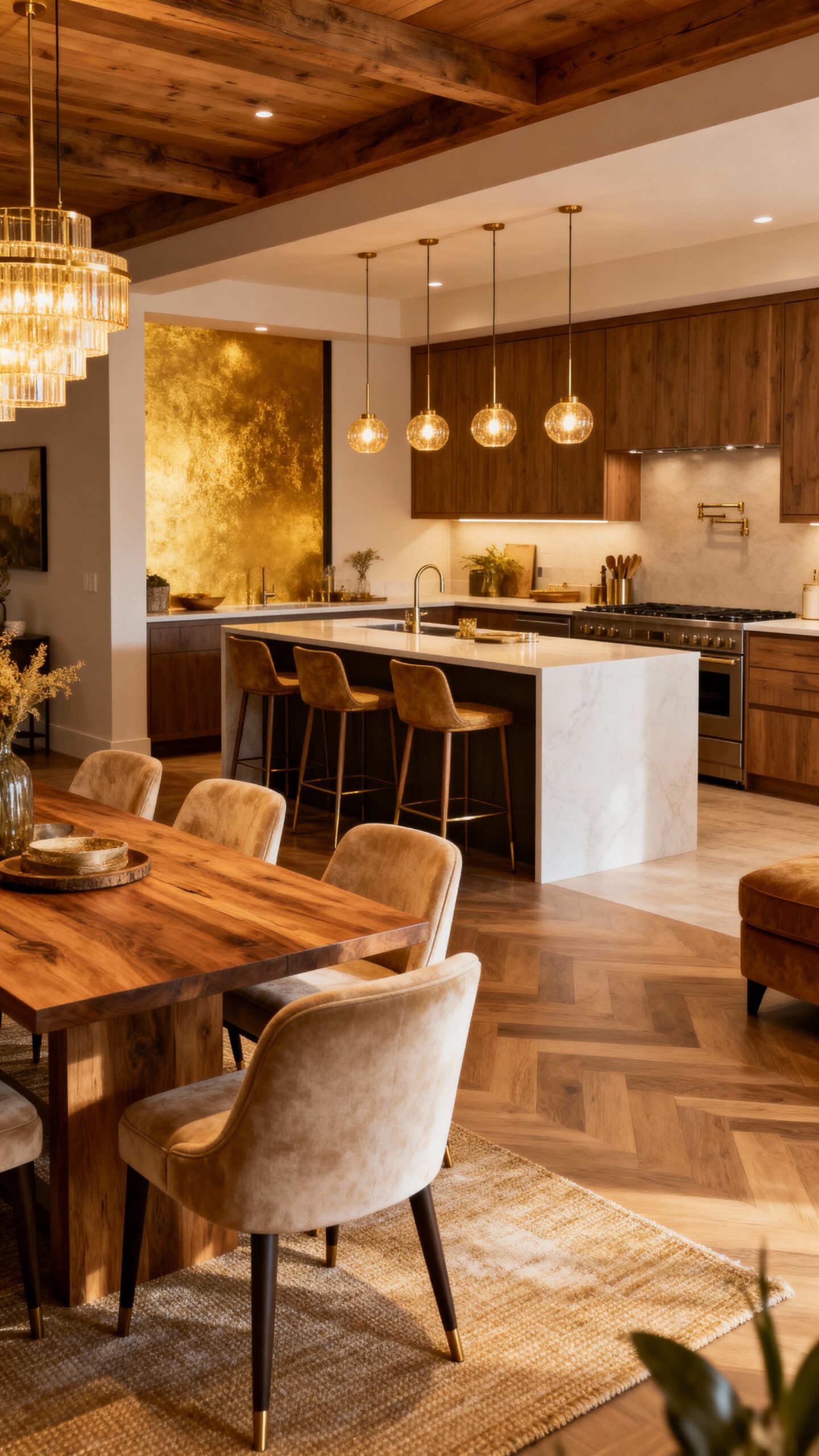
You’re probably struggling to create a kitchen that feels both functional for cooking and inviting for family meals. The challenge isn’t just about cramming a dining table near your stove—it’s about designing spaces that naturally flow together while serving both purposes effectively. Whether you’re working with a compact galley kitchen or an expansive open floor plan, smart design choices can metamorphose your space into a culinary hub where cooking becomes part of the entertainment.
Open Concept Kitchen Islands That Define Dining Spaces
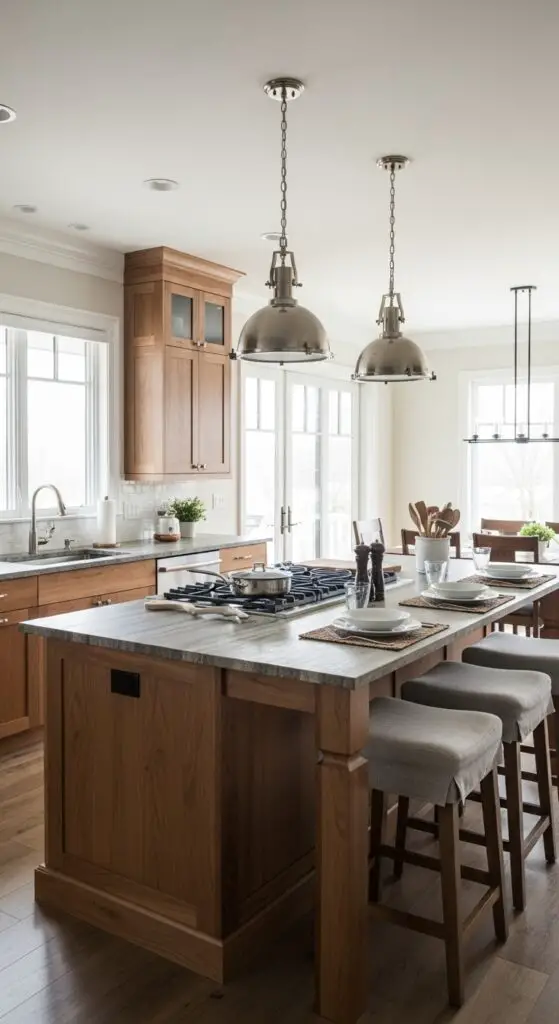
How can you create distinct dining areas in an open floor plan without sacrificing the spacious, flowing feel you love? Kitchen islands serve as natural room dividers while maintaining visual connection between spaces.
Design your island with integrated countertop seating to establish a casual dining zone that encourages conversation during meal prep. Configure customized work zones around your island’s perimeter, positioning the sink or cooktop strategically to face the dining area.
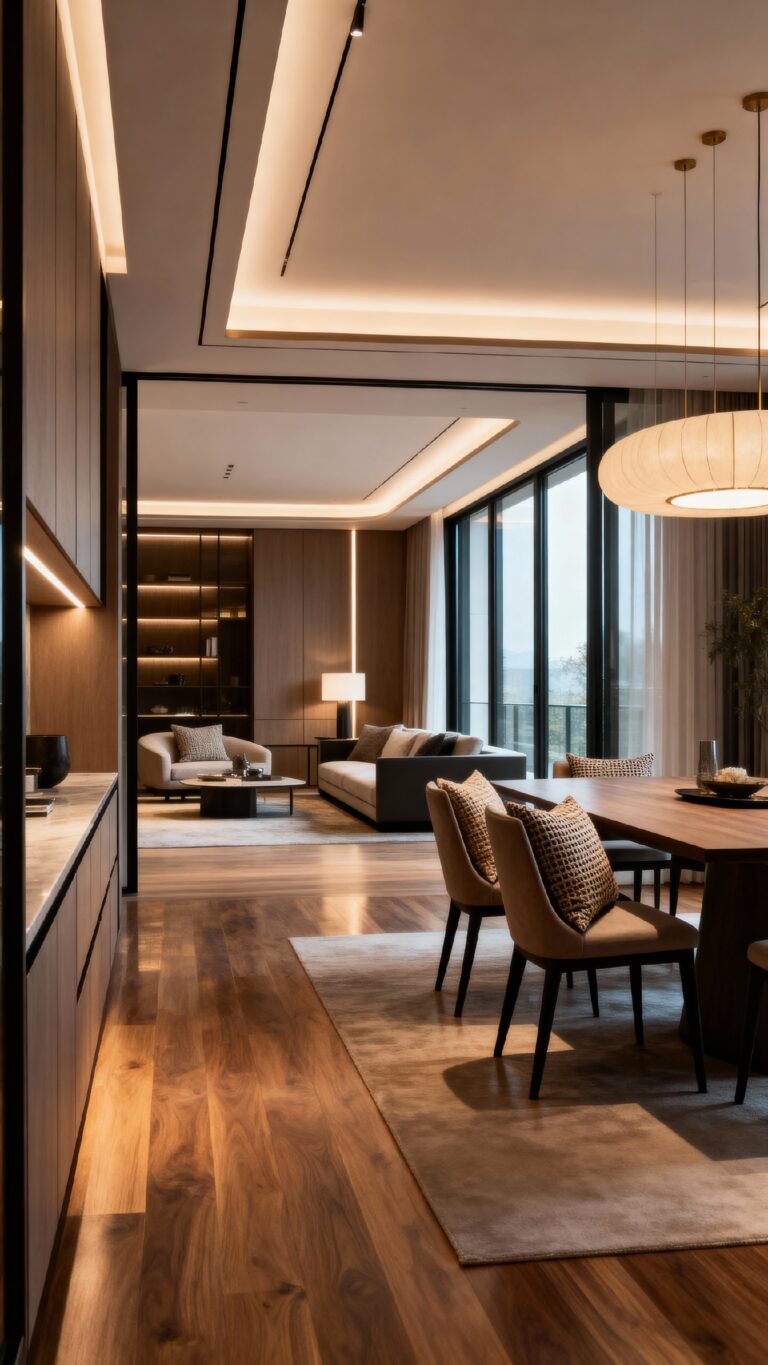
Add pendant lighting above the island to further define the space. Choose materials that complement both kitchen and dining aesthetics, creating seamless shifts that respect each area’s unique function. Consider extending your island’s design elements into the adjacent living area to create seamless flow between all connected spaces.
Breakfast Nooks That Maximize Small Kitchen Areas
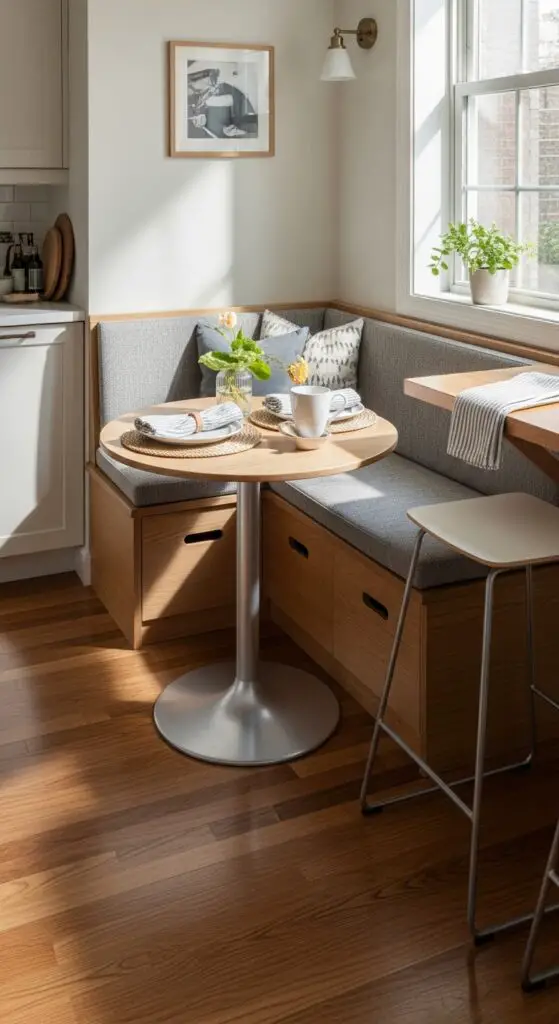
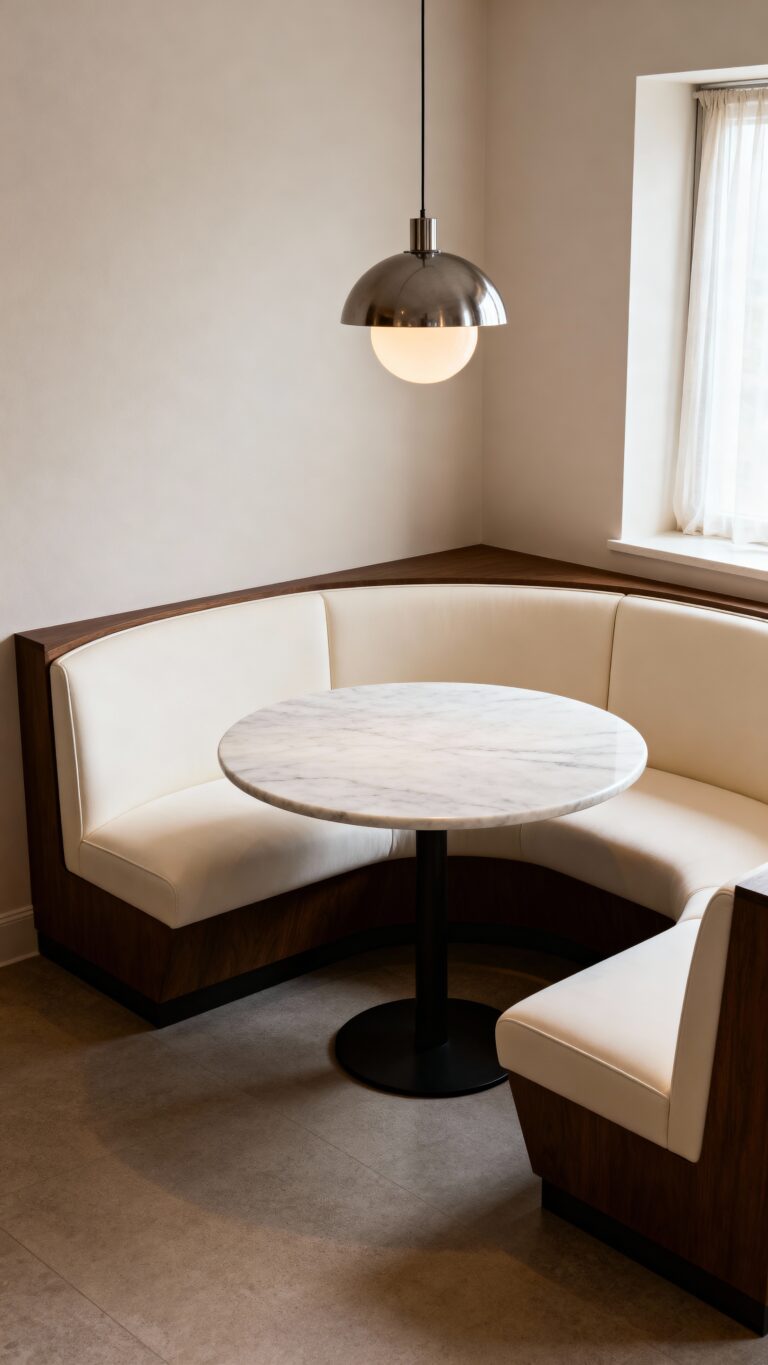
While kitchen islands work beautifully in spacious open concepts, smaller kitchens require different strategies to create functional dining areas without overwhelming the space. You’ll find that cozy built in nooks alter awkward corners into intimate dining retreats. Consider installing a custom banquette with storage underneath to maximize every square inch available.
Window side breakfast bars offer another smart solution for compact kitchens. You can mount a narrow counter along your window wall, creating a bright dining spot that doesn’t interfere with your workflow. Add bar stools that tuck completely underneath when not in use. Bench seating provides an excellent alternative that saves space while accommodating more people than traditional chairs in compact dining areas.
Peninsula Layouts for Seamless Cooking and Conversation
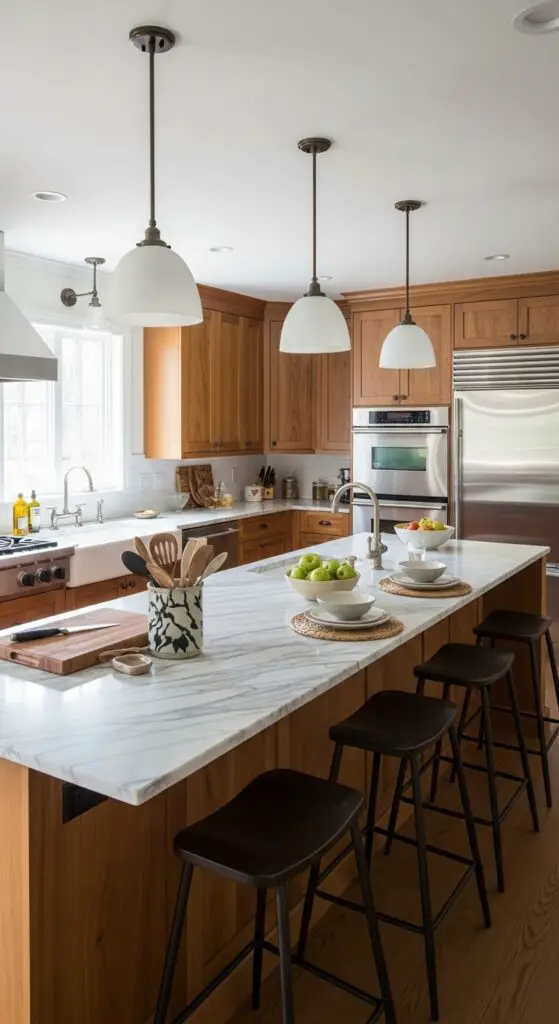
Peninsula kitchens create the perfect bridge between cooking zones and dining areas, offering you an L-shaped counter extension that naturally encourages interaction. You’ll find these peninsula configurations work exceptionally well in open floor plans where you want cooking and conversation to flow together seamlessly.
Wraparound counter designs let you prep meals while guests gather around the extended surface. You can install bar stools along the peninsula’s outer edge, creating casual dining space that doesn’t require a separate table. This layout maximizes your kitchen’s functionality while maintaining that open, connected feeling you crave. For particularly narrow dining areas, peninsula layouts prove especially valuable as they make efficient use of limited width while providing both food prep and dining functionality.
Built-In Banquettes That Save Space and Add Storage
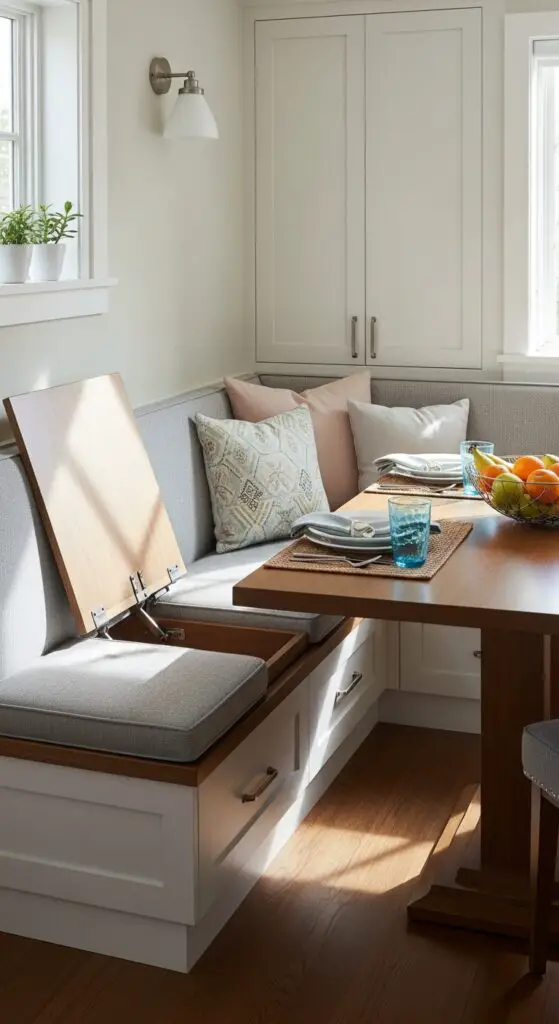
Built-in banquettes convert your dining area into a space-saving powerhouse that combines comfortable seating with clever storage solutions. You’ll maximize every square inch while creating an inviting gathering spot for family meals and entertaining guests.
Design your banquette with hinged seats that reveal spacious compartments beneath, perfect for storing linens, dishes, or seasonal items. Built in window seats extend this concept further, offering panoramic views while you dine. Custom cabinetry storage integrated into the banquette’s design provides additional organization options. Consider positioning your banquette to take advantage of corner space where traditional dining furniture might feel cramped or awkward.
You’ll appreciate how banquettes eliminate the need for bulky dining chairs while accommodating more people in tighter spaces.
Two-Tier Kitchen Islands for Cooking and Casual Dining
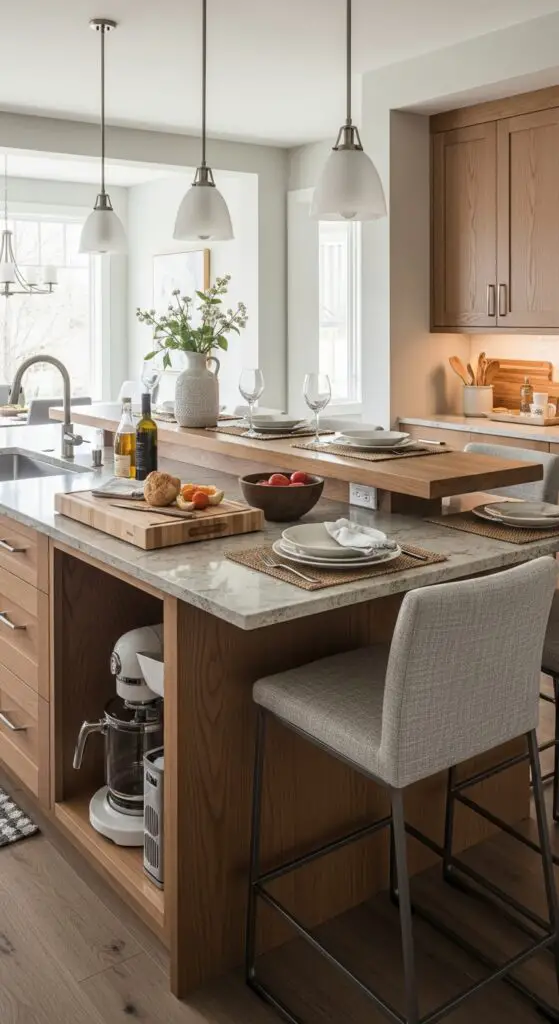
Two-tier kitchen islands revolutionize your culinary workspace by creating distinct zones for food preparation and casual dining within a single, efficient design. You’ll maximize functionality by incorporating elevated countertops that separate messy cooking tasks from clean eating surfaces. The lower tier handles chopping, mixing, and appliance storage, while the raised section provides comfortable dining height for quick meals and entertaining.
Integrated seating alters your island into a social hub where family gathers naturally. You can customize bar-height stools that tuck neatly underneath, preserving floor space while encouraging conversation. This dual-level approach gives you cooking freedom without sacrificing style or functionality. Consider complementing your island design with traditional pedestal styles for formal dining occasions when you need additional seating capacity.
Galley Kitchens With Smart Dining Solutions
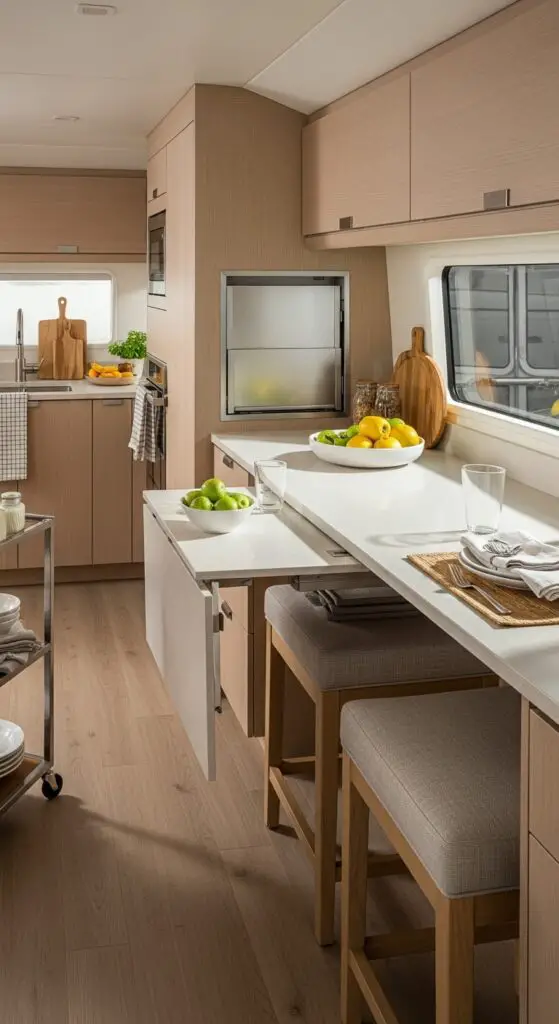
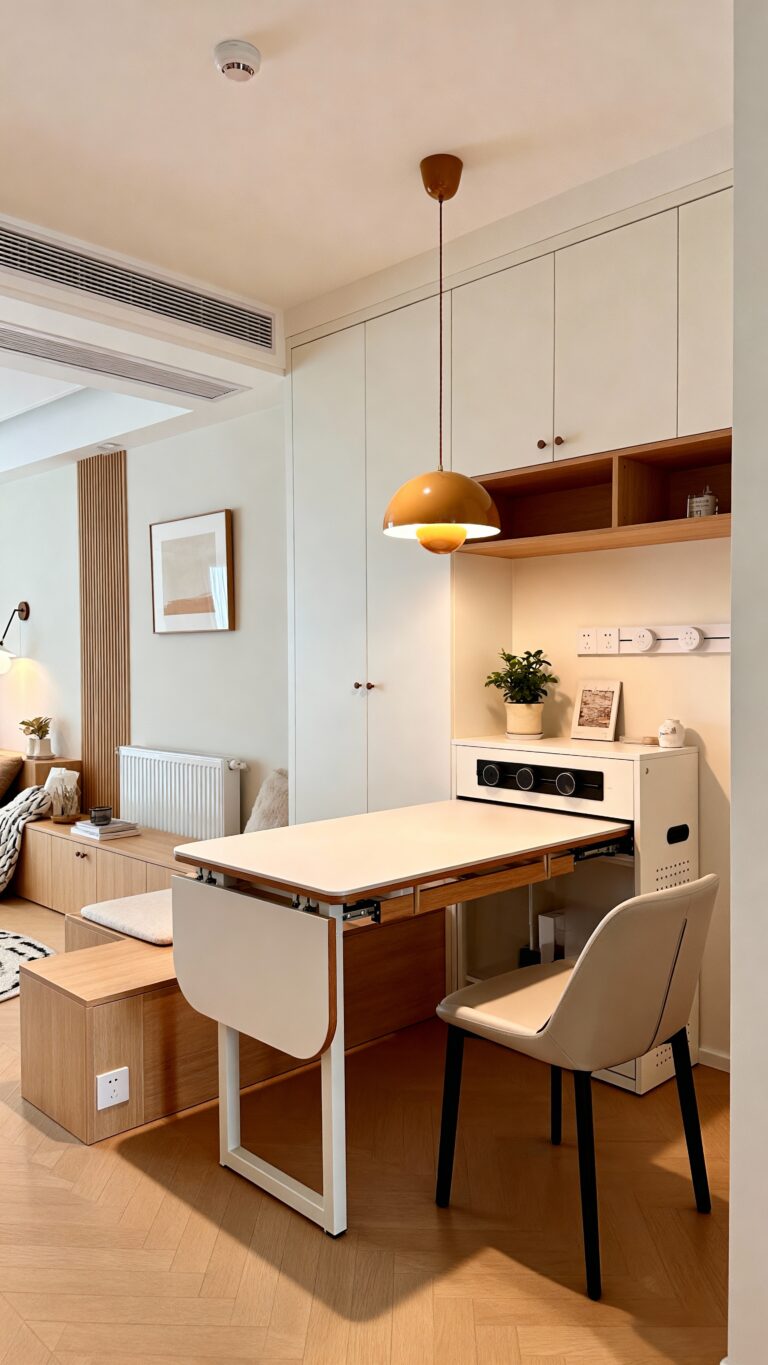
Narrow galley kitchens demand creative strategies to incorporate dining spaces without compromising your cooking workflow or visual appeal. You’ll maximize functionality by installing a fold-down table that doubles as extra prep space when needed. Consider peninsula extensions with bar-height seating to create defined dining zones while maintaining open sightlines.
Smart galley kitchen configurations include built-in banquettes with under-seat storage and slim console tables against walls. You’re optimizing compact dining when you choose multi-functional furniture like rolling carts that serve meals then store away. Wall-mounted drop-leaf tables provide instant dining surfaces without permanent floor space commitment. These compact dining table solutions ensure that even the smallest galley kitchen can accommodate comfortable meal spaces while preserving essential cooking areas.
L-Shaped Kitchen Dining Combos for Corner Efficiency
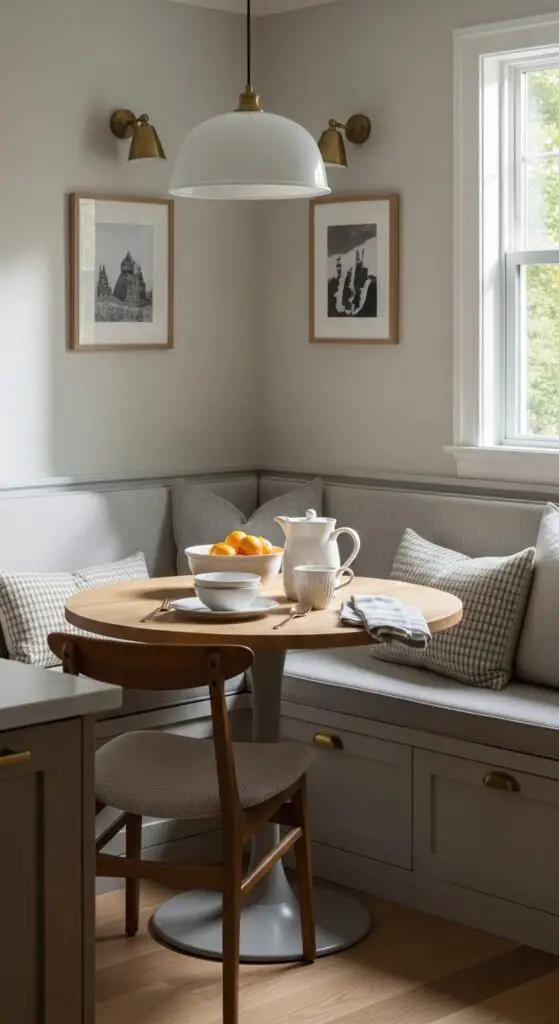
Corner configurations in L-shaped kitchens provide exceptional opportunities for integrating dining areas while maximizing your available square footage. You’ll find that corner space utilization becomes effortless when you position dining tables strategically within the L-shape’s natural flow.
Efficient table placement works best when you tuck compact round or square tables into the corner’s inner angle, creating intimate breakfast nooks. You can also extend one leg of your L-shape to accommodate longer rectangular tables for family meals.
Consider built-in banquette seating along walls to maximize floor space while maintaining comfortable dining capacity for your household’s needs.
Pass-Through Windows That Connect Separate Rooms
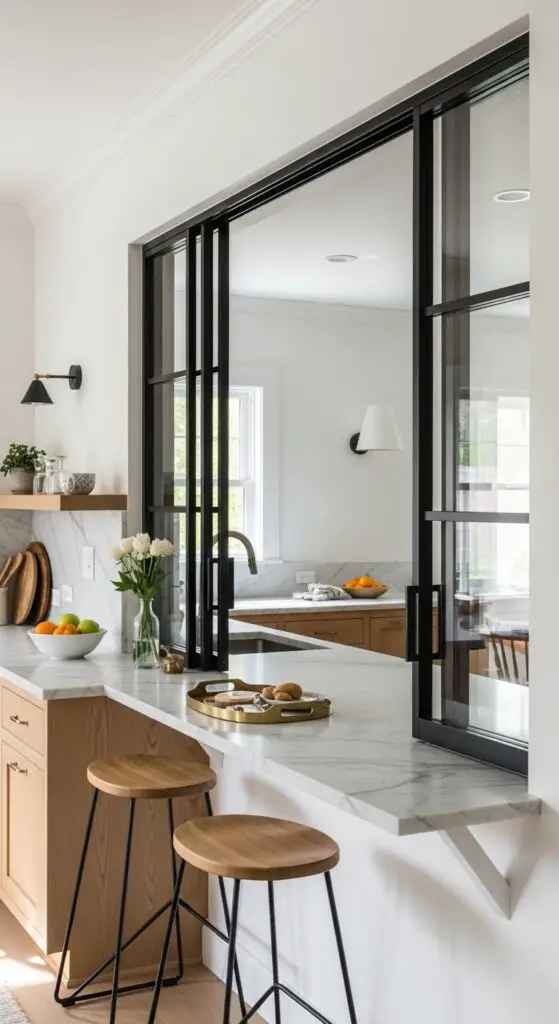
When you’re working with a completely separate kitchen and dining room, pass-through windows create seamless connections that alter how these spaces function together. You’ll uncover that pass through window functionality extends beyond simple serving—it enables conversation flow while maintaining distinct zones for cooking and dining.
Pass through window aesthetics can complement any design style, from rustic barn-style openings to sleek modern frames with sliding glass panels. You’re free to customize the opening size based on your serving needs and structural limitations. Consider adding a breakfast bar ledge or decorative shutters for enhanced versatility and visual appeal.
Multi-Level Surfaces for Prep, Cooking, and Eating
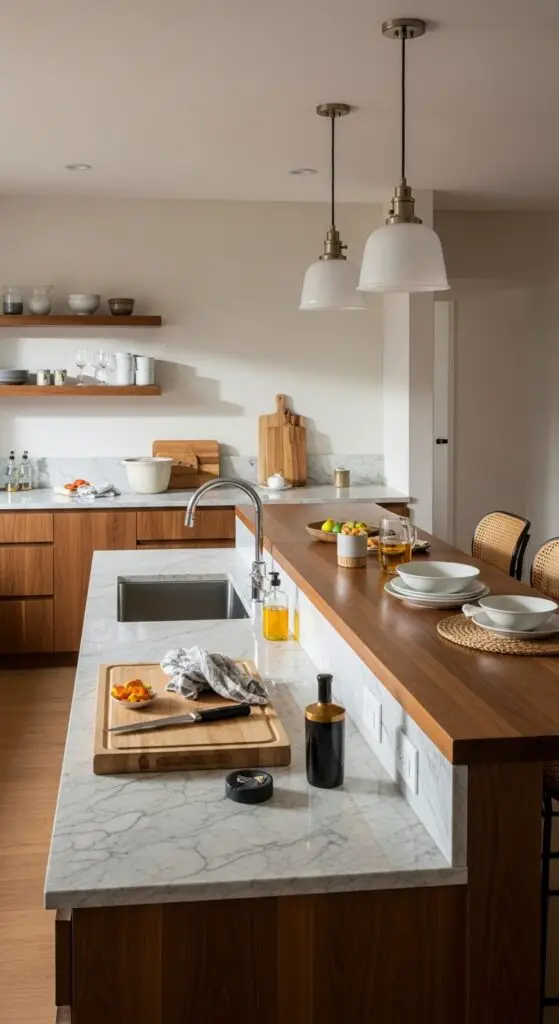
Multi-level surfaces alter your kitchen dining area into a highly functional workspace where different activities happen simultaneously without interference. You’ll create distinct zones by incorporating multi functional countertops at varying heights throughout your space. Install a standard 36-inch counter for food preparation, then add a 42-inch island for casual dining and cocktail service.
Elevated dining platforms work perfectly when you want to separate cooking from eating areas. You can build a raised section with bar-height seating that overlooks your main workspace. This design lets you interact with guests while maintaining clear boundaries between messy prep work and clean dining surfaces.
Flexible Furniture That Adapts From Kitchen to Dining
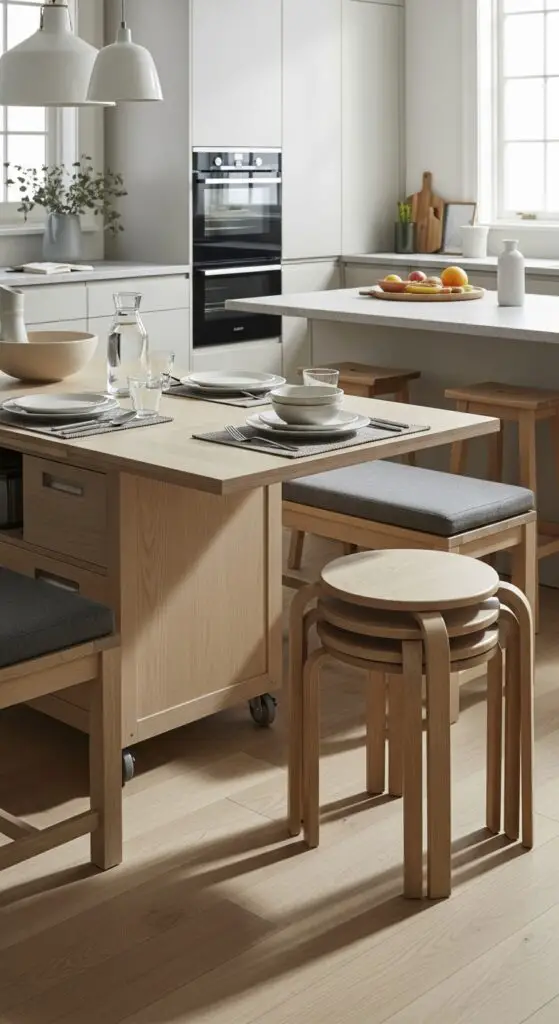
Smart furniture choices alter your kitchen dining area into a versatile space that seamlessly adapts to different activities throughout the day. Rolling kitchen islands with drop-leaf extensions metamorphose from prep stations to dining tables within seconds.
You’ll maximize functionality with bar-height tables that work for both casual meals and additional counter space. Modular seating arrangements let you reconfigure your layout instantly—think ottomans that store dishes or benches that tuck under tables.
Flexible furniture configurations include expandable dining tables and stackable stools that vanish when you’re cooking. These adaptable pieces give you complete control over your space’s purpose.
Color Schemes That Unify Kitchen and Dining Areas
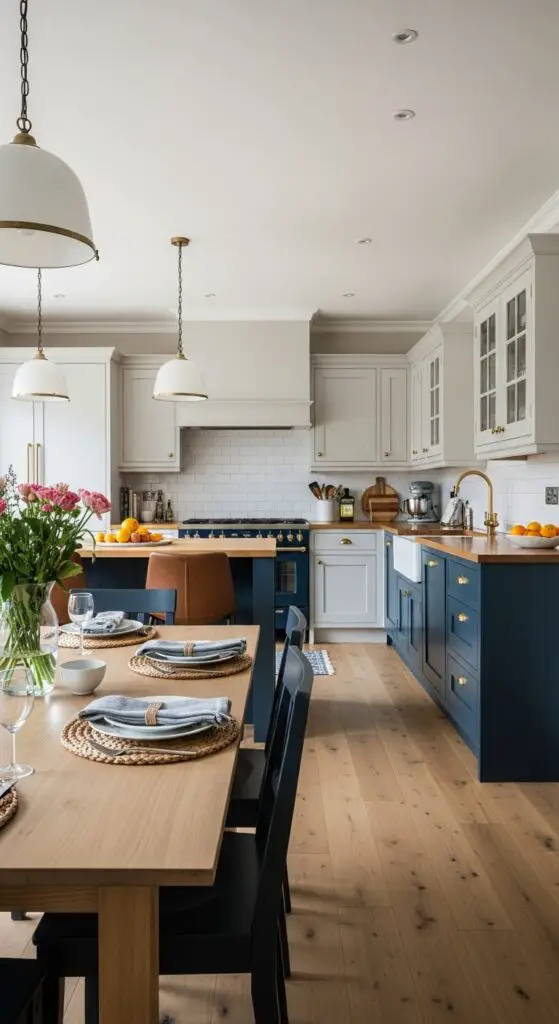
Although open-concept kitchens and dining rooms share the same physical space, creating visual harmony between these areas requires thoughtful color coordination that flows naturally from one zone to the adjacent.
You’ll achieve seamless shifts by selecting a dominant neutral base like warm white or soft gray, then adding accent colors that appear in both spaces. Harmonizing color palettes works best when you repeat three colors throughout—perhaps navy cabinets, brass hardware, and cream walls. Complementary material choices like matching wood tones or consistent metal finishes strengthen your unified design while maintaining each area’s distinct personality.
Lighting Design That Works for Both Cooking and Dining
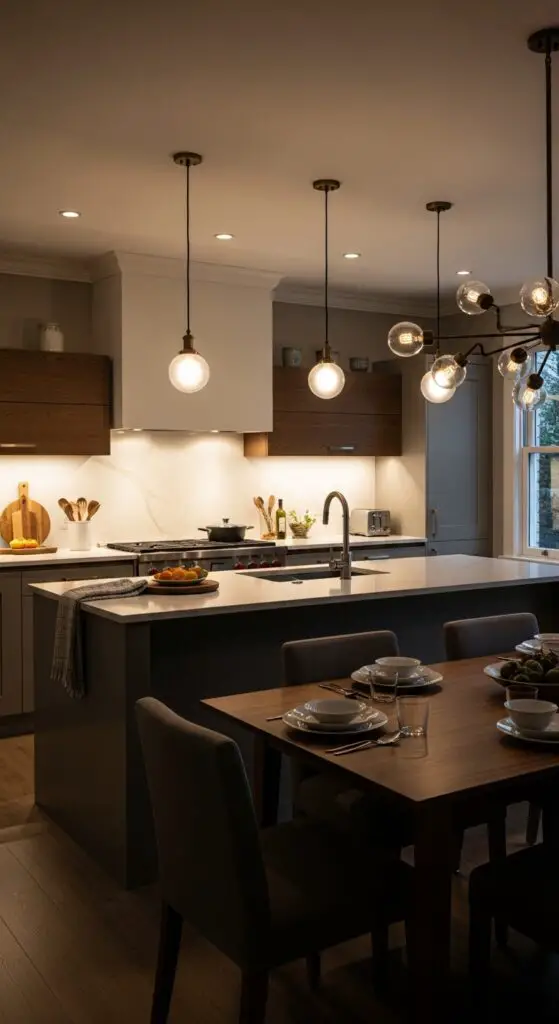
Successful lighting creates distinct moods for meal preparation and dining experiences while ensuring adequate illumination throughout your combined space. Strategic task lighting placement over work zones—including under-cabinet strips and pendant lights above islands—provides focused brightness where you’re chopping, cooking, and cleaning. Install dimmer switches to alter these functional fixtures into softer accent pieces during dinner.
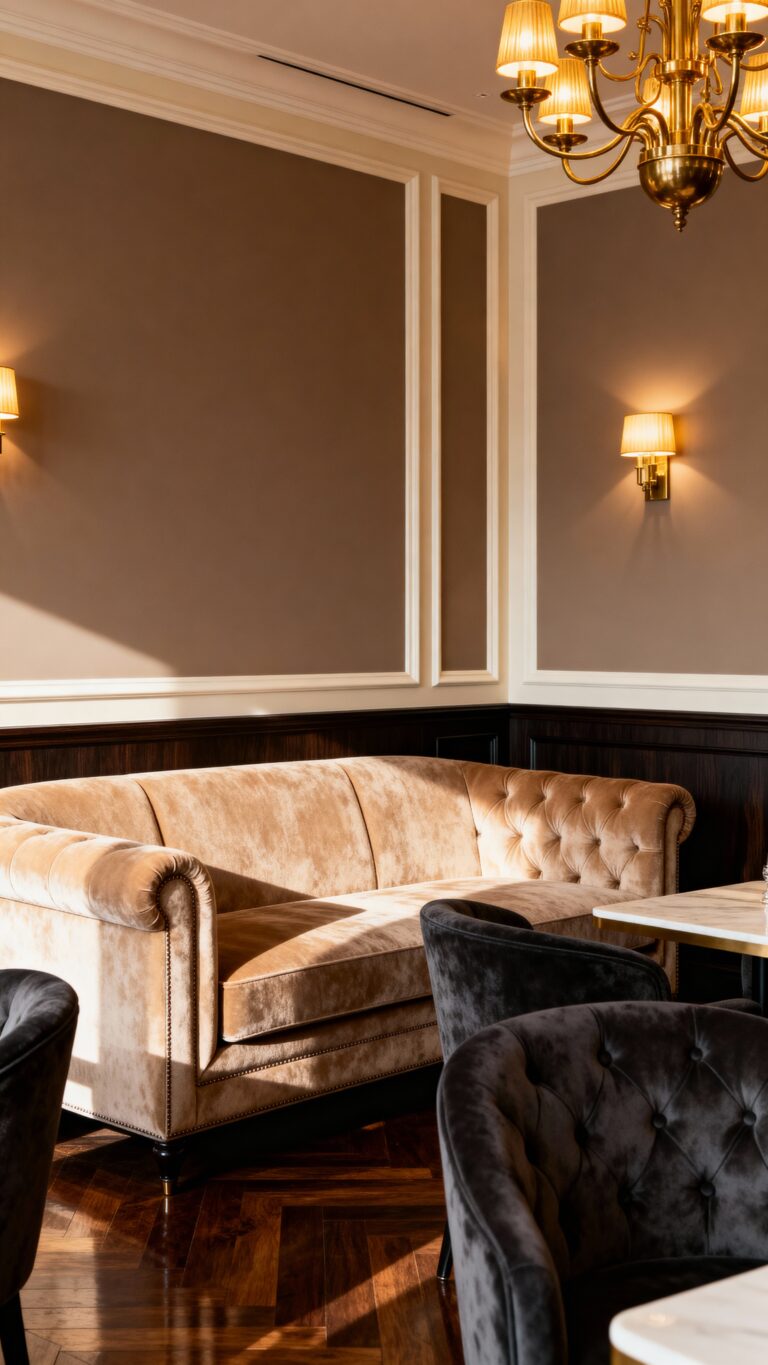
Balance this with ambient lighting through recessed ceiling fixtures or track lighting that evenly distributes general illumination. Add a statement chandelier or pendant cluster above your dining table to define the eating area while creating visual interest that complements your kitchen’s aesthetic.
Storage Solutions That Serve Kitchen and Dining Needs
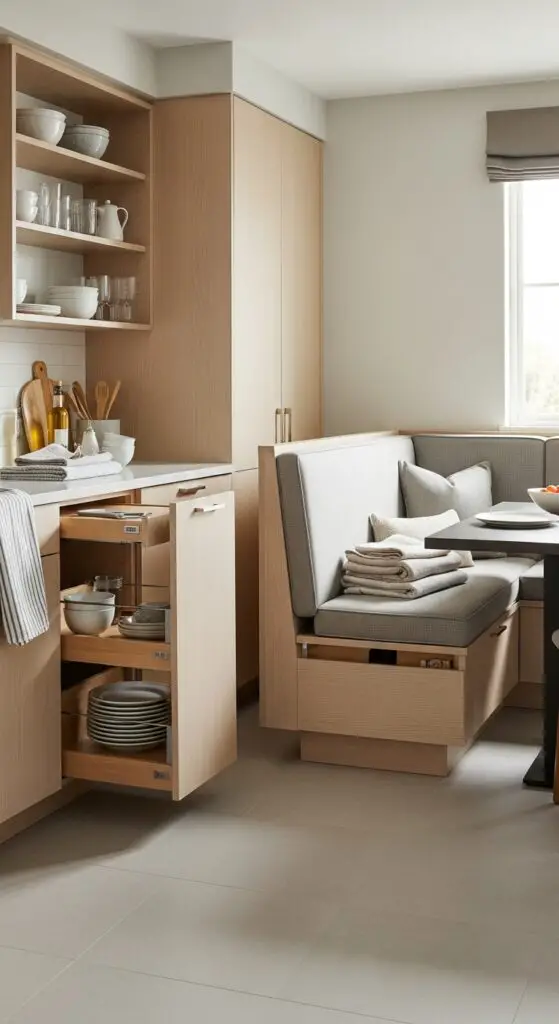
Maximizing storage in your kitchen-dining combination requires strategic solutions that accommodate both culinary essentials and dining accessories without creating visual clutter. Counter height shelving creates perfect zones for displaying dishes while storing everyday items within easy reach.
You’ll love how multipurpose cabinetry converts dead space into functional areas that serve both cooking and entertaining needs. Install pull-out drawers in lower cabinets to access heavy pots and serving platters effortlessly. Consider built-in banquettes with hidden storage underneath for linens, seasonal dishes, or small appliances you don’t use daily but need accessible.
Layout Mistakes to Avoid in Kitchen Dining Combinations
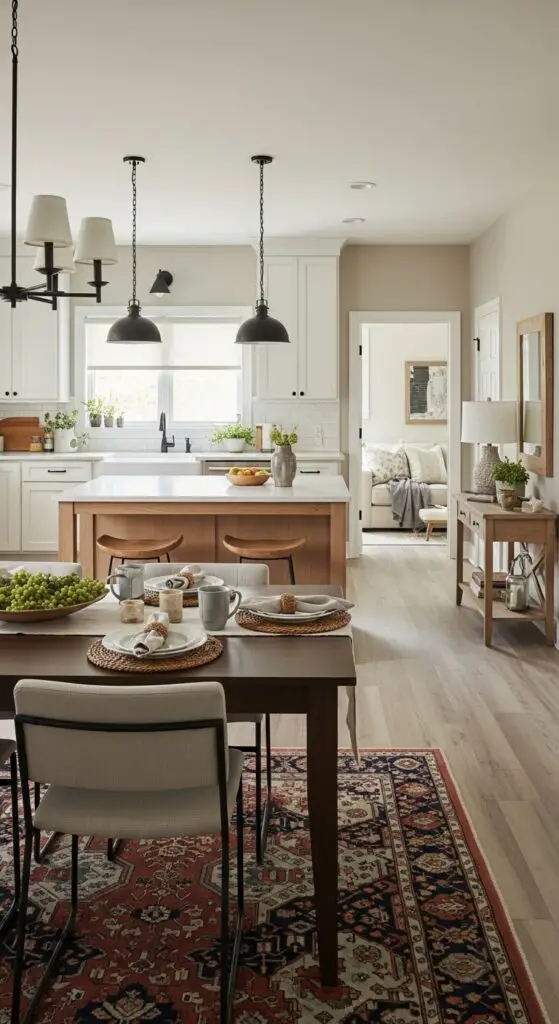
When planning your kitchen-dining combination, certain layout errors can alter your dream space into a daily source of frustration and inefficiency. Cramped layouts create the biggest headache, forcing you to squeeze past chairs while carrying hot dishes. You’ll want at least 36 inches between your kitchen island and dining table for comfortable movement.
Unbalanced zones represent another common mistake. Don’t position your dining area directly in the kitchen’s work triangle. This creates chaos during meal prep when family members gather. Instead, designate clear boundaries using lighting, rugs, or furniture placement to maintain each zone’s distinct purpose.
Conclusion
You’ll create the perfect kitchen-dining blend by choosing layouts that match your space and lifestyle needs. Focus on functional elements like islands, banquettes, and strategic lighting that serve both cooking and dining purposes. Don’t forget to maintain visual flow through consistent color schemes and smart storage solutions. With thoughtful planning and these proven design strategies, you’ll alter your kitchen into a welcoming space that brings family and friends together naturally.