13 Outdoor Kitchen Garden Ideas That Blend Nature and Design
Nature meets culinary artistry in these innovative outdoor kitchen garden designs that transform cooking spaces into stunning, functional landscapes.
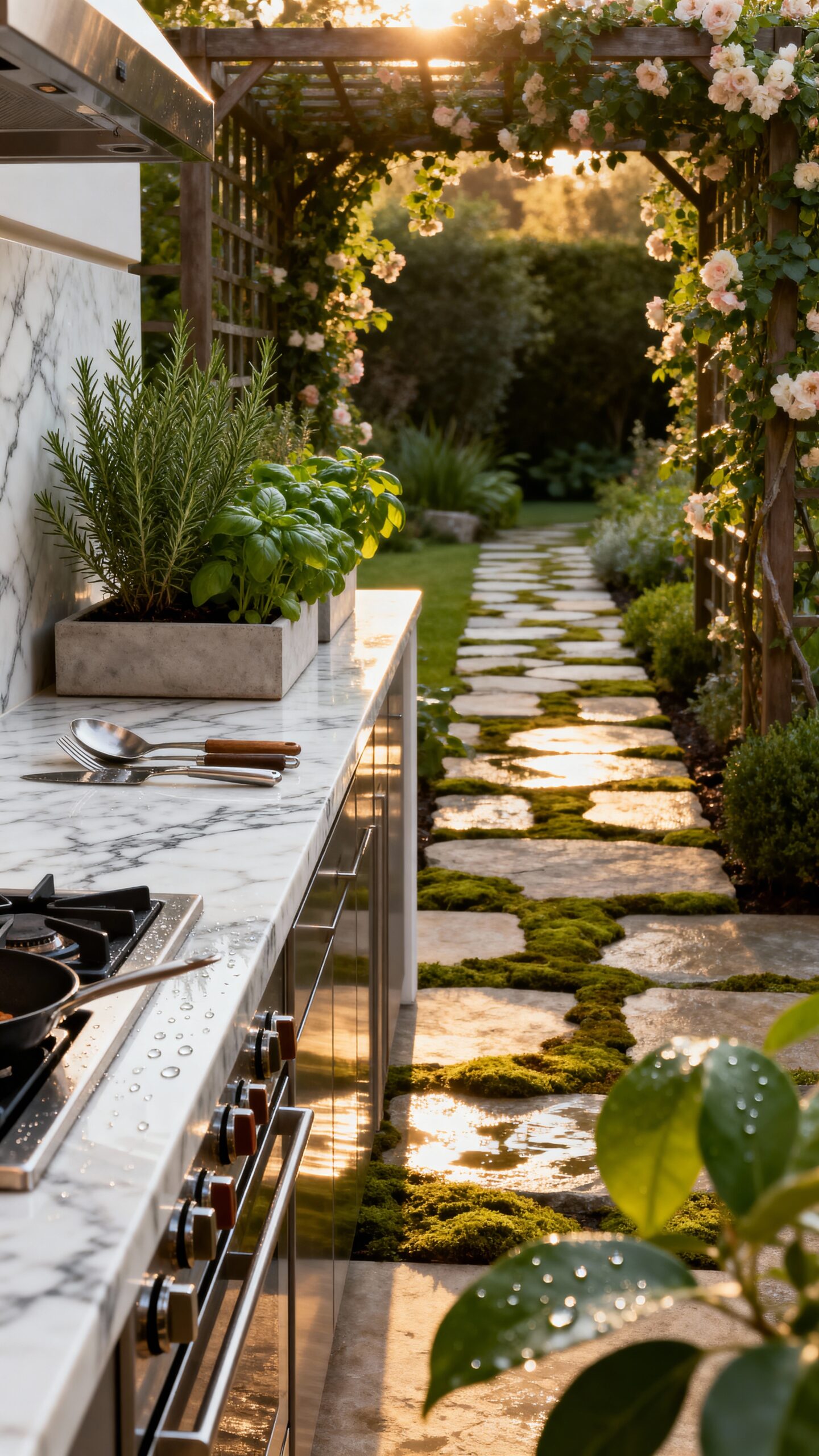
You can modify your outdoor cooking space into a living, breathing extension of your home by thoughtfully integrating edible gardens with functional design elements. These thirteen innovative approaches combine practical growing solutions with aesthetic appeal, creating spaces where fresh ingredients grow within arm’s reach of your grill and prep areas. From vertical herb walls that maximize small spaces to fire-safe plantings around pizza ovens, each concept addresses specific outdoor kitchen challenges while enhancing your connection to nature and elevating your culinary experience.
Vertical Herb Wall Gardens for Small Spaces
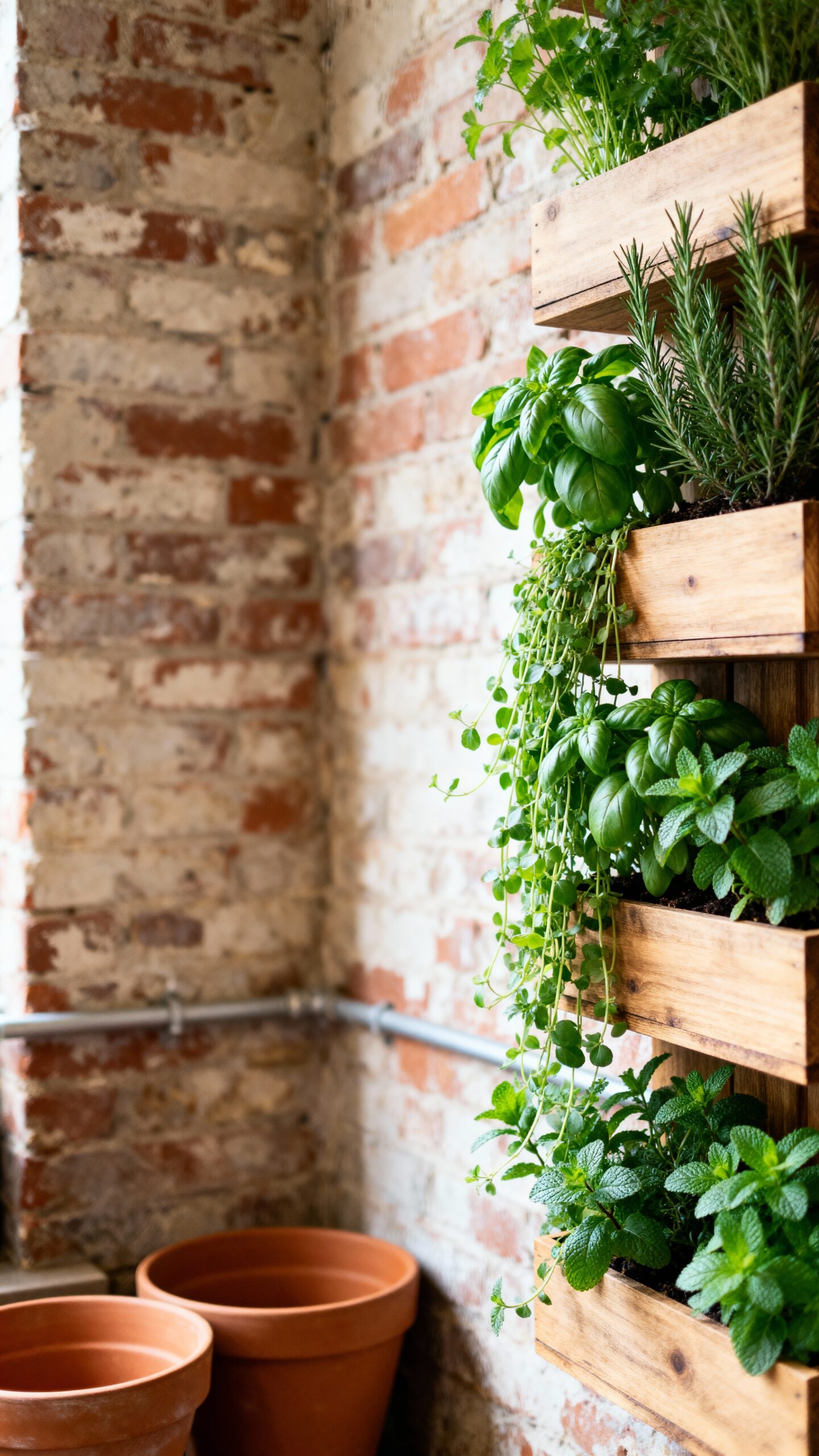
When you’re working with limited outdoor space, vertical herb wall gardens convert even the smallest patios into productive culinary havens. You’ll maximize growing potential by installing vertical wall trellis systems that support climbing herbs like oregano and thyme. These systems create layers of growing space without sacrificing floor area.
Consider incorporating micro greens hydroponic modules for quick-harvest crops like basil and cilantro. You can mount these self-contained units at eye level for easy maintenance and harvesting. This approach gives you complete control over your herb selection while creating an attractive living wall that serves both aesthetic and practical purposes.
Adding a pergola structure above your vertical herb garden provides essential shade protection while creating an attractive architectural framework that enhances the overall design appeal.
Raised Bed Zones That Define Cooking Areas
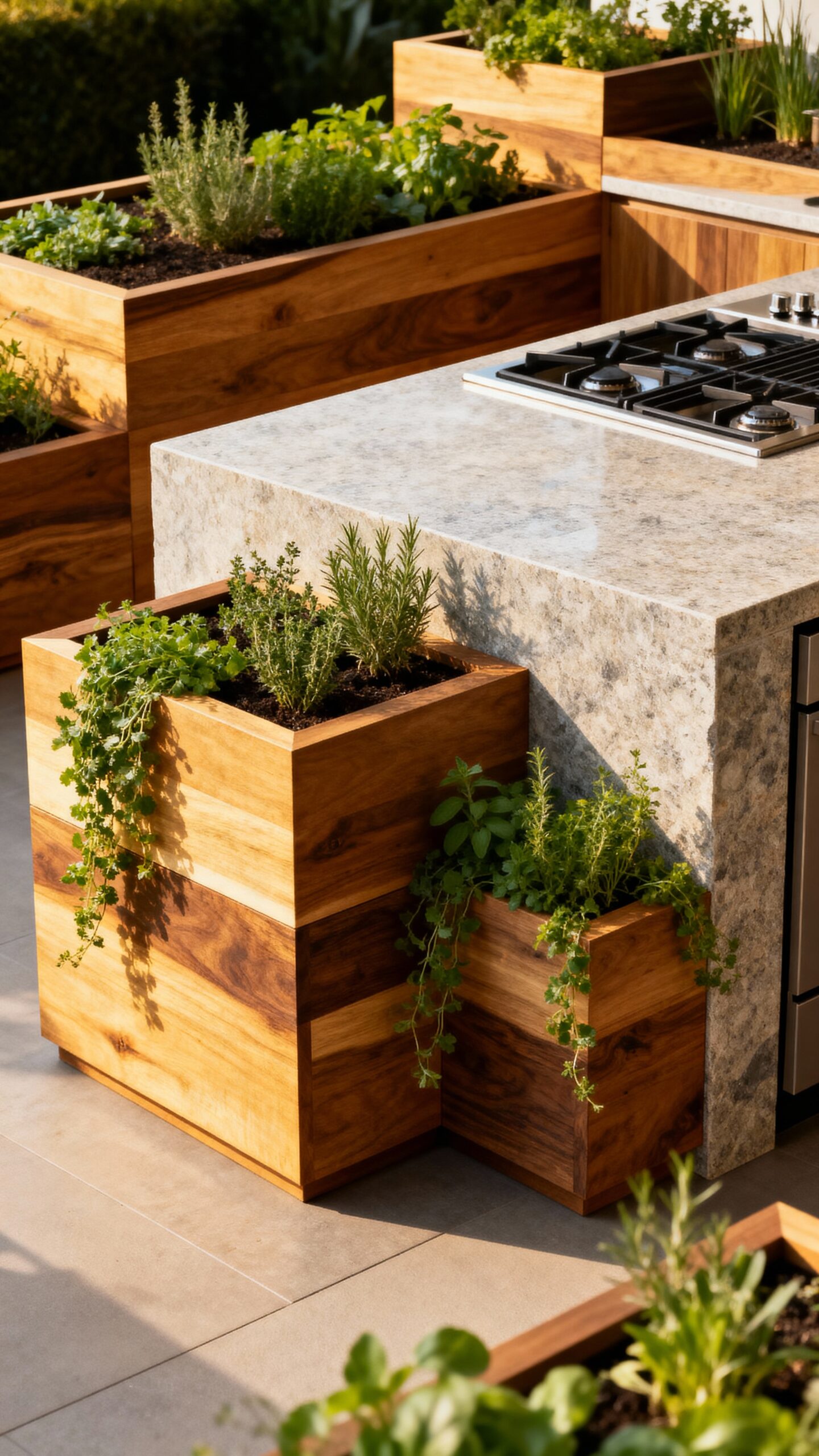
Strategic raised bed placement alters your outdoor kitchen into distinct functional zones while keeping fresh ingredients within arm’s reach of your cooking station. Create raised bed zones for meal planning by positioning herb boxes near prep areas and vegetable plots beside grilling stations. You’ll enjoy seamless cooking flow when basil grows three feet from your pizza oven and tomatoes ripen beside your outdoor sink.
Design raised bed zones with decorative borders using natural stone, reclaimed wood, or metal edging that complements your kitchen’s aesthetic. These boundaries define spaces while preventing soil spillage, creating organized zones that feel intentional rather than scattered. Consider an L-shaped layout for your raised bed arrangement to mirror efficient kitchen design principles that maximize both growing space and cooking workflow.
Living Pergola With Climbing Edibles
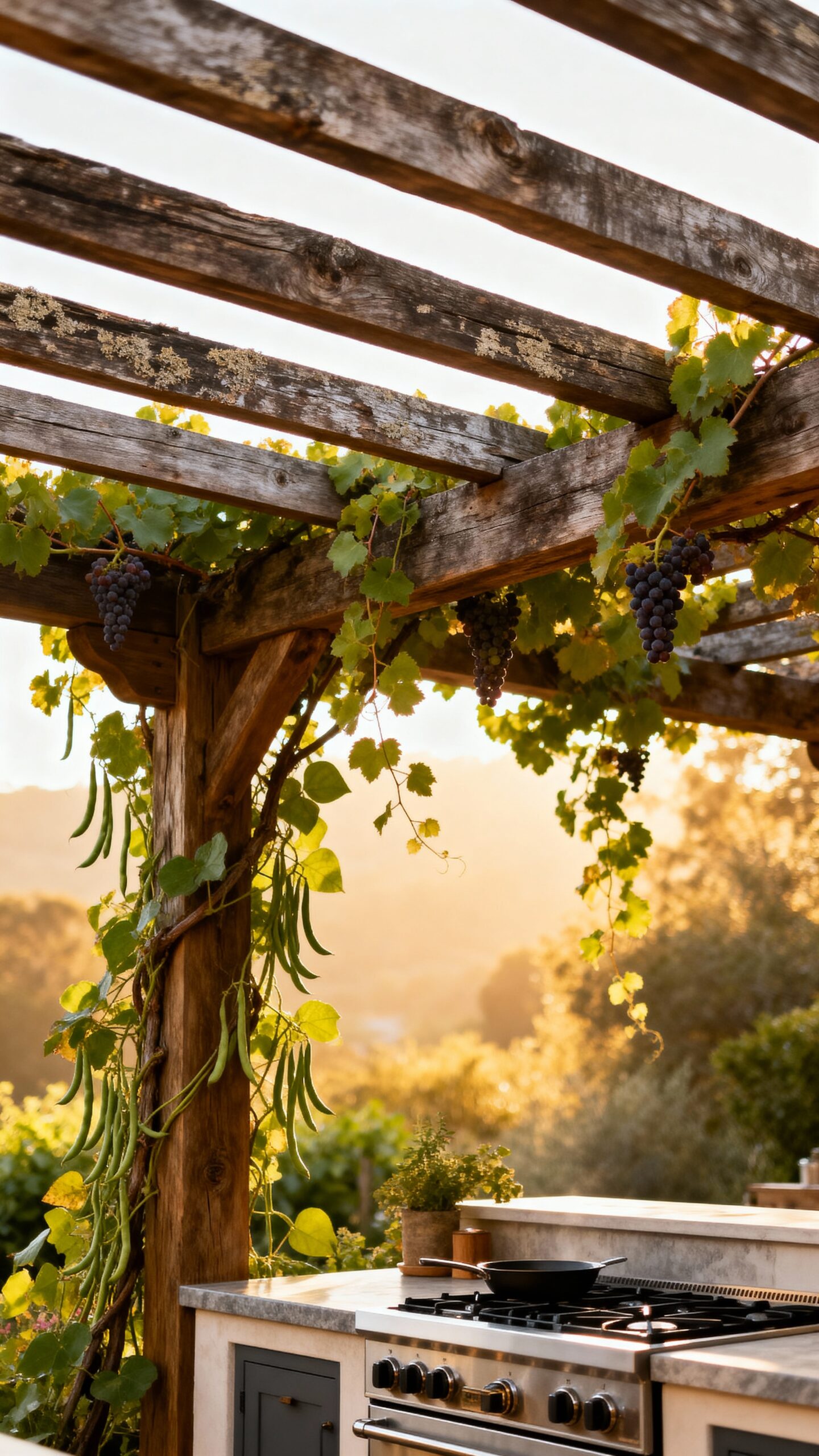
A living pergola alters your outdoor kitchen into a productive vertical garden that provides both shade and fresh ingredients throughout the growing season. You’ll create natural boundaries while maximizing your growing space overhead.
Train grape vines along sturdy beams for future harvests and instant privacy from neighbors. Hardy kiwi and passion fruit vines establish lush evergreen coverage that stays beautiful year-round. Fragrant flowering climbers like jasmine and honeysuckle attract beneficial pollinators to your garden space.
Install wire mesh panels between posts to support lighter climbers such as peas, beans, and cucumbers for easy picking during meal preparation. Consider positioning your Blackstone griddle beneath or adjacent to the pergola for convenient access to fresh herbs and vegetables while cooking.
Stone-Edged Mediterranean Herb Spirals
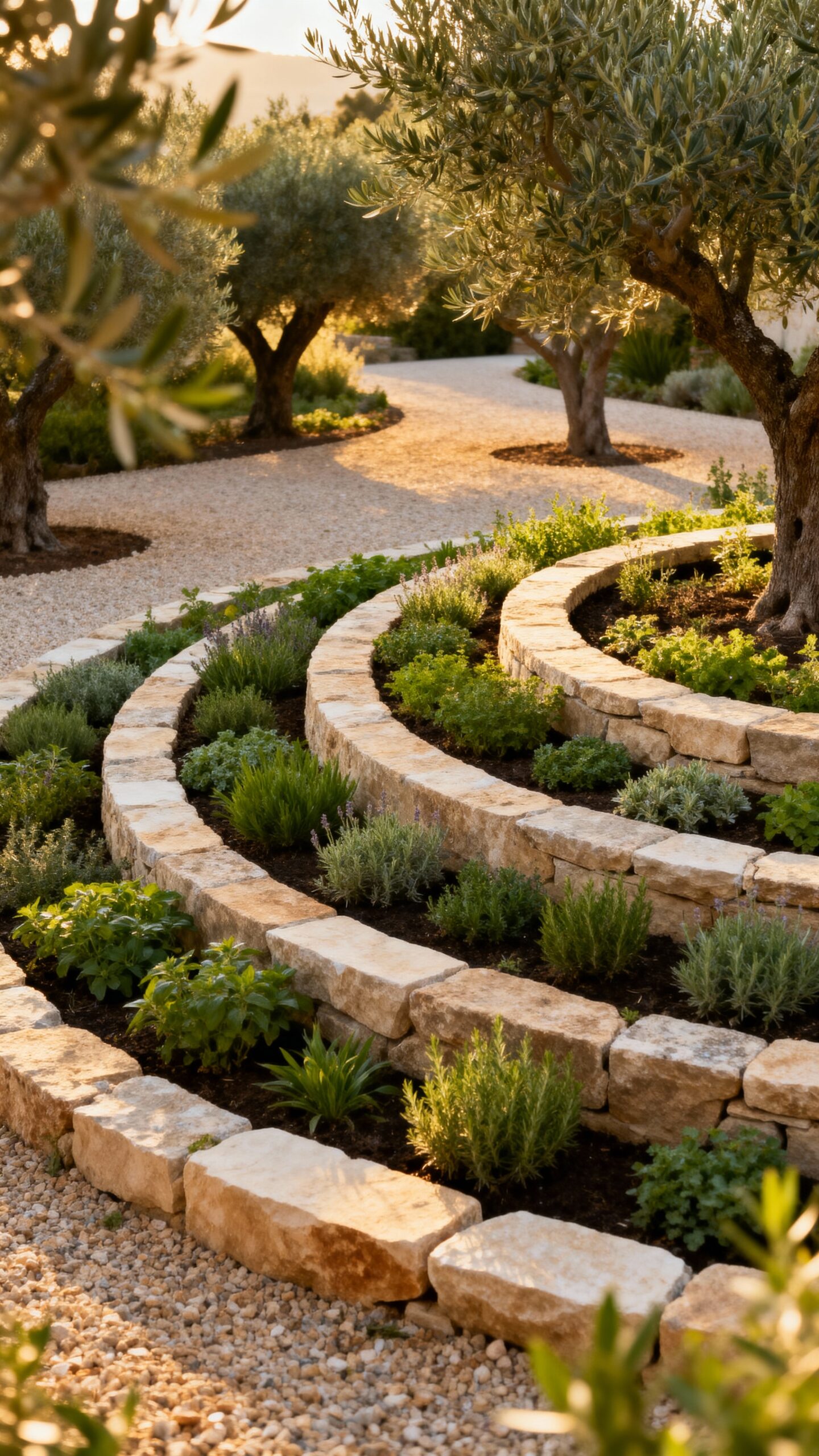
Stone-edged herb spirals bring Mediterranean flavors directly to your outdoor kitchen while creating stunning designer features that maximize growing space in compact areas.
You’ll construct ascending stone edged terraces that follow spiral garden patterns, placing heat-loving herbs like rosemary and oregano at the sunny top while positioning moisture-loving basil and parsley in the cooler bottom sections.
This design creates distinct microclimates within one compact structure, letting you grow diverse herbs in perfect conditions. You’ll harvest fresh ingredients steps from your cooking area while enjoying a sculptural garden element that becomes your outdoor kitchen’s centerpiece. Incorporate dedicated storage solutions nearby to keep harvesting tools, herb drying equipment, and garden supplies easily accessible yet neatly organized.
Integrated Planter Islands Around Grilling Stations
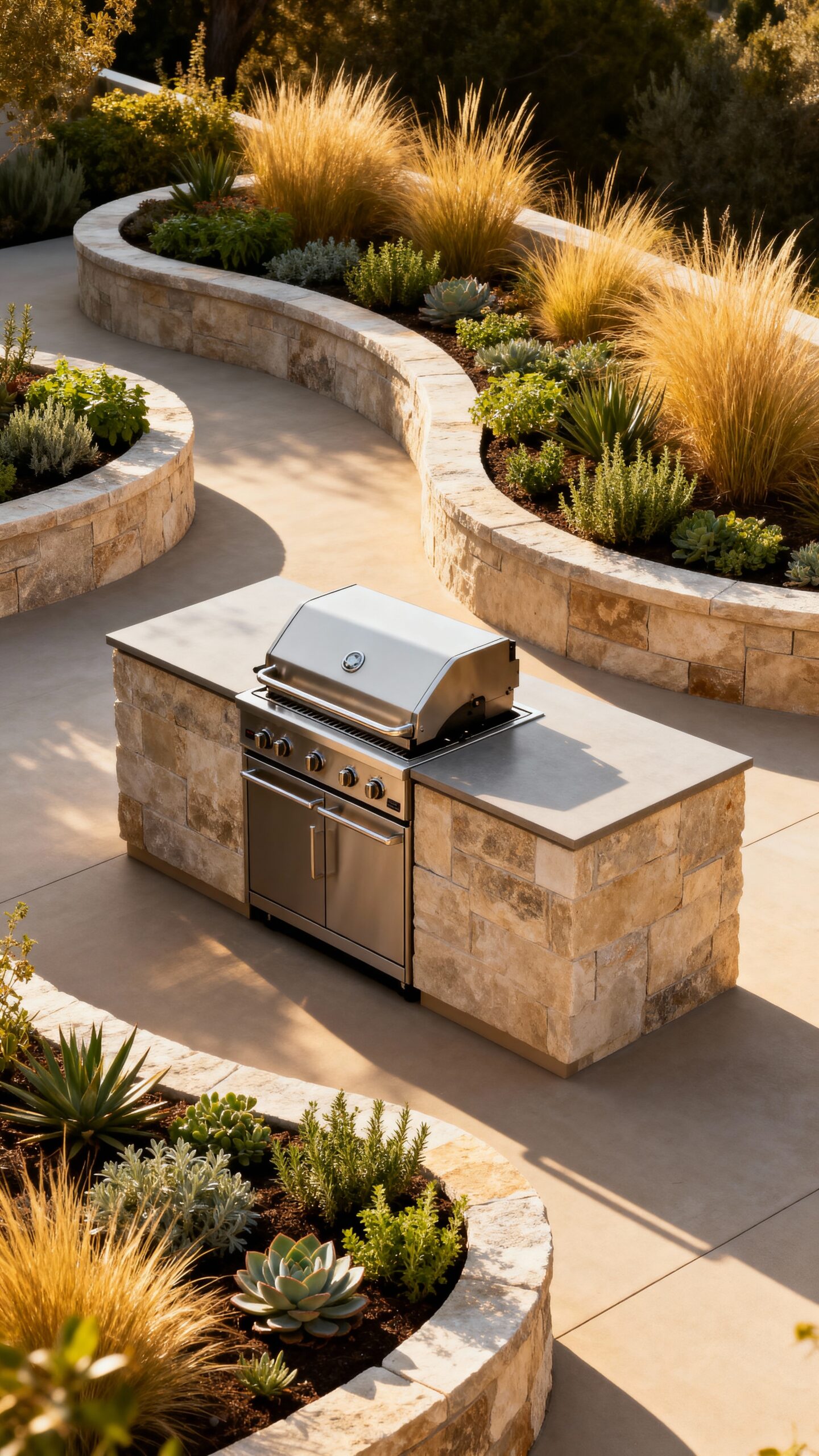
Built-in planter islands convert your grilling station into a functional culinary workspace where fresh ingredients grow within arm’s reach of your cooking surface. You’ll create an efficient outdoor kitchen by positioning raised planters at varying heights around your grill’s perimeter.
Plant quick-growing herbs like basil, cilantro, and oregano in closest proximity for immediate harvesting while cooking. Design curved seating arrangements that flow naturally around these garden islands, encouraging guests to gather and interact.
Add overhead pergolas or umbrellas to establish shaded dining nooks where family can relax while enjoying meals prepared with freshly picked ingredients. Create a dedicated bar area within your planter island design to enhance the entertaining experience for both casual dining and formal gatherings.
Tiered Garden Steps Leading to Outdoor Kitchens
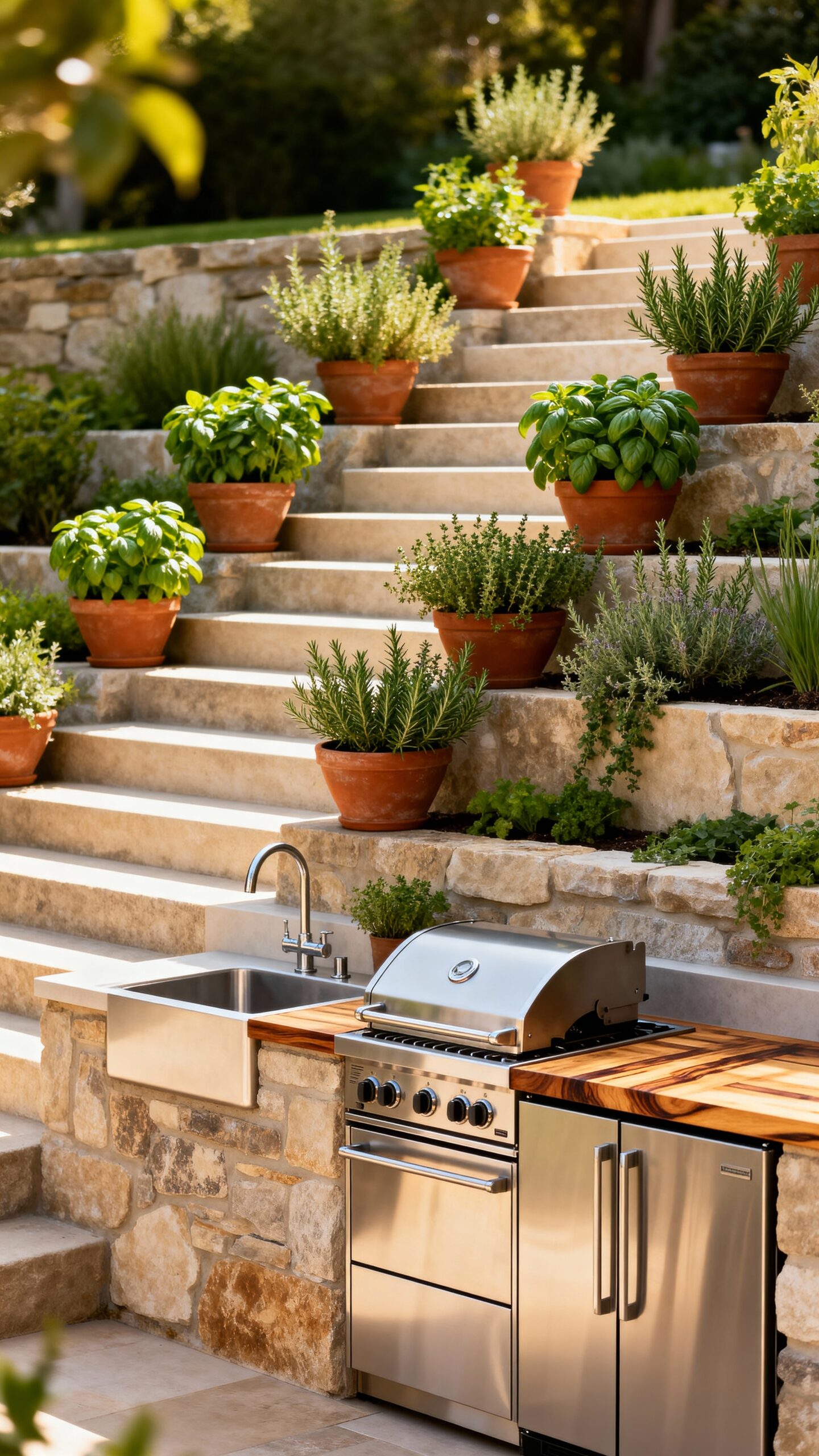
Cascading garden steps metamorphose the expedition to your outdoor kitchen into a living showcase of culinary ingredients that cultivate anticipation with every level you ascend. Design tiered planting levels that feature herbs on the highest step, vegetables in middle sections, and fragrant flowers along the bottom tier.
You’ll create multilayered garden tiers that serve both aesthetic and functional purposes while establishing natural shifts between spaces. Plant Mediterranean herbs like rosemary and thyme on upper levels where drainage excels. Position leafy greens and compact vegetables in central zones, then finish with colorful edible flowers that welcome guests. Consider incorporating durable tiles along step edges and pathways to create seamless transitions that withstand outdoor elements while maintaining visual cohesion with your kitchen design.
Portable Rolling Garden Carts for Flexibility
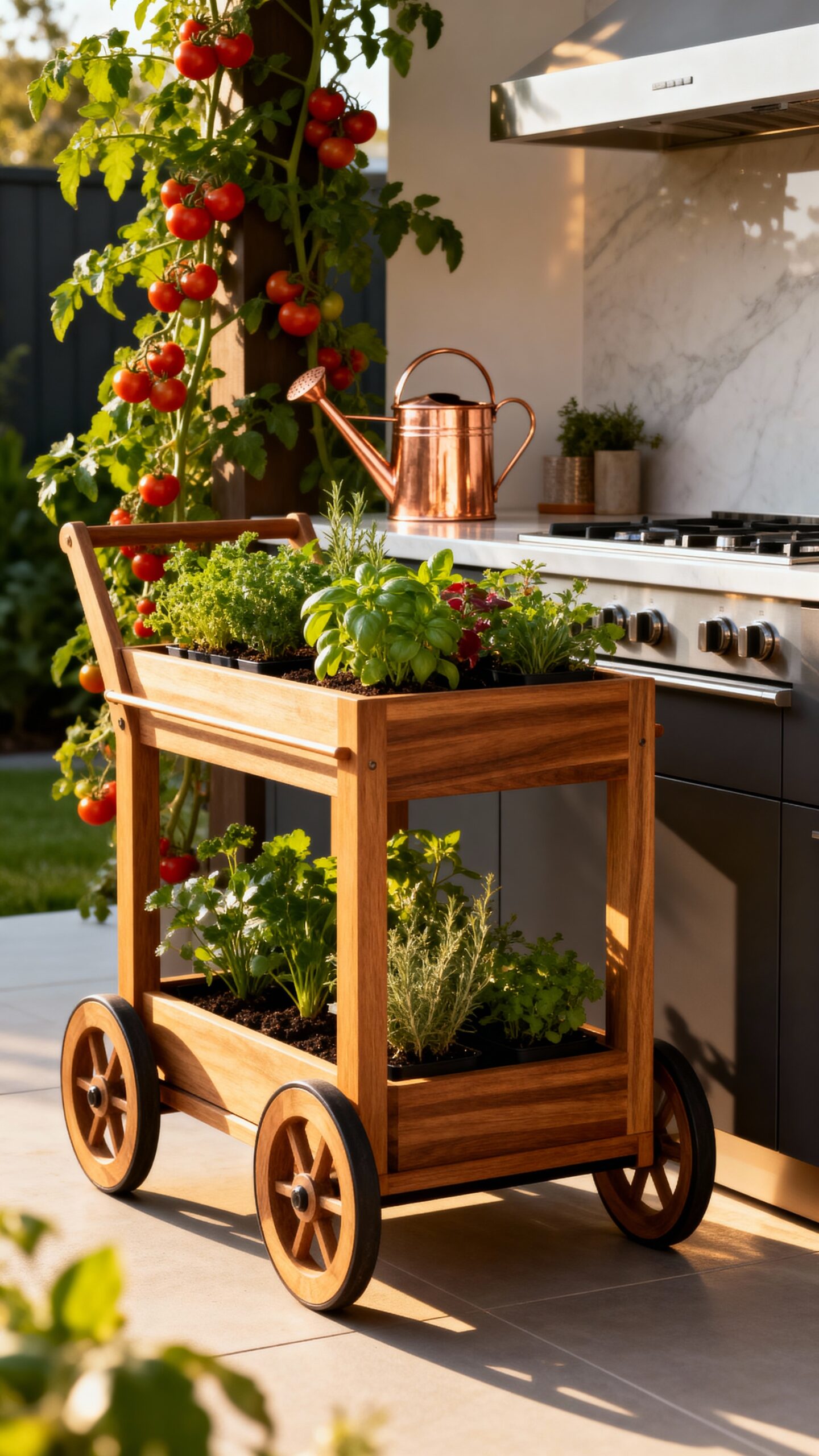
Mobile garden carts alter your outdoor kitchen experience by bringing fresh ingredients directly to your cooking station whenever you need them. You’ll find unparalleled flexibility when you can relocate herbs, vegetables, and cooking essentials based on sunlight patterns, weather conditions, or entertaining needs.
Consider wheeled vegetable planters that hold tomatoes, peppers, and leafy greens at perfect harvesting height. Rolling compost bins complement these systems by processing kitchen scraps into nutrient-rich soil amendments. You can position these mobile units strategically around your outdoor kitchen, then move them seasonally for ideal growing conditions while maintaining easy access.
Natural Stone Pathways Through Edible Landscapes
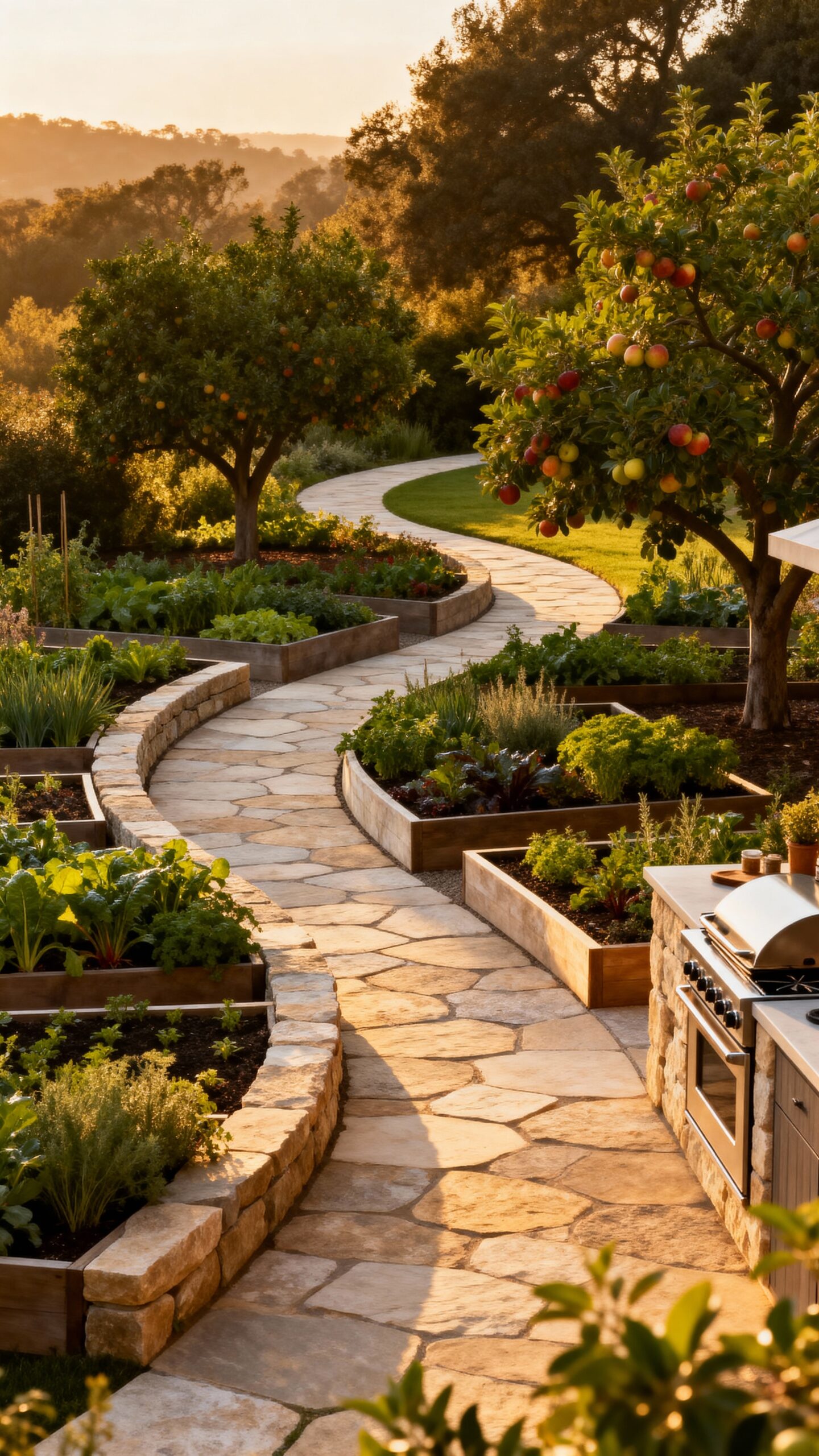
Pathways alter your outdoor kitchen garden from a collection of scattered plantings into a cohesive, navigable environment that invites exploration and harvesting. Natural stone creates durable surfaces that complement your edible scenery’s organic beauty while providing practical access to herbs and vegetables.
Install rustic rock edging along pathway borders to define walking areas and prevent soil erosion. Choose local fieldstone or weathered limestone for authentic character that ages gracefully outdoors.
Design meandering gravel trails between raised beds to encourage leisurely strolls through your garden sanctuary. These curved paths create visual interest while allowing easy maintenance access to all growing areas.
Built-In Window Box Gardens for Easy Access
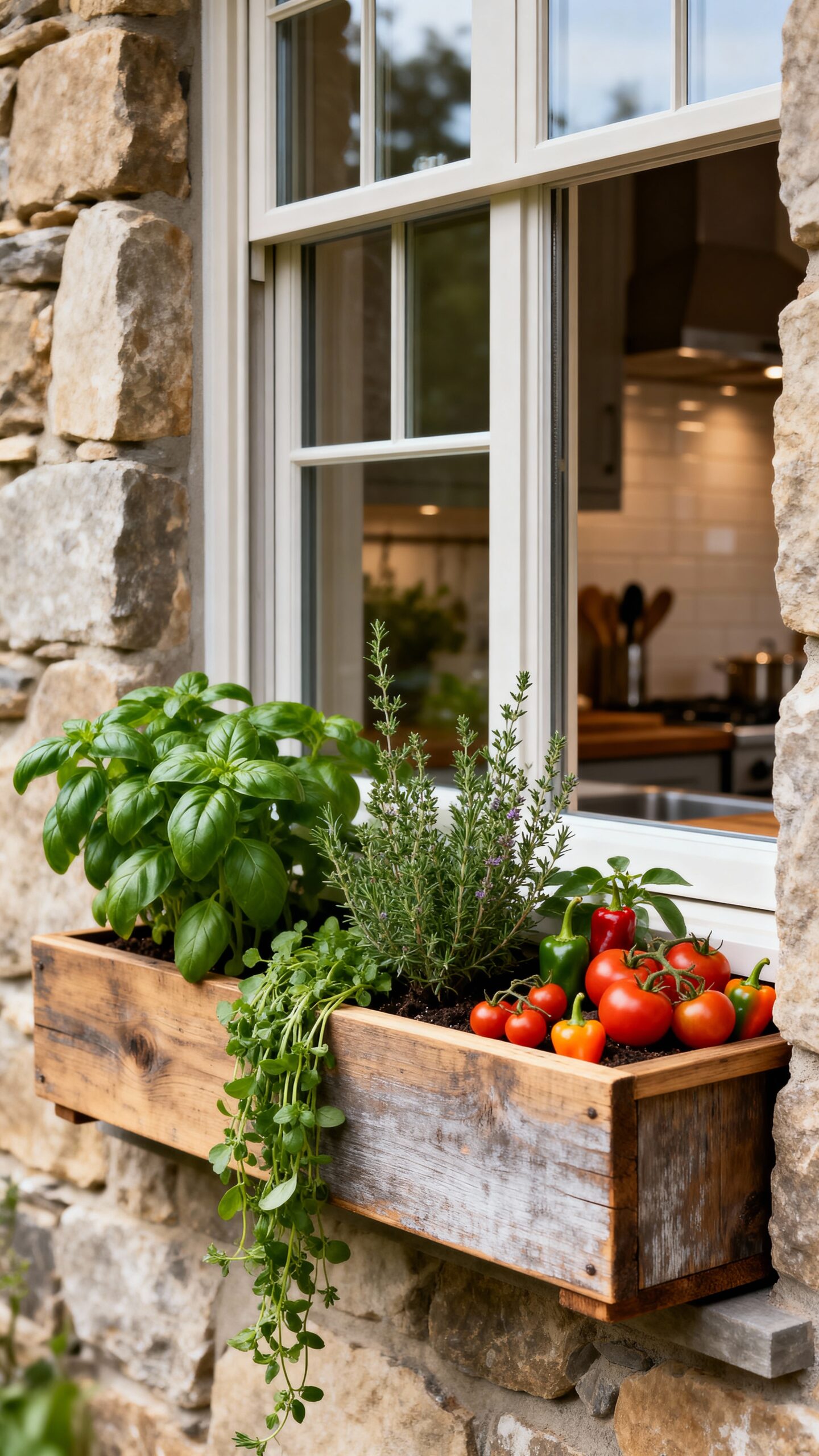
When you position window box gardens near your outdoor kitchen, you’ll create an herb and vegetable station that’s both functional and visually appealing. These raised planters eliminate bending while keeping fresh ingredients within arm’s reach during meal preparation.
Install boxes at counter height alongside built in bench seating to maximize your kitchen’s efficiency. Design multipurpose potting nooks beneath the boxes for storing tools and extra soil. Choose herbs like basil, oregano, and thyme that you’ll use frequently. Mount sturdy brackets that support soil weight and provide proper drainage through pre-drilled holes for healthy plant growth.
Corner Greenhouse Extensions for Year-Round Growing
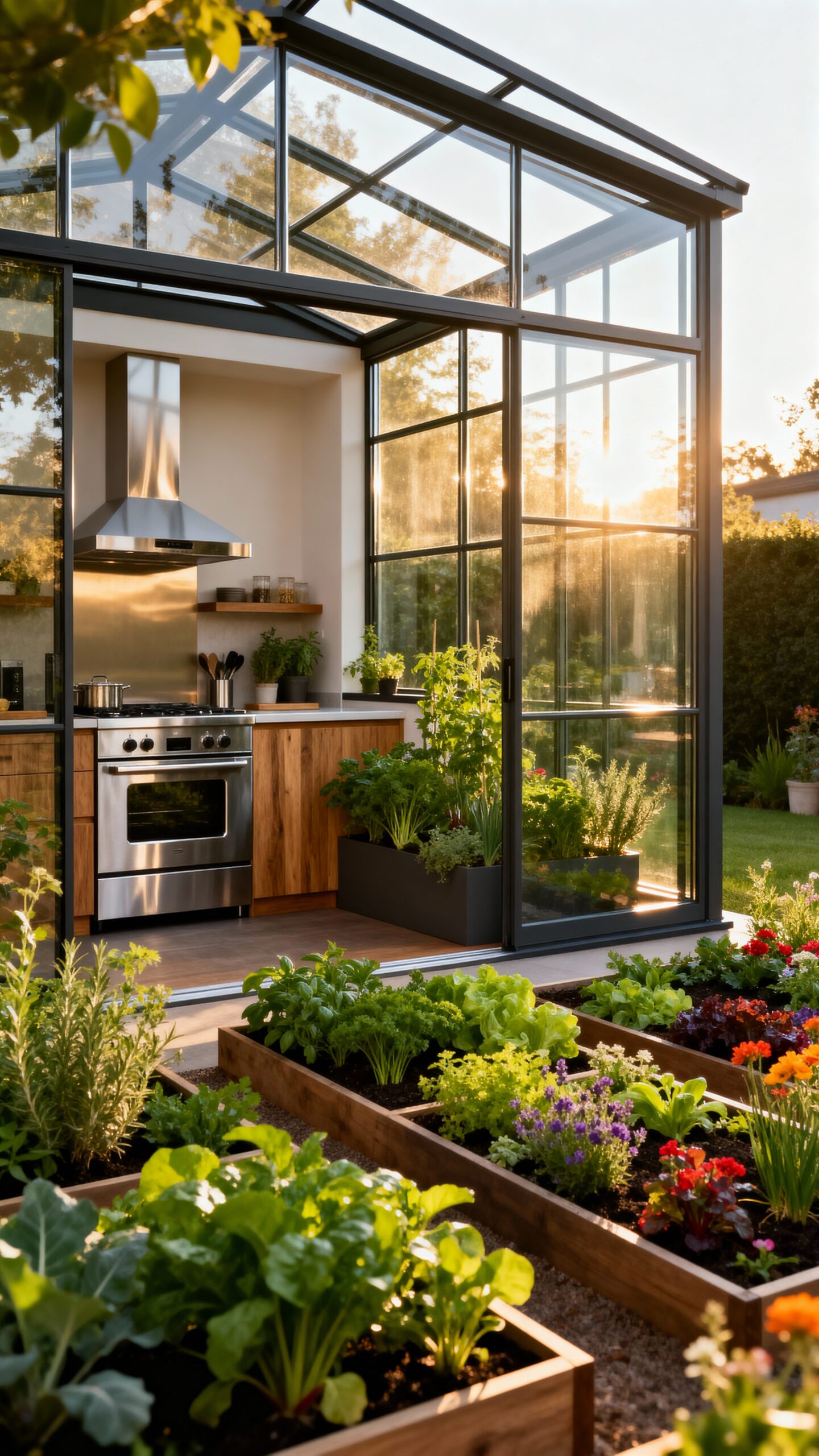
Why limit your outdoor kitchen garden to seasonal growing when corner greenhouse extensions can provide fresh produce throughout the entire year? These season extending greenhouse structures attach seamlessly to your existing outdoor kitchen, creating a protected microenvironment for tender herbs and vegetables. You’ll harvest fresh basil in January and grow lettuce during winter months without depending on grocery stores.
Position cold frame vegetable protectors along the greenhouse perimeter for additional growing space. These compact units protect seedlings from harsh weather while maintaining easy access for daily harvesting. Corner greenhouse extensions maximize unused space while giving you complete control over your food production schedule.
Fire-Safe Herb Gardens Around Pizza Ovens
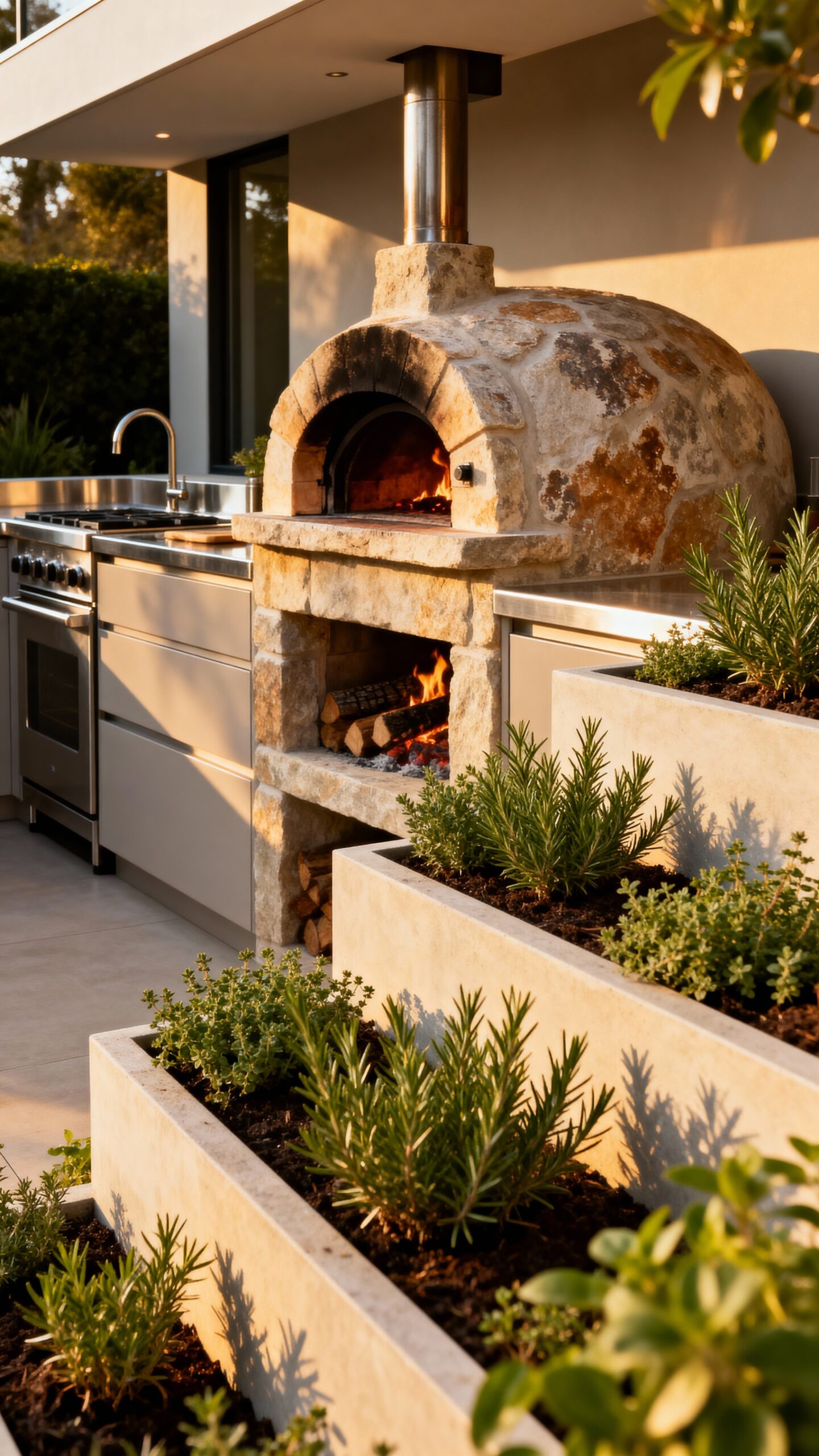
Smart placement alters your pizza oven area into a productive herb garden that enhances both safety and culinary convenience. You’ll want fireproof plant selections like rosemary, thyme, and lavender positioned at least six feet from your oven’s opening. These hardy herbs naturally resist heat while providing fresh ingredients for your cooking expeditions.
Create flame retardant landscaping layouts using stone pathways and gravel beds between plants and heat sources. Mediterranean herbs thrive in these conditions and won’t ignite easily.
Position taller herbs like sage farther back, with low-growing oregano closer to walkways for easy harvesting during your outdoor cooking sessions.
Water Feature Gardens With Aquatic Vegetables
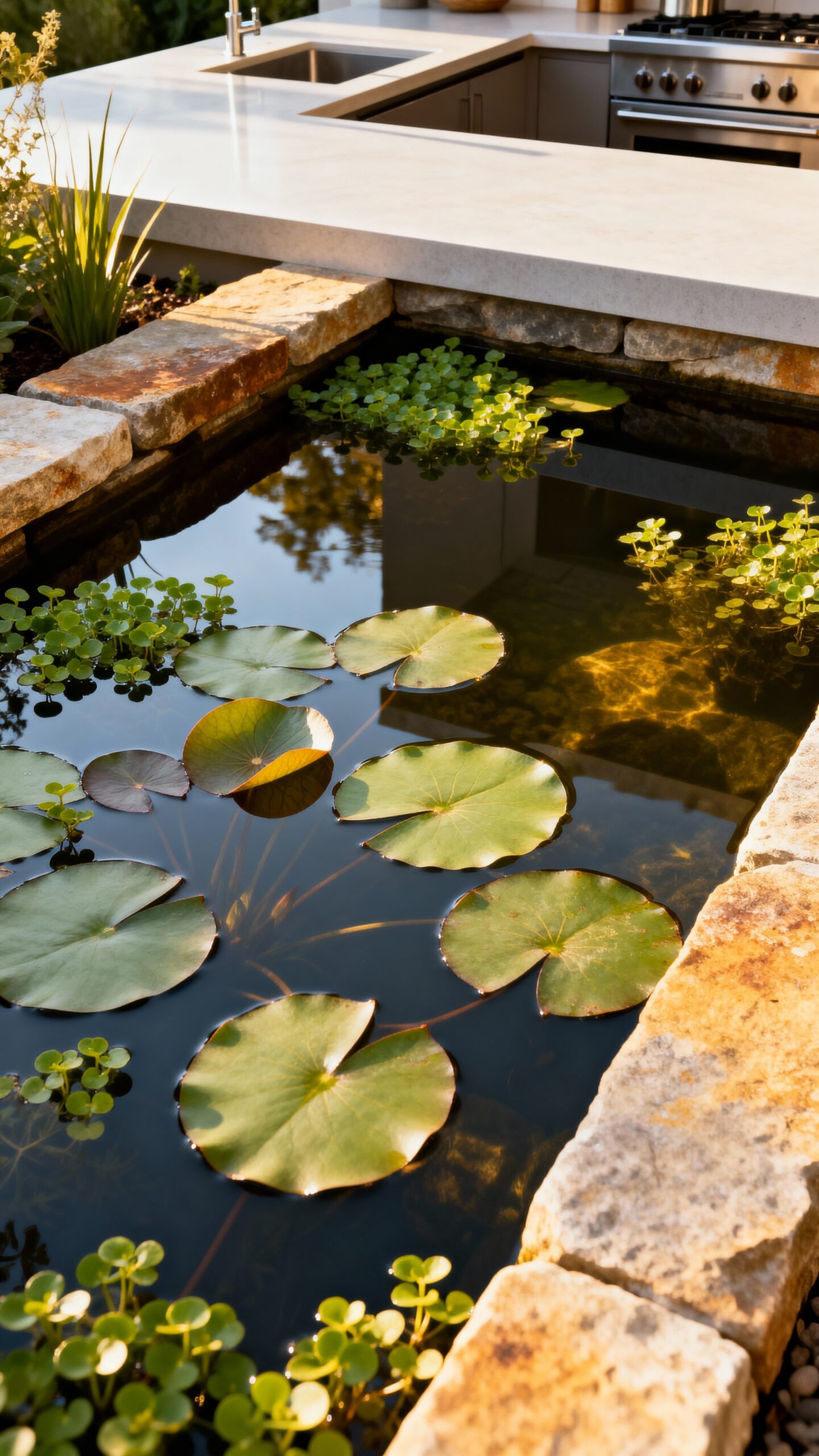
Although traditional vegetable gardens require soil beds, water feature gardens offer thrilling opportunities to grow aquatic vegetables that thrive in ponds, streams, and hydroponic systems. You’ll uncover watercress flourishing in shallow streams alongside your outdoor kitchen, providing fresh peppery greens within arm’s reach.
Create floating lotus ponds where you can harvest nutritious lotus roots and leaves for Asian-inspired dishes. Install aquatic vegetable floating islands featuring water spinach and arrowhead plants that’ll give you complete food independence. These water gardens require minimal maintenance while producing unique ingredients that’ll revolutionize your culinary expeditions and create stunning focal points near your cooking area.
Moonlight Garden Designs With Edible Night Bloomers
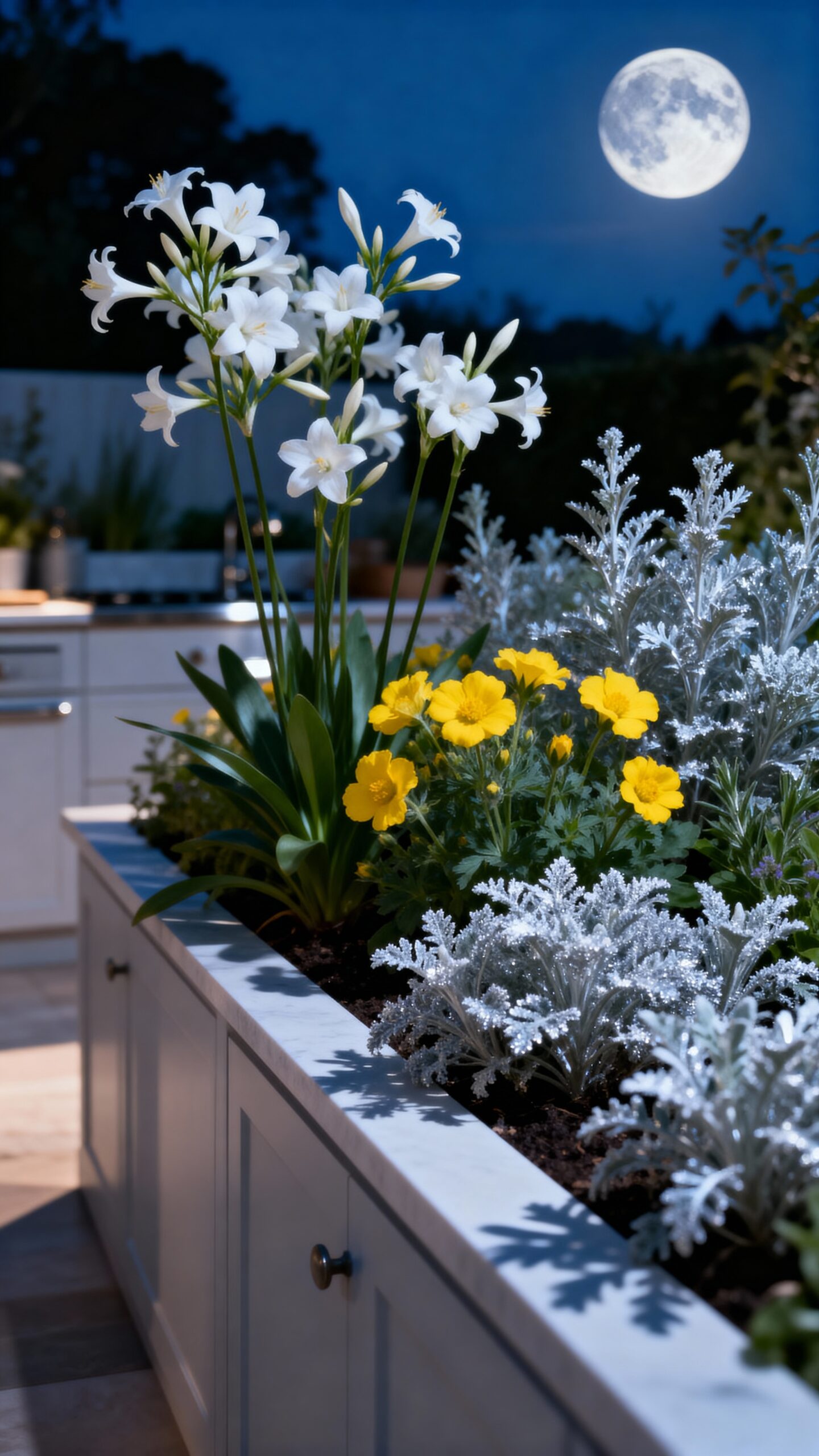
When darkness falls over your outdoor kitchen, moonlight gardens come alive with fragrant night-blooming edibles that metamorphose evening cooking into a magical experience. You’ll create moon gazing flower beds featuring evening primrose, whose delicate petals open at twilight and offer lemony leaves for salads.
Plant nocturnal nectar producing plants like night-blooming cereus, whose dramatic flowers bloom once yearly and provide edible buds. Add four o’clocks with their trumpet-shaped blooms that release sweet fragrance after sunset. Design pathways with white stones that reflect moonlight, guiding you through your nocturnal harvest while creating an enchanting backdrop for nighttime culinary quests.
Conclusion
You’ve unearthed powerful ways to merge cooking and gardening in your outdoor space. These integrated designs create functional beauty while providing fresh ingredients at your fingertips. Start with one element that fits your space and budget, then expand gradually. Your outdoor kitchen garden will become a productive sanctuary where nature enhances every meal. Metamorphose your backyard into this living, breathing extension of your home.