16 Natural Patio Trellis Ideas for Plants & Privacy
Want to transform your patio into a private oasis using natural materials that support plants while blocking unwanted views?
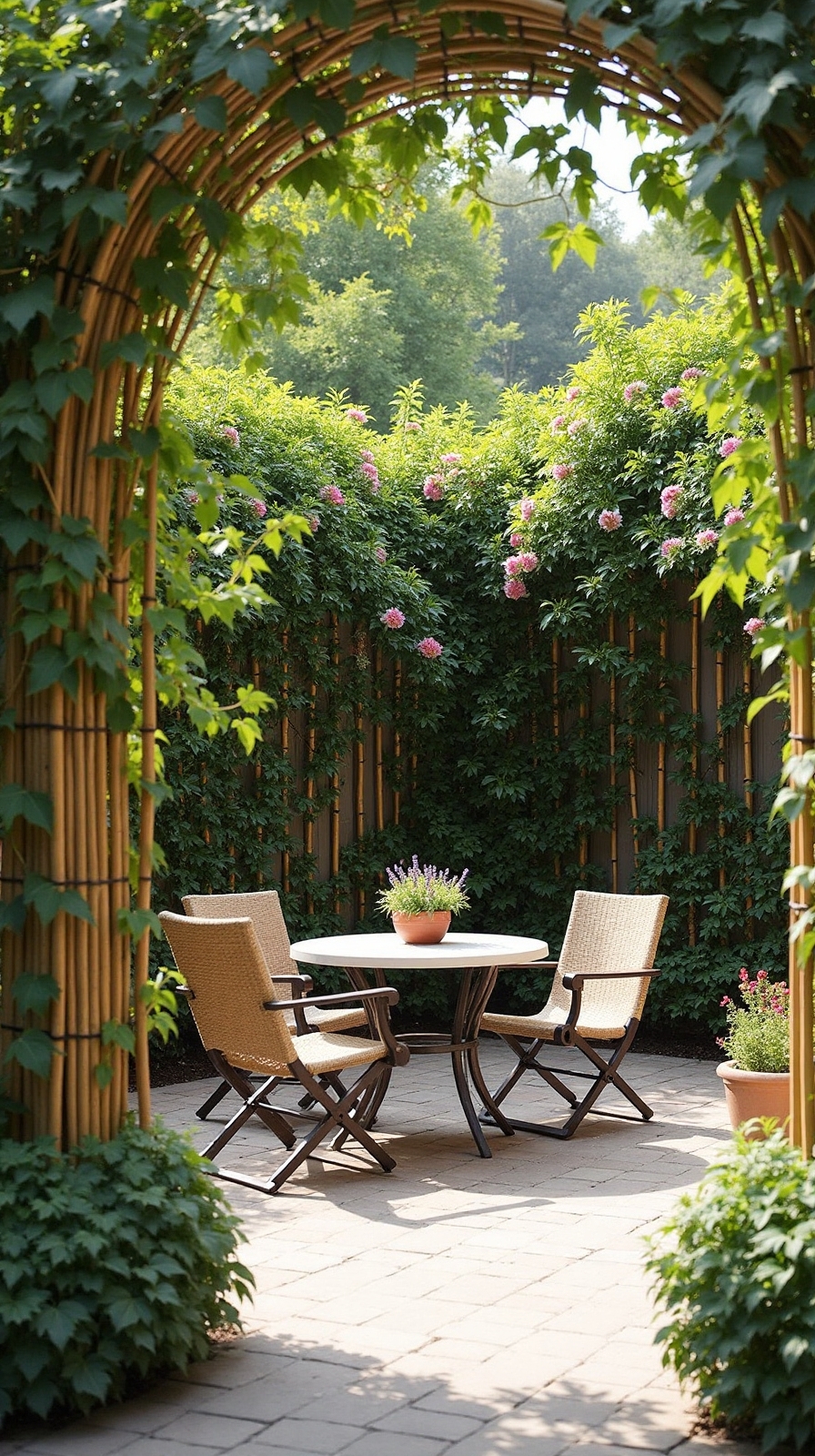
You’re probably looking for ways to create more privacy on your patio without installing expensive fencing or compromising your garden’s natural beauty. Natural trellis systems offer the perfect solution by combining functional privacy screens with stunning plant support structures. These eco-friendly alternatives use materials like bamboo, reclaimed wood, and living branches to modify your outdoor space into a secluded retreat. The best part? You’ll uncover options that work for every budget and skill level.
Bamboo Panel Privacy Screens
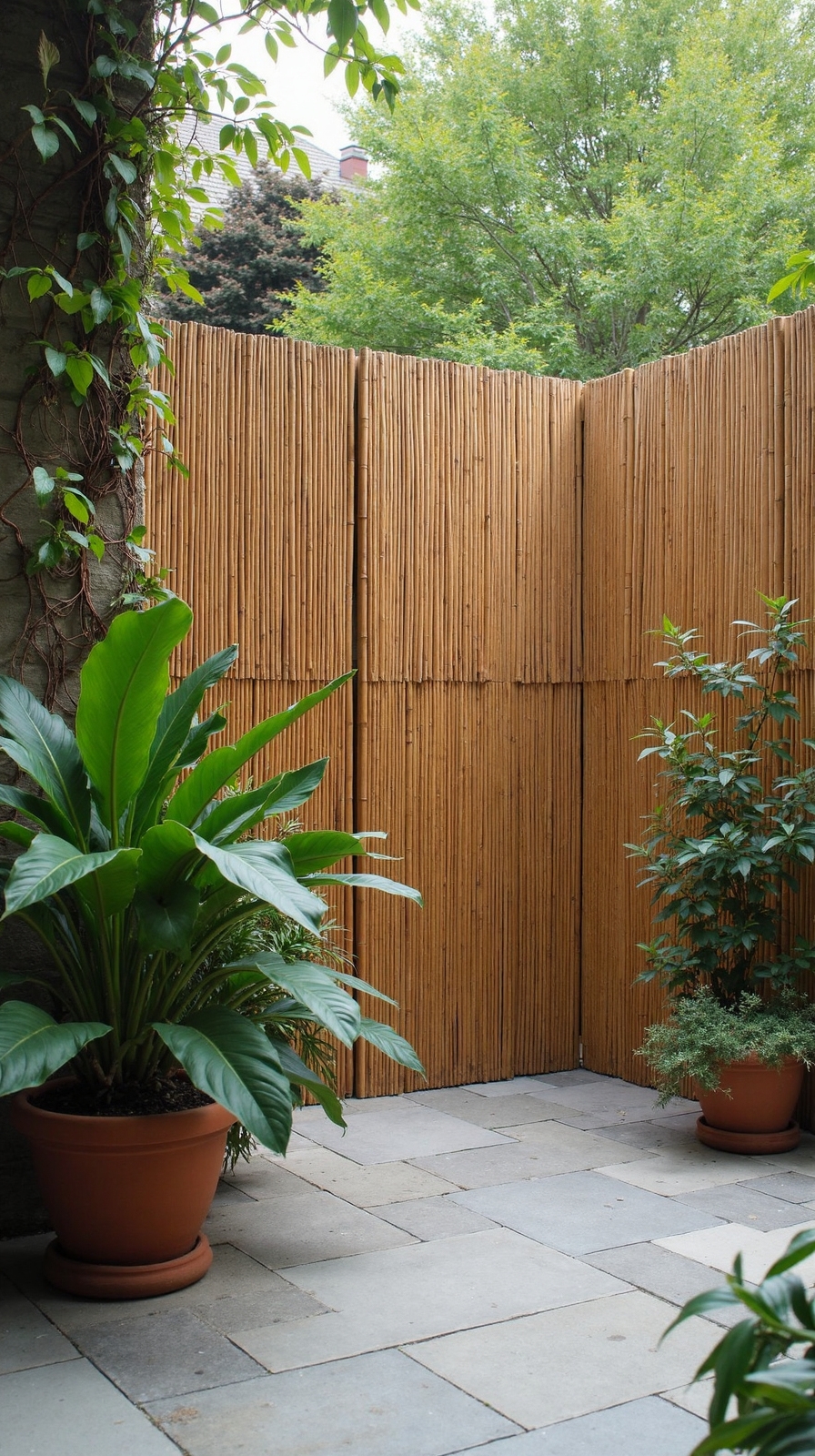
When you’re looking for an eco-friendly trellis solution that doubles as a privacy screen, bamboo panels offer the perfect blend of functionality and natural beauty. You’ll uncover that bamboo screen panels create instant vertical growing space while blocking unwanted views from neighbors.
These versatile bamboo divider panels can support climbing vines, flowering plants, and vegetables with minimal installation effort. You can mount them directly to existing fence posts or create freestanding structures using simple hardware. The natural texture adds warmth to your outdoor space while providing the freedom to garden vertically without compromising your privacy or style preferences. Beyond plant support, bamboo panels excel at spatial definition, helping to create distinct outdoor rooms and zones within your patio area.
Rustic Branch and Twig Lattice
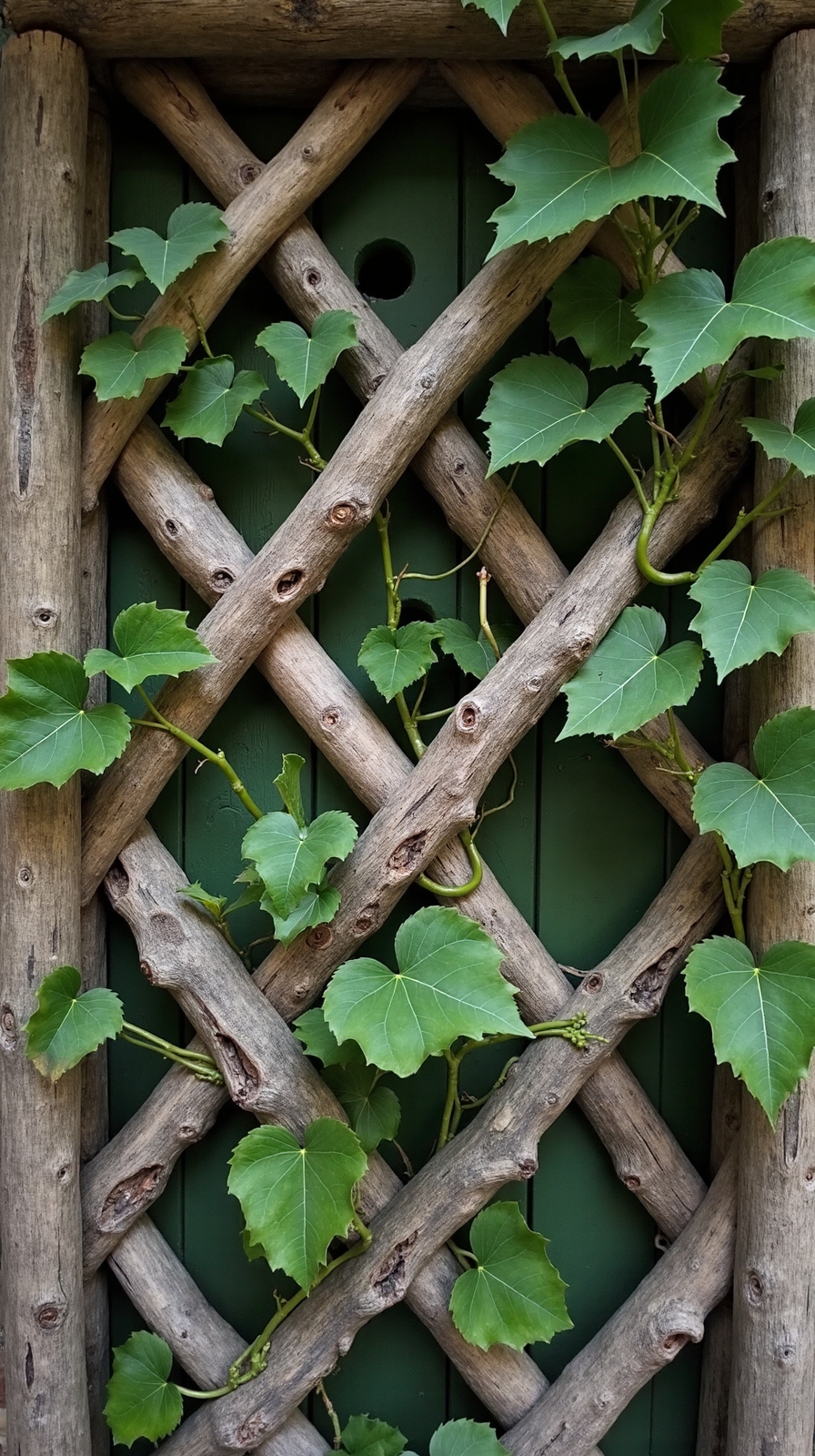
Rustic charm meets practical functionality when you craft your own branch and twig lattice using materials gathered from your yard or local wooded areas. You’ll create an authentic, cost-free trellis that perfectly complements natural garden settings while providing excellent plant support.
Select earthy textured branches of varying thicknesses, ensuring they’re sturdy and relatively straight. Arrange thicker branches vertically as your main structure, then weave thinner twigs horizontally between them. Secure intersections with natural hemp rope or wire.
This rustic organic structure works beautifully for climbing roses, clematis, or vegetable vines, creating an effortlessly natural backdrop that enhances your patio’s organic appeal. The natural textures and weathered appearance pair wonderfully with brick patios for a cohesive outdoor design that emphasizes timeless appeal.
Living Willow Woven Fencing
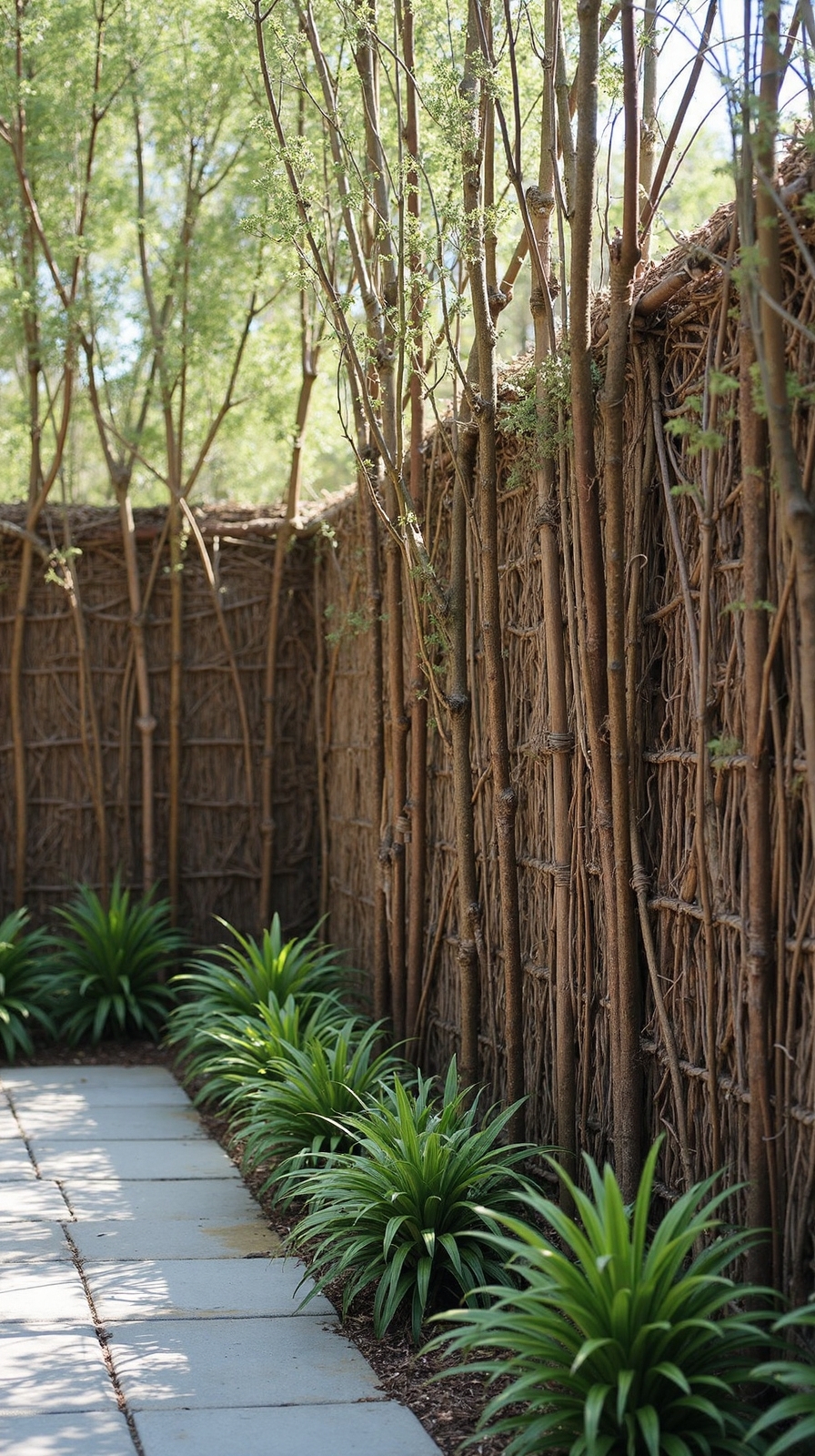
Living willow creates a breathtaking fence that grows stronger and more beautiful each year, altering your patio space into a natural sanctuary. You’ll plant flexible willow whips directly into the ground during winter dormancy, then weave them together horizontally.
This living willow vine weaving technique allows branches to root and establish naturally. Your fence literally grows itself, requiring minimal maintenance once established. Living willow trellis designs offer endless creative possibilities—from simple geometric patterns to elaborate artistic configurations.
You can harvest additional shoots annually for expansion projects. This sustainable approach gives you complete design freedom while creating lasting natural privacy. The combination of natural textures with living willow creates an exceptionally rustic and cozy atmosphere that complements any outdoor space.
Reclaimed Wood Ladder Trellis
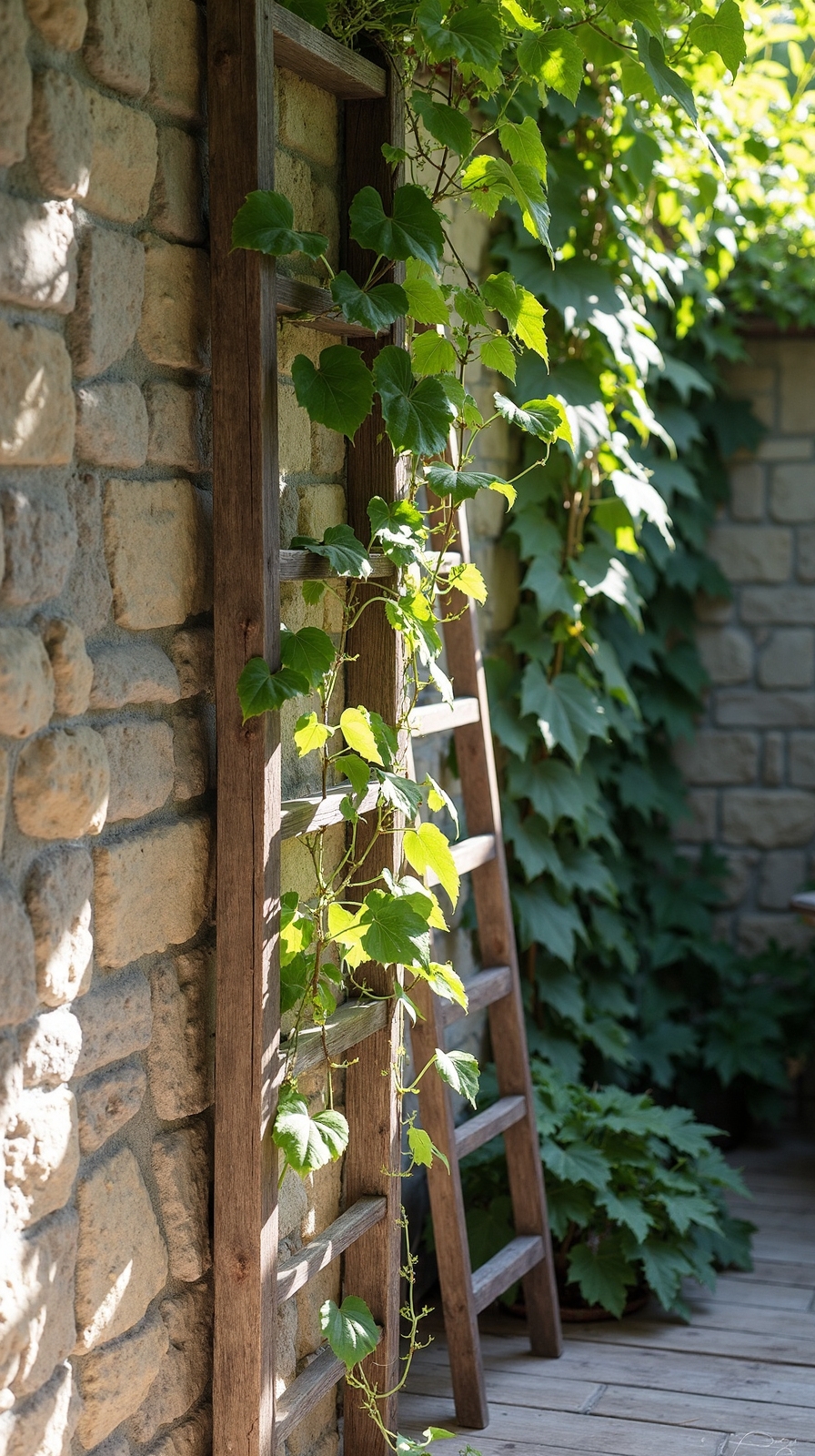
Three weathered wooden ladders can convert into stunning vertical garden supports that bring rustic charm and functionality to any patio space. You’ll uncover that these repurposed treasures offer excellent climbing surfaces for beans, peas, and flowering vines while creating natural privacy screens.
Position your salvaged frame accents against walls or fence lines for maximum stability and visual impact. The rustic aesthetic appeal complements cottage gardens and farmhouse-style patios perfectly, giving you creative freedom to arrange multiple ladders at varying heights. These ladder trellises pair beautifully with neutral tones that define the farmhouse aesthetic, creating a cohesive outdoor living space.
Sand rough edges lightly, then apply natural wood preservative to extend their lifespan while maintaining that authentic, weathered appearance you’re seeking.
Cedar Post and Wire Grid System
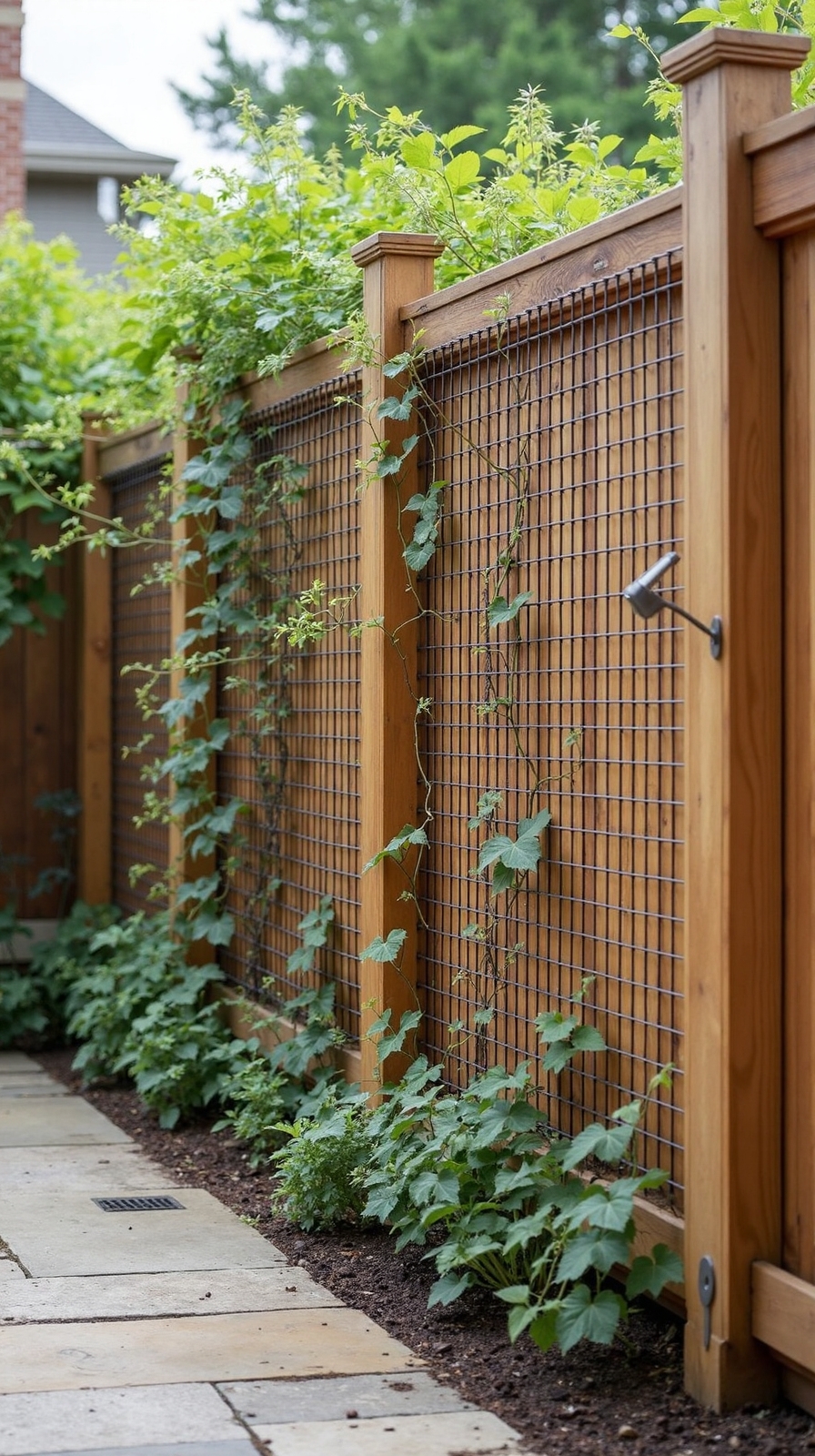
When you need a durable trellis system that’ll last for decades, cedar posts combined with galvanized wire mesh create an unbeatable foundation for heavy climbing plants. Cedar post construction begins with setting 4×4 posts three feet apart in concrete footings for maximum stability.
The natural oils in cedar resist rot and insects without chemical treatments, giving you freedom from constant maintenance worries. Wire grid installation involves stretching welded wire mesh between posts using fence staples every six inches. This versatile system supports grape vines, clematis, and privacy screens while maintaining its structural integrity through harsh weather conditions. For the base of your trellis, consider incorporating gravel surfaces that provide excellent drainage and complement the natural cedar aesthetic.
Natural Stone Pillar Supports
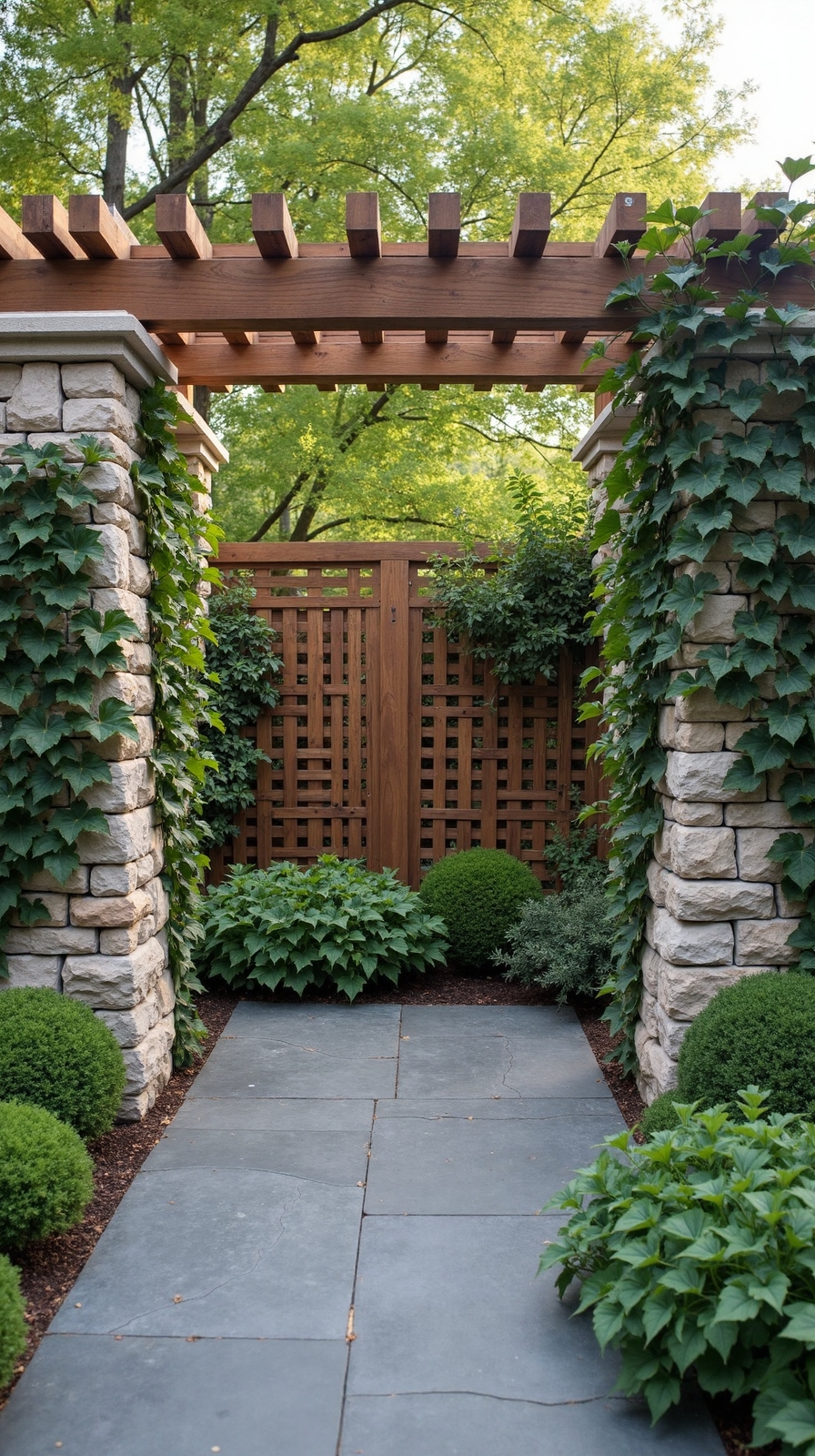
Stone pillars offer a permanent and sophisticated alternative that redefines your trellis into a structural component deserving of professional site planning. Natural stone pedestals anchor climbing plants while creating dramatic vertical elements that’ll last decades without maintenance concerns.
You can construct organic stone columns using fieldstone, limestone, or granite blocks stacked with mortar for stability. These pillars support horizontal wire systems, wooden crossbeams, or metal frameworks between posts. Consider spacing pillars eight to twelve feet apart for the best plant coverage and structural integrity. The weight and permanence mean you’re investing in a landscape feature that increases property value considerably. When designing your stone patio, these vertical elements create seamless transitions between hardscaped and planted areas for a cohesive outdoor living space.
Driftwood Artistic Climbing Frame
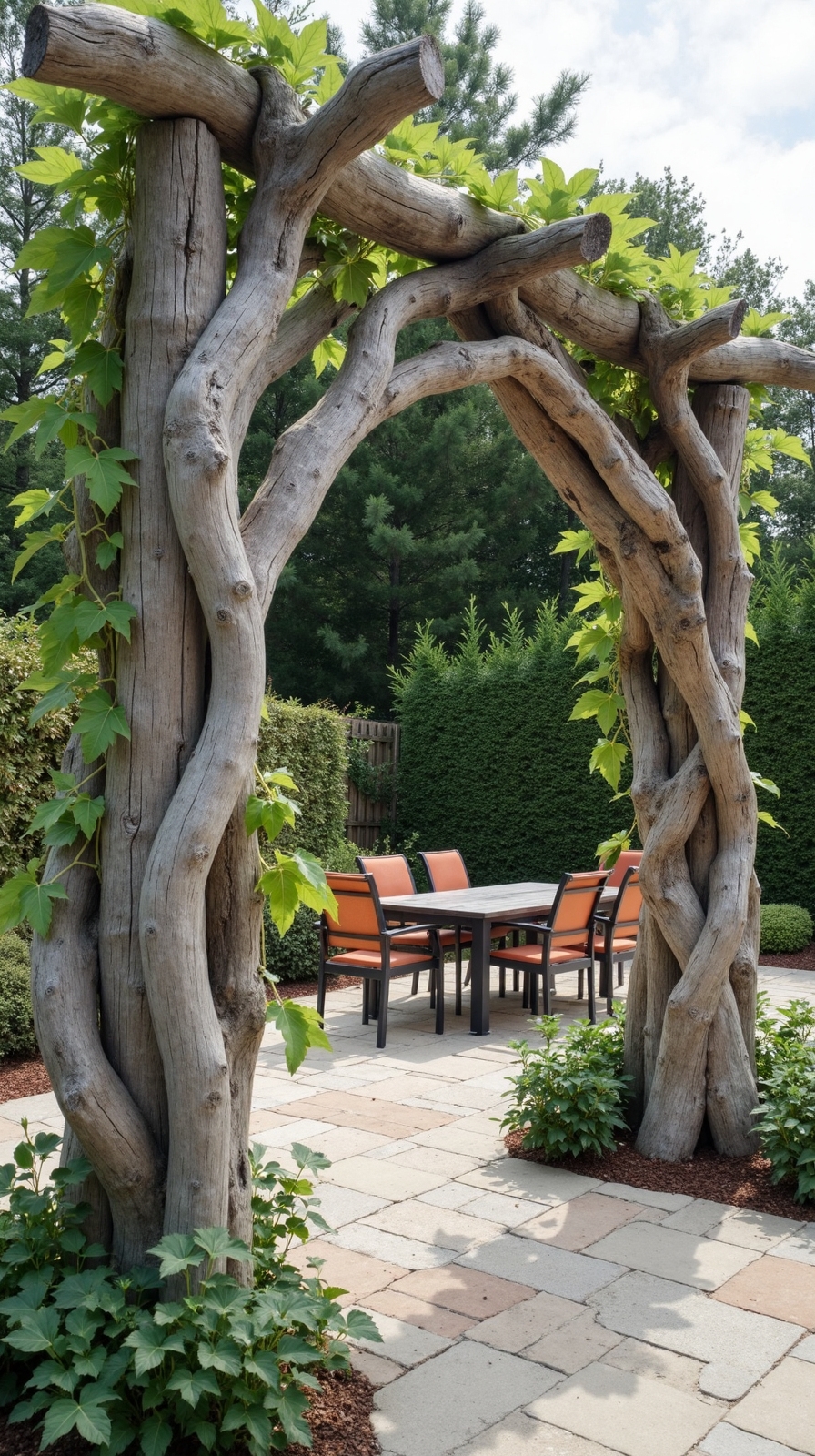
Weathered driftwood alters ordinary climbing structures into sculptural pinnacles that meld seamlessly with coastal and rustic garden themes. You’ll create stunning focal points by arranging multiple pieces into driftwood wave like structures that support climbing vines naturally.
Large driftwood pieces work perfectly as vertical supports, while smaller branches form horizontal crossbeams for plant training.
Your driftwood sculpture installation becomes both functional trellis and artistic statement piece. Position pieces to follow organic curves rather than rigid geometric patterns. This approach gives you complete creative control while providing sturdy plant support that ages beautifully in outdoor environments. These natural elements help create eco-friendly designs that embrace the inherent beauty of your outdoor space.
Birch Pole Teepee Structure
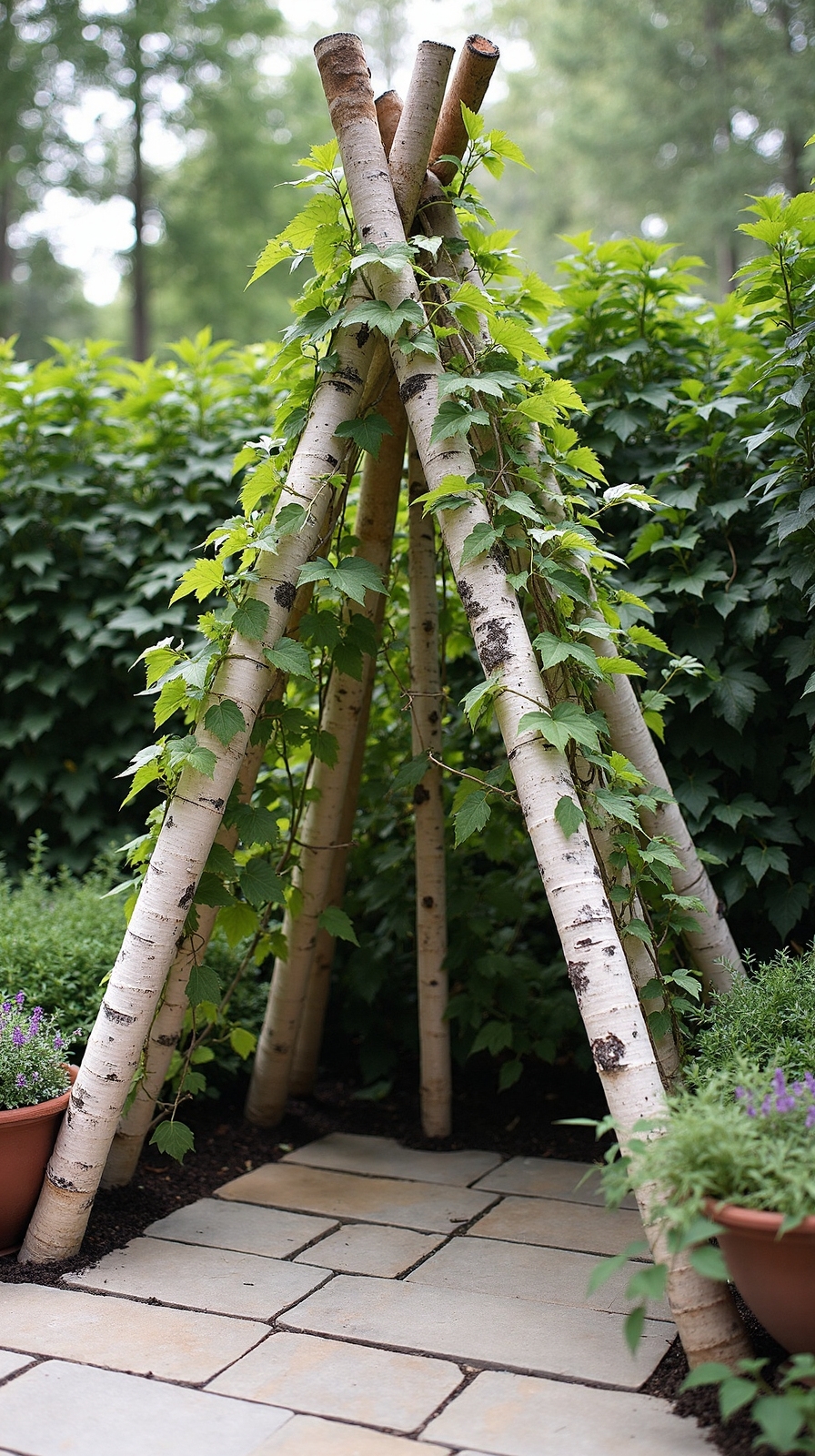
Birch poles create stunning teepee structures that bring natural woodland elegance to any patio while offering excellent vertical growing space for climbing plants. You’ll arrange three to four birch poles in a circle, securing the tops together with sturdy rope or wire.
This birch pole teepee structure supports morning glories, sweet peas, or climbing beans beautifully. For added versatility, you can connect multiple teepees with horizontal birch branches to form a natural birch pole archway. The pale bark and rustic texture complement any outdoor décor style while giving your plants the freedom to climb skyward naturally. These structures work particularly well in detached patio areas where you can create a complete standalone relaxation zone surrounded by climbing greenery.
Wattle Fencing With Climbing Pockets
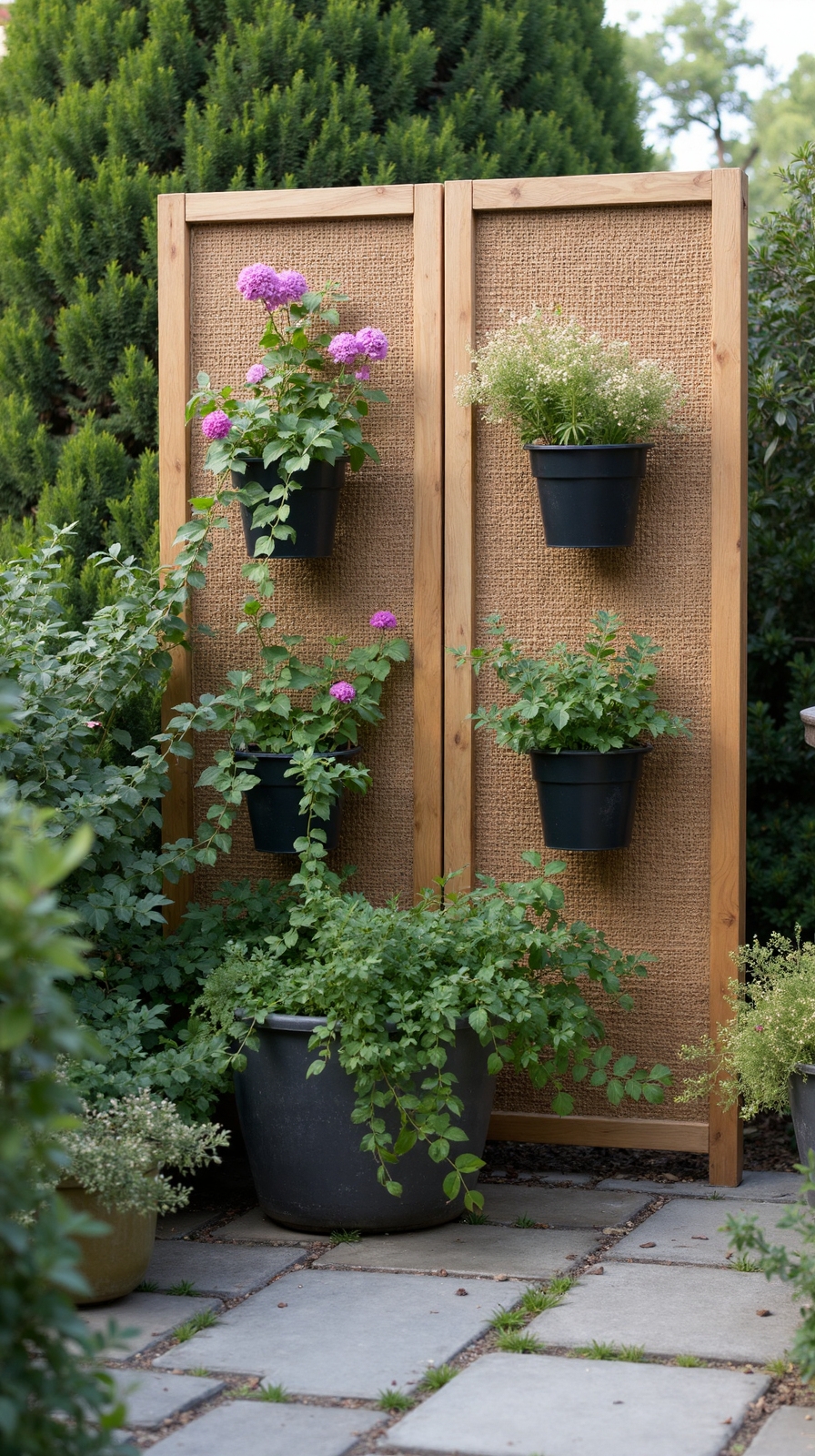
Although traditional wattle fencing might seem like an ancient building technique, this time-tested method creates beautiful trellis systems with built-in climbing pockets that perfectly suit modern patio gardens. You’ll weave flexible branches horizontally between vertical posts, creating natural branch weaving patterns that form sturdy support structures.
Start with willow, hazel, or young maple branches for best flexibility. Space your vertical posts eighteen inches apart, then weave branches in an over-under pattern. These woven plant pockets naturally form spaces where climbing vines can establish themselves, giving you both privacy screening and productive growing areas without any synthetic materials.
Grapevine Spiral Tower Design
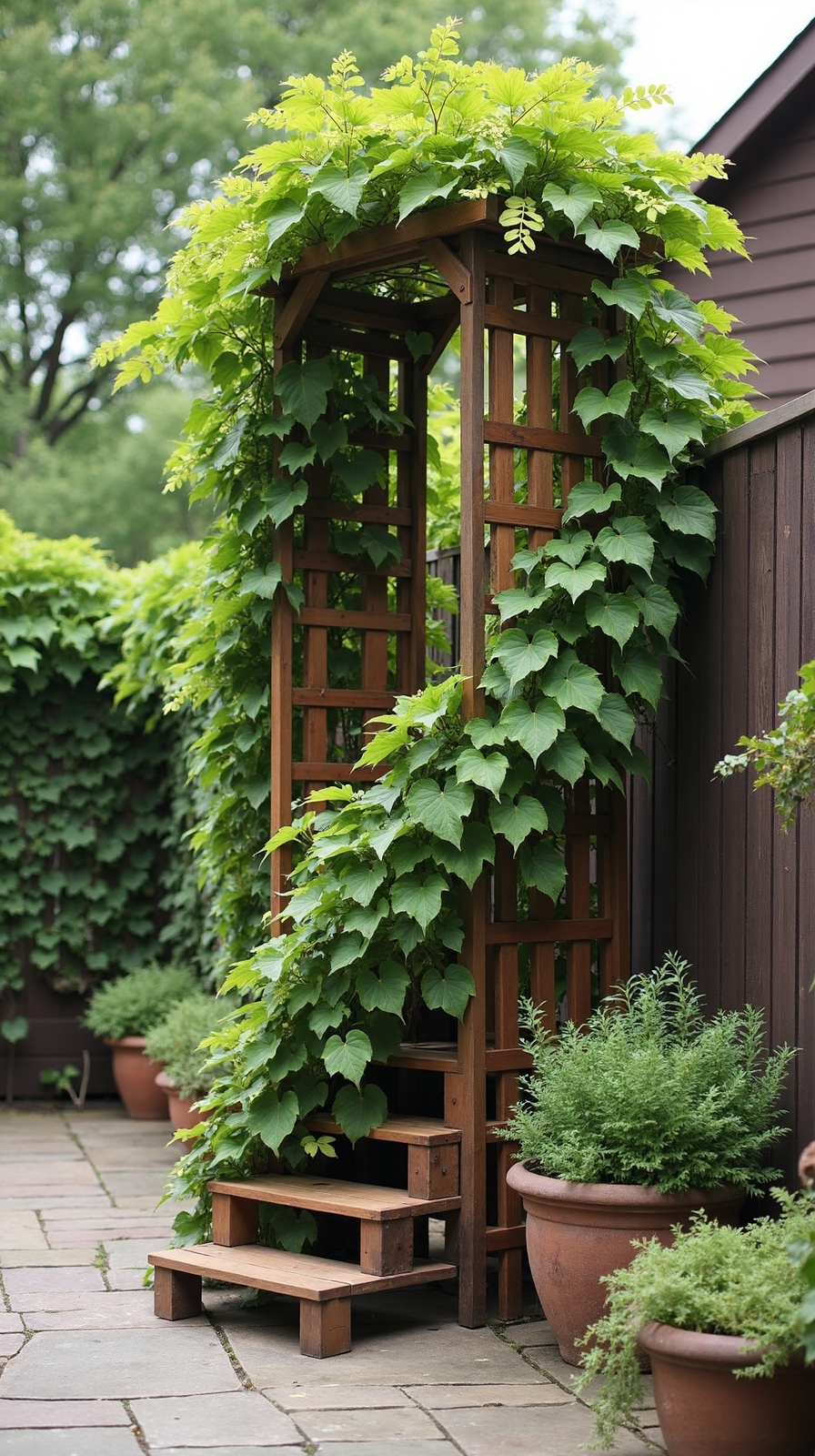
Grapevine branches twist naturally into stunning spiral towers that’ll reshape any corner of your patio into a vertical garden showpiece.
You’ll create this curved spiral design by weaving flexible grapevine stems around a central post, starting from the bottom and spiraling upward. The layered trellis structure provides multiple planting pockets at different heights, giving you complete control over your vertical space.
Secure each layer with natural twine as you build upward, creating sturdy support for climbing plants. This organic tower design breaks free from traditional flat trellises, offering three-dimensional growing space that maximizes your patio’s potential without requiring expensive materials.
Split Rail Horizontal Trellis
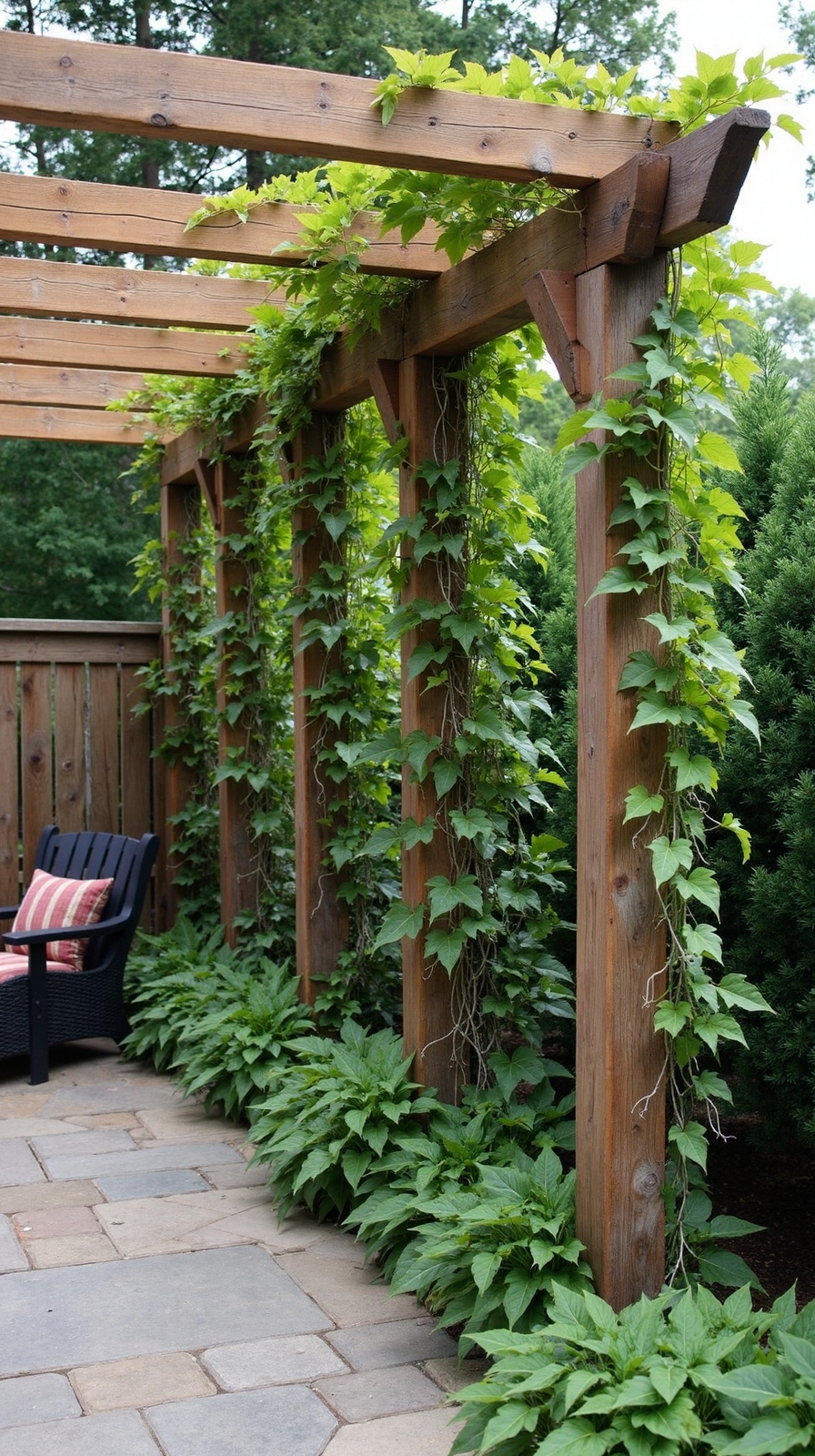
While spiraling grapevines reach skyward, horizontal split rail trellises stretch across your patio space to create impressive living walls and privacy screens. You’ll build this rustic wooden frame using cedar or pine rails that naturally weather into beautiful gray tones over time.
Install natural log supports every six to eight feet, setting them two feet deep in concrete for stability. Space horizontal rails twelve to eighteen inches apart, allowing climbing plants like clematis or morning glories to weave through easily. This design gives you complete control over your outdoor sanctuary while maintaining that authentic, wilderness aesthetic you’re seeking.
Hazel Rod Bent Archway
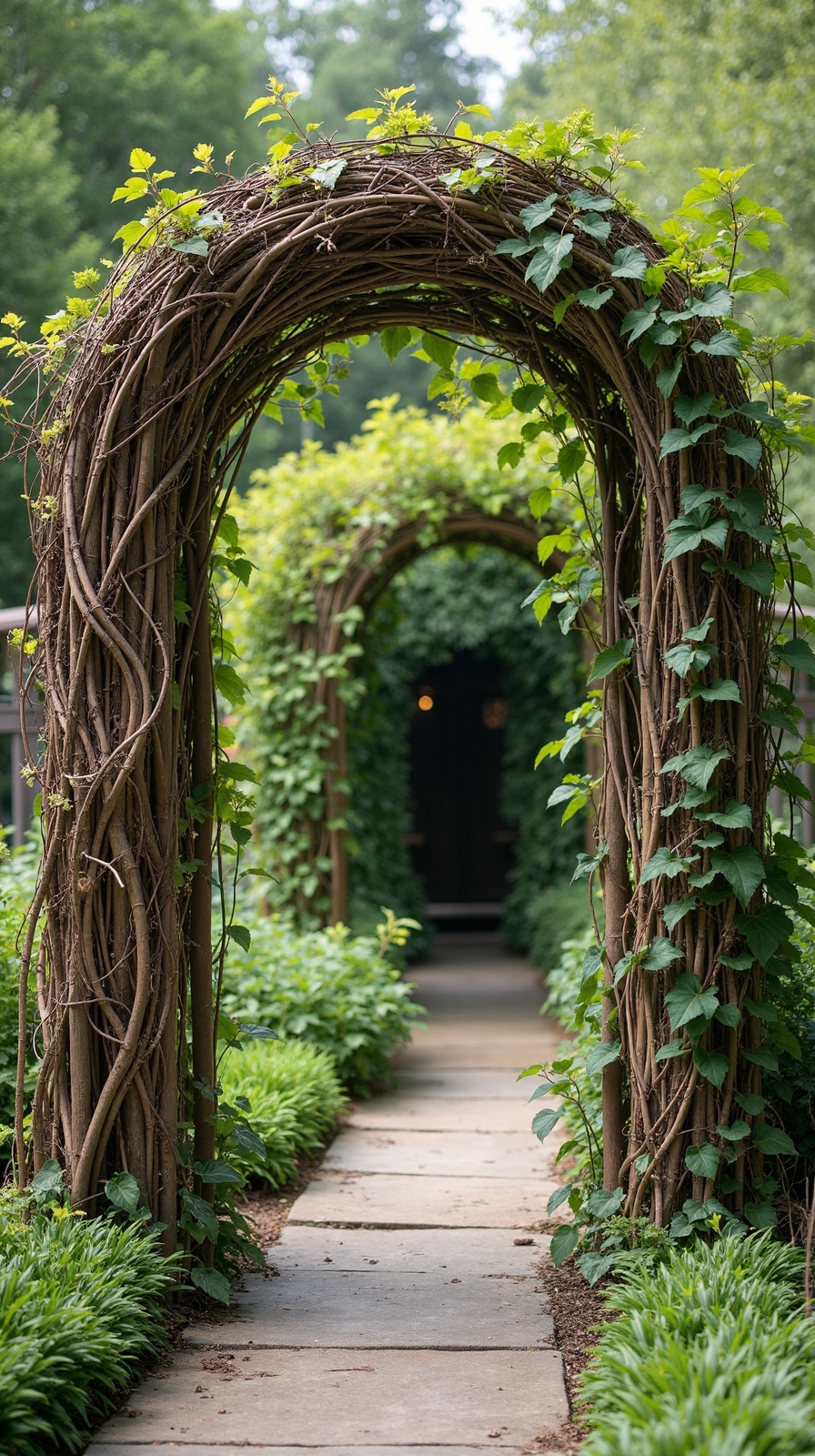
When you’re ready to create a stunning focal point that draws visitors deeper into your garden space, hazel rod bent archways offer a graceful, refined, sophisticated solution that’s both functional and beautiful. You’ll find hazel’s natural flexibility makes it perfect for bending into exquisite curves without snapping or cracking under pressure.
Start by selecting straight hazel rod that’re 8-10 feet long and about 2 inches thick at the base. Create your twisted hazel branch frame by anchoring both ends firmly into the ground, then gradually bend the center upward. A woven hazel archway adds decorative horizontal elements between vertical supports.
Cork Oak Panel Installation
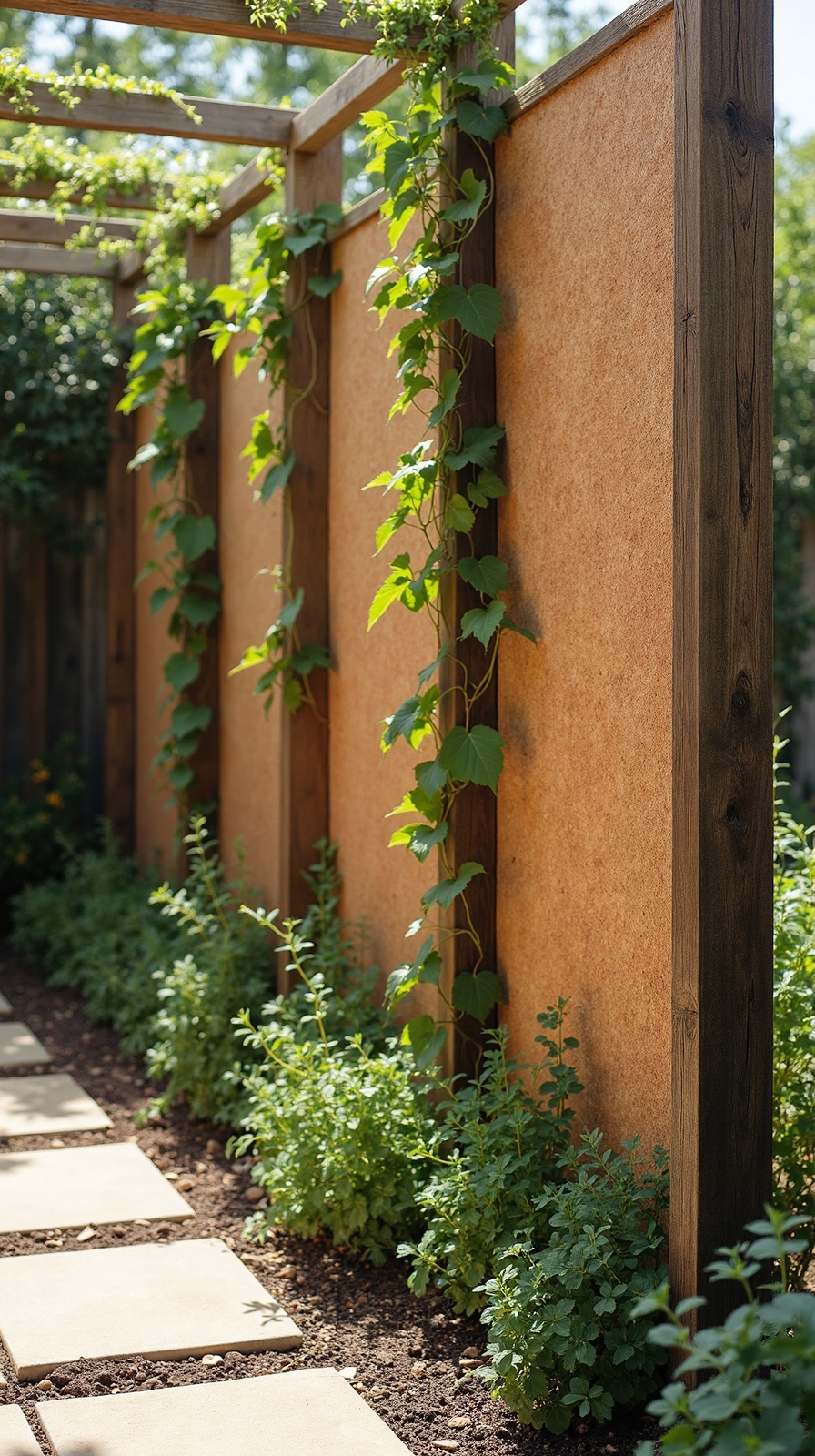
Since cork oak panels provide exceptional durability and natural insulation properties, they’re becoming increasingly popular for creating sophisticated patio trellis systems that last for decades.
You’ll find cork tiling patterns offer endless design possibilities while maintaining your space’s organic aesthetic. Start by measuring your designated area and cutting custom cork panel shapes to fit perfectly within your existing structure. Mount panels using weather-resistant screws, ensuring proper spacing for climbing plants.
The natural texture creates ideal grip points for vines, while cork’s moisture resistance prevents deterioration. This eco-friendly option gives you complete design freedom.
Eucalyptus Branch Geometric Patterns
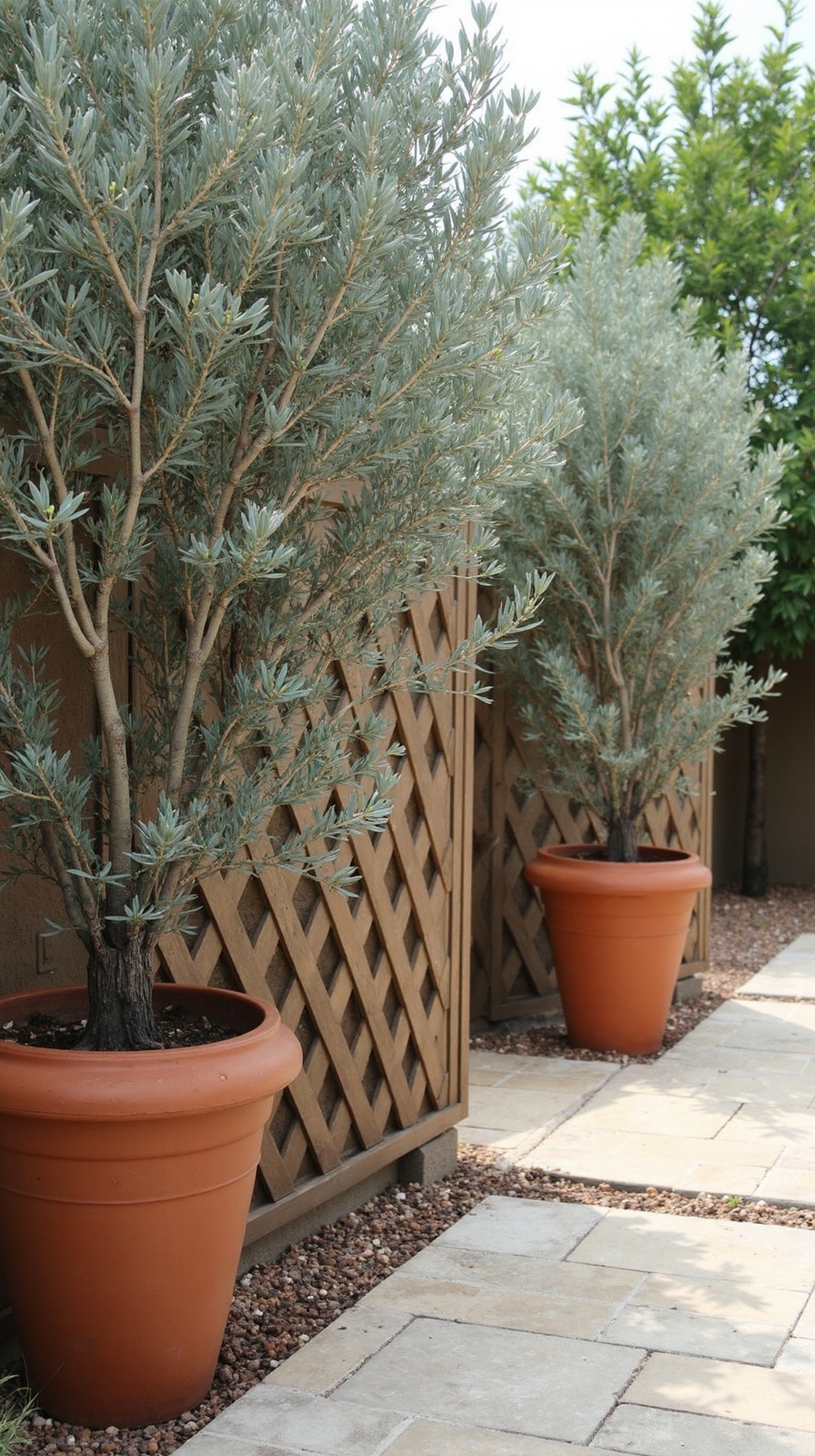
Eucalyptus branches offer exceptional versatility for creating stunning geometric trellis patterns that metamorphose your patio into an architectural opus. You’ll uncover endless possibilities with their flexible nature and natural silvery-green beauty.
Design curving branch spirals by selecting younger, more pliable eucalyptus stems that bend easily into circular motifs. Secure these spirals at multiple points using galvanized wire or natural twine for lasting stability.
Create sophisticated intertwining branch patterns by weaving thicker branches through your base structure. Layer different branch thicknesses to add visual depth and textural interest. You’ll achieve professional-looking results while maintaining complete creative control over your outdoor sanctuary’s aesthetic appeal.
Pine Log Vertical Garden Wall
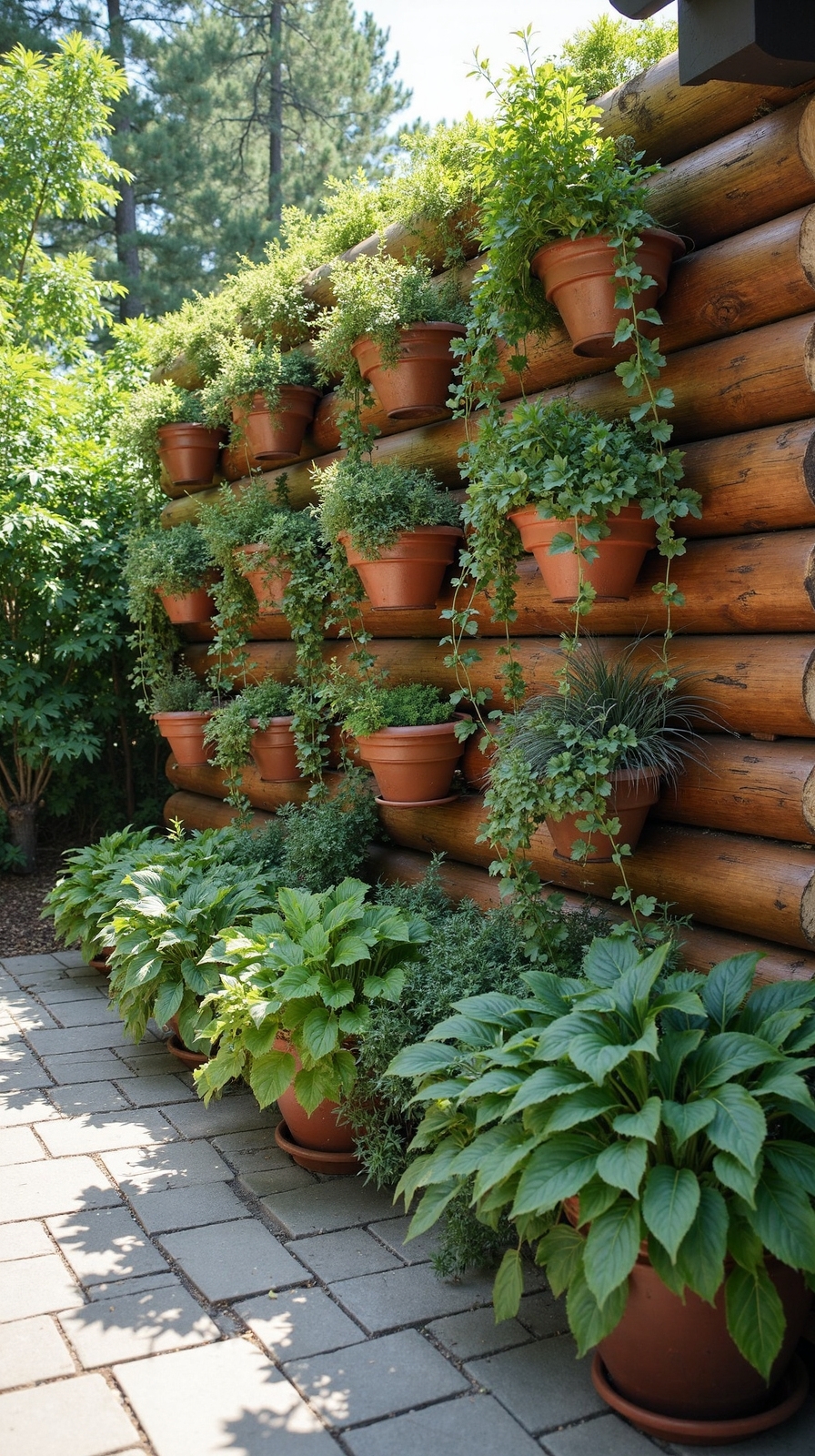
Three distinct advantages make pine logs an exceptional foundation for creating dramatic vertical garden walls that alter ordinary patio spaces into living marvels. First, you’ll appreciate the natural durability that pine provides without restrictive maintenance schedules. Second, the rustic texture complements any outdoor aesthetic you’re cultivating.
Using timber frame construction techniques, you can stack pine logs horizontally while incorporating natural log planter beds between each level. This method creates multiple growing zones for trailing vines, herbs, or flowering plants. You’ll uncover the logs naturally weather to stunning silver-gray tones, providing authentic character that manufactured materials simply can’t match.
Cattail Reed Screen Divider
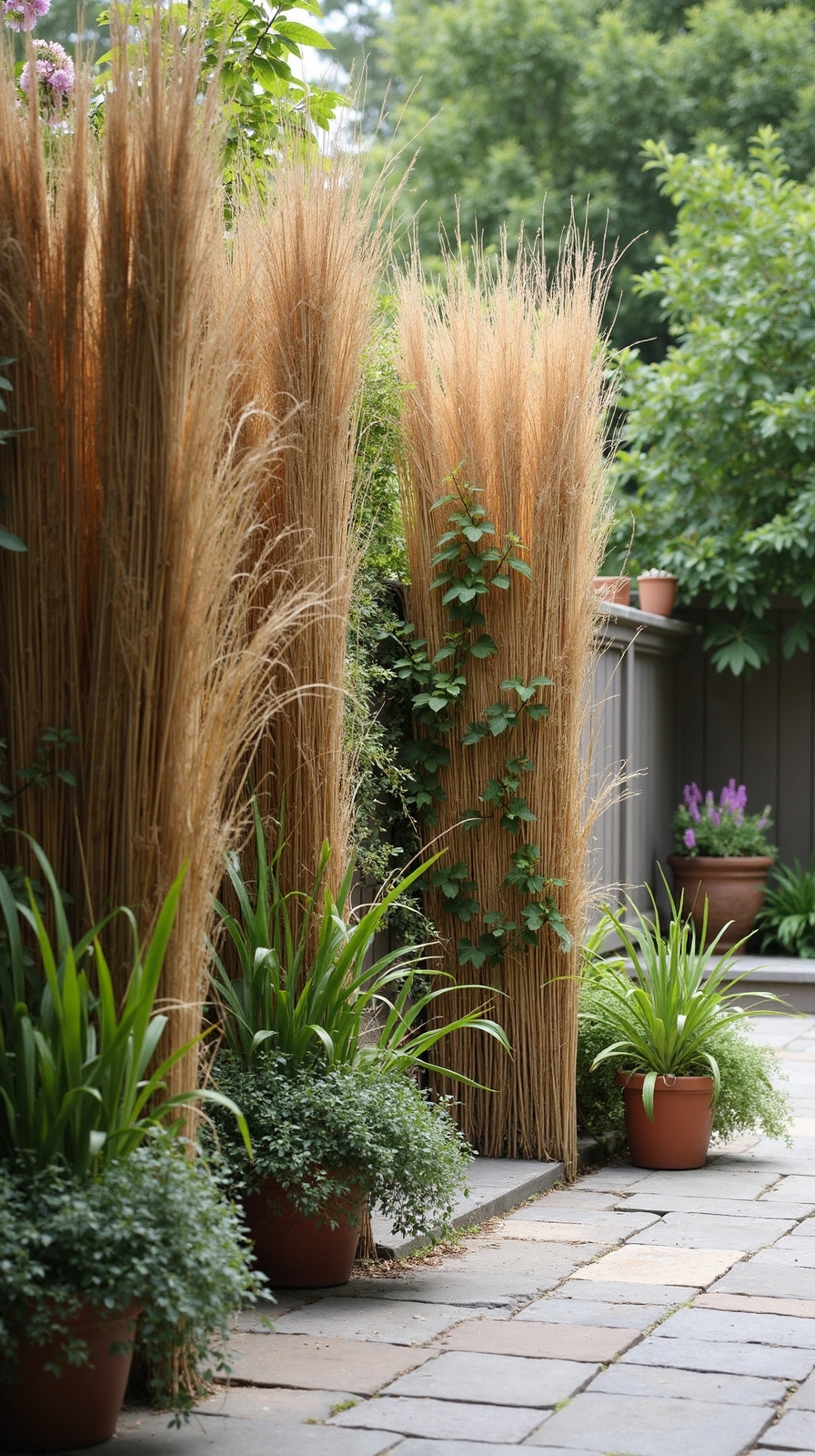
When privacy meets natural beauty, cattail reed screen dividers deliver an organic solution that alters any patio into a secluded retreat. You’ll locate these versatile screens create instant boundaries while maintaining an earthy, relaxed atmosphere that complements your outdoor sanctuary.
Cattail reed bundled panels offer flexible installation options that adapt to your space’s unique dimensions and requirements. You can secure them to existing fence posts or create freestanding structures using wooden frames for maximum positioning freedom.
Cattail reed woven screens provide excellent wind protection while filtering sunlight naturally, creating the perfect balance of openness and seclusion for your outdoor living area.
Conclusion
You’ll uncover that natural patio trellises alter your outdoor space while supporting eco-friendly gardening practices. These sustainable options blend seamlessly with your terrain, creating functional privacy screens that’ll grow more beautiful over time. Whether you choose bamboo panels or living willow fencing, you’re investing in structures that provide immediate benefits and long-term garden enhancement. Start with locally sourced materials to create your perfect natural trellis solution today.