10 Primitive Dining Room Ideas With Early American Charm
Historic primitive dining room designs blend weathered wood, handcrafted furniture, and colonial accessories to create authentically charming spaces that whisper untold stories.
You can reshape your dining space into a haven of early American authenticity by incorporating primitive design elements that celebrate our nation’s heritage. These timeless decorating strategies blend weathered textures, handcrafted furniture, and colonial-era accessories to create dining rooms that feel both historically grounded and warmly inviting. Each approach honors traditional craftsmanship while providing the cozy, lived-in charm that makes primitive style so enduringly popular among homeowners seeking genuine character.
Embrace Weathered Wood Dining Tables and Benches
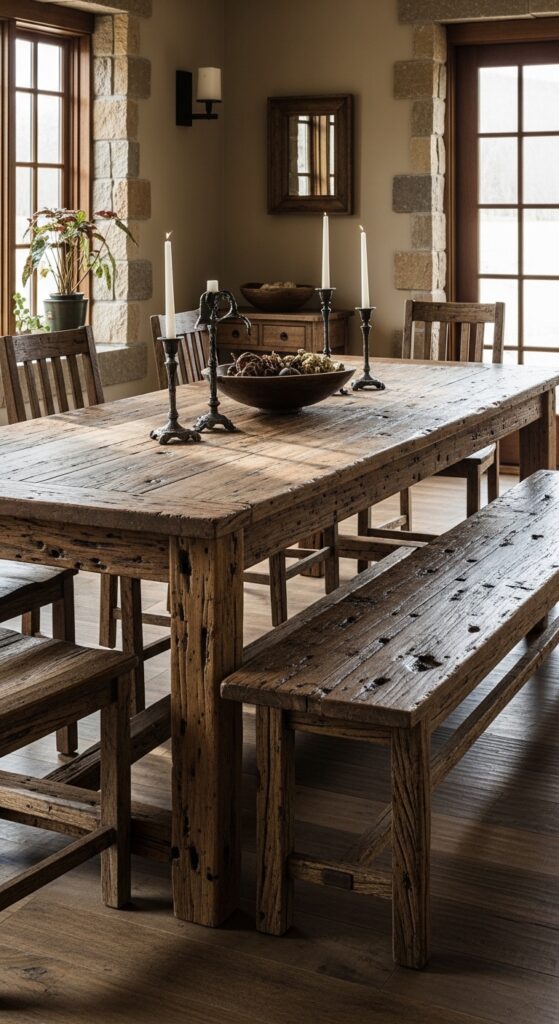
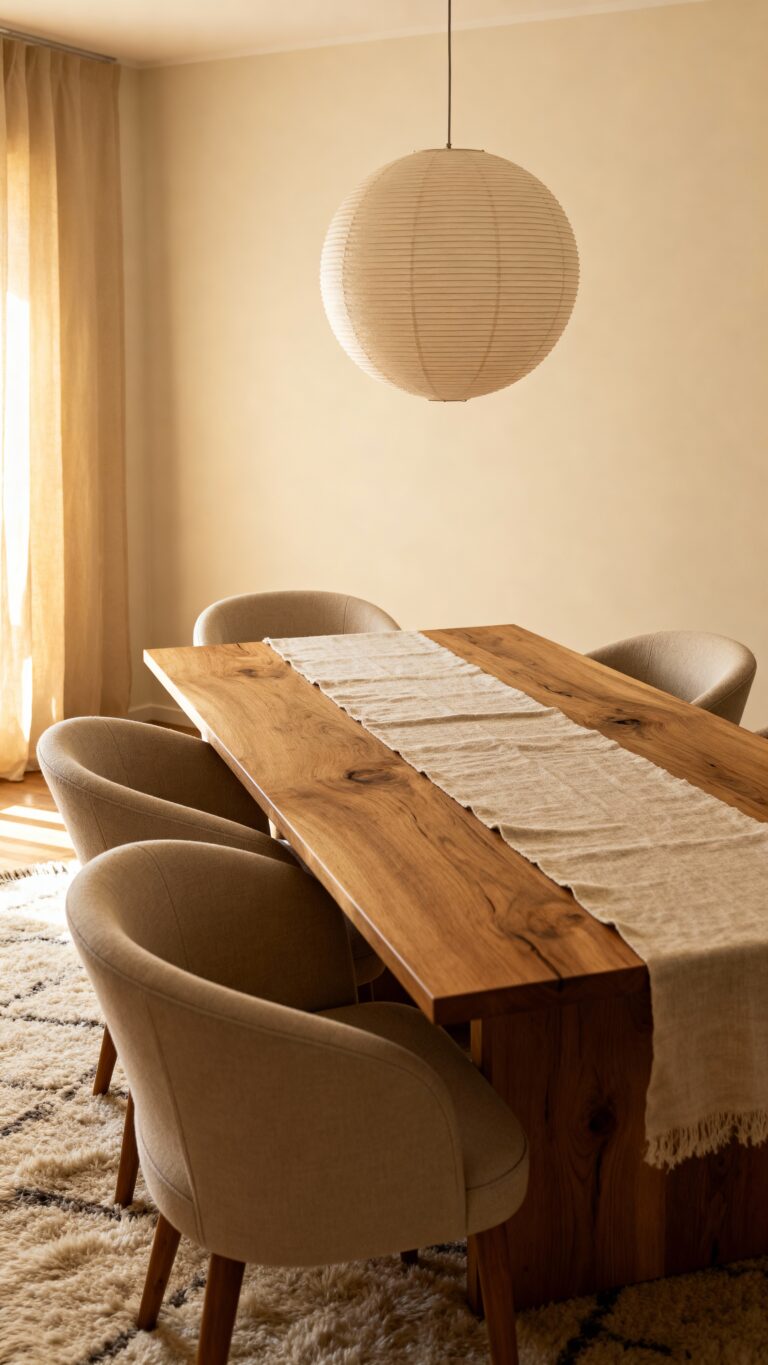
When you’re creating a primitive dining room, weathered wood tables and benches serve as the perfect foundation for achieving that rustic, lived-in charm. Choose pieces with natural imperfections like scratches, dents, and aged patina that tell stories of generations past.
Reclaimed wood accents add authentic character while supporting sustainable design choices. Look for distressed wood finishes that showcase raw grain patterns and worn edges. Farm tables with thick planks work beautifully alongside matching benches or mismatched wooden chairs.
Don’t worry about perfection—embrace the weathered appearance that makes each piece unique and creates that coveted early American aesthetic. Combining these weathered wood elements with stone accents can further enhance the rugged charm that defines authentic rustic dining spaces.
Create Warmth With Colonial-Style Windsor Chairs
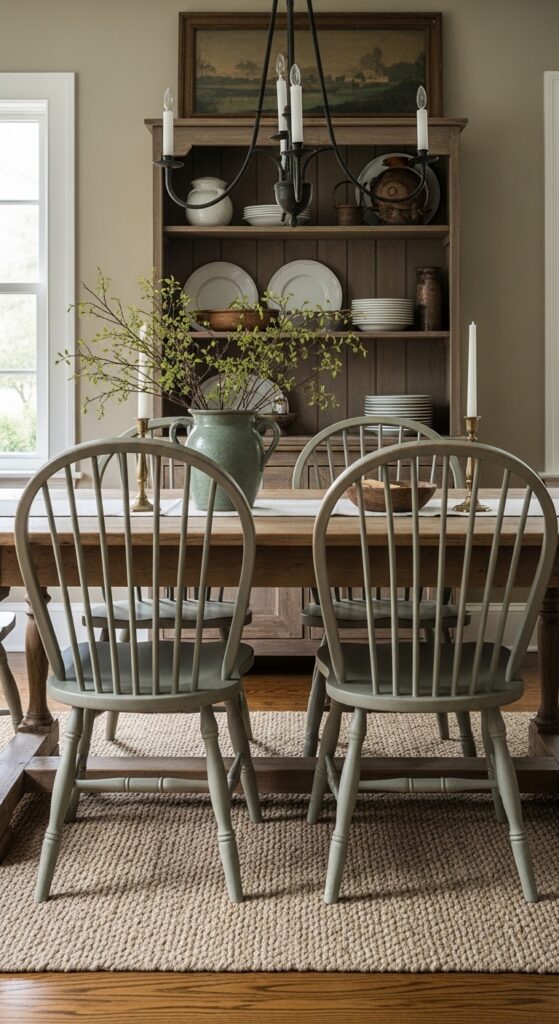
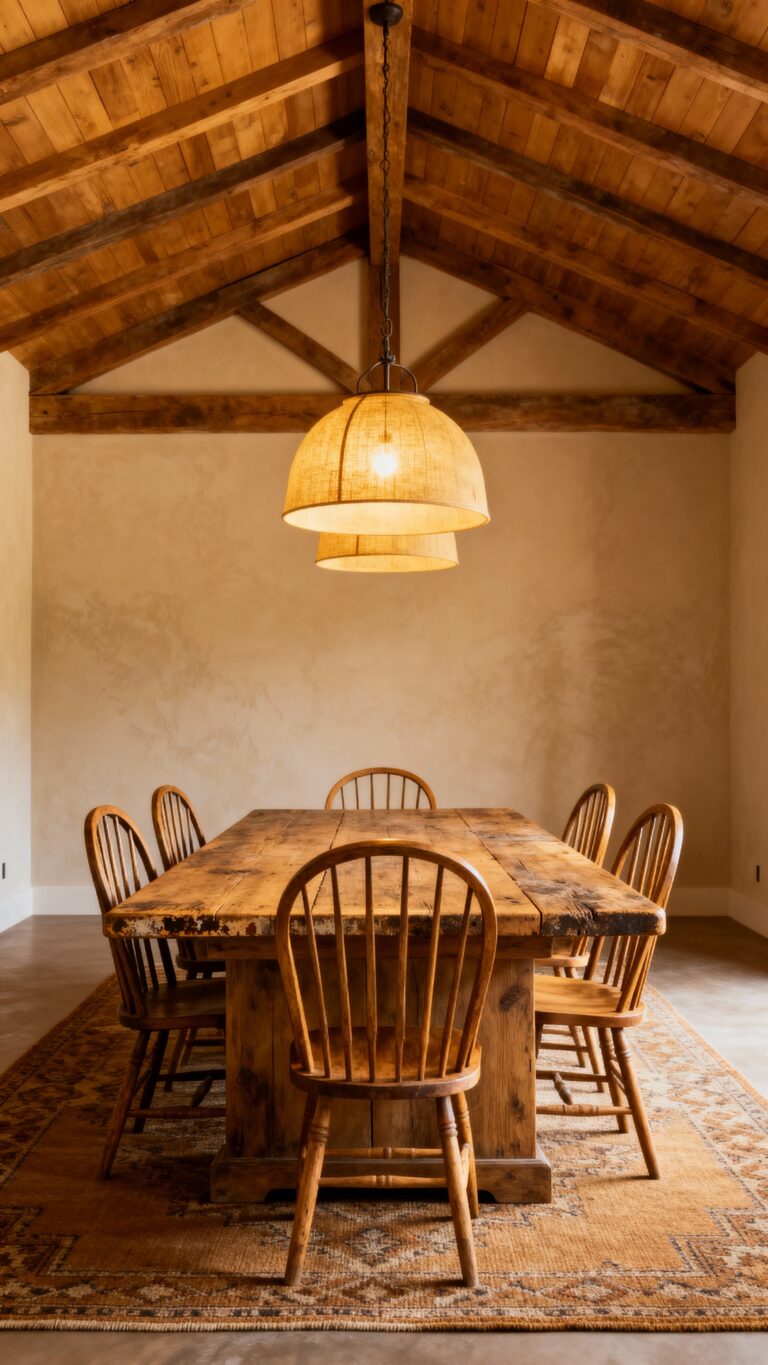
Colonial-style Windsor chairs bring timeless elegance and comfortable seating to your primitive dining room while honoring America’s rich furniture-making heritage. These versatile pieces feature distinctive spindle backs and solid wood construction that perfectly complements your weathered dining table.
You’ll appreciate how simple Windsor chair designs create visual harmony without overwhelming your space’s rustic character. Choose chairs in natural wood finishes or muted painted colors like sage green or barn red. The timeless Windsor chair appeal lies in their handcrafted appearance and ergonomic comfort, making them ideal for long family meals and intimate gatherings in your primitive-style home. Position your Windsor chairs to emphasize symmetry and balance, reflecting the fundamental design principles that defined colonial dining spaces.
Display Antique Pewter and Stoneware Collections
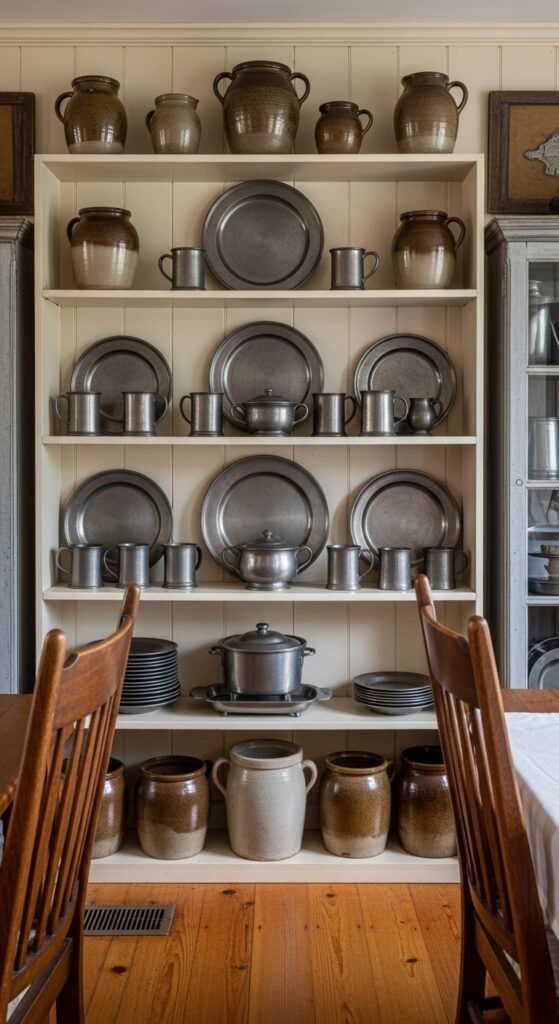
Antique pewter plates, mugs, and serving pieces create stunning focal points that showcase your primitive dining room’s authentic historical character. You’ll want to display antique pewter on open shelves or inside glass-front hutches where natural light enhances their soft metallic glow.
Arrange pieces by size and function, grouping platters with smaller bowls for visual balance. Consider hutch styles that blend display and storage functionality to house your collection while maintaining easy access to frequently used pieces. Showcase heirloom stoneware alongside pewter to create arresting textural contrasts between smooth metal and rough ceramic surfaces.
Position your most impressive pieces at eye level, and don’t overcrowd displays—give each treasured item breathing room to command attention and tell its unique story.
Install Rustic Beam Ceilings and Wide-Plank Floors
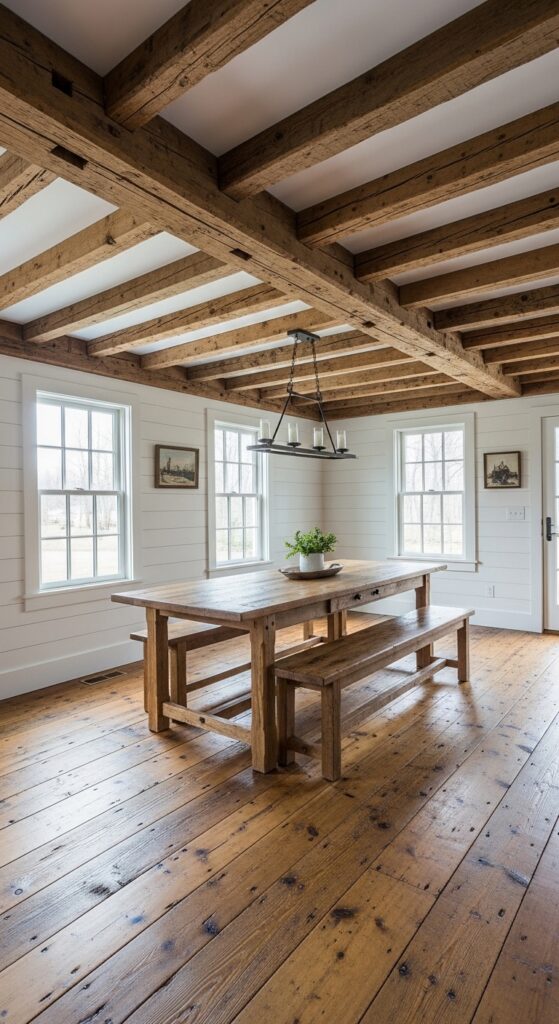
Exposed wooden beams overhead and weathered wide-plank flooring beneath your feet convert any dining space into an authentic primitive retreat that captures centuries-old craftsmanship. You’ll want to choose reclaimed chestnut or oak beams that showcase natural imperfections and hand-hewn marks. Install exposed timber beams using traditional mortise-and-tenon joinery for maximum authenticity.
Your wide-plank floors should feature random widths between six and twelve inches with visible nail holes and weathered patina. These natural materials create the foundation for timeless farmhouse elegance that never goes out of style. Pair these foundational elements with whitewashed shiplap walls to create visual contrast. This combination establishes the perfect backdrop for your primitive dining room’s rustic, freedom-loving aesthetic.
Choose Muted Earth Tones and Milk Paint Finishes
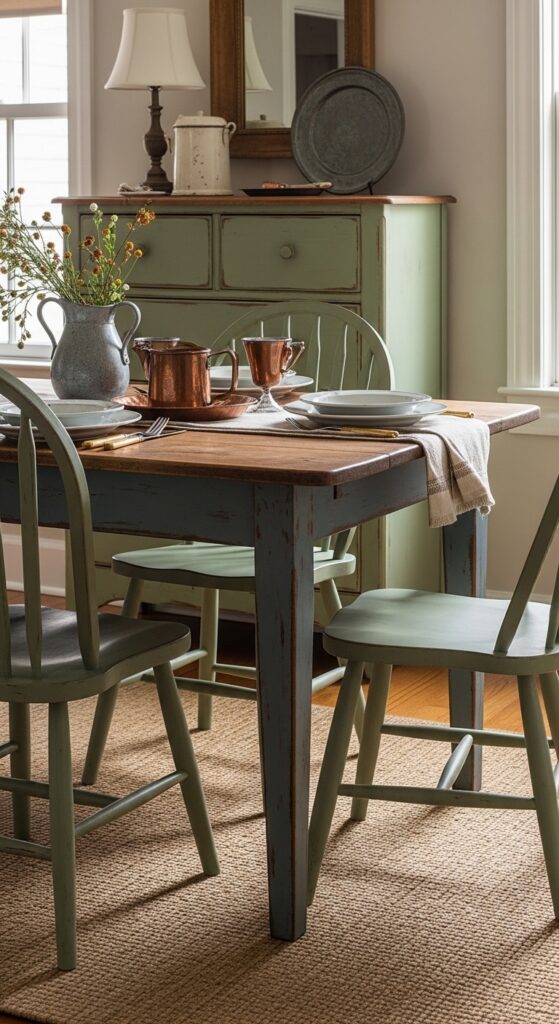
While bold colors might tempt modern decorators, primitive dining rooms thrive on nature’s subtle palette of weathered browns, sage greens, and dusty blues that whisper stories of simpler times. You’ll find freedom from today’s overwhelming color choices by embracing these muted earth tones that create instant tranquility.
Milk paint delivers authentic primitive charm through its naturally flat, chalky appearance that mimics centuries-old finishes. Apply distressed paint finishes to dining chairs and tables by lightly sanding edges after painting. Complement these painted pieces with aged patina pieces like copper accents or pewter serving dishes that enhance your room’s timeless appeal. This contemporary style approach allows you to blend modern functionality with the warmth and character of rustic farmhouse elements.
Add Authentic Lighting With Lanterns and Candles
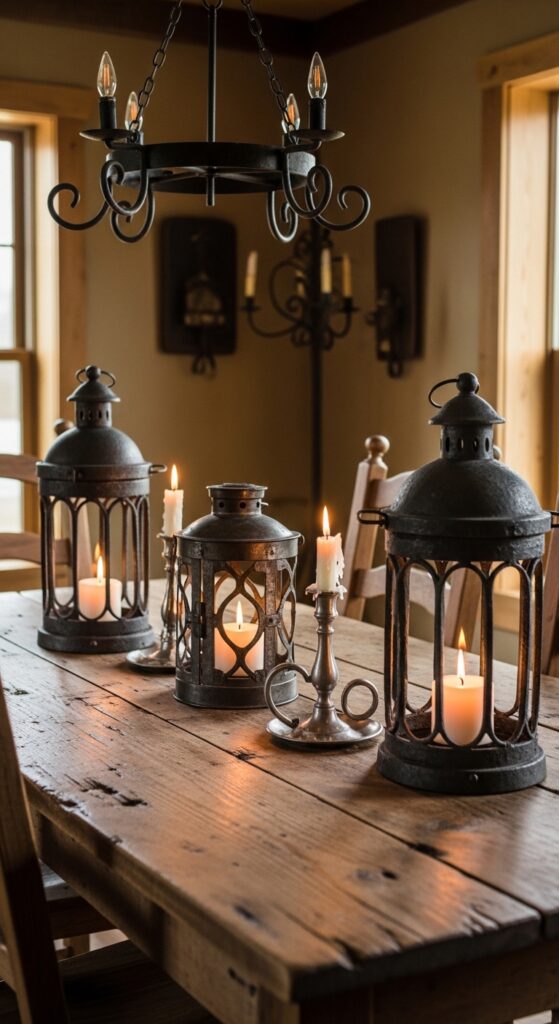
Flickering flames and warm amber glows transport your primitive dining room back to an era when families gathered by candlelight and oil lamps illuminated evening meals. You’ll create authentic ambiance by strategically placing wrought iron or tin lanterns throughout your space, letting their rustic metalwork cast dancing shadows on weathered walls.
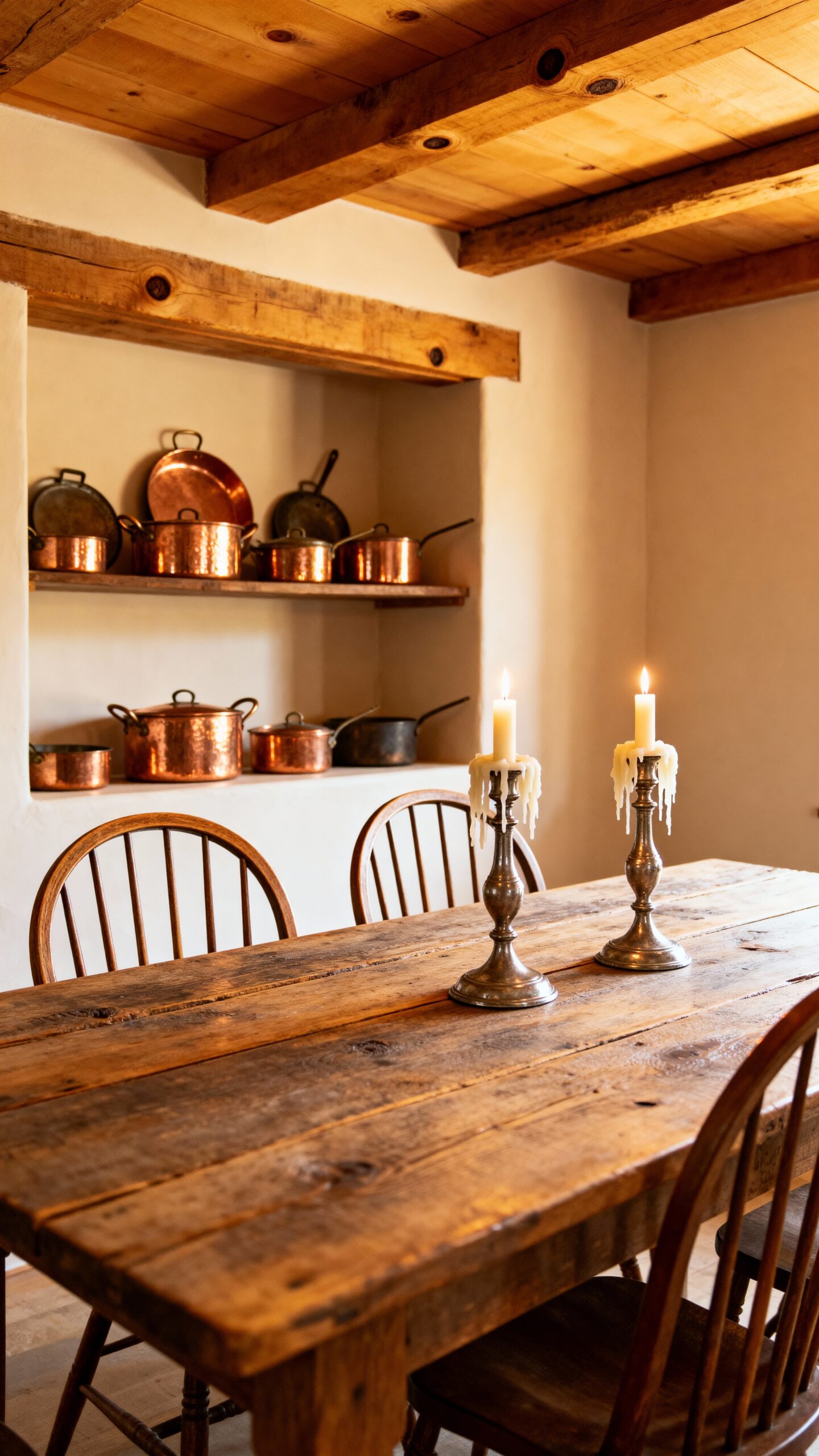
Position oil lamps on your dining table’s center, using them as functional centerpieces that provide gentle illumination during meals. Add tallow candles in pewter holders along windowsills and sideboards. For intimate dining spaces, consider smaller-scale chandeliers crafted from natural materials like wood or wrought iron that complement the primitive aesthetic without overwhelming the room. These traditional lighting sources eliminate harsh modern fixtures while embracing the self-reliant spirit of early American homes.
Incorporate Handwoven Textiles and Homespun Fabrics
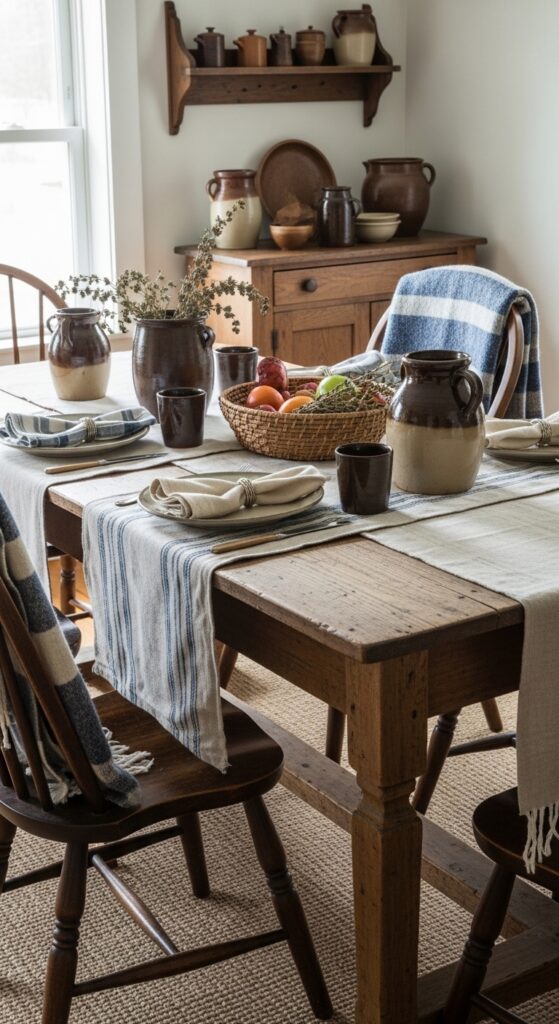
Handwoven textiles bring the authentic touch of colonial craftsmanship into your primitive dining room, connecting you to generations of skilled artisans who created functional beauty from simple materials.
Choose linen table runners with visible weave patterns and homespun napkins in natural cream or indigo blue. Layer wool blankets over chair backs for warmth and visual interest. Incorporate natural fiber baskets as centerpieces or storage solutions, filling them with seasonal fruits or dried herbs.
Display handcrafted pottery alongside your textiles to create cohesive vignettes. These elements convert your space into an authentic celebration of early American self-reliance and resourcefulness.
Feature Traditional American Folk Art and Signage
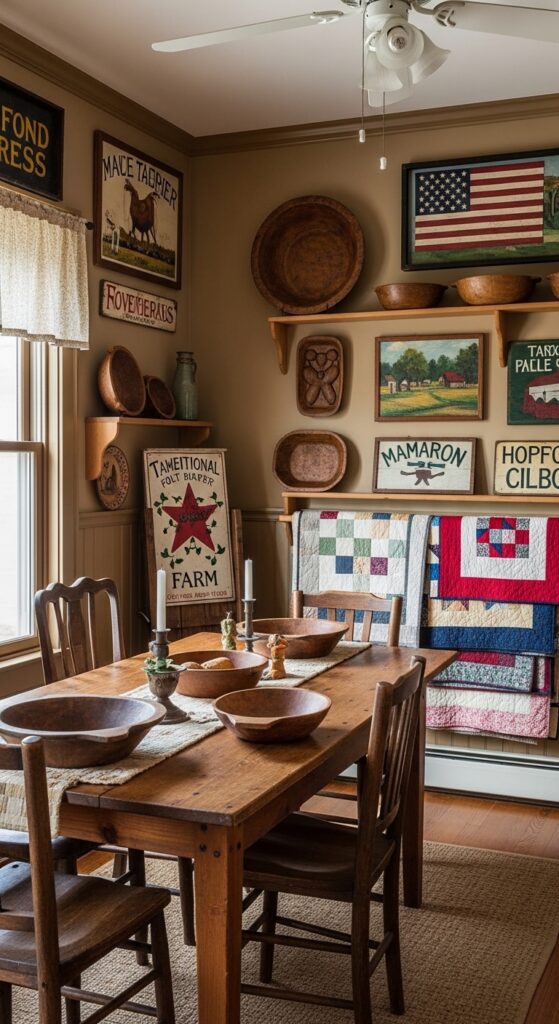
Traditional American folk art alters your primitive dining room into a gallery of early American heritage, where every painted sign and carved piece tells a story of colonial life. Incorporate vintage signage like weathered general store advertisements, hand-painted farm signs, or wooden tavern markers above doorways and windows. These authentic pieces create focal points that celebrate America’s independent spirit.
Highlight primitive artwork through displayed quilts, carved wooden bowls, and pewter serving pieces on open shelving. Position folk art paintings featuring rural scenes, barnyard animals, or patriotic motifs on walls to establish your room’s historical character and freedom-loving atmosphere.
Build Open Shelving for Everyday Pottery Display
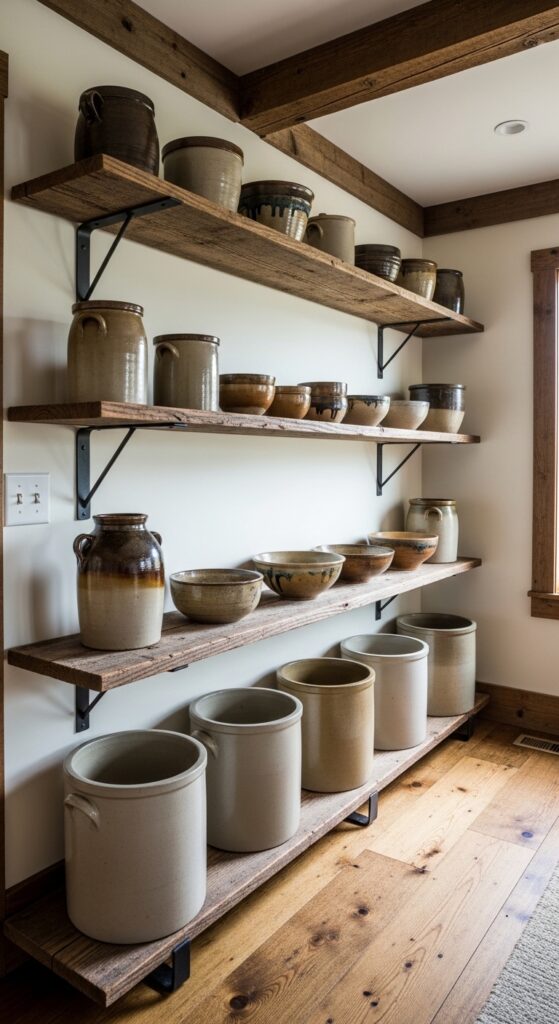
Since open shelving alters bare walls into functional display areas, you’ll create the perfect backdrop for showcasing your primitive pottery collection while keeping everyday dishes within easy reach. Install reclaimed wood planks on simple iron brackets for authentic early American character.
Space shelves eighteen to twenty-four inches apart to accommodate various pottery heights comfortably.
Hang pottery pieces artfully by grouping similar colors together, then mixing different sizes for visual interest. Place larger crocks on lower shelves for stability, while arranging smaller bowls up high. Highlight unique pottery shapes by positioning them where natural light catches their handcrafted textures and earthy glazes beautifully.
Layer Vintage Quilts and Primitive Accessories
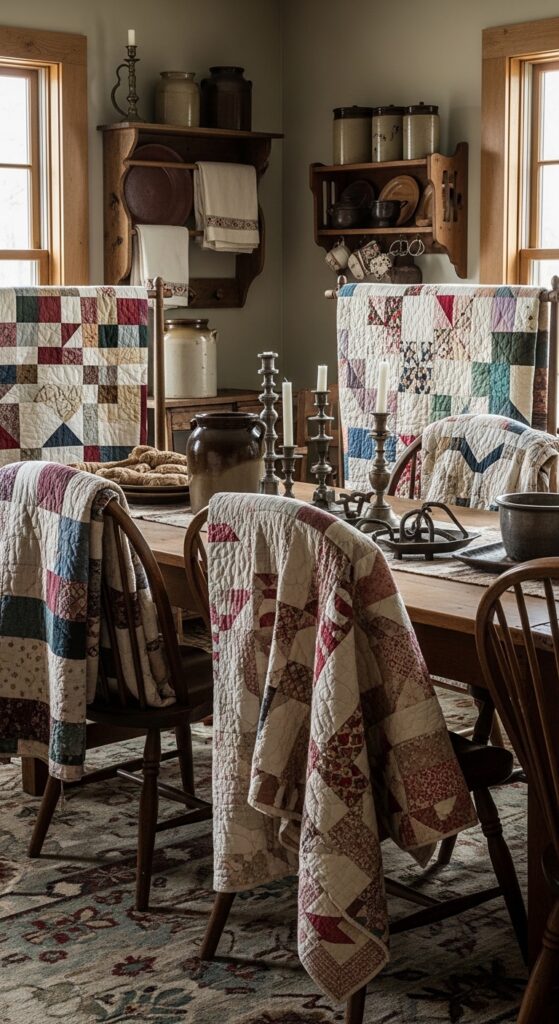
Vintage quilts alter your primitive dining room into a cozy, lived-in space that celebrates generations of American craftsmanship and storytelling. You’ll create visual warmth by draping handmade quilts over dining chairs or displaying them on quilt racks near your table.
Layer antique linens beneath your quilts for added texture and authentic charm. Display handcrafted baskets filled with seasonal gourds, dried herbs, or wooden utensils on nearby surfaces.
You can also arrange primitive accessories like pewter candlesticks, earthenware crocks, and hand-forged iron pieces throughout the room. These timeless elements work together to establish your dining space’s authentic early American character.
Conclusion
You’ll create an authentic primitive dining room by combining weathered wood furniture, colonial accessories, and natural textures. Start with a distressed dining table and Windsor chairs, then add pewter collections and handwoven textiles. Install exposed beams and wide-plank floors to establish rustic foundations. Choose muted earth tones and milk paint finishes to complete the early American aesthetic. These timeless elements will alter/change/convert/shift your space into a cozy, historically-inspired gathering place.