12 Rustic Dining Room Ideas Full of Natural Texture
Get inspired by twelve rustic dining room ideas that transform ordinary spaces using natural textures and weathered materials for cozy elegance.
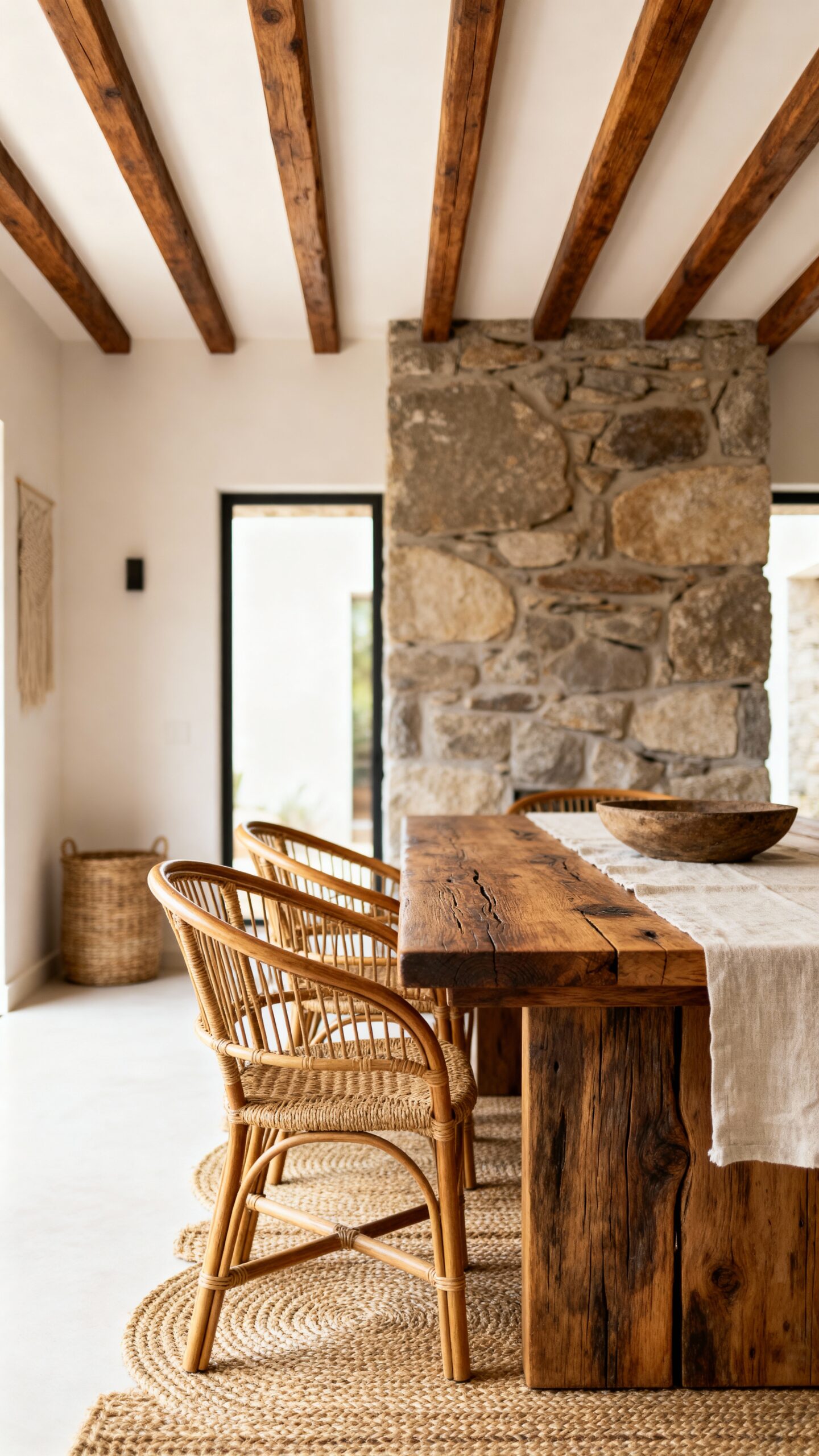
You can alter your dining space into a warm, welcoming retreat by incorporating natural textures that create authentic rustic charm. These twelve design strategies focus on bringing outdoor elements inside through reclaimed materials, weathered finishes, and organic accents that tell meaningful stories. Each approach builds layers of visual interest while maintaining the cozy, lived-in feel that makes rustic dining rooms so appealing. That perfect balance between refined elegance and comfortable informality.
Reclaimed Wood Dining Tables That Tell a Story
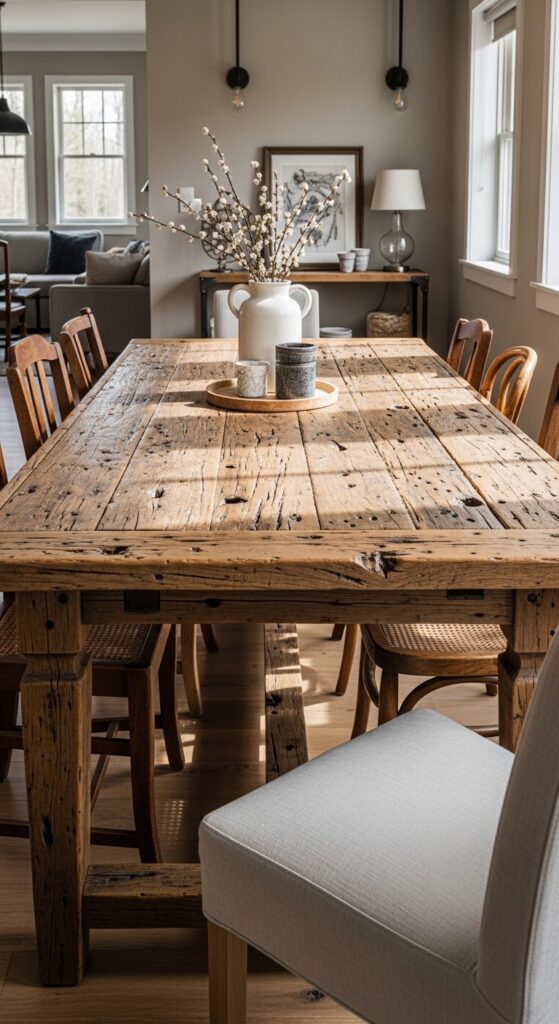
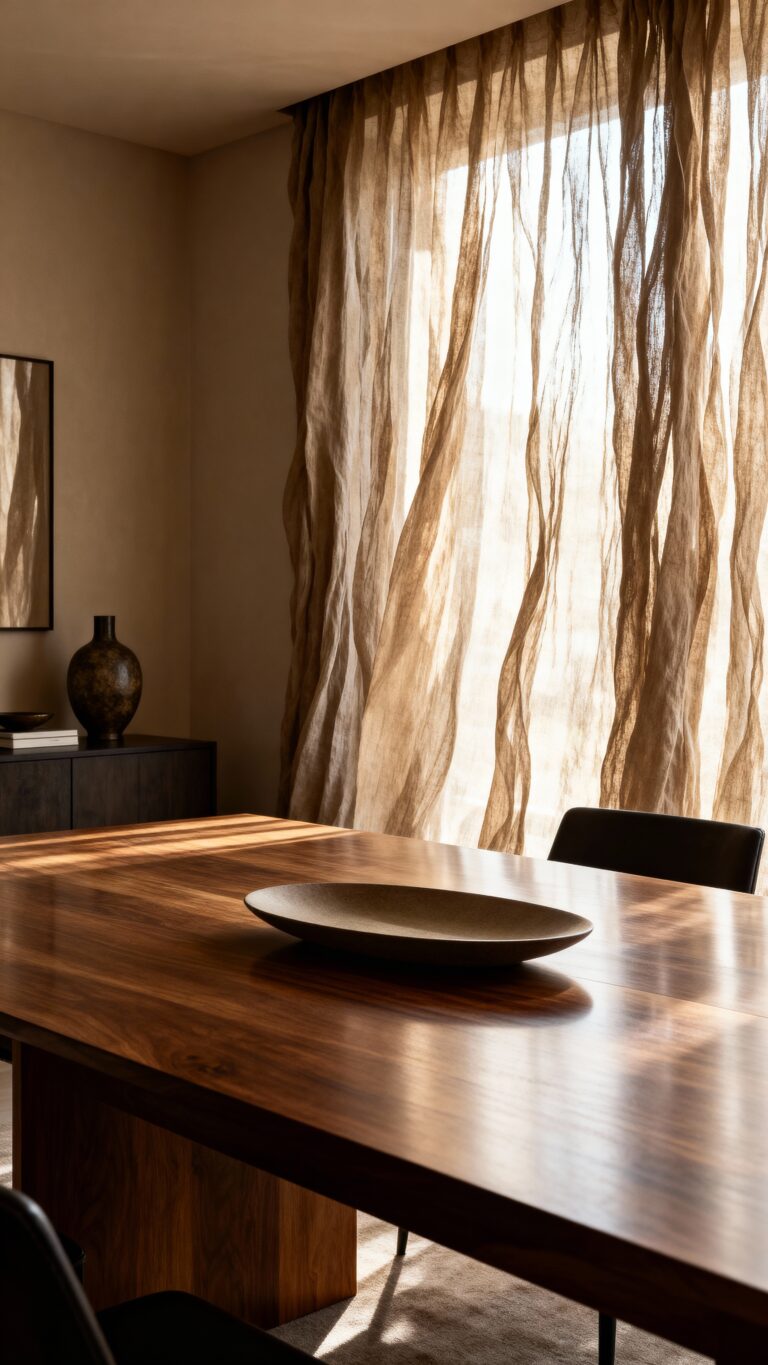
When you choose a reclaimed wood dining table, you’re bringing centuries of history directly into your home’s heart. Each weathered wood patina tells stories of barns, factories, and homes that came before yours. You’ll find unique character marks like nail holes, saw cuts, and natural aging that mass-produced furniture simply can’t replicate.
Consider pairing your reclaimed top with antique table legs from designer salvage yards or vintage furniture stores. These combinations create one-of-a-kind pieces that reflect your independent spirit while supporting sustainable design practices that keep beautiful materials from landfills. This approach perfectly achieves the contemporary style balance that makes rustic farmhouse design so appealing in modern homes.
Exposed Ceiling Beams for Architectural Drama
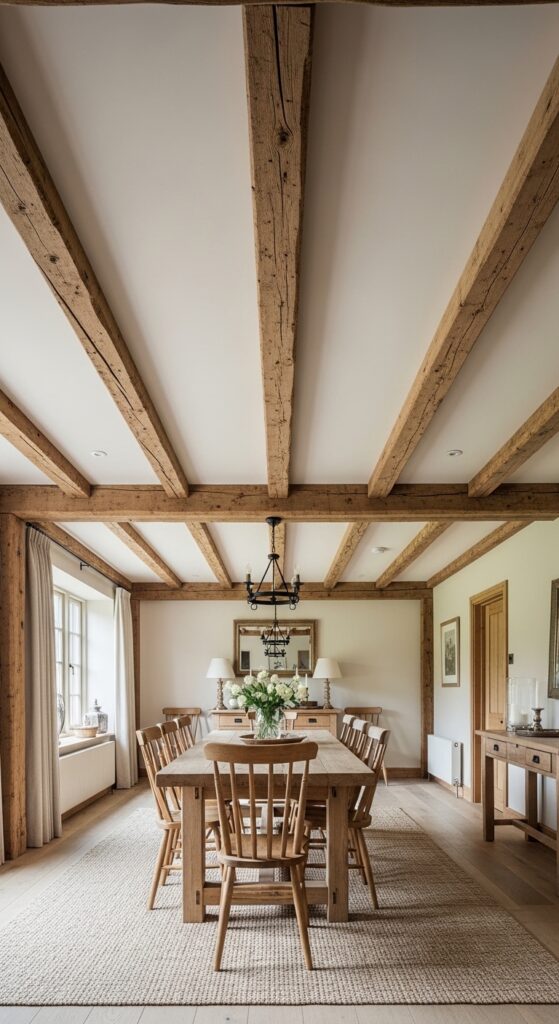
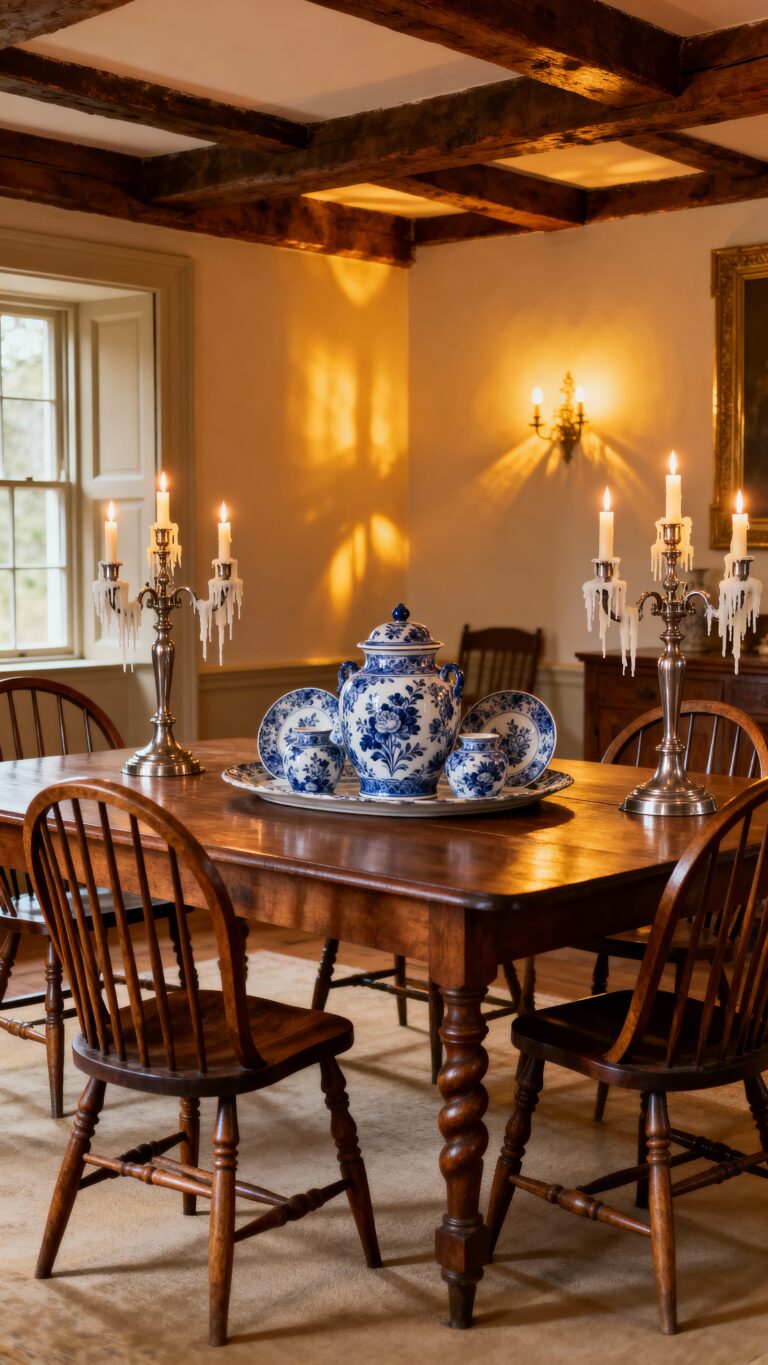
Exposed ceiling beams alter your rustic dining room from ordinary to extraordinary by drawing the eye upward and creating impressive vertical scale. Reclaimed timber beams add authentic character while showcasing natural wood grain patterns that complement your dining furniture perfectly.
Install rustic wood support structures across your ceiling’s length to emphasize the room’s dimensions and create visual interest. You’ll find that darker beams contrast beautifully against lighter ceiling colors, while weathered finishes enhance the organic texture you’re seeking. Chunky wooden tables positioned beneath these architectural elements create a cohesive farmhouse aesthetic that celebrates natural materials.
Consider spacing beams evenly for symmetrical appeal, or arrange them asymmetrically for a more casual, farmhouse-inspired atmosphere that celebrates imperfection.
Stone Accent Walls That Ground Your Space
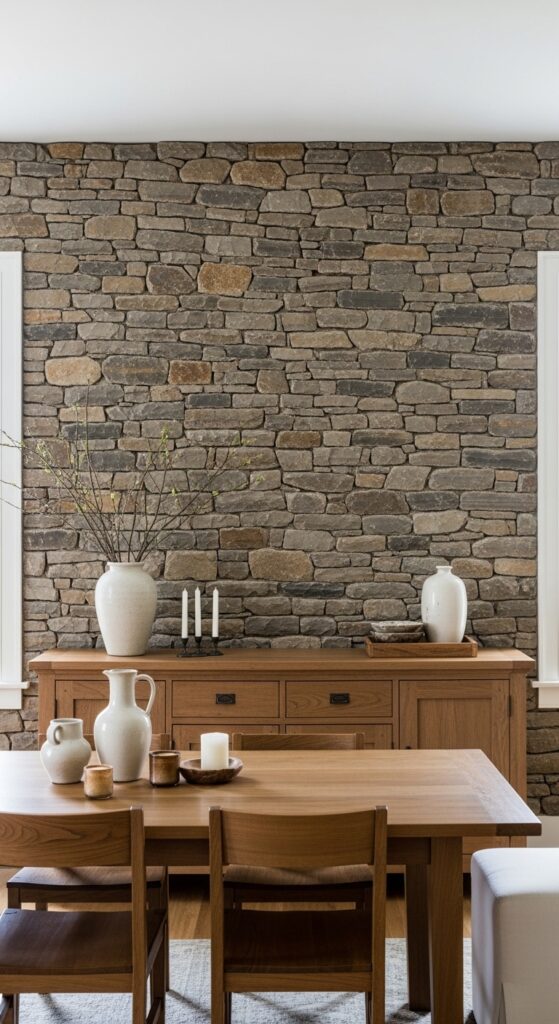
Stone accent walls metamorphose your rustic dining room into a grounded, sophisticated space that balances the airy drama of exposed ceiling beams with earthy, substantial texture. You’ll uncover that stone accent walls with earthy hues create visual weight that anchors your dining experience beautifully.
Choose natural fieldstone, reclaimed brick, or stacked slate to establish your room’s foundation. These materials offer authentic character that can’t be replicated artificially.
Stone accent walls that enhance rustic charm work exceptionally well behind buffets or as backdrop features. You’re free to experiment with different installation patterns—horizontal stacking creates width while vertical arrangements add height to your space. The key is incorporating natural materials that complement the timeless farmhouse aesthetic and create that cozy atmosphere essential to rustic dining spaces.
Vintage Industrial Lighting With Raw Metal Finishes
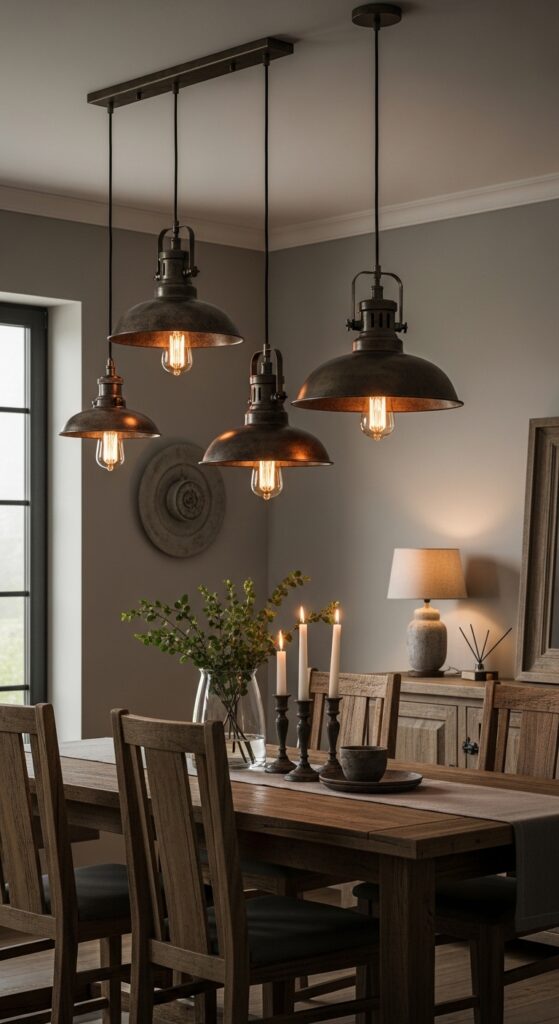
Raw metal finishes in vintage industrial lighting fixtures instantly alter your rustic dining room into a sophisticated blend of old-world charm and urban edge. You’ll find hammered metal light fixtures create stunning focal points above your dining table while reflecting your independent spirit.
Rustic industrial pendant lights work beautifully when hung at varying heights, adding visual interest and breaking traditional design rules. Choose fixtures with exposed Edison bulbs to enhance the raw aesthetic you’re creating.
Mix different metal patinas like weathered bronze, aged copper, or distressed iron to showcase your unique style and create depth throughout your space. Consider the fixture placement carefully in rooms with high ceilings to ensure proper scale and illumination for your dining area.
Natural Fiber Rugs That Add Warmth and Texture
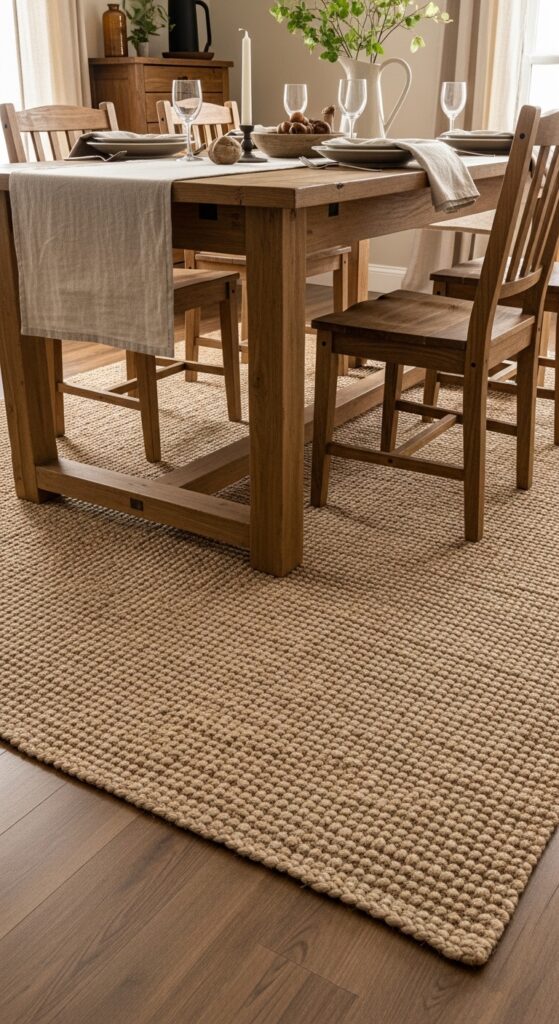
When you’re selecting natural fiber rugs for your rustic dining room, you’ll uncover they instantly ground your space with organic textures and earthy warmth. Jute rugs bring natural durability while creating visual interest through their woven patterns and neutral tones. You can layer different sizes to define your dining area without overwhelming the room’s rustic charm.
Sisal area rugs offer exceptional texture contrast against smooth hardwood floors, adding depth to your design scheme. These natural materials complement wooden furniture beautifully, creating cohesive flow throughout your space while maintaining that authentic, lived-in atmosphere you’re seeking. The right rug selection will anchor your furniture and provide a foundation that ties all your rustic elements together seamlessly.
Handcrafted Pottery and Ceramic Serving Pieces
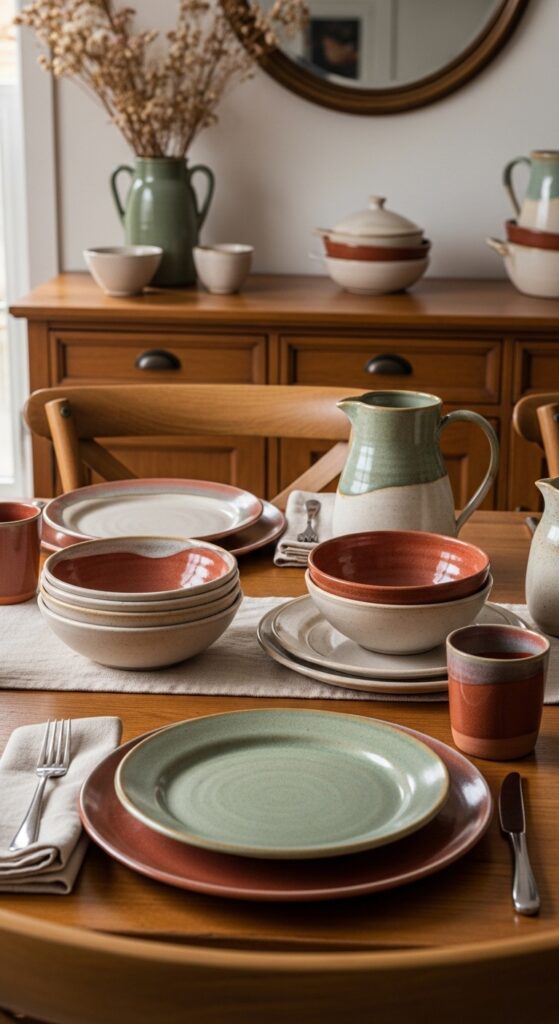
Handcrafted pottery and ceramic serving pieces alter your rustic dining room into an authentic gathering space that celebrates artisanal craftsmanship. You’ll uncover that handcrafted ceramic plates with irregular edges and earthy glazes create intimate dining experiences that manufactured dinnerware simply can’t match.
Choose artisan pottery collections featuring bowls, pitchers, and serving platters in warm terracotta, sage green, or cream tones. These pieces tell stories of skilled hands and traditional techniques, giving you freedom from mass-produced uniformity. These simple designs echo the primitive dining room aesthetic of early American homes, where function and beauty merged seamlessly.
Mix different pottery styles and sizes to create versatile table settings that reflect your personal taste while honoring time-tested craftsmanship traditions.
Live Edge Furniture for Organic Sophistication
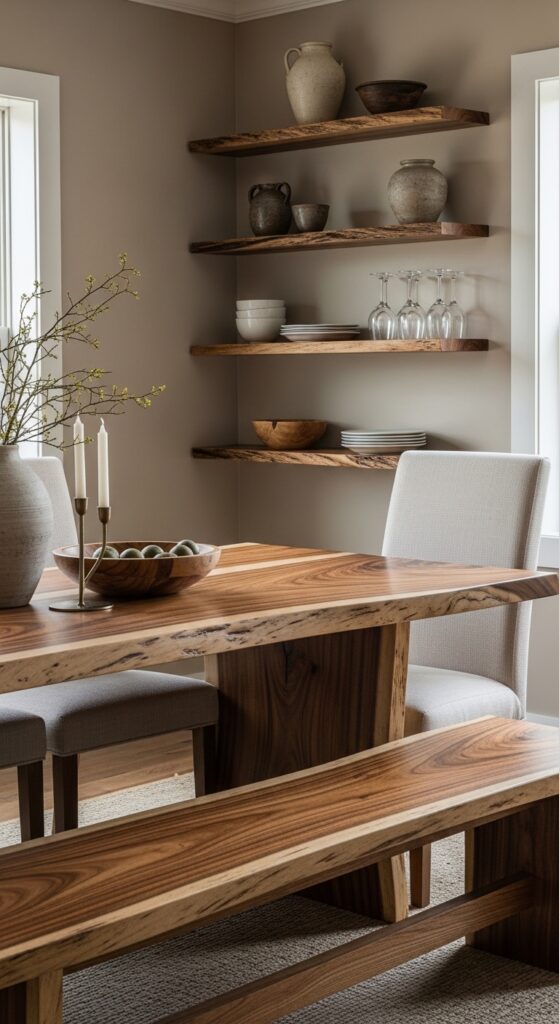
Organic sophistication emerges naturally when you incorporate live edge furniture into your rustic dining space, creating seamless harmony with your handcrafted pottery collection. You’ll alter your room’s energy by selecting tables that showcase natural wood grain patterns and irregular edges that celebrate imperfections.
Consider adding reclaimed wood benches alongside your live edge dining table for flexible seating arrangements. Install live edge shelving to display your ceramic pieces while maintaining the organic aesthetic. These furniture pieces bring authentic character that mass-produced items can’t match, giving you the freedom to create a truly personalized dining environment.
Woven Baskets and Natural Storage Solutions
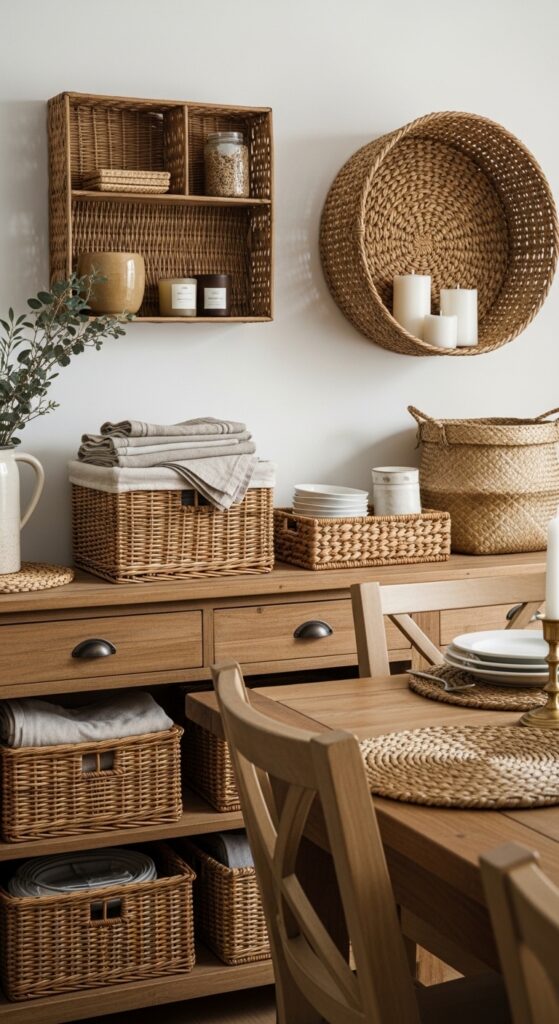
Storage becomes both functional and beautiful when you incorporate woven baskets throughout your rustic dining room, creating designated spaces for linens, utensils, and seasonal decorations. You’ll find endless opportunities to add texture while maintaining organization that supports your lifestyle choices.
Consider placing large wicker baskets beneath sideboards for storing extra table linens and serving pieces. Smaller baskets work perfectly for organizing napkin rings and candle collections. Complement these storage solutions with woven placemats that echo the same natural textures. Wall-mounted baskets featuring natural cane accents provide vertical storage while showcasing your commitment to sustainable, earth-friendly design choices.
Mixed Wood Tones for Visual Depth
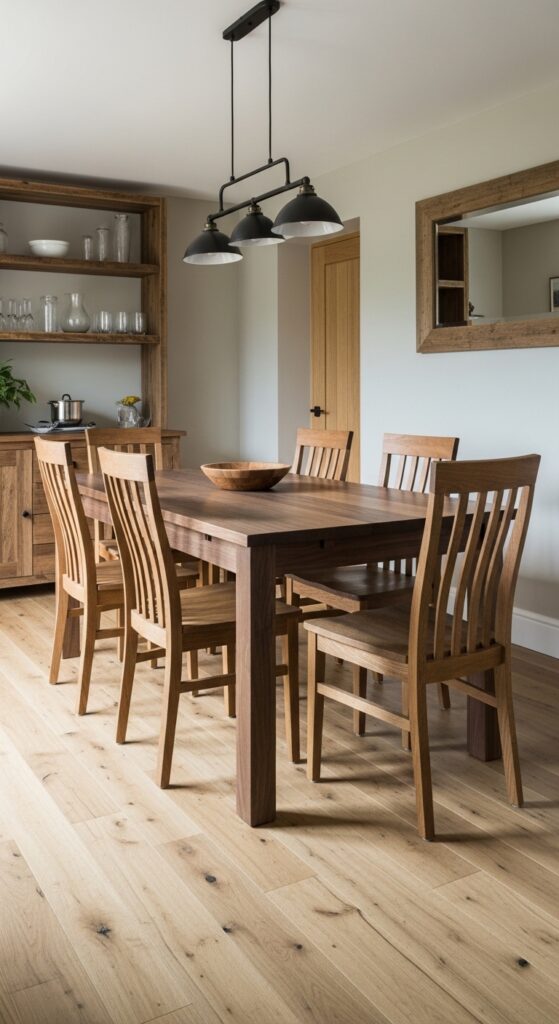
Layering different wood species throughout your dining space creates engrossing visual interest that transforms a flat, monotonous room into an active environment with natural character. You’ll achieve this depth by combining light oak floors with darker walnut furniture pieces.
Mixed wood finishes prevent your space from feeling too coordinated or sterile. Try pairing reclaimed pine shelving with cherry dining chairs, or combine weathered barn wood accents with smooth maple tabletops. These layered wood grains add authentic texture that captures rustic charm.
Don’t match everything perfectly—embrace the natural variations that make each wood species uniquely beautiful and characteristically distinct.
Natural Linen and Burlap Textiles
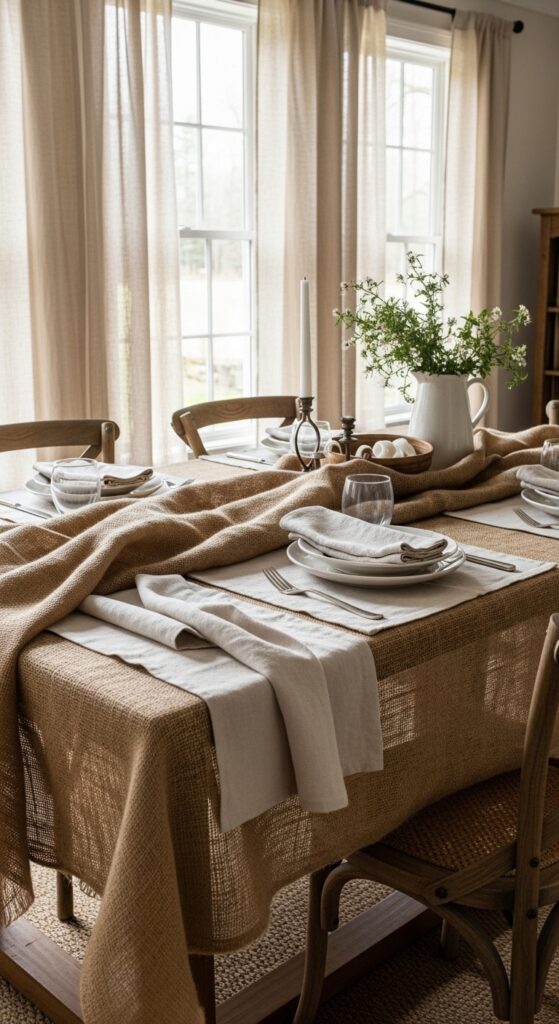
Natural fibers bring warmth and authenticity to rustic dining rooms while complementing the rich wood elements you’ve already established. Burlap tablecloths create an earthy foundation that welcomes imperfection and casual elegance. You’ll love how their loose weave adds textural interest without overwhelming your space.
Layer linen curtains in cream or oatmeal tones to soften harsh window lines while maintaining that organic feel. These natural textiles age beautifully, developing character over time. Mix different weights and weaves for visual depth—combine heavy burlap placemats with lighter linen napkins. You’re creating layers that invite touch and conversation.
Antique Mason Jars and Rustic Glassware
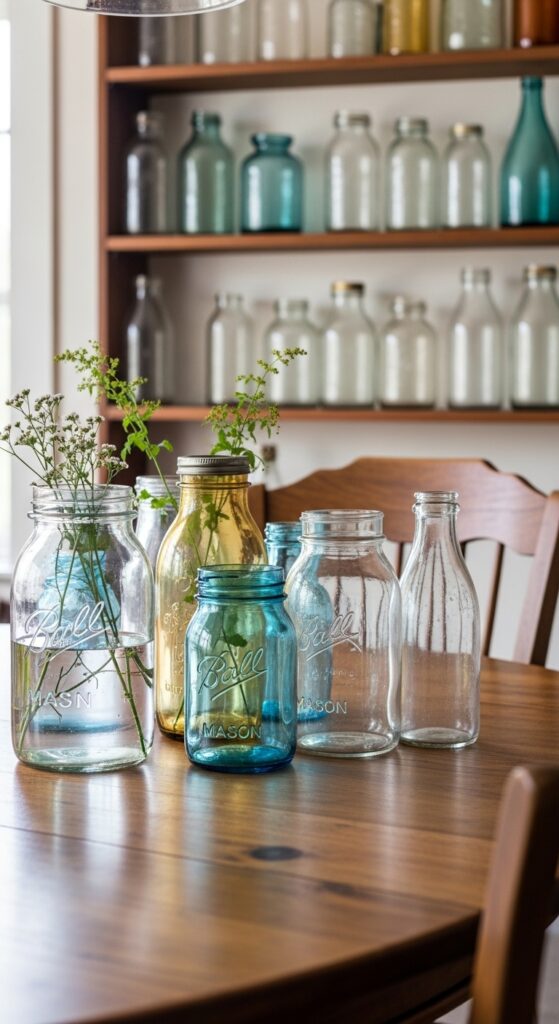
When you incorporate antique mason jars and rustic glassware into your dining space, you’re adding functional charm that tells a story. These pieces break free from cookie-cutter decorating trends while serving practical purposes.
Start building vintage glassware collections by hunting thrift stores, flea markets, and estate sales. Mix clear mason jars with amber and blue-tinted pieces for visual depth. Create repurposed jar centerpieces by filling them with wildflowers, herbs, or battery-operated string lights.
You’ll find endless possibilities with mismatched drinking glasses, vintage milk bottles, and weathered canning jars that celebrate imperfection over uniformity.
Seasonal Natural Centerpieces With Branches and Greenery
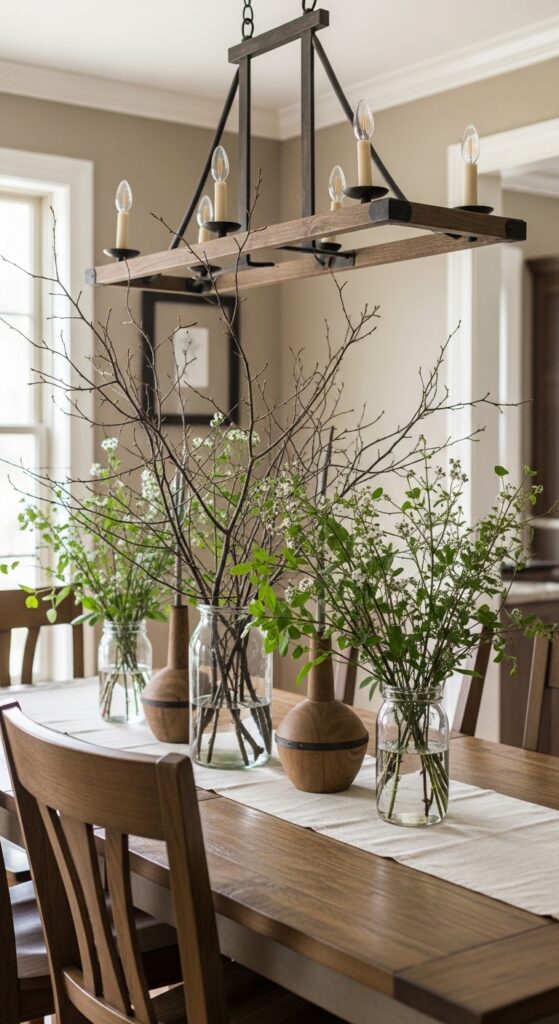
Building on your rustic glassware foundation, you’ll uncover that branches and seasonal greenery create stunning centerpieces that evolve throughout the year. Natural floral arrangements featuring bare winter branches, spring pussy willows, summer wildflowers, and autumn maple boughs modify your dining space effortlessly.
You can gather seasonal foraged elements from your own yard or local parks—think pinecones, acorns, cattails, and flowering stems. Simply arrange these treasures in your mason jars or wooden vessels for instant rustic charm. This approach gives you complete creative freedom while connecting your dining room to nature’s ever-changing beauty throughout each season.
Conclusion
You’ve uncovered how natural textures metamorphose ordinary dining rooms into inviting rustic retreats. Start with one element like reclaimed wood furniture or exposed beams, then gradually layer additional textures through stone accents, vintage lighting, and natural textiles. Remember, authentic rustic design isn’t about perfection—it’s about creating a warm, lived-in atmosphere where family and friends naturally gather to share memorable meals together.