14 Small Dining Room Ideas That Feel Open and Stylish
Brilliant small dining room ideas that maximize space and style—discover the 14 design secrets that make compact rooms feel surprisingly spacious.
You don’t need to sacrifice style when working with a small dining room. The right design strategies can remodel your compact space into an airy, sophisticated area that feels twice its actual size. From clever color choices to smart furniture placement, these fourteen proven techniques will help you create a dining room that’s both functional and visually stunning. Let’s investigate how simple changes can make your small space feel surprisingly spacious.
Choose Light Colors That Reflect Natural Light
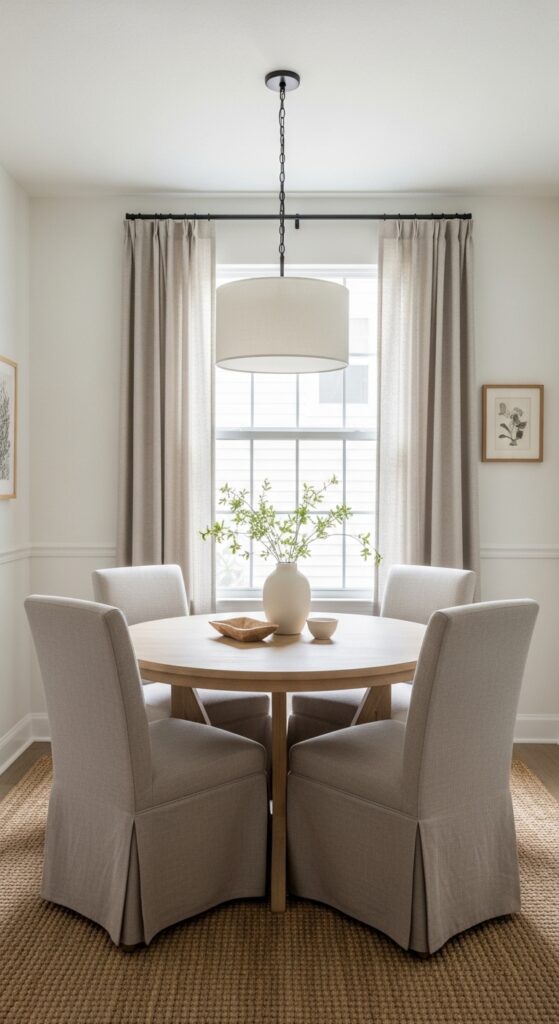
When you’re working with a small dining room, selecting the right paint colors can dramatically alter how spacious and inviting your space feels. Light, neutral tones like soft whites, pale grays, and warm creams bounce natural light around the room, creating an airy atmosphere that opens up cramped quarters.
You’ll maximize this effect by choosing semi-gloss or satin finishes that reflect more light than flat paints. Use natural textiles like linen curtains or jute rugs to add warmth without overwhelming the space. White dining room designs create a particularly fresh and clean aesthetic that enhances the sense of openness. Complement with subtle accents through artwork or small decorative pieces that won’t compete with your carefully chosen palette.
Use Mirrors Strategically to Double Your Visual Space
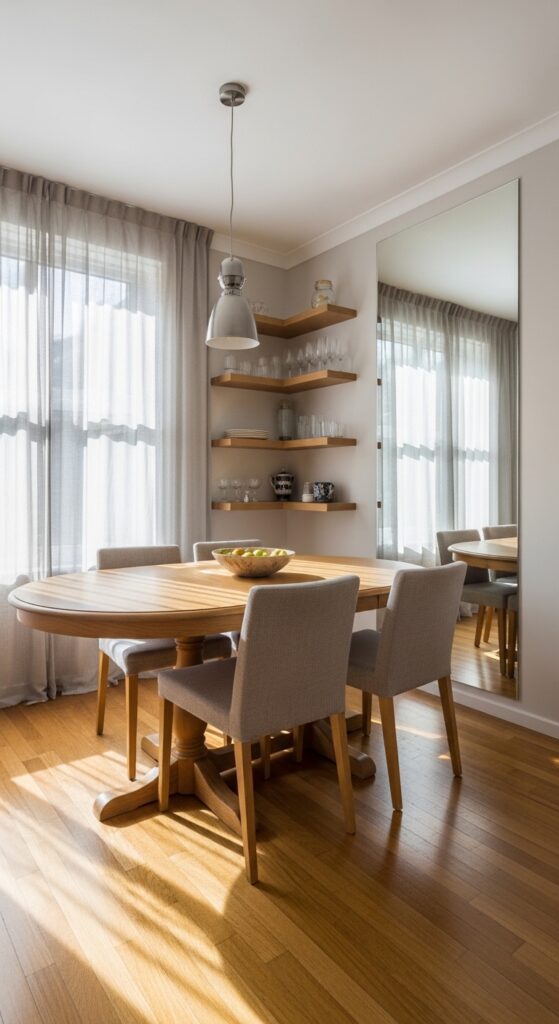
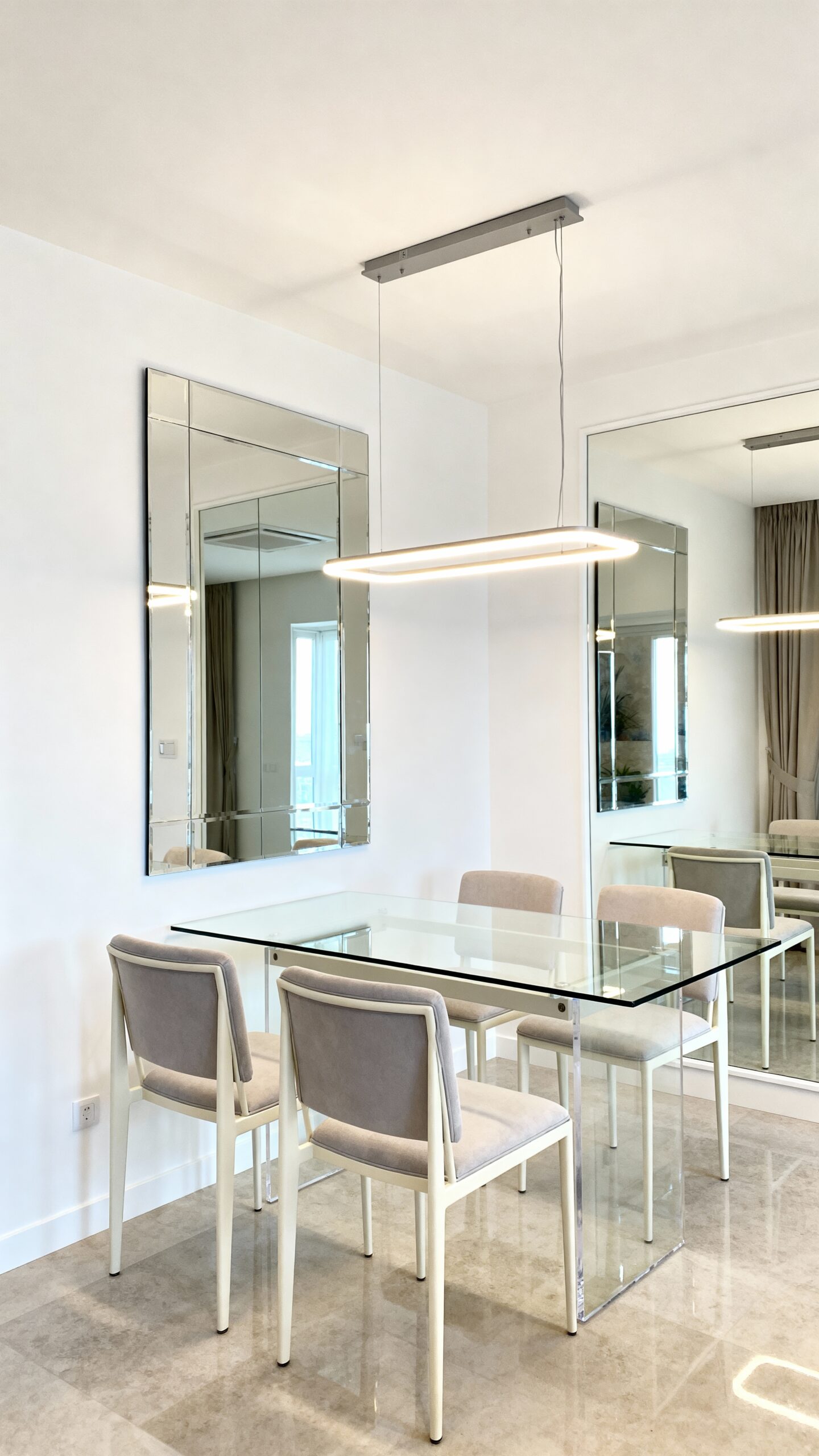
Mirrors act as optical illusions that can instantly metamorphose your cramped dining room into what appears to be a much larger, brighter space. You’ll want to angle mirrors strategically across from windows to capture and bounce natural light throughout the room.
Position large mirrors on walls perpendicular to your main seating area for maximum impact. Employ mirror placement effectively by installing them at eye level when seated, creating seamless visual flow. Consider mirrored furniture pieces like sideboards or accent tables for subtle reflection. The strategic placement of mirrors can visually double the size of your dining room, creating an impressive transformation that guests will notice immediately. This approach breaks free from traditional limitations, giving you creative control over your space’s perceived boundaries.
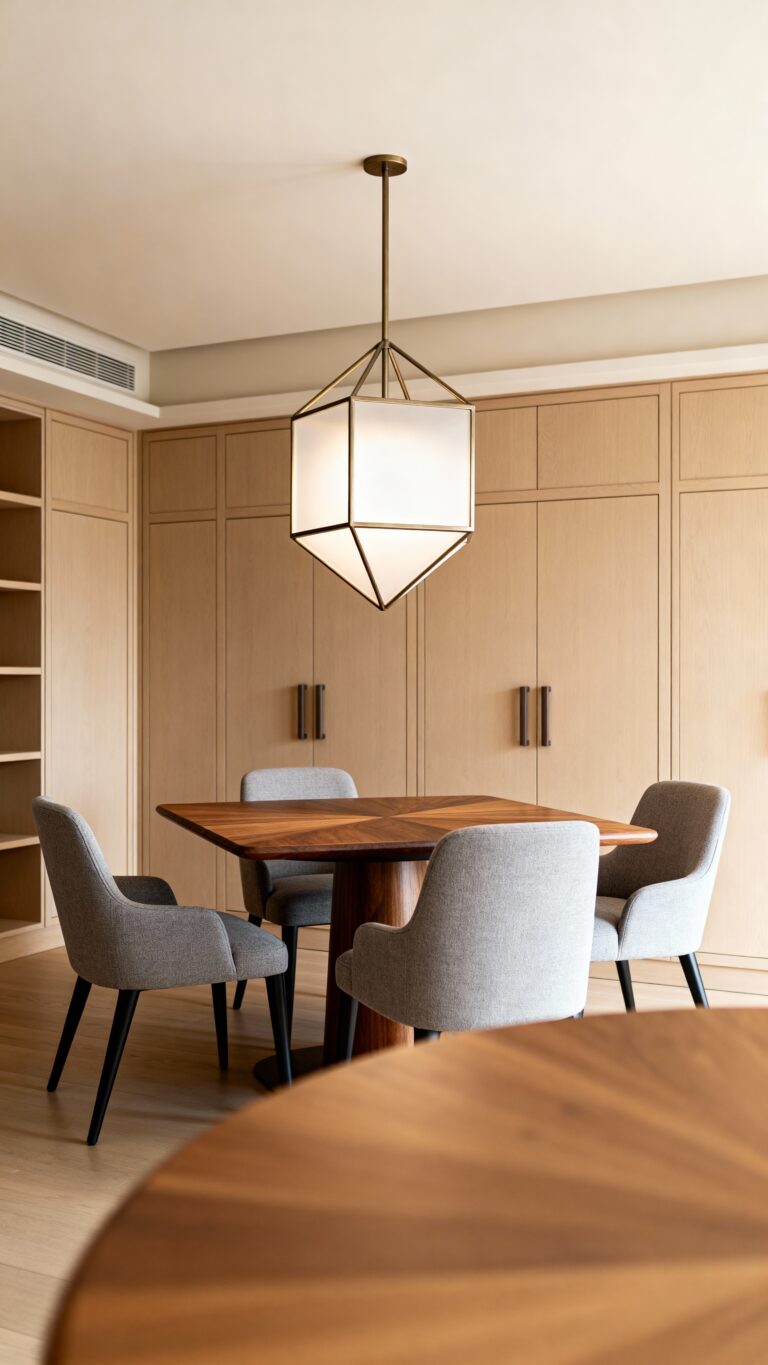
Select Round or Oval Tables Over Rectangular Ones
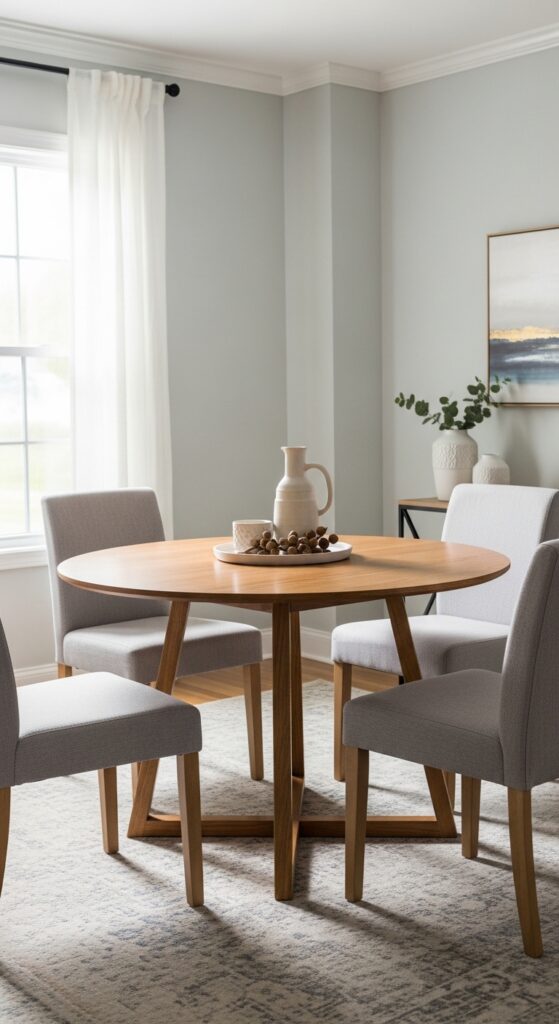
Why do sharp corners feel so restrictive in tight dining spaces? Round and oval tables create flowing movement that opens up your room’s entire footprint. You’ll encourage natural lighting to bounce freely around curved edges instead of getting trapped by rectangular corners.
Choose a 42-inch round table for four people, or select a 54-inch oval for six diners. These shapes promote open sight lines across your space, letting conversations flow naturally. You’ll also gain easier traversal around the table’s perimeter.
Round tables eliminate awkward corner positioning against walls, giving you flexible placement options that maximize your room’s breathing space. Consider pedestal styles that further enhance the open feel by eliminating bulky table legs at the corners.
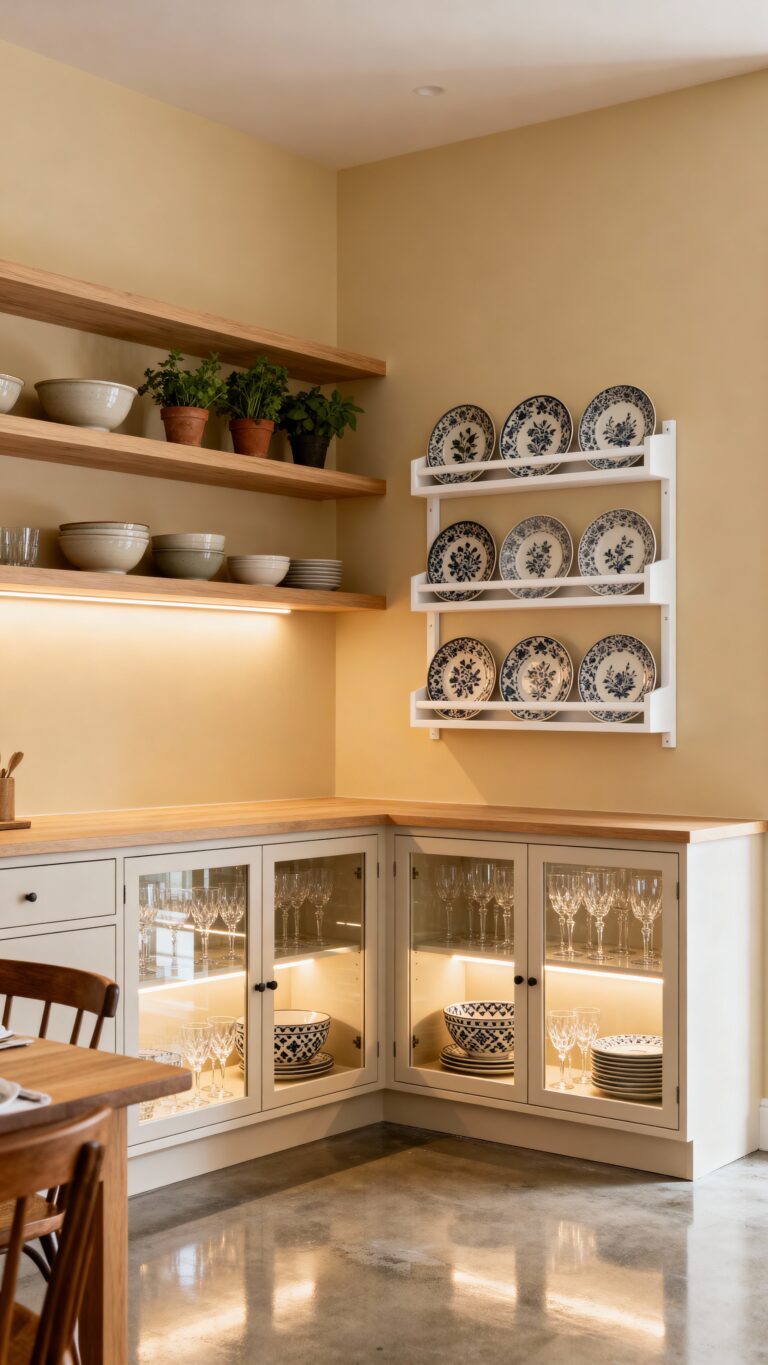
Mount Floating Shelves Instead of Bulky Storage Units
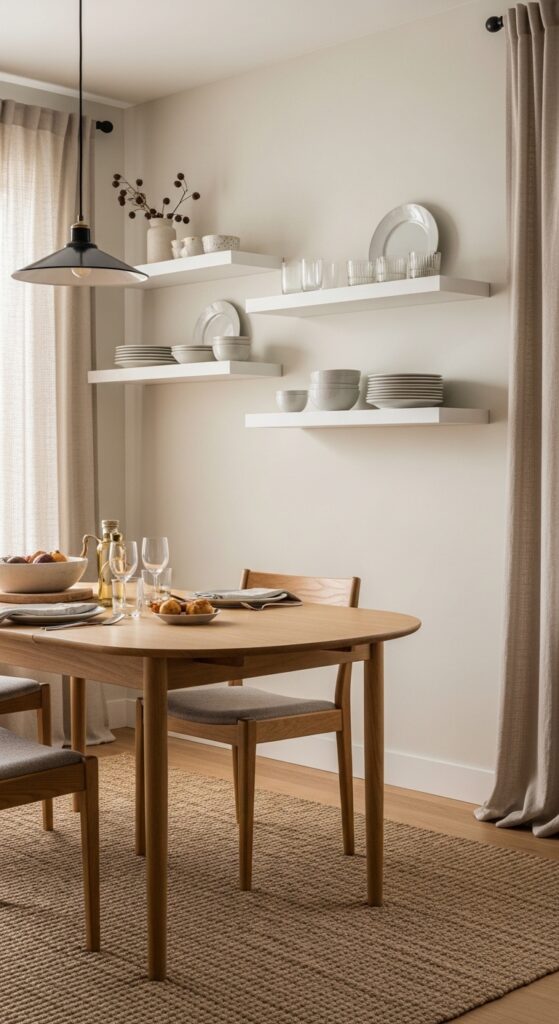
Traditional storage units steal precious floor space that small dining rooms can’t afford to lose. You’ll create an airy atmosphere by installing floating shelves that draw the eye upward and maximize vertical storage without overwhelming your space.
Mount shelves at varying heights to display dishes, glassware, and decorative items while keeping essentials within reach. You can conceal cords neatly behind shelves when positioning them near electrical outlets for accent lighting or small appliances. Wall-mounted shelves are particularly effective for saving floor space in compact dining areas where every square foot counts.
Choose sleek, minimal brackets that complement your décor style. Install shelves in corners or above existing furniture to leverage every inch efficiently while maintaining your room’s open, uncluttered feel.
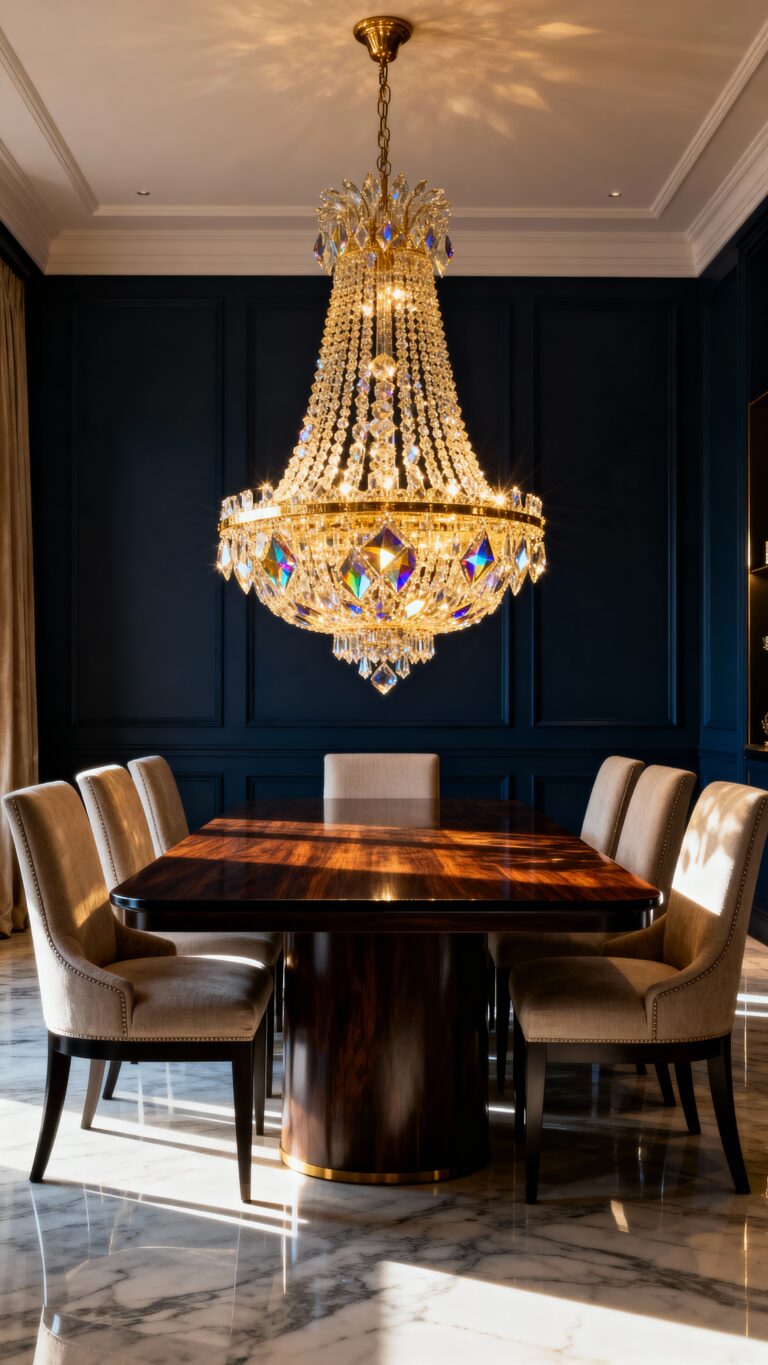
Hang Statement Lighting to Draw Eyes Upward
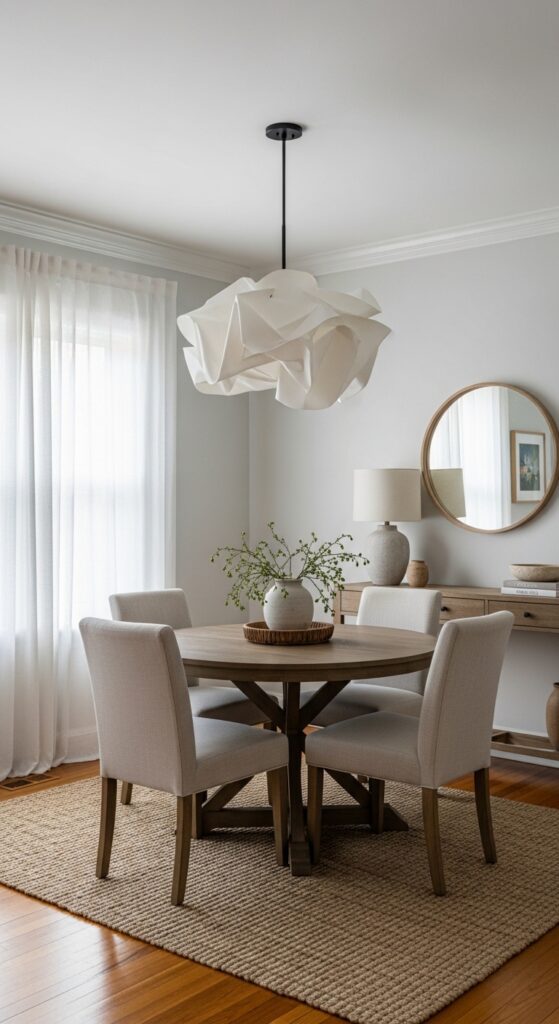
Strategic lighting choices complement your vertical storage approach by creating dramatic focal points that make your ceiling appear higher. Choose oversized pendant lighting styles that command attention and establish visual hierarchy in your compact space.
Position chandeliers or sculptural fixtures at varying heights to maximize the illusion of spaciousness. When working with limited space, consider how grand light fixtures can be scaled appropriately to create impact without overwhelming the room.
Layering light fixtures adds depth while maintaining an airy feel throughout your dining area. Combine ambient ceiling lights with accent pieces like wall sconces or table lamps for balanced illumination. Bold statement pieces draw guests’ gazes upward, making your room feel larger and more vibrant than its actual square footage suggests.
Create Built-In Banquette Seating Along Walls
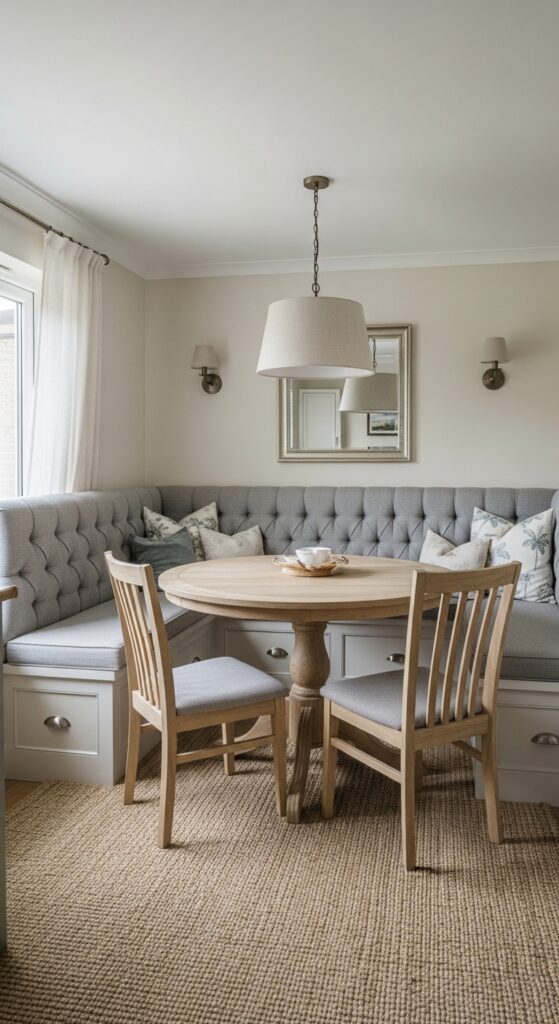
When you install built-in banquette seating along your dining room walls, you’ll maximize every square inch while creating a cozy, restaurant-style atmosphere. This smart solution helps you maximize seating capacity without cramming chairs into tight corners. You can comfortably seat more people than traditional dining setups allow.
Built-in benches optimize layout functionality by eliminating the need for chair backs to clear walkways. Add cushions and pillows for comfort and style. Consider incorporating storage underneath the seating for linens, seasonal items, or dining accessories. Corner space becomes particularly valuable when designing banquette layouts that wrap around dining areas. This approach converts awkward wall space into functional, attractive seating that guests will love.
Install Floor-to-Ceiling Curtains for Height Drama
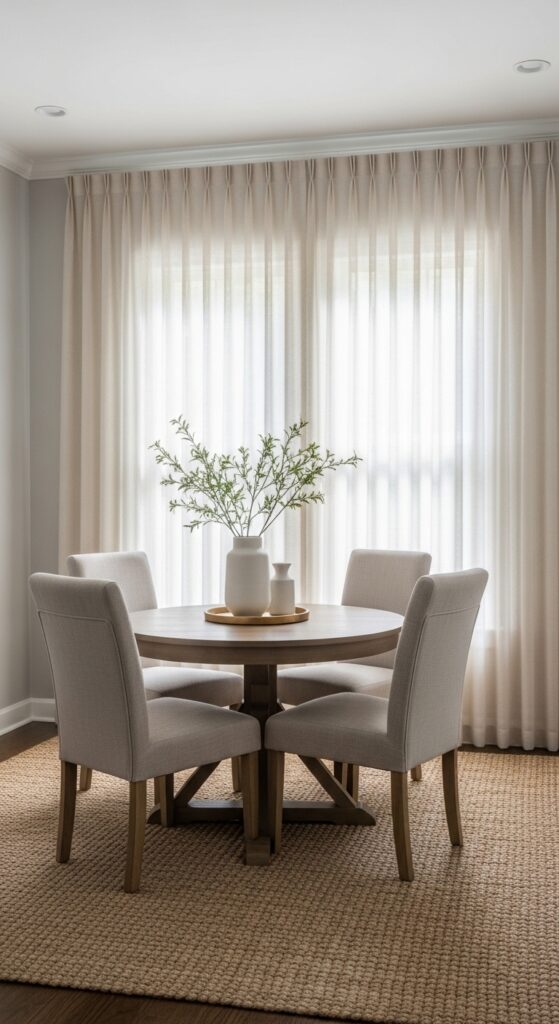
Floor-to-ceiling curtains create an instant illusion of height that modifies your small dining room into a more spacious and refined environment. You’ll draw the eye upward, making low ceilings appear taller while adding sophisticated style to your space.
Choose sheer curtains to maximize natural light penetration while maintaining privacy and visual softness. Mount curtain rods close to the ceiling rather than above windows to emphasize vertical lines. Light-colored fabrics reflect ambient lighting better, creating brightness that opens up cramped quarters.
Consider layering sheers with heavier panels for versatility—you can adjust lighting throughout the day while maintaining that dramatic height effect.
Choose Clear Acrylic or Glass Dining Chairs
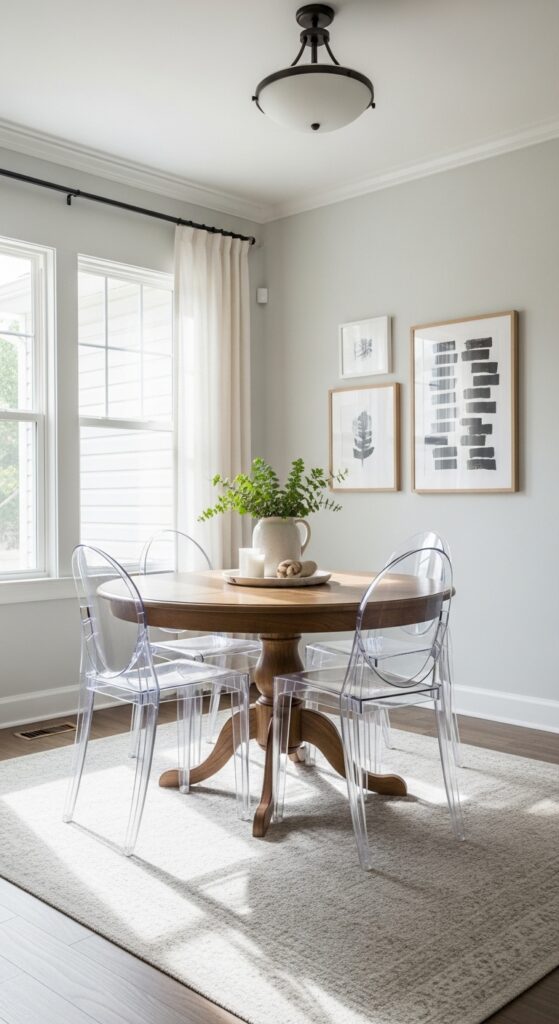
Clear acrylic and glass dining chairs function as visual magic tricks that make your small dining room appear substantially larger and more open. Their transparent design creates an unobstructed sightline that eliminates visual clutter while maintaining full functionality.
You’ll uncover these chairs offer seamless integration with any décor style, from modern minimalist to traditional elegance. They won’t compete with your dining table or other furniture pieces for attention. Consider pairing them with a bold tablecloth or colorful placemats to add personality without sacrificing the airy feel.
This smart choice maximizes your room’s potential while expressing your design freedom.
Define the Space With a Large Area Rug
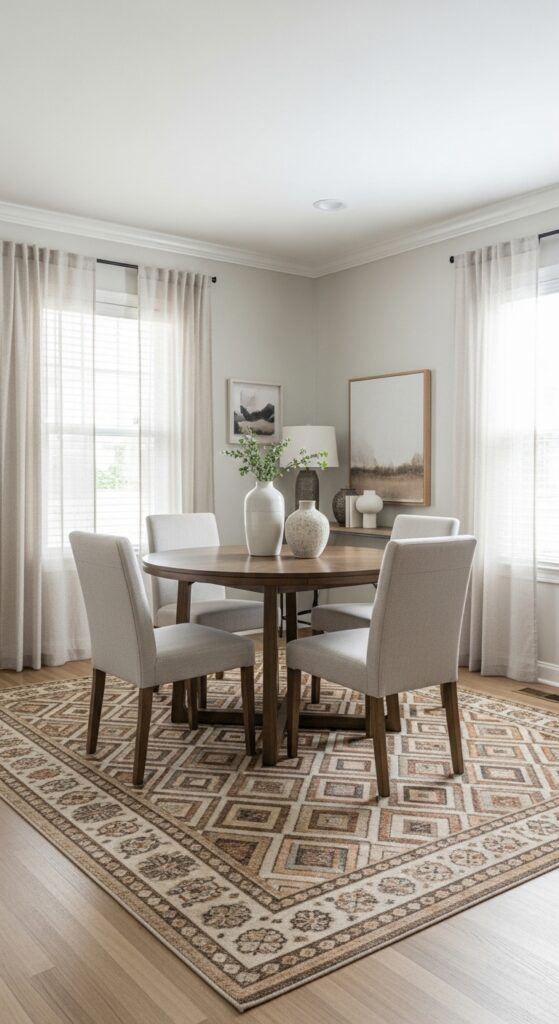
Although it might seem counterintuitive, placing a large area rug in your small dining room actually creates the illusion of expanded space while establishing clear boundaries.
You’ll want to anchor the rug with furniture by positioning your dining table and chairs completely on top of it. This technique unifies your seating area and makes the room appear larger than its actual dimensions.
Don’t hesitate to experiment with rug patterns that reflect your personal style – bold geometric designs can add visual interest, while subtle textures maintain a clean, open feeling that maximizes your dining space’s potential.
Incorporate Vertical Storage Solutions
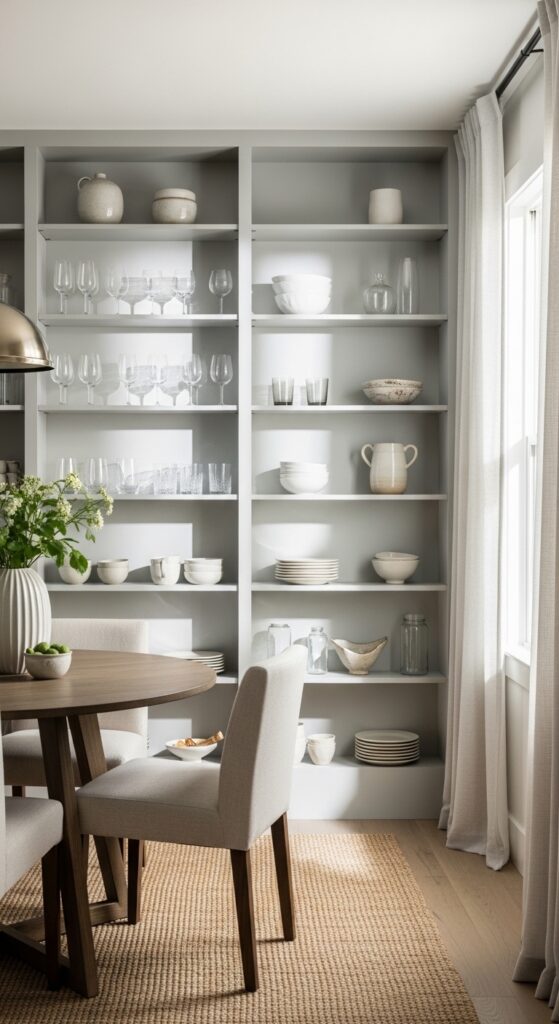
While floor rugs help define your dining area horizontally, maximizing your wall space through vertical storage creates additional functionality without sacrificing precious square footage. You’ll convert, modify, or remodel cramped quarters into organized, breathable spaces that feel intentionally designed rather than cluttered.
Utilize wall mounted shelves above your dining table to display dishes, glassware, or decorative pieces while keeping essentials within reach. Install floating shelves at varying heights to create visual interest and accommodate different item sizes.
Don’t overlook opportunities to capitalize on corner storage with tall, narrow cabinets or ladder-style shelving units that draw the eye upward and expand perceived room height.
Add Multi-Functional Furniture Pieces
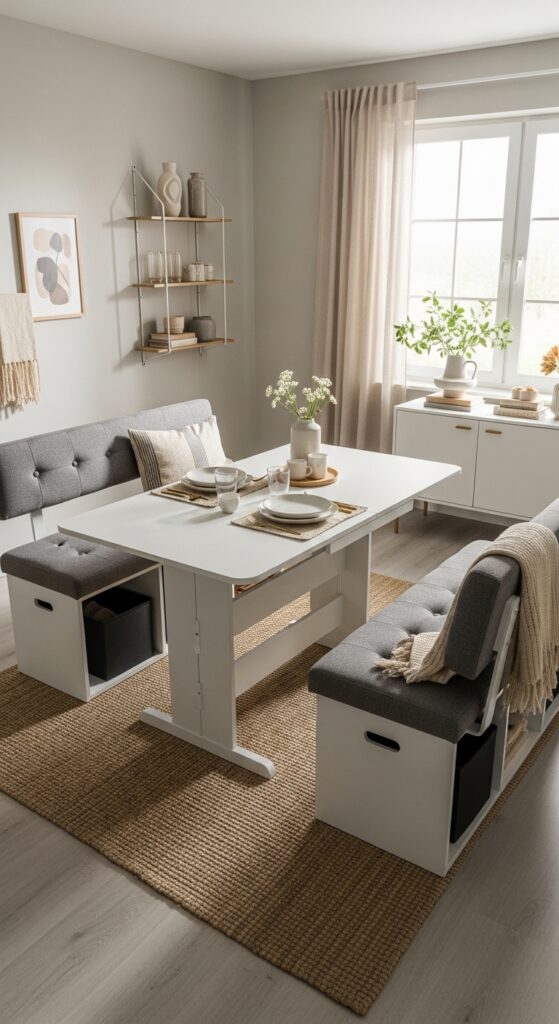
Since small dining rooms demand every piece earn its keep, multi-functional furniture reconfigures limited space into a powerhouse of efficiency and style. Choose modular furniture pieces like expandable tables that adjust from intimate dinners to larger gatherings without permanently claiming floor space.
Invest in dining benches with built-in storage compartments for linens, seasonal items, or tableware. Select multipurpose storage solutions such as credenzas that serve as both serving stations and display areas for dishes. Consider nesting side tables that tuck away when not needed but expand your surface area during entertaining occasions.
Use Console Tables as Space-Saving Dining Surfaces
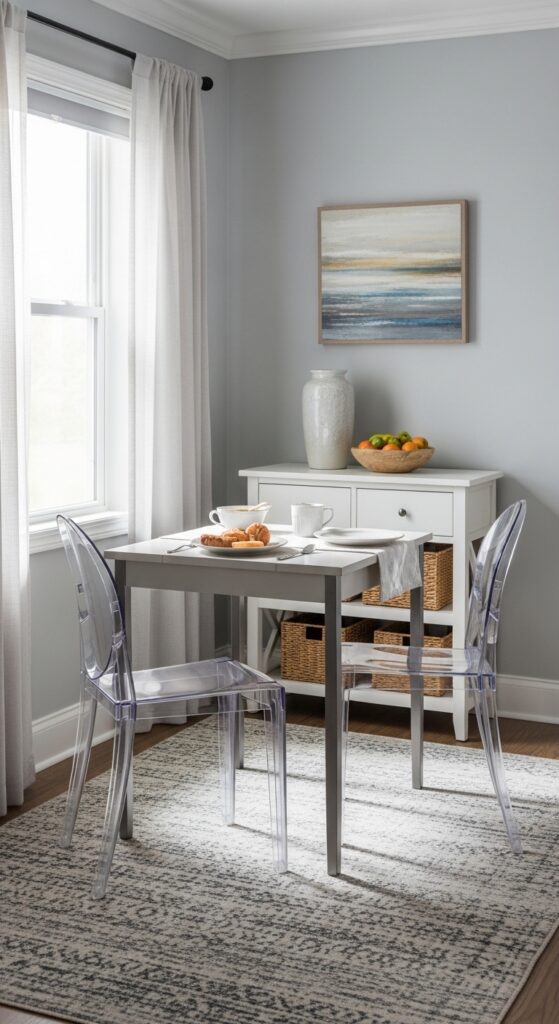
The versatile console table converts from a hallway accent piece into a surprisingly functional dining surface that maximizes every square inch of your compact space.
Choose a narrow console design that fits snugly against walls when you’re not dining, then pull it out for meals.
Look for models with built-in drawers or shelves underneath – this dual purpose storage table keeps linens, dishes, and serving pieces organized while maintaining clean lines.
You’ll love how easily it shifts between decorative display and practical dining spot, giving you flexibility without sacrificing style in your small dining area.
Create Visual Continuity With Adjacent Rooms
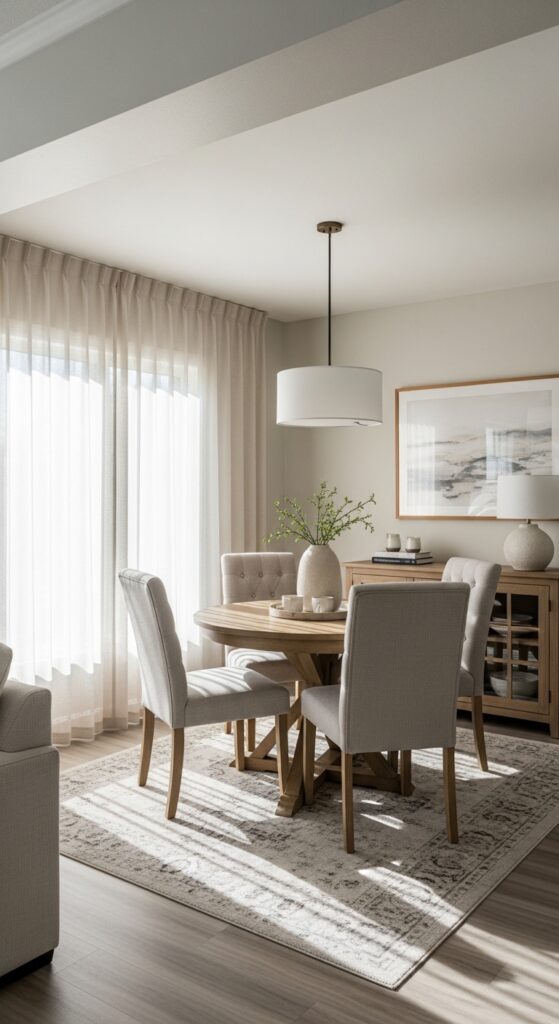
When your small dining room connects to adjacent spaces, coordinating design elements across these areas makes your entire home feel larger and more cohesive.
Open floor plans benefit from unified design choices that create seamless shifts between rooms. Choose cohesive color schemes that flow naturally from your dining area into the living room or kitchen. Repeat similar materials, such as wood tones or metal finishes, throughout connected spaces.
Use consistent lighting styles and furniture pieces that complement each other. This approach eliminates visual barriers and creates an expansive feeling that maximizes your home’s potential.
Embrace Minimalist Decor to Reduce Visual Clutter
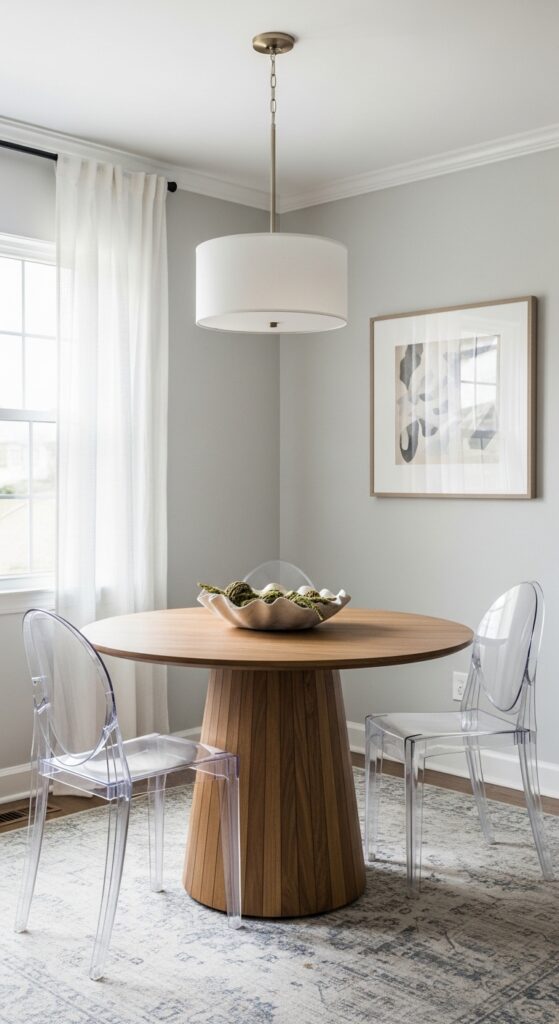
Beyond creating visual flow between rooms, minimalist design principles can alter your small dining room into a spacious, serene environment. Choose one statement piece—like a sleek dining table or single artwork—rather than multiple competing elements.
Keep surfaces clear by storing serving dishes in closed cabinets instead of displaying them openly. Select minimal accent pieces that serve dual purposes, such as a bench with hidden storage or floating shelves. This approach creates decluttered visual appeal while maintaining functionality.
Remember, every item you remove gives your eyes more breathing room, making your dining space feel vastly/considerably/substantially larger and more inviting.
Conclusion
You’ve got plenty of options to alter your cramped dining area into an inviting, spacious retreat. Start with one or two strategies that appeal most to you, then gradually incorporate additional elements as your budget allows. Remember, small changes like switching to light colors or adding mirrors can make dramatic differences. Your dining room doesn’t need square footage to feel grand—it just needs thoughtful design choices that maximize every inch.