12 Small Kitchen Extension Ideas to Add Space Without Stress
Find clever micro-extensions and space-saving tricks that transform cramped kitchens into functional havens without major construction or breaking your budget.
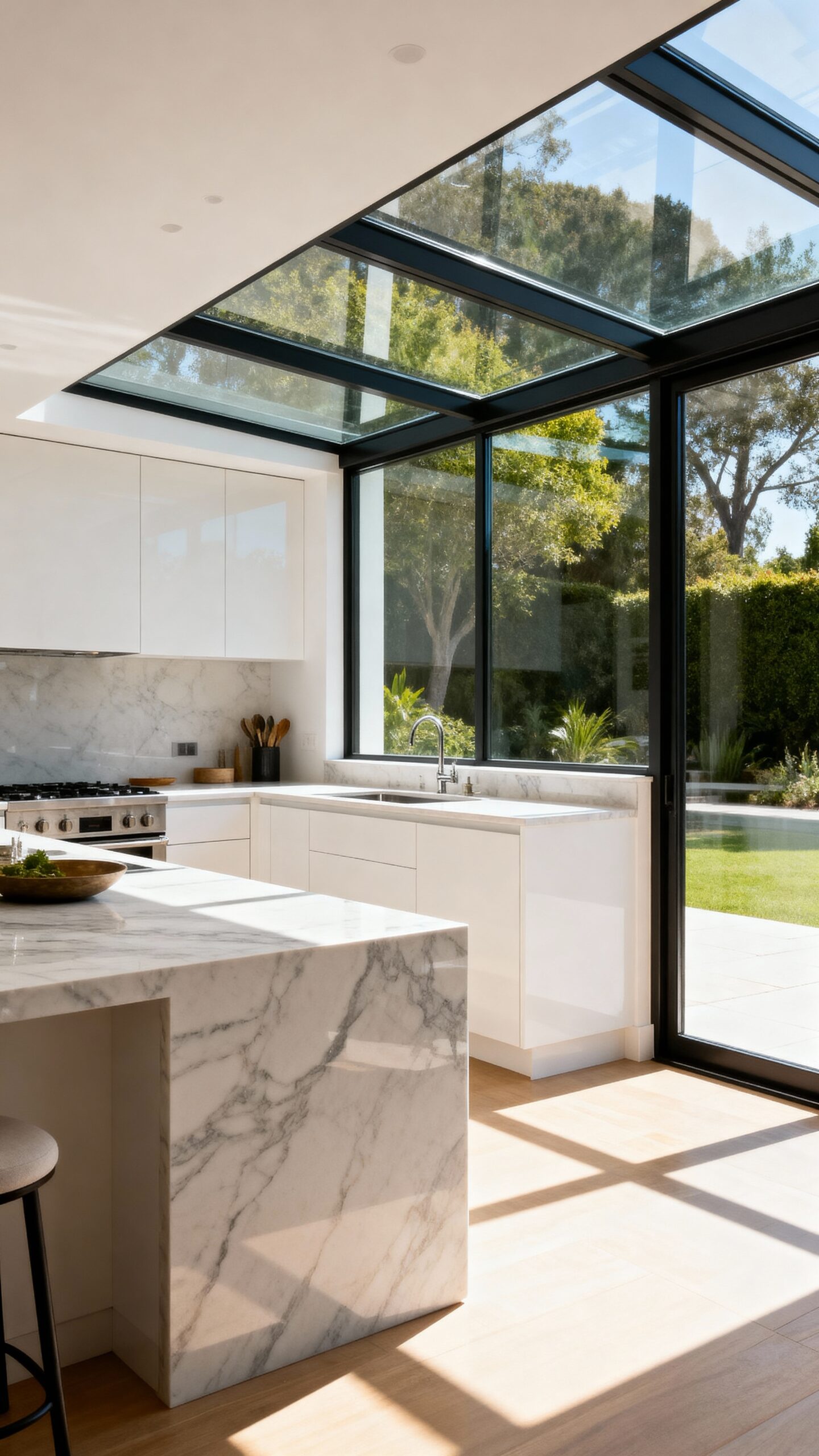
You don’t need to demolish walls or undertake major construction to metamorphose your cramped kitchen into a functional cooking haven. Small-scale extensions and smart space reallocation can add precious square footage while keeping your renovation budget intact. From micro bump-outs that extend just two feet outward to clever conversions of adjacent closets, these strategic approaches maximize your kitchen’s potential. The secret lies in identifying overlooked opportunities that’ll give you the breathing room you’ve been craving.
Micro Bump-Out Extensions for Maximum Impact
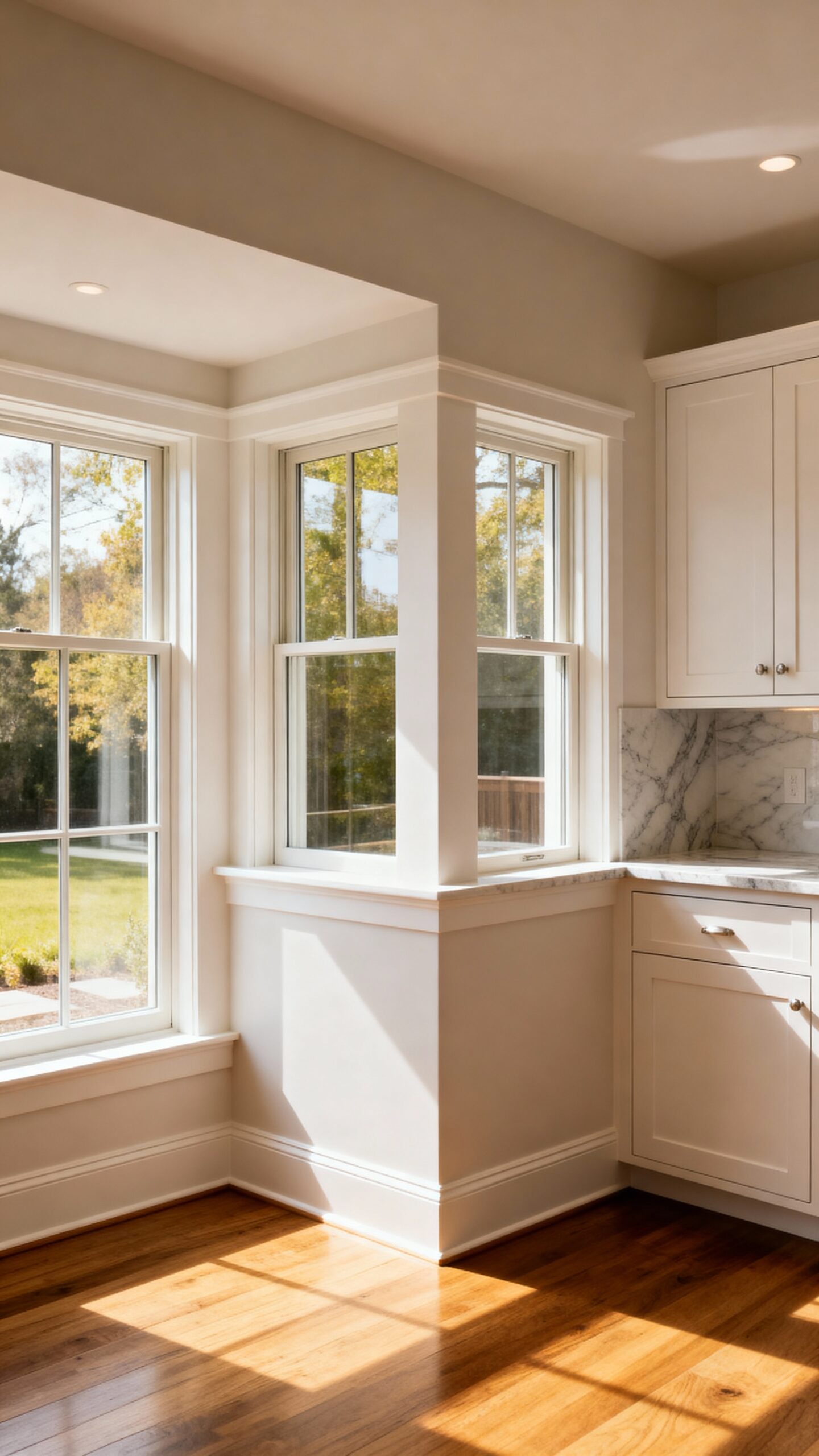
When your kitchen feels cramped but you can’t afford a major renovation, micro bump-out extensions offer an ingenious solution that maximizes space without breaking the bank. You’ll gain 2-4 feet of precious room by extending one wall outward, creating space for essential appliances or storage.
Consider adding recessed alcove additions for built-in pantry storage or coffee stations. These targeted expansions work perfectly with modular shelving solutions that adapt to your changing needs. You can install floating shelves, pull-out drawers, or custom cabinetry within your new space. When selecting storage solutions for your expanded area, choose clever shelving options that keep the space visually light while maximizing functionality. This approach gives you freedom to design exactly what you need without major structural changes.
Converting Adjacent Pantries and Closets
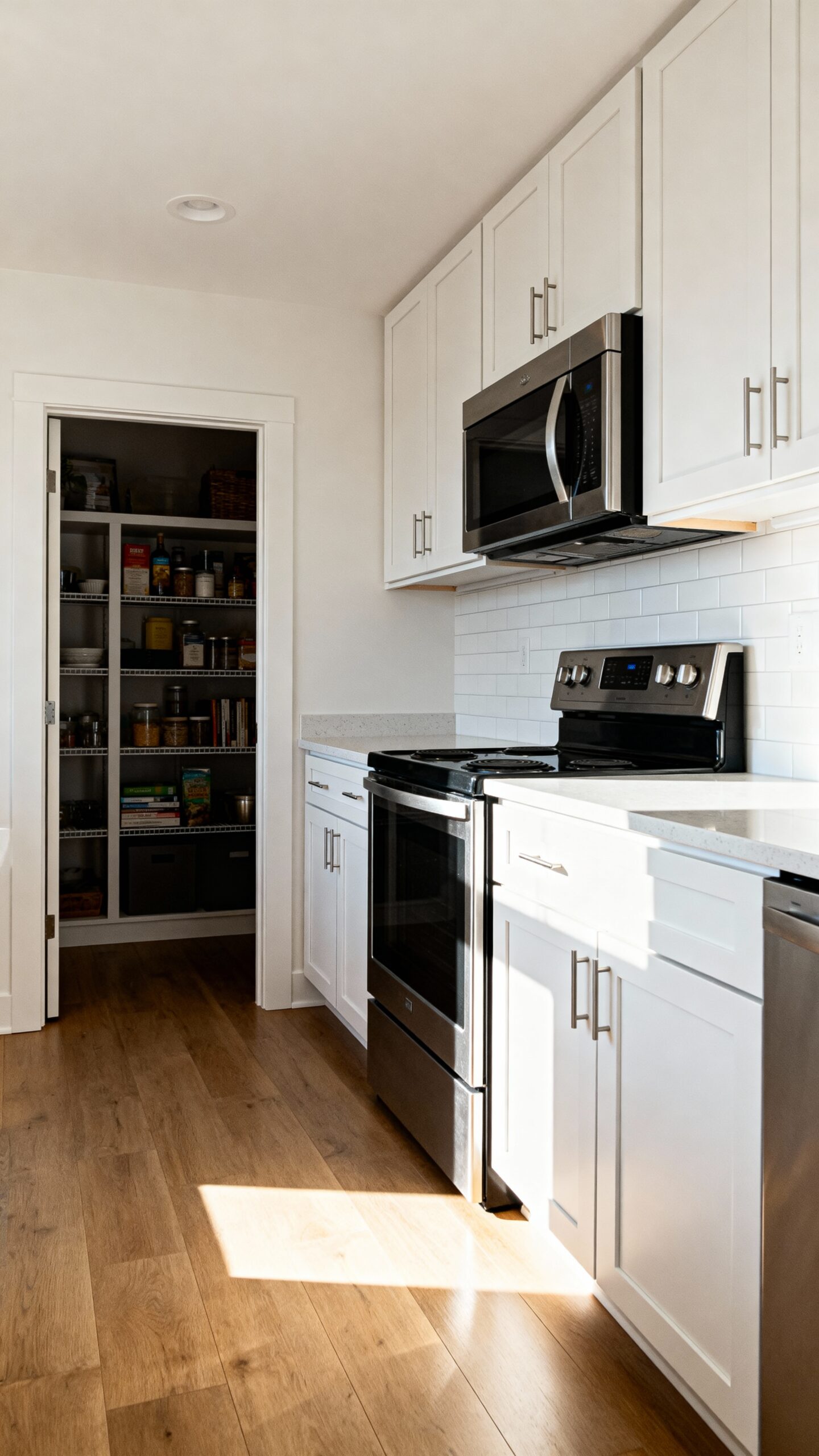
If you’re looking beyond exterior additions, converting adjacent pantries and closets into kitchen space offers one of the most cost-effective expansion strategies available. You’ll gain immediate square footage by removing walls between your kitchen and underutilized storage areas.
Start by repurposing underutilized cabinets from these spaces as kitchen storage before demolition. This approach works especially well when you’re maximizing storage in small spaces through vertical solutions. Consider altering a coat closet into a coffee station or converting a pantry into additional counter space. When converting a pantry, implement creative storage solutions to maintain organized food storage in your newly expanded kitchen layout.
You’ll need permits for wall removal, but the investment typically costs 60% less than exterior extensions.
Kitchen Peninsula Additions Using Existing Footprints
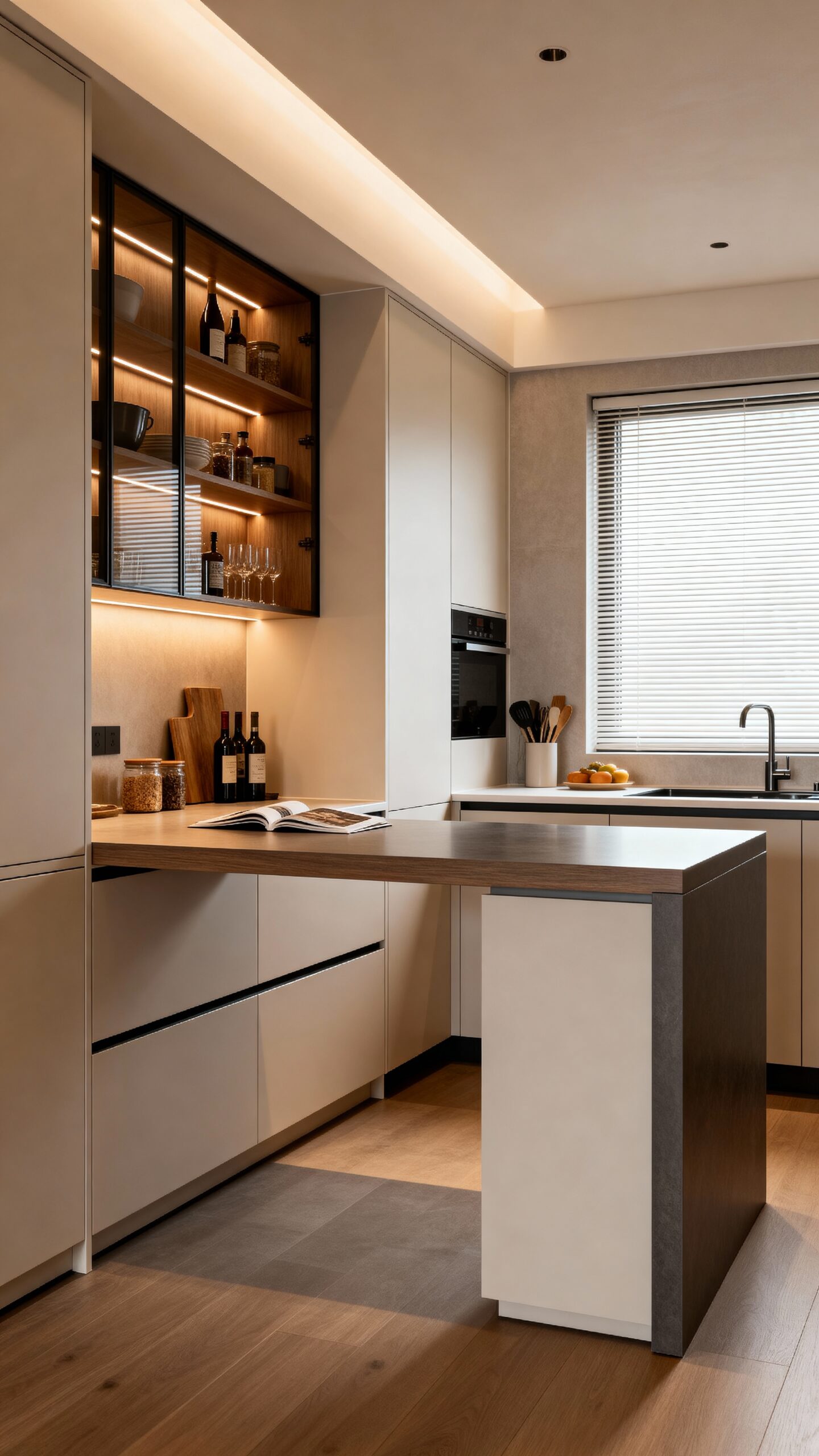
Another smart way to expand your kitchen without breaking through exterior walls involves creating a peninsula that maximizes your current floor plan. You’ll convert underused corners or awkward spaces into functional work areas that flow seamlessly with your existing layout.
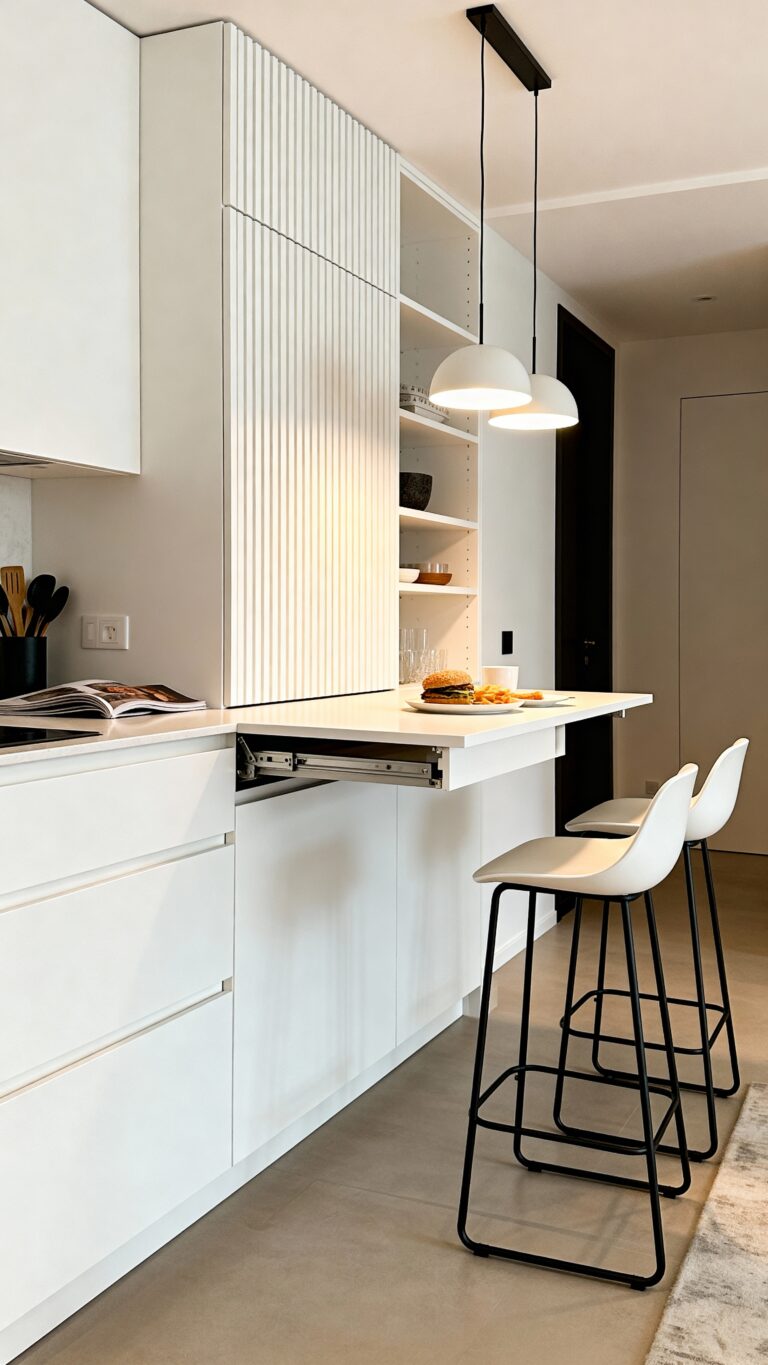
Start by identifying dead zones where compact countertop extensions can add prep space and storage. Install a peninsula that connects to your current counters, creating an L-shaped or U-shaped configuration. Add mobile storage units underneath that you can roll out when needed, then tuck away to maintain clear walkways. These versatile peninsula designs can also incorporate built-in seating to create a casual dining area within your expanded workspace. This approach doubles your workspace while preserving your kitchen’s original boundaries.
Strategic Wall Removal for Open-Concept Flow
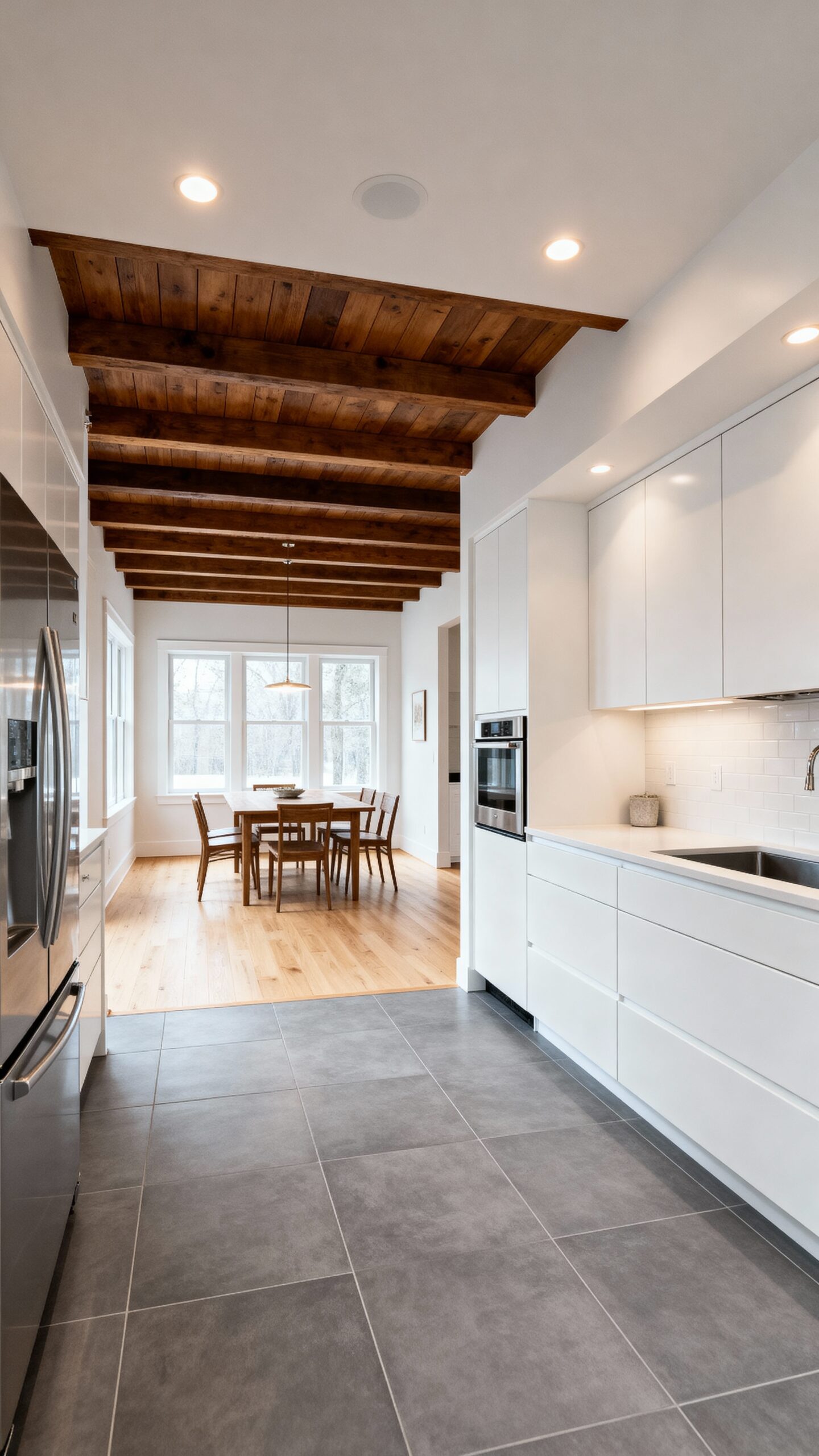
Although removing walls requires careful planning and professional consultation, this approach can dramatically alter your small kitchen into an expansive, open-concept space. You’ll need to identify load-bearing versus non-load-bearing walls before proceeding with any wall relocation project.
Start by hiring a structural engineer to assess your home’s structure and determine which barriers can safely be removed. Consider ceiling height adjustments to maximize vertical space and create an airier atmosphere. Non-load-bearing walls between kitchens and dining rooms make excellent candidates for removal, instantly doubling your perceived square footage while improving traffic flow and natural light distribution throughout your home. When working with square kitchen layouts, focus on creating balanced space planning that maintains functionality while maximizing your newly opened area.
Breakfast Nook Annexes in Underused Corners
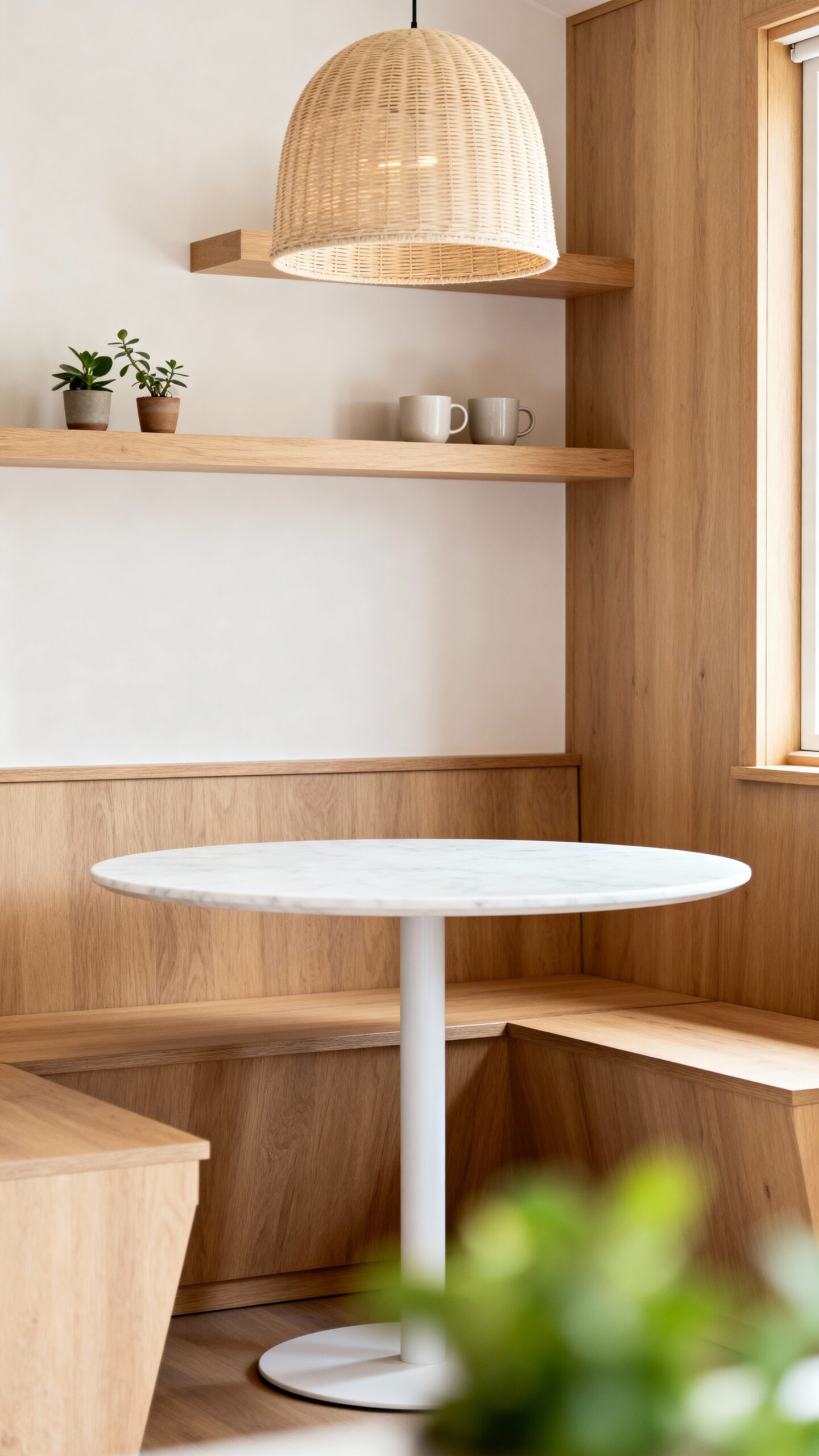
While many homeowners overlook awkward corners and unused spaces, these areas represent prime real estate for creating functional breakfast nook annexes that expand your kitchen’s usability. You’ll uncover that corners near windows offer natural light for morning meals, while dead-end hallway spaces can accommodate compact dining solutions.
Transform these forgotten areas with cozy bench seating that doubles as storage underneath. Built-in banquettes maximize seating capacity while minimizing footprint, creating intimate spaces for family gatherings. Consider informal dining arrangements with round pedestal tables that fit snugly into corner configurations, allowing easy movement around the space while maintaining your kitchen’s traffic flow. Smart corner kitchen ideas can help you maximize every inch of these overlooked areas by incorporating clever storage solutions and space-saving furniture arrangements.
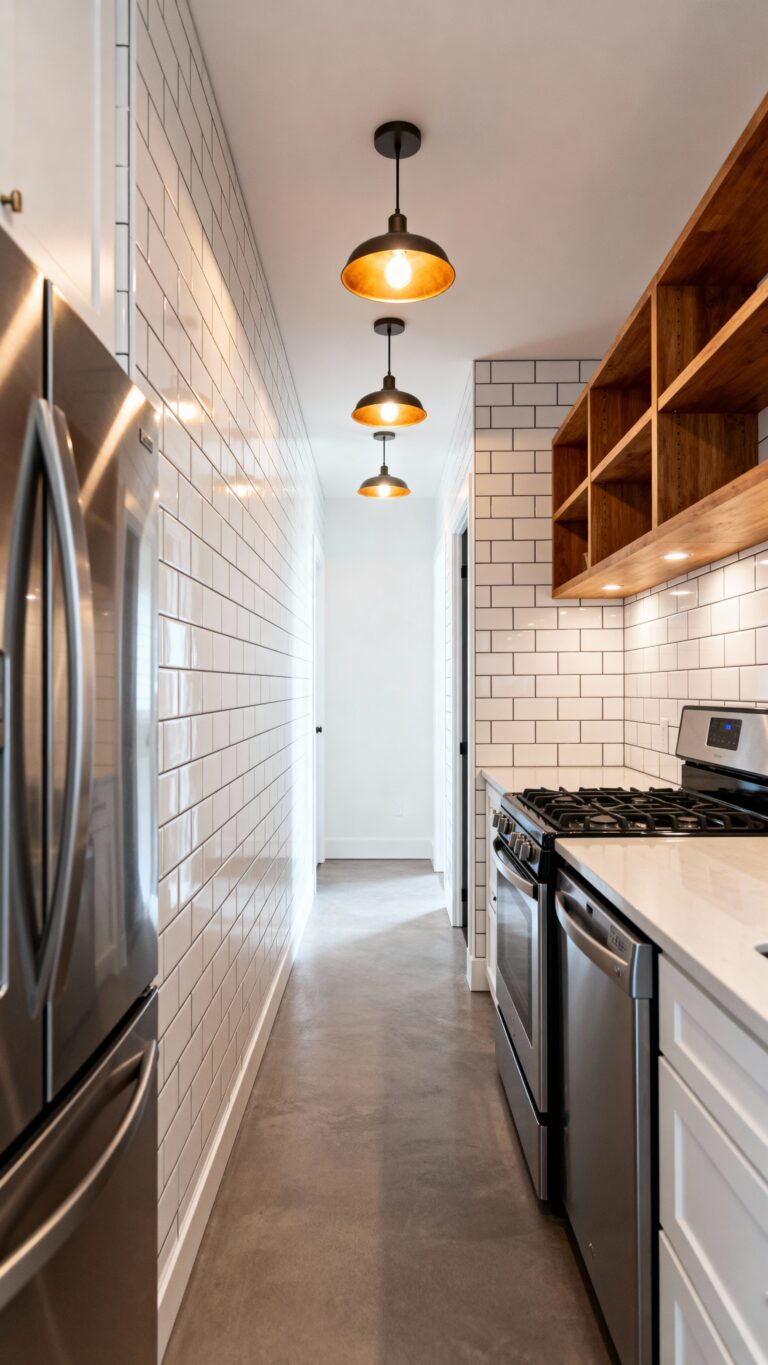
Galley Kitchen Widening Through Side Expansions
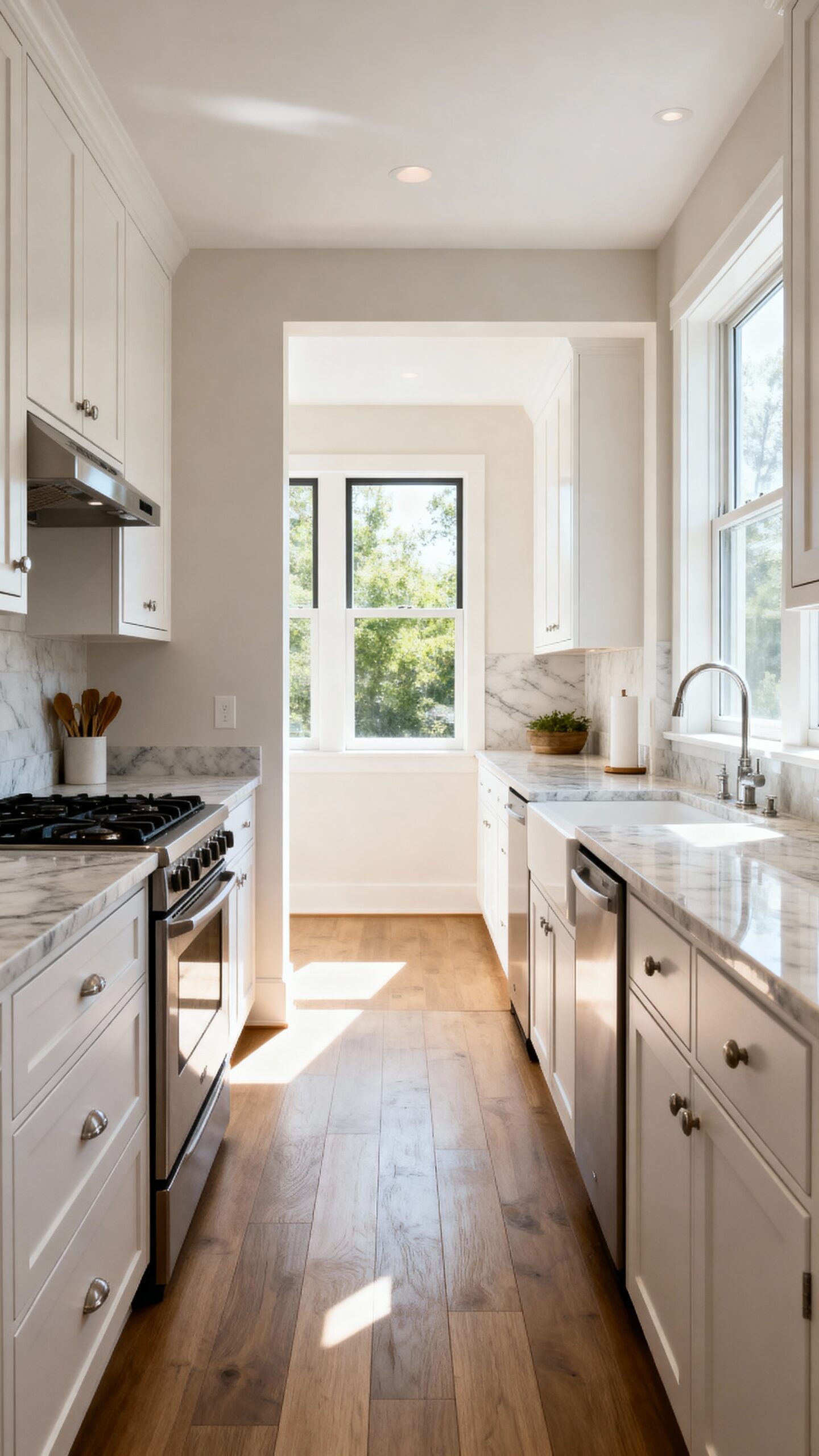
Strategic side expansions offer the most effective solution for altering cramped galley kitchens into spacious, functional cooking environments. You’ll metamorphose your narrow workspace by extending into adjacent rooms, closets, or hallways. This approach doubles your counter space while creating room for islands or peninsulas that enhance workflow.
Side expansions naturally provide increased natural lighting through additional windows or skylights in the new space. You can install efficient storage solutions like floor-to-ceiling cabinets and pull-out pantries along expanded walls. The expanded design maintains the streamlined design principles that make galley kitchens naturally efficient while providing significantly more room to work. Consider removing non-load-bearing walls to neighboring dining rooms or unused spaces for maximum impact.
Under-Stair Space Integration for Extra Storage
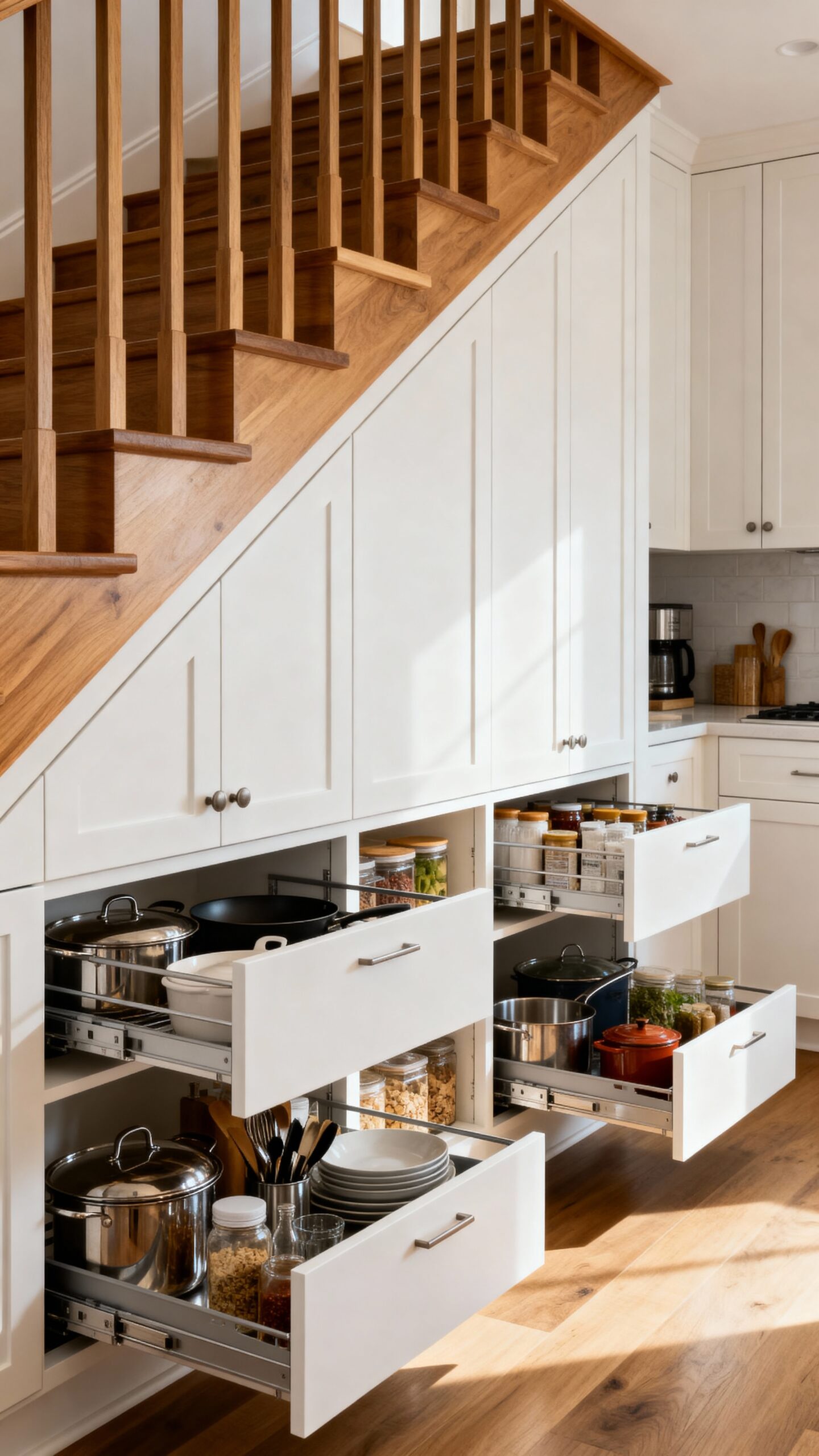
Beyond expanding your kitchen’s footprint horizontally, you can maximize vertical storage potential by reconfiguring the often-overlooked space beneath your staircase. Under stair cabinet storage redefines this dead zone into a functional pantry, housing everything from bulk groceries to small appliances. You’ll create custom-fitted shelving that follows the staircase’s sloped angle, maximizing every inch available.
For ultimate flexibility, consider under stair workspace integration by installing a compact desk area or coffee station. This dual-purpose approach gives you additional counter space while maintaining the room’s flow. You’re fundamentally claiming square footage that already exists without costly structural modifications.
Sunroom and Porch Conversions Into Kitchen Areas
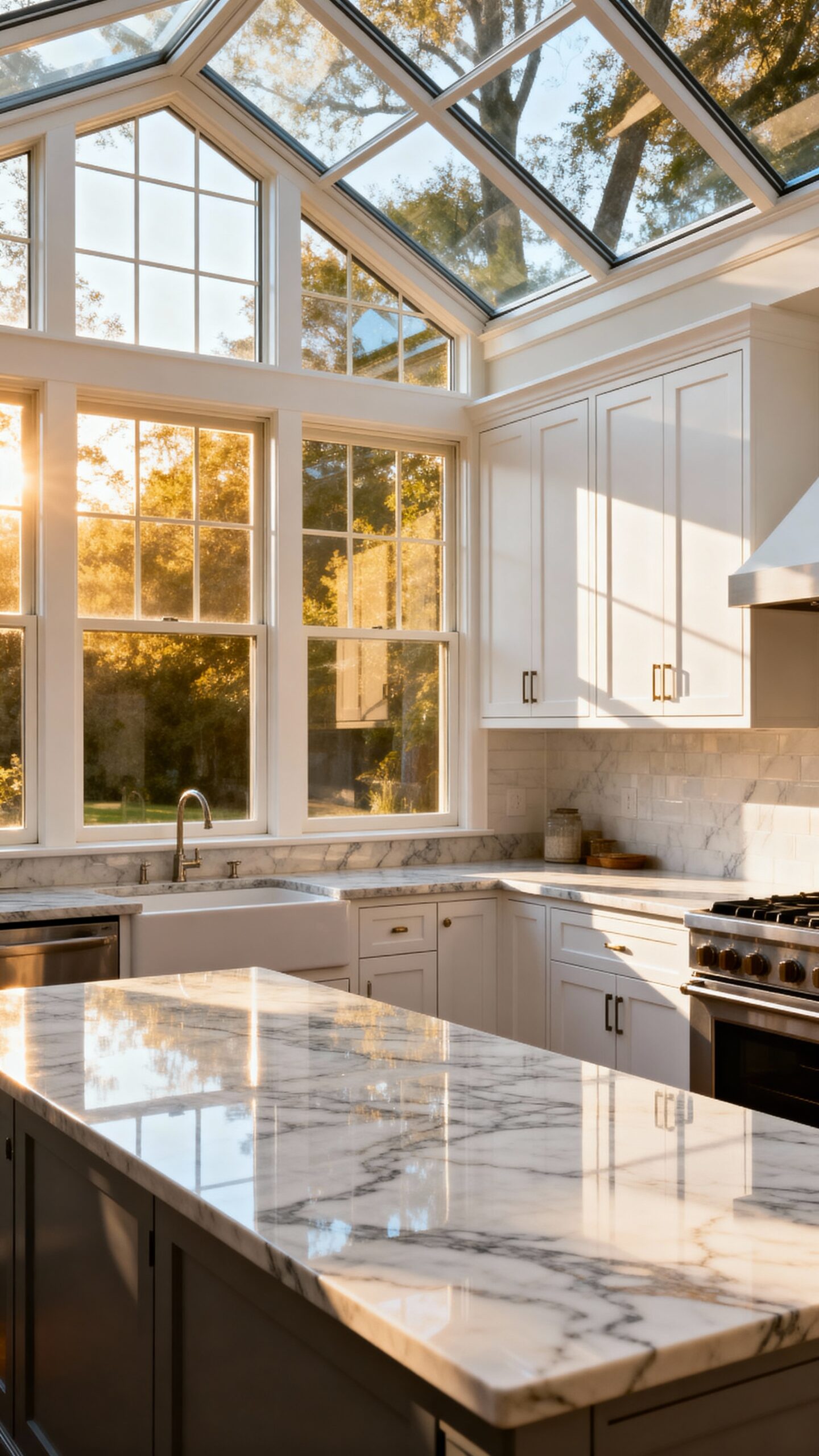
Existing sunrooms and enclosed porches offer tremendous potential for kitchen expansion without the expense of building from scratch. You’ll find these spaces already have essential elements like flooring, walls, and often electrical connections that reduce conversion costs considerably.
Consider how sunrooms provide natural light that transforms cooking experiences, while screened porches offer excellent ventilation for meal preparation. Unlike complex shed additions or cramped basement kitchen layouts, these conversions maintain your home’s flow while adding functional square footage.
Focus on waterproofing, insulation, and proper ventilation systems to guarantee year-round usability for your expanded culinary workspace.
Back Door Vestibule Transformations
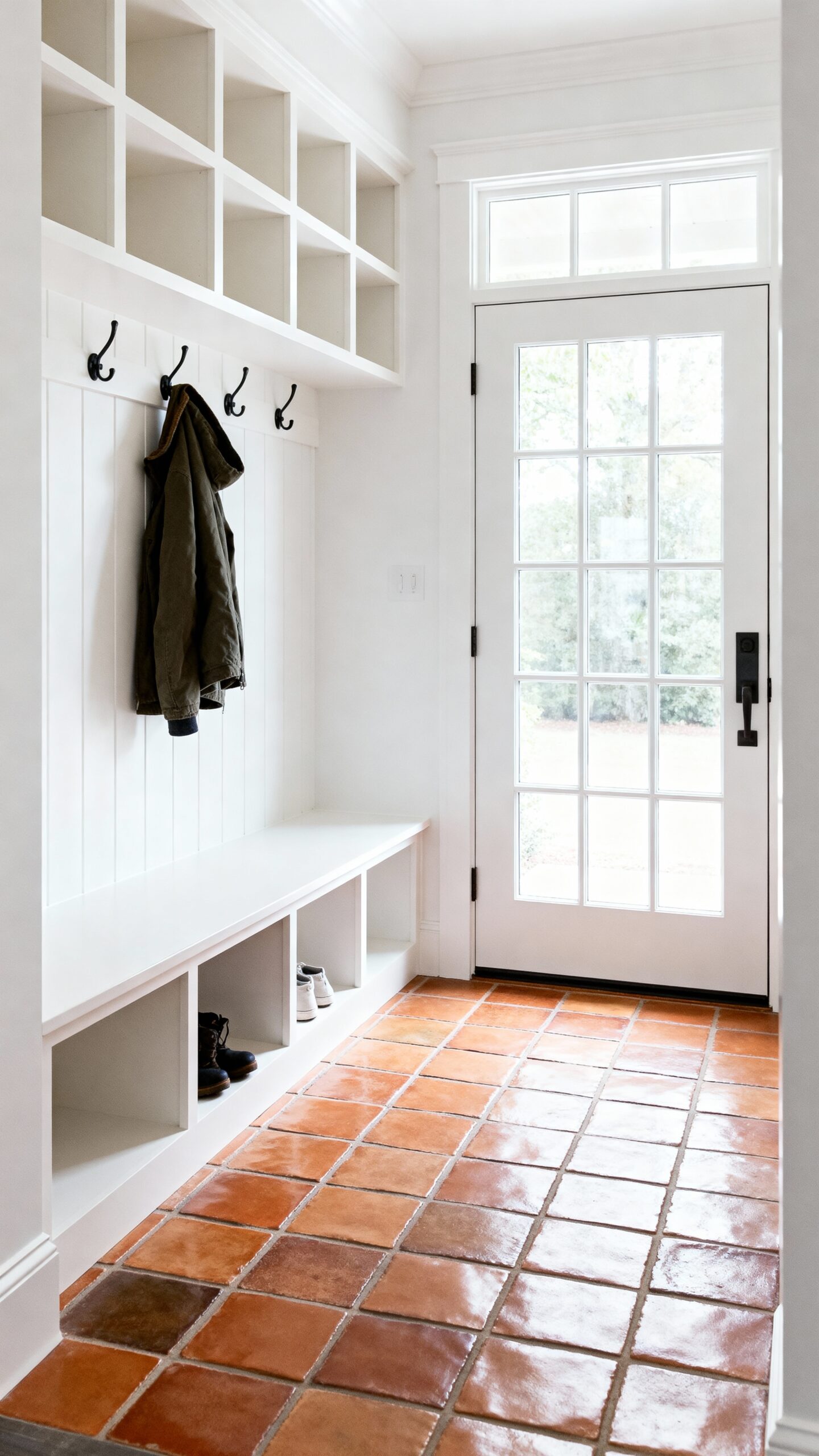
Many homeowners overlook the untapped potential hiding right behind their back door, where vestibules and mudrooms can seamlessly expand into functional kitchen extensions. You’ll uncover these transitional spaces offer incredible flexibility for creative expansion without major structural changes.
Shift your back door vestibule by removing interior walls to create an open breakfast nook or prep area. Consider enclosed patio conversions that connect directly to existing vestibules, doubling your usable space.
Small greenhouse annexations work exceptionally well when attached to back entrances, providing year-round herb gardens plus additional counter space. These metamorphoses maximize your home’s existing footprint while creating natural traffic flow.
Dining Room Boundary Adjustments for Kitchen Growth
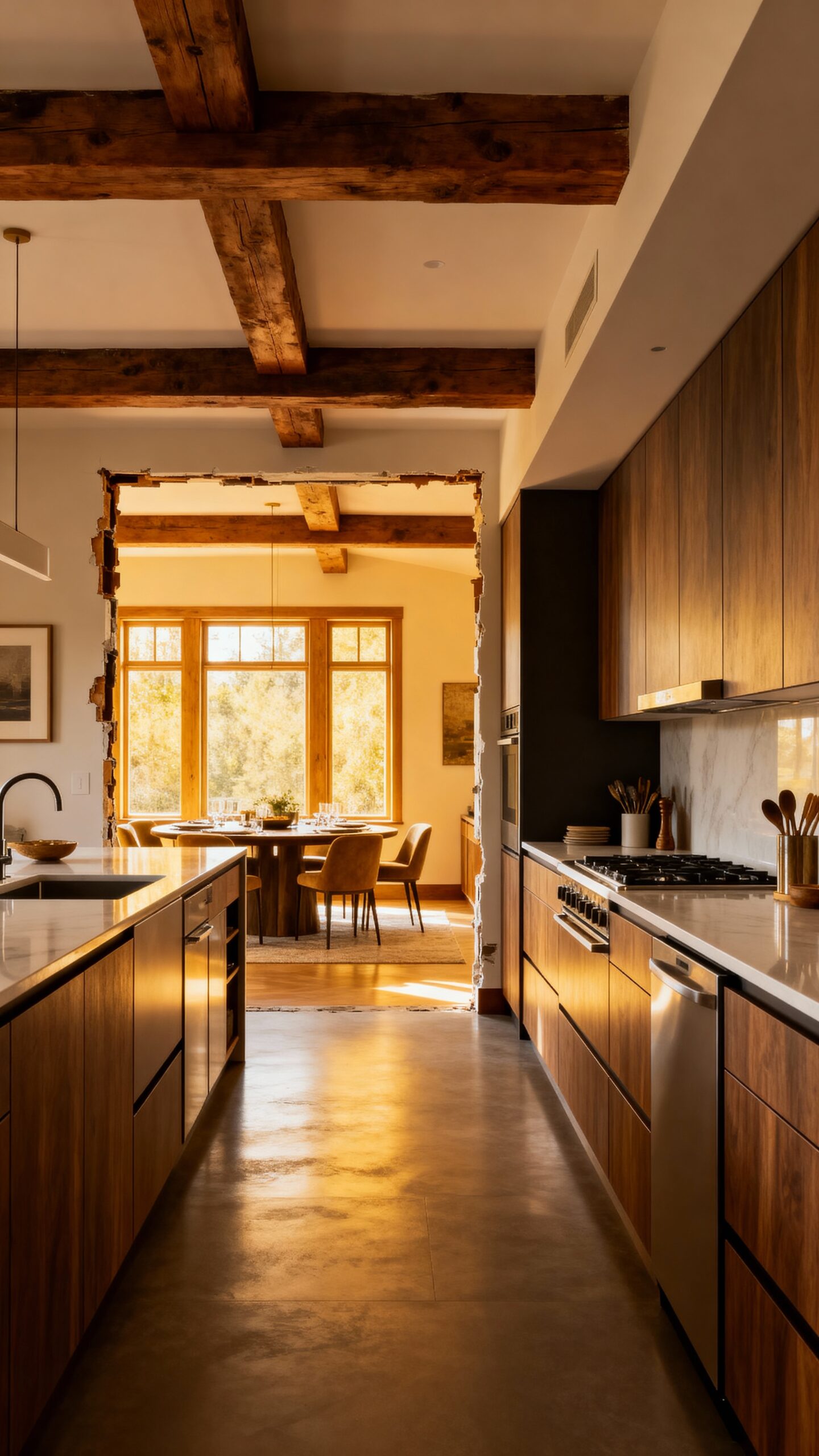
When your kitchen feels cramped but an adjacent dining room sits underutilized, strategic boundary adjustments can redistribute square footage to better match your family’s daily needs.
You’ll create breathing room by removing non-load-bearing walls between these spaces, instantly doubling your functional area. Consider installing recessed seating arrangements along the former dining room perimeter to maintain intimate meal spaces while freeing up floor space. Add overhead storage shelves above the seating to maximize vertical storage potential.
This approach converts two restrictive rooms into one flowing space that adapts to cooking, dining, and entertaining without sacrificing either function.
Garage Wall Modifications for Additional Square Footage
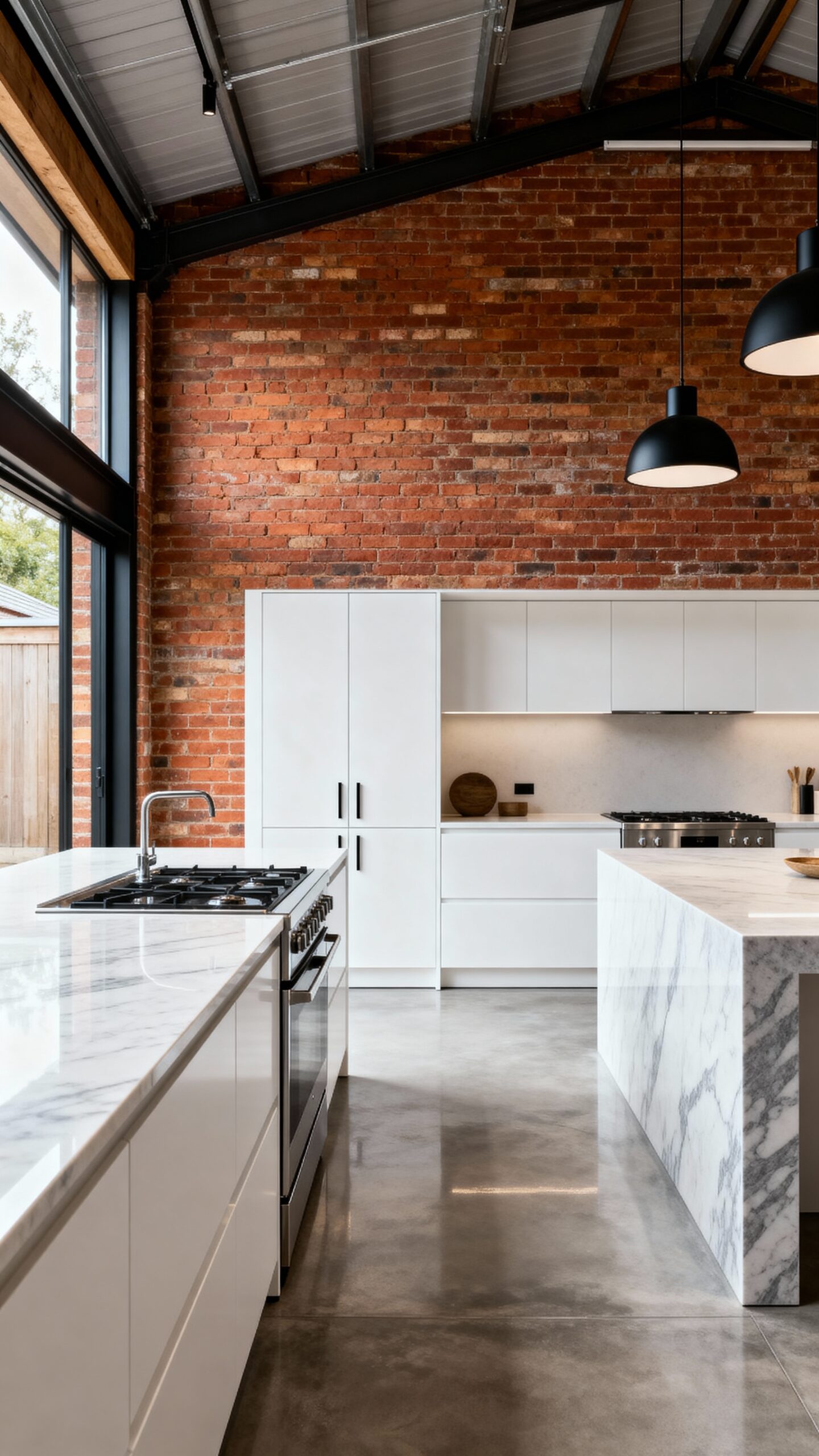
Adjacent garage spaces offer untapped potential for kitchen expansion through carefully planned wall modifications that can add substantial square footage to your cooking area. You can alter unused garage space by removing or relocating interior walls that separate your kitchen from the garage. This approach gives you complete control over your home’s layout without external additions.
Consider garage door conversion to create seamless indoor space, replacing overhead doors with windows or solid walls. Additionally, garage attic expansion provides vertical growth opportunities, perfect for cathedral ceilings or upper storage solutions that enhance your kitchen’s functionality and visual appeal.
Vertical Extensions With Loft-Style Kitchen Islands
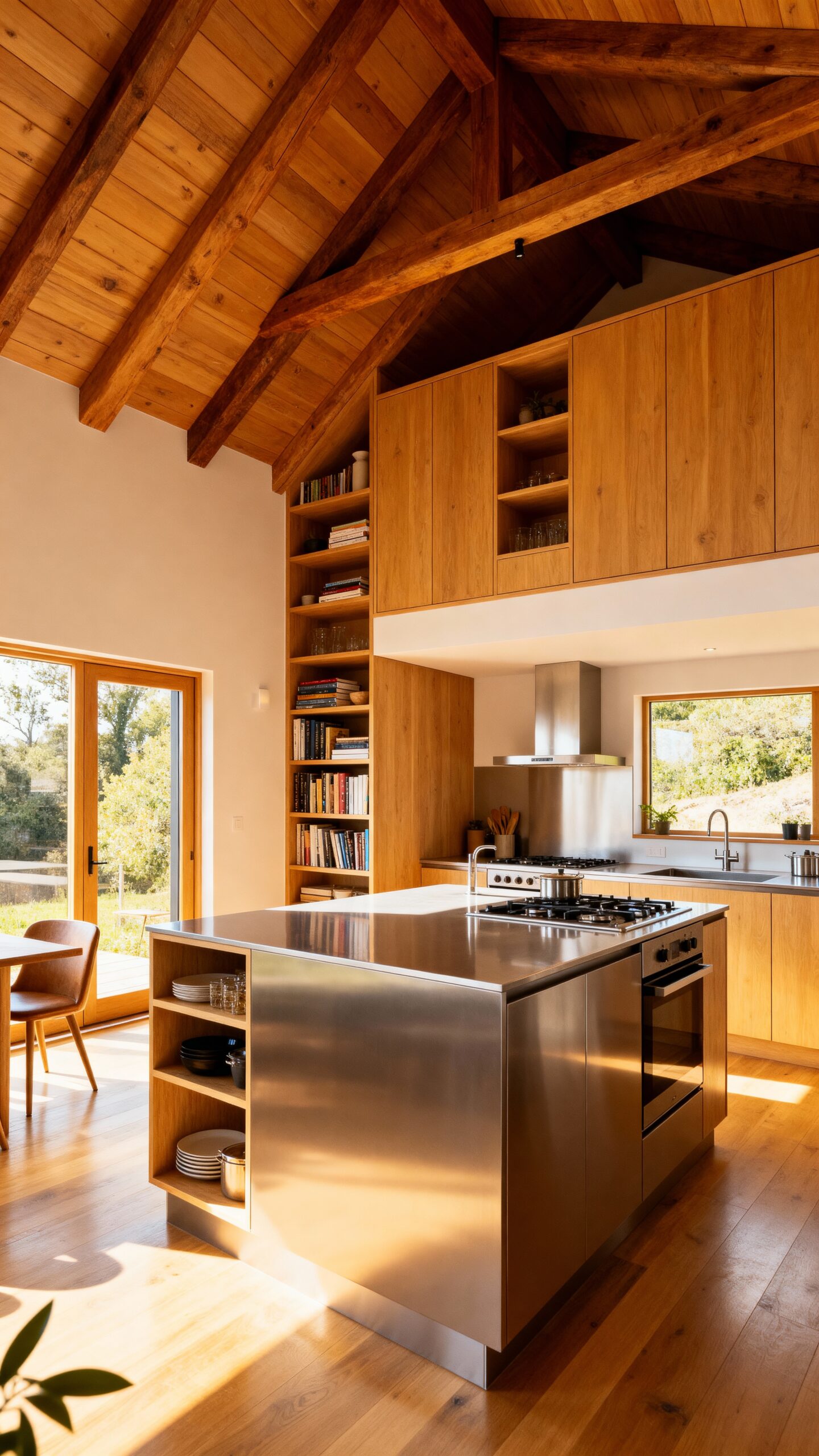
You can modify your small kitchen’s vertical space by incorporating loft-style islands that extend upward, creating dramatic height while maximizing every square inch of floor area. These towering structures break free from traditional constraints, offering ceiling height maximization through clever design choices.
Install hanging storage compartments, suspended spice racks, and raised prep surfaces that draw the eye upward. Multi level seating arrangements work perfectly here—add bar stools at different heights to accommodate various activities.
You’ll reshape cramped quarters into an open, airy workspace that feels twice its actual size while maintaining full functionality throughout every vertical zone.
Conclusion
You’ve uncovered multiple ways to expand your kitchen without major construction headaches. Whether you’re bumping out walls, converting adjacent spaces, or creating smart peninsulas, these solutions work within your existing layout. Start by evaluating which option fits your budget and timeline best. Remember, even small extensions can dramatically improve your kitchen’s functionality and value. Choose the approach that maximizes your space while minimizing disruption to your daily routine.