15 Smart Small Living Room With Dining Table Ideas That Maximize Space
Ingenious small living room dining solutions that transform cramped quarters into stylish, functional spaces—discover which surprising trick works best.
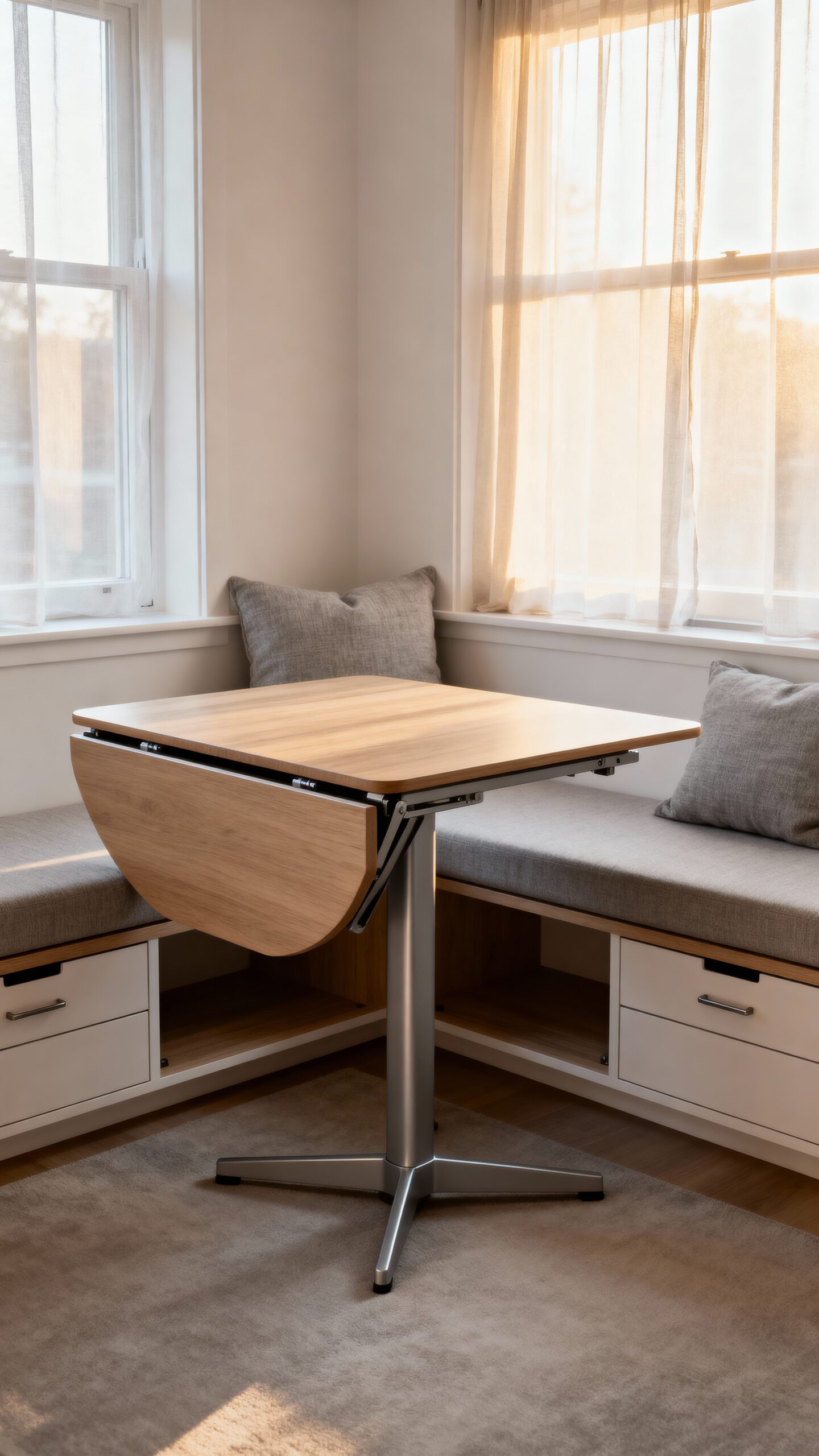
You’re looking at your cramped living room wondering how you’ll ever fit a dining table without turning your space into an obstacle course. The good news? Smart design strategies can renovate even the tiniest rooms into dual-purpose havens that work beautifully for both lounging and dining. With the right furniture choices and clever positioning tricks, you’ll uncover solutions that’ll make your small space feel surprisingly spacious and remarkably functional.
Use a Fold-Down Wall-Mounted Dining Table
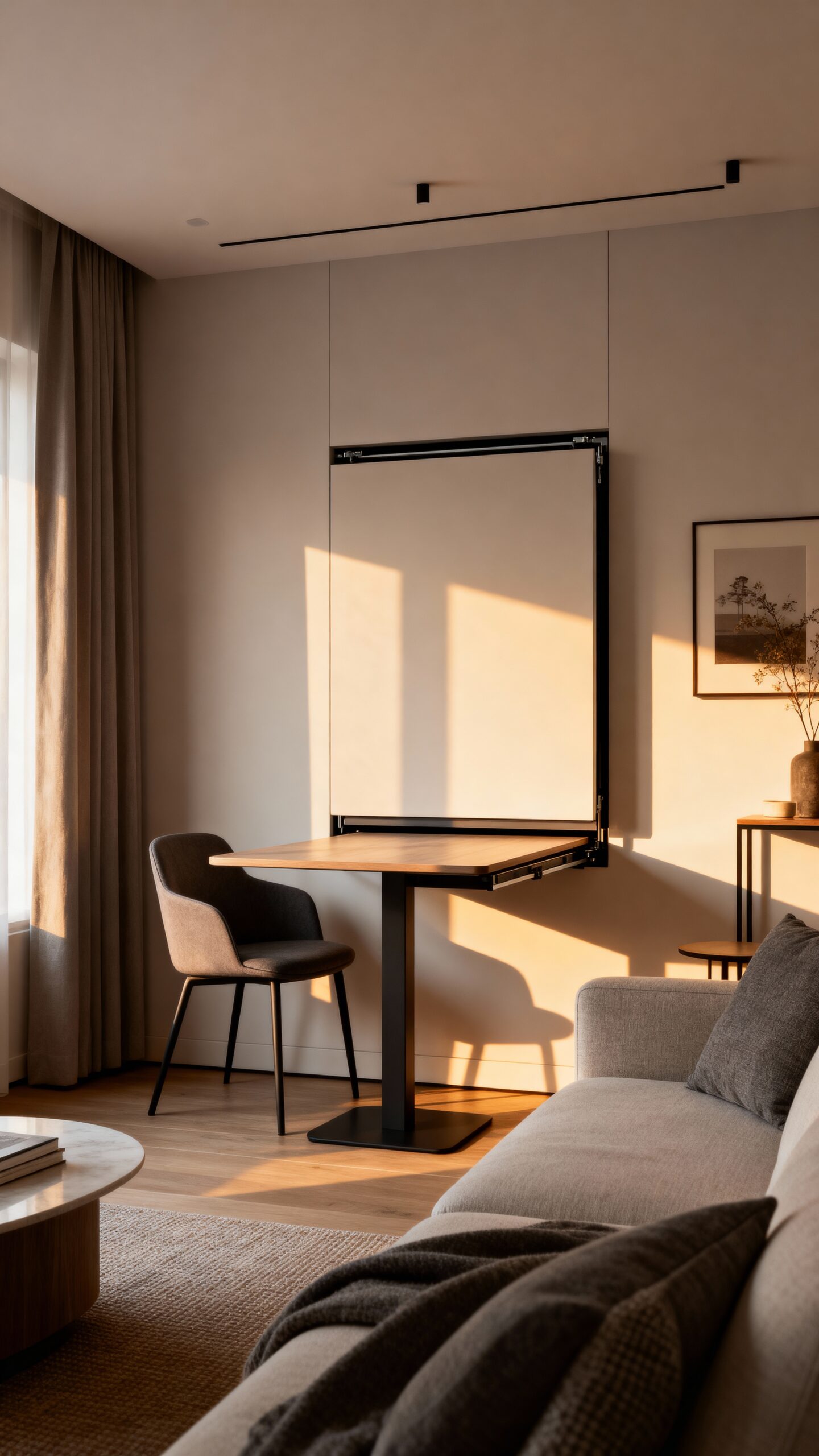
When space comes at a premium, a fold-down wall-mounted dining table converts your small living room into a flexible dining area without permanent sacrifice. You’ll reclaim floor space instantly when meals aren’t happening, creating room for other activities like yoga or entertaining guests.
Choose models that integrate seamlessly with your existing wall mounted storage systems. Many designs feature built-in shelving above or below the table surface, maximizing vertical space efficiency.
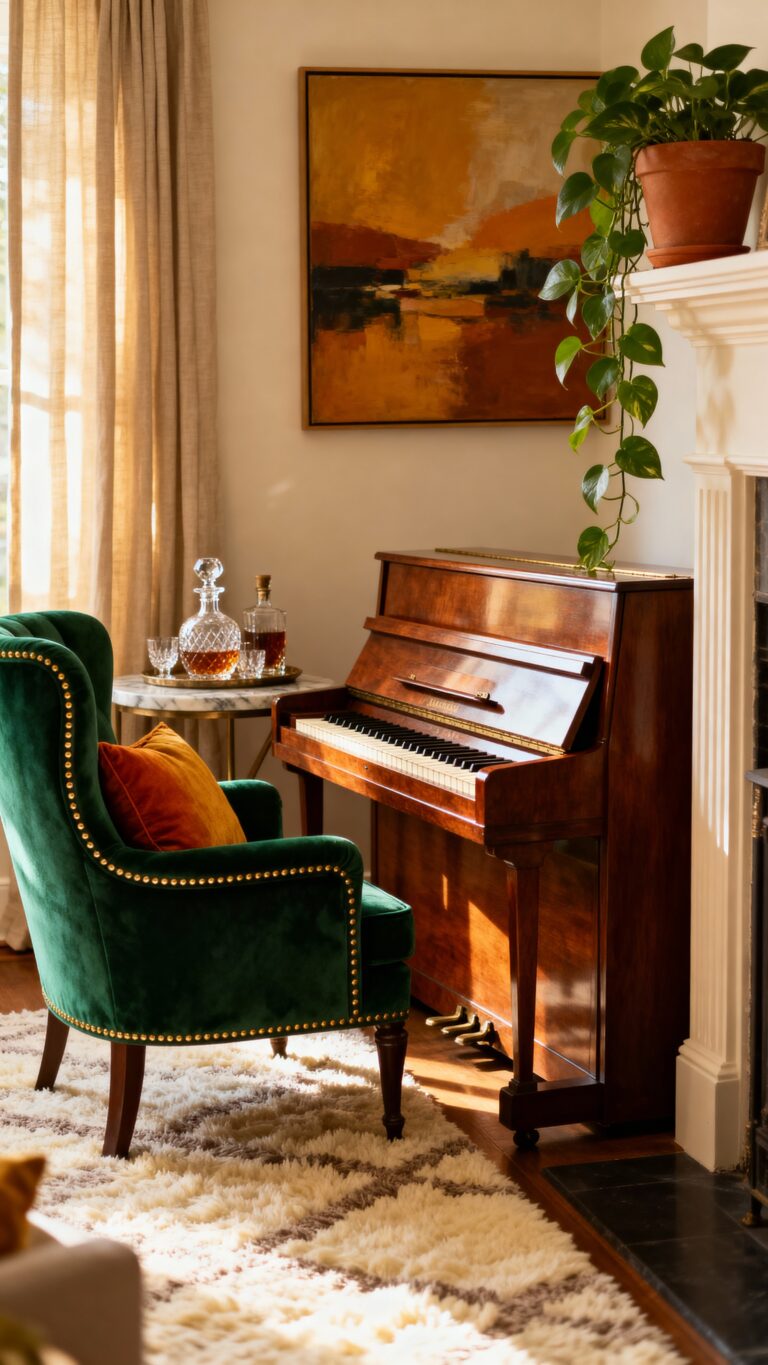
Position fold up side tables nearby to provide additional surface area when needed, then tuck them away afterward. Consider how this flexible dining setup can complement other furniture arrangements, such as creating space for piano setups that add both functionality and elegance to your compact living area.
Installation requires sturdy wall anchors and proper stud mounting to support weight safely. Select finishes that complement your living room’s aesthetic—whether that’s sleek white laminate, warm wood grain, or industrial metal accents that enhance your space’s personality.
Choose a Round Pedestal Table for Better Flow
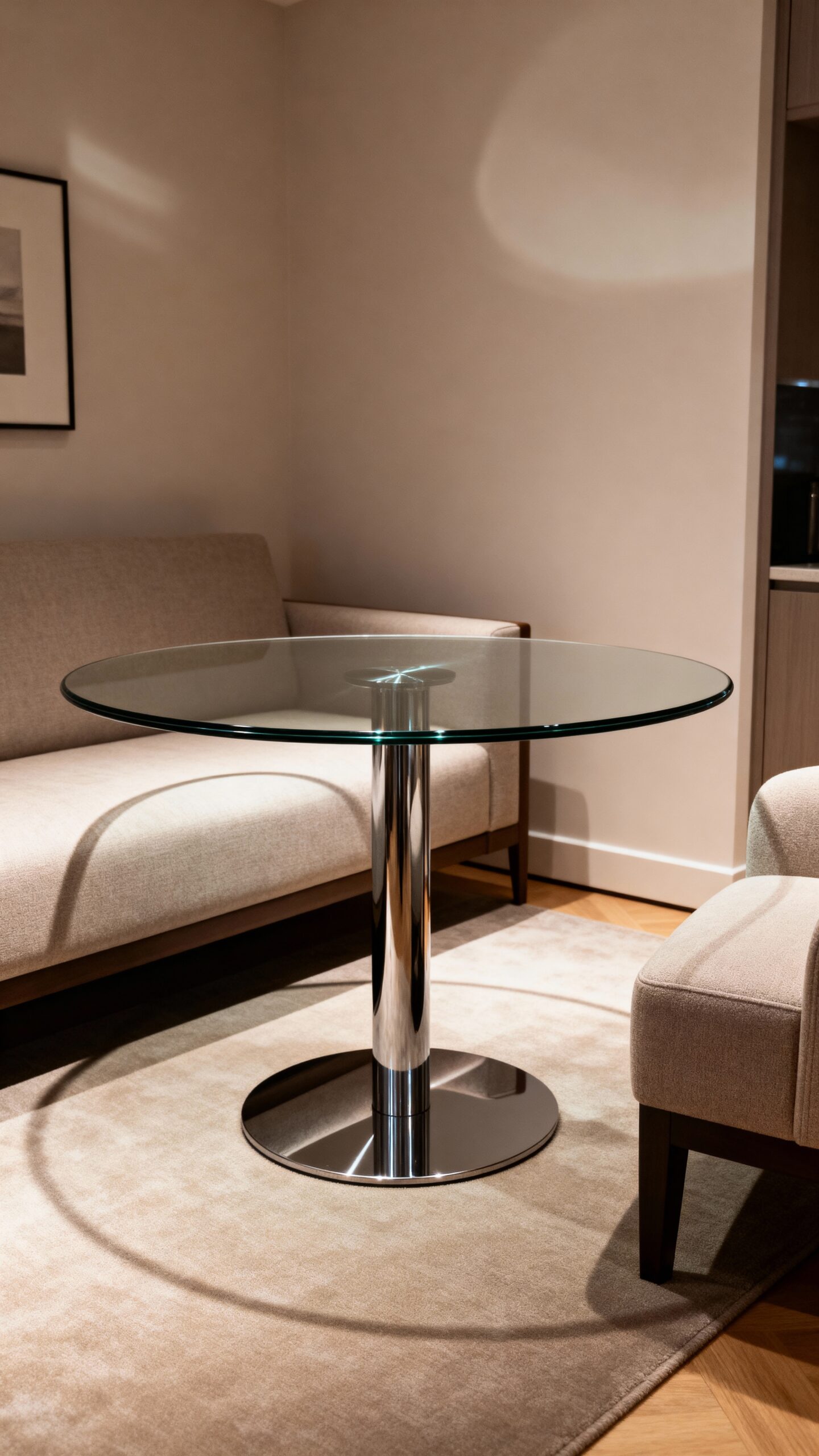
Unlike rectangular tables that create sharp corners and block pathways, a round pedestal table alters your small living room’s traffic flow while maximizing seating capacity. You’ll uncover that people can move freely around the curved edges without bumping into protruding table legs or sharp corners.
A round pedestal base eliminates the four-leg obstacle course that traditional tables create, giving you more flexibility in furniture placement. You can position chairs at any angle around the table, accommodating different numbers of guests without predetermined seating restrictions. Consider selecting charming chair designs that complement your compact living space while maintaining comfort and style.
The circular design creates visual flow throughout your space, making the room appear larger and less cluttered. You’ll recognize how the smooth, continuous lines complement other curved elements in your décor while maintaining an open, airy atmosphere that enhances your living room’s functionality.
Opt for a Glass-Top Dining Table to Create Visual Space
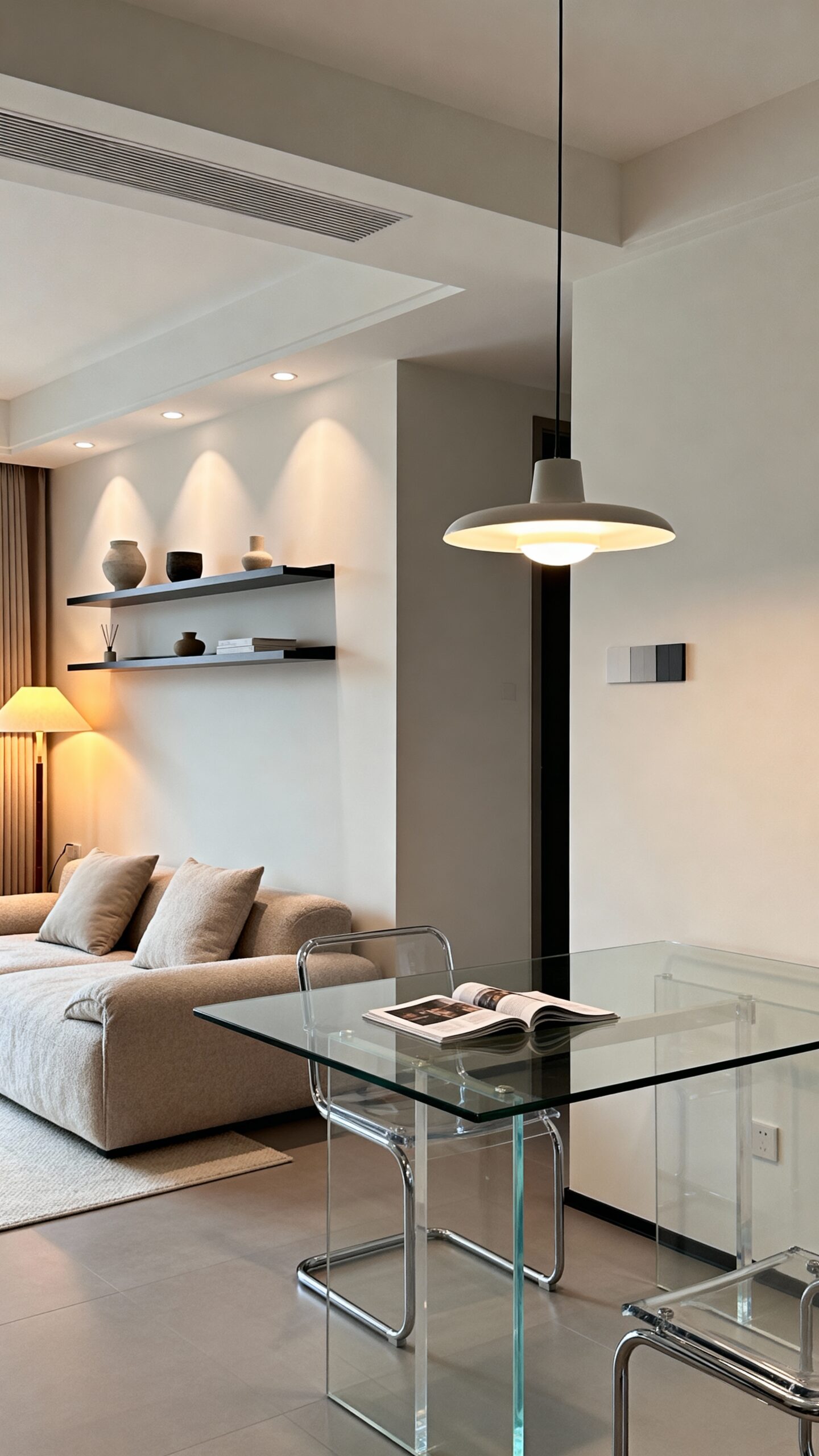
Glass-top dining tables offer another smart solution for maximizing visual space in your compact living room. The transparent tabletop creates an illusion of openness by allowing light to pass through and maintaining clear sightlines across your space. You’ll appreciate how this design choice prevents your room from feeling cramped or cluttered.
When selecting a compact dining table with glass, consider pairing it with slim metal or acrylic legs to enhance the airy effect. This combination virtually disappears into your décor while providing full functionality. You can also layer colorful placemats or table runners underneath to add personality without blocking the see-through benefits. To complement your glass dining table, choose space-saving sofas that maintain the same visual lightness and functionality throughout your combined living and dining area.
The transparent surface reflects natural light, brightening your entire living area and making it appear larger than its actual square footage.
Position Your Dining Table Behind the Sofa
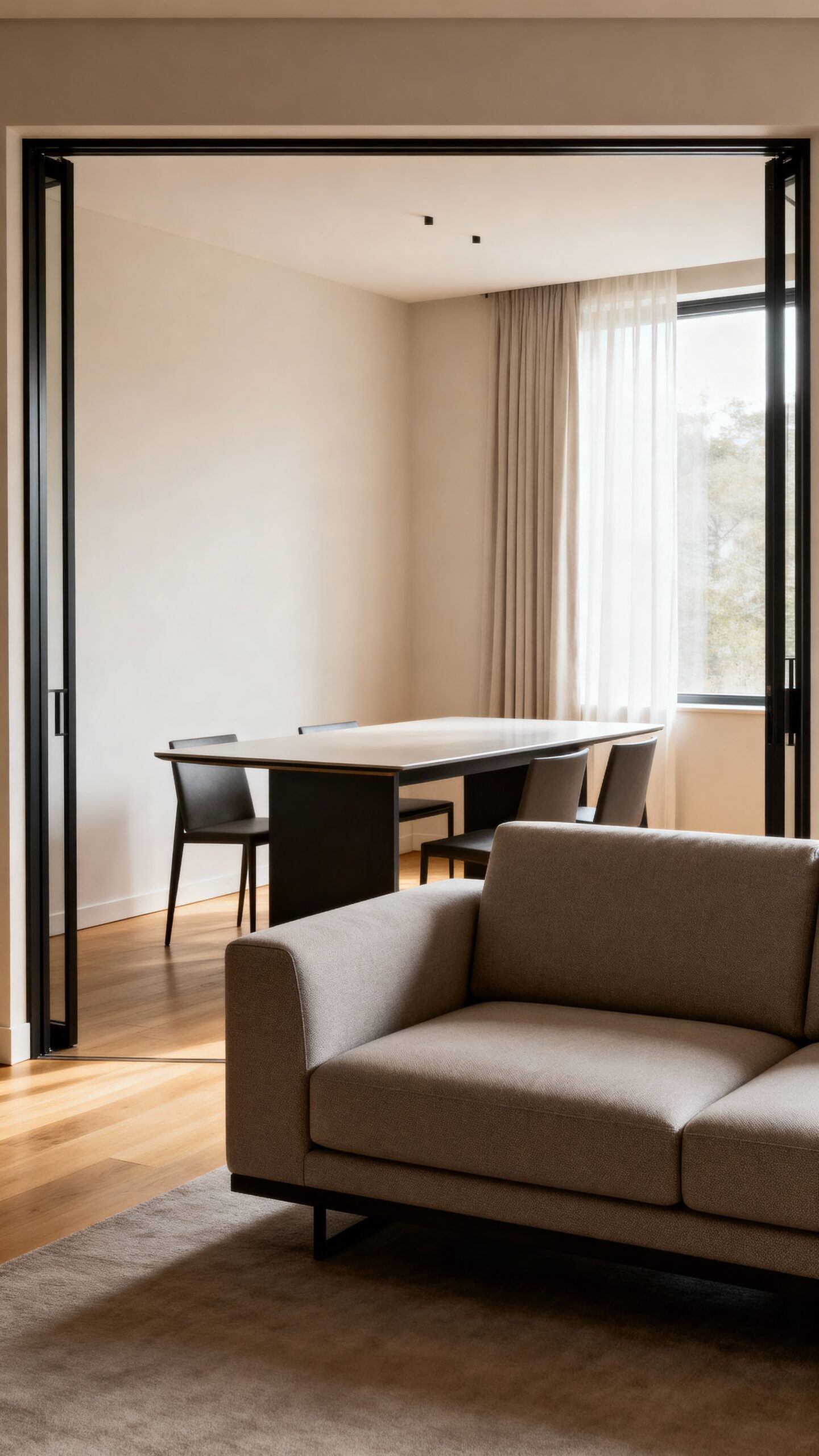
Strategic placement of your dining table directly behind your sofa creates a natural room division that maximizes every square inch of available floor space. This layout converts your sofa into a functional room divider while maintaining open sightlines throughout your space.
When you position dining table behind sofa, you’re establishing distinct zones without building walls or installing permanent partitions. The sofa’s back naturally defines the dining area’s boundary, giving you freedom to move between spaces effortlessly.
Choose a dining table height that aligns with your sofa’s back for visual continuity. If you prefer versatility, you can place console table behind sofa during non-dining times, then swap it for your dining table when entertaining guests.
This arrangement works exceptionally well in studio apartments and open-plan homes where flexibility matters most. Consider how this setup affects traffic flow when your front door opens directly into the living space, ensuring guests can move naturally through your home.
Select an Expandable Console Table That Doubles as Dining Surface
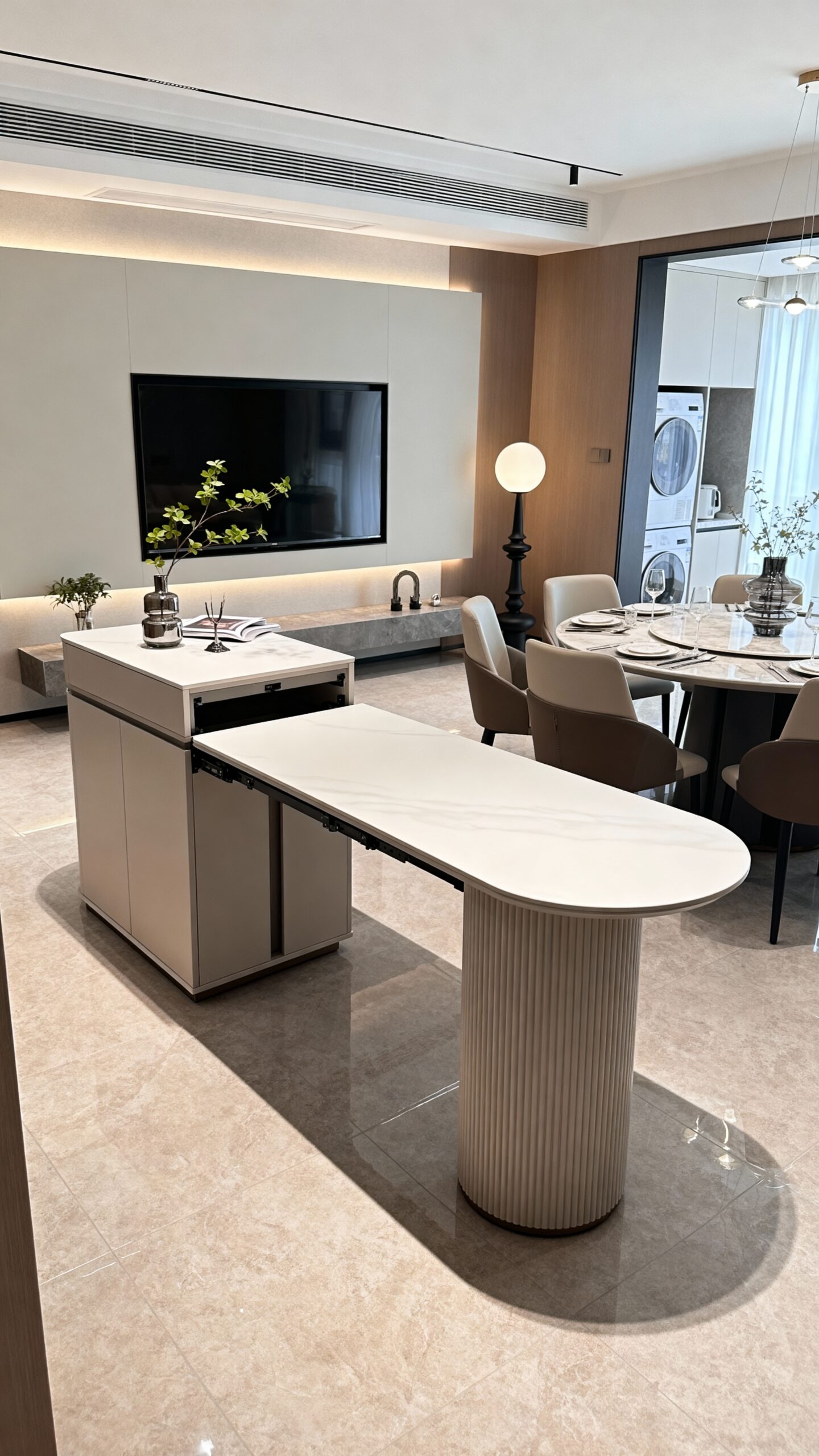
An expandable console table converts your cramped living space into a functional dining area within seconds, offering the perfect solution for homes where every piece of furniture must earn its keep. These versatile pieces typically measure 12-16 inches deep when closed, fitting perfectly against walls or behind sofas without overwhelming your room.
When you’re ready to dine, simply pull out the hidden leaves or flip-up extensions to create a full-sized dining surface. Space saving sideboard options often include built-in storage compartments for dishes, linens, or everyday items you’d rather keep concealed.
Choose expandable dining surfaces with sturdy locking mechanisms to guarantee stability during meals. Look for models with wheels or lightweight construction that make transformation effortless, granting you complete control over your living space. Consider compact sofa designs that complement your expandable table setup, creating a cohesive look that maximizes both seating and dining functionality.
Create Zones With an Area Rug Under the Dining Space
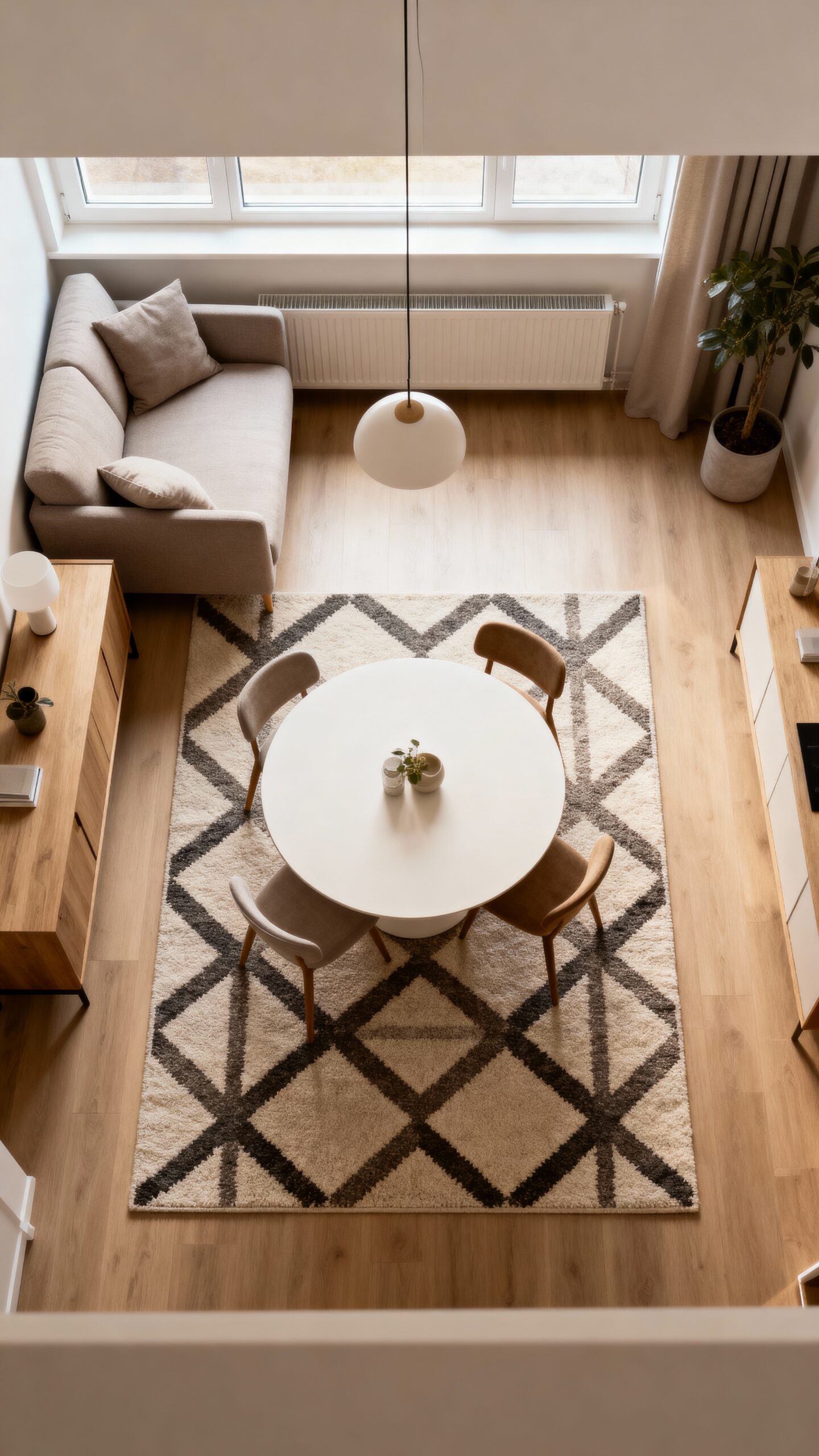
When you place a well-sized area rug beneath your dining table, you’ll instantly define the eating space while creating visual separation from your living room furniture. This simple design trick establishes clear boundaries without building walls or installing permanent fixtures.
Choose a rug that extends at least 24 inches beyond each side of your table, allowing chairs to remain on the surface when pulled out. Dark colors and bold patterns work exceptionally well to define zones with a decorative rug, making the dining area feel intentional and polished. The key to harmonizing small spaces is ensuring both areas complement each other while maintaining their distinct functions.
You can enhance the zone’s functionality by positioning a small side table or ottoman nearby. Add a cozy floor cushion for extra seating when hosting larger gatherings, giving you flexible options that don’t permanently consume precious square footage.
Install Floating Shelves Instead of a Traditional Buffet
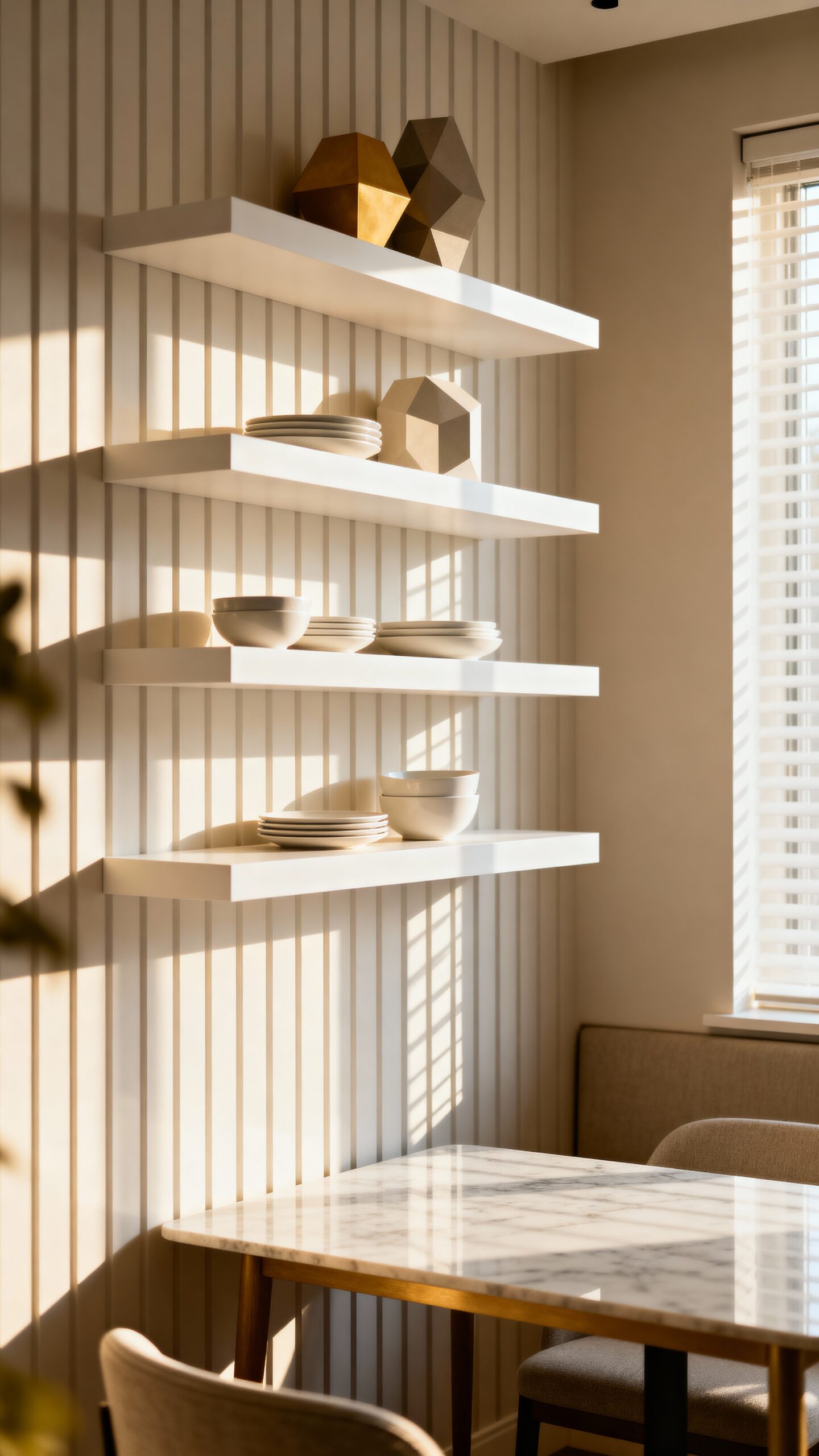
Floating shelves replace bulky buffets and sideboards that consume precious floor space in your compact living-dining area. You’ll gain immediate visual openness while maintaining essential storage and display functions that traditional furniture provides.
Mount three to four shelves at varying heights along your dining wall to create an organized, functional display system. You can save floor space with floating shelves while storing dishes, glassware, and serving pieces within easy reach during meals.
Use floating shelves for decorative display by alternating practical items with plants, books, and artwork. This approach creates visual interest without overwhelming your small space. Choose shelves that match your existing décor—white for modern spaces or natural wood for farmhouse styles. You’ll enjoy the freedom to rearrange displays seasonally while keeping your floor plan open and uncluttered.
Choose Stackable or Nesting Chairs for Easy Storage
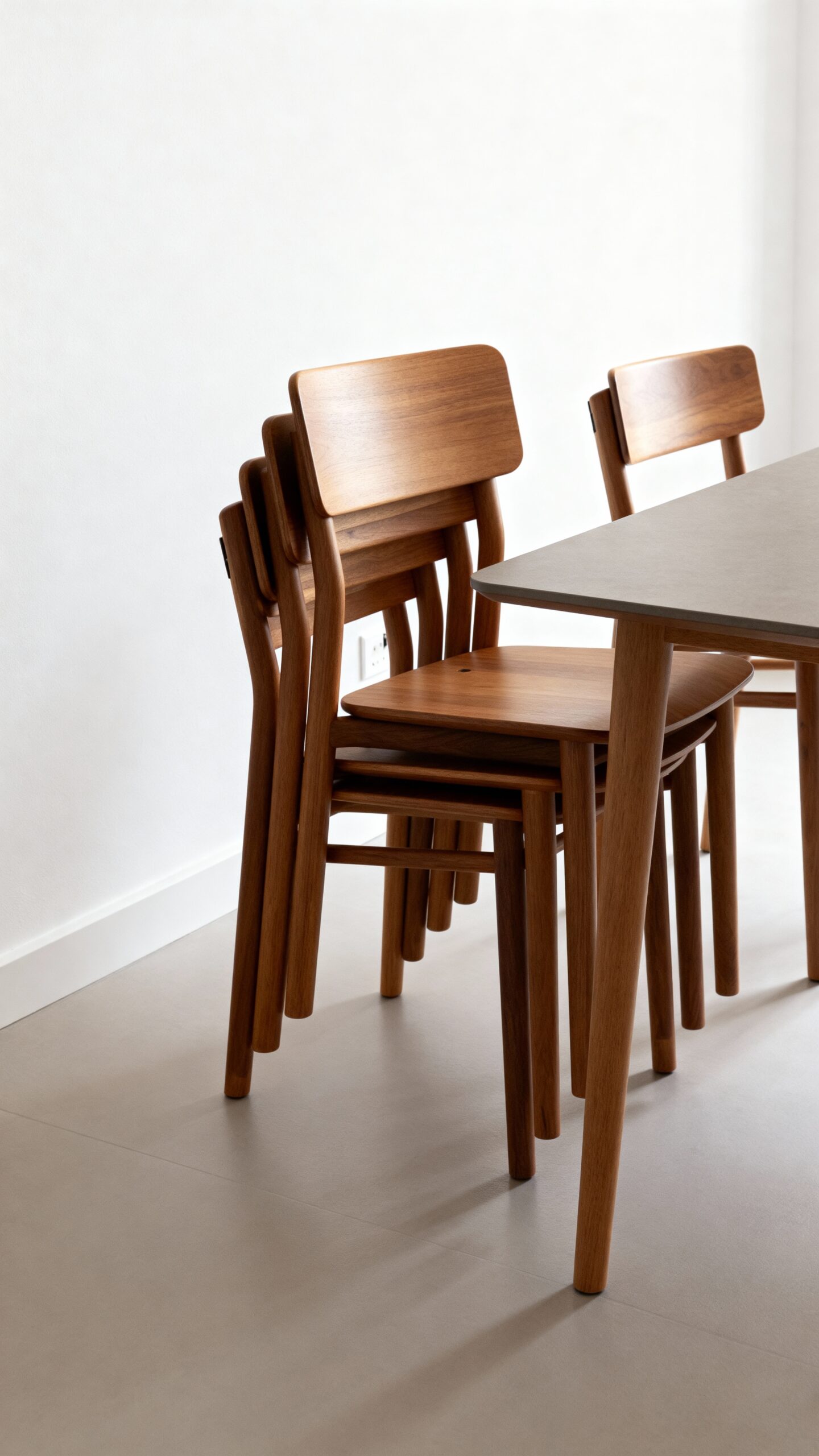
Stackable and nesting chairs alter your small living-dining space by disappearing when you don’t need them, freeing up essential floor area for daily activities. You’ll maximize your room’s potential when guests leave and you can stack chairs in a closet or corner.
Consider acrylic stackable chairs that won’t visually clutter your space while providing comfortable seating for six or more people. Metal folding chairs stack efficiently and offer durability for frequent use. Nesting chairs slide together seamlessly, taking up just one chair’s footprint when stored.
Complement your seating with stackable ottomans that serve as extra seats or storage. Add nesting end tables that expand your surface area during meals, then tuck away afterward. This flexible approach gives you complete control over your space’s configuration.
Use a Bar Cart as a Mobile Dining Station
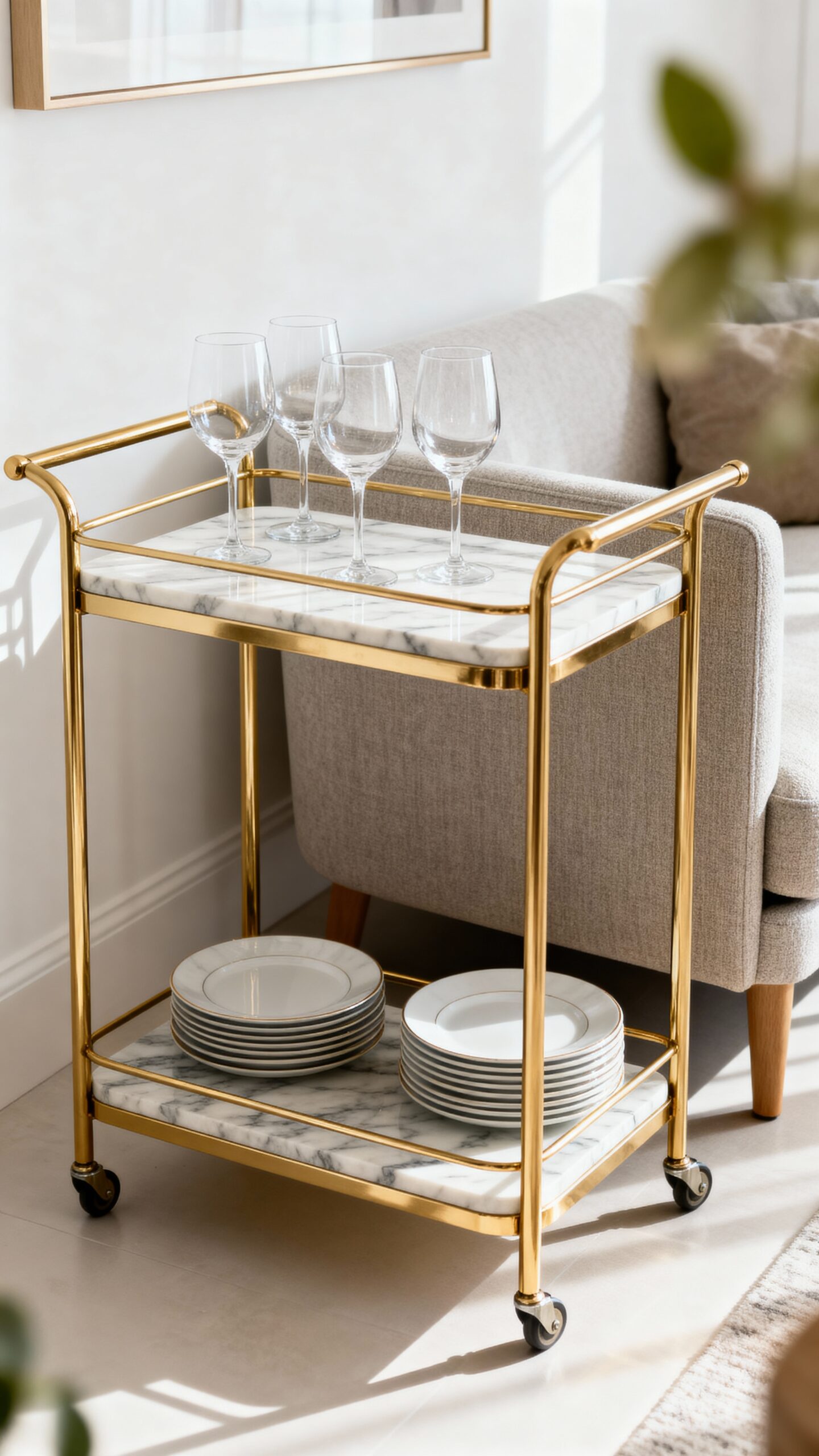
A bar cart metamorphosizes into the perfect mobile dining station for your small living room, offering flexibility that fixed furniture simply can’t match. You’ll uncover that this versatile piece transforms your space instantly, rolling wherever you need it most.
Your mobile bar cart serves multiple purposes throughout the day. Stock the top shelf with dinnerware and glasses, while lower tiers hold napkins, utensils, and condiments. When mealtime arrives, simply wheel it beside your seating area to create an instant compact dining area.
Choose a cart with locking wheels to guarantee stability during use. Look for models with removable trays that double as serving platters. After dinner, you can effortlessly roll your dining station away, instantly reclaiming your living space for relaxation and entertainment.
Position the Dining Table Against a Window
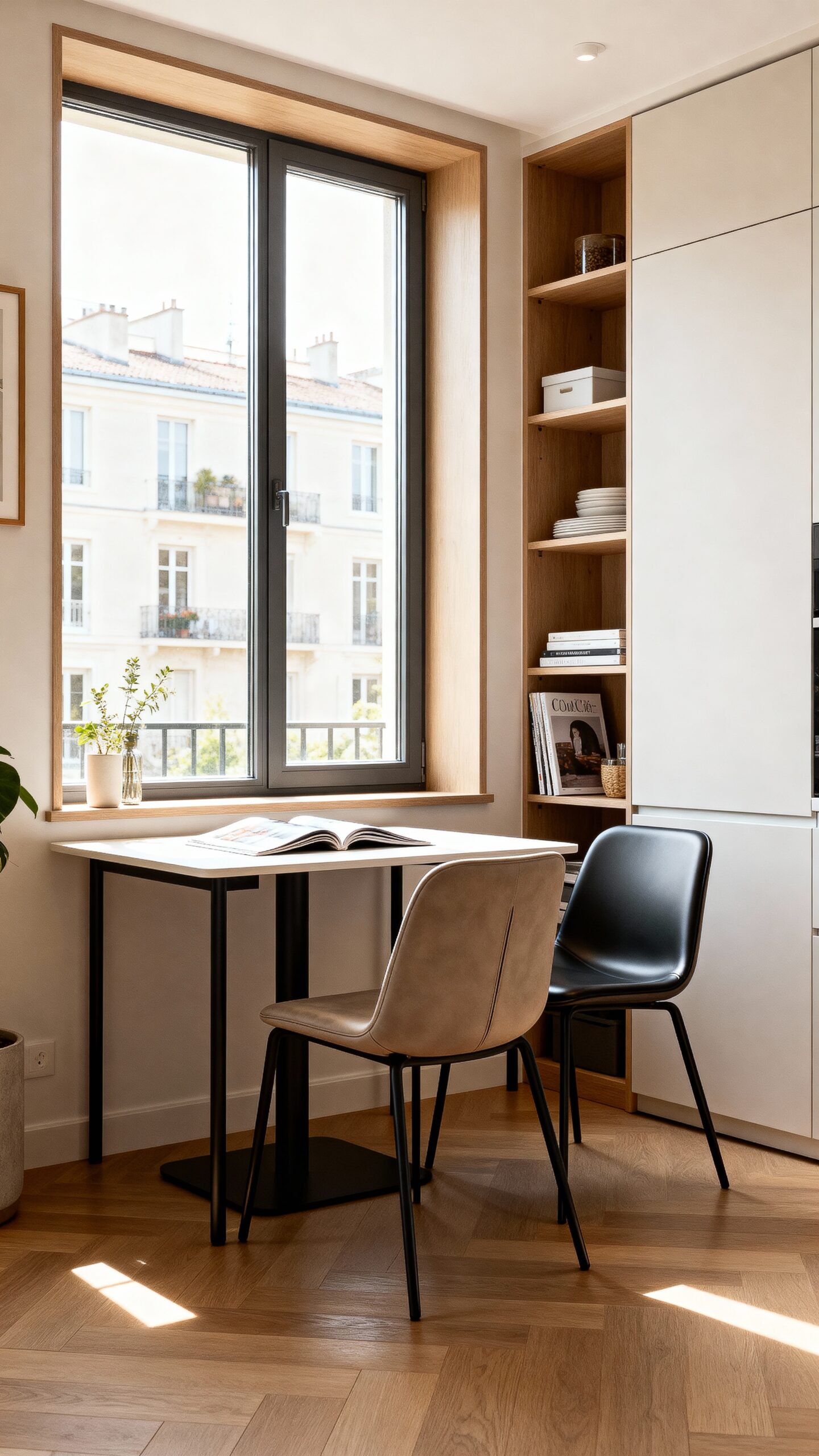
When you position your dining table against a window, you’ll maximize natural light while creating the illusion of expanded space in your compact living room. This strategic placement transforms your eating area into a bright, airy zone that feels larger than its actual footprint.
Choose a slim rectangular table that won’t block the window’s architectural details or obstruct your view. You can employ narrow console table designs that extend along the window wall, providing ample surface area without overwhelming the space. Incorporate space saving pendant lighting above the table to guarantee adequate illumination during evening meals while maintaining the clean lines of your setup.
Consider adding a window seat or built-in bench on one side to eliminate the need for multiple chairs, further optimizing your floor plan.
Select a Bench With Storage Instead of Multiple Chairs
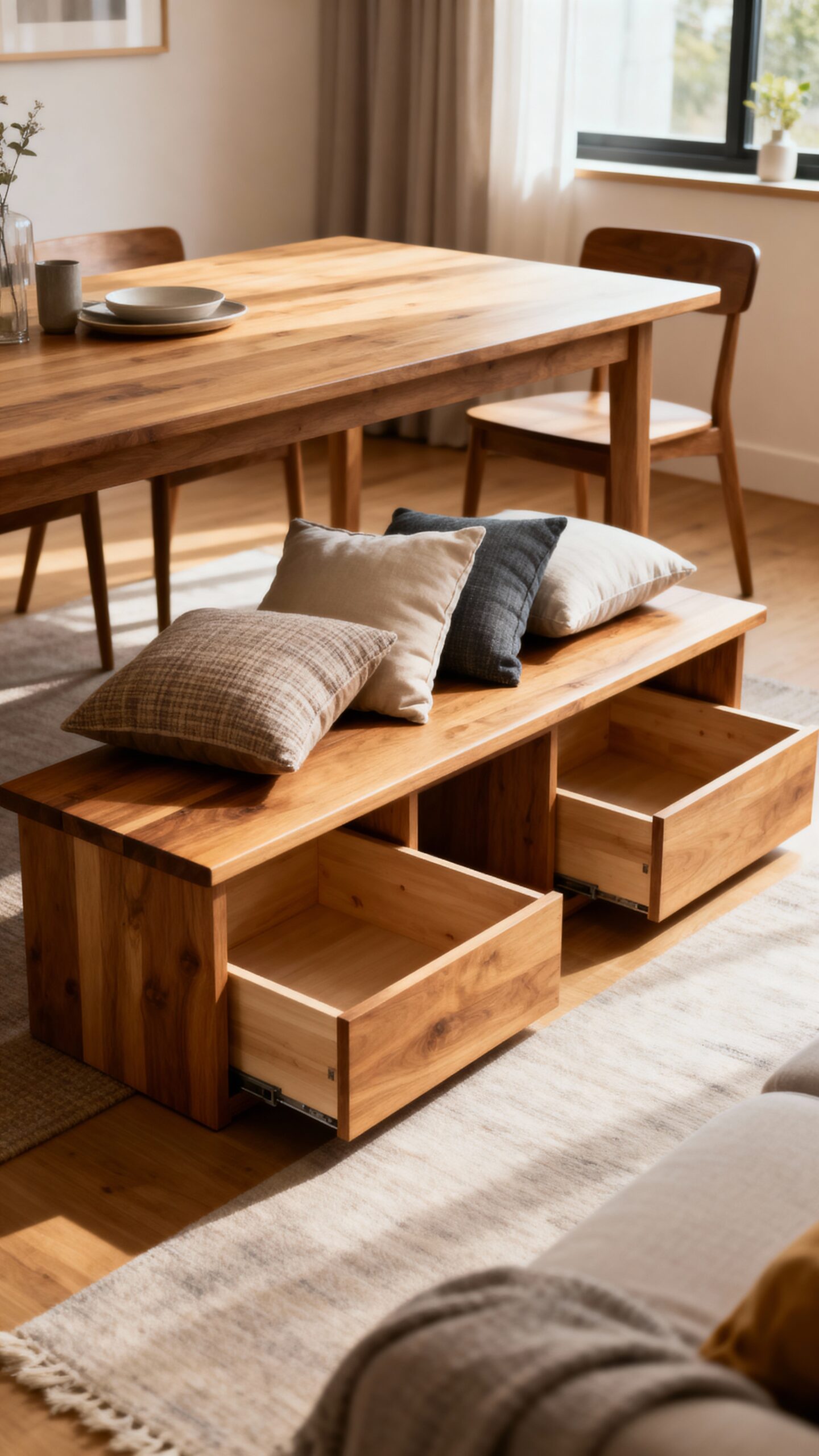
By choosing a bench with built-in storage over individual chairs, you’ll dramatically increase your dining area’s functionality while reducing visual clutter in your small living room. This smart swap lets you maximize footprint by seating the same number of people in a more streamlined configuration.
Look for benches that provide hidden storage beneath the seat cushion for storing table linens, seasonal items, or extra pillows. You can tuck the bench completely under your table when not in use, creating prized floor space for movement and activities.
Consider upholstered benches with lift-up tops or wooden designs with drawers underneath. Place the bench against a wall to free up walking space, and you’ll uncover how this single piece transforms your cramped dining area into an organized, efficient zone.
Choose Multi-Purpose Ottoman Seating
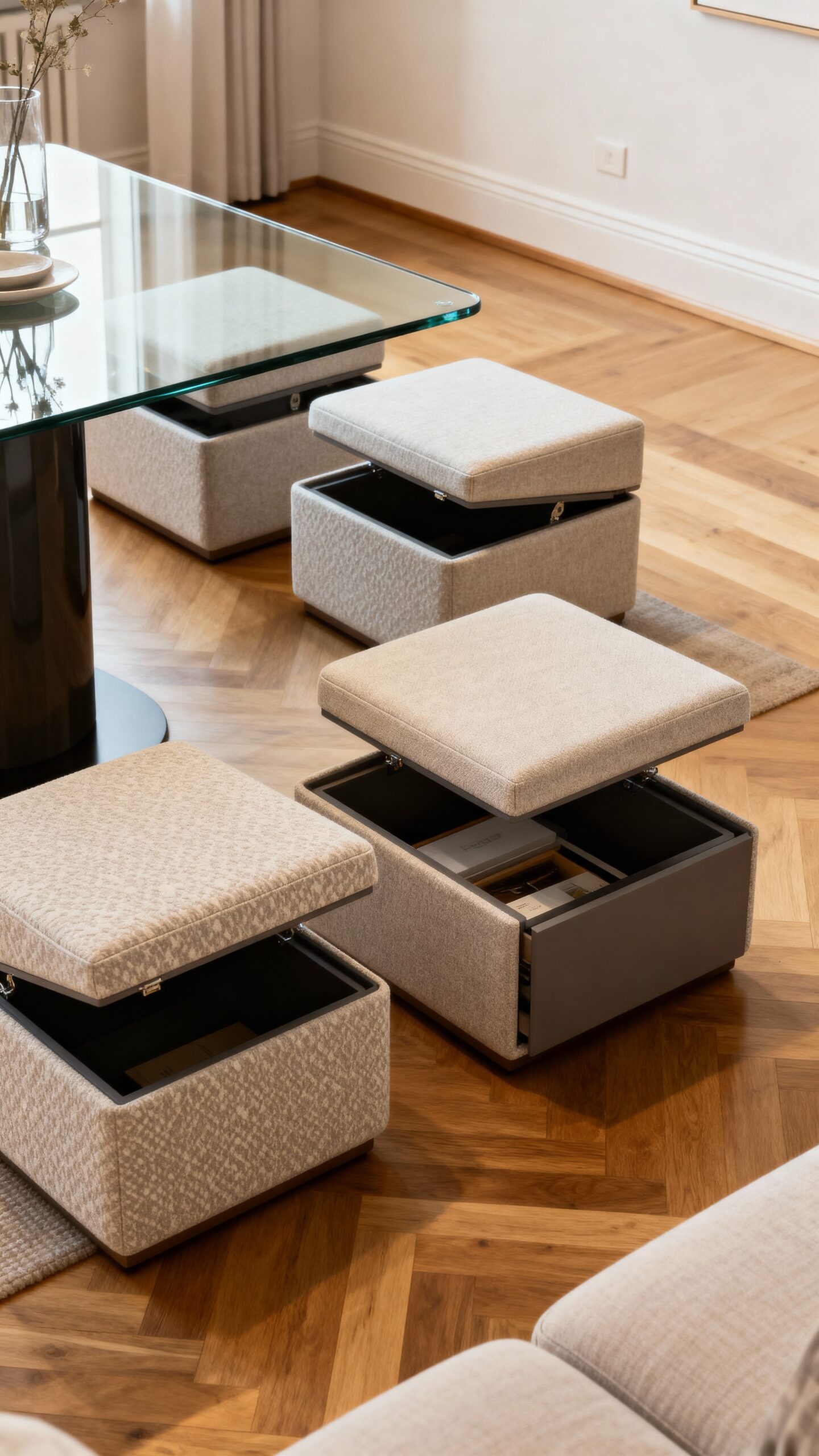
Multi-purpose ottomans deliver triple functionality as seating, storage, and coffee tables, making them essential additions to your compact living-dining space. You’ll maximize every square foot when you employ multifunctional ottomans that adapt to your changing needs throughout the day.
Choose ottomans with hinged tops to store linens, games, or seasonal items while providing extra seating for dinner guests. Round ottomans work particularly well since they won’t create sharp corners in tight spaces, and you can easily move them around your room.
When you incorporate modular seating solutions like cube ottomans, you’ll create flexible arrangements that convert instantly. Stack them for elevated seating, separate them for individual seats, or push them together to form a makeshift coffee table for movie nights.
Use Mirrors to Reflect Light and Create Depth
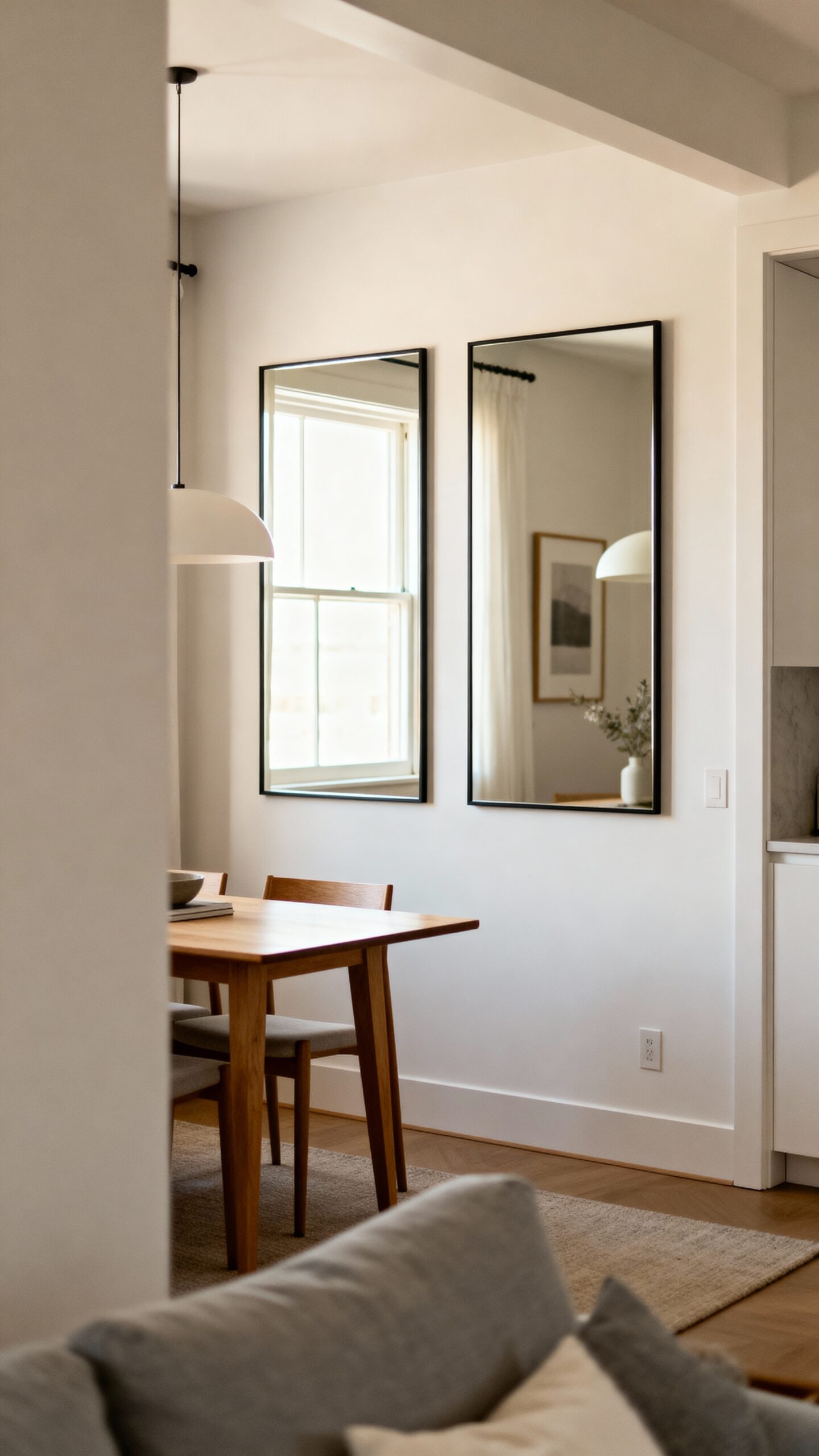
Strategic mirror placement converts your cramped living-dining area into an expansive, light-filled sanctuary that feels twice its actual size.
Position large mirrors opposite windows to bounce natural light throughout your space, instantly brightening dark corners. A floor-to-ceiling mirror behind your dining table creates dramatic depth while making the room feel infinitely larger. You’ll love how this simple trick alters your confined quarters into an airy retreat.
Utilize recessed lighting paired with strategically placed mirrors to amplify illumination throughout your dual-purpose space. The reflected light eliminates shadows and creates a welcoming atmosphere for both dining and relaxation.
Incorporate glass tabletops with mirrored surfaces underneath for maximum light reflection. This combination doubles your lighting effect while maintaining clean sight lines. Round mirrors above seating areas add visual interest while continuing the space-expanding illusion you’ve created.
Install Built-In Banquette Seating
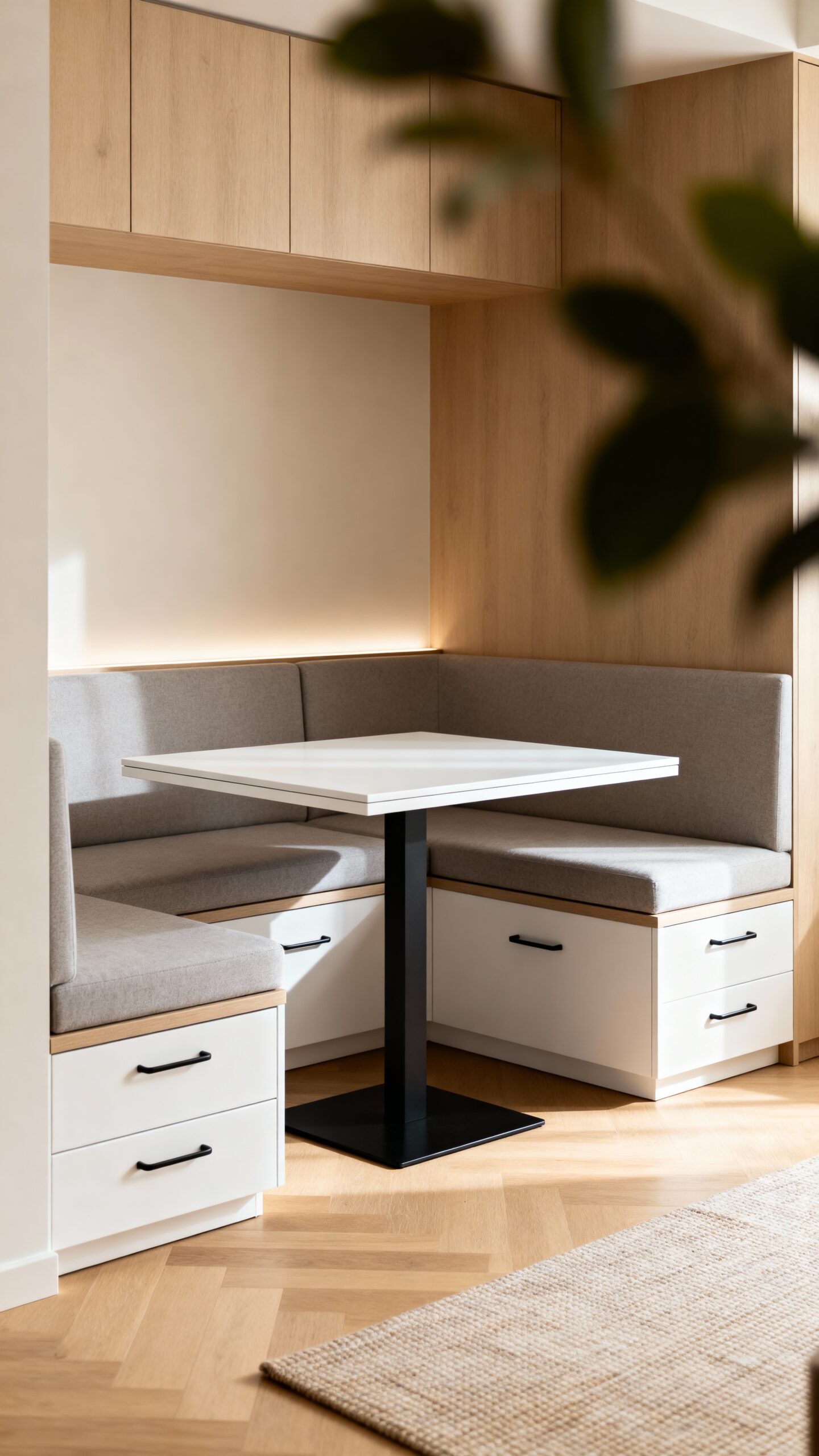
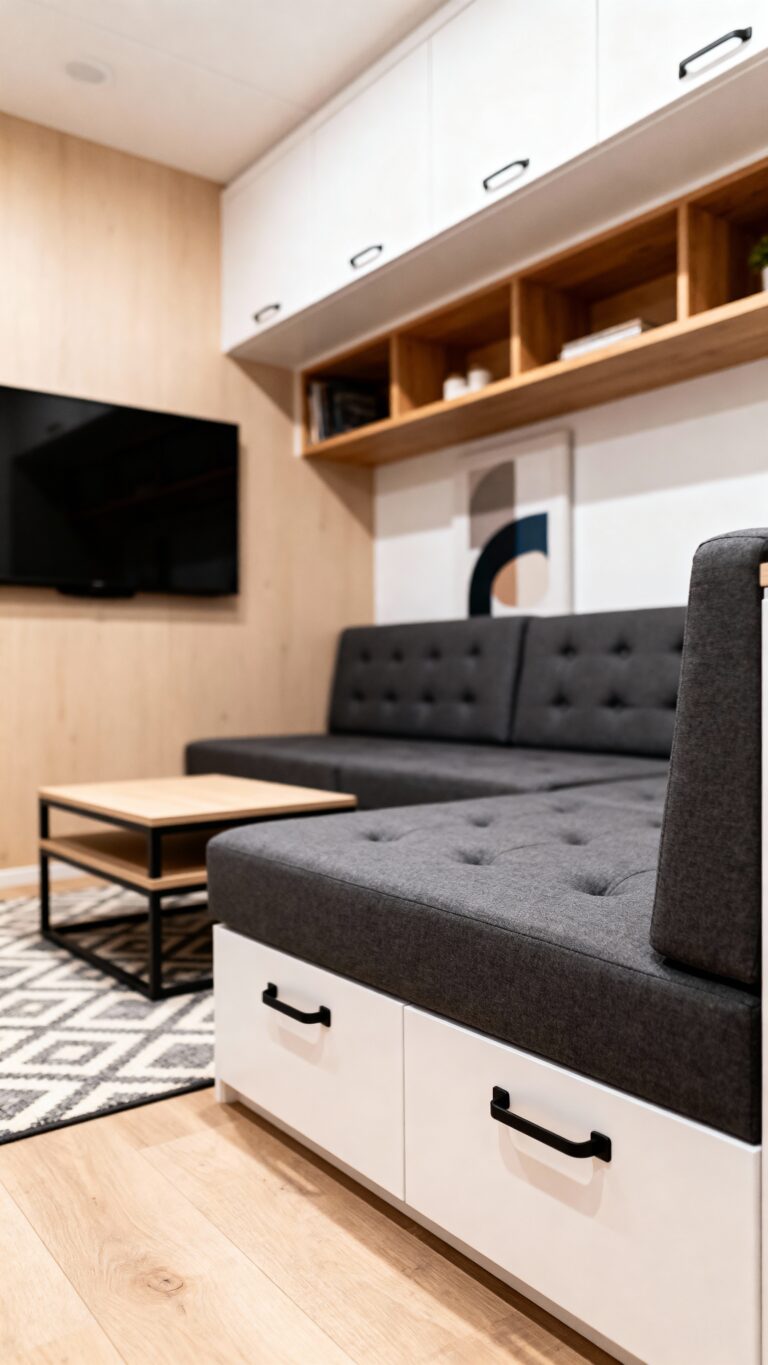
Built-in banquette seating converts your small living room into a multifunctional haven that maximizes every square inch while providing comfortable dining and storage solutions. You’ll transform dead corner space into a functional dining area that serves multiple purposes throughout your day.
When you utilize corner banquette seating, you’re creating an L-shaped configuration that accommodates more people than traditional chairs while using less floor space. This design allows you to push your dining table closer to the wall, freeing up important walking room in your living area.
Make sure you incorporate built in storage beneath the banquette cushions for linens, seasonal items, or dining accessories. This hidden storage eliminates clutter while maintaining your room’s clean aesthetic, giving you the organized, flexible living space you’ve always wanted.
Choose Furniture With Exposed Legs to Maintain Sightlines
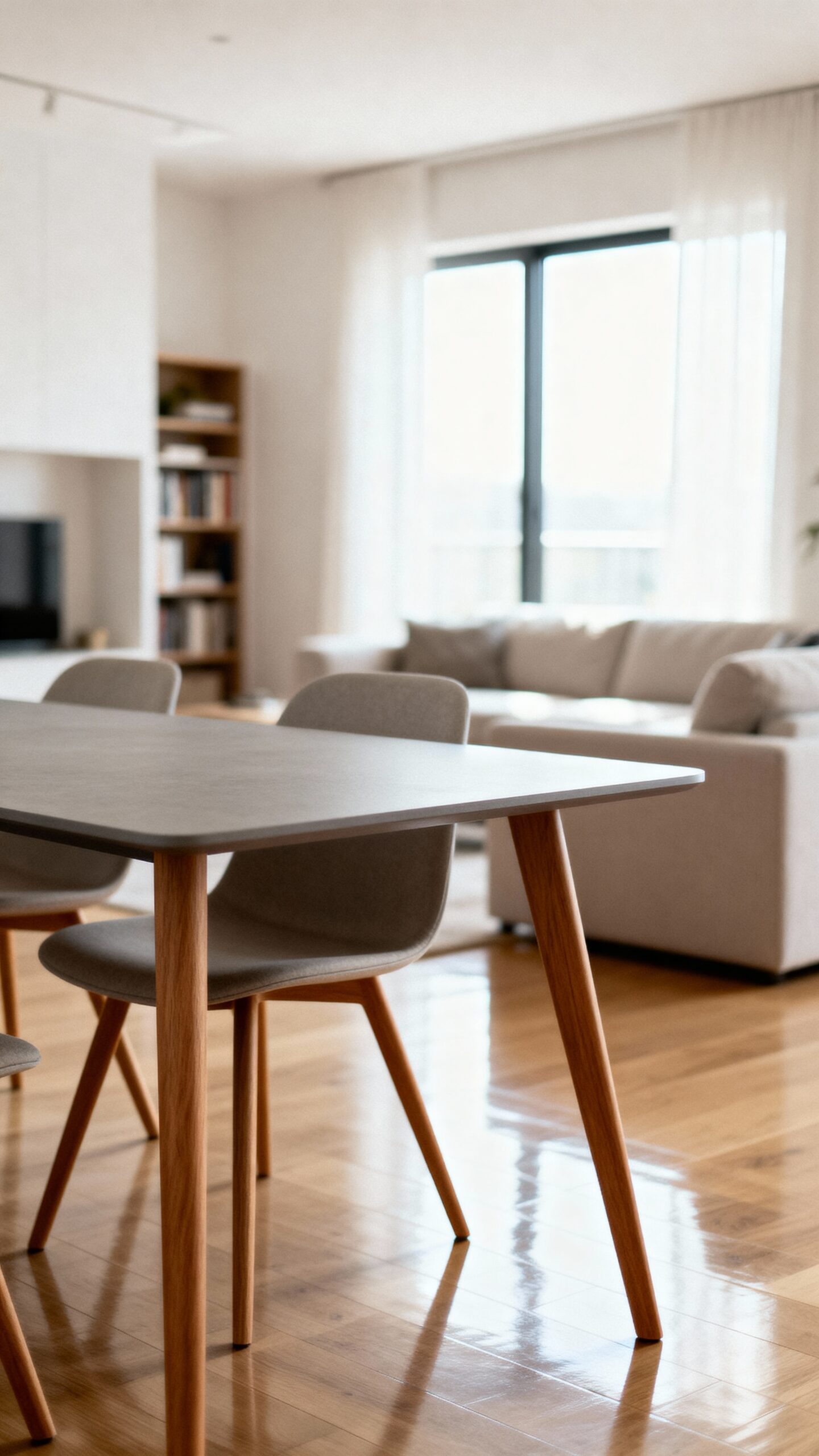
Beyond maximizing seating efficiency, your furniture choices can dramatically impact how spacious your small living room feels through strategic visual design elements. Selecting pieces with exposed legwork creates an airy, uncluttered appearance that tricks the eye into perceiving more square footage than actually exists.
Dining tables, chairs, and sofas boosted on visible legs allow light and sightlines to flow underneath, maintaining visual continuity throughout your space. This design principle prevents furniture from appearing as solid blocks that chop up your room’s flow.
Choose pieces with slender metal or wooden legs rather than heavy pedestals or skirted bases. You’ll notice how this simple swap immediately opens up your floor space visually, making movement feel effortless and your combined living-dining area appear considerably larger than its actual dimensions.
Conclusion
You’ll uncover that maximizing your small living room with a dining table isn’t impossible when you apply these smart strategies. Choose furniture that serves multiple purposes, creates visual space, and maintains traffic flow throughout your room. Don’t let limited square footage discourage you from creating both comfortable living and dining areas. With thoughtful planning and the right pieces, you’ll alter your compact space into a functional, stylish home.