12 Functional Small Living Room Entry Layout Ideas That Flow Naturally
Keep your small living room flowing with these 12 clever entry layouts that maximize space and create seamless transitions you’ll love.
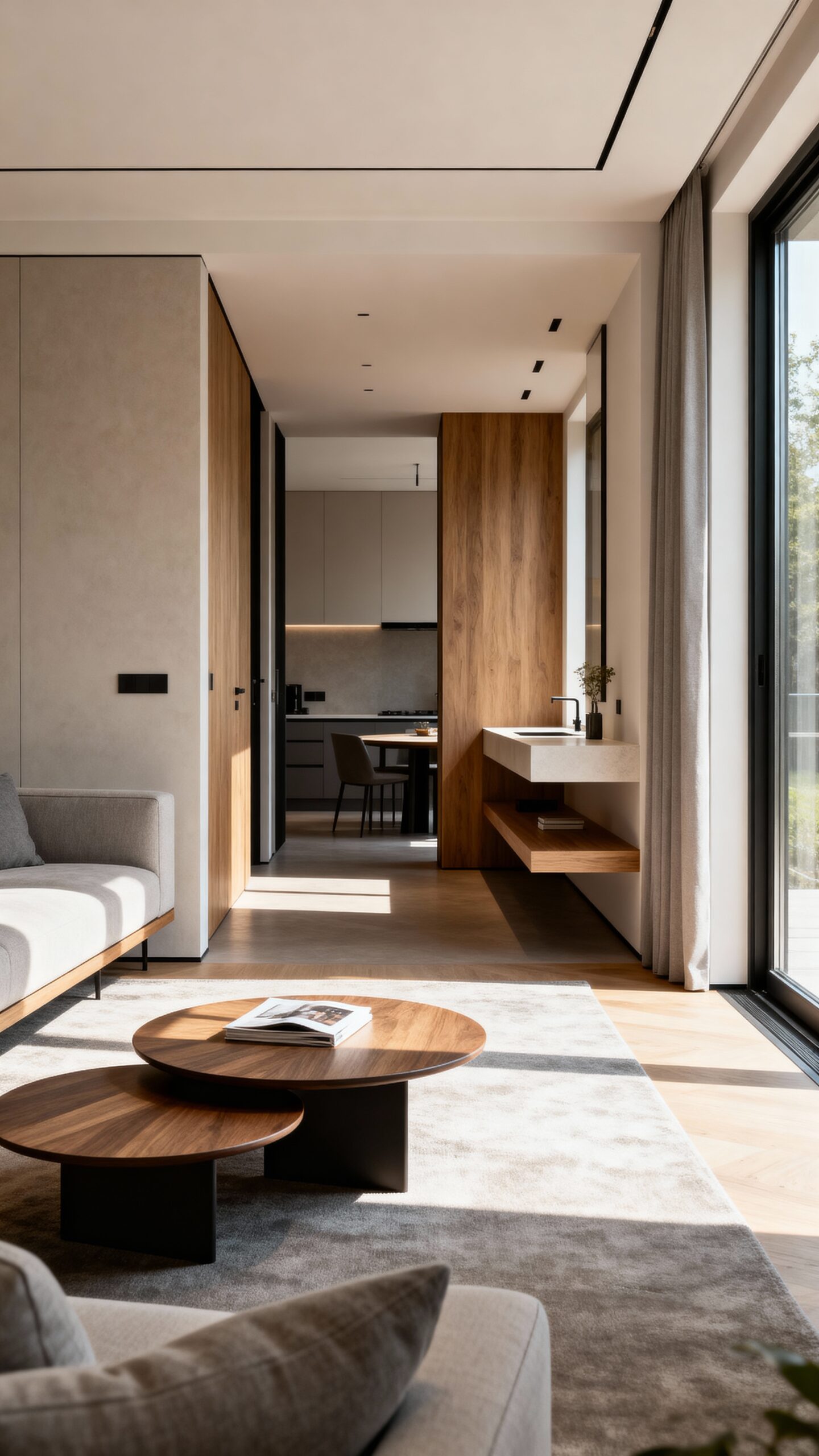
You’re facing the challenge of creating a functional entry in your small living room, and you’re not alone in this design dilemma. The key lies in strategic layout choices that maximize every square inch while maintaining smooth traffic flow. Smart storage solutions, clever furniture placement, and zone-defining elements can remodel your cramped entryway into an organized, welcoming space. These twelve proven layout ideas will help you achieve that perfect balance between form and function, starting with the most impactful solution that requires zero floor space.
Floating Console Against the Wall
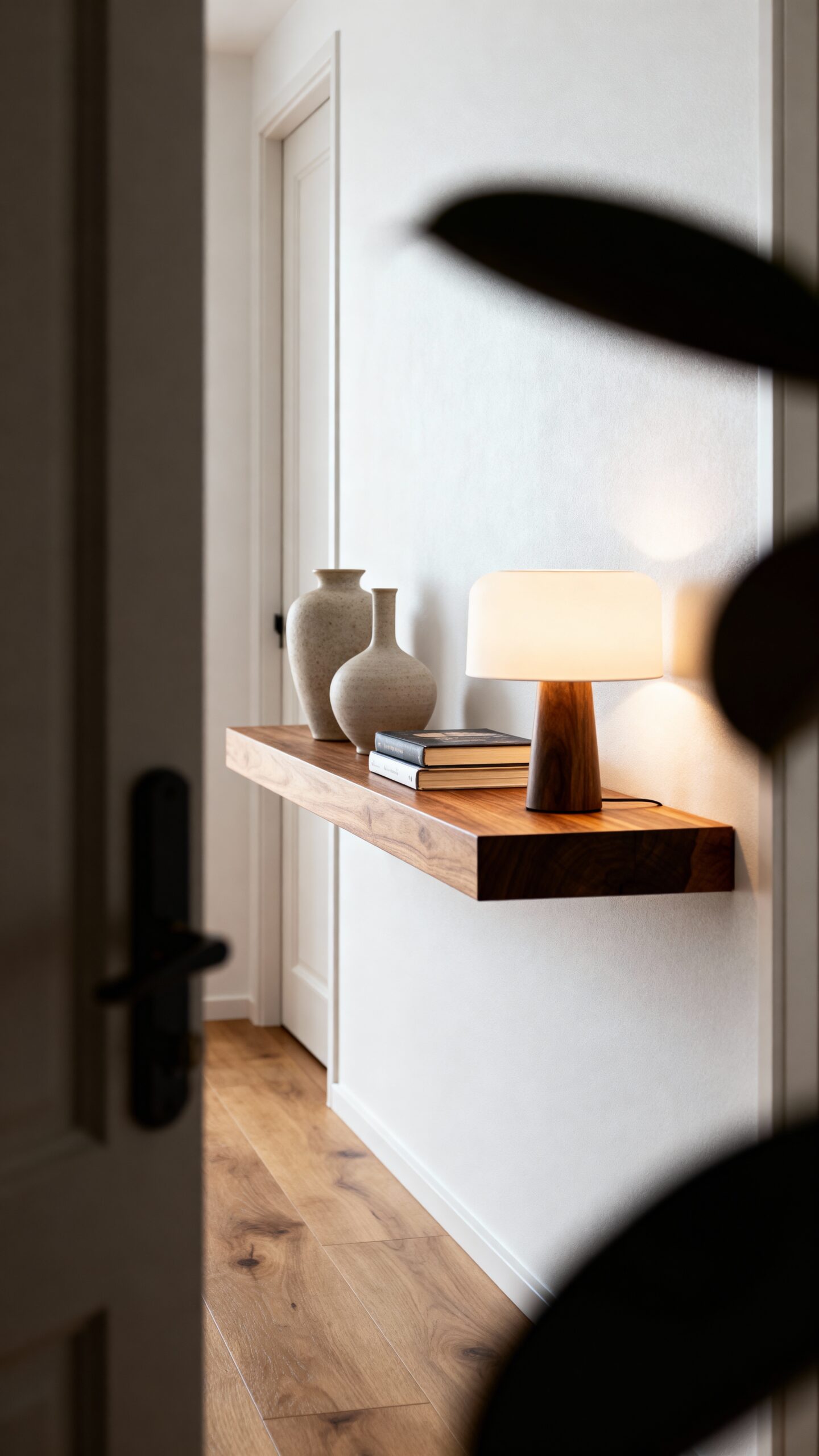
When you’re working with limited square footage, a floating console against the wall becomes your secret weapon for creating an organized entryway without sacrificing precious floor space. This streamlined approach keeps your floor clear while providing essential storage for keys, mail, and daily essentials.
Mount your floating media console at hip height to create a natural drop zone for incoming items. You’ll maximize vertical space by incorporating recessed shelving above or around the console for books, decorative objects, or storage baskets. Choose a console with clean lines and minimal hardware to maintain an airy feel.
Position hooks underneath for jackets and bags, converting dead wall space into a hardworking entry solution. Consider pairing your floating console with charming chair designs that complement compact living spaces for additional seating without overwhelming the area. This layout creates visual flow while keeping clutter contained and accessible.
Corner Entry Nook With Built-In Storage
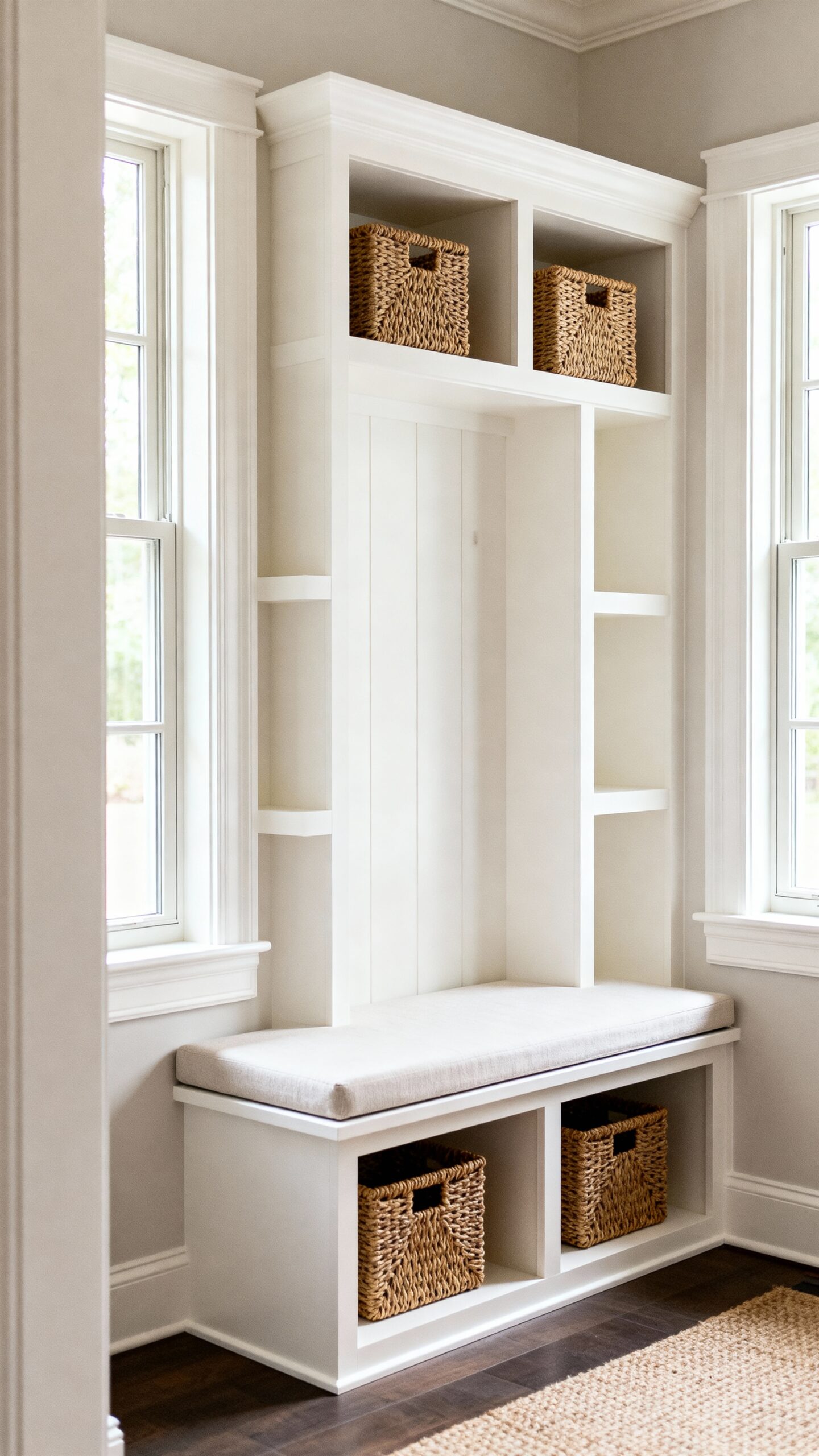
Since corners often become wasted space in small living rooms, converting yours into a dedicated entry nook with built-in storage maximizes every square inch while creating a welcoming passage zone. You’ll transfigure an awkward area into a functional hub that greets guests while keeping everyday essentials organized.
Install curved bench seating along the corner walls to create comfortable seating for putting on shoes or setting down bags. The curved design softens harsh angles while providing maximum seating capacity in minimal space. Add built-in cubbies above and below the bench for storing shoes, keys, and seasonal accessories.
Incorporate decorative storage baskets within the cubbies to maintain visual appeal while hiding clutter. Choose baskets that complement your décor style, whether woven natural fibers or sleek fabric bins that blend seamlessly with your living room’s aesthetic. Consider using light colors for your storage solutions to help the narrow space feel more open and airy.
Room Divider Screen for Zone Definition
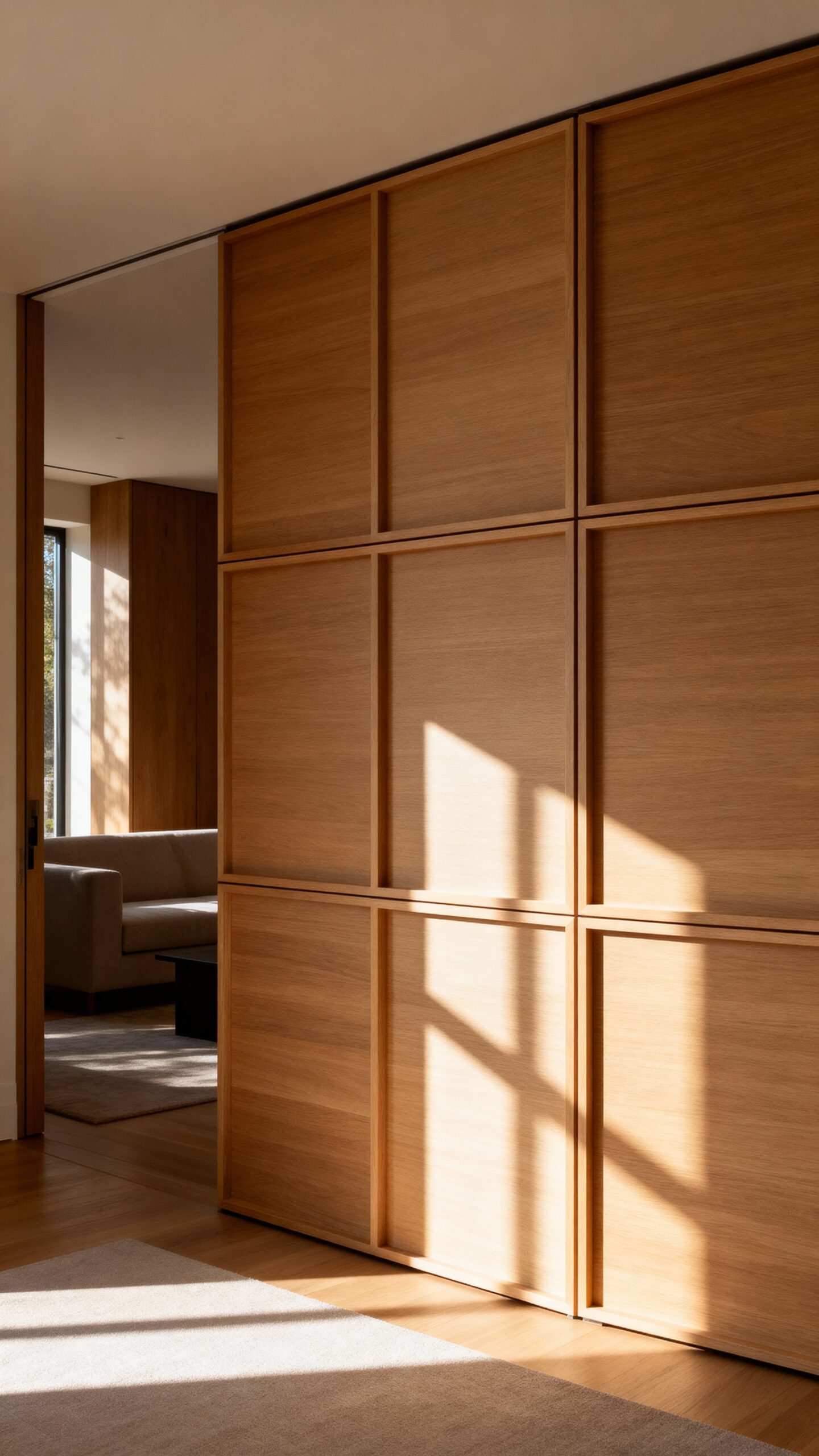
Although open floor plans maximize space in small living rooms, they can leave your entryway feeling undefined and chaotic without proper boundaries. Room divider screens offer you the perfect solution to create distinct zones without sacrificing your home’s airy feel.
Choose lightweight folding screens that you can easily reposition as your needs change. Fabric panels filter light while maintaining visual connection between spaces. For maximum functionality, select screens with integrated storage pockets or hooks for keys and bags. These space-saving solutions help create the illusion of a larger room while keeping everything organized.
You’ll love how modular storage units double as attractive room dividers. Stack cube organizers to your desired height, then add decorative boxes or plants on top. Consider screens with recessed shelving built right in – they’ll hold books, décor, and daily essentials while clearly defining your entry zone.
Narrow Bench With Underneath Storage
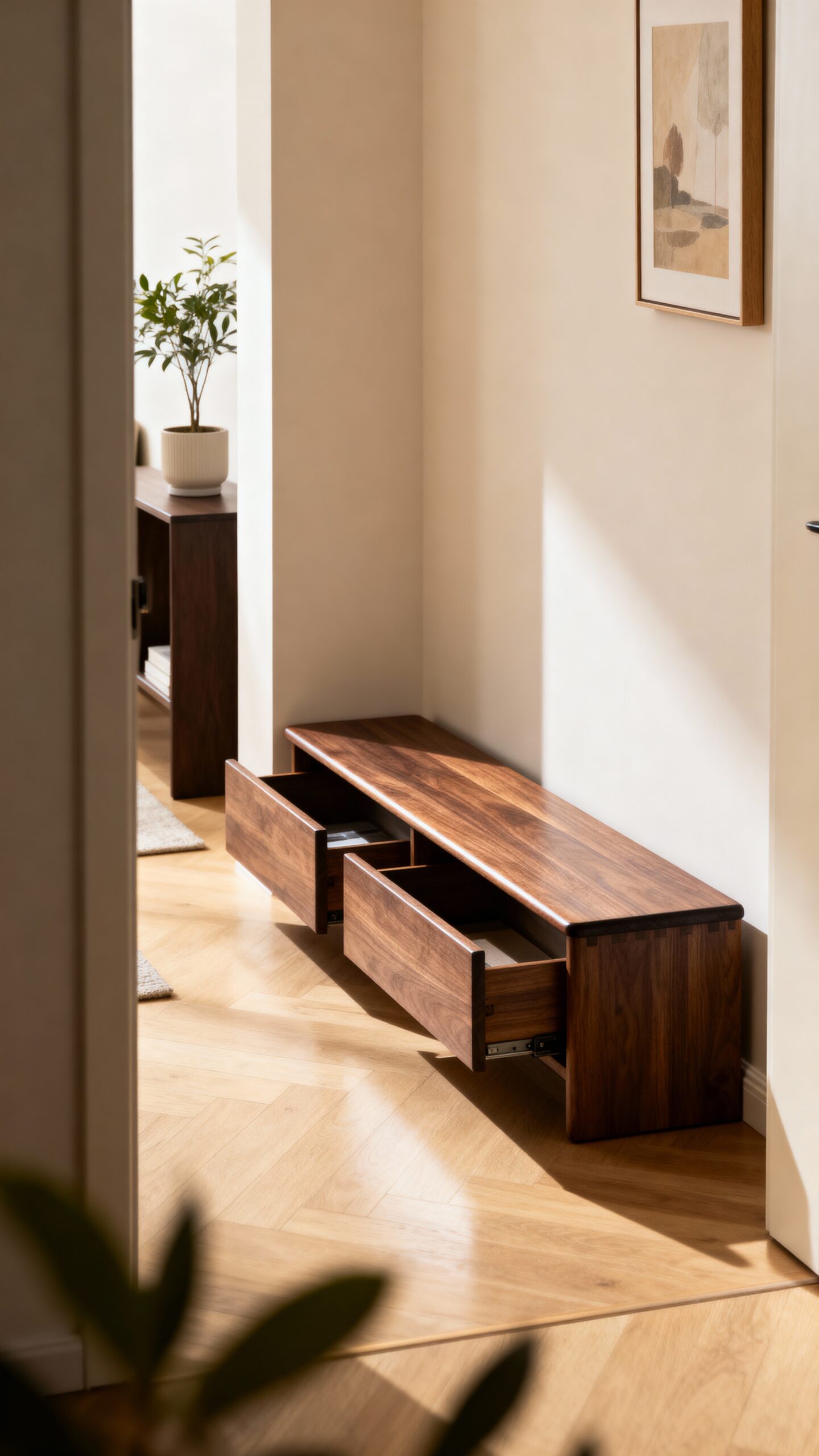
Beyond creating visual boundaries, your small living room entry needs practical seating and storage solutions that won’t overwhelm the limited square footage. A compact storage bench delivers exactly what you’re looking for without sacrificing precious floor space.
Position your dual purpose bench seating along the longest wall to maximize walking room while providing essential functionality. Choose designs with lift-up tops or pull-out drawers that’ll house shoes, seasonal accessories, and daily essentials you’d rather keep hidden.
Look for benches measuring 36-48 inches long and 14-16 inches deep – they’re perfectly sized for tight spaces. Upholstered tops in neutral fabrics add comfort while maintaining your room’s aesthetic flow. You’ll appreciate having designated storage that doubles as convenient seating for putting on shoes or setting down bags. These stylish sofa designs can complement your bench choice while maintaining the same space-saving principles throughout your compact living area.
Wall-Mounted Hooks and Shelving System
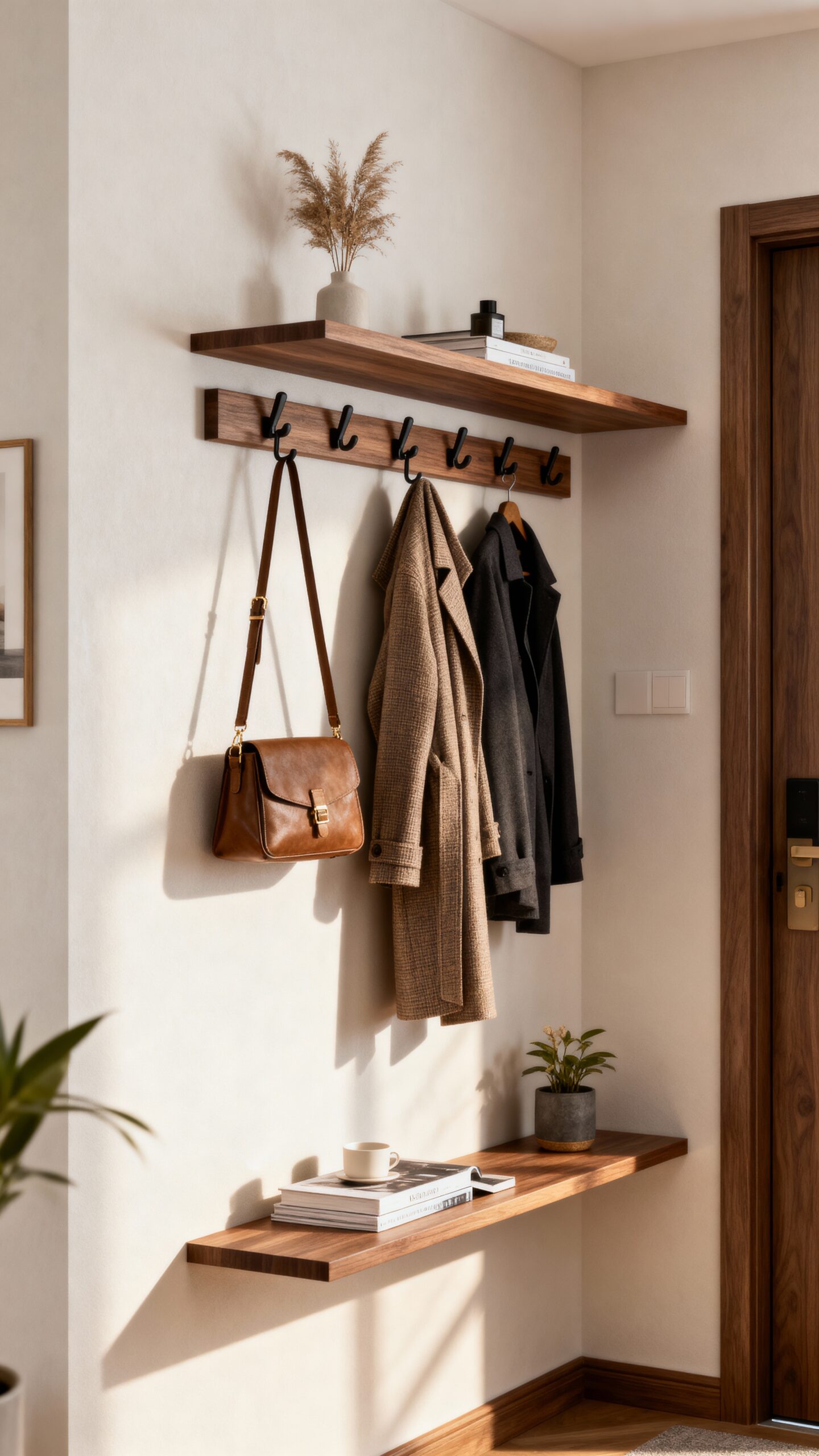
When you’re working with limited floor space, vertical storage becomes your most prized real estate for organizing entry essentials. A wall mounted coat rack paired with strategically placed shelves creates an efficient system that keeps belongings accessible yet organized.
Install hooks at varying heights to accommodate different family members and coat lengths. Position a hanging organizer below or beside your coat rack to store gloves, scarves, and small accessories. Add floating shelves above the hooks for keys, sunglasses, and mail.
Choose coordinating finishes like brushed nickel or matte black to create visual cohesion. Mount everything at eye level for easy access while maintaining your room’s open feel. Strategic wall decor placement draws the eye upward, making your small living room feel larger and more inviting. This vertical approach maximizes storage capacity without sacrificing precious square footage.
L-Shaped Furniture Arrangement
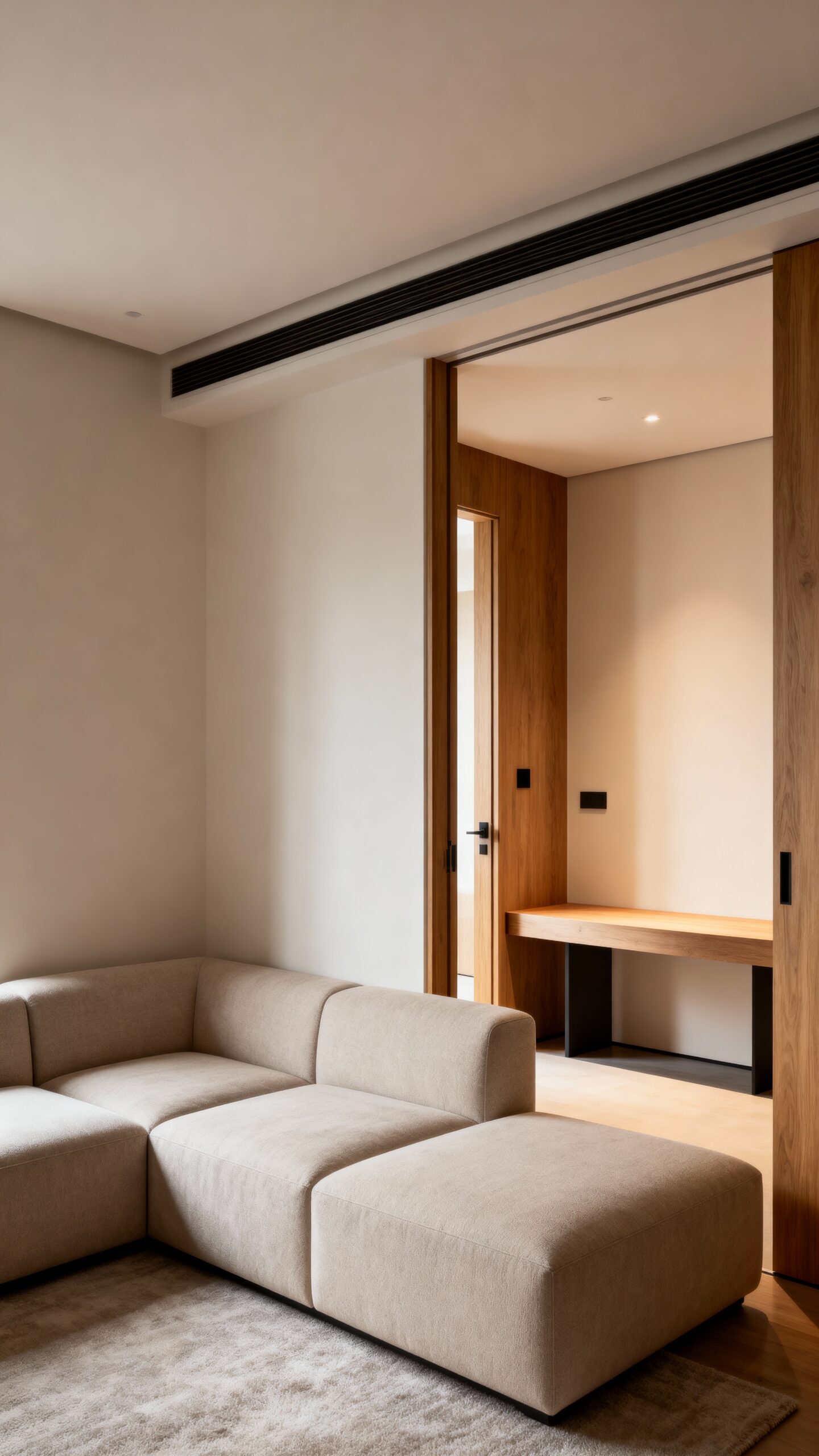
Strategic L-shaped furniture arrangements metamorphose cramped entryways into functional zones that serve multiple purposes without overwhelming your small living room. You’ll create natural traffic flow while maximizing every square foot of available space.
Position your curved sofa arrangement along two perpendicular walls, forming an inviting corner that doesn’t block the entrance pathway. This setup creates a welcoming boundary between your entry and main living area without installing permanent dividers. Choose light paint colors for the walls behind your L-shaped arrangement to visually expand the space and create an airier feel in your compact entry zone.
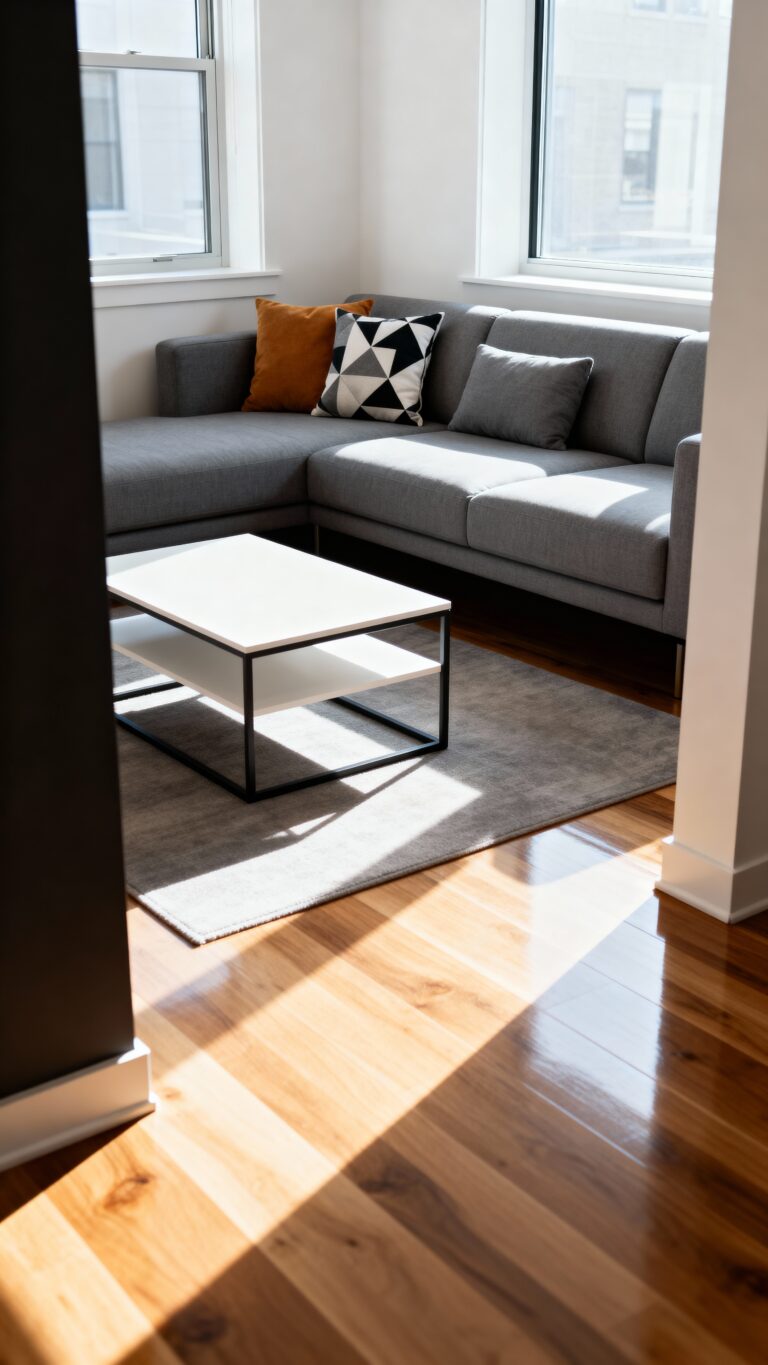
Consider a modular sectional setup that you can reconfigure as your needs change throughout the seasons. Place the longer section against your main wall, with the shorter piece extending toward the entry zone. This configuration provides ample seating while maintaining clear walkways.
Add a compact side table at the corner junction to hold keys, mail, and daily essentials within easy reach.
Behind-the-Sofa Entry Setup
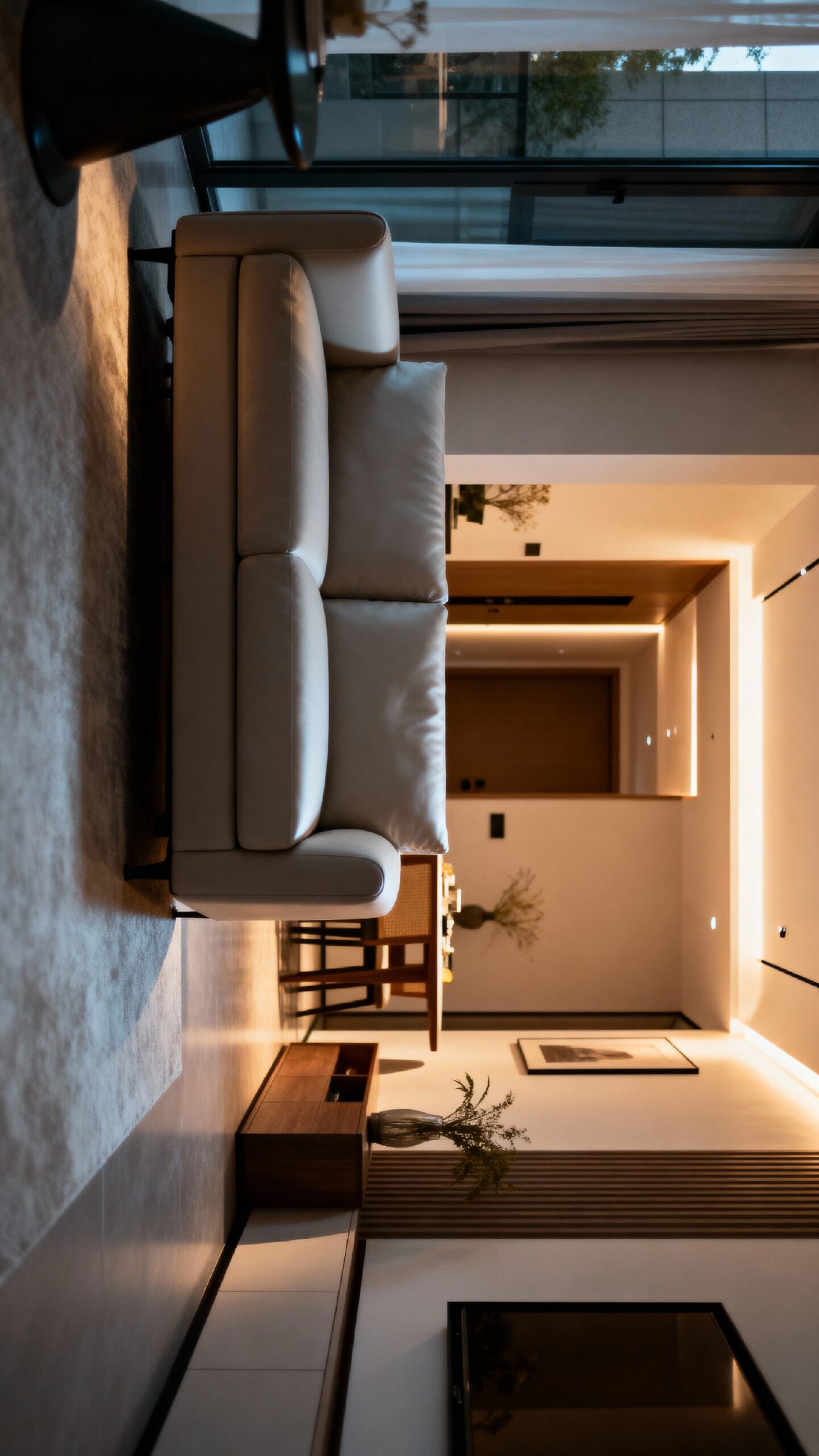
Console tables positioned behind your sofa create an ingenious entry solution that doubles your storage and display options while maintaining the room’s open feel. You’ll maximize every square inch while establishing a natural shift zone between your entrance and living space.
Position an angled entry console at a slight diagonal to soften harsh lines and create visual interest. This arrangement allows easier movement around furniture while providing accessible storage for keys, mail, and daily essentials. You can display decorative items on top while utilizing lower shelves for hidden organization.
Add a compact entryway bench nearby for shoe changes and additional seating when guests visit. Choose pieces with built-in storage compartments to keep seasonal items tucked away. This setup alters dead space into functional territory that serves multiple purposes without overwhelming your room’s aesthetic.
Multi-Level Storage Tower
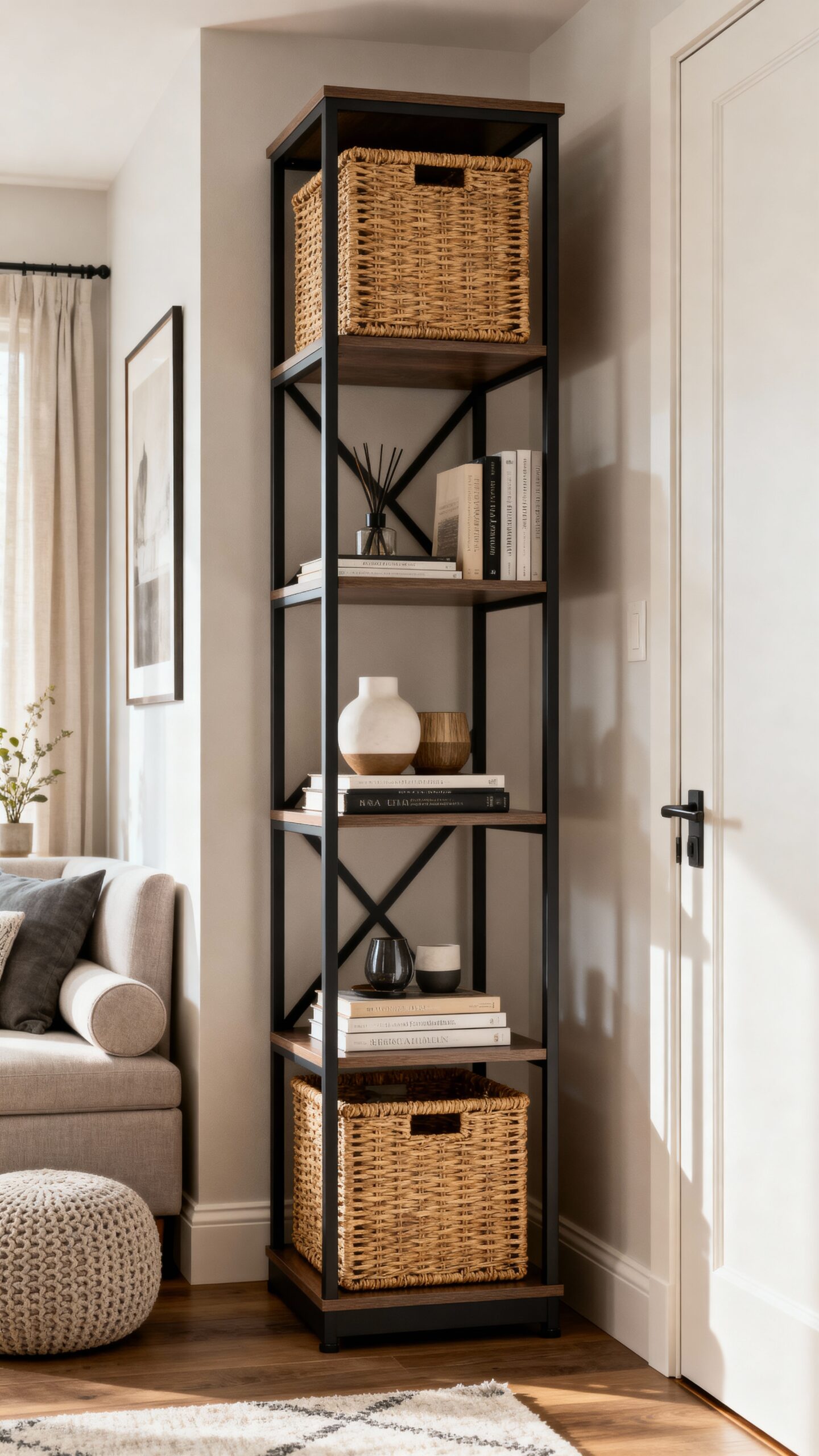
Vertical storage towers convert unused corners into powerhouse organizational hubs that maximize your small living room’s potential without sacrificing precious floor space. You’ll create instant entry zones that handle everything from keys to seasonal gear while maintaining visual flow throughout your space.
Choose stackable modular units that adapt as your storage needs evolve. These flexible systems let you add or remove sections without purchasing entirely new furniture. Position taller units against walls to draw the eye upward, making ceilings appear higher.
Install vertical storage shelves with designated spots for daily essentials like bags, mail, and electronics. You’ll eliminate clutter while keeping necessities within arm’s reach. Mix open shelving with closed compartments to display decorative items while hiding less attractive storage needs.
Angled Furniture Placement for Traffic Flow

Once you’ve optimized your vertical storage, smart furniture positioning becomes your next potent instrument for creating seamless movement through your compact living space. Strategic angled entry seating remodels cramped pathways into flowing corridors that welcome guests naturally.
Position your sofa at a 45-degree angle to walls, creating diagonal pathways that feel wider than traditional straight arrangements. This curved sofa orientation opens up corner spaces while maintaining conversation areas. Place accent chairs at complementary angles, forming gentle curves that guide foot traffic around your seating zone.
Angled furniture placement eliminates sharp corners that block movement and creates multiple traffic routes through your room. You’ll find that diagonal arrangements make small spaces feel dramatically larger while maintaining all the functionality you need for comfortable living.
Drop Zone Table With Vertical Storage
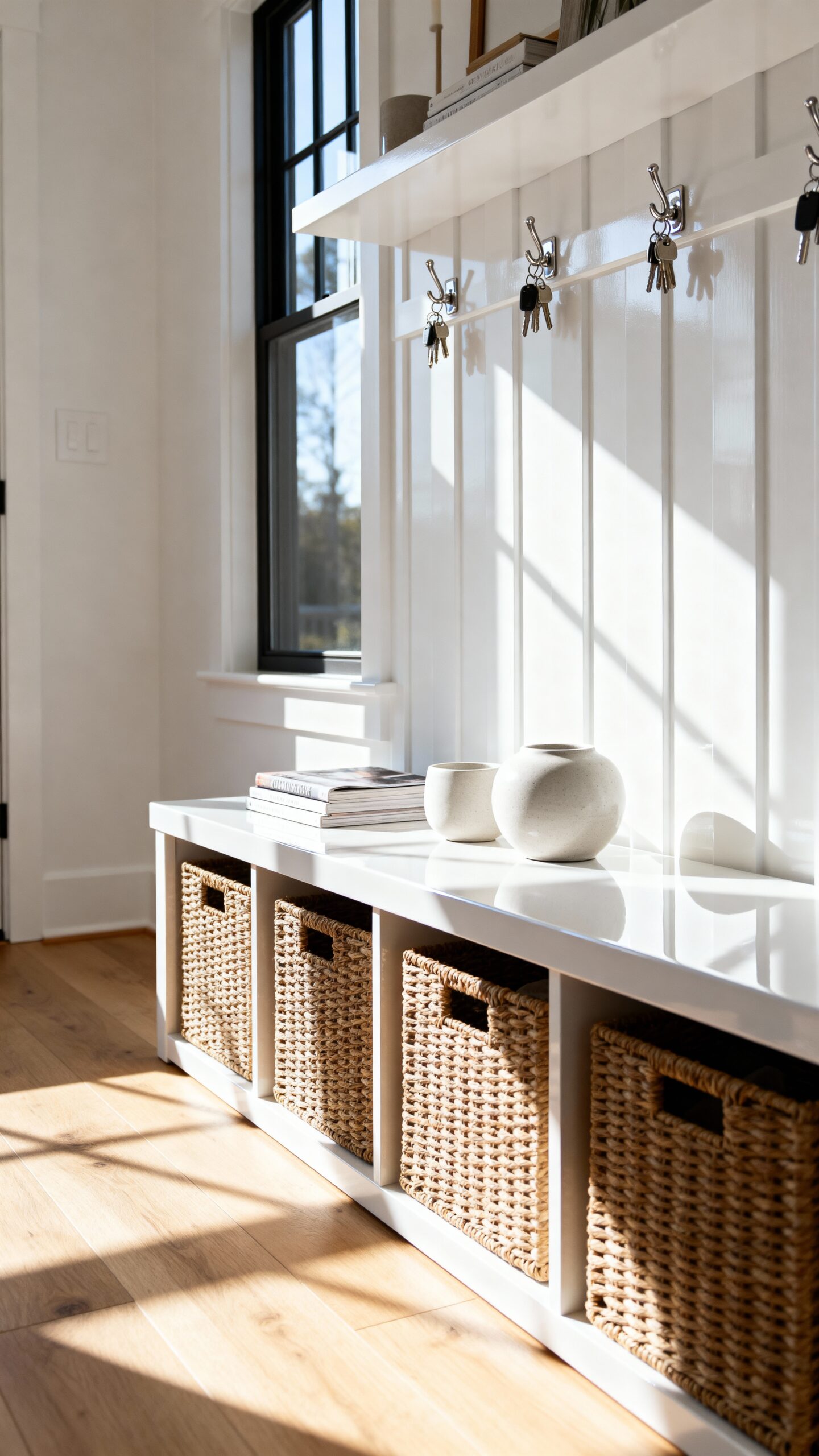
After establishing your angled furniture flow, a strategically positioned drop zone table alters your entryway chaos into organized efficiency while maximizing every inch of available vertical space.
Mount floating shelves above your console table to create dedicated spots for keys, mail, and daily essentials. You’ll triple your storage capacity without consuming precious floor space. Install hooks underneath for bags and jackets, keeping walkways clear.
Consider pairing your table with drop zone storage baskets that slide underneath for shoes and seasonal items. A drop zone seating bench positioned adjacent to your table provides convenient seating while doubling as hidden storage for blankets or outdoor gear.
Wall-mounted cubbies above eye level store items you don’t need daily but want accessible. This vertical approach transforms dead wall space into functional storage zones.
Sliding Barn Door Entry Separation
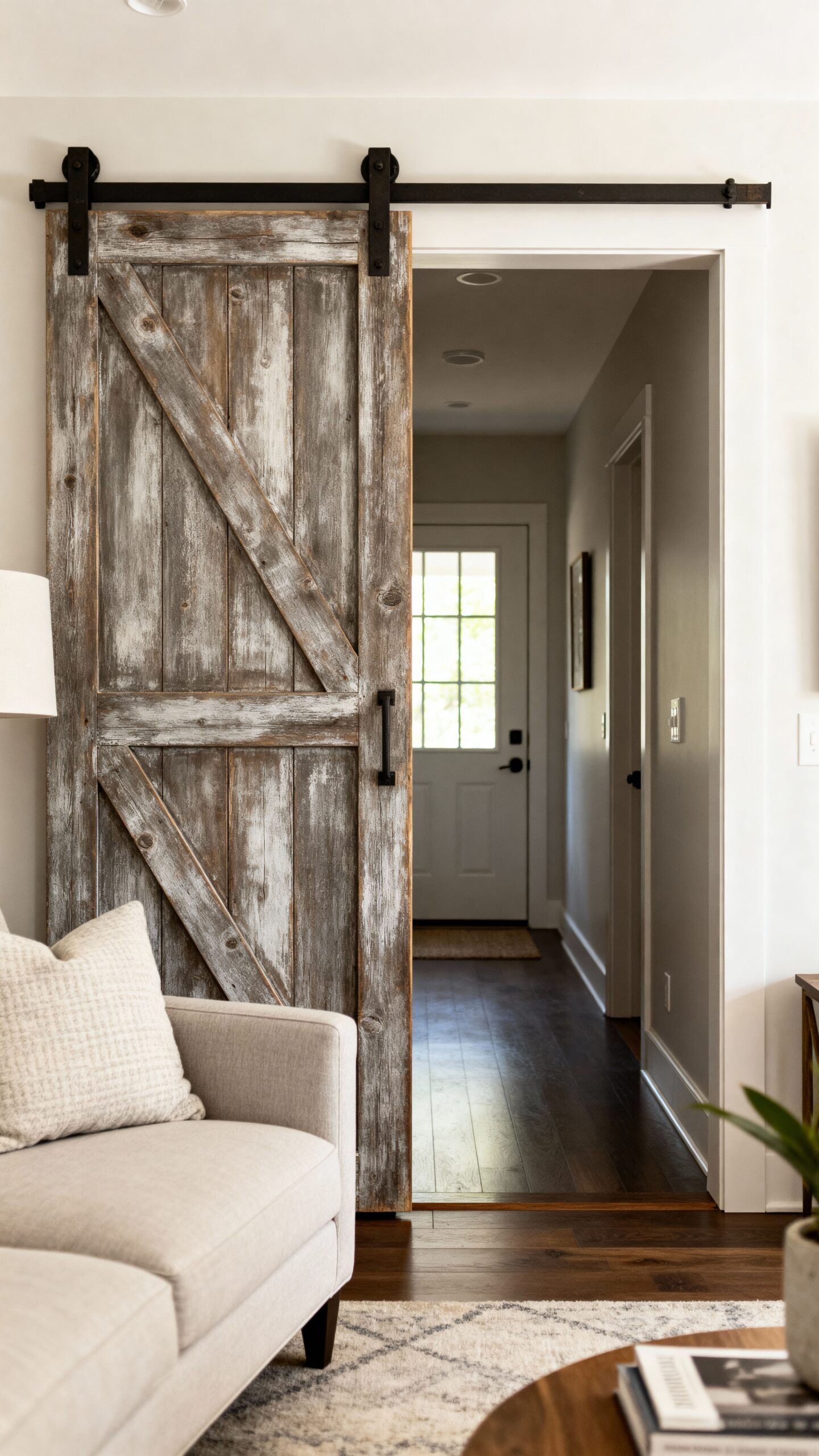
When space feels cramped between your living room and entryway, a sliding barn door creates instant separation while preserving your home’s open feel. You’ll maintain visual flow while defining distinct zones for guests and daily activities.
Choose a freestanding barn door divider if you’re renting or want flexibility in positioning. These moveable units don’t require wall mounting and can relocate as your needs change. For permanent solutions, install ceiling-mounted tracks that allow doors to slide completely out of sight.
Consider a sliding curtain partition as a softer alternative that offers privacy without blocking natural light. Lightweight fabric panels move effortlessly and fold compactly when not needed.
Both options give you control over your space’s openness, letting you adapt your living room entry based on entertaining needs or daily routines.
Mirror and Ledge Combination Layout
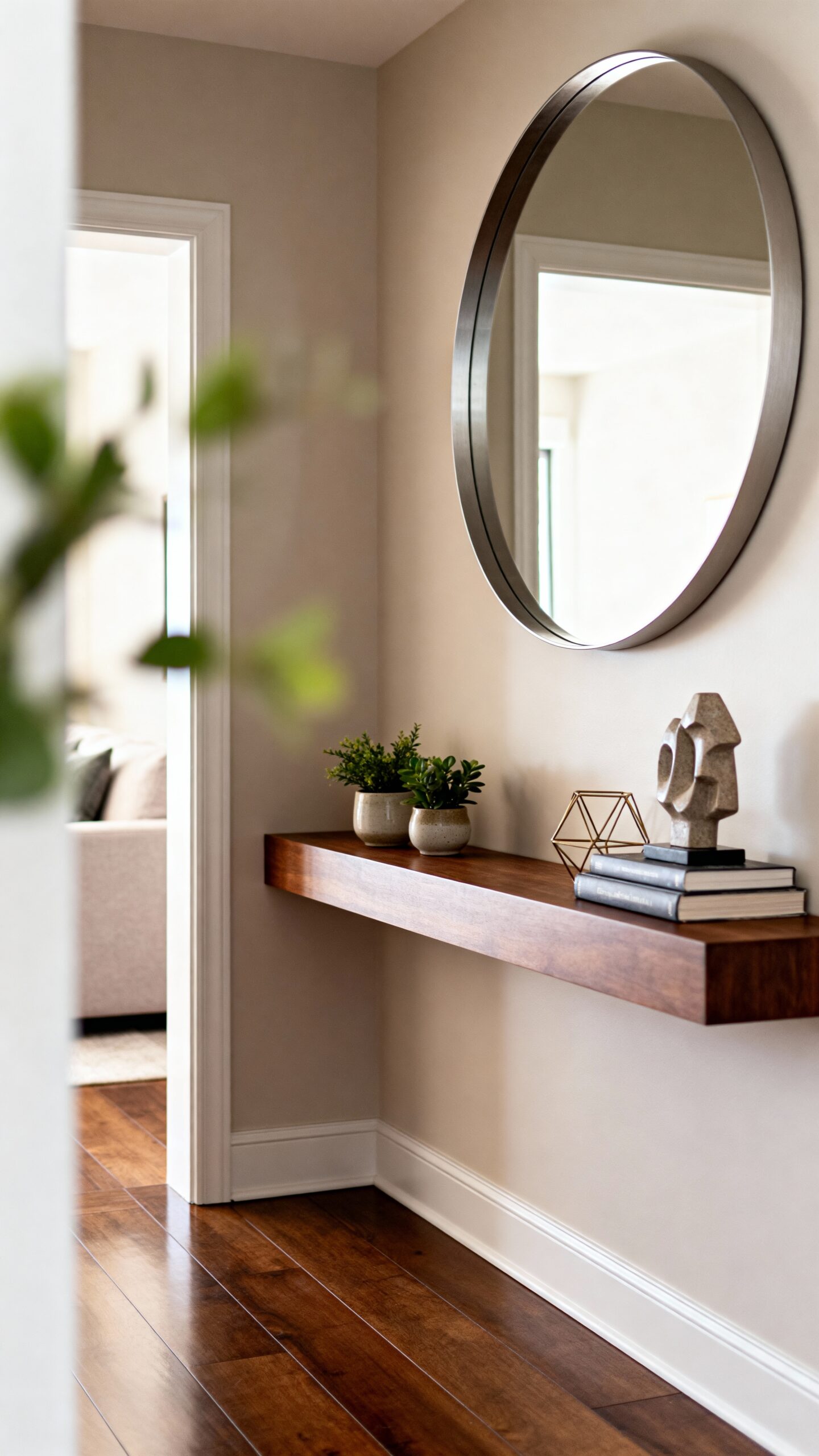
Strategic placement of mirrors paired with narrow ledges alters your small living room entry into a functional and visually spacious zone. You’ll create an impressive mirrored wall feature that doubles your space’s perceived size while establishing a practical drop zone for daily essentials.
Mount your decorative entryway ledge 12-18 inches below the mirror’s bottom edge for ideal functionality. This positioning allows you to style decorative items without blocking the mirror’s reflective benefits. Choose ledges 6-8 inches deep to accommodate keys, mail, and small plants without overwhelming your narrow entry.
Position mirrors opposite windows or light sources to maximize natural light reflection throughout your living space. You’ll amplify brightness while creating an illusion of depth that makes your compact entry feel dramatically larger and more welcoming.
Conclusion
You’ll alter your small living room entry into a highly functional space by implementing these strategic layout solutions. Focus on vertical storage options and multipurpose furniture that serves double duty in your compact area. Remember that thoughtful placement creates natural traffic flow while maintaining your room’s open feel. Start with one or two ideas that match your specific needs, then gradually add elements as your space evolves.