13 Stylish Small Living Room Piano Ideas That Create Harmony at Home
Get inspired by 13 clever piano placement ideas that transform small living rooms into stylish music havens without sacrificing space.
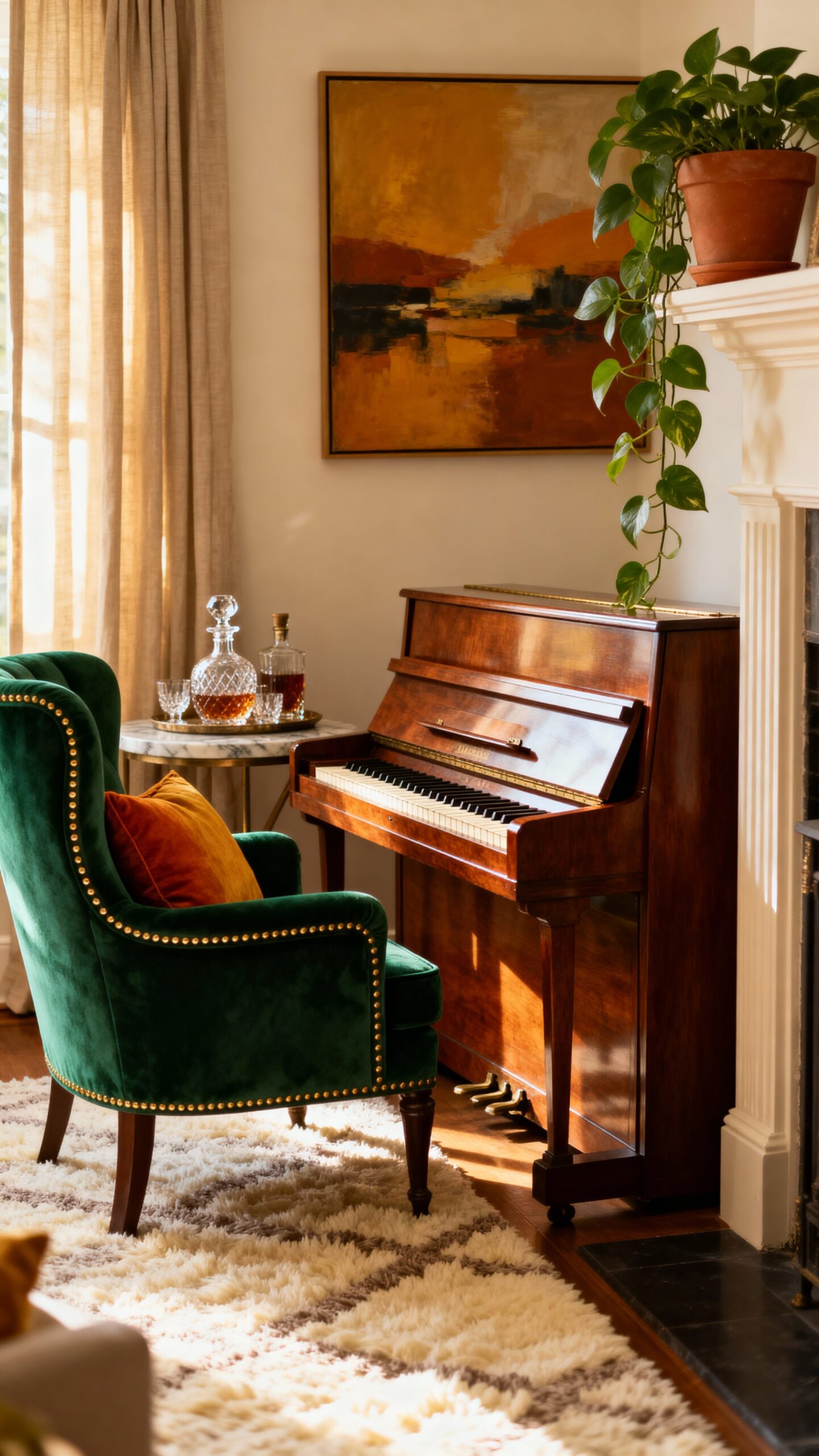
You’ve always dreamed of having a piano in your living room, but you’re worried about overwhelming your compact space. The good news is that with smart placement strategies and creative design solutions, you can seamlessly integrate a piano into even the smallest living areas. Whether you’re working with a studio apartment or a cozy family room, these thirteen proven techniques will convert your space into a refined music sanctuary that doesn’t sacrifice comfort or style.
Position Your Piano Against the Longest Wall for Maximum Space Efficiency
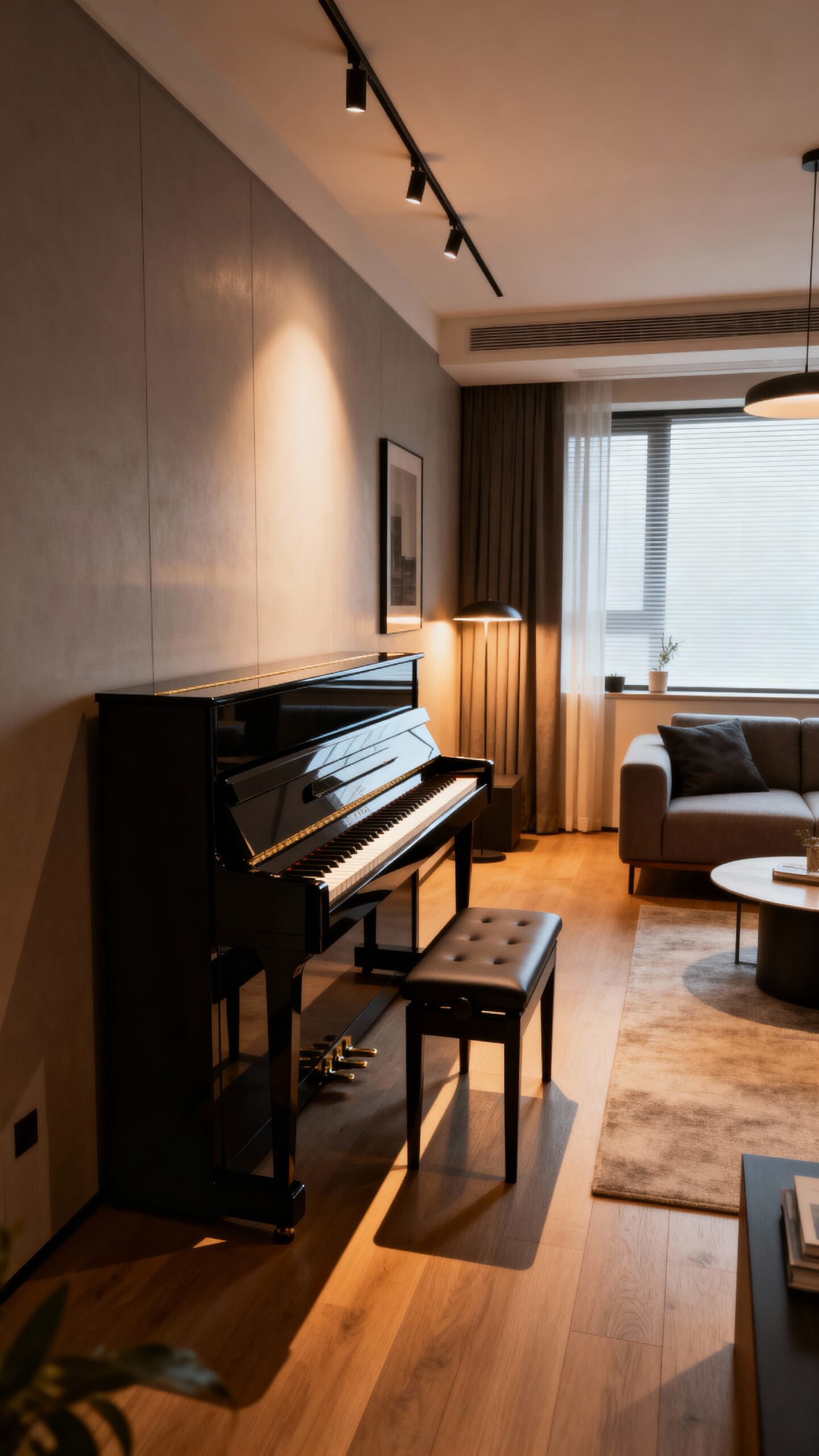
When space is at a premium in your small living room, positioning your piano against the longest wall creates an immediate sense of openness and flow. This strategic piano placement maximizes your room’s natural dimensions while preventing the instrument from dominating the entire space.
Smart space allocation begins with measuring your longest wall to guarantee adequate clearance on both sides. You’ll want at least eighteen inches between the piano and adjacent furniture for comfortable movement. This positioning also creates a natural focal point that draws the eye horizontally, making your room appear wider than it actually is.
Consider angling the piano slightly away from the wall to improve acoustics and create visual interest. This arrangement leaves the room’s center open for seating and foot traffic, giving you the freedom to enjoy both music and conversation without feeling cramped. When your front door opens directly into the living space, maintaining clear pathways ensures smooth traffic flow around your piano without creating bottlenecks.
Choose a Digital Piano to Save Precious Floor Space
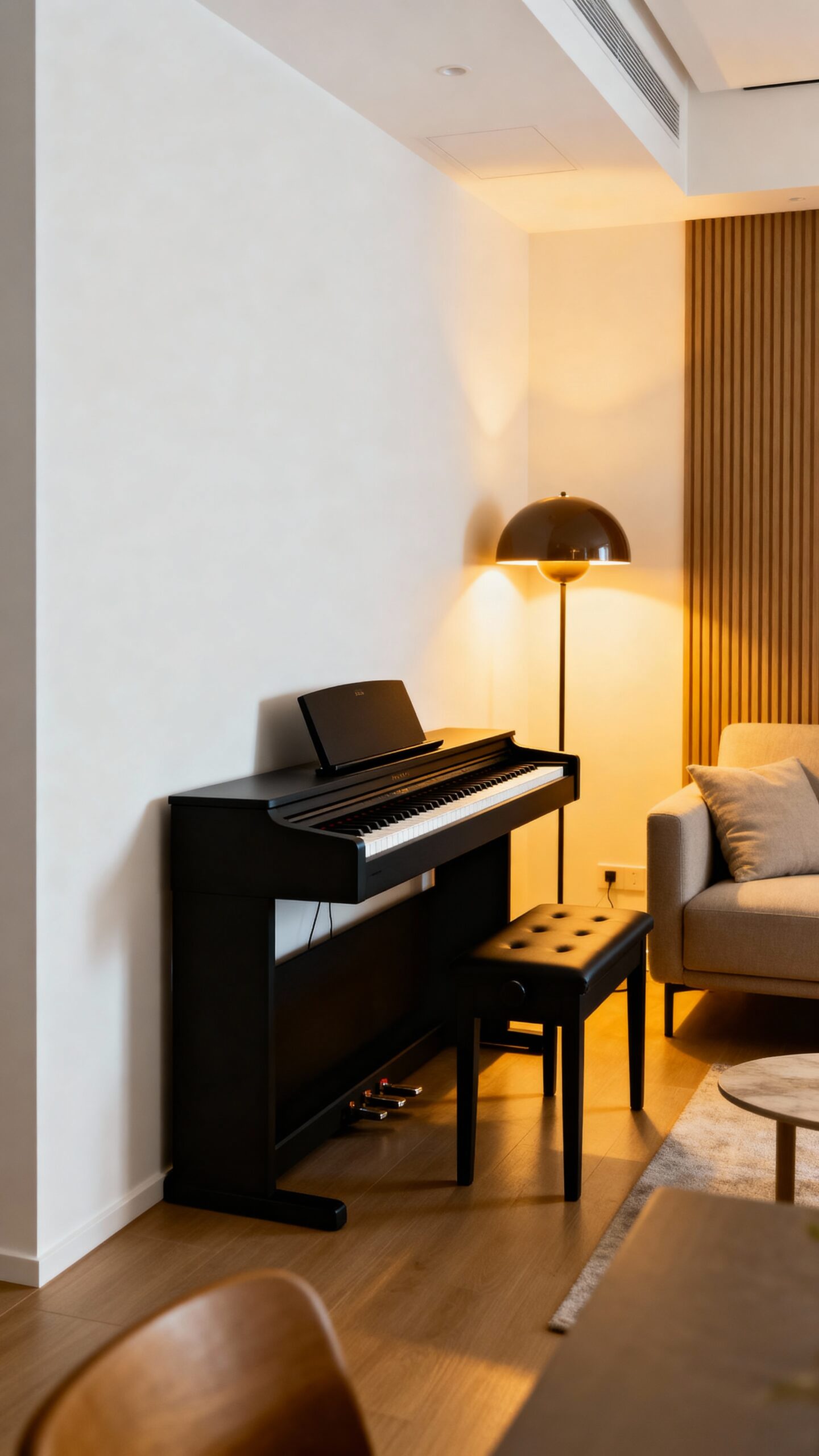
Why sacrifice cherished square footage when a digital piano delivers the same musical experience in a remarkably compact design? You’ll uncover that modern digital pianos offer space saving features that make them perfect for tight quarters.
Slim piano models typically measure just 12-15 inches deep compared to acoustic uprights that require 24+ inches. You can easily slide these streamlined instruments against walls or tuck them into corners without overwhelming your room’s layout.
Consider stage pianos that weigh under 40 pounds – you’ll move them effortlessly for parties or practice sessions. Many models include collapsible stands that fold completely flat for storage behind furniture or under beds.
Digital pianos eliminate the need for bench storage since most connect directly to adjustable X-stands. You’re gaining prized floor space while maintaining authentic playing experiences. Just like TV wall designs that maximize vertical space in compact living rooms, wall-mounted digital piano solutions can further enhance your room’s efficiency.
Create a Multi-Functional Music Corner With Built-In Storage
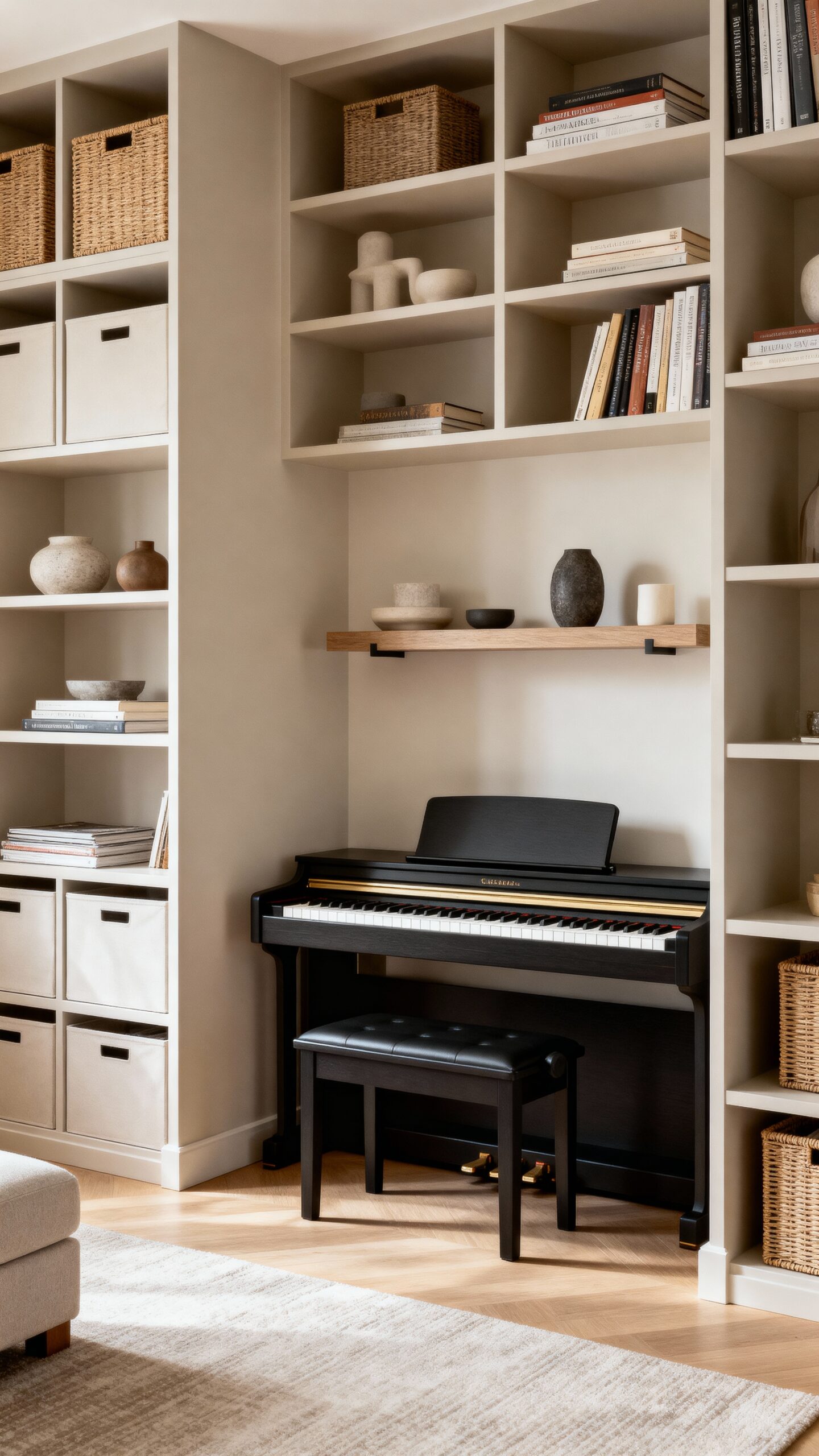
Since clever storage solutions convert cramped spaces into organized sanctuaries, you’ll maximize every inch by designing a music corner that serves multiple purposes throughout your day.
Install floating shelves above your piano to house sheet music, metronomes, and decorative items that reflect your personal style.
Consider modular piano storage units that roll beneath your instrument, keeping music books and accessories within arm’s reach while maintaining clean lines.
Built-in cabinets flanking your piano create seamless music integration while providing space for games, books, or entertainment equipment.
Transform your piano bench into a storage powerhouse by choosing models with hinged tops that conceal extra sheet music, cleaning supplies, and seasonal decorations.
You’ll create a sophisticated focal point that adapts to hosting guests, practicing sessions, or quiet reading moments.
Just like choosing the right space-saving sofa for your living room layout, selecting compact piano furniture ensures both comfort and functionality in your multi-use space.
Use a Console Piano as a Room Divider Between Living Areas
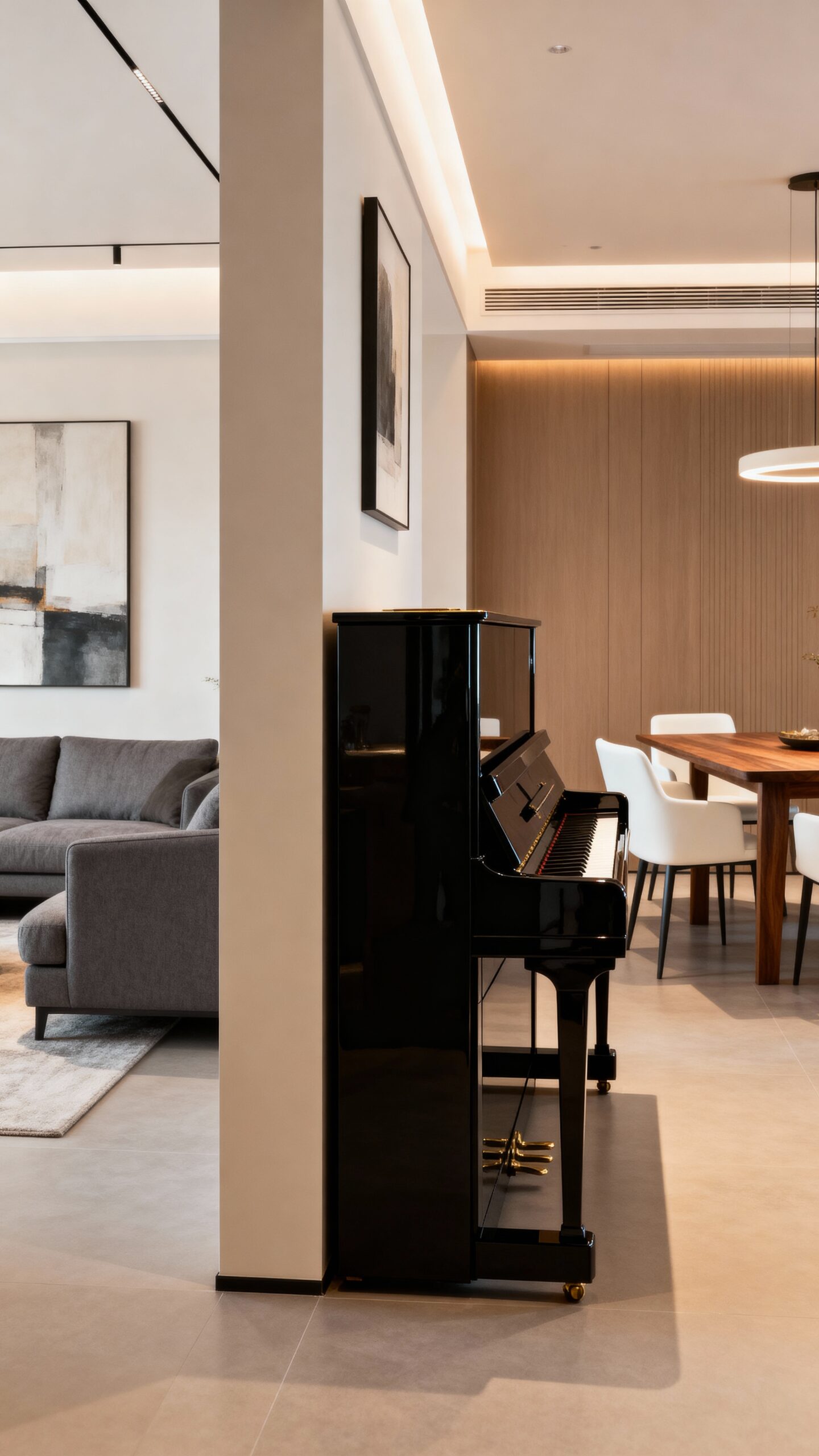
Although most homeowners view pianos as stationary furniture pieces, your console piano can effectively divide open-concept spaces while maintaining visual flow throughout your home. This multi purpose room divider creates distinct zones without blocking natural light or making rooms feel cramped.
Position your console piano perpendicular to walls, separating your living room from dining areas or home offices. The piano’s height provides privacy while preserving sight lines across spaces. You’ll appreciate how this space saving piano placement maximizes floor area compared to traditional room dividers.
Consider placing a slim console table behind the piano to define the separation further. Add coordinating lighting on both sides to enhance each area’s ambiance. This arrangement lets you practice without disturbing other activities while creating two functional spaces from one room. Focus on clean lines in your overall design to maintain the modern aesthetic while incorporating smart storage solutions around your piano setup.
Mount Wall Shelves Above Your Piano for Vertical Storage Solutions

Wall-mounted shelves above your piano convert unused vertical space into practical storage while preserving your room’s streamlined appearance. You’ll maximize every square inch without cluttering your floor space, creating an organized haven that reflects your independent lifestyle.
Install floating shelves at varying heights to display sheet music, decorative items, and personal treasures. These sleek storage solutions won’t overwhelm your piano’s visual presence while providing easy access to frequently used items. Position shelves 18-24 inches above your piano to guarantee comfortable playing clearance. Consider incorporating dark hues on your shelving to create visual depth and add a cozy atmosphere to your small living room.
Corner shelves work exceptionally well in tight spaces, utilizing angles that typically go unused. You can store music books, small plants, or framed photos without sacrificing precious floor real estate. This vertical approach gives you complete control over your space’s functionality and aesthetic appeal.
Select Light-Colored Pianos to Make Your Room Feel More Spacious
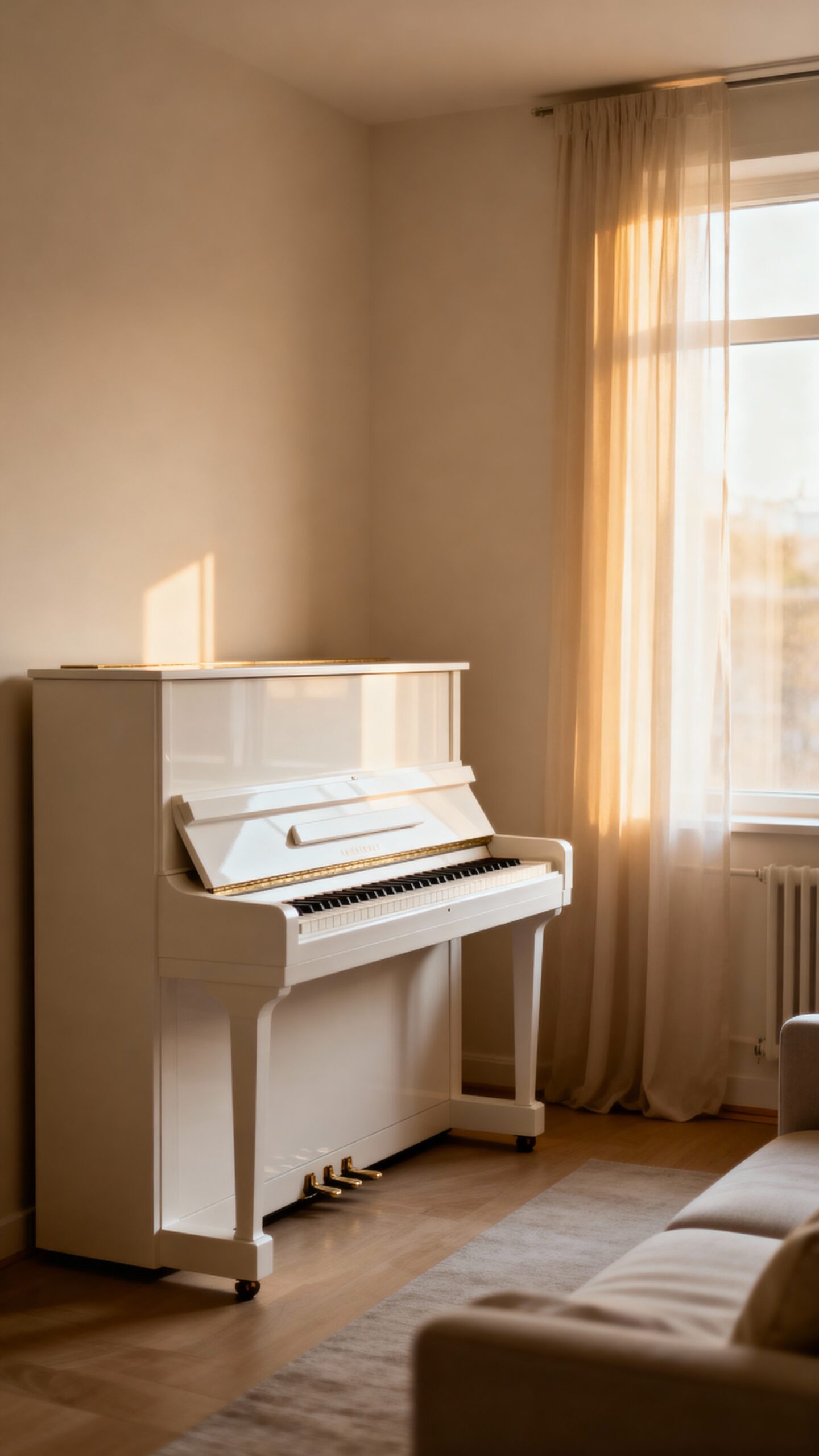
When choosing a piano for your compact living space, lighter finishes create an immediate visual expansion effect that alters cramped quarters into airy retreats. White, cream, and natural wood tones reflect more light throughout your room, making walls appear farther apart than they actually are.
You’ll find that minimalist designs in lighter finishes work exceptionally well in small spaces. Consider white lacquer uprights or blonde wood baby grands that won’t visually overwhelm your furniture arrangement. These lighter tones seamlessly blend with contemporary décor while maintaining the piano’s presence as a focal point.
Pearl white, ivory, and light maple finishes offer sophistication without heaviness. They’ll complement your existing color scheme while giving you the freedom to experiment with bold accent pieces and artwork around your musical centerpiece. Light-colored pianos naturally contribute to classy design elements that elevate the overall aesthetic of your formal living area.
Angle Your Piano in a Corner to Optimize Traffic Flow
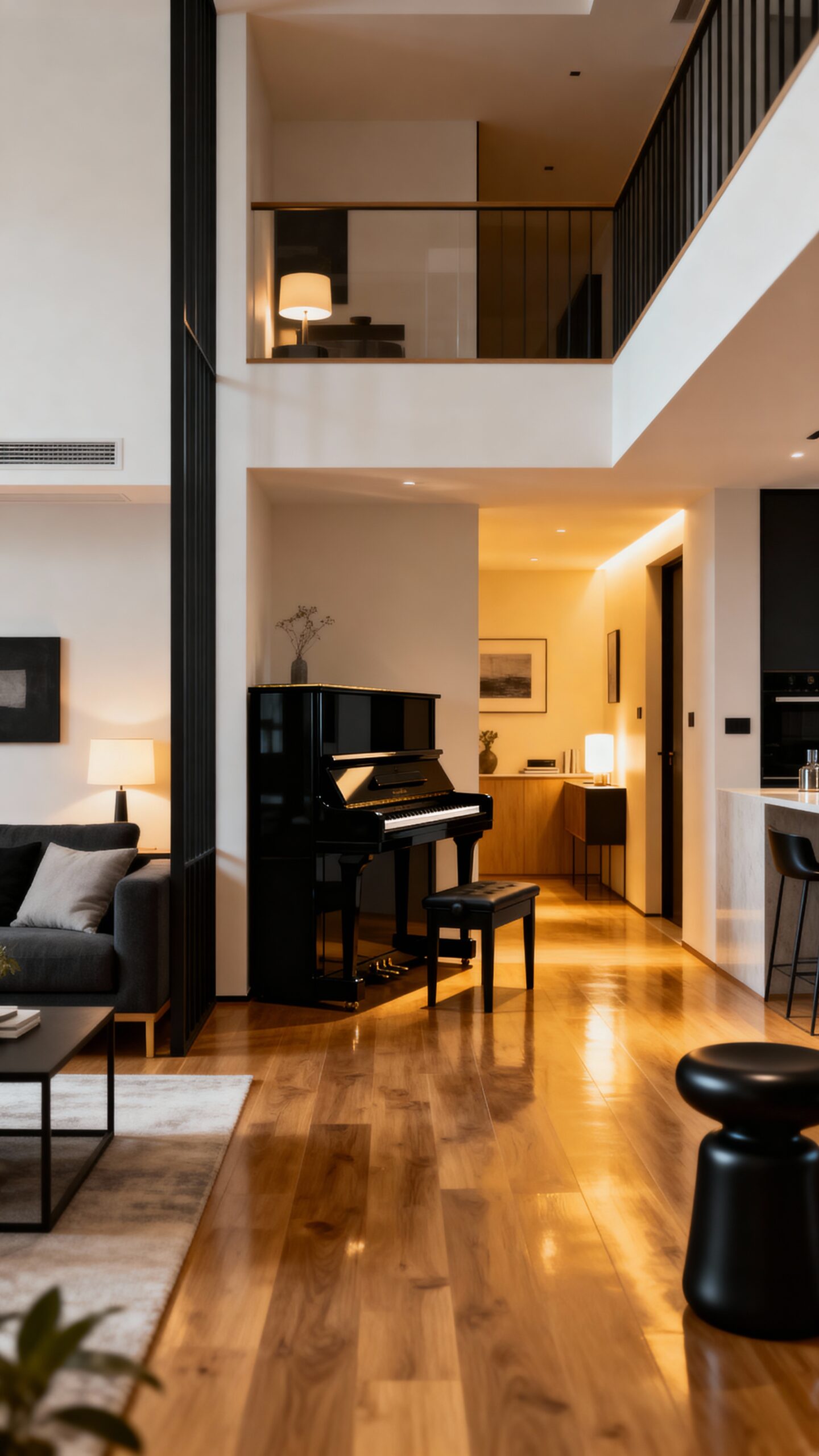
Corner placement alters your piano from a space-hogging obstacle into a strategic design element that enhances your room’s natural flow patterns. When you stagger piano placement at a 45-degree angle, you’ll create diagonal sight lines that make your compact living room appear larger and more variable.
Position your piano’s bench perpendicular to nearby walls, allowing easy access without blocking walkways. You’ll find that angled placement naturally directs foot traffic around the instrument rather than forcing people to squeeze past it. This strategic positioning also helps employ piano’s lines to draw attention toward room corners, creating visual depth.
The angled approach works particularly well with upright pianos, as it softens their boxy appearance while maximizing floor space for seating arrangements and daily movement throughout your living area.
Incorporate a Piano Bench With Hidden Storage Compartments
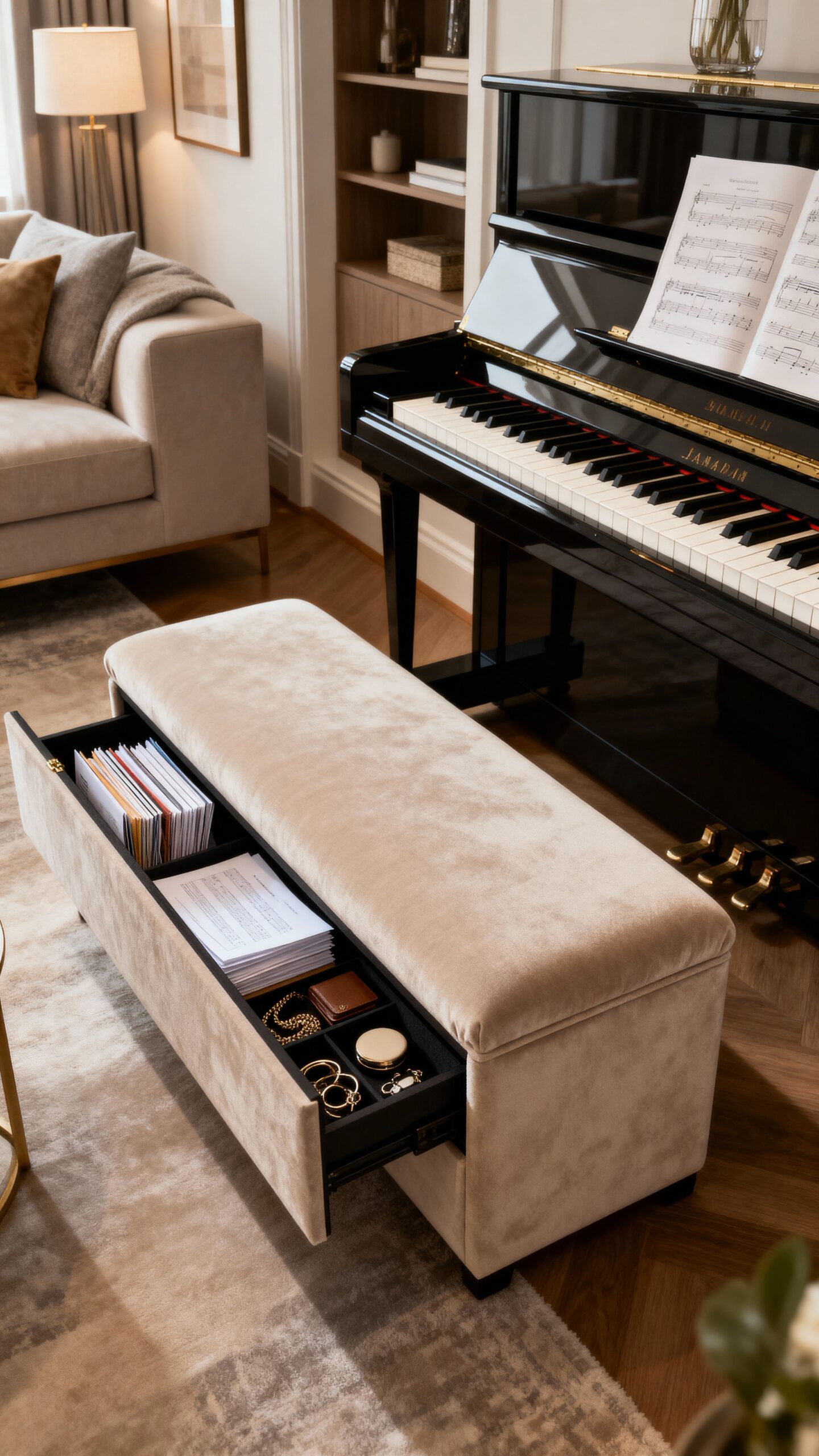
Why sacrifice precious storage space when your piano bench can serve double duty as both seating and organization solution? Smart piano benches with hidden compartments transform your small living room into an efficiently organized space while maintaining stylish aesthetics.
Choose fashionable storage options like velvet-lined compartments for sheet music, practice books, and metronomes. You’ll keep essential items within arm’s reach without cluttering surrounding surfaces. Modern designs feature hydraulic hinges that open smoothly and stay secure during use.
Consider adjustable-height benches with built-in storage for maximum versatility. These discreet seating solutions accommodate different family members while concealing seasonal decorations, extra throw pillows, or electronic accessories. Leather and fabric options complement various décor styles, ensuring your storage bench enhances rather than disrupts your room’s visual flow.
Design a Gallery Wall Around Your Piano as Artistic Backdrop
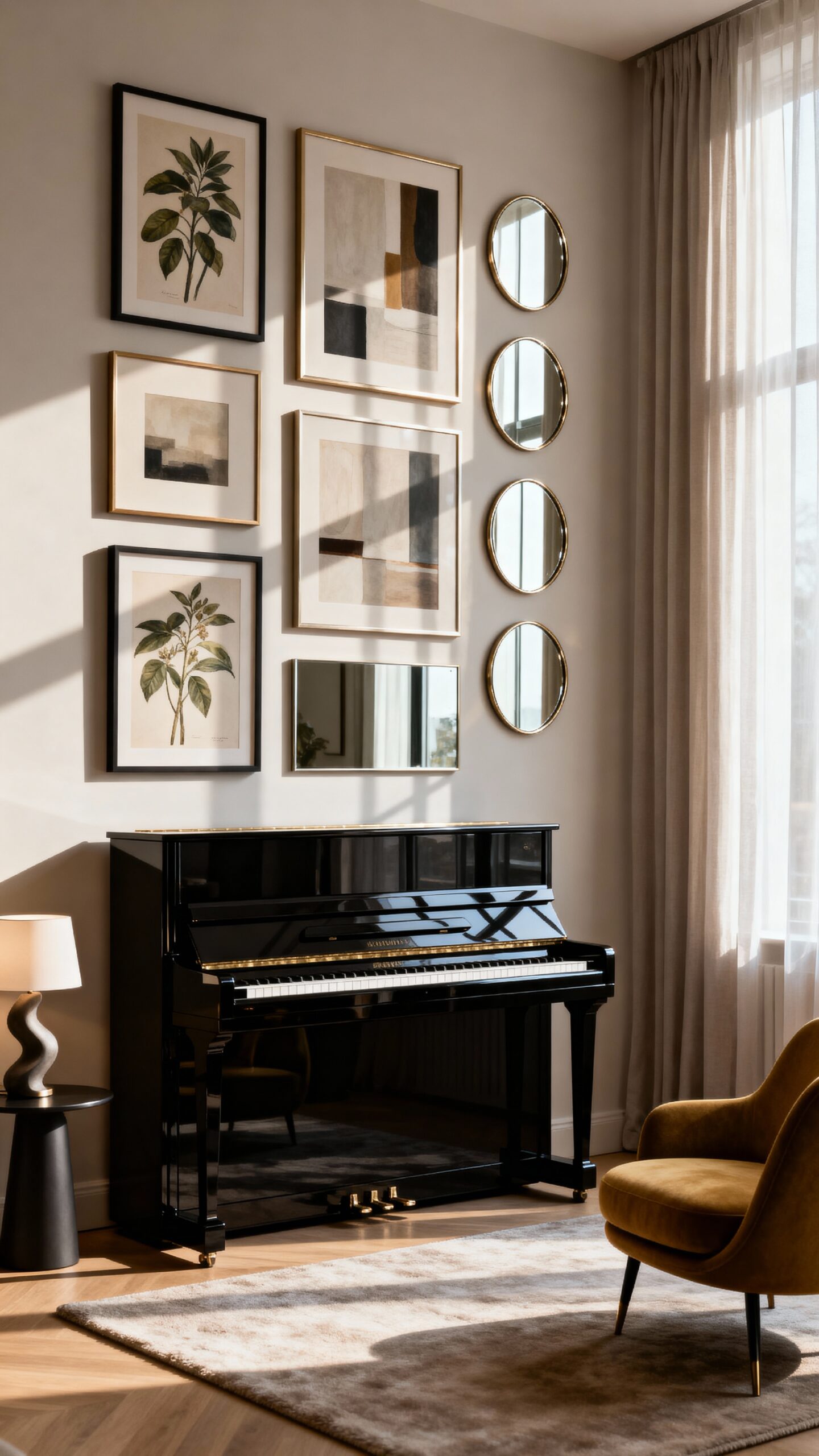
Gallery walls create stunning visual impact that alters your piano from furniture into the centerpiece of an artistic display. You’ll transform your small living room by strategically positioning artwork that complements your instrument’s proportions and color palette.
Start by measuring the wall space above and around your piano to determine ideal frame placement. Use framed artwork in varying sizes, creating visual rhythm through mixed heights and widths. Choose pieces that reflect your personal style while maintaining cohesive color schemes.
Position larger artwork pieces at eye level, then fill surrounding areas with smaller complementary works. Leave adequate breathing room between frames to avoid cluttered appearances.
Incorporate plants around piano corners and nearby surfaces to soften hard edges and add natural elements. This combination creates changeable visual layers that make your piano area feel intentionally curated rather than cramped.
Choose Furniture That Complements Your Piano’s Color and Style
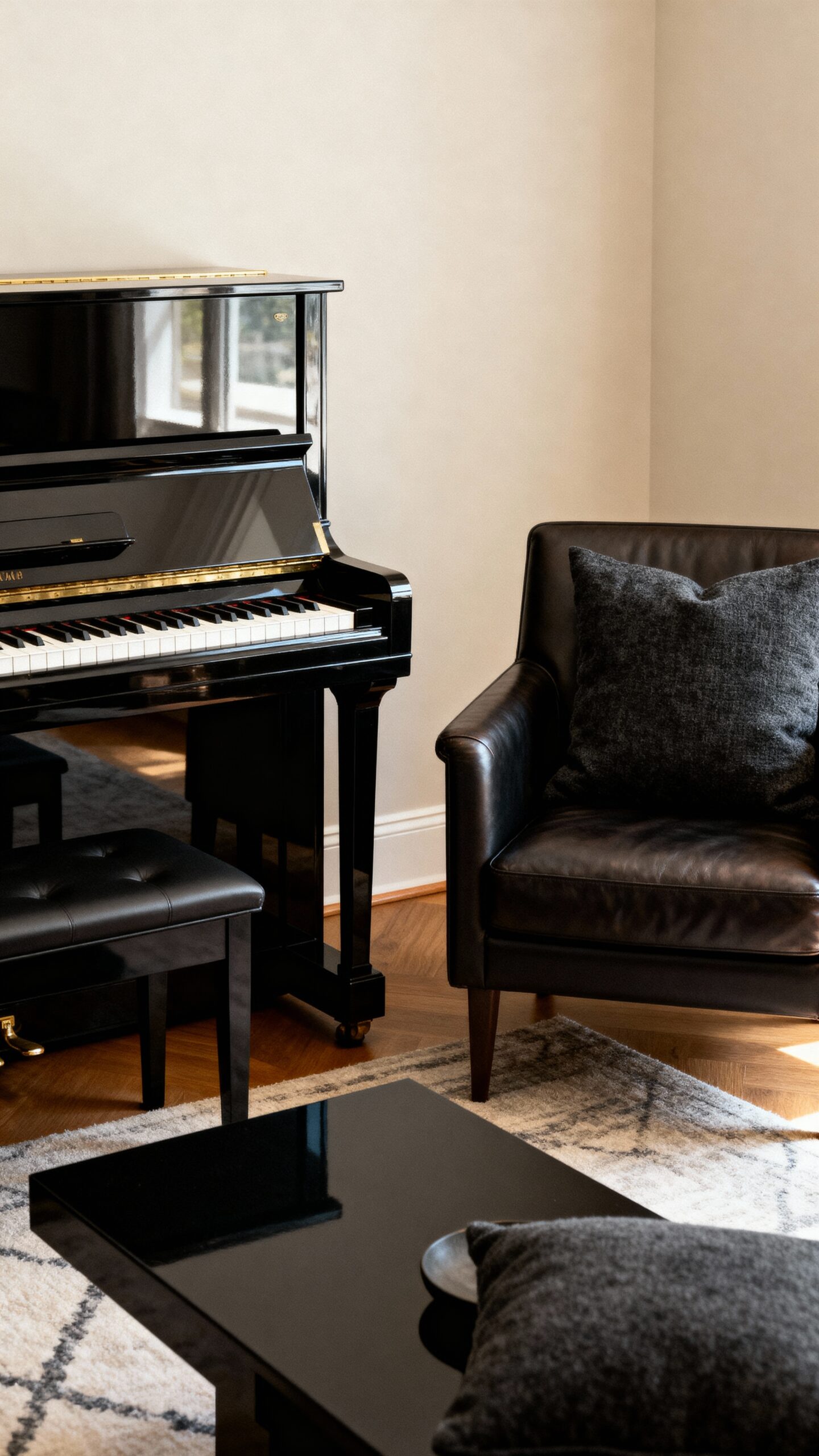
When selecting furniture pieces for your small living room, you’ll want to create visual harmony by matching or complementing your piano’s existing color scheme and design aesthetic. Choose lightweight, multi purpose furniture pieces that won’t compete with your instrument’s presence while maximizing your limited space.
For traditional black or mahogany pianos, consider rich leather seating in cognac or deep brown tones. White or cream pianos pair beautifully with light oak furniture and soft neutral fabrics. Modern digital pianos work well with sleek metal accents and contemporary glass pieces.
Select furniture with similar wood finishes or complementary metal hardware to create cohesion. Avoid overwhelming patterns that clash with your piano’s classic lines. Instead, opt for solid colors or subtle textures that enhance rather than distract from your musical centerpiece.
Add Mirrors Near Your Piano to Create the Illusion of More Space
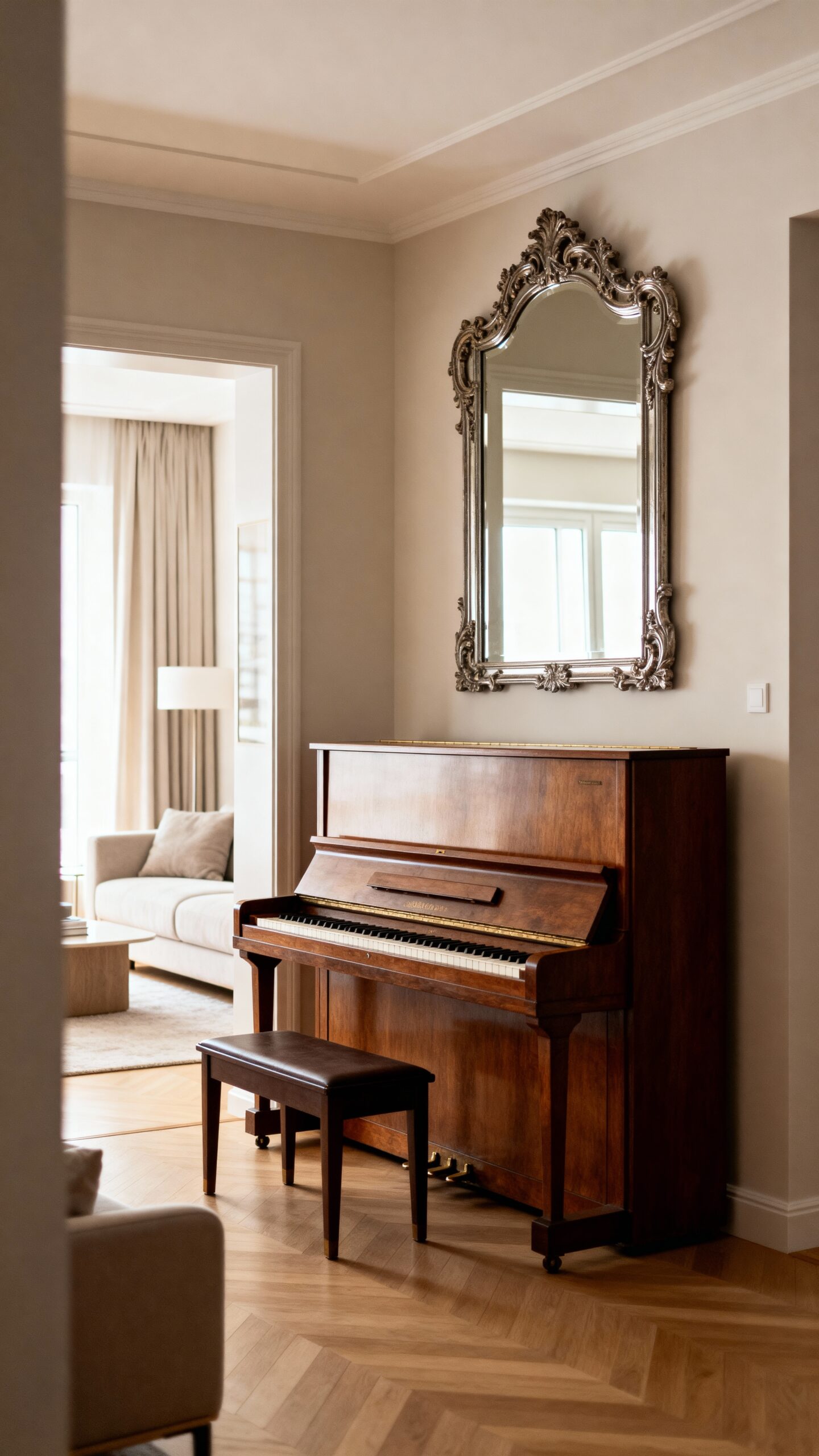
Strategic mirror placement reconfigures cramped piano corners into seemingly spacious musical sanctuaries that feel twice their actual size. Position a large mirror on the wall opposite your piano to instantly double your room’s visual depth. You’ll create an open, airy atmosphere that breaks free from confining small-space limitations.
Consider mounting mirrors at different heights to maximize light reflection throughout your living area. Reflective surface configurations work best when they capture natural light from windows and bounce it around your piano space. Try placing a tall, narrow mirror beside your piano to elongate the room vertically.
Avoid positioning mirrors directly behind your piano, as this can create distracting reflections while you’re playing. Instead, angle mirrors strategically to reflect your room’s best features and brightest corners for maximum spatial impact.
Use Area Rugs to Define Your Piano Zone Within the Living Room
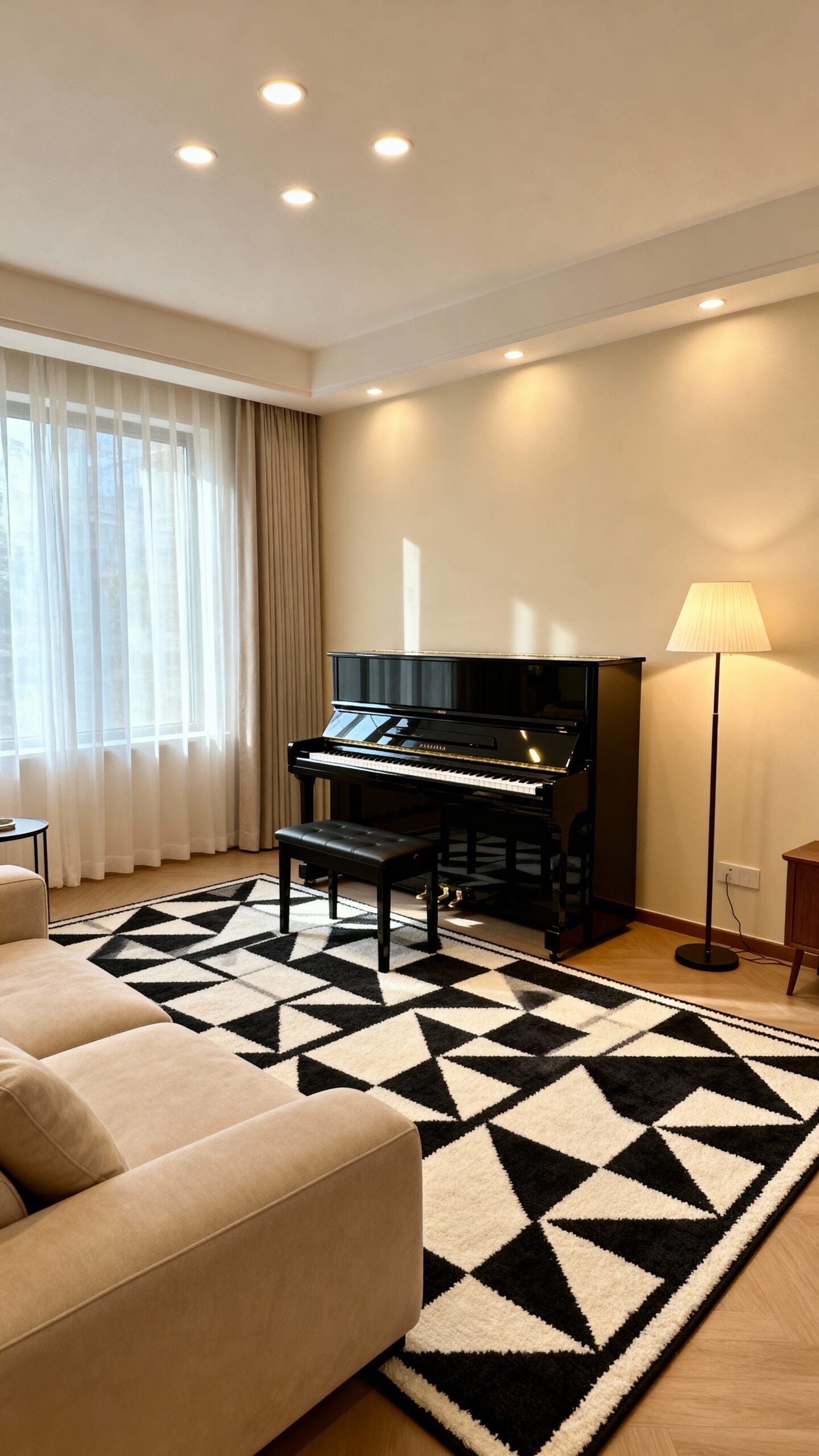
Area rugs metamorphose your piano from a floating piece of furniture into an intentionally designed focal point that anchors your entire living room layout. You’ll create clear boundaries that separate your musical space from other activities without building walls or barriers.
Choose area rug patterns that complement your piano’s finish while adding visual interest to your floor. Bold geometric designs work beautifully with modern pianos, while traditional Persian or Oriental patterns enhance classic instruments. Consider neutral patterns if you’re uncertain about long-term style preferences.
Strategic area rug placement extends at least eighteen inches beyond your piano bench on all sides. This guarantees you’re standing on the rug whether you’re playing, turning pages, or moving around the instrument. You’ll define your piano zone while maintaining your room’s open, flowing feel.
Install Adjustable Lighting to Highlight Your Piano as a Focal Point
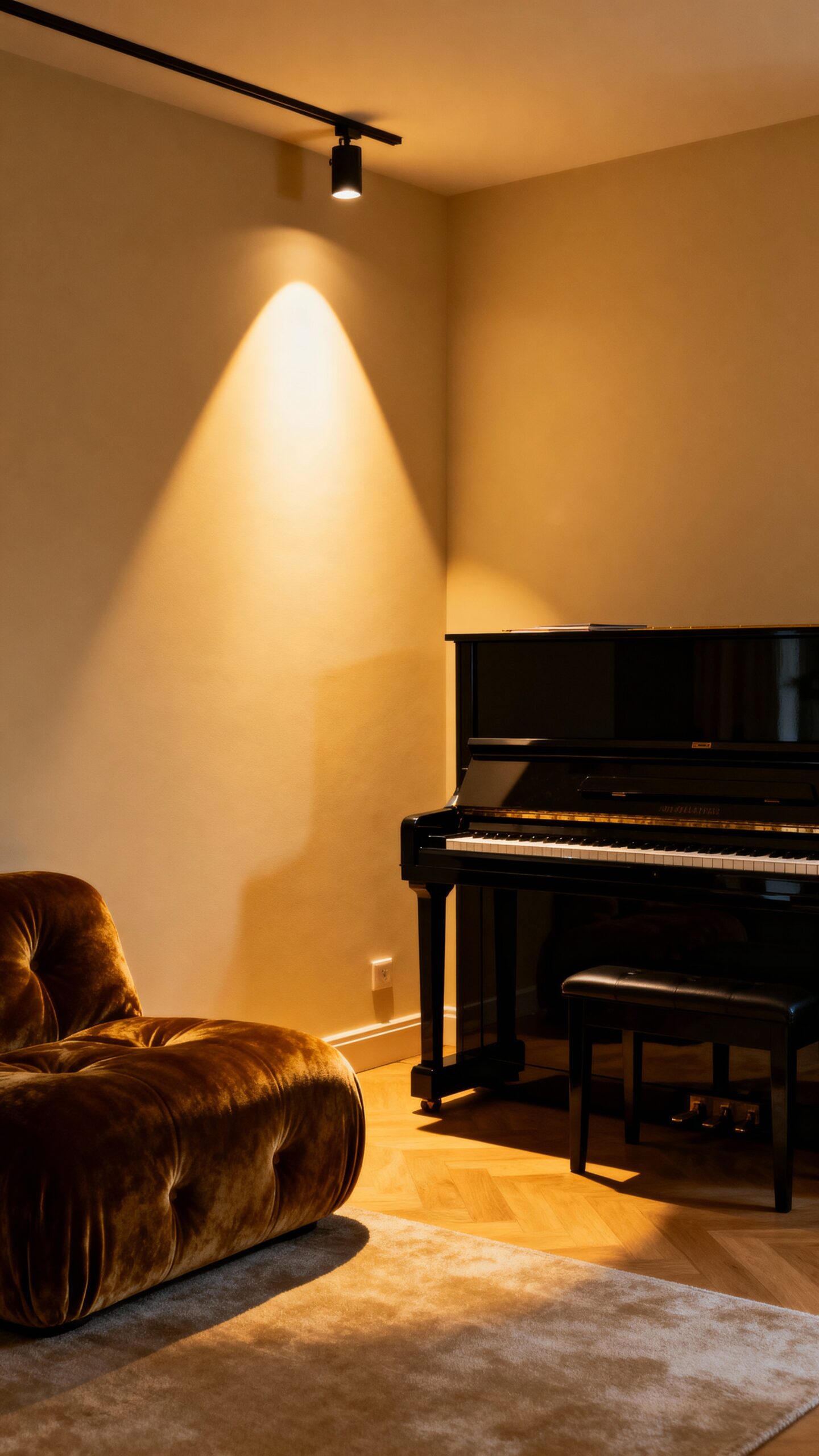
Although proper lighting metamorphoses any piano into a breathtaking centerpiece, adjustable fixtures give you complete control over your instrument’s visual impact throughout different times of day. You’ll uncover that strategic lighting placement transforms your piano from mere furniture into an architectural focal point that commands attention.
Install dimmable fixtures above or beside your piano to create flexible illumination options. Track lighting works exceptionally well because you can adjust bulb brightness from subtle ambient glow to dramatic spotlight intensity. Position adjustable sconces on nearby walls to eliminate harsh shadows while providing consistent illumination for sheet music.
Consider LED strip lights underneath your piano bench or along the instrument’s base for contemporary flair. These create a refined floating effect that’s particularly striking during evening hours when you want maximum visual drama.
Conclusion
You’ll explore that incorporating a piano into your small living room doesn’t require sacrificing style or space. These strategic placement ideas and smart storage solutions will help you create a beautiful music corner that enhances your home’s functionality. Remember to evaluate your room’s acoustics, lighting needs, and traffic flow when positioning your instrument. With thoughtful planning, you’ll achieve the perfect balance between musical expression and comfortable living space.