15 Smart Small Living Room Narrow Layout Ideas That Feel Bigger
Get proven layout tricks that instantly transform your cramped narrow living room into a surprisingly spacious retreat that guests won’t believe.
You’re probably staring at your narrow living room wondering how to make it feel less like a cramped hallway and more like a welcoming space. The good news? Smart furniture placement and design tricks can liberate even the tightest quarters into a room that breathes. By positioning pieces strategically, choosing the right colors, and maximizing vertical space, you’ll create an illusion of openness that surprises guests. These fifteen proven layout strategies will show you exactly how to reveal your room’s hidden potential.
Position Furniture Away From Walls to Create Visual Flow
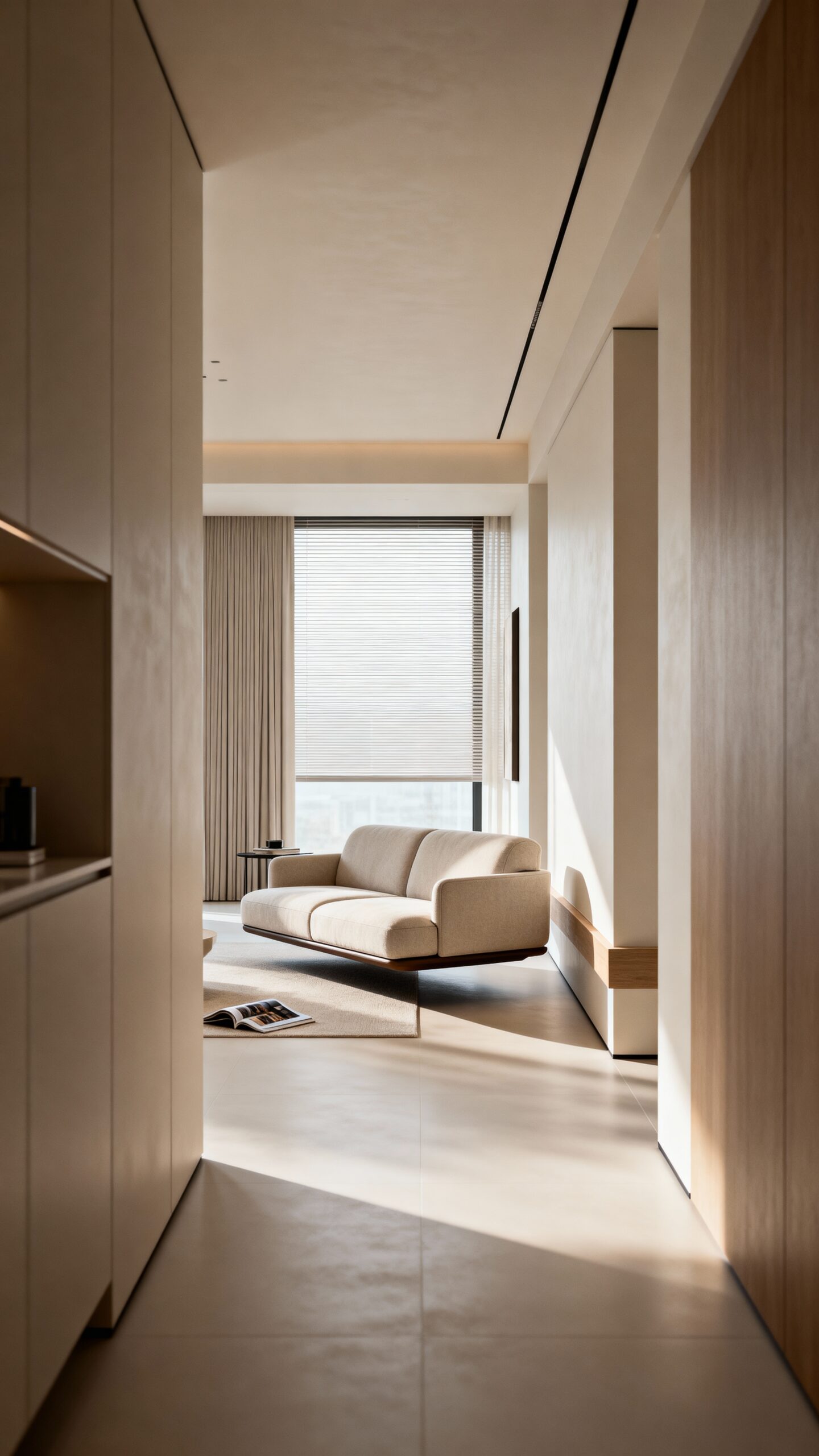
Surprisingly, pulling your furniture away from the walls can instantly make your small living room feel more spacious and inviting. When you float furniture away from walls, you’ll create natural pathways that guide the eye throughout your space. This technique breaks free from traditional cramped arrangements that push everything against perimeters.
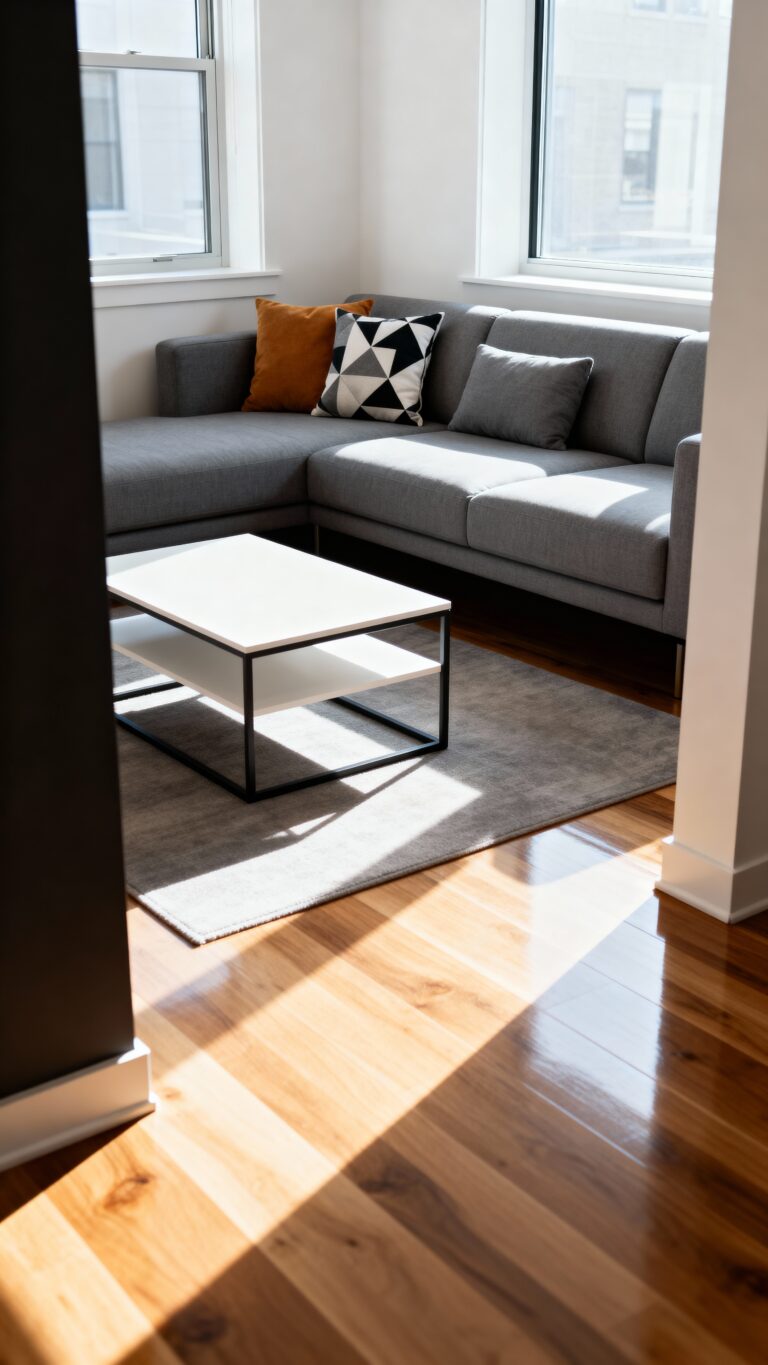
Start by positioning your sofa 12-18 inches from the wall, allowing air to circulate behind it. Create openness with strategic placement of side tables and chairs that define conversation areas without blocking sightlines. You’ll uncover that floating your coffee table in the room’s center, rather than against a wall, establishes better traffic flow. This approach alters your narrow space into a versatile environment where each piece serves multiple purposes while maintaining breathing room.
Choose space-saving sofas that complement your floating arrangement, such as loveseats or sectionals that won’t overwhelm your room’s proportions.
Use Light Colors and Mirrors to Reflect Natural Light
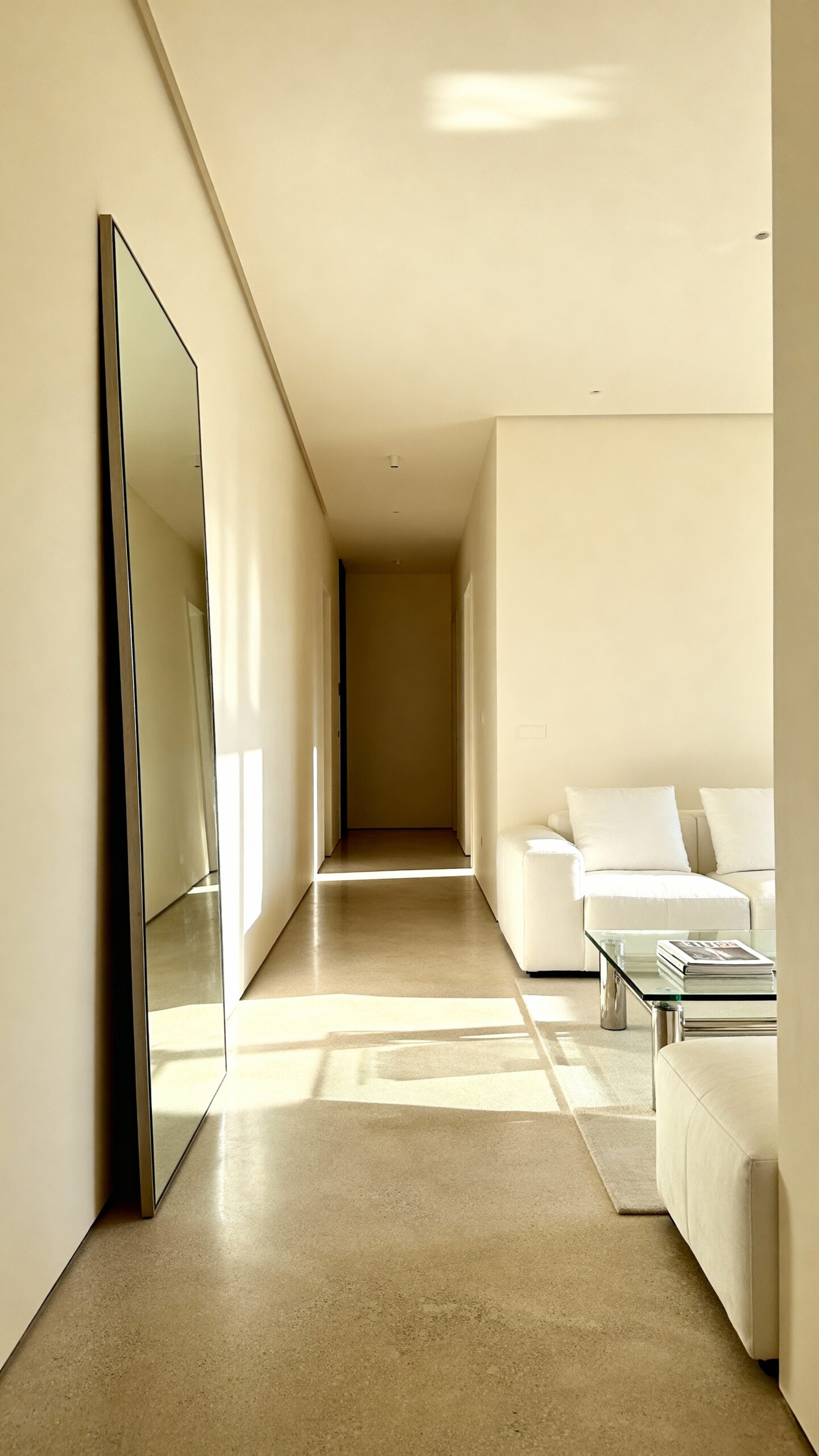
When you strategically incorporate light colors and mirrors into your small living room, you’ll amplify available natural light and create the illusion of expanded space. Position furniture to maximize natural light by choosing pieces in whites, creams, and soft pastels that won’t absorb precious sunlight streaming through windows.
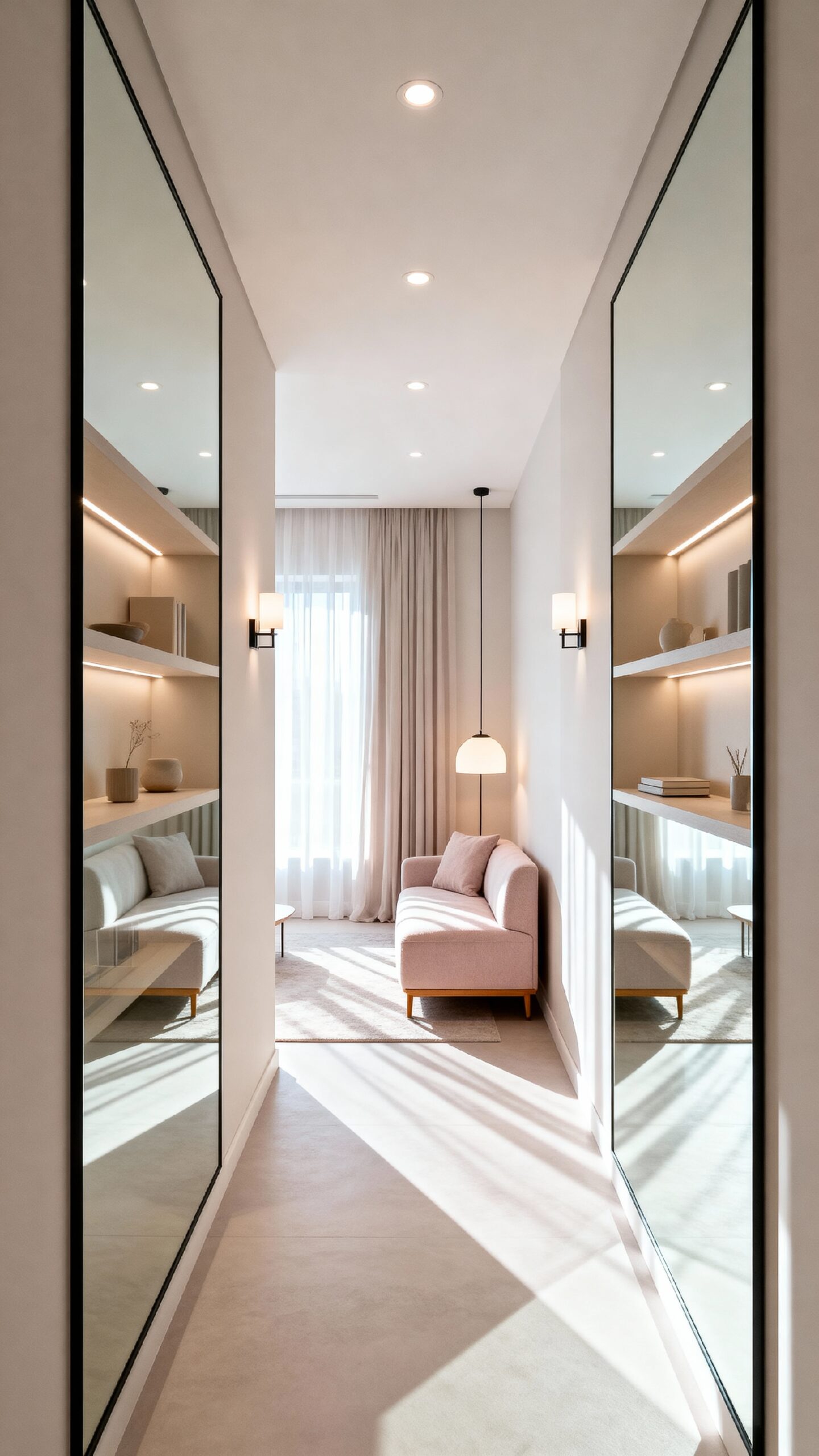
Large mirrors become your secret weapon for doubling brightness and visual square footage. Mount a substantial mirror opposite your main window to bounce light throughout the room.
Find reflective surfaces strategically by selecting glass coffee tables, metallic accent pieces, and glossy finishes on furniture. Consider selecting charming chair designs that feature light-colored upholstery or sleek profiles to maintain your room’s open feel.
Light-colored walls paired with reflective accessories modify cramped quarters into airy retreats. You’ll detect that pale blues, soft grays, and warm whites work harmoniously with mirrors to create depth and openness that defies your room’s actual dimensions.
Choose Multi-Functional Furniture With Built-In Storage
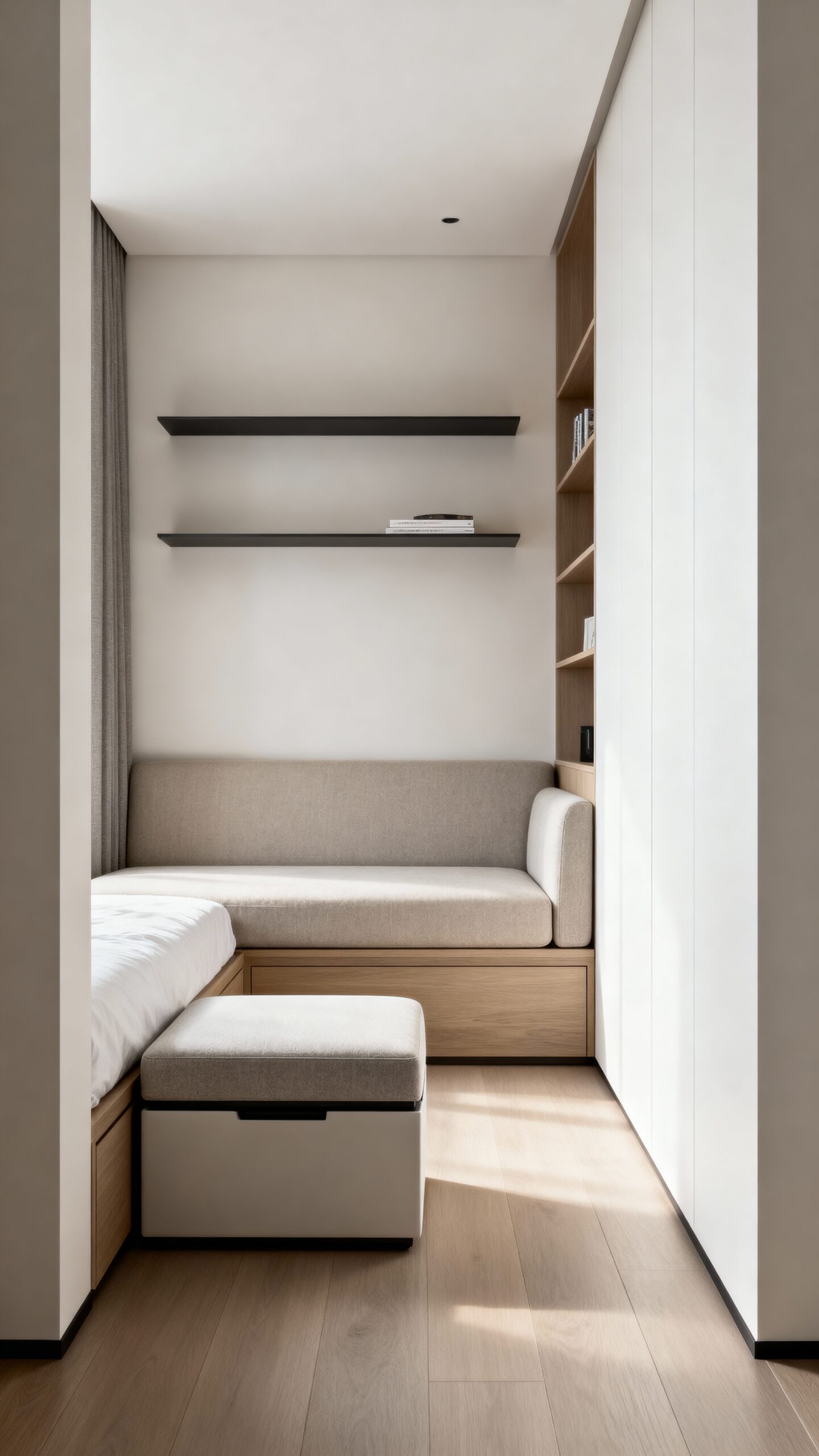
Multi-functional furniture reconfigures your cramped living room into an organized haven where every piece serves double or triple duty. You’ll maximize your space by selecting multi purpose furniture pieces that eliminate clutter while providing essential functionality.
Storage ottomans work as footrests, coffee tables, and blanket storage simultaneously. Nesting tables tuck away when you’re not entertaining, then expand when guests arrive. Console tables with drawers hide remotes, magazines, and electronics behind clean facades. Stylish sofa designs specifically created for compact spaces combine seating comfort with hidden compartments beneath cushions.
Hidden storage solutions alter ordinary seating into organizational powerhouses. Sofas with built-in compartments store seasonal items, while lift-top coffee tables reveal spacious interiors for books and games. Wall-mounted desks fold flat against walls, creating instant workspace that disappears completely when you’re done working.
Create Vertical Interest With Floor-To-Ceiling Shelving
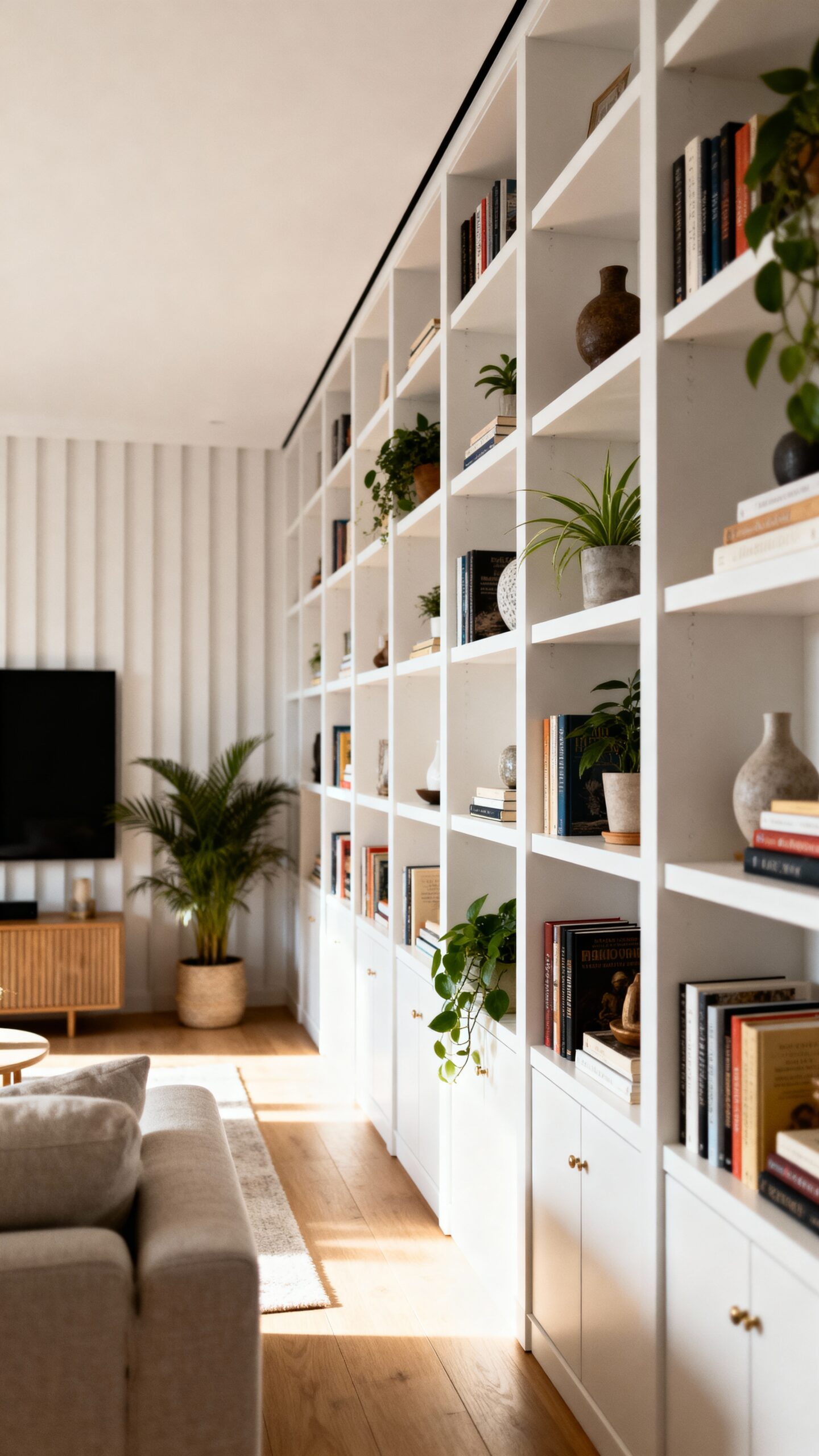
Floor-to-ceiling shelving alters your small living room’s vertical space into a powerful storage and design solution that draws eyes upward while maximizing every available inch. You’ll create the illusion of height while freeing up precious floor space for movement and activities.
Install shelving that spans from floor to ceiling around doorways or windows to highlight the building’s features naturally. This approach frames existing elements while adding functional storage. You can incorporate ledge storage by adding narrow shelves at different heights for books, plants, and decorative items.
Choose open shelving to maintain visual flow, or mix closed cabinets with open sections for varied storage needs. Paint shelving the same color as your walls to create seamless integration that won’t overwhelm your compact space. The emphasis on clean lines in your shelving design will enhance the modern aesthetic while maintaining the uncluttered look essential for small spaces.
Implement a Floating Furniture Layout for Open Floor Space
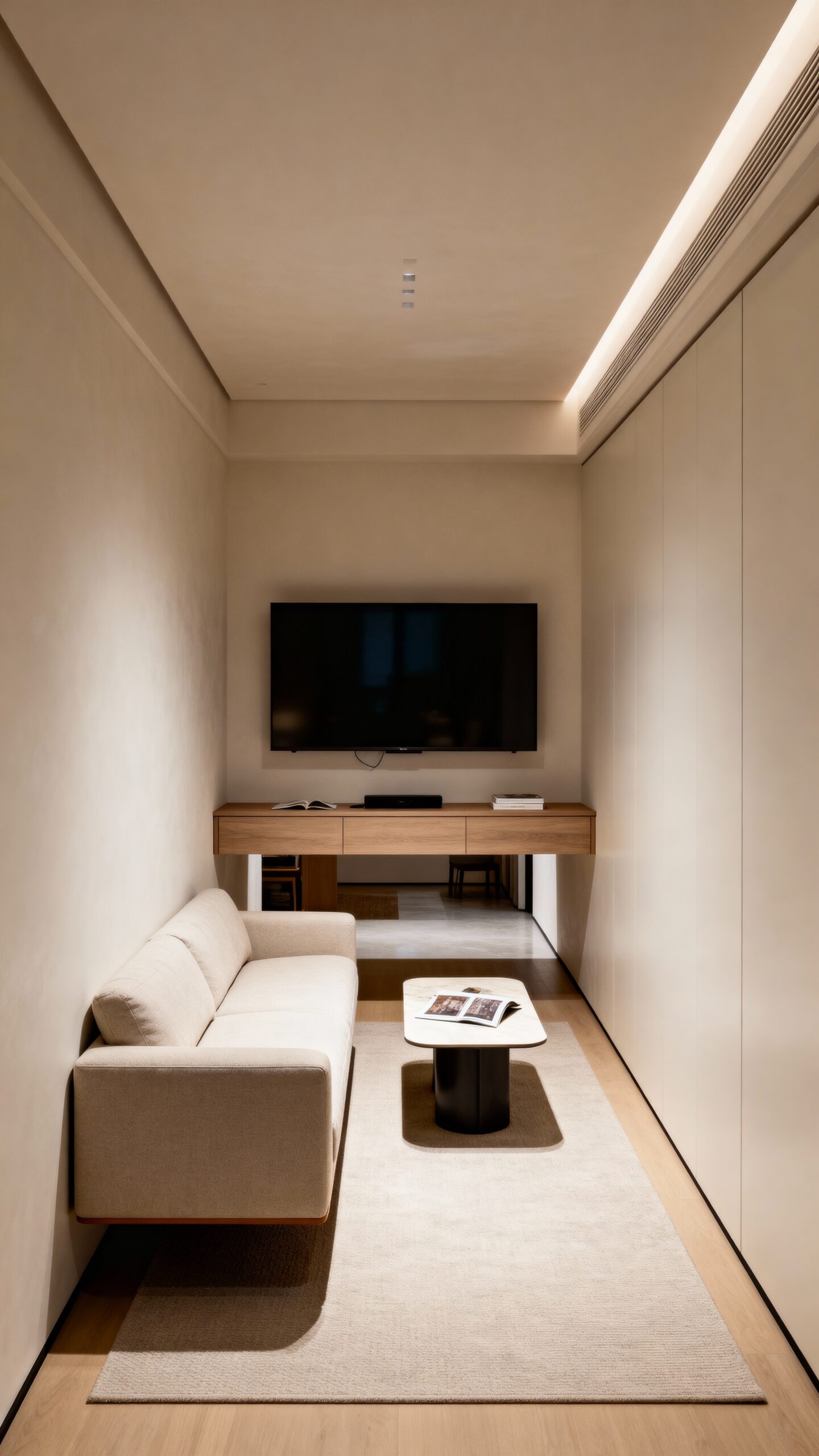
Beyond maximizing vertical storage, you can alter your small living room by pulling furniture away from walls to create a floating layout that opens up precious floor space. This arrangement breaks free from traditional wall-hugging habits that make rooms feel cramped and restricted.
Strategize furniture arrangement by positioning your sofa several inches from the wall, creating breathing room that visually expands your space. Employ lightweight furniture pieces like armless chairs, glass coffee tables, and narrow console tables that won’t overwhelm your room’s proportions.
Float your entertainment center or bookshelf as a room divider, defining separate zones while maintaining flow. Consider mounting your television on the wall to eliminate bulky entertainment units and create clean, streamlined TV wall designs that maximize your compact space. This technique creates pathways around furniture, making your living room feel larger and more changeable. You’ll uncover newfound flexibility in your layout options.
Add Depth With Strategic Lighting Layers Throughout the Room
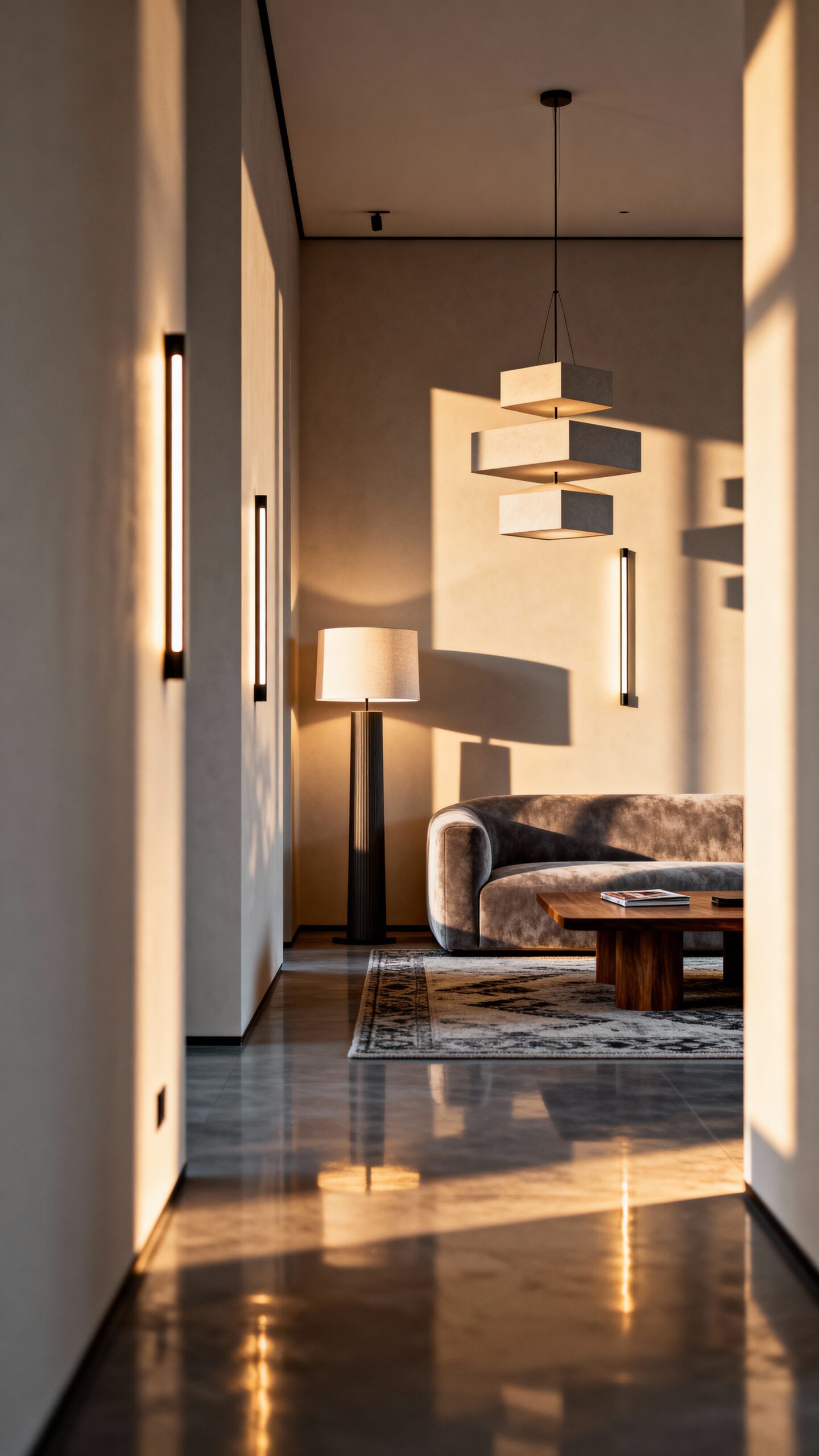
While proper furniture placement creates visual space, layered lighting alters your small living room from a flat, cramped area into a versatile space with genuine depth and dimension. You’ll want to combine three distinct lighting types to maximize this effect.
Start with ambient lighting through recessed lighting design, installing fixtures every six to eight feet across your ceiling. This creates even illumination without consuming precious floor space.
Next, add task lighting with table lamps or wall-mounted reading lights positioned near seating areas.
Finally, focus on accent lighting placement to highlight structural elements, artwork, or textured walls. Use LED strip lights behind your TV or under floating shelves to create dramatic shadows that push walls outward visually. Consider incorporating light paint colors on your walls to reflect and amplify the layered lighting effects, making your space appear even more expansive. This three-layer approach transforms your cramped room into an inviting, spacious retreat.
Select a Light-Colored Area Rug to Define the Seating Area
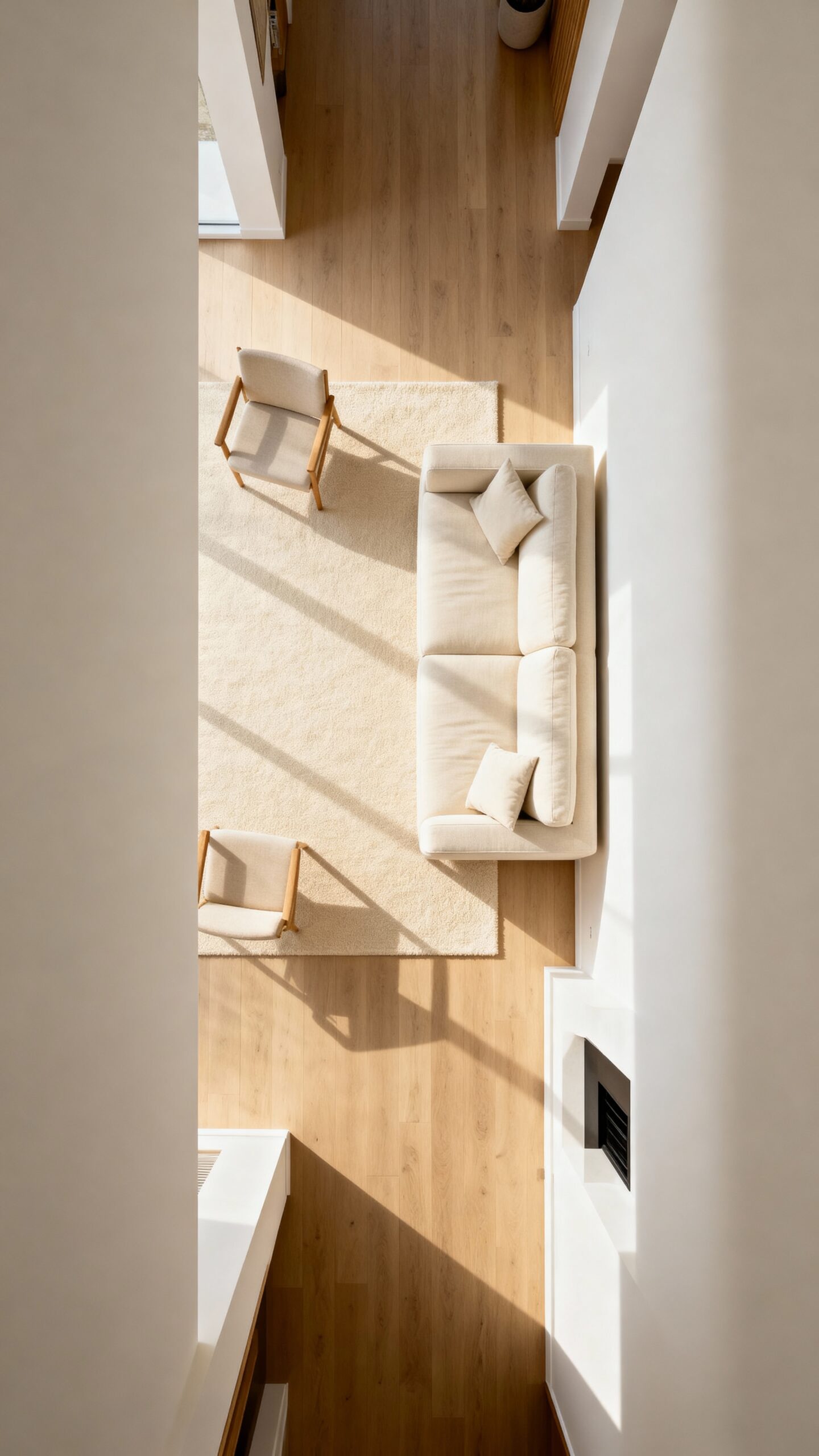
A carefully chosen light-colored area rug serves as the foundation that anchors your seating arrangement while creating the illusion of expanded floor space. Cream, beige, or soft gray rugs reflect natural light and make your narrow living room feel more spacious than darker alternatives.
Position your rug so it extends at least 18 inches beyond your sofa to properly define the space. You’ll want to arrange furniture in conversation groups with front legs of chairs and sofas resting on the rug’s edge or surface.
For added visual interest, layer rugs for texture by placing a smaller patterned rug over your neutral base. This technique adds depth without overwhelming your compact space. Choose low-pile rugs that won’t create visual bulk, allowing foot traffic to flow freely around your thoughtfully arranged seating area.
Hang Curtains High and Wide to Maximize Window Impact
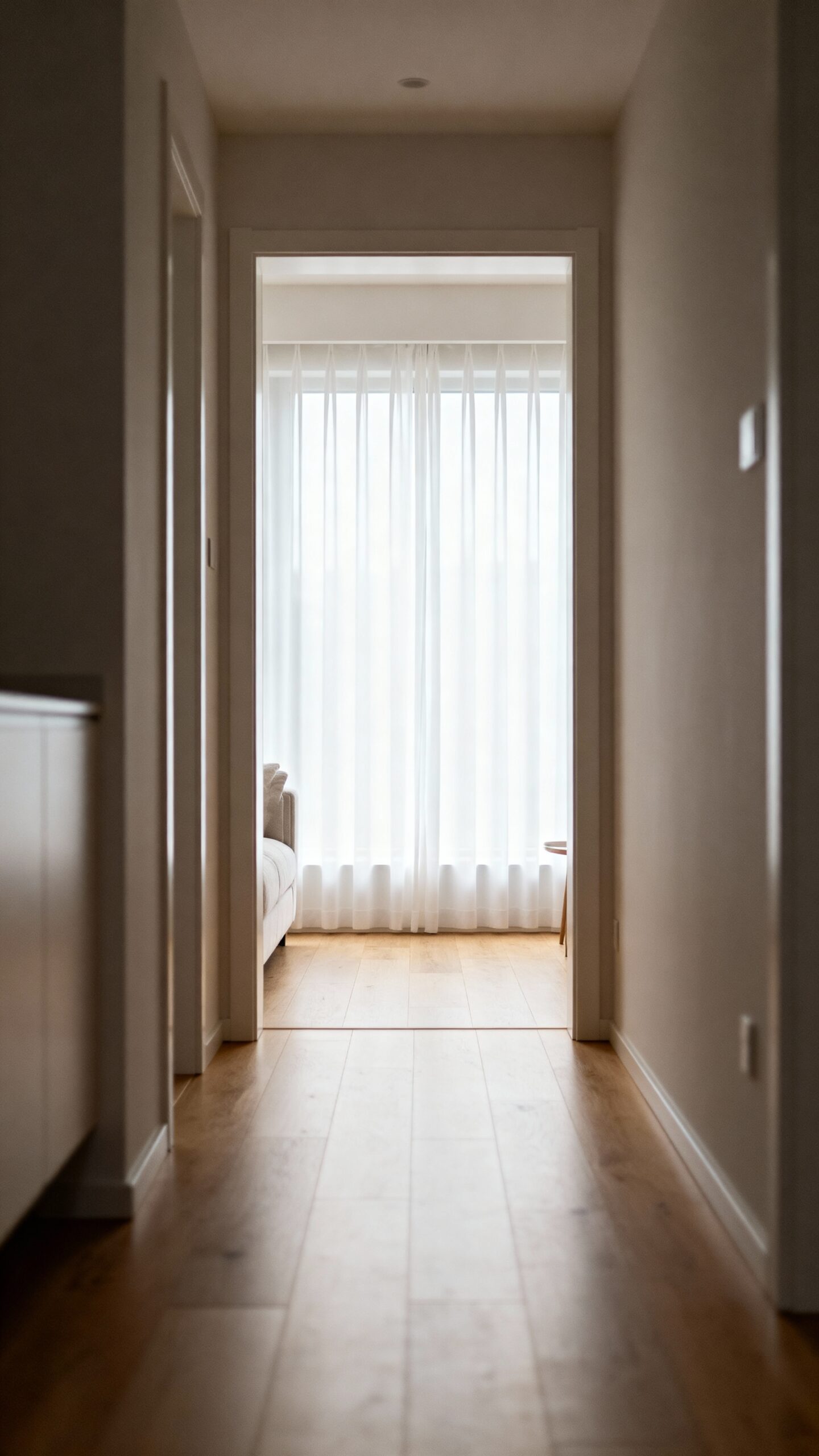
Strategic curtain placement alters your small living room by creating dramatic vertical lines that draw the eye upward and outward. Mount your curtain rods 6-8 inches above the window frame and extend them 4-6 inches beyond each side. This technique makes windows appear larger while adding precious height to cramped spaces.
Leverage sheer curtains to maintain natural light flow while providing privacy and softness. The translucent fabric won’t block your view or create visual heaviness that shrinks the room. Choose panels that reach floor length for maximum elongating effect.
When you prioritize window view, you’re connecting your interior to the outdoors, which psychologically expands your space. Light-colored fabrics in whites, creams, or pale neutrals enhance this airy feeling while reflecting available light throughout your room.
Choose Furniture With Exposed Legs to Show More Floor
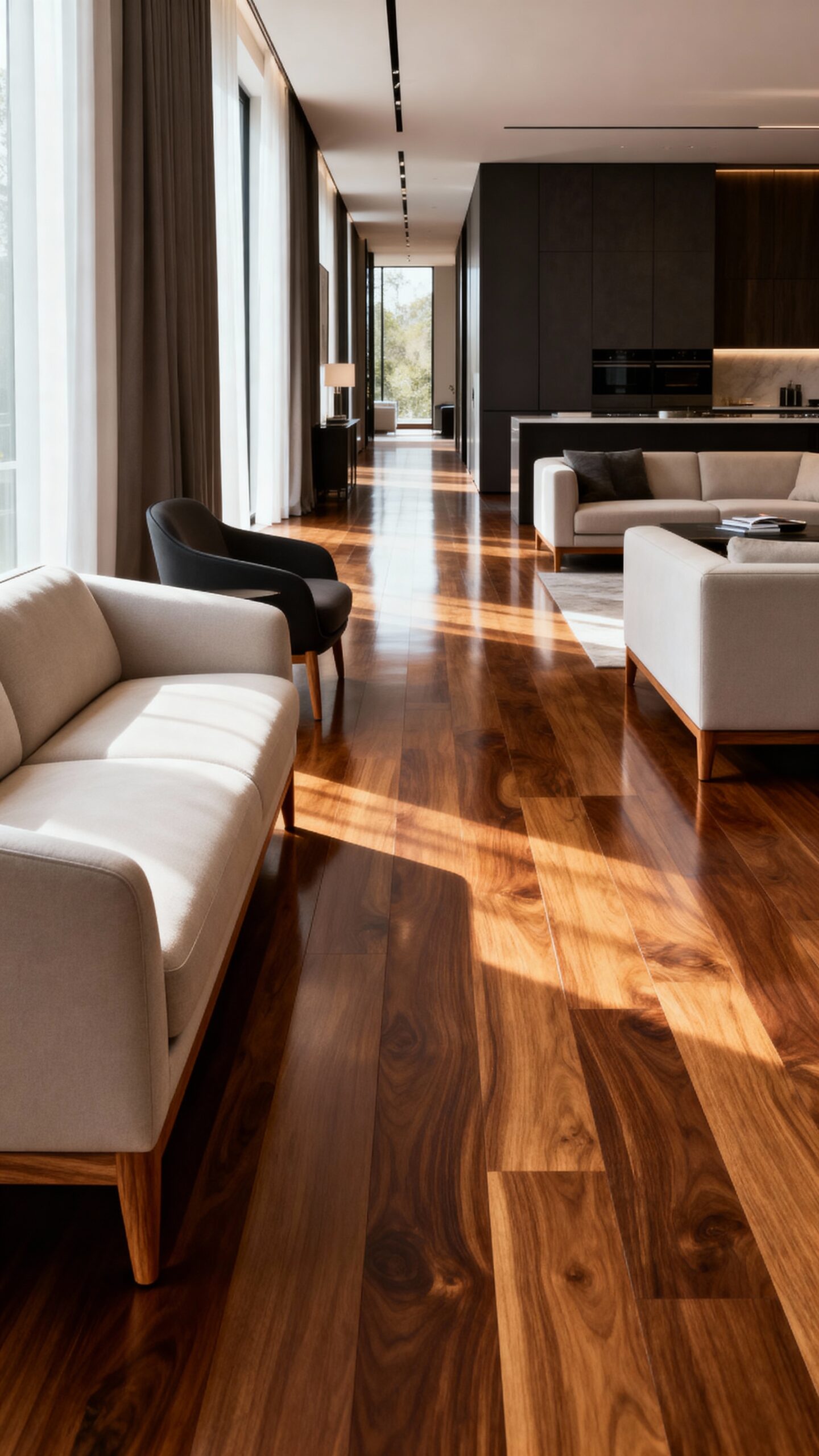
Furniture with exposed legs creates an optical illusion that makes your small living room feel considerably more spacious and open. When you choose pieces like sofas, chairs, and coffee tables with visible legs, you’re allowing natural light to flow underneath and around each piece. This technique helps expose furniture silhouettes while preventing your room from feeling cluttered or closed-off.
Select sofas with thin, tapered legs rather than bulky bases that touch the floor. Opt for armchairs with slender metal or wooden legs that lift the seat several inches above ground level. Choose coffee tables and side tables with open designs that emphasize visual openness throughout your space.
This strategy works because your eye can see more continuous floor area, creating the perception of additional square footage without requiring any actual renovations.
Create Zones With Different Lighting for Multiple Functions
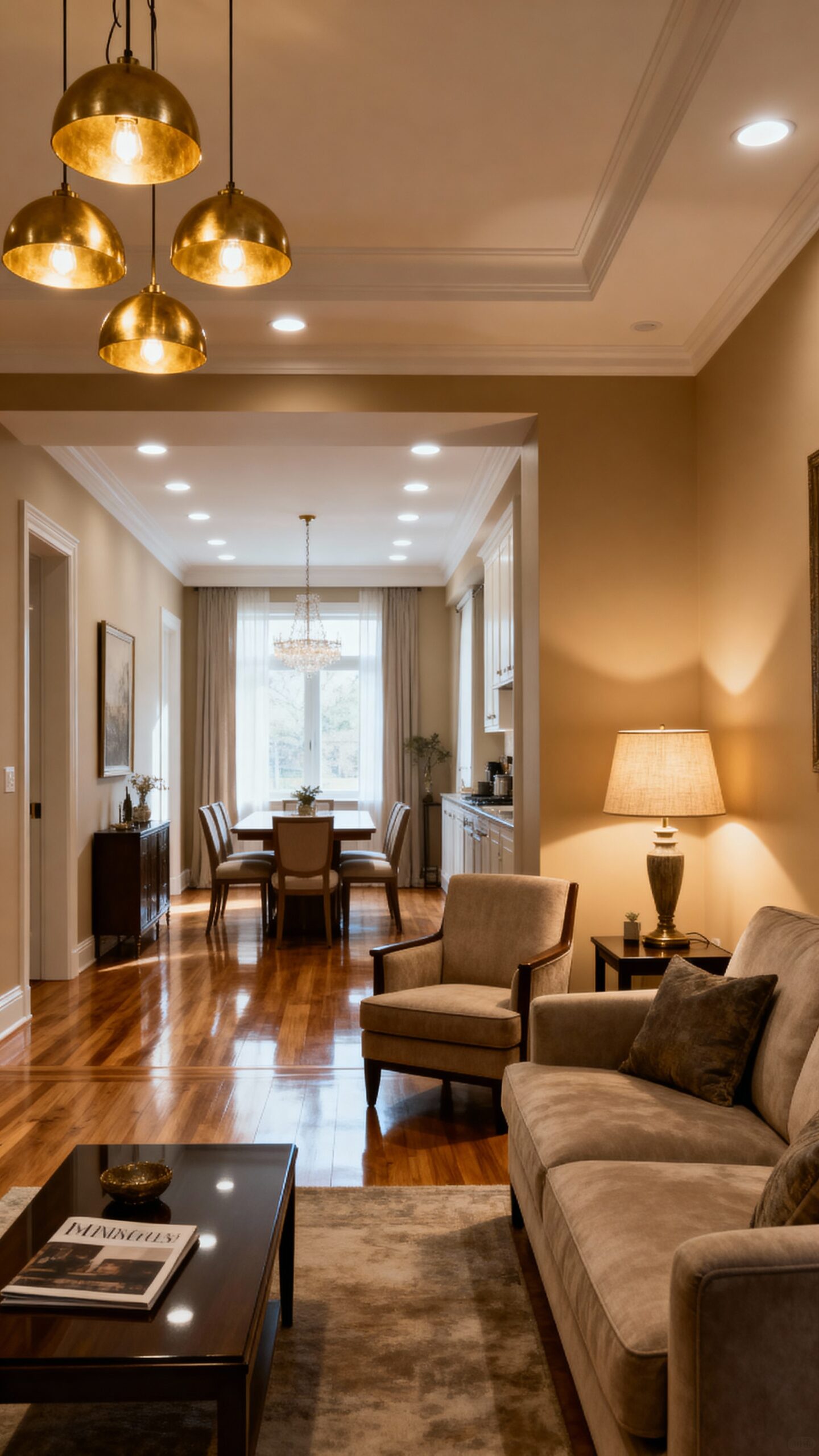
When you strategically position different types of lighting throughout your small living room, you’ll instantly alter a single cramped space into multiple functional zones. Break free from overhead-only lighting that flattens your room’s potential.
Create a reading nook with focused task lighting placement using adjustable floor lamps or swing-arm wall sconces. Position these fixtures beside seating areas where you’ll actually use them for specific activities like reading or working on laptops.
Define your entertainment zone with accent lighting fixtures such as LED strip lights behind your TV or image lights above artwork. These subtle illumination sources add depth while drawing attention to focal points.
Use table lamps to establish intimate conversation areas within your larger space. Different lighting levels naturally guide movement and create psychological boundaries without physical barriers restricting your freedom.
Use Wall-Mounted Storage to Keep Surfaces Clear
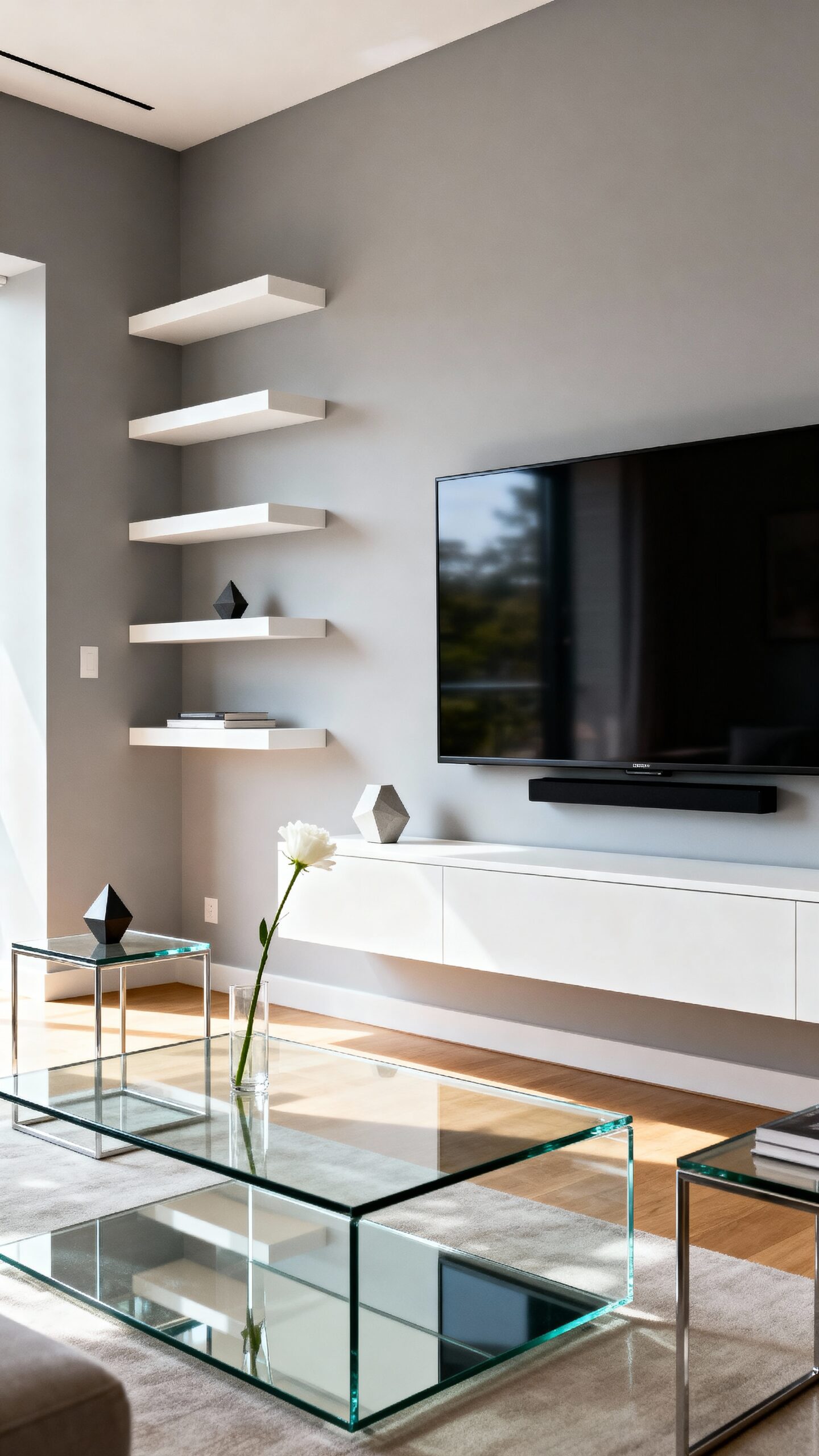
While proper lighting creates distinct zones in your small living room, wall-mounted storage solutions will help you maintain those clean, organized spaces by eliminating surface clutter.
You’ll maximize your floor space when you utilize wall shelves strategically throughout your room. Install floating shelves above your sofa to display books, plants, or decorative items without sacrificing precious surface area. Mount storage units above seating areas to create functional cubbies for remotes, magazines, and personal items.
Consider installing wall-mounted cabinets with doors to hide less attractive necessities while keeping them easily accessible. You can also add narrow ledge shelves along walls to showcase artwork or photos without using tabletops.
This vertical approach frees your coffee table and side tables from storage duties, creating a more spacious, breathable atmosphere that enhances your room’s overall flow.
Position the Longest Furniture Piece Along the Longest Wall
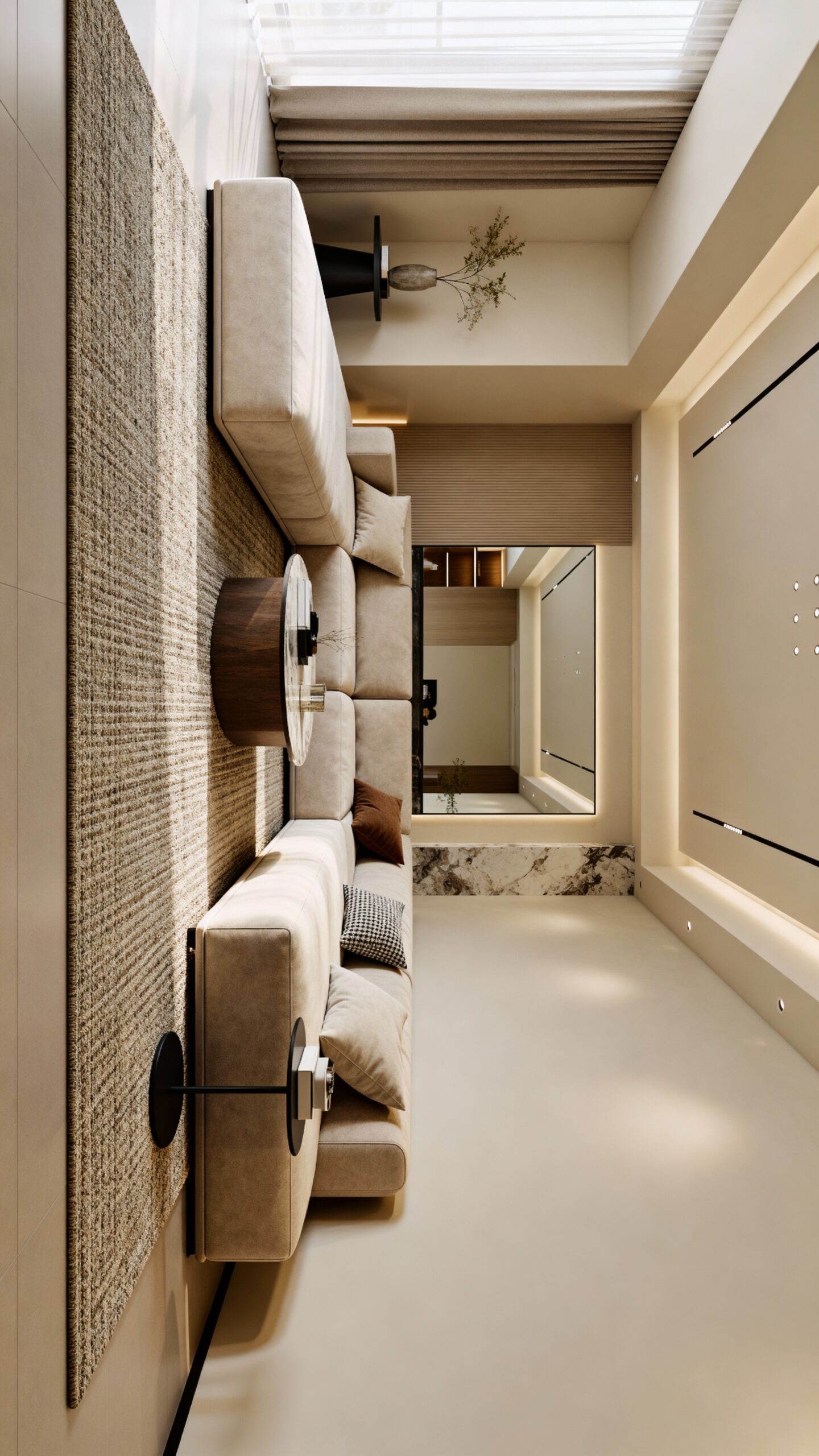
Strategic placement of your sofa creates the foundation for an efficient small living room layout that maximizes both space and functionality. When you position your longest furniture piece along your room’s longest wall, you’re establishing a natural traffic flow that won’t obstruct movement patterns.
This arrangement allows you to employ negative space effectively by keeping the center of your room open and breathable. You’ll create visual interest by placing accent chairs or side tables at angles that complement your sofa’s placement rather than competing with it.
Consider floating your sofa slightly away from the wall to add depth and dimension. This technique prevents your furniture from appearing pushed against surfaces, giving your narrow living room a more spacious, intentionally designed feel that promotes comfort and freedom.
Incorporate Glass and Lucite Elements for Visual Transparency
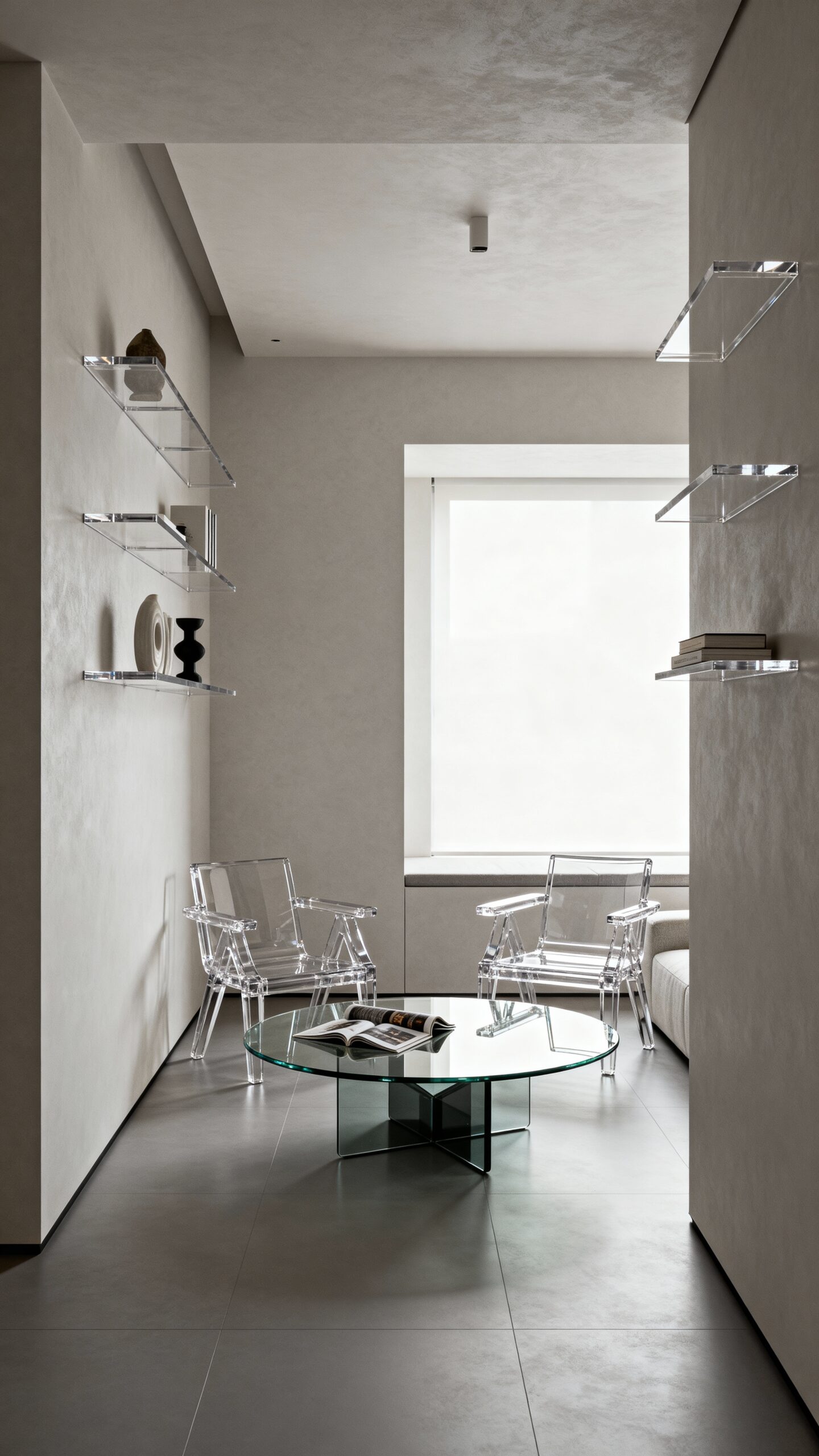
Glass and lucite furniture pieces act as invisible space expanders that maintain your room’s functionality without adding visual weight to cramped quarters. You’ll create breathing room by choosing transparent coffee tables, acrylic chairs, or glass-top side tables that let light flow freely throughout your space.
Incorporate open shelving for visual lightness by selecting glass bookcases or floating shelves with clear brackets. These storage solutions keep your belongings organized while maintaining sight lines across the room. You can also employ reflective finishes for an airy feel through mirrored accent pieces or glass image frames.
Position transparent furniture strategically near windows to maximize natural light reflection. Your room will feel twice its actual size when you layer these see-through elements with existing lighting, creating depth without boundaries.
Add Height With Tall Plants and Vertical Artwork
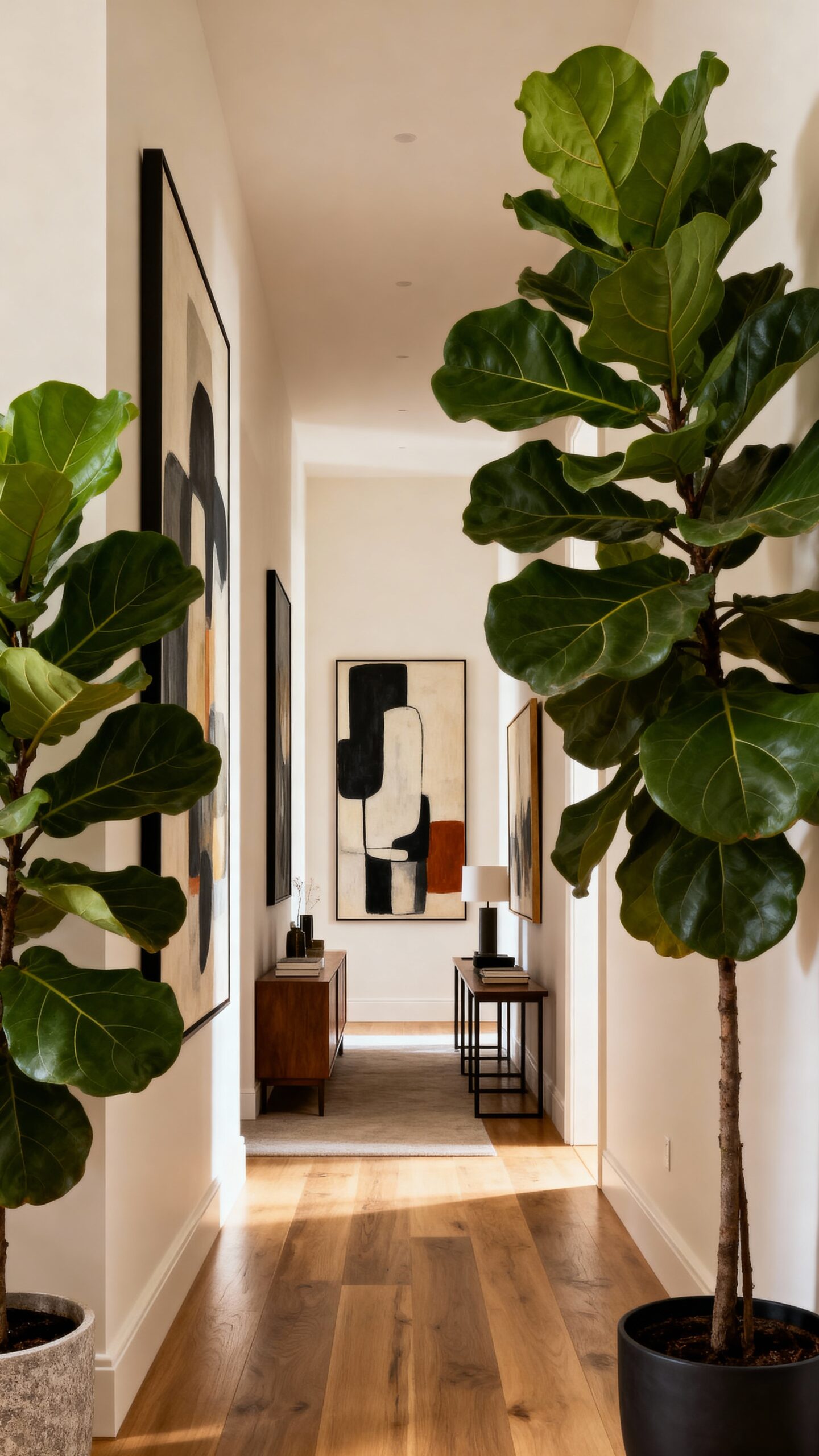
Tall elements draw your eye upward and create the illusion of higher ceilings in compact living rooms. Position a fiddle leaf fig or snake plant in a corner to add natural height without consuming floor space. These vertical green accents break up monotonous sightlines while purifying your air.
Create eye catching vertical displays by hanging artwork in gallery walls that stretch from mid-wall to ceiling. Choose pieces with vertical orientations like portraits or narrow vistas. Mount floating shelves at varying heights to showcase books, plants, and decorative objects.
Balance with lower decor by pairing tall elements with horizontal pieces like coffee tables or floor cushions. This contrast prevents your space from feeling top-heavy while maintaining the upward momentum that makes your ceiling appear higher than it actually is.
Choose a Cohesive Color Palette to Unify the Space
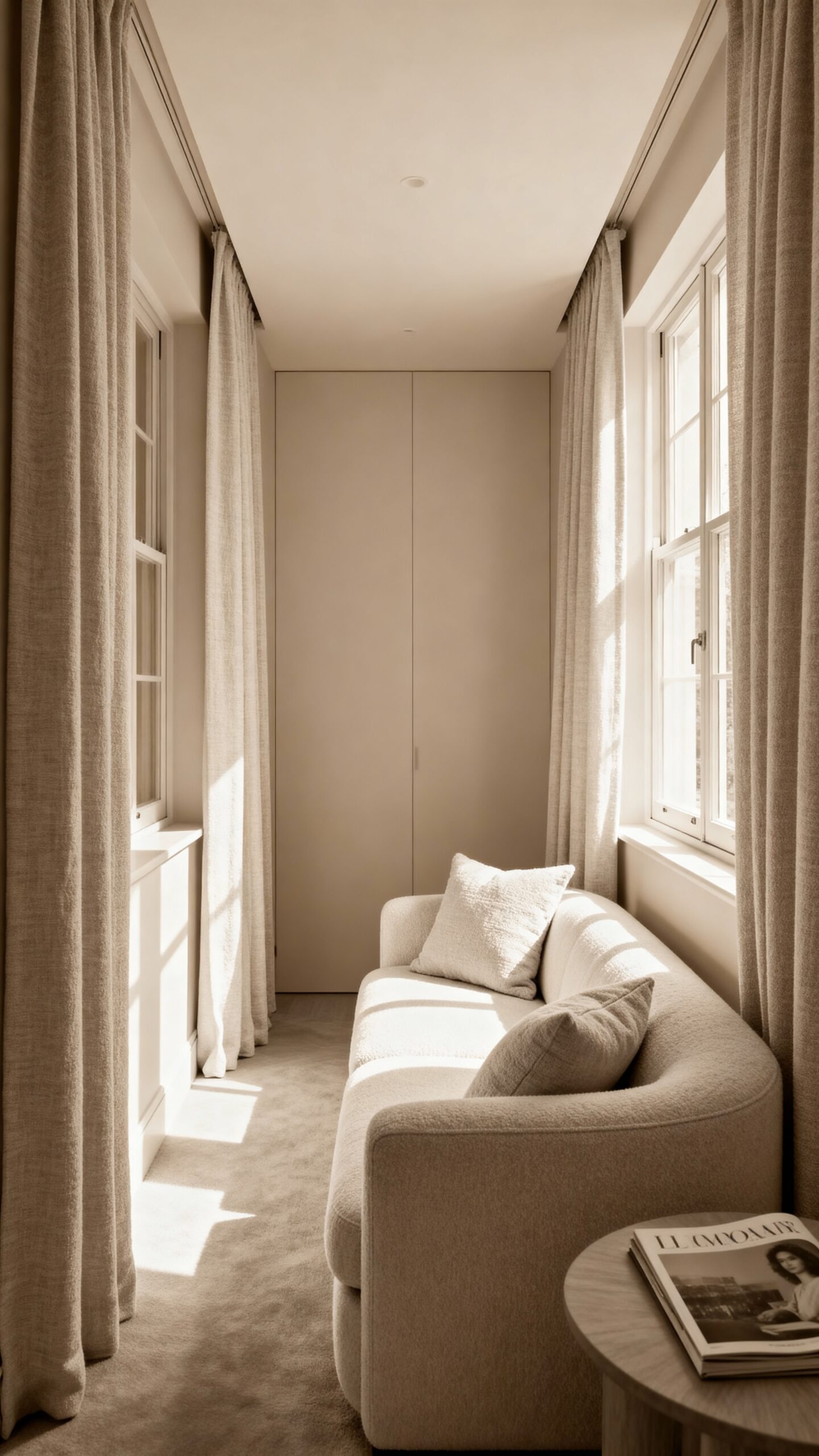
A well-planned color scheme pulls together all your furniture and decor elements, making even the smallest living room feel intentionally designed and spacious. Start with a neutral base like soft whites, warm grays, or muted beiges that reflect light and create visual continuity throughout your narrow space.
Choose complementary accent colors in two or three shades maximum to avoid overwhelming the room. Deep blues paired with warm brass, or sage green with terracotta, create sophisticated combinations without competing for attention. Apply your accent colors through throw pillows, artwork, and small decorative pieces.
Maintain balance with symmetry by distributing colors evenly across the room. If you place a navy pillow on one side, echo that shade somewhere on the opposite side. This creates visual harmony that makes your space feel larger and more cohesive.
Conclusion
You’ve got powerful tools to alter your narrow living room into a spacious, functional haven. Start with one or two approaches that strike a chord most with your style and budget. Remember, small changes like repositioning furniture away from walls or adding mirrors can make an immediate impact. Don’t rush the process—experiment with different layouts until you find what works best for your lifestyle and space.