13 Spring Kindergarten Decor Ideas Kids Will Love
Hands-on spring decorations transform kindergarten classrooms into engaging learning environments, but which thirteen ideas will captivate your students most?
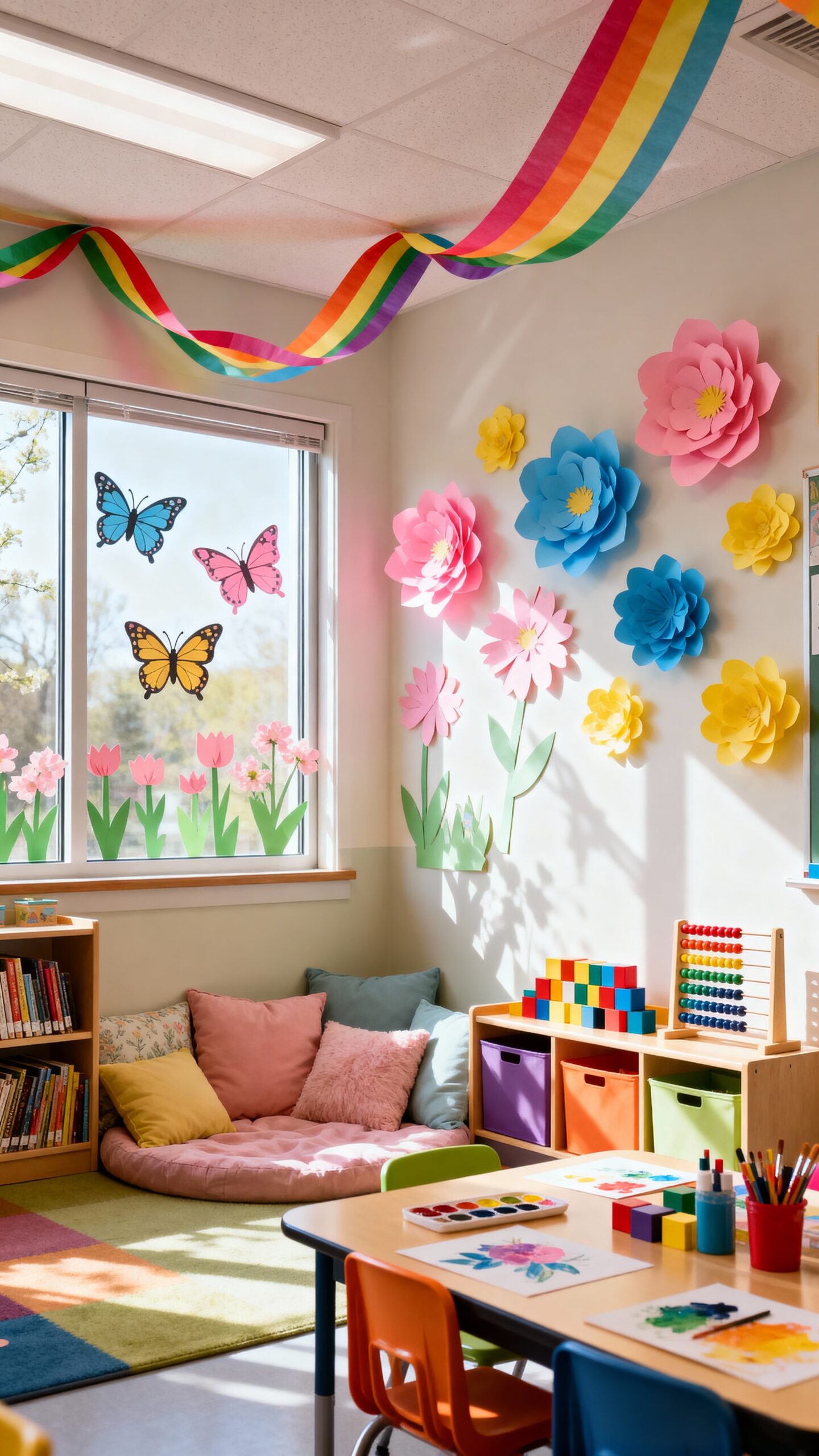
I’ve unearthed that metamorphosing your kindergarten classroom into a lively spring environment doesn’t require extensive resources or daunting preparation time. Through meticulous selection of interactive displays and nature-themed learning stations, you’ll craft an enthralling atmosphere that seamlessly draws children into hands-on exploration. The thirteen ideas I’m sharing combine educational value with visual appeal, ensuring each decoration serves a dual purpose in your teaching strategy.
Create a Classroom Garden Corner With Real Plants
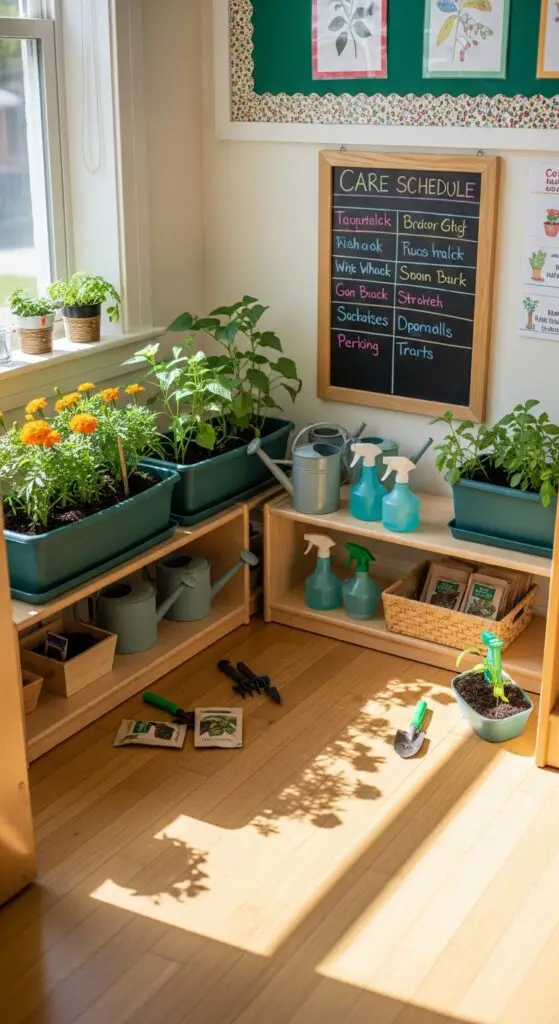
Three simple steps can alter any classroom corner into a thriving garden space that brings spring’s natural beauty indoors. First, I’ll help you select easy-care plants like marigolds, beans, and herbs that incorporate seasonal plants perfectly for kindergarten hands.
Second, arrange child-height planters and watering tools where students can easily reach them daily.
Third, create a simple care schedule that’ll encourage hands on gardening through rotating responsibilities. You’ll convert learning by letting kids observe plant growth cycles firsthand. This living classroom addition promotes responsibility while connecting children to nature’s rhythms in an engaging, educational way. A cheerful learning space filled with growing plants naturally boosts student engagement and creates lasting memories of the spring season.
Design Interactive Weather Station Displays
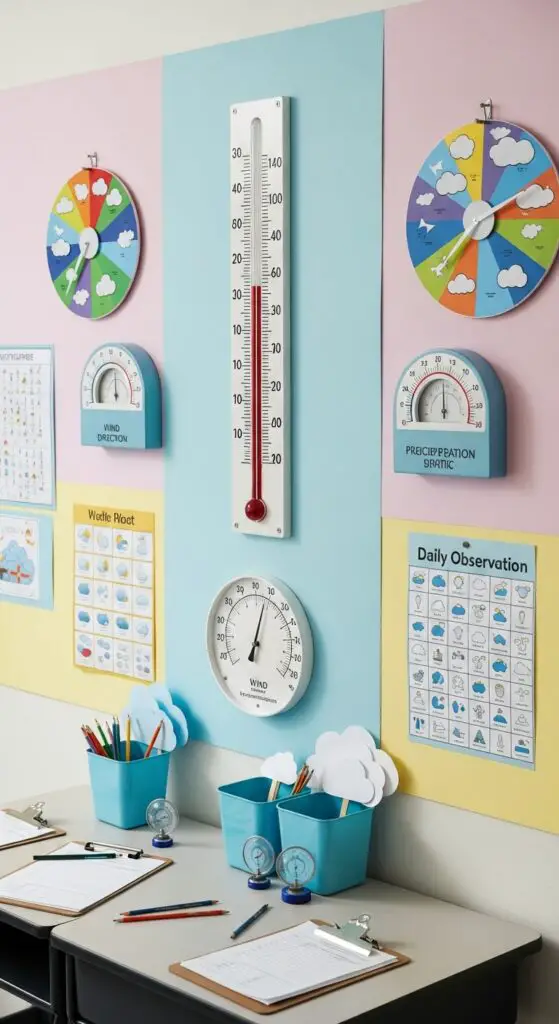
Four essential components rearrange any classroom wall into an engaging weather station that’ll enthrall kindergarteners while teaching essential scientific concepts. I recommend installing a large thermometer, barometer, wind direction indicator, and precipitation gauge at child-friendly heights.
Create interactive weather data visualizations using colorful charts where students track daily temperatures, rainfall amounts, and cloud types. Design rotating wheels showing weather patterns and seasonal changes that children can manipulate independently. Enhance the display with soft colors and light textures that create a calming spring atmosphere perfect for focused learning.
Incorporate hands on weather experiments like cloud formation demonstrations and simple wind measurement activities. Position supplies in accessible containers so students can conduct daily observations and record findings independently.
Build a Spring Reading Nook With Flower Themes
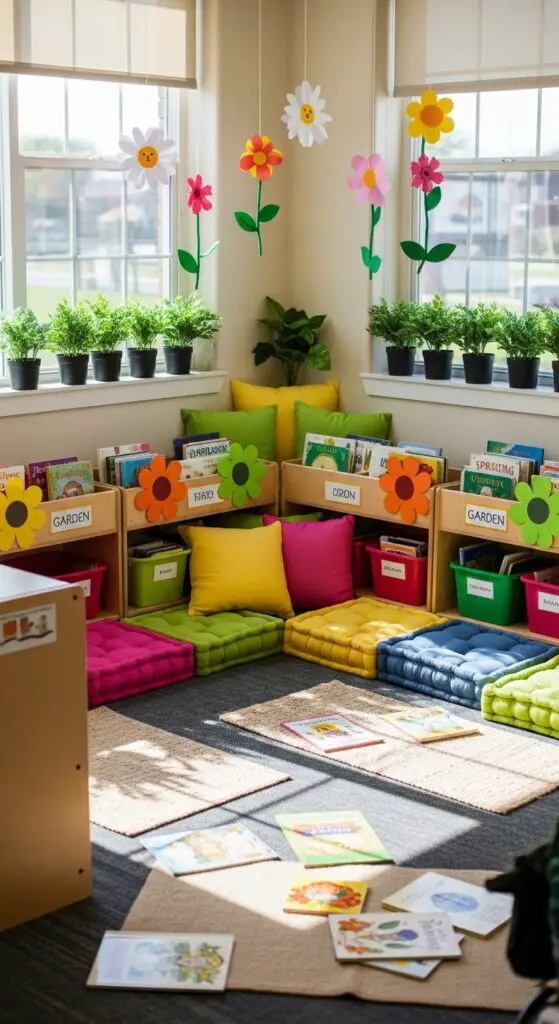
When you convert a corner of your classroom into a flower-themed reading sanctuary, you’ll create an inviting space where young readers naturally gravitate toward books and quiet exploration.
Add cozy reading cushions in bright spring colors like yellow, pink, and green to encourage comfortable sitting. Create inviting book displays using flower-shaped bookends and colorful bins labeled with garden themes.
Hang paper flowers from the ceiling and place artificial potted plants around the perimeter. Transform your reading nook into a fresh and inviting environment that mirrors the renewal of spring season. You’ll cultivate any unused corner into a magical reading retreat that sparks children’s imagination while nurturing their love for literature.
Craft Paper Flower Wall Displays
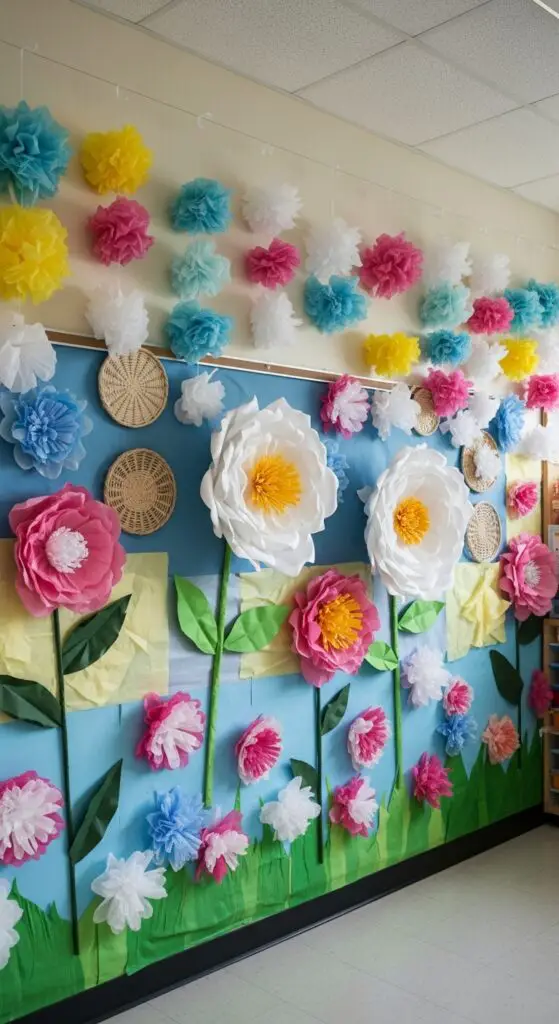
Creating stunning paper flower wall displays alters any blank classroom wall into a lively spring garden that enthralls kindergarten students throughout the season. I’ll show you techniques that convert ordinary materials into extraordinary decorations.
Start with large paper mache flower sculptures as focal points, using newspaper and flour-water paste for dimension. Position these centerpieces at eye level for maximum impact.
Next, create delicate tissue paper flower garlands by layering colorful sheets, cutting petal shapes, and connecting them with fishing line.
Arrange displays in odd-numbered clusters for visual appeal, mixing sizes and colors to maintain student interest. Incorporate natural textures by adding woven paper elements or crinkled tissue paper backgrounds to create depth and visual richness.
Set Up a Butterfly Life Cycle Learning Center
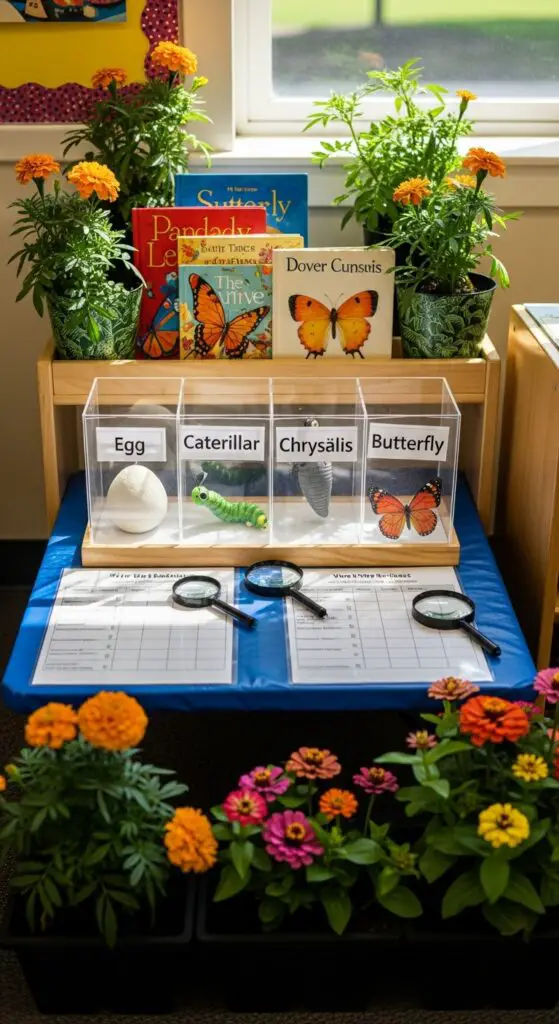
While paper flowers bring spring beauty to your walls, hands-on science centers engage kindergarteners in meaningful exploration of nature’s most intriguing alterations. I’ll show you how to create an interactive butterfly station that transforms learning into expedition.
Set up four distinct sections representing each life cycle stage: egg, caterpillar, chrysalis, and butterfly. Use clear containers with magnifying glasses so students can observe butterfly growth closely. Create recording sheets where children track butterfly life cycle stages through drawings and simple words.
Add storybooks, plastic models, and real chrysalises when possible to enhance the hands-on experience. Consider incorporating decorative planters filled with butterfly-attracting flowers like marigolds or zinnias to create an authentic garden atmosphere that connects indoor learning with outdoor exploration.
Make Colorful Spring Bulletin Boards
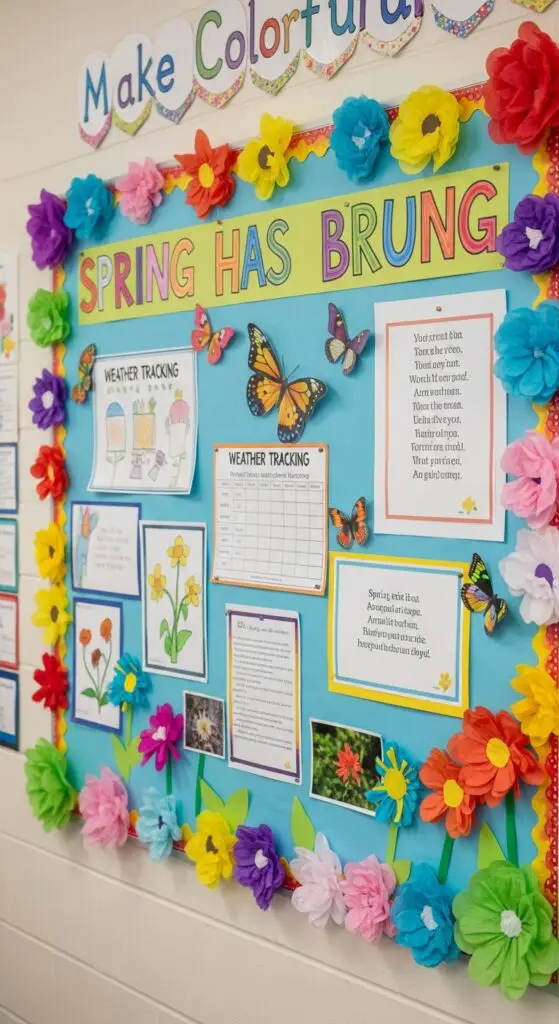
Since bulletin boards serve as the centerpiece of spring classroom decor, I’ll guide you through creating lively displays that celebrate the season while supporting your curriculum goals. Choose colorful bulletin board borders featuring flowers, rainbows, or garden themes to frame your displays effectively.
Focus on seasonal bulletin board themes like “Spring Has Sprung” with student artwork, weather tracking charts, or plant growth documentation. You can showcase emerging readers’ work alongside spring poetry or science observations. Layer different textures using tissue paper flowers, construction paper butterflies, and real photographs from nature walks to create engaging three-dimensional displays. These vibrant displays help create a cheerful atmosphere that energizes both students and teachers throughout the spring months.
Add Spring Animal Habitat Dioramas
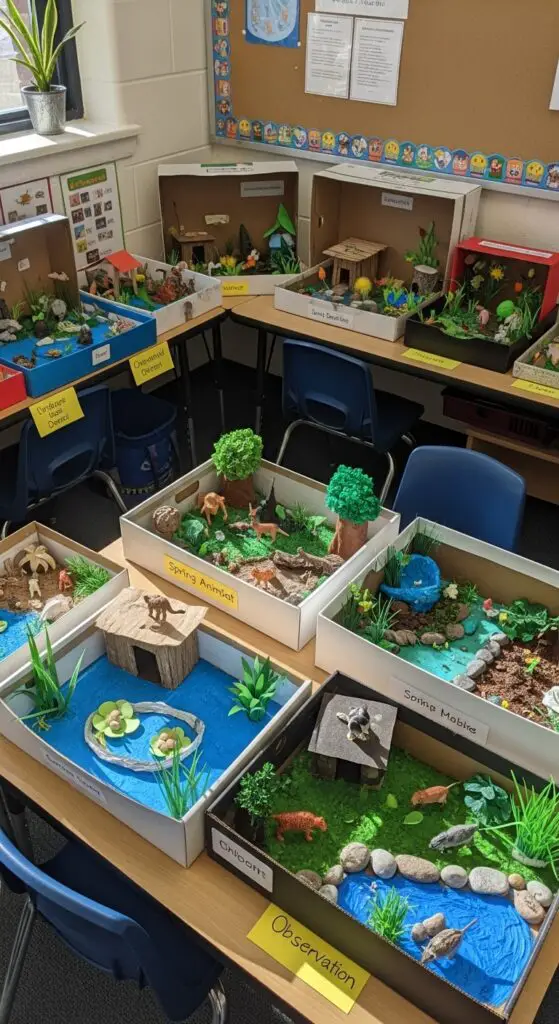
As spring awakens the natural world, animal habitat dioramas transform your kindergarten classroom into an immersive learning environment where students investigate wildlife homes and seasonal changes.
I recommend setting up spring animal habitat displays in corners or on designated tables where children can investigate freely. You’ll construct miniature ecosystems using shoeboxes, craft materials, and toy animals representing pond life, forest dwellers, or meadow creatures.
Students develop scientific observation skills while arranging habitats with proper food sources, shelter, and water elements. These hands-on displays encourage independent examination and spark curiosity about nature’s interconnected relationships during this lively season.
Create Rainbow and Cloud Ceiling Decorations
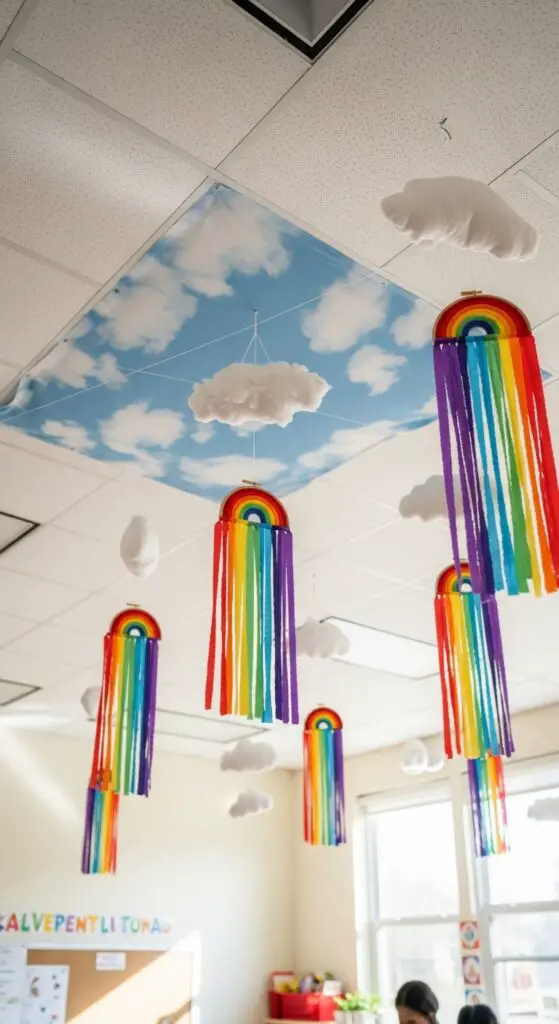
After altering your floor-level displays, overhead ceiling decorations bring spring’s wonder directly above your kindergarten students’ heads throughout their daily activities. I’ll show you how simple materials change your classroom ceiling into an inspiring springtime sky.
Start with a rainbow hanging mobile using colored streamers attached to embroidery hoops. Suspend multiple hoops at varying heights to create depth and movement.
Next, craft cloud pillow displays by stuffing white fabric with batting, then securing them with fishing line across the ceiling. These soft, three-dimensional clouds complement your rainbow mobile perfectly, creating an enchanting overhead environment that sparks imagination.
Design a Spring Math Center With Counting Flowers
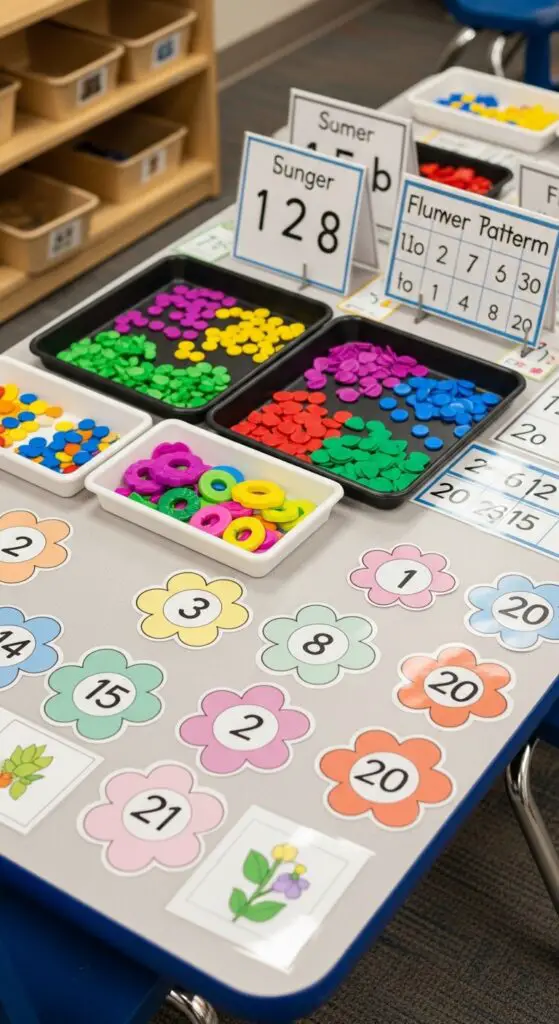
While your ceiling displays capture students’ attention from above, ground-level learning centers provide hands-on mathematical exploration that makes abstract concepts tangible and engaging. I’ll show you how to create an interactive spring math station that uncovers number recognition into exciting revelation time.
Set up counting games with spring flowers using laminated flower cutouts numbered 1-20. Students match quantities of manipulatives to corresponding numerals on each bloom. Add flower petal sorting activities where children organize petals by color, size, or number patterns. This versatile center adapts easily to different skill levels, letting you differentiate instruction naturally while maintaining that fresh spring atmosphere.
Build a Classroom Tree With Student Achievements
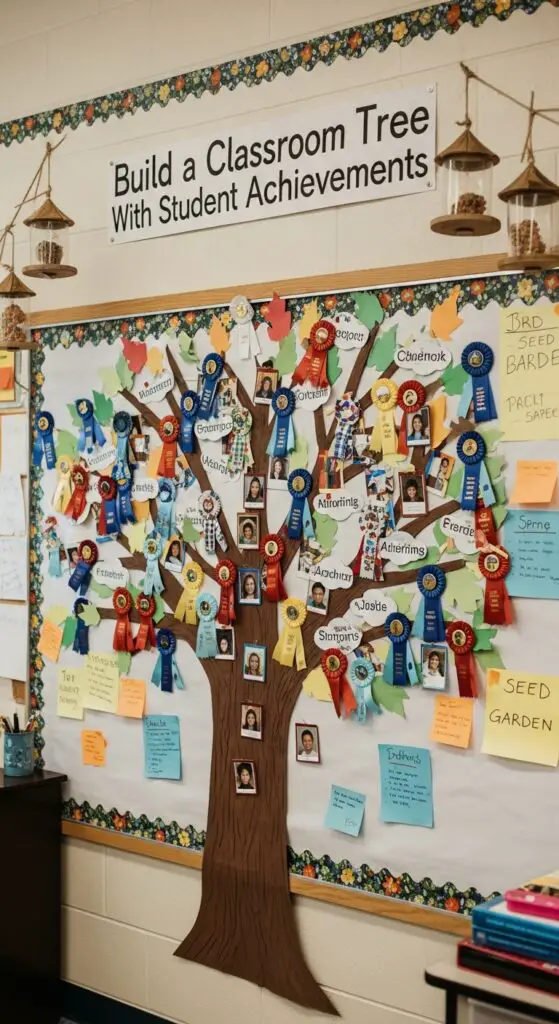
Once students see their accomplishments displayed on a magnificent classroom tree, they’ll develop stronger motivation to achieve new academic milestones throughout the spring season. I recommend creating paper leaves where you’ll write each child’s achievement, from conquering letter sounds to completing their first book. Attach colorful ribbons and student photos to make it personal.
Connect this display to spring activities like DIY bird feeders when students learn about wildlife habitats, or celebrate progress in your planting class seed garden project. This visual reminder shows children how their hard work grows into something beautiful and meaningful.
Make Spring Door Decorations That Welcome Visitors
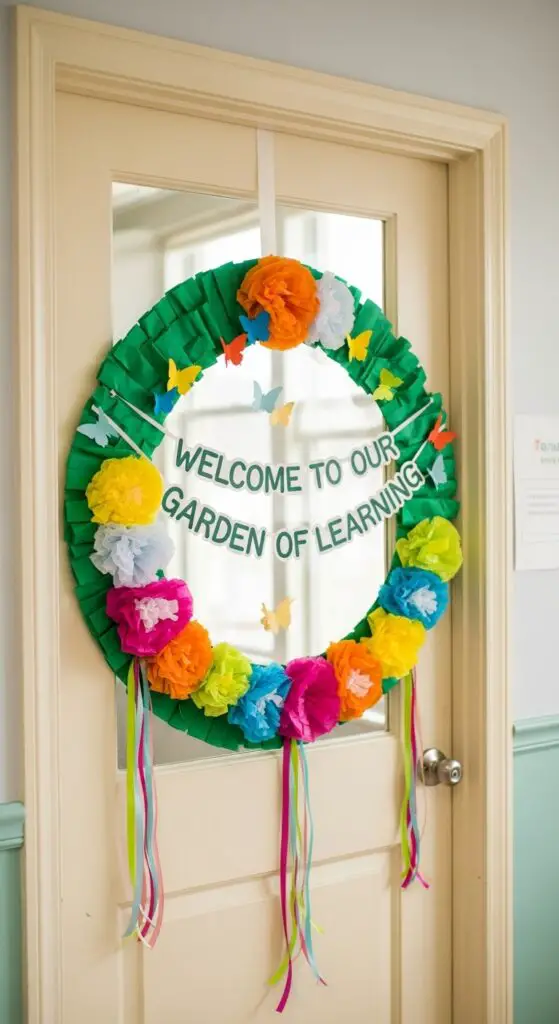
Three simple materials can alter your kindergarten classroom door into a lively spring welcome that enthralls every visitor’s attention from the moment they arrive. I recommend starting with colorful paper, ribbons, and artificial flowers to create stunning welcome sign crafts that’ll make parents smile.
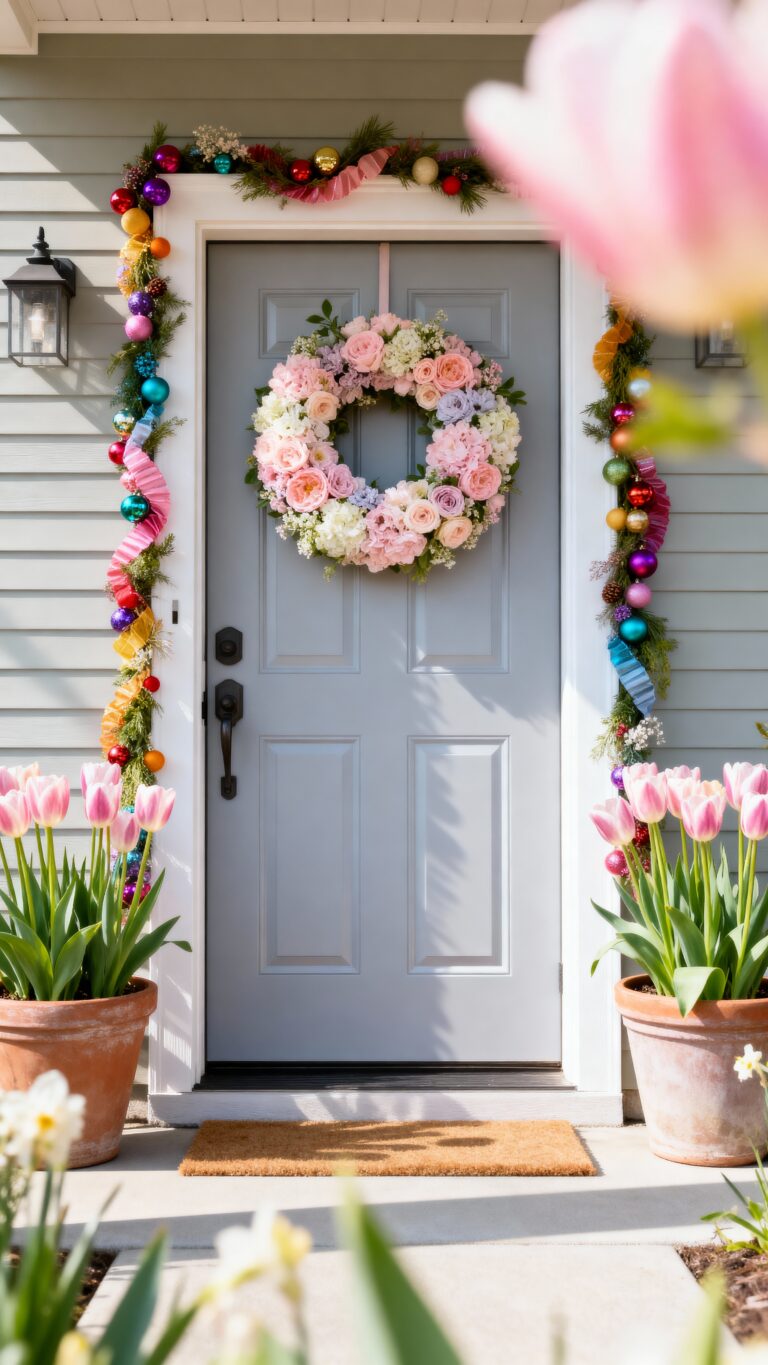
Begin your floral wreath making project by forming a circle with green construction paper as your base. Attach bright tissue paper flowers around the perimeter, then add a cheerful “Welcome to Our Garden of Learning” banner across the center. This approach metamorphoses ordinary doorways into inviting spaces that reflect your classroom’s energetic spring essence.
Set Up Seasonal Writing Stations With Spring Prompts
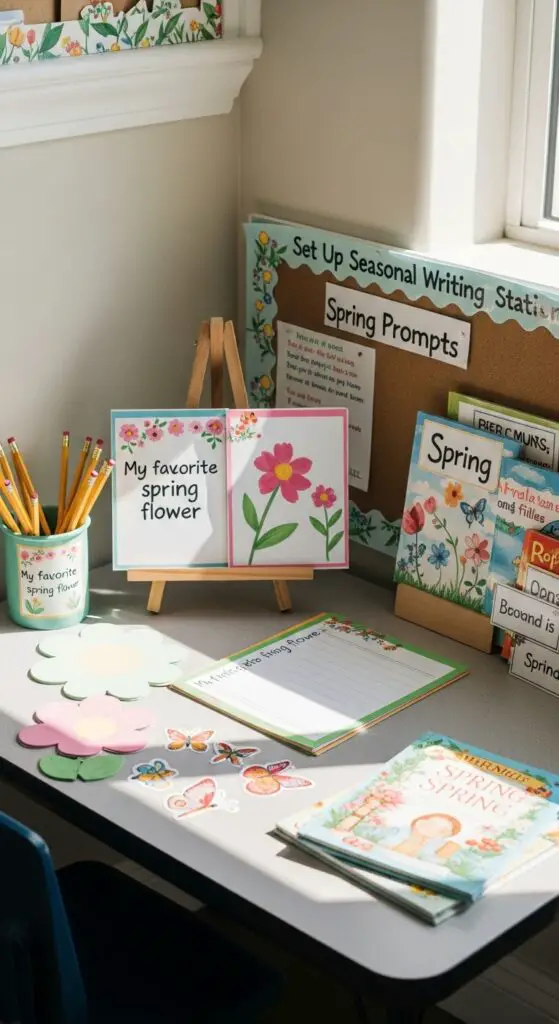
After altering your classroom door into a spring showcase, you’ll want to extend that seasonal energy throughout your learning environment by creating dedicated writing stations filled with spring-themed prompts.
Transform corner spaces into vibrant writing nooks using seasonal writing prompts that spark creativity. Display colorful question cards featuring topics like “My favorite spring flower” or “What I saw during my nature walk.” Stock stations with spring themed paper supplies including pastel-colored writing sheets, flower-shaped notepads, and butterfly stickers for decoration.
Rotate prompts weekly to maintain fresh inspiration, and include illustrated books about spring to help reluctant writers generate ideas for their stories.
Add Spring Science Exploration Tables
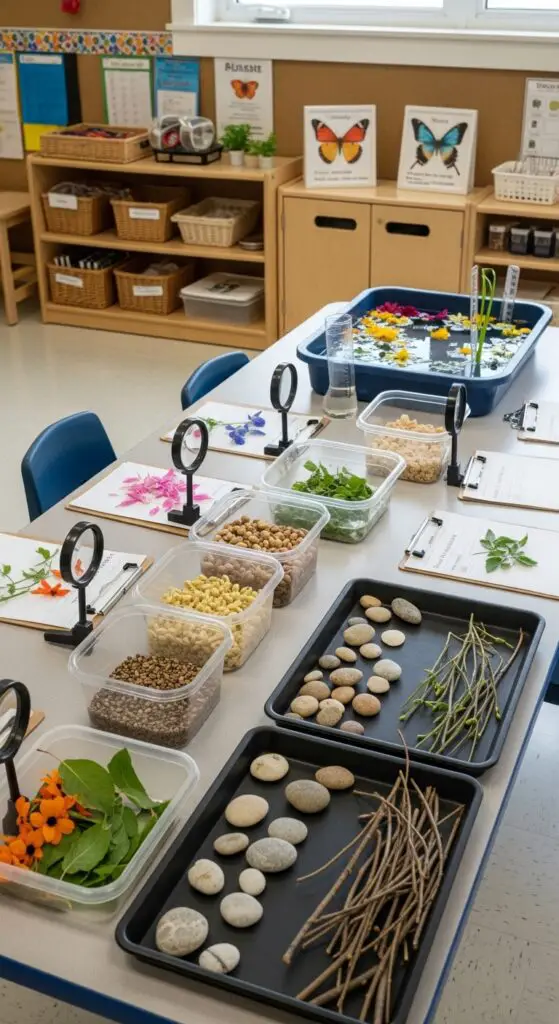
Creating hands-on science study tables alters your kindergarten classroom into a living laboratory where students can investigate spring’s natural phenomena through engaging, age-appropriate activities.
Set up magnifying stations with flower petals, leaves, and seeds for detailed observation.
Include spring science experiments like bean sprouting in clear containers and butterfly lifecycle displays.
Create hands on learning activities using water tables filled with floating flowers and measuring tools.
Add nature sorting trays with rocks, shells, and twigs collected outdoors.
Position clipboards nearby for recording findings, encouraging scientific thinking while students scrutinize spring’s fascinating metamorphoses through interactive inquiry.
Conclusion
These spring classroom decorations revitalize your kindergarten into an engaging learning environment that ignites imagination. I’ve shared practical ideas you can implement immediately, from garden corners to interactive stations. You’ll create memorable experiences while reinforcing essential concepts through hands-on activities. Start with one or two projects that excite you most, then gradually add more elements. Your students will thrive in this lively, nature-inspired classroom that celebrates growth and exploration.