13 Warm Wood Patio Ideas for Warm Natural Vibes
Inspire your outdoor transformation with these 13 stunning wood patio designs that create irresistible natural warmth and timeless elegance.

You’ll remodel your outdoor space into a warm sanctuary when you choose the right wood patio design for your home. Whether you’re considering rich teak planks, weathered cedar platforms, or rustic reclaimed barn wood, each material brings its own character and charm to your backyard retreat. The key lies in selecting patterns and layouts that complement your home’s design while creating an inviting atmosphere that draws family and friends outdoors year-round.
Create a Floating Deck With Rich Teak Planks
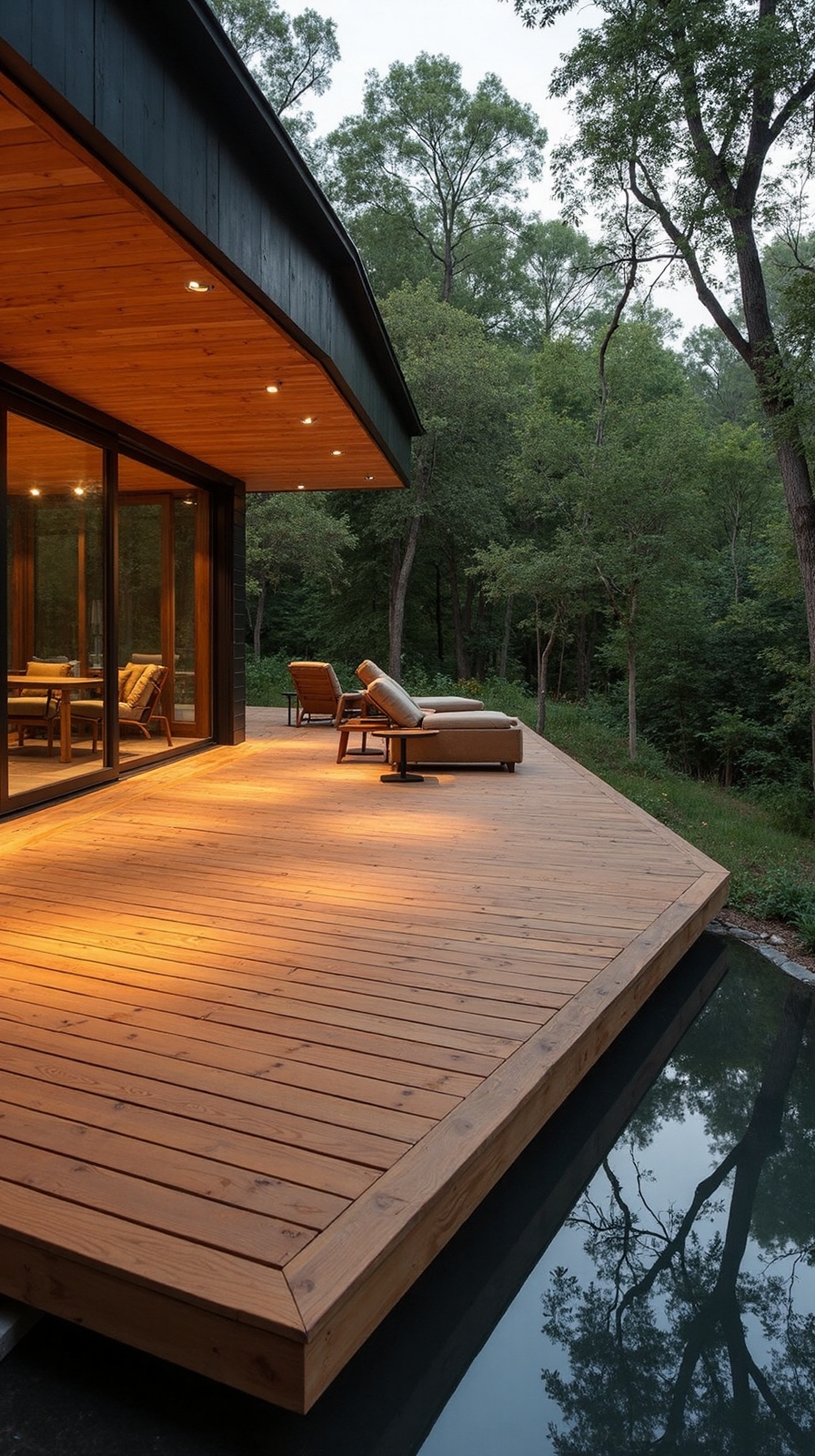
One of the most sophisticated ways to enhance your outdoor space involves installing a floating deck constructed from premium teak planks. This raised platform doesn’t require permanent foundation work, giving you complete design freedom.
When you use hardwood species for longevity, you’re investing in decades of natural beauty and structural integrity. Teak’s natural oils resist moisture, insects, and weathering without chemical treatments.
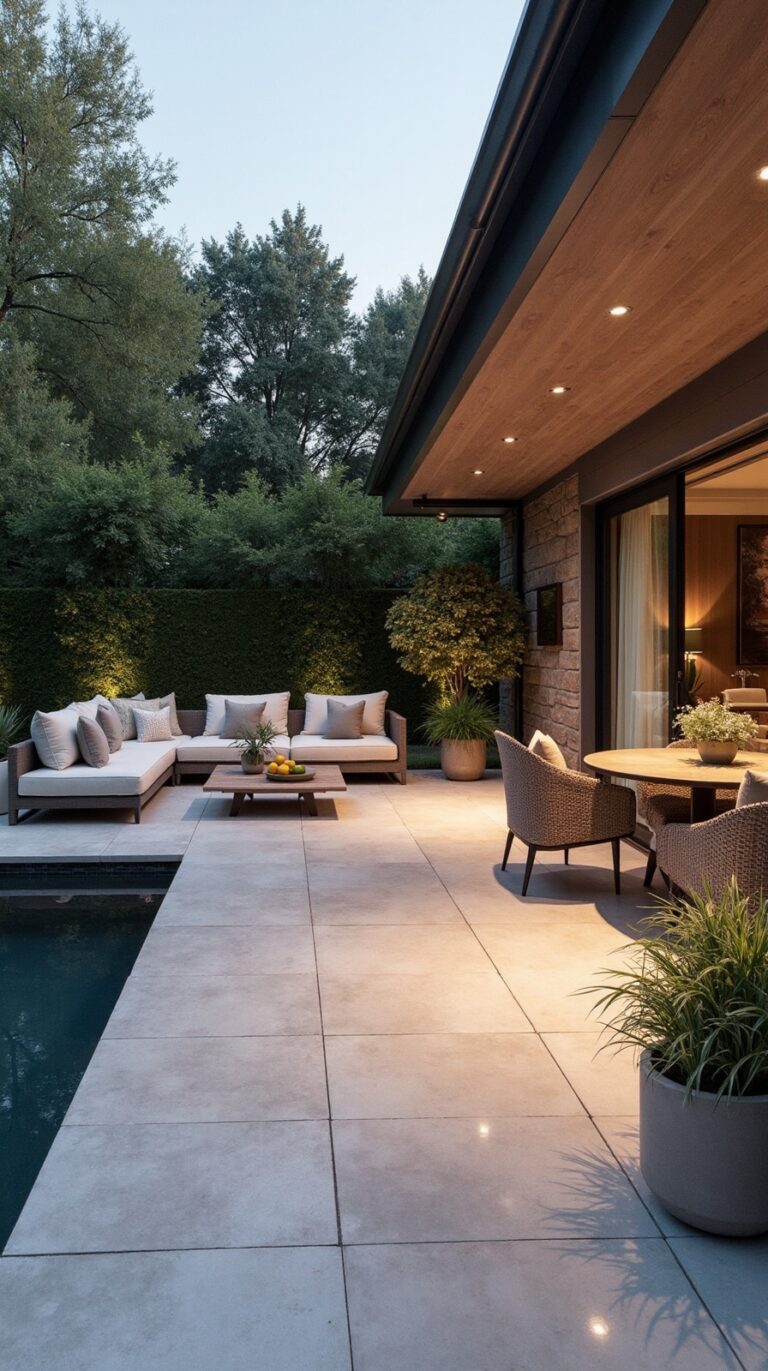
To create visual depth, incorporate weathered wood accents through contrasting border planks or decorative inlays. The floating design allows easy relocation and prevents ground moisture issues while creating a seamless connection between indoor and outdoor living spaces. While wood offers natural warmth, concrete patios provide exceptional durability and require minimal long-term maintenance.
Build a Multi-Level Cedar Platform Design
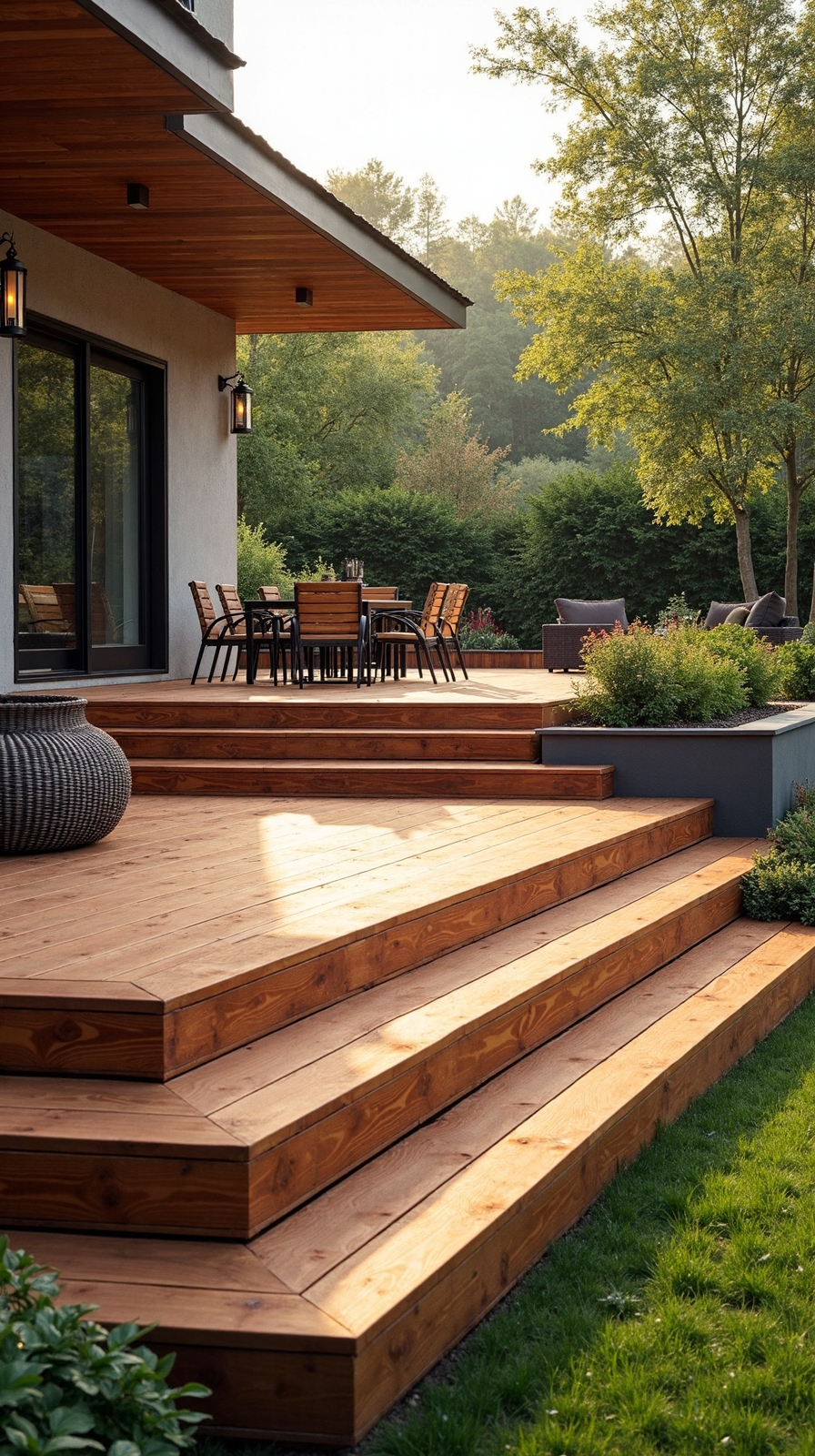
While single-level floating decks offer refined simplicity, multi-level cedar platforms create dramatic visual interest and maximize your outdoor living potential. You’ll design distinct zones for dining, lounging, and entertainment by varying platform heights. Cedar’s natural wood grain provides warm textures that complement any architectural style.
Start your elevated platform design by sketching different levels based on your yard’s slope and intended functions. Build the highest tier first, then work downward for structural stability. Connect levels with wide steps that double as seating. This approach shapes awkward terrain into purposeful outdoor rooms that flow seamlessly together. Consider incorporating L-shaped layouts to create intimate conversation areas that naturally define separate zones within your multi-level design.
Install Reclaimed Barn Wood Decking
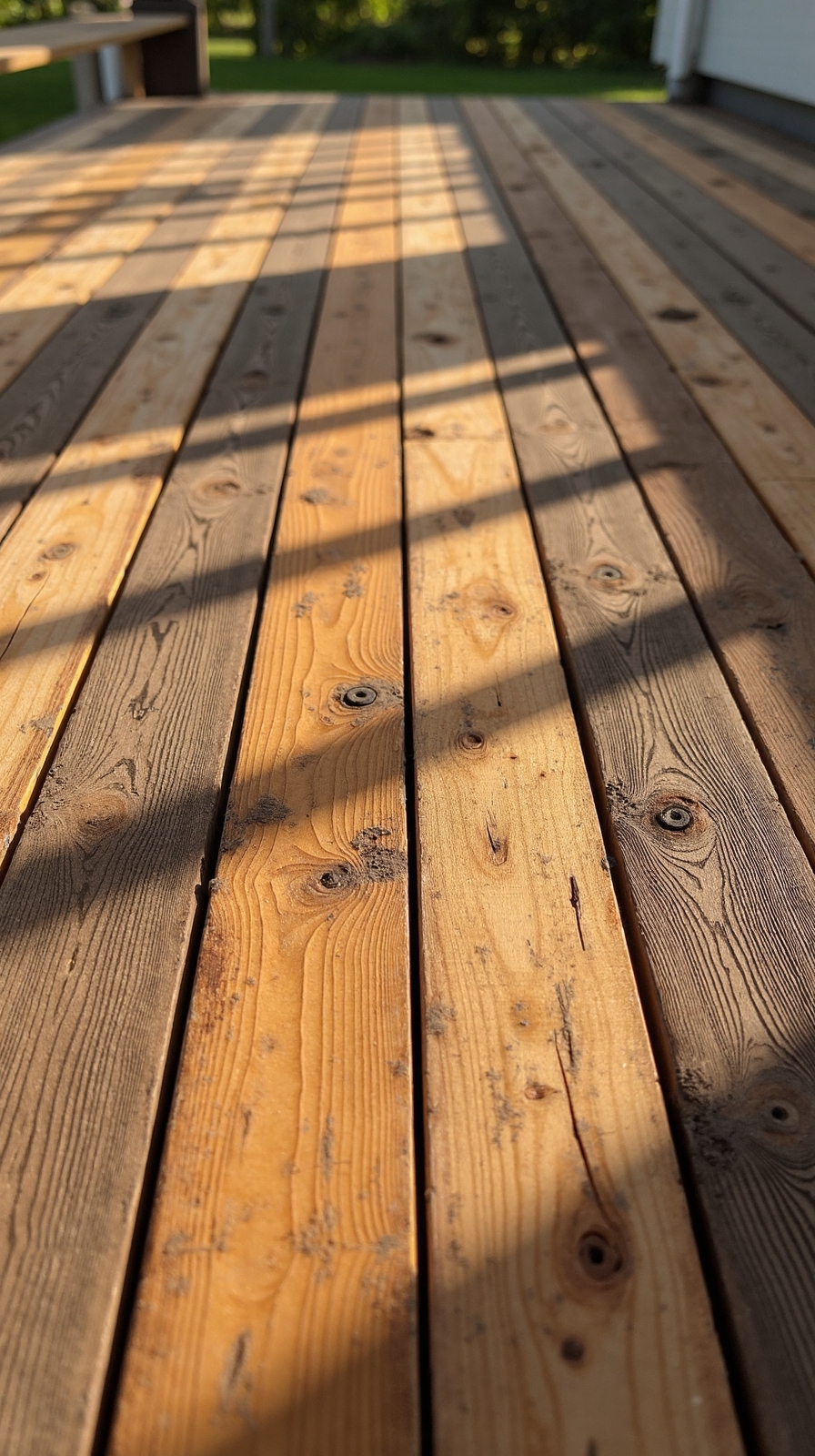
Reclaimed barn wood revitalizes your patio into a rustic magnum opus that conveys narratives through weathered textures and rich patina. You’ll uncover each plank carries decades of character that manufactured materials can’t replicate.
Start your barn wood installation by checking moisture levels below 15% to prevent warping. Space boards with quarter-inch gaps for natural expansion and drainage. Pre-drill holes to avoid splitting these aged treasures.
Apply a clear reclaimed wood finish that preserves the authentic weathered appearance while providing UV protection. This coating enhances grain patterns without masking the wood’s natural imperfections that make your patio uniquely yours. For budget-conscious homeowners, pallet furniture offers another affordable alternative that delivers similar rustic charm without the premium cost of barn wood.
Design a Circular Wood Patio With Radiating Patterns
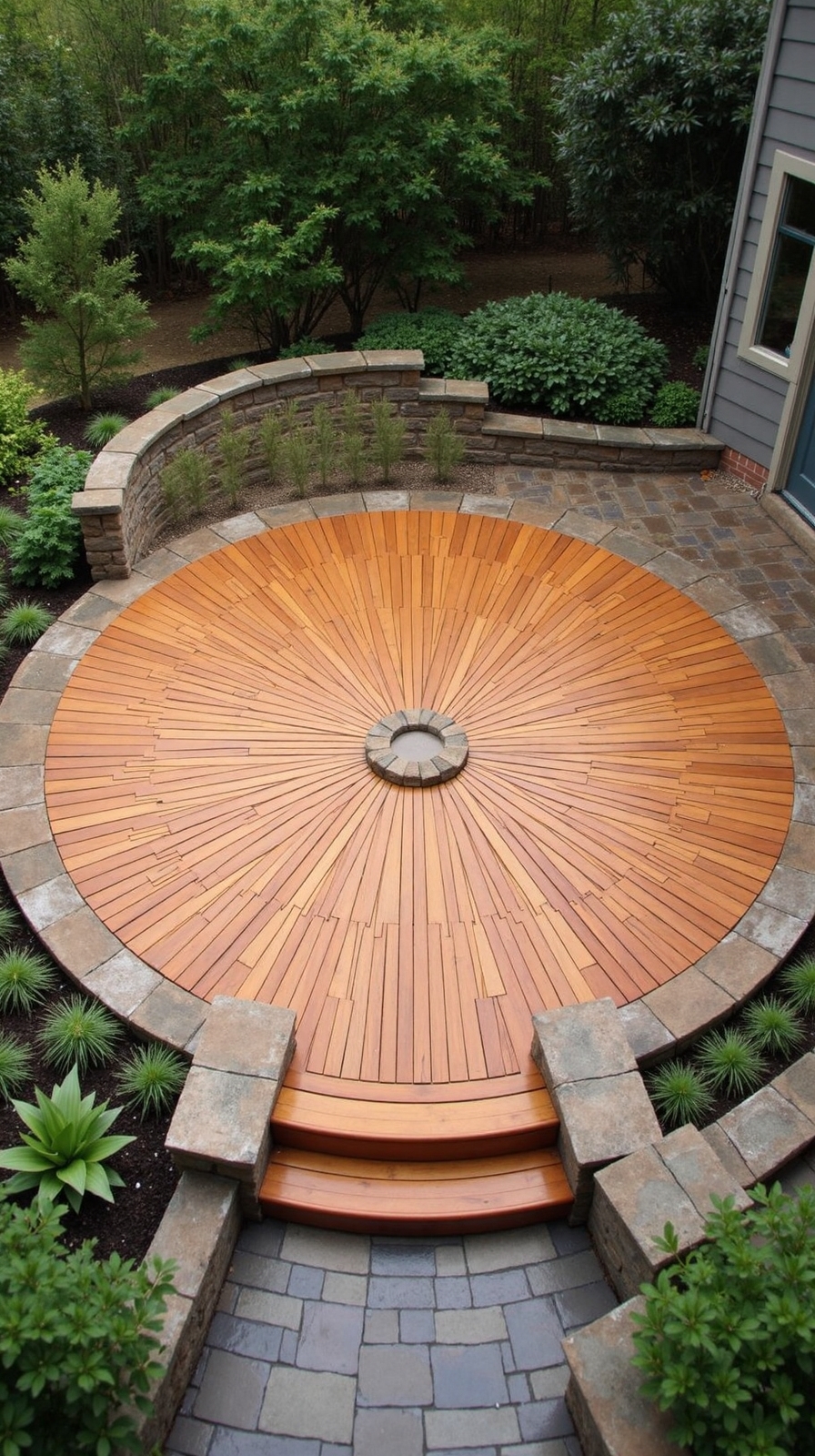
Circular wood patios with radiating patterns create stunning focal points that remodel ordinary outdoor spaces into architectural masterpieces. Your circular patio configuration starts from a central point, with boards extending outward like sunbeams. This radiant wood patio layout demands precise measurements and careful planning for seamless shifts between rings.
Choose contrasting wood species to emphasize the radiating design—alternate between light cedar and dark walnut strips. Cut boards at precise angles using a miter saw, ensuring each piece fits perfectly within its designated section. Install temporary guide strings from the center point to maintain consistent spacing throughout construction. The curved design naturally softens the harsh angles often found in traditional rectangular outdoor spaces.
Construct a Wraparound Wooden Deck
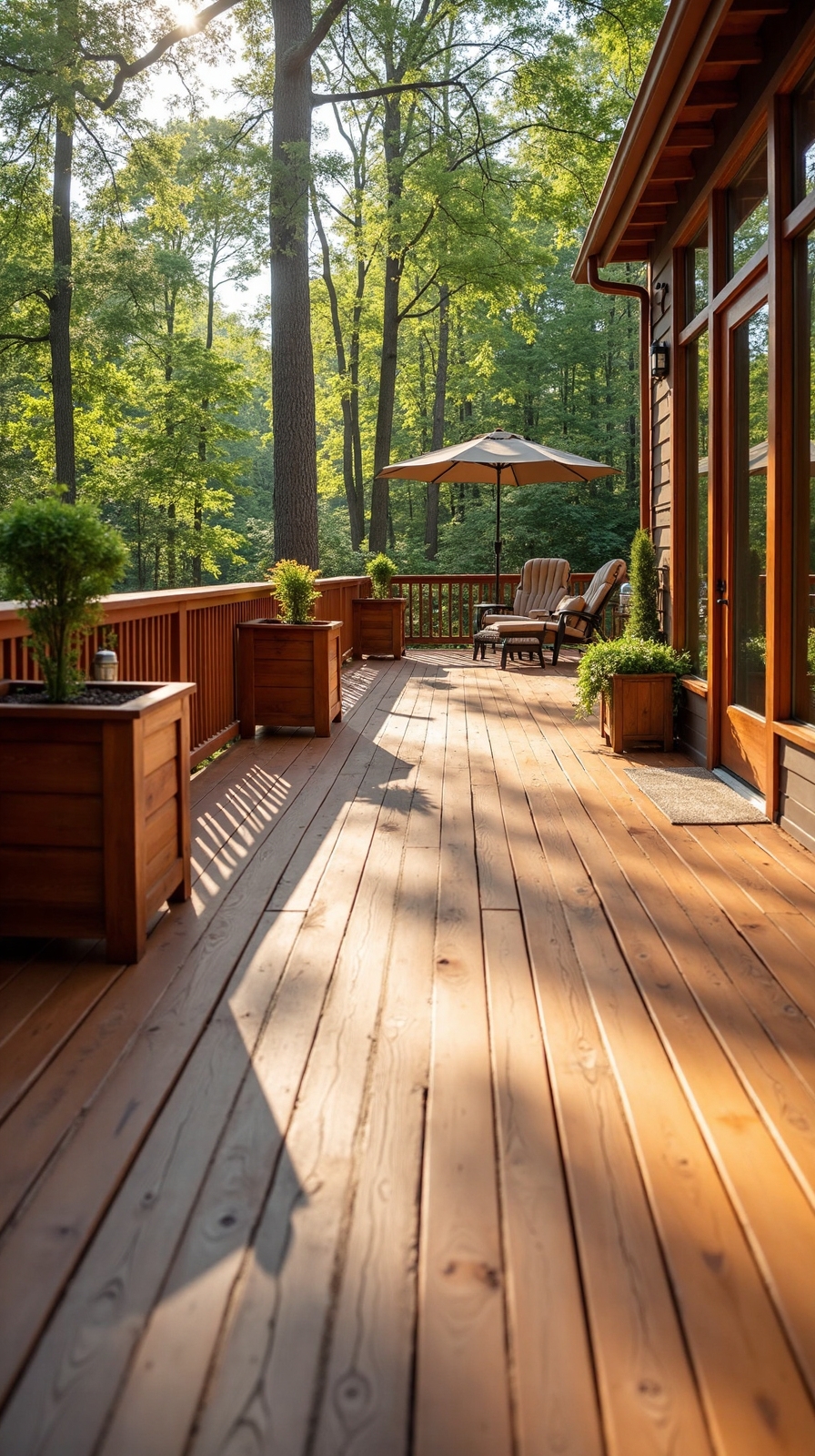
Because wraparound wooden decks maximize your home’s outdoor living space, they convert multiple sides of your house into connected entertainment areas. You’ll create seamless shifts between indoor and outdoor living while enjoying panoramic views from every angle.
Start by selecting a foundation that follows your home’s perimeter, ensuring proper structural support at each corner. Employ weather resistant wood species like cedar or composite materials that’ll withstand seasonal changes without constant maintenance.
Design multiple access points from different rooms to enhance flow and functionality. Consider incorporating stone accents alongside your wood decking to create visual interest and complement other patio flooring materials. Incorporate custom patio lighting along railings and steps to extend usability into evening hours while creating ambient warmth.
Add Vertical Wood Slat Privacy Screens
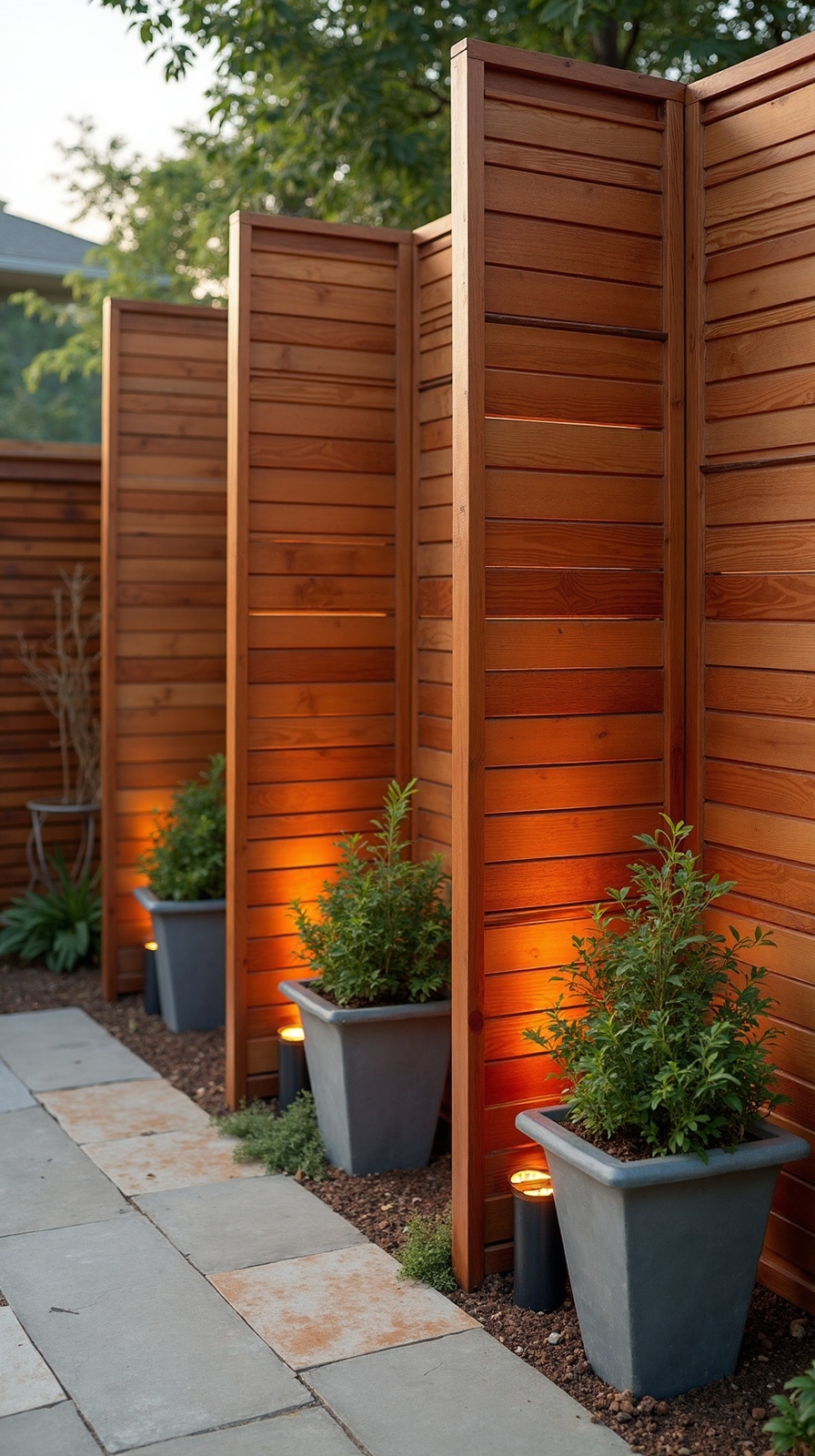
Vertical wood slat privacy screens alter your patio into a secluded retreat while maintaining an open, airy atmosphere that won’t feel cramped or enclosed. You’ll create natural boundaries without sacrificing light or airflow through your outdoor space.
Add textured wood panels in varying heights to establish visual interest and define separate activity zones. Cedar and redwood resist weather naturally while developing beautiful patina over time.
Incorporate lattice wood screens for partial privacy that allows gentle breezes to flow through. These screens effectively enhance privacy while maintaining the connection to your surrounding landscape.
Install screens strategically around seating areas, hot tubs, or dining spaces where you desire enhanced privacy without complete isolation from your surroundings.
Create Built-In Wooden Bench Seating
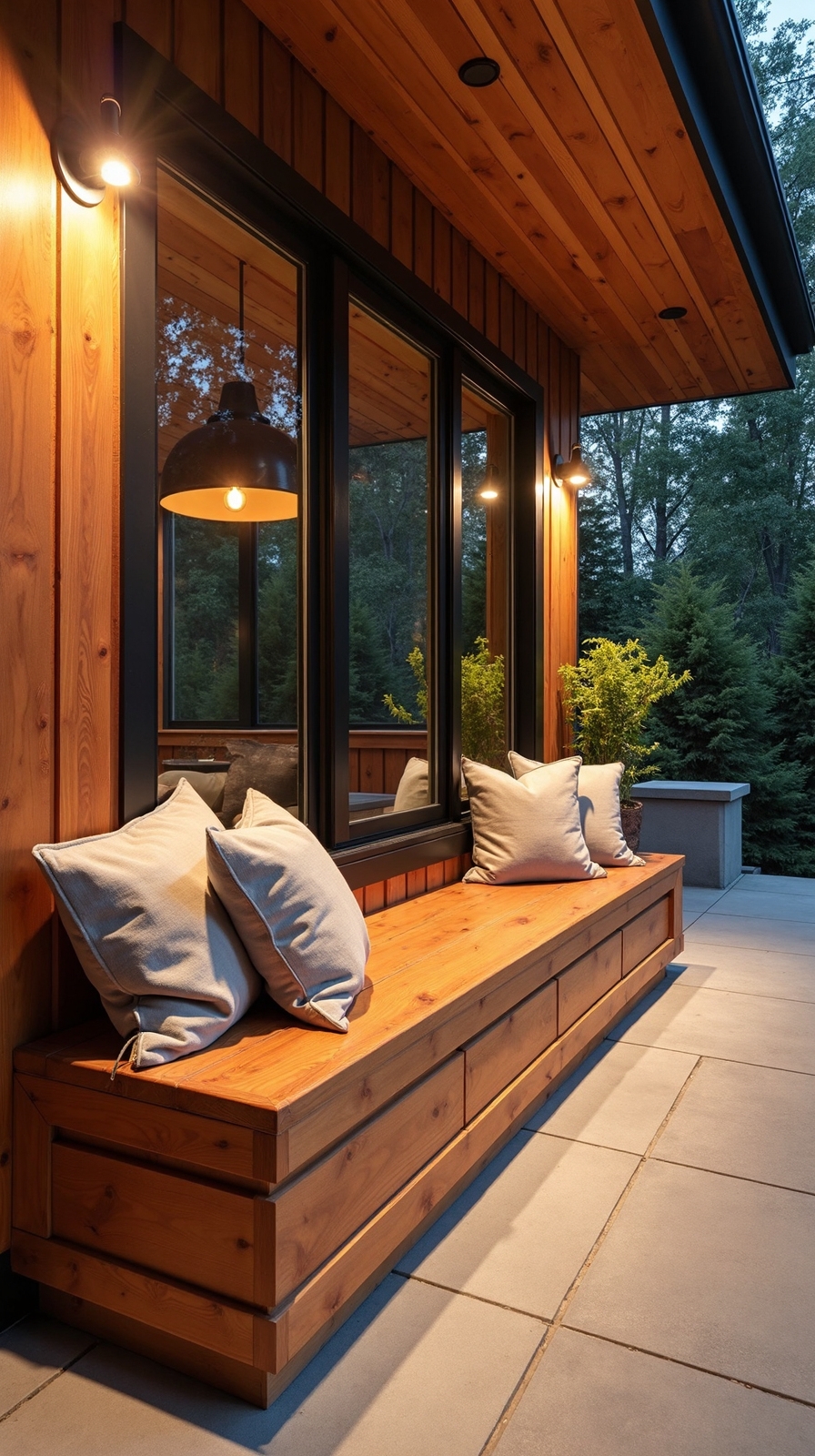
Built-in wooden bench seating alters your patio into a functional gathering space while maximizing your outdoor square footage through smart design integration. You’ll create intimate conversation areas that flow naturally with your existing terrain without purchasing separate furniture pieces.
Consider installing built in wooden banquette seating along patio perimeters or around fire pits for cozy entertaining zones. Design your custom wood bench with storage underneath to hide cushions, outdoor games, or gardening supplies. Choose weather-resistant cedar or teak for longevity, and add removable cushions for comfort. Strategic placement creates natural traffic flow while defining separate activity areas within your outdoor living space. Incorporate natural stone elements around your wooden benches to enhance the rustic appeal and create visual contrast with the warm wood tones.
Install a Wood-Framed Pergola Overhead
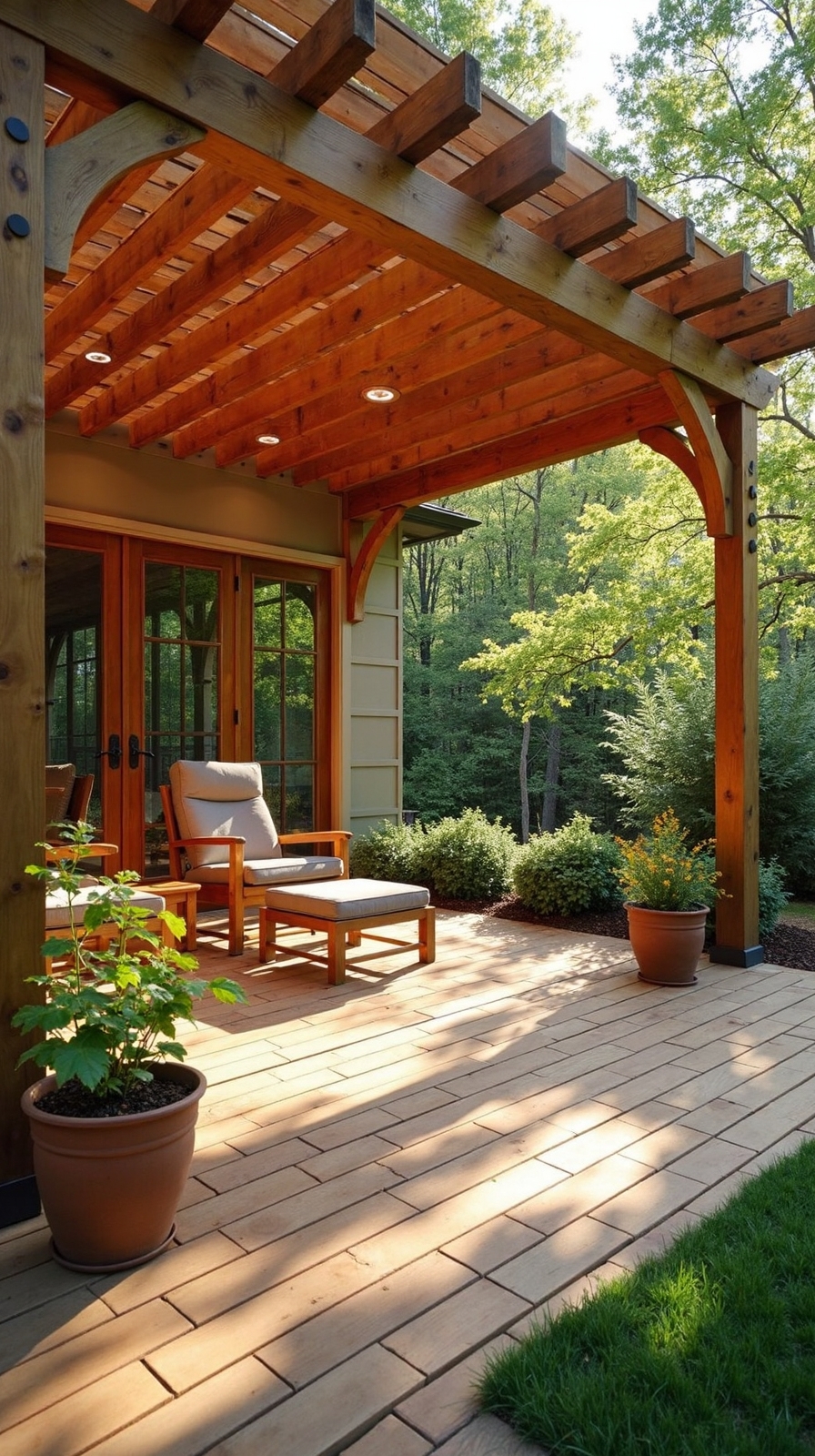
A wood-framed pergola modifies your patio into a stylish outdoor room while providing essential shade and structural appeal above your seating areas. Consider overhead shade structures that complement your existing wooden benches and deck materials for seamless design flow.
Cedar and redwood offer natural weather resistance, while pressure-treated pine provides budget-friendly durability. These pergola designs bring architectural beauty to your outdoor space while delivering the practical shade coverage you need. Incorporate integrated lighting features like string lights or recessed LED strips along the pergola beams to extend your outdoor enjoyment into evening hours.
You’ll create defined spaces that feel both open and intimate, converting your patio into a year-round retreat that perfectly balances shelter with sky.
Design Wooden Planter Boxes as Borders
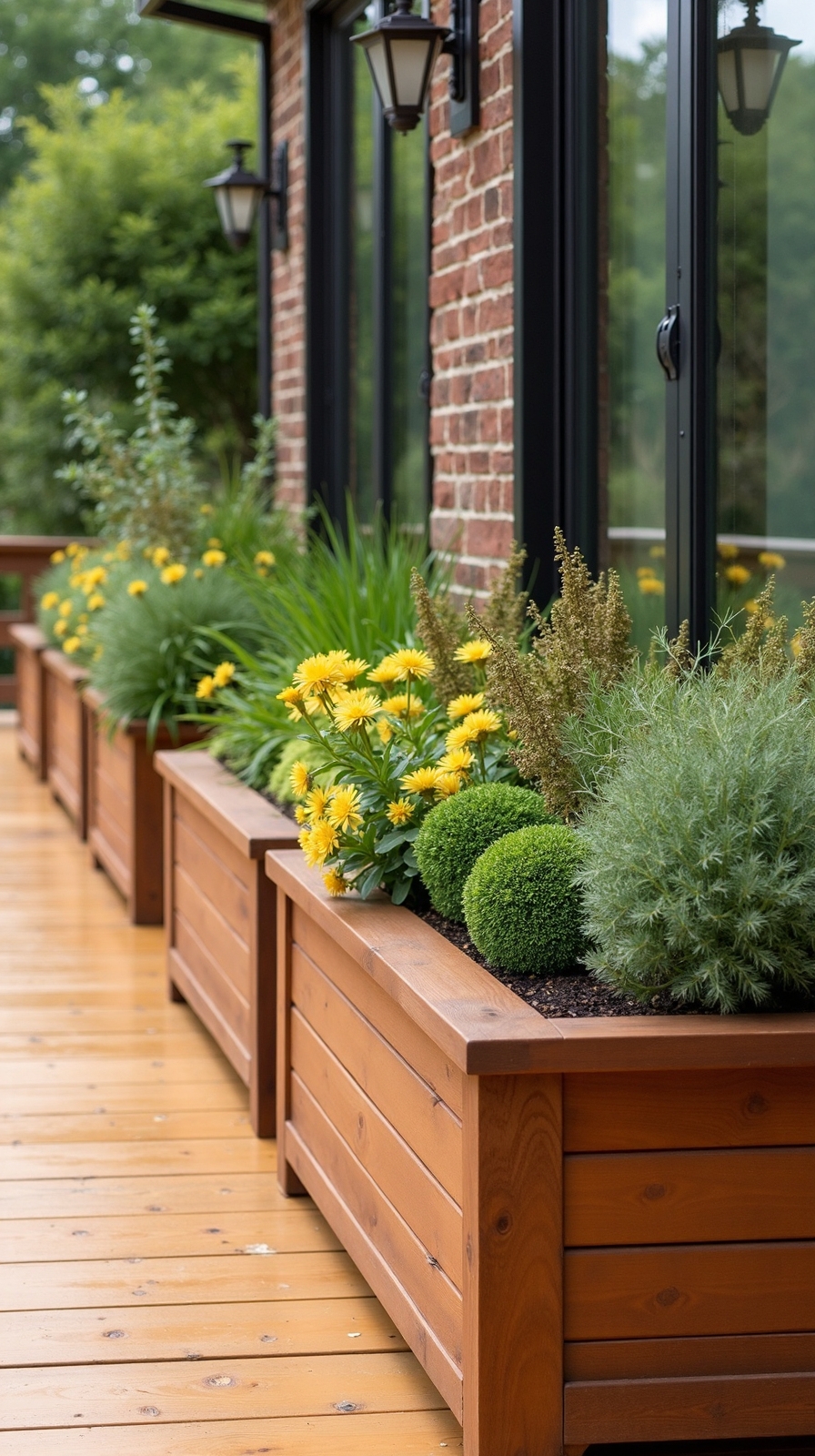
Strategic wooden planter boxes create natural boundaries that define your patio spaces while adding layers of greenery and visual interest to your outdoor design.
You can employ wooden crates as instant planters by drilling drainage holes and lining them with landscape fabric. These portable options let you rearrange your space seasonally.
Incorporate raised garden beds along patio edges using cedar or redwood boards for lasting durability. Fill them with aromatic herbs, colorful flowers, or cascading plants that soften hard edges.
Position planters at varying heights to create changeable visual flow while maintaining your outdoor space’s flexible, unrestricted feel.
Build a Sunken Wood Patio Lounge Area
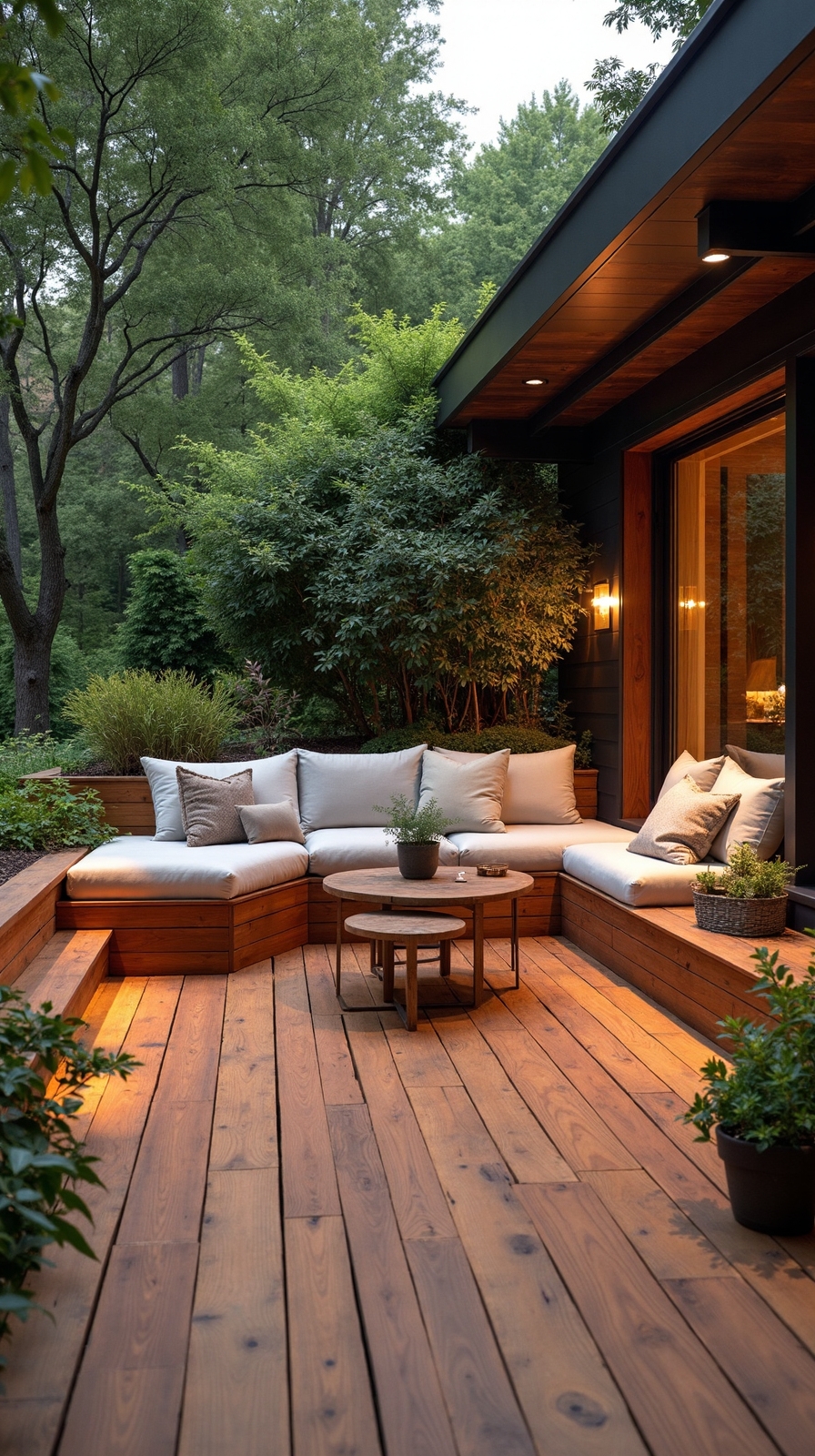
Why settle for ground-level seating when you can create a dramatically intimate outdoor retreat by excavating and building downward? Sunken patio seating alters your outdoor space into a cozy conversation pit that naturally draws people together.
Start by digging 18-24 inches deep, then frame with pressure-treated lumber for stability. Install built-in wooden benches around the perimeter, incorporating integrated storage features beneath the seats for cushions and outdoor essentials. Add steps with wide treads for easy access.
This design creates natural windbreak protection while establishing distinct zones that feel separate from your main yard area.
Add Wooden Steps and Tiered Levels
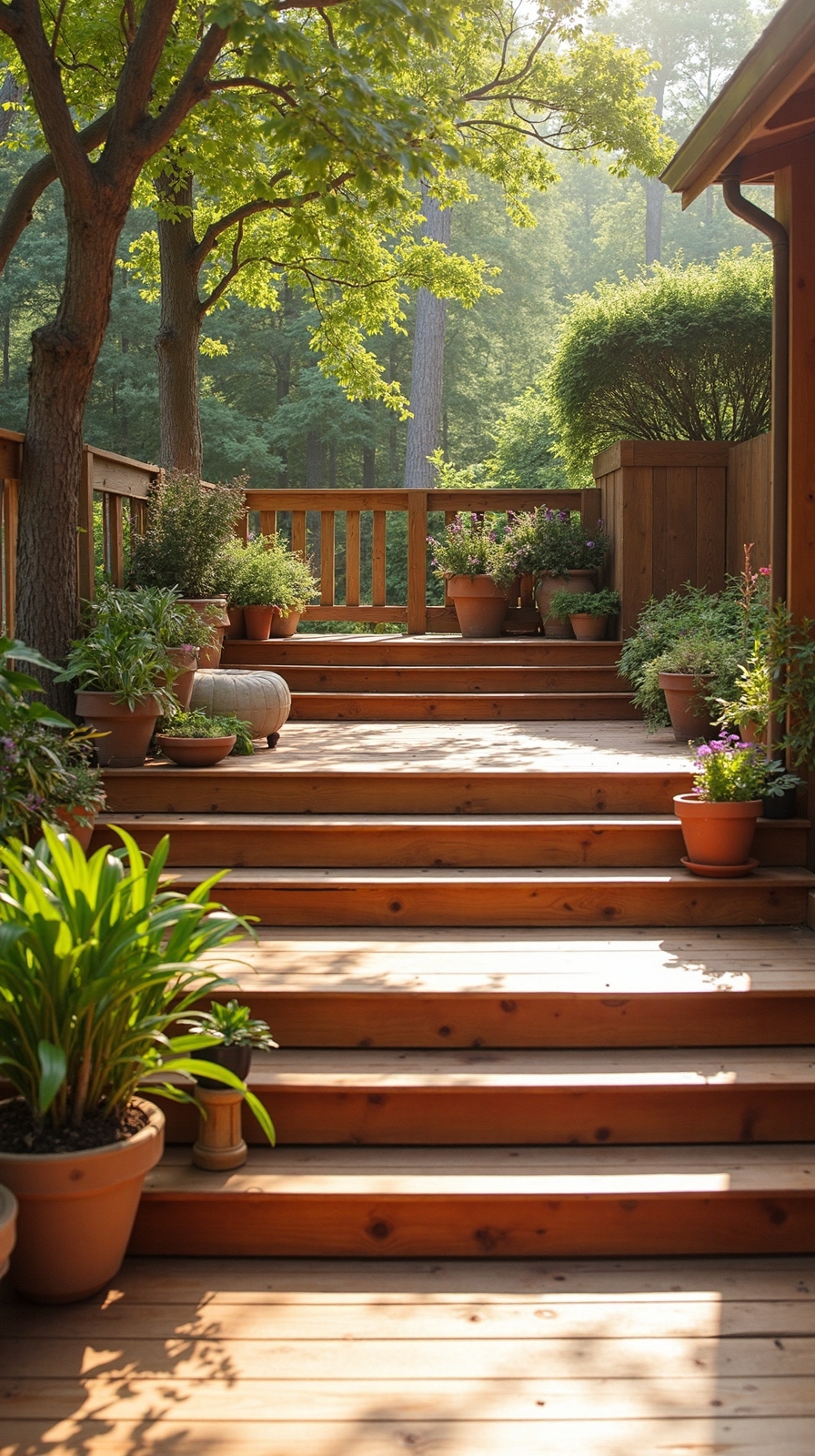
Building on excavation techniques, wooden steps and tiered levels alter flat outdoor spaces into ever-shifting environments with distinct functional zones. You’ll create visual depth while maximizing your yard’s potential through strategic elevation changes.
Design wood steps with landing areas that serve as natural gathering spots between levels. These platforms provide rest points and separate entertaining spaces from quiet retreat zones. Consider tiered levels with ramps for accessibility, ensuring everyone can traverse your outdoor sanctuary comfortably.
Start with two-inch pressure-treated lumber for durability, then add composite decking for low maintenance. You’ll convert boring landscapes into fluid retreats that invite exploration and conversation.
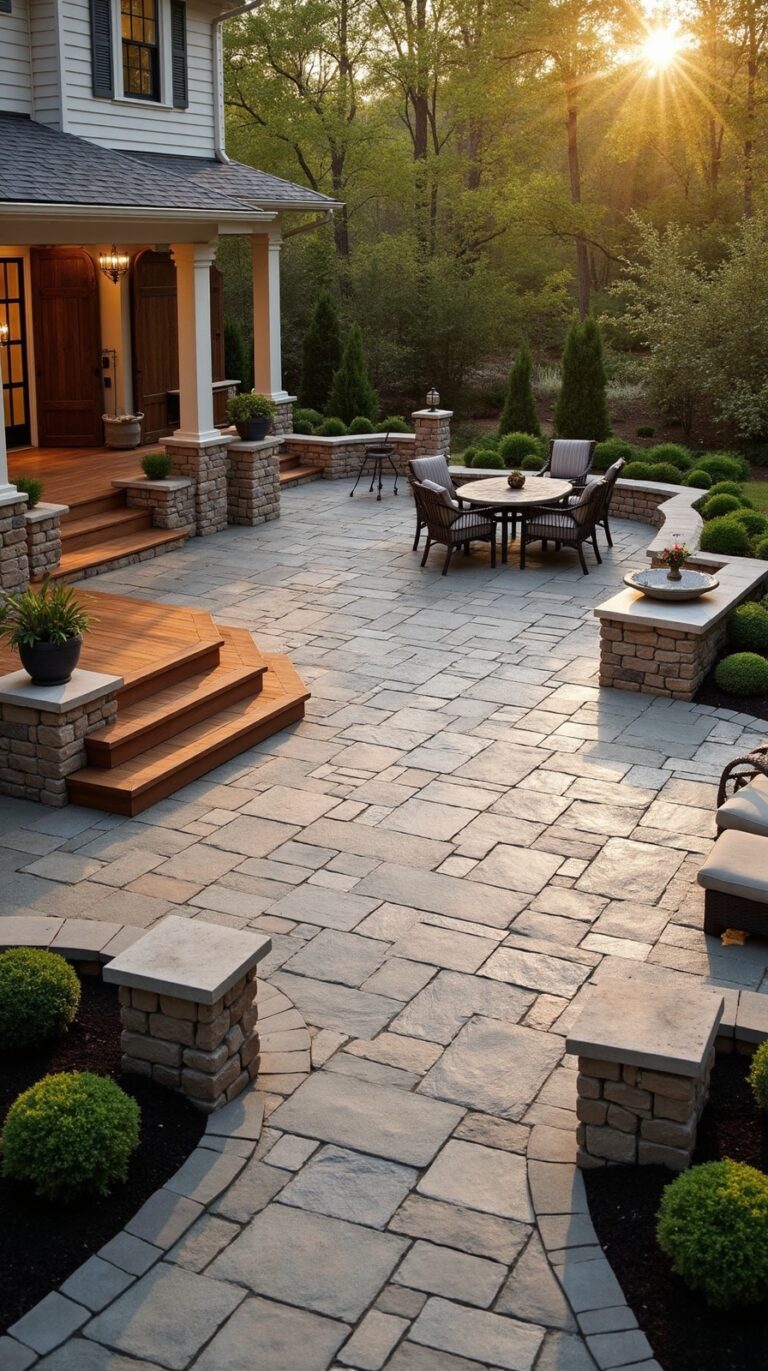
Create a Wood and Stone Combination Patio
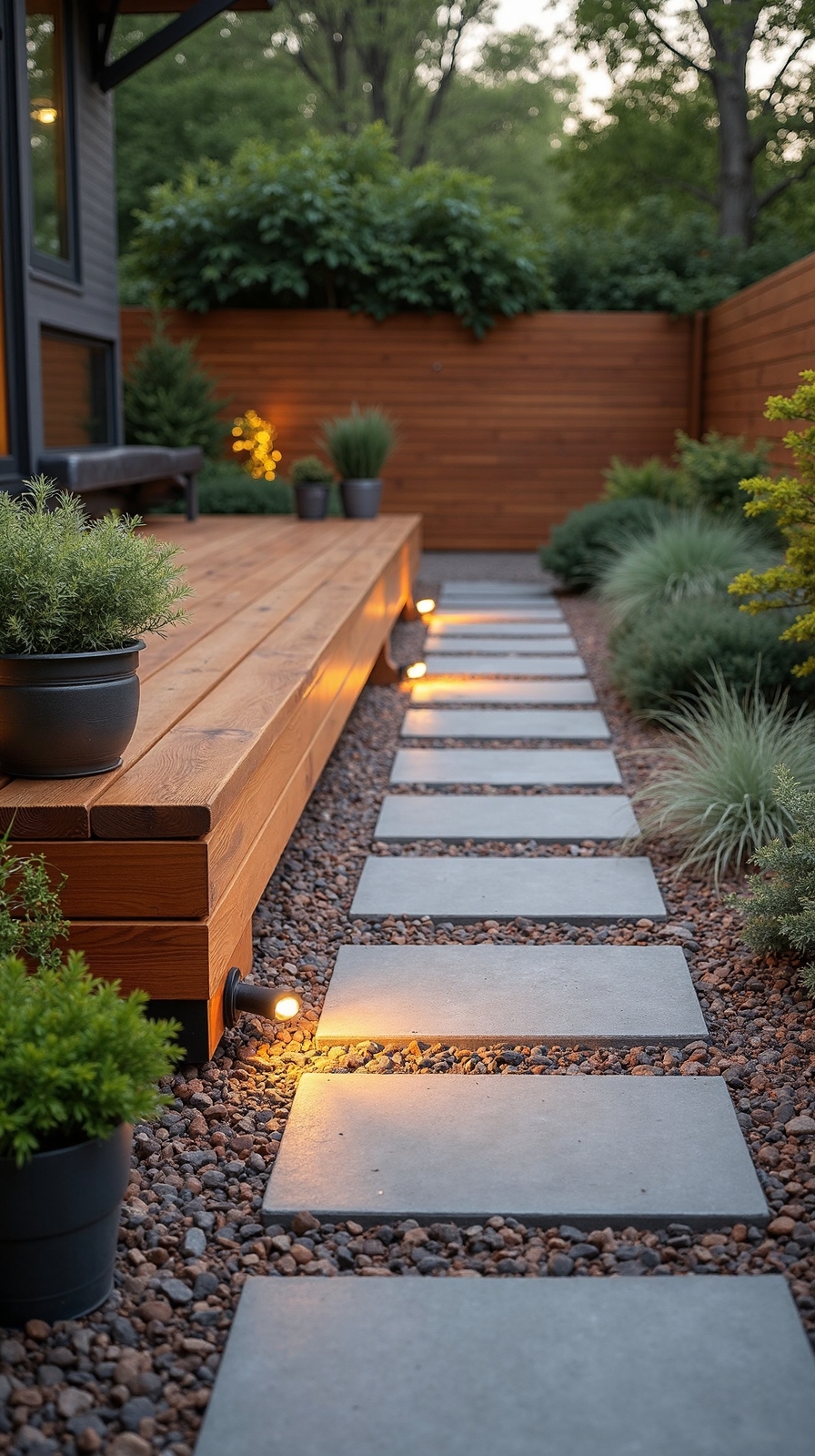
When you combine wood and stone materials, you’ll achieve the perfect balance between natural warmth and timeless durability in your patio design. This versatile approach gives you creative freedom to express your unique style preferences.
Start by choosing your foundation material, then incorporate stone pavers around wooden deck sections or create defined pathways between seating areas. You’ll blend wood and stone textures by alternating materials in geometric patterns or organic flowing designs.
Consider using flagstone borders around cedar decking, or integrate river rock accents between wooden planks for visual interest and enhanced drainage capabilities.
Install Diagonal Wood Decking Patterns
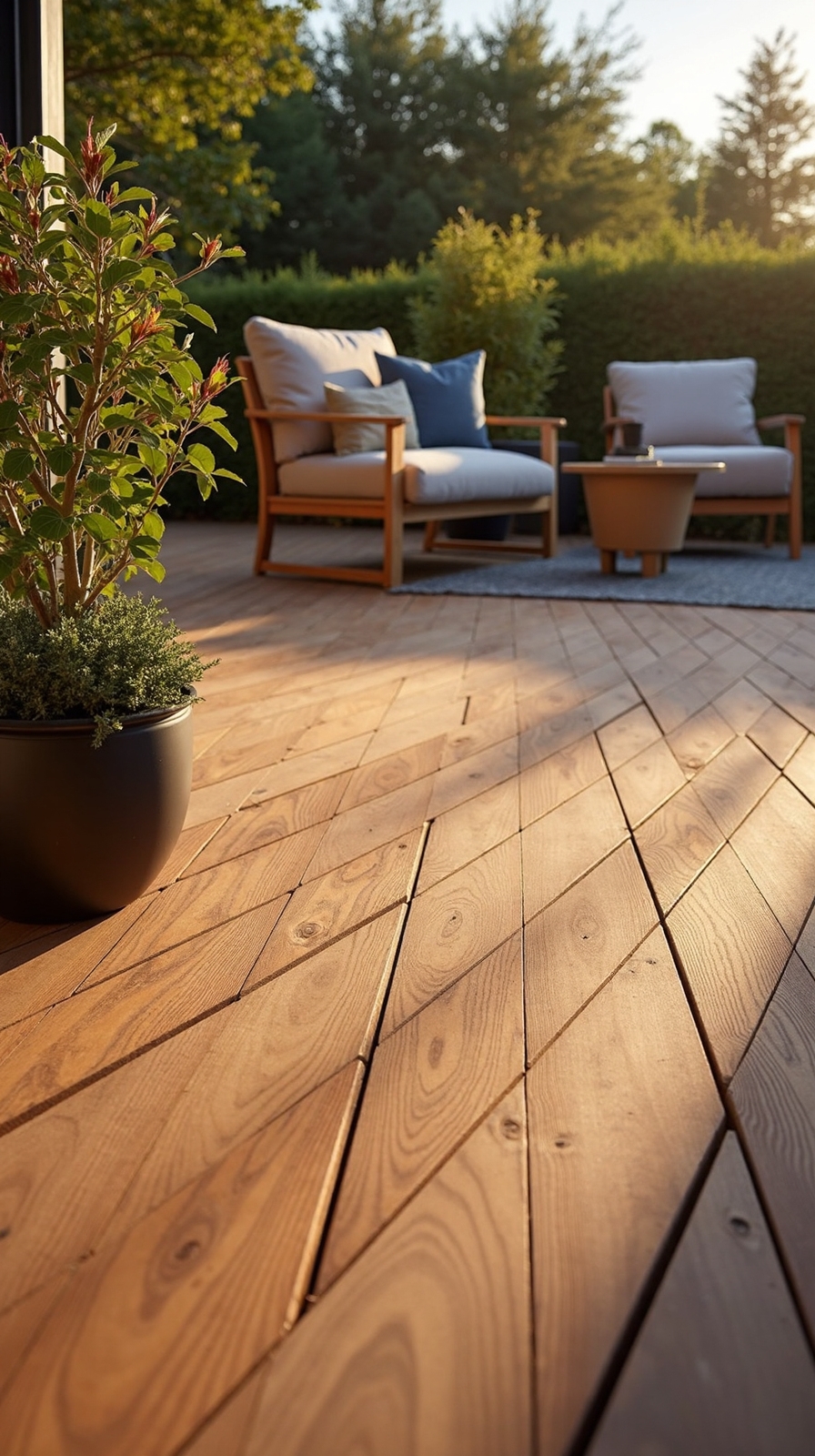
Diagonal wood decking patterns convert ordinary patios into visually striking outdoor spaces that draw the eye across expanded sightlines. You’ll create fluid movement by installing boards at 45-degree angles instead of traditional parallel layouts. This diagonal wood pattern layout makes smaller patios appear larger while adding sophisticated architectural interest.
Start by marking your centerline, then work outward using staggered decking board placement. You’ll need extra material for angled cuts, but the dramatic visual impact justifies the investment. The diagonal installation breaks up monotonous straight lines, giving your patio a custom designer appearance that reflects your desire for unique outdoor freedom.
Conclusion
You’ve unearthed thirteen stunning ways to metamorphose your outdoor space with warm wood patio designs. Whether you choose premium teak, rustic cedar, or reclaimed barn wood, these versatile options offer endless customization possibilities. From floating decks to sunken lounges, each design brings natural warmth and timeless appeal to your backyard. Start planning your wood patio project today and create an inviting outdoor retreat that’ll provide years of comfortable entertaining.