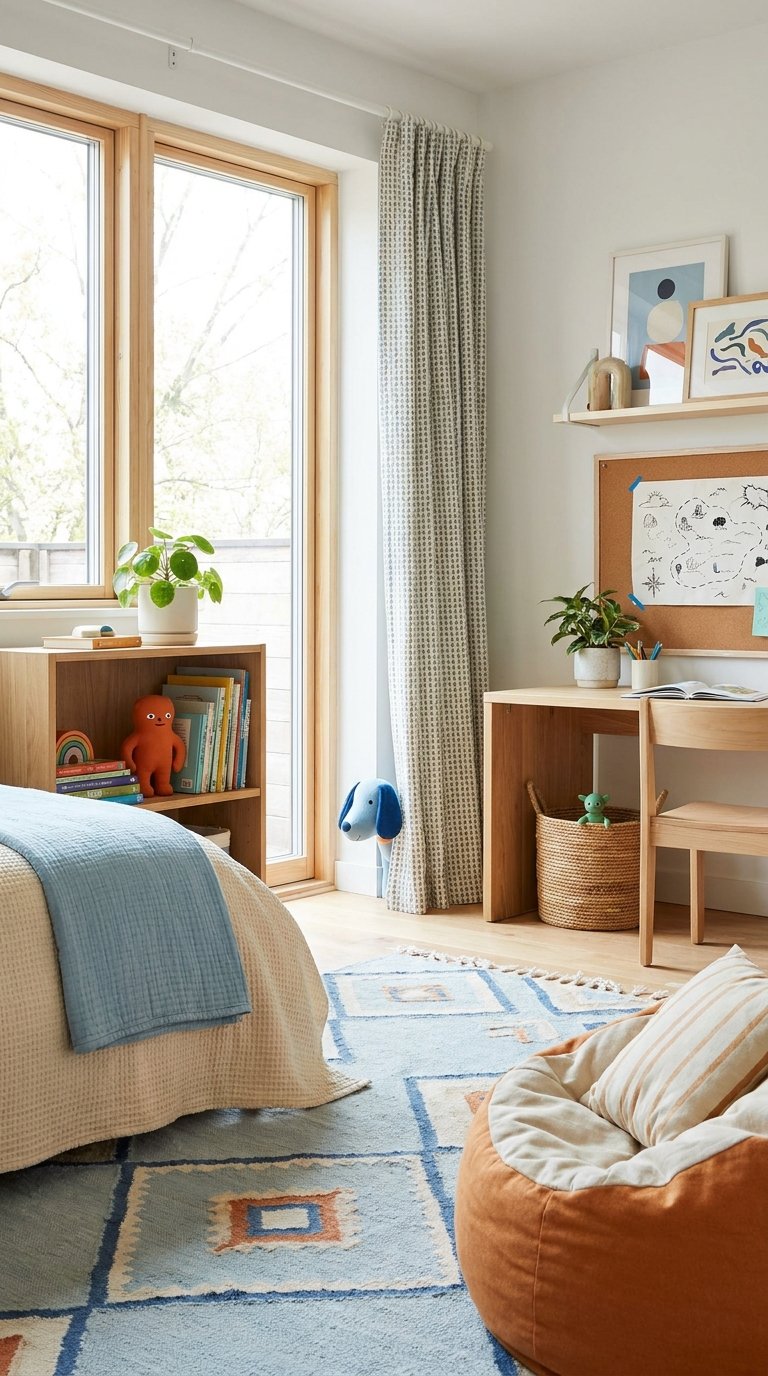
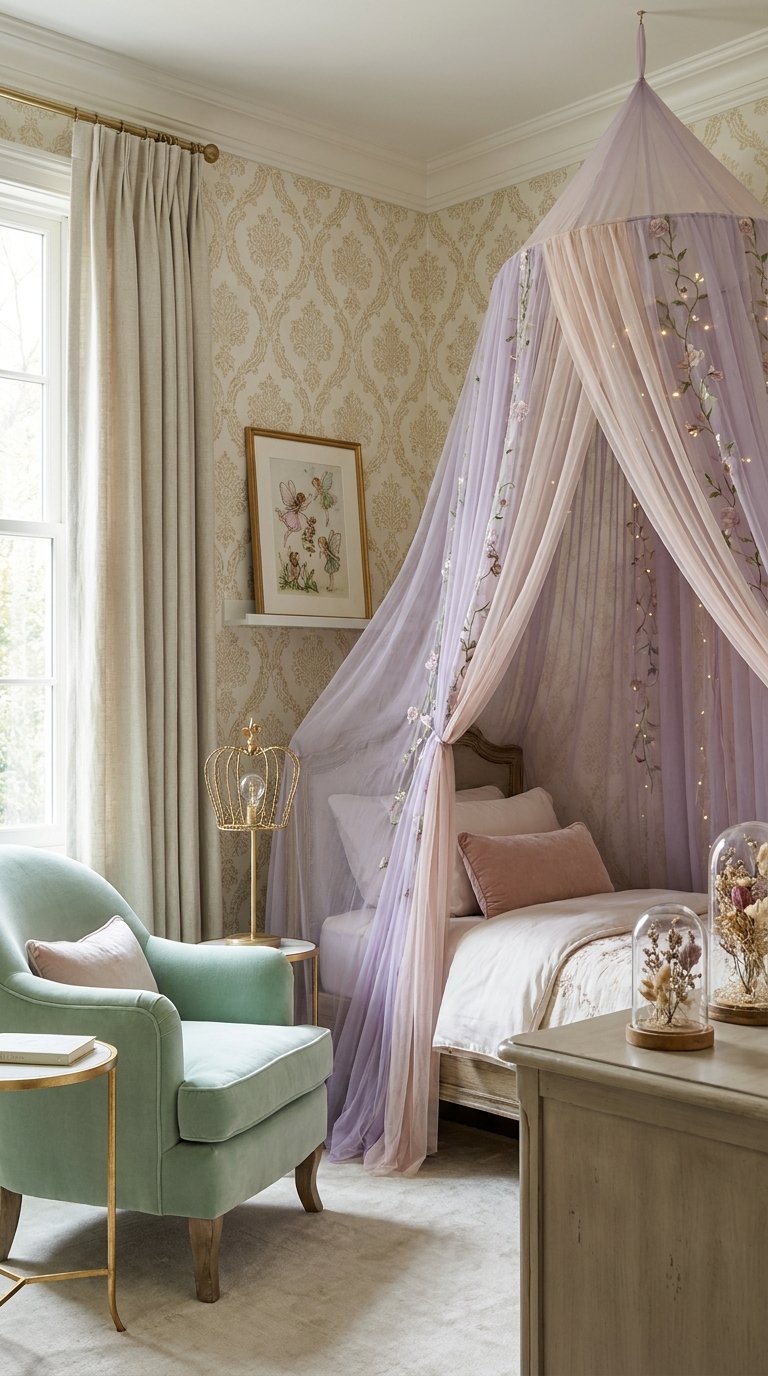
10 Bedroom Ideas for 2 Kids That Balance Fun and Space
Unlock 10 brilliant bedroom solutions that transform cramped shared spaces into functional havens where two kids can thrive without constant territorial disputes.
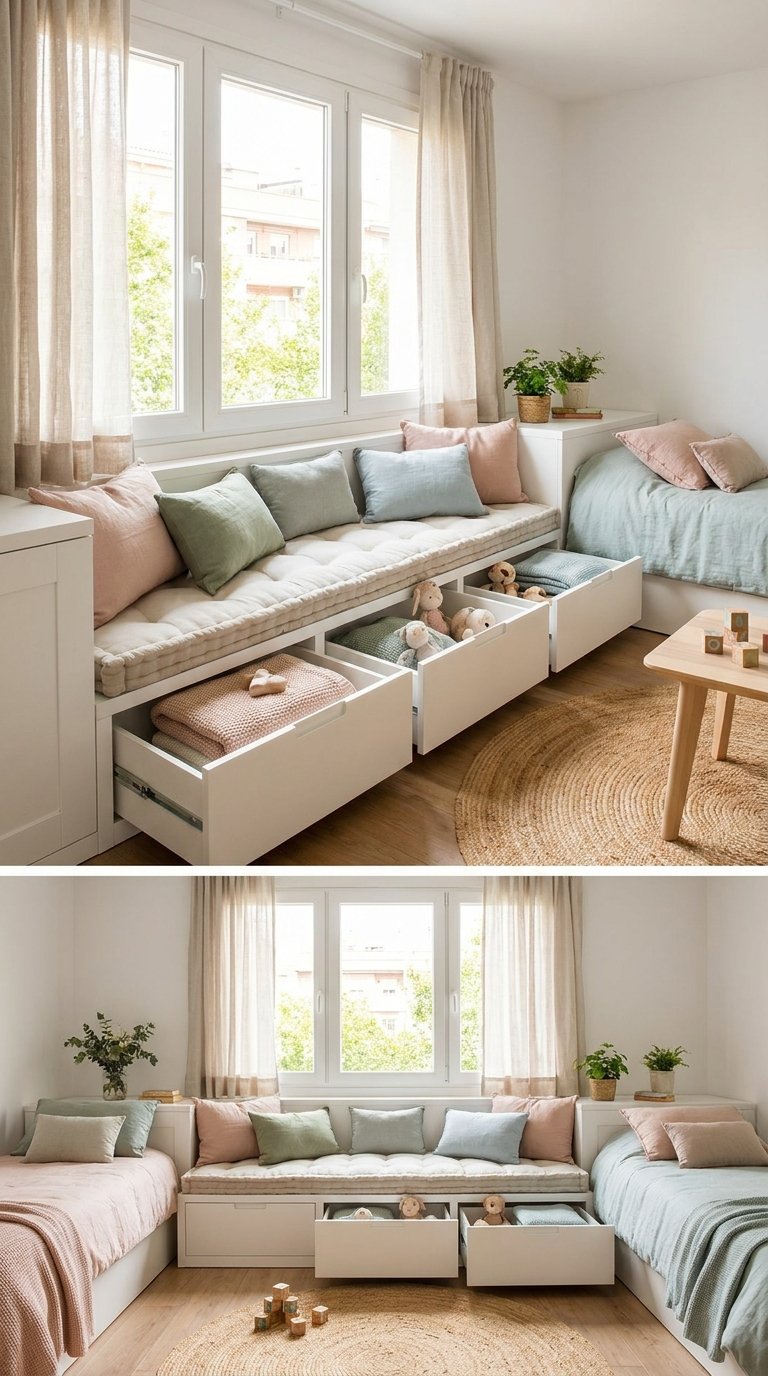
You’re facing the classic challenge of creating a functional bedroom that two kids can actually share without constant battles over space and belongings. The key lies in smart design choices that maximize every square foot while giving each child their own designated areas. From innovative storage solutions that double as play spaces to clever furniture arrangements that adapt as your children grow, these 10 strategic ideas will alter your kids’ shared room into an organized, personalized haven that works for everyone.
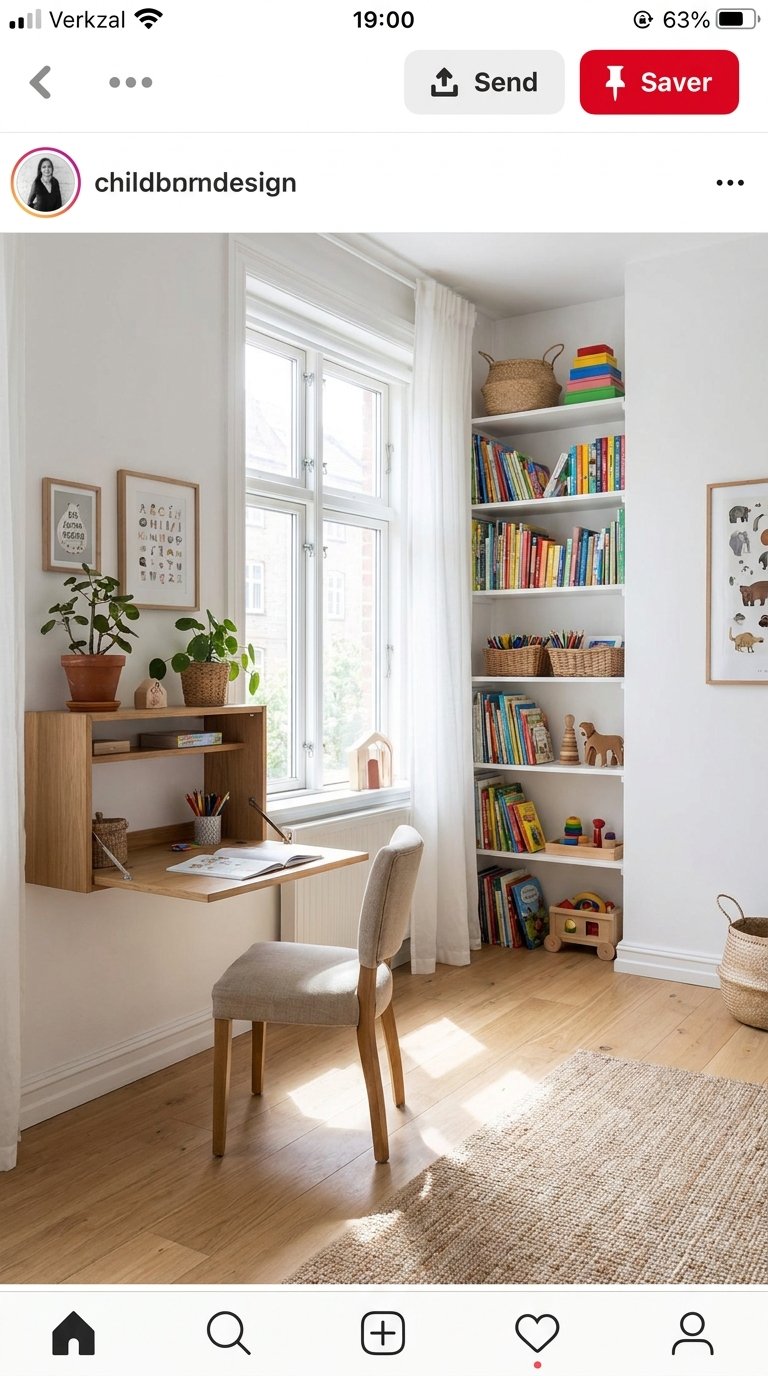
Wall-Mounted Desks to Maximize Floor Space
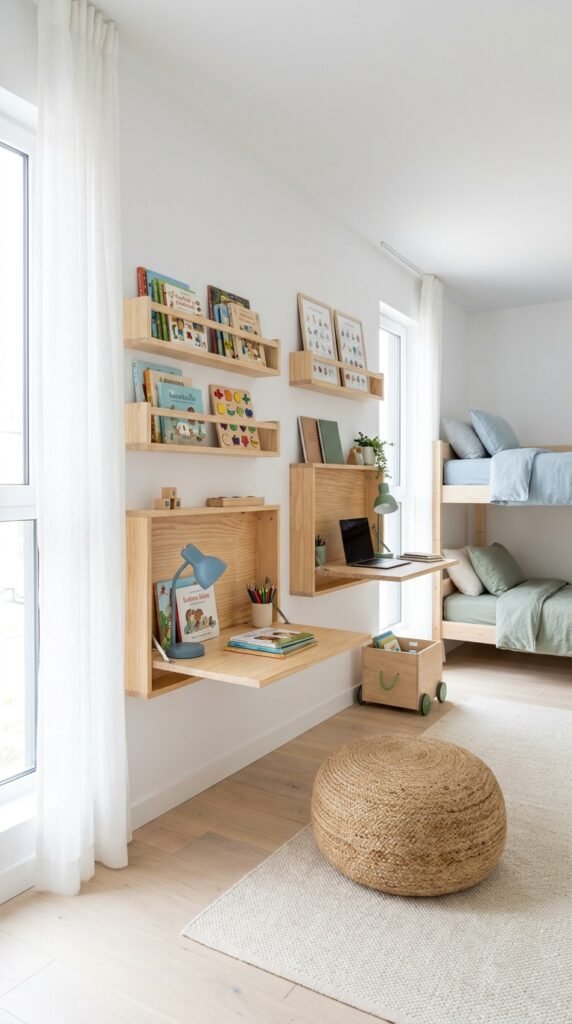
Space-saving solutions become even more critical in shared bedrooms where every square foot counts for play and movement. Wall-mounted desks convert cramped quarters into functional study zones without sacrificing precious floor space your kids need for activities.
Choose fold-down models that disappear completely when not in use, creating instant room for games or exercise. Height adjustable desks accommodate growing children, eliminating the need for frequent furniture replacements as they mature.
Install two separate wall-mounted units at different heights to serve both kids simultaneously. Stand up desks promote better posture and health while studying, and many wall-mounted versions offer this flexibility.
Position desks near windows for natural light, and add floating shelves above for storage. This vertical approach maximizes your room’s potential while giving each child their dedicated workspace.
Themed Rooms That Appeal to Both Children
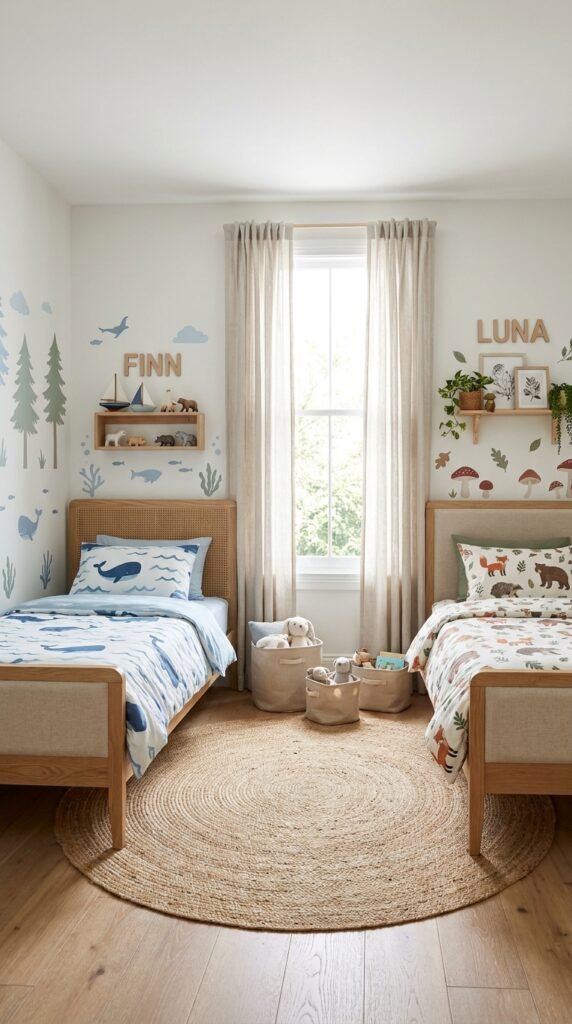
Finding common ground between two different personalities can make or break your shared bedroom design success. You’ll need clever strategies that satisfy both children while creating a cohesive space they’re excited to call home.
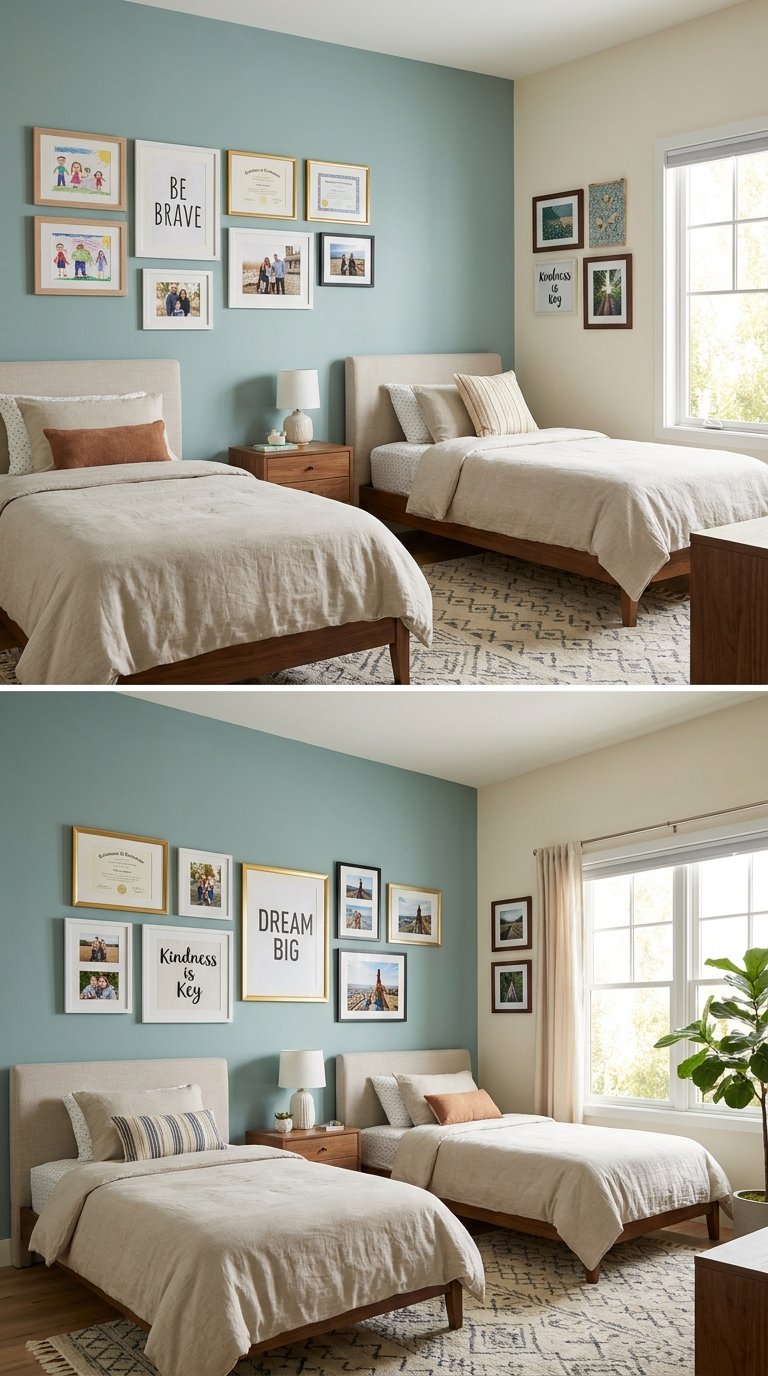
Consider neutral themes with broad appeal like nature, space exploration, or expedition. These allow each child to express individuality within the larger concept. Color schemes should blend their preferences – perhaps combining one child’s love of blue with another’s passion for green into an ocean or forest theme.
Focus on personalized decor that reflects each personality while maintaining unity. Create designated zones where each child can display their treasures, artwork, or collections. Use removable wall decals, custom name signs, or fabric panels that can evolve as their interests change without requiring complete room overhauls.
Room Dividers That Double as Storage Units
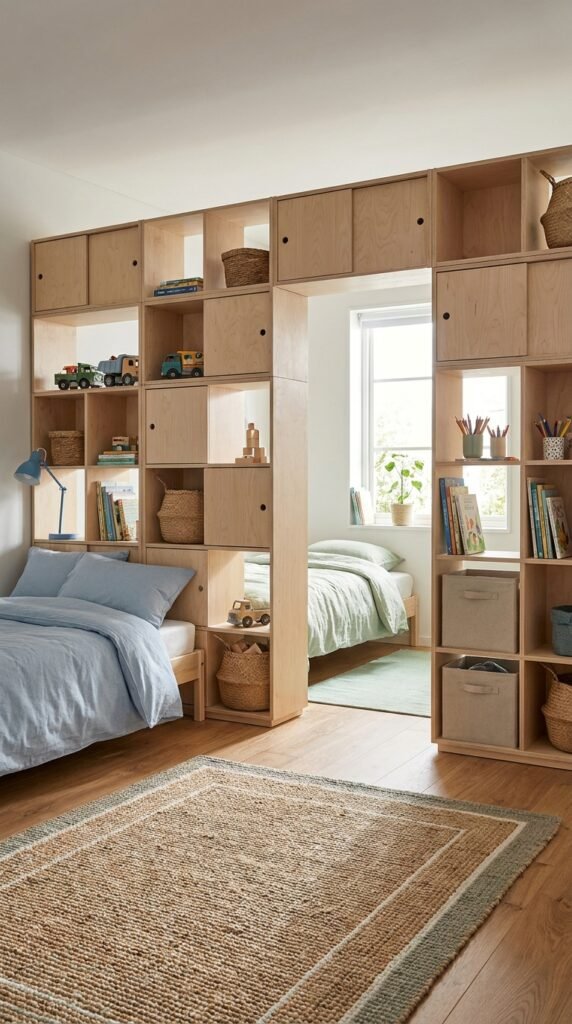
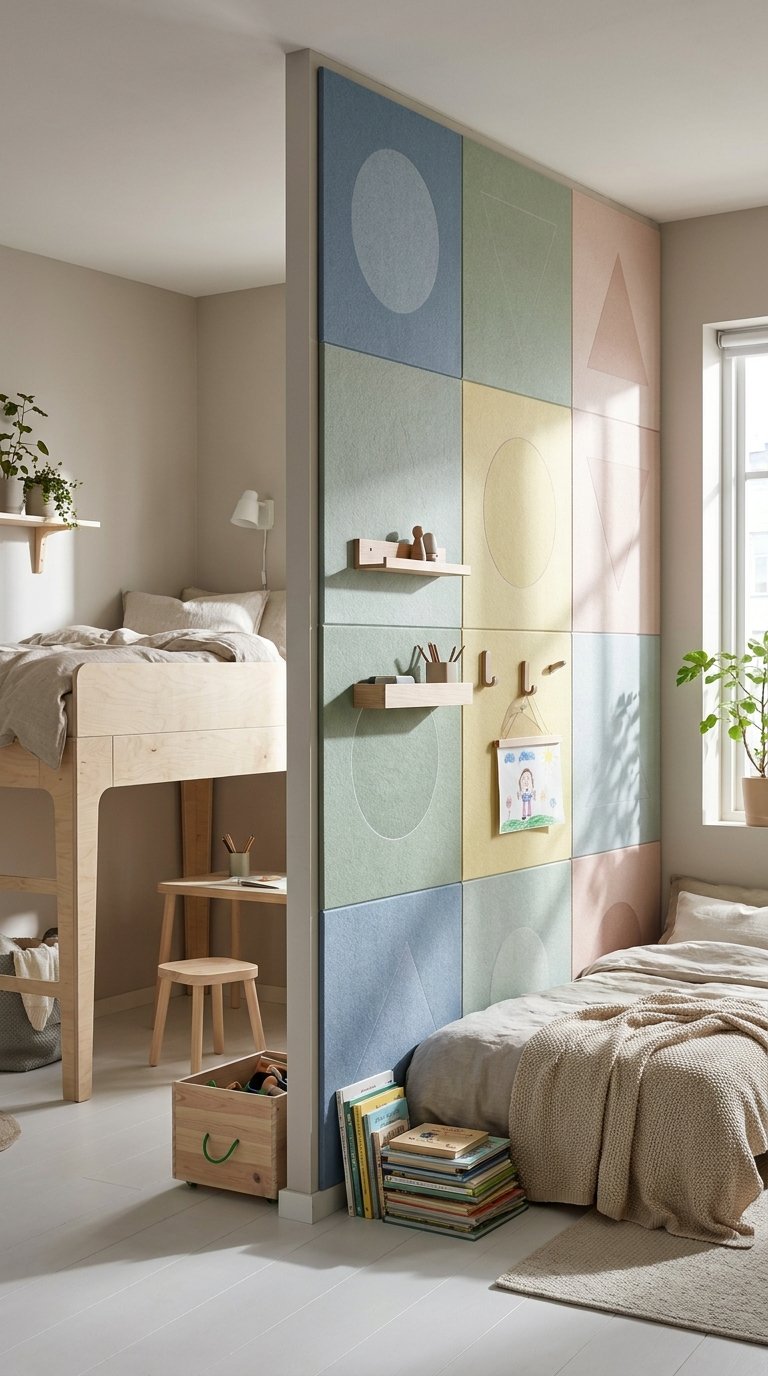
Although traditional room dividers simply separate spaces, modern storage-integrated options convert dead zones into functional organizational powerhouses for shared bedrooms. You’ll find that customizable dividers offer the flexibility to adapt as your children grow and their needs change.
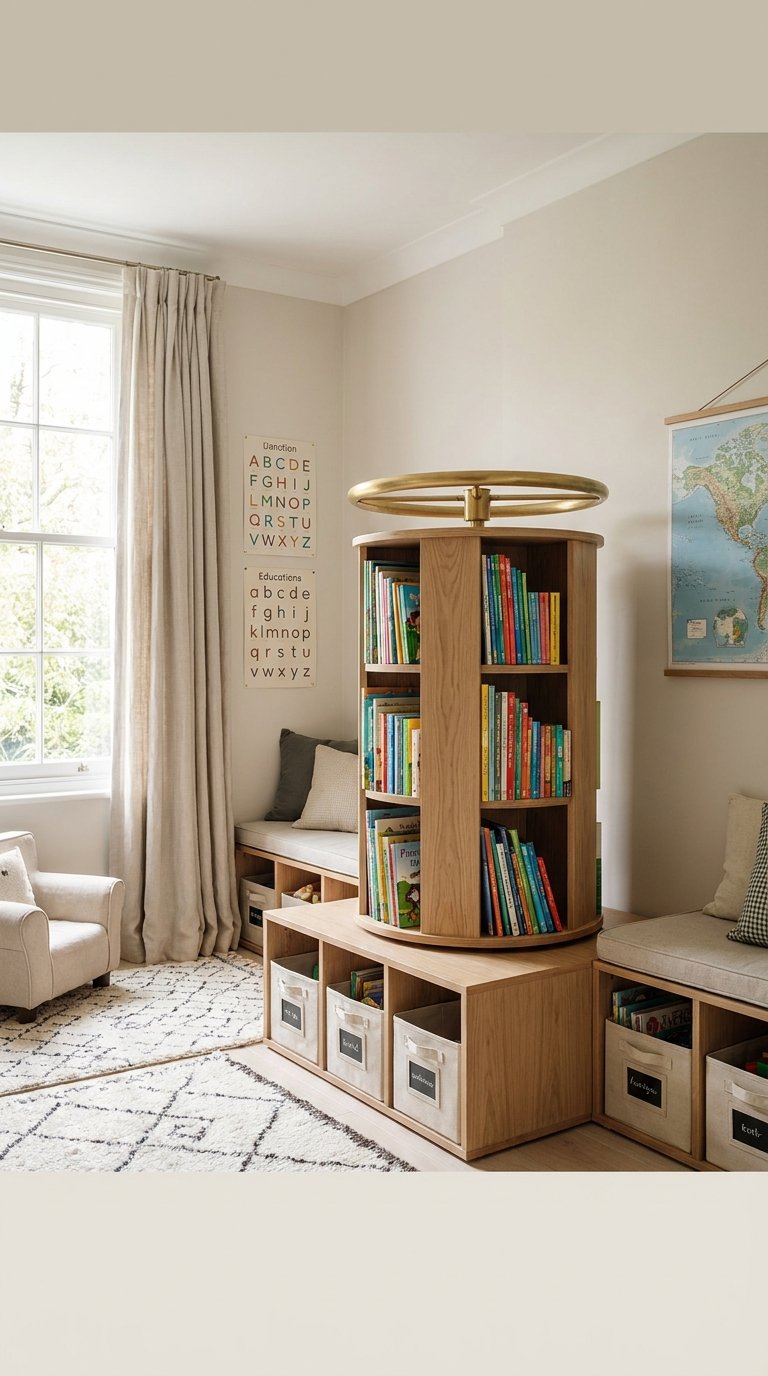
Consider cube storage systems that create distinct areas while housing toys, books, and clothing. You can arrange these modular units in various heights and configurations to match your room’s layout perfectly. Open shelving units work exceptionally well, allowing both children to access shared items while maintaining visual separation.
For maximum efficiency, choose dividers with space saving features like built-in desks, reading nooks, or hanging organizers. Tall bookcases positioned perpendicular to walls create privacy without blocking natural light, while providing ample storage for each child’s belongings.
Under-Bed Drawers for Toy Organization
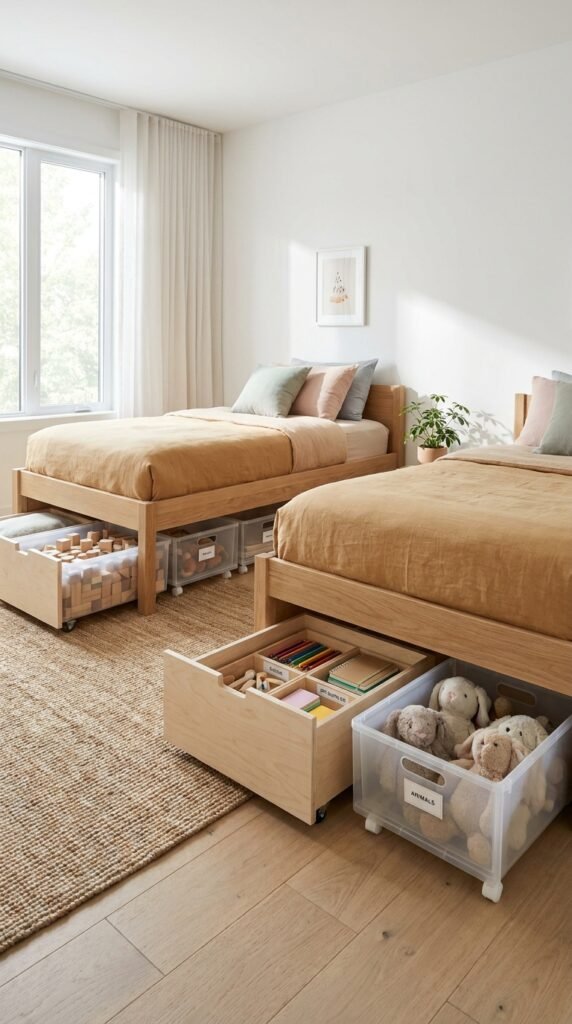
Every square inch counts when you’re organizing a shared bedroom, and the space beneath each bed represents untapped storage potential for conquering toy clutter. Under the bed baskets offer quick access to frequently used items while maintaining visual organization. Choose clear containers so kids can easily identify contents without dumping everything out.
Under the bed rolling containers work exceptionally well for heavier toys like building blocks or art supplies. These wheeled solutions glide smoothly across carpet and hardwood, making cleanup less of a chore. Install labels with imagery and words to help younger children maintain the system independently.
Consider dividing storage by child, assigning specific containers to each kid. This approach eliminates arguments over toys while teaching personal responsibility and ownership of shared spaces.
Floating Shelves for Books and Collectibles
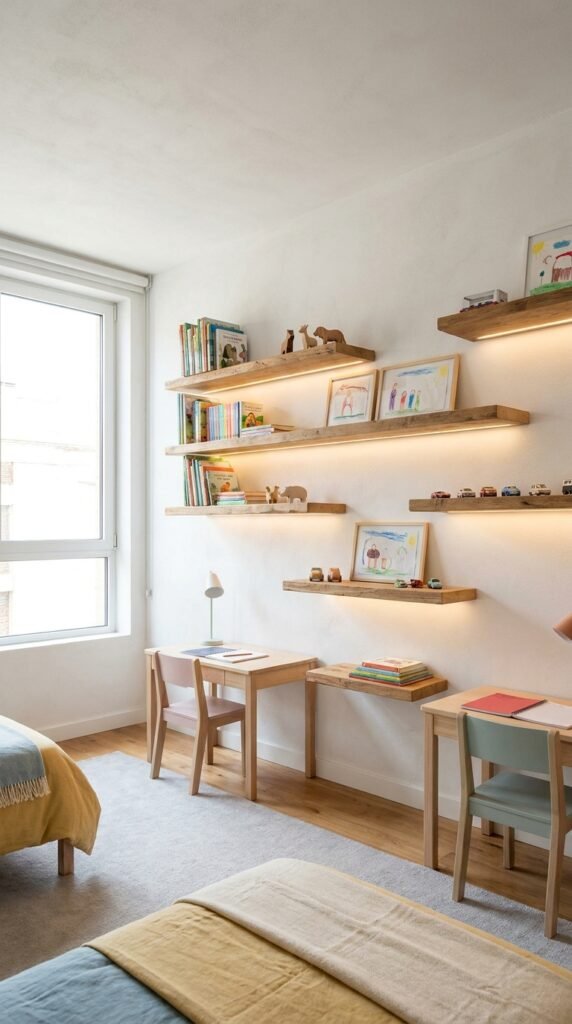
While under-bed storage handles the bulk of toy organization, floating shelves convert wall space into attractive displays for books and treasured collectibles. You’ll maximize vertical space without cluttering floor areas, giving each child designated spots for their favorite items.
Install shelves at different heights to accommodate both kids’ reach and create visual interest. Use custom shelving brackets that match your room’s style, whether modern metal or classic wood finishes.
Place frequently-used books on lower shelves and special collectibles higher up for safety. Add personalized labels beneath each shelf section to help children maintain organization independently.
Consider installing LED strip lighting underneath shelves to highlight displays and provide gentle reading light. This approach alters blank walls into functional storage that celebrates each child’s personality.
Multi-Purpose Ottoman Storage Solutions
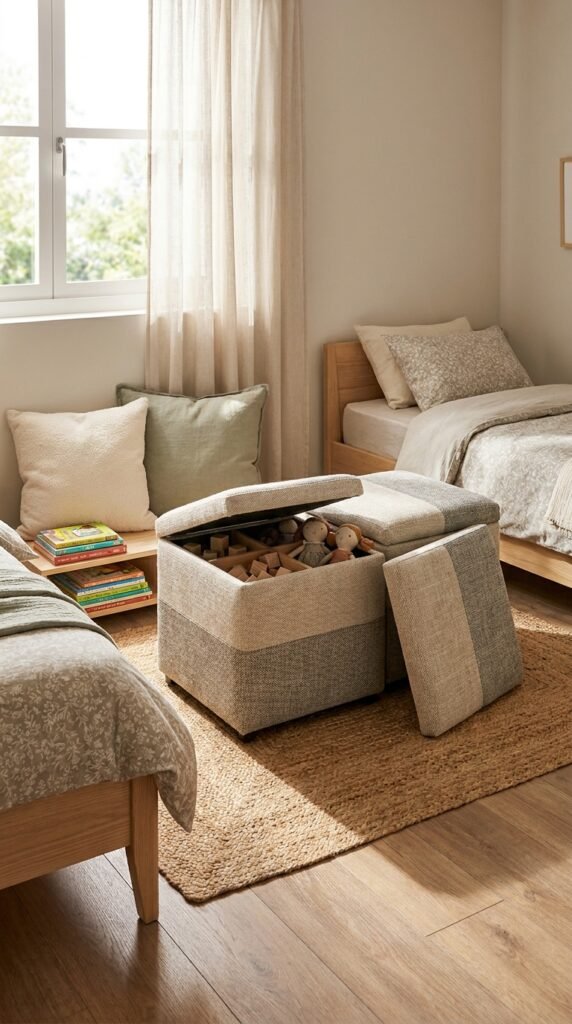
Ottoman storage pieces pull double duty as comfortable seating and hidden storage compartments, making them perfect additions to any shared bedroom. You’ll maximize your floor space while creating cozy spots where kids can read, play games, or simply relax together.
Choose dual purpose seating options with lift-up lids that reveal spacious interiors for toys, books, or seasonal clothing. Stackable storage cubes offer incredible flexibility since you can arrange them in different configurations as your children’s needs change over time.
Position ottomans at the foot of beds or create a reading corner by clustering several together. Look for models with safety hinges that prevent lids from slamming shut on little fingers. Consider fabric options that complement your room’s color scheme while hiding inevitable stains and wear.
Pegboard Walls for Customizable Organization
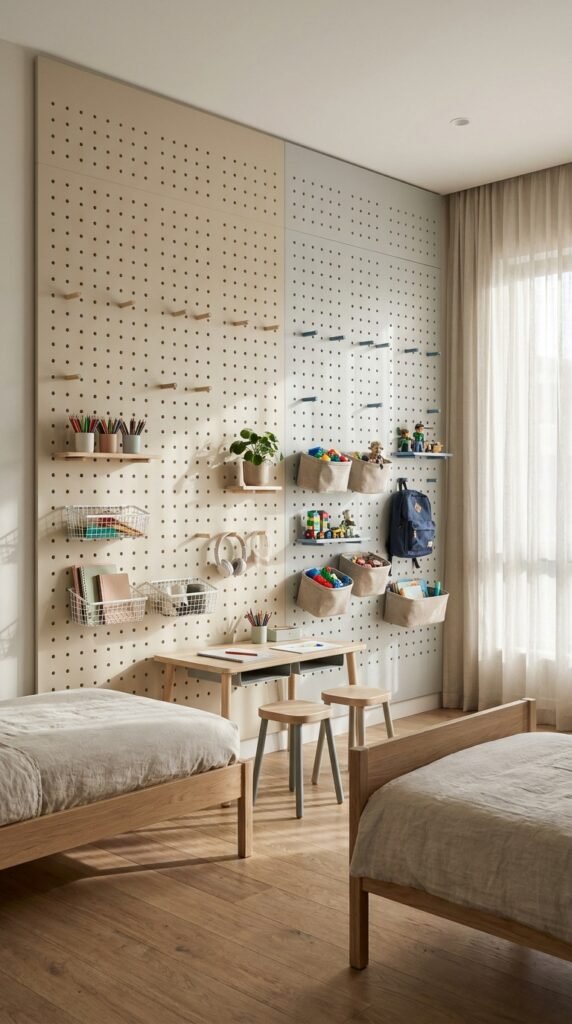
Alter any wall into a flexible organizational powerhouse by installing pegboard panels that adapt to your children’s changing storage needs. You’ll create an endlessly customizable system that grows with your kids while maximizing vertical space efficiency.
Choose pegboards with adjustable peg spacing to accommodate everything from small craft supplies to larger sports equipment. Mount hooks, baskets, and shelves wherever you need them most. Your children can rearrange their storage areas independently, cultivating organizational skills and personal responsibility.
Create visually appealing designs by painting pegboards in bright colors or patterns that complement your room’s theme. You can even designate specific sections for each child using different colored accessories. This system eliminates drawer clutter while keeping frequently used items visible and accessible, making cleanup faster and more enjoyable for everyone involved.
Shared Closet Systems With Individual Sections
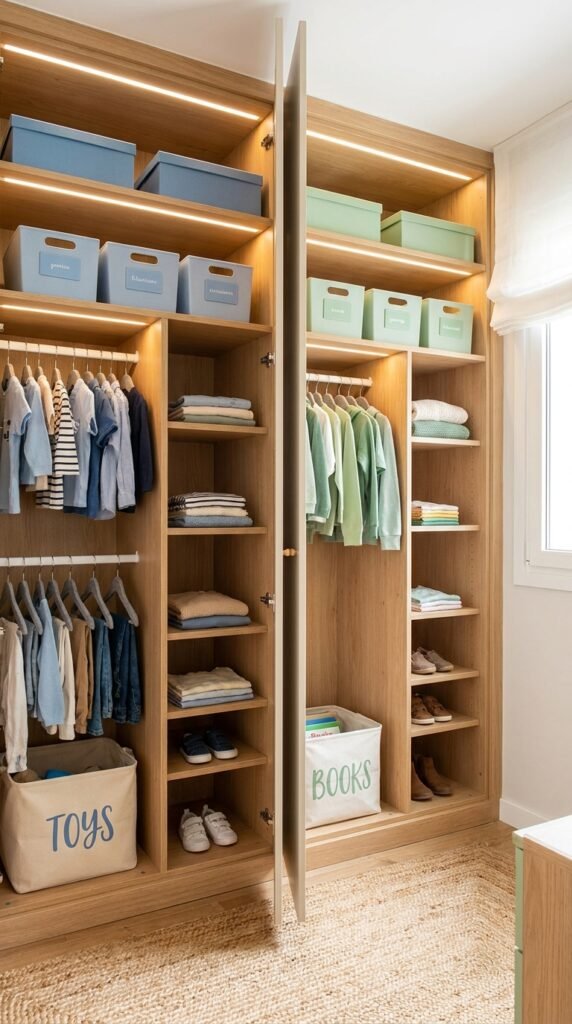
Modify your shared closet into an organized haven by dividing it into clearly defined individual sections that give each child their own designated storage territory. Install customized dividers down the middle to create distinct zones, allowing each kid to personalize their space without interference from their sibling.
Maximize your closet’s potential with vertical storage solutions that work upward rather than outward. Add adjustable shelves at different heights to accommodate varying clothing lengths and storage needs. Install double hanging rods to separate school clothes from play outfits.
Label each section clearly with your children’s names or photos to eliminate confusion and ownership disputes. Consider adding small bins or baskets within each zone for accessories, undergarments, and seasonal items that need contained storage.
Window Seat Storage Benches
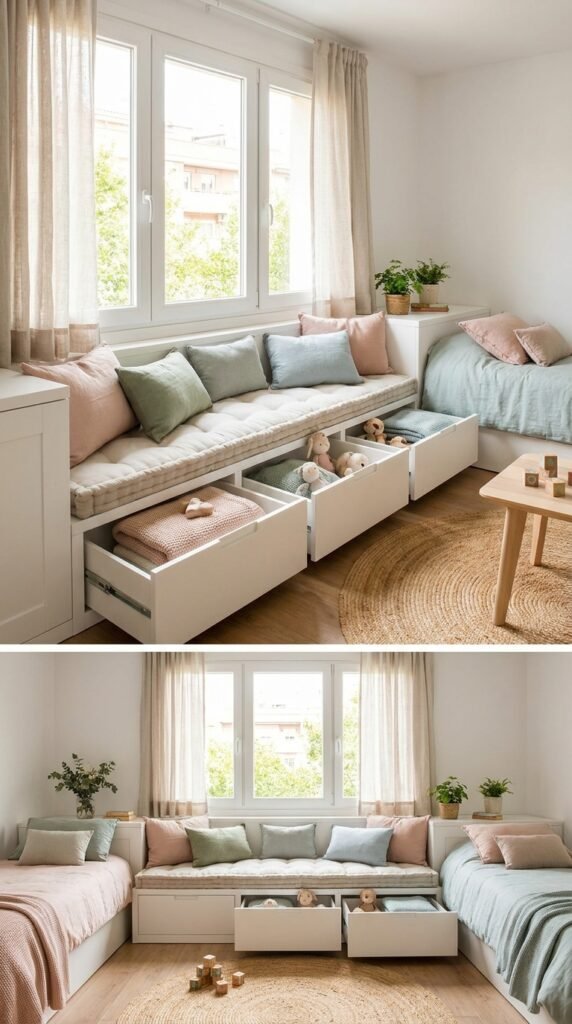
Built-in window seat storage benches repurpose underutilized window space into functional seating areas while providing precious hidden storage for toys, books, and seasonal clothing. These cozy seating nooks convert ordinary windows into versatile zones where your kids can read, play games, or simply daydream while gazing outside.
When designing built in bench storage, you’ll want to incorporate hinged tops that lift easily for quick access to hidden compartments. Consider adding colorful cushions and throw pillows that reflect each child’s personality while maintaining the room’s overall aesthetic. Install safety hinges to prevent lid slamming and potential finger injuries.
Position the bench at an appropriate height for both children, typically 16-18 inches from the floor. This creates comfortable seating while maximizing storage capacity underneath for bulky items like comforters or out-of-season clothes.
Ceiling-Mounted Nets for Stuffed Animal Storage
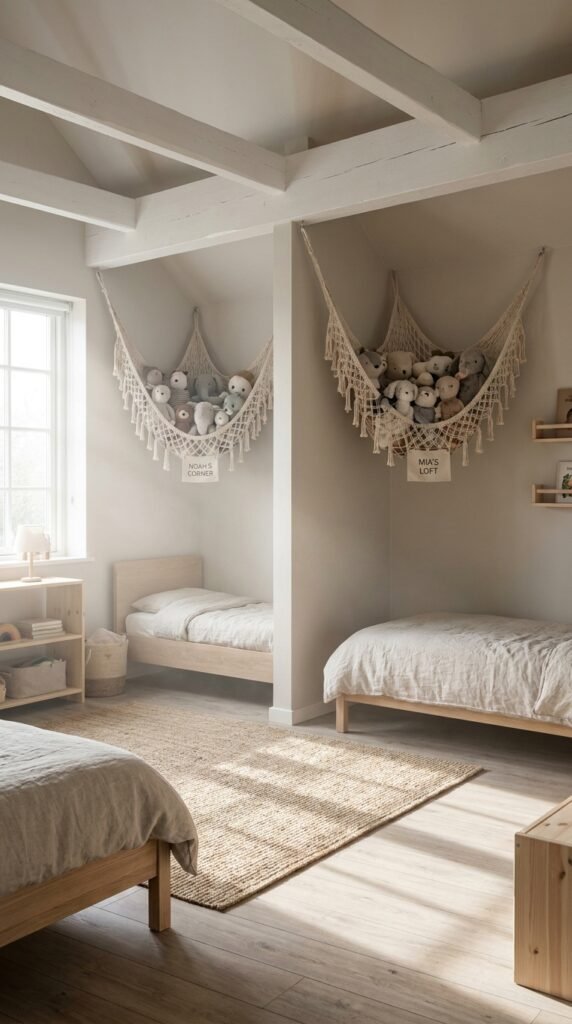
When stuffed animals take over every available surface in your shared bedroom, ceiling-mounted nets offer an innovative vertical storage solution that converts clutter into colorful displays. You’ll create an organized system that keeps beloved toys accessible while freeing up precious floor and furniture space.
Install hammock style hanging nets in opposite corners, giving each child their own designated storage area. Position nets at heights where kids can easily reach their favorites while storing less-used animals higher up. Strong ceiling hooks support substantial weight loads without compromising safety.
Implement personalized labeling systems using colorful tags or small signs to identify each child’s collection. This prevents ownership disputes and encourages responsibility. Choose mesh materials that complement your room’s color scheme, reshaping storage into decorative elements that showcase your children’s personalities.
Conclusion
You’ve got countless options to create a bedroom that works perfectly for two kids. These space-saving solutions help you maximize every square foot while giving each child their own personal area. Remember to involve your kids in the design process—they’ll love choosing colors, themes, and organizational systems. With smart furniture choices and creative storage solutions, you’ll convert any shared bedroom into a functional, fun space both children will absolutely love.