13 Dining Room Setup Ideas That Balance Function and Style
Master the art of creating a dining room that effortlessly transitions from homework chaos to elegant dinner parties with these game-changing design secrets.
You’re probably using your dining room for everything from homework sessions to bill paying, yet it still needs to look polished when guests arrive. The challenge isn’t choosing between function and style—it’s creating a space that delivers both seamlessly. Smart design choices can alter your dining area into a versatile hub that handles daily chaos while maintaining an inviting atmosphere.
Create Zones for Different Activities Within Your Dining Space
When you think beyond traditional dining room boundaries, you’ll uncover opportunities to maximize your space’s functionality and appeal.
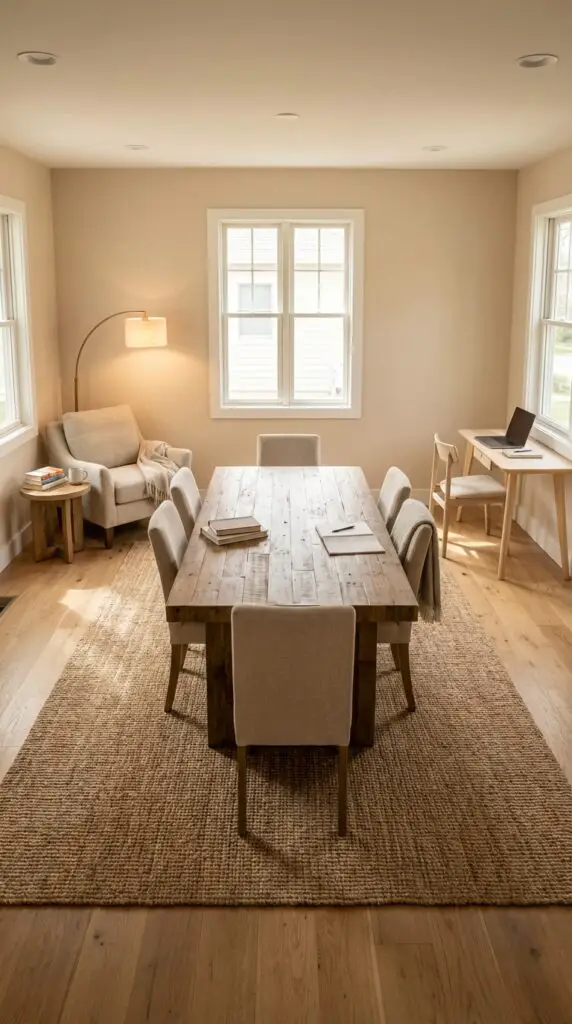
Alter your dining area into a multi-purpose haven by designating specific zones for various activities. Create a reading nook with a comfortable armchair and side table in one corner. Integrate conversation zones by positioning two accent chairs near a window or bookshelf.
Optimize seating arrangements by adding a bench along one wall that doubles as storage. Consider a small desk area for homework or remote work. These strategic zones maintain your room’s dining purpose while expanding its daily utility.
Transform formal areas into dynamic spaces that adapt to your family’s changing needs throughout the day.
Choose Multi-Purpose Furniture That Works Double Duty
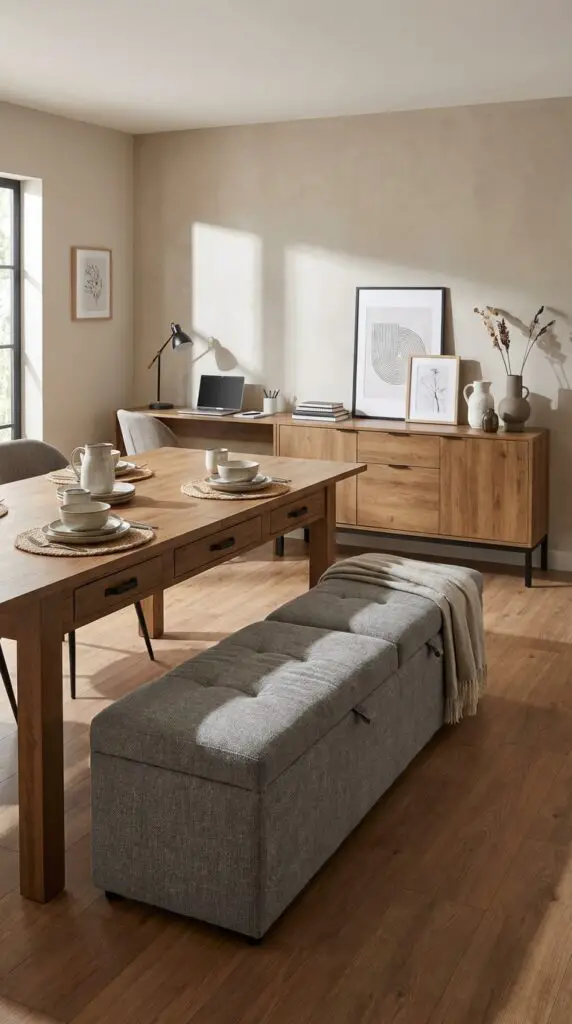
Multi-purpose furniture serves as the backbone of any well-designed dining space that needs to work harder throughout the day. You’ll maximize your room’s potential by selecting versatile furnishings that adapt to various activities.
Consider dining tables with built-in storage drawers for linens, games, or office supplies. Choose multi purpose seating like storage benches or ottomans that provide extra seating while hiding clutter inside. Select sideboards that function as serving stations during meals and home office desks during work hours. Compact cabinet designs specifically engineered for small spaces can transform awkward corners into functional storage zones without overwhelming your dining area’s visual flow. These smart furniture choices eliminate the need for single-purpose pieces, giving you more space and freedom.
Design Smart Storage Solutions That Hide Everyday Clutter
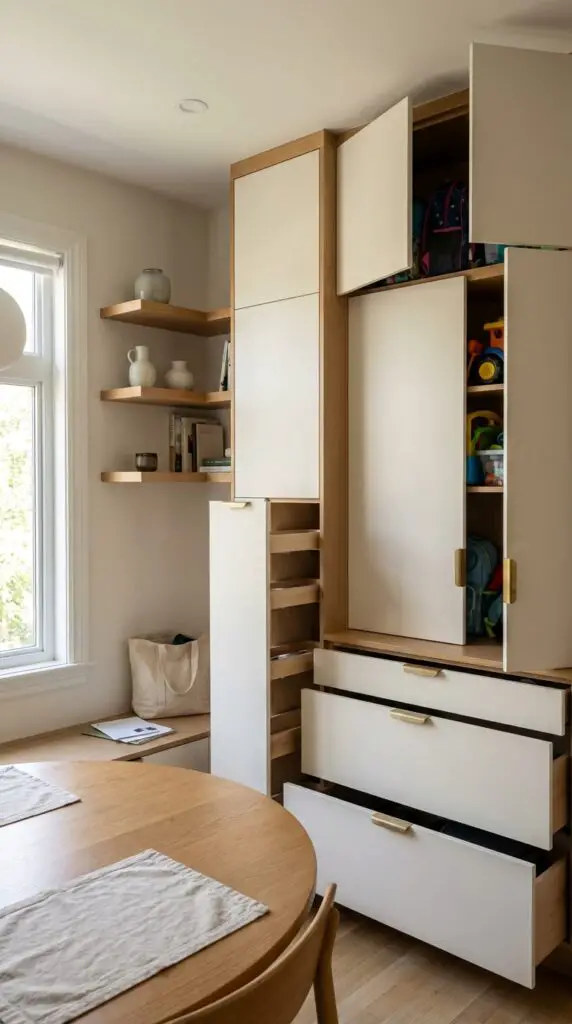
Smart storage solutions convert cluttered dining rooms into organized, peaceful spaces where everything has its designated place. You’ll maximize built in cabinetry by installing floor-to-ceiling units that employ every inch of vertical space effectively. Add pull-out drawers and adjustable shelving to accommodate items of varying sizes and shapes.
Consider sideboards with hidden compartments that conceal dishware storage while maintaining clean lines throughout your dining area. Install floating shelves in corners to display decorative pieces while keeping everyday items tucked away in closed cabinets. These strategic choices create visual calm and functional efficiency. Choose pieces that serve dual purposes, allowing you to maintain a clutter-free environment while ensuring every item remains easily accessible.
Layer Your Lighting for Both Ambiance and Task Functionality
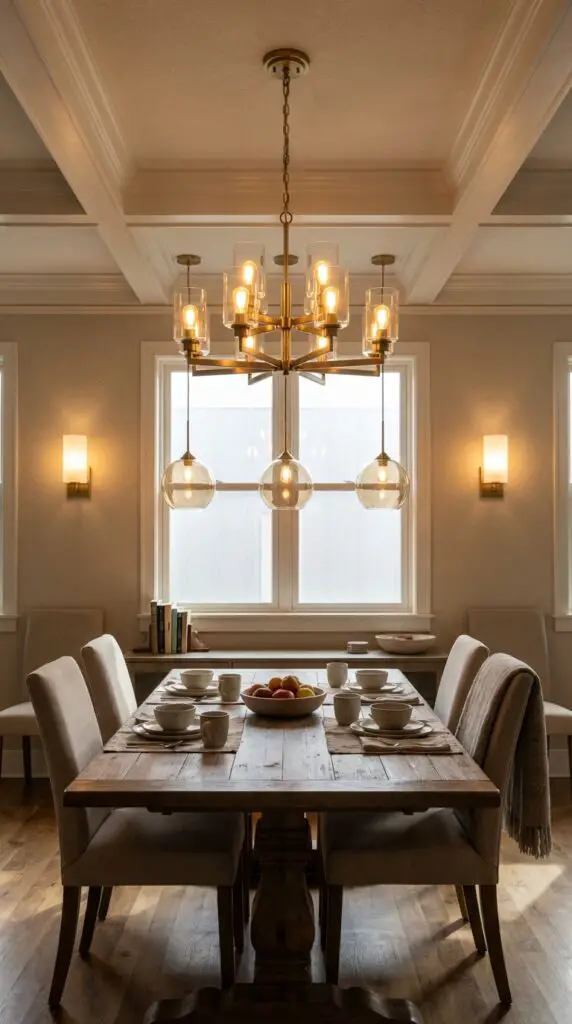
Effective lighting layers remodel your dining room into a versatile space that adapts seamlessly from casual family meals to sophisticated dinner parties. You’ll want three distinct lighting types working together harmoniously.
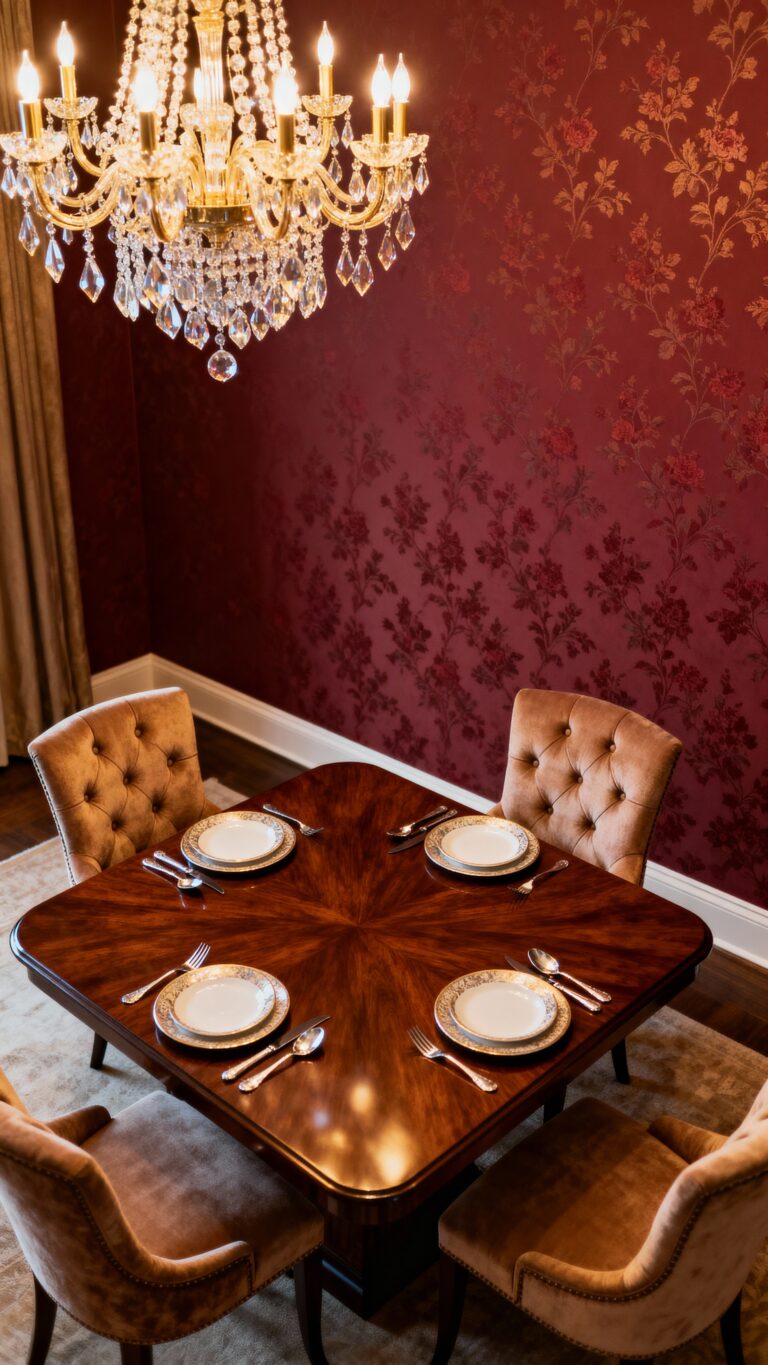
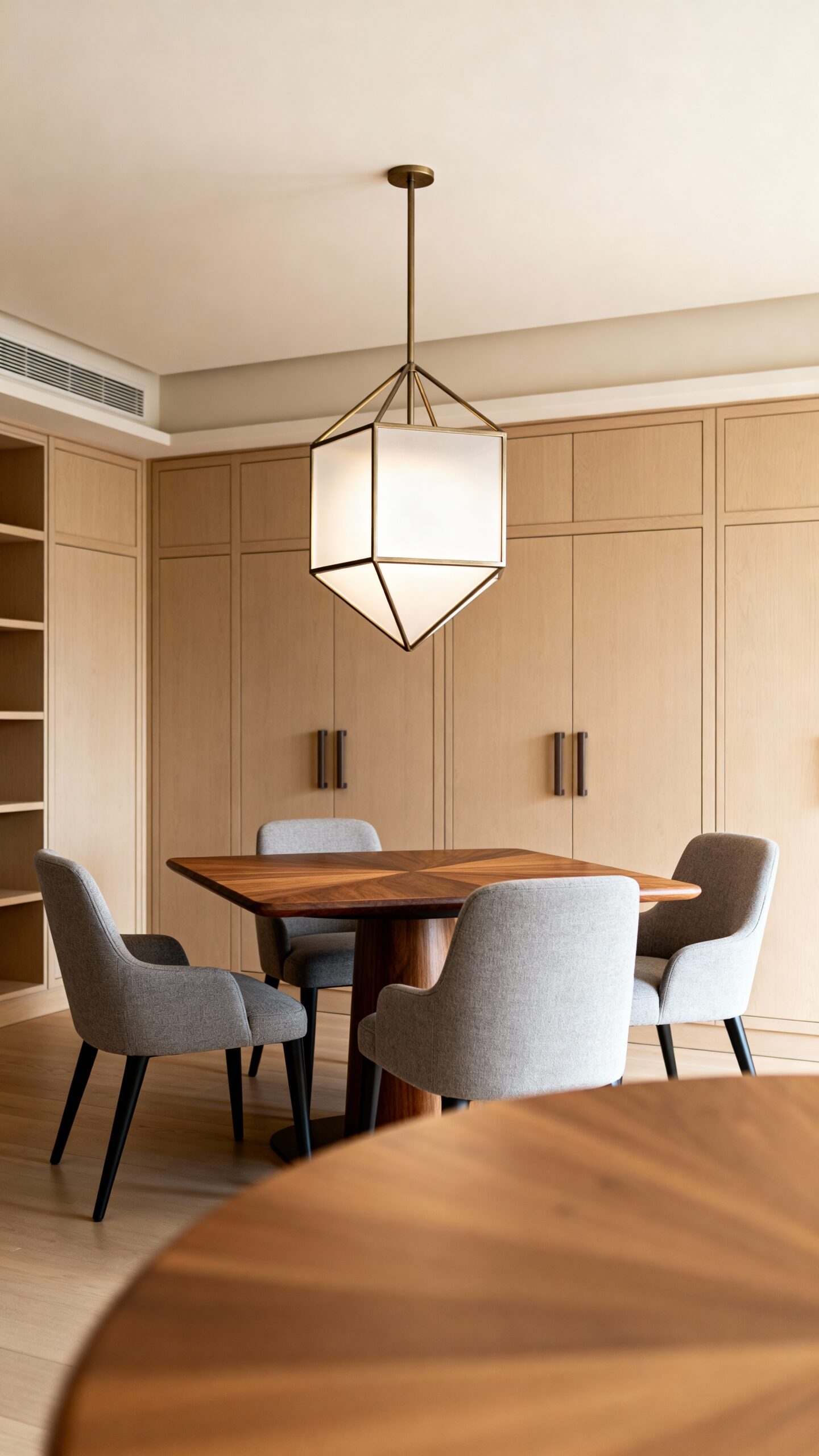
Start with ambient chandelier designs as your primary overhead source, creating warm general illumination throughout the room. Add pendant lighting selections over your dining table for focused task lighting during meals and homework sessions. Complete the trio with accent lighting through wall sconces or table lamps, highlighting artwork and structural elements.
Dimmer switches give you complete control, letting you adjust brightness levels for any occasion or mood you’re creating. Strategic placement of wall sconces can also provide additional ambient lighting while creating visual interest on vertical surfaces.
Select a Dining Table Size That Fits Your Room and Lifestyle
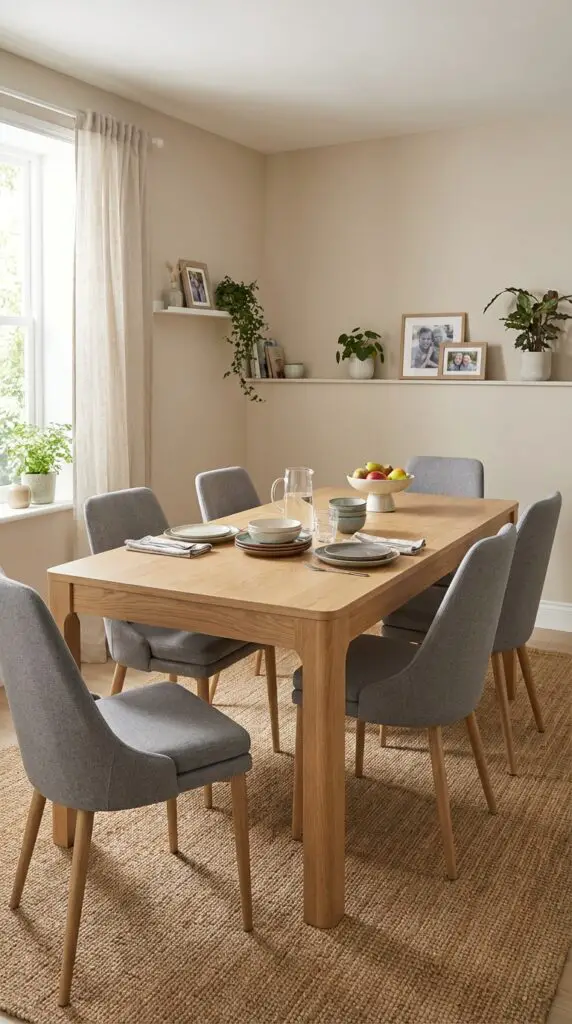
Your dining table serves as the central gathering point where family conversations unfold and memorable meals bring people together, making size selection crucial for both comfort and functionality.
Consider your room’s dimensions first—allow 36 inches between the table and walls for easy chair movement.
A 60-inch round table creates an intimate dining experience for four to six people, while rectangular tables work best for larger spaces.
For a family friendly dining setup, choose expandable options that accommodate everyday meals and special occasions.
Remember, you’ll want 24 inches of table width per person for comfortable elbow room.
Compact dining tables are ideal for apartments or smaller homes where maximizing space efficiency is essential.
Incorporate Flexible Seating Options for Various Occasions
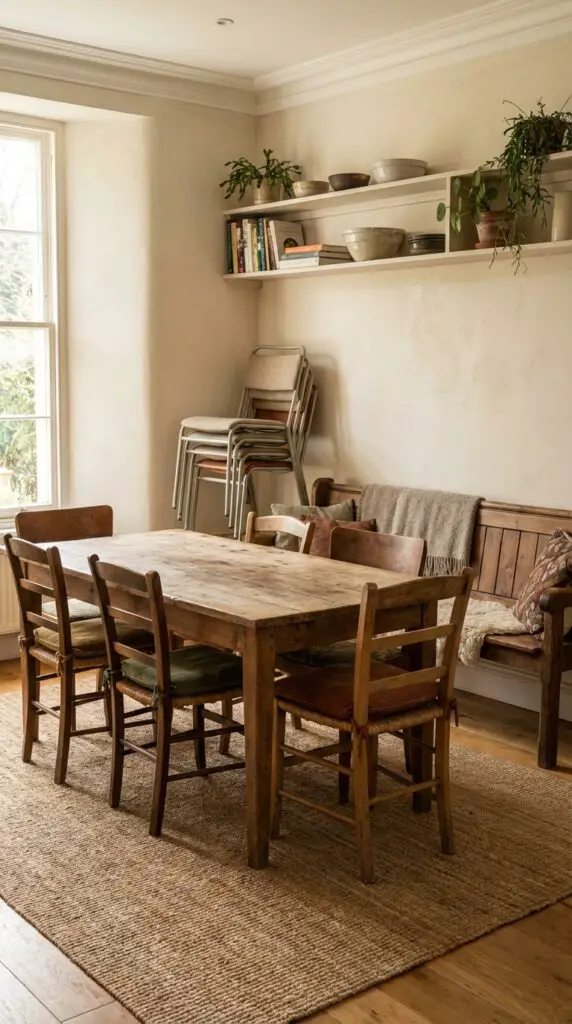
Once you’ve chosen the perfect table size, flexible seating arrangements will modify how you host different types of gatherings throughout the year. Mix dining chairs with a bench to accommodate extra guests during holidays. Consider stackable chairs that you can store easily when not needed.
Ottomans double as extra seating and storage solutions for linens or games. Multi purpose seating arrangements let you alter intimate dinners into larger celebrations effortlessly. Add folding chairs for unexpected visitors, and choose lightweight pieces you can move between rooms. Bench seating offers a particularly smart solution for compact dining rooms where space efficiency matters most.
These adaptable furniture configurations give you complete control over your entertaining space.
Use Color and Texture to Define Your Dining Area
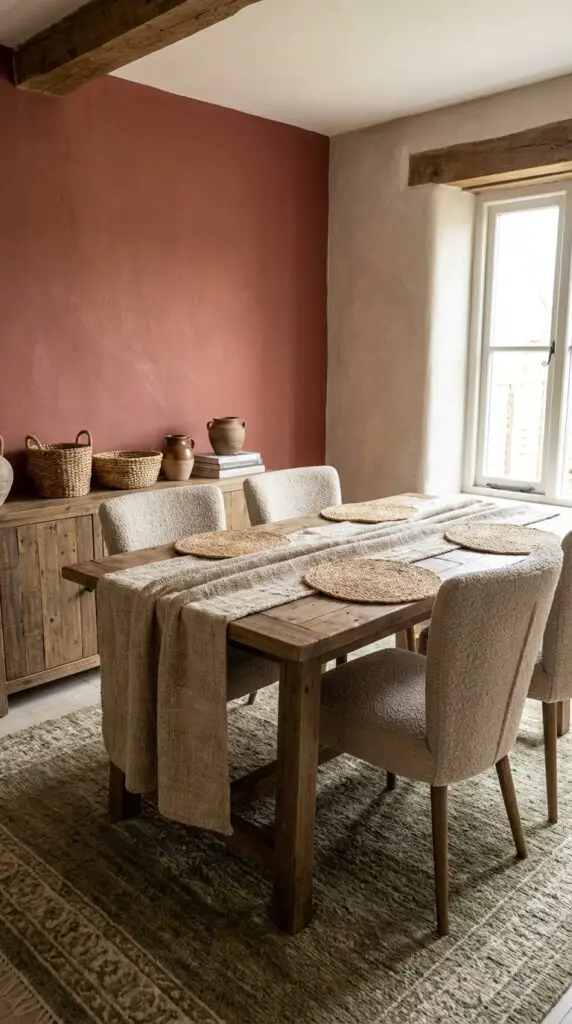
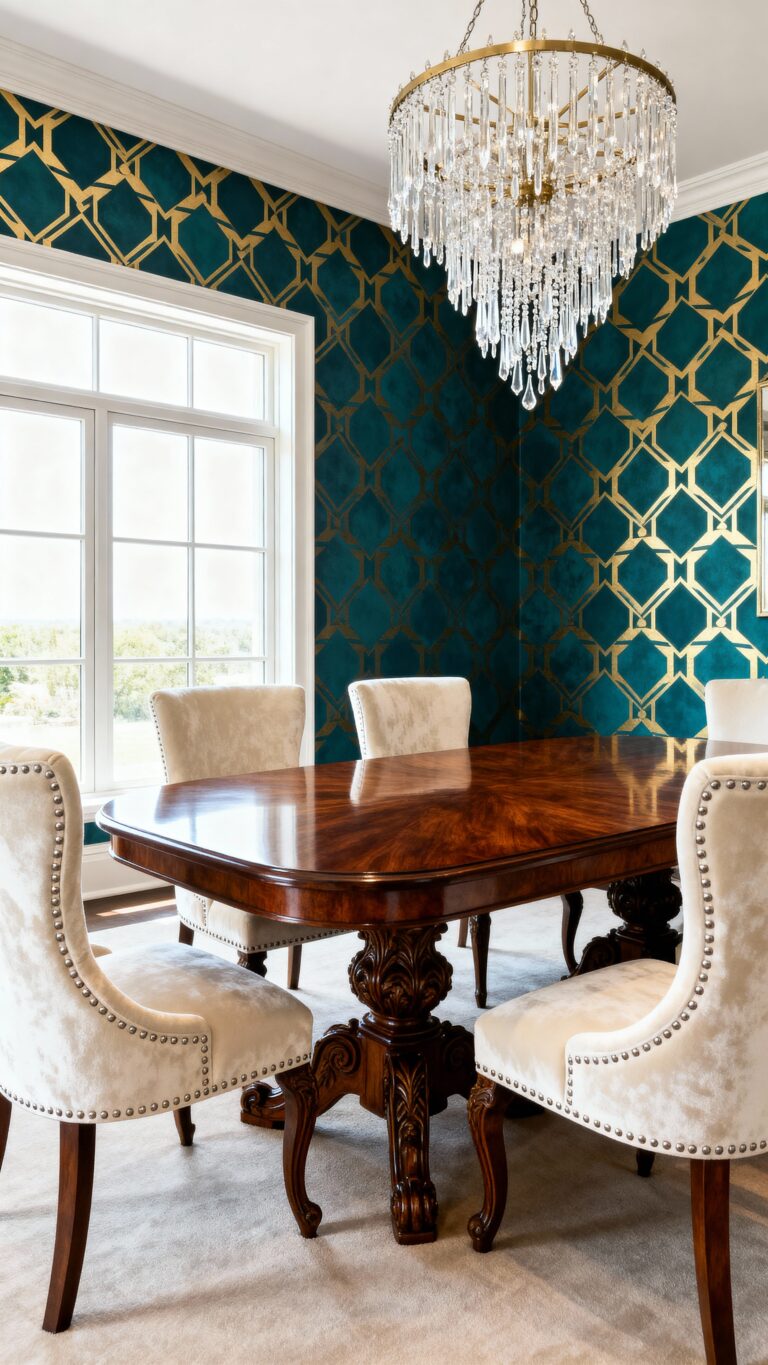
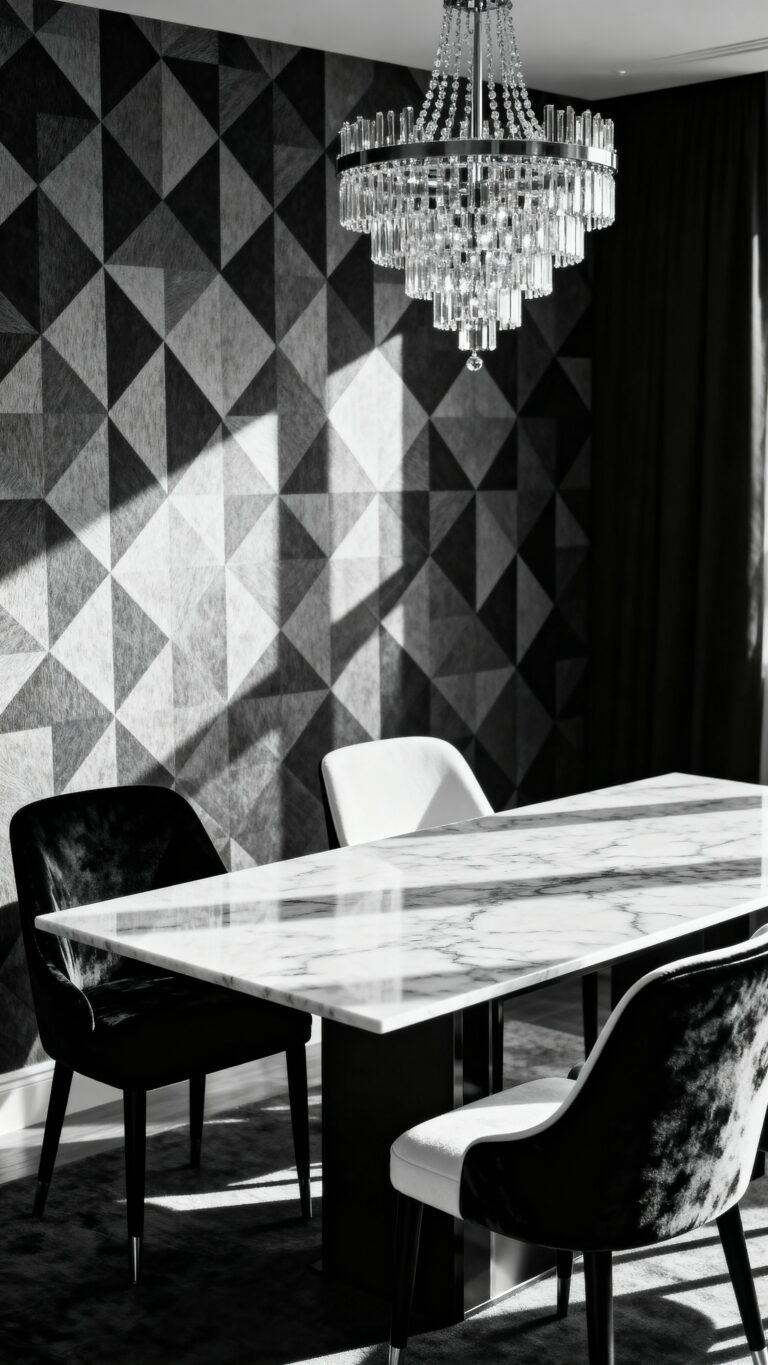
Strategic color choices and varied textures alter any dining space from ordinary to extraordinary while creating clear visual boundaries. You’ll establish distinct zones by painting accent walls in deeper hues or adding bold wallpaper behind your dining table. Incorporate textured accents through woven placemats, rough-hewn wooden serving pieces, or fabric chair cushions that contrast smooth surfaces.
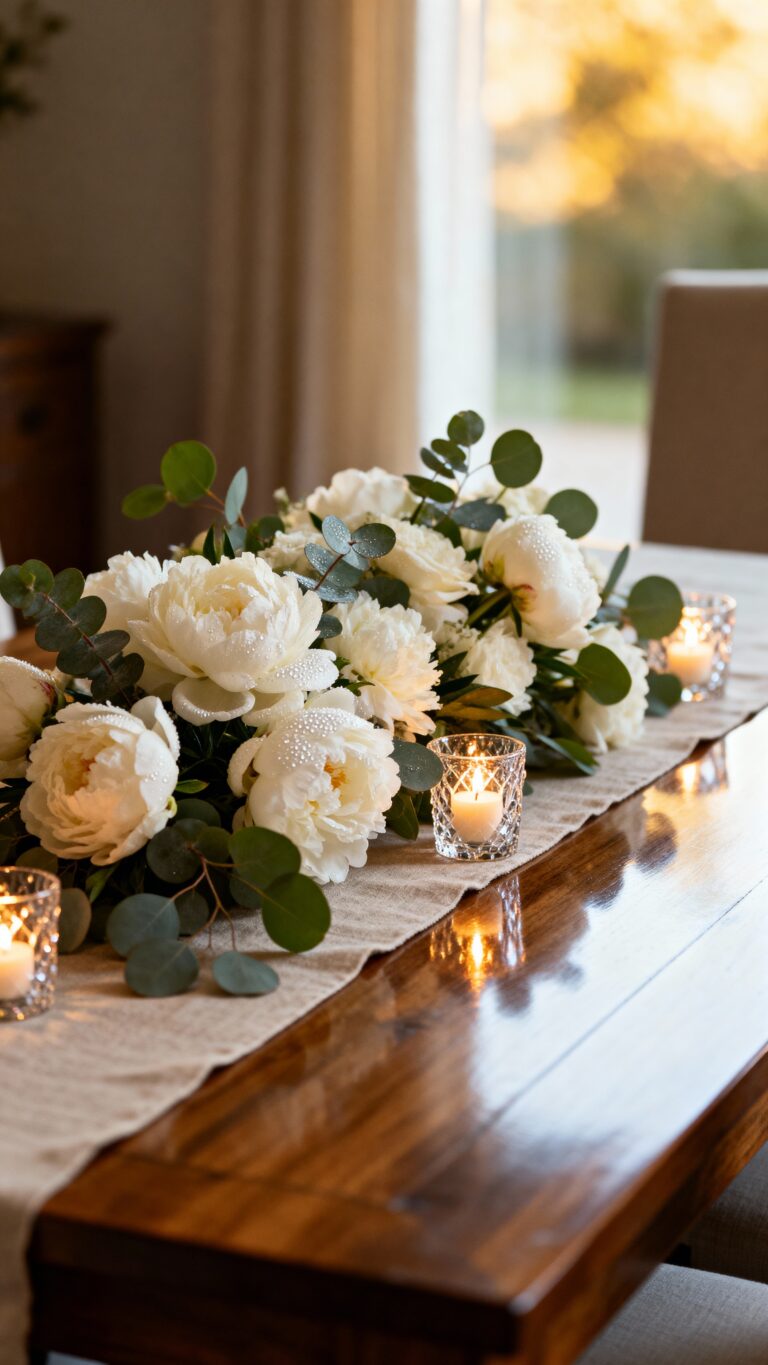
Use rich fabrics like velvet curtains or textured table runners to soften hard edges. Highlight focal structural components such as exposed beams or built-in shelving with contrasting paint colors. These deliberate choices give your dining area personality while maintaining functional flow throughout your home.
Position Your Dining Room for Optimal Traffic Flow
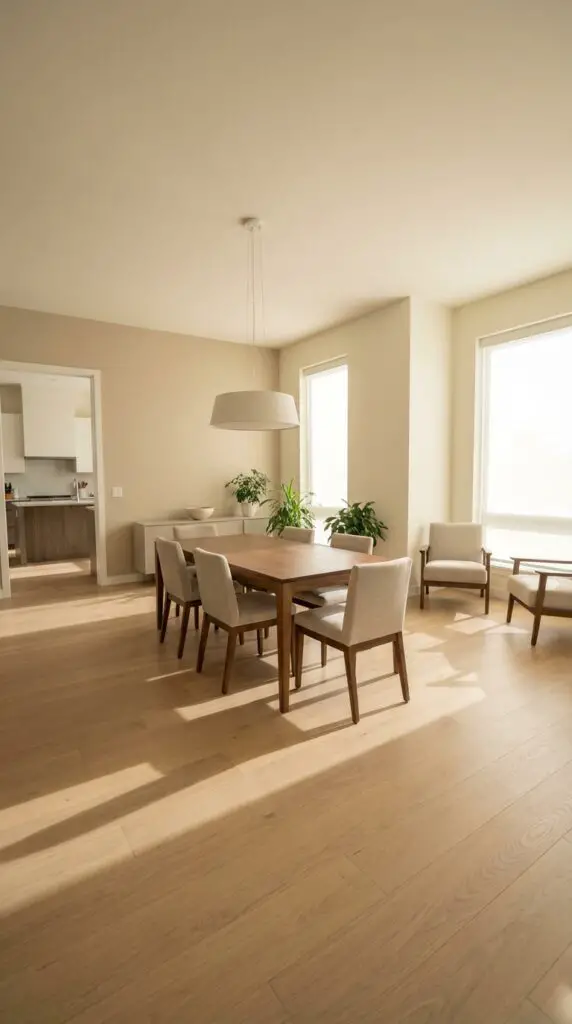
Three key considerations determine whether your dining room becomes a welcoming gathering space or an awkward obstacle course that disrupts your home’s natural flow.
First, you’ll want to prioritize guest circulation by maintaining clear pathways around your table—allowing at least 36 inches between furniture pieces.
Second, position seating away from high-traffic zones like kitchen entrances or hallway intersections to maximize dining experience without constant interruptions.
Finally, create designated walkways that don’t force people to squeeze behind occupied chairs. When you respect your home’s natural traffic patterns, you’ll convert mealtime into seamless, enjoyable experiences for everyone.
Add Functional Decor That Serves a Purpose
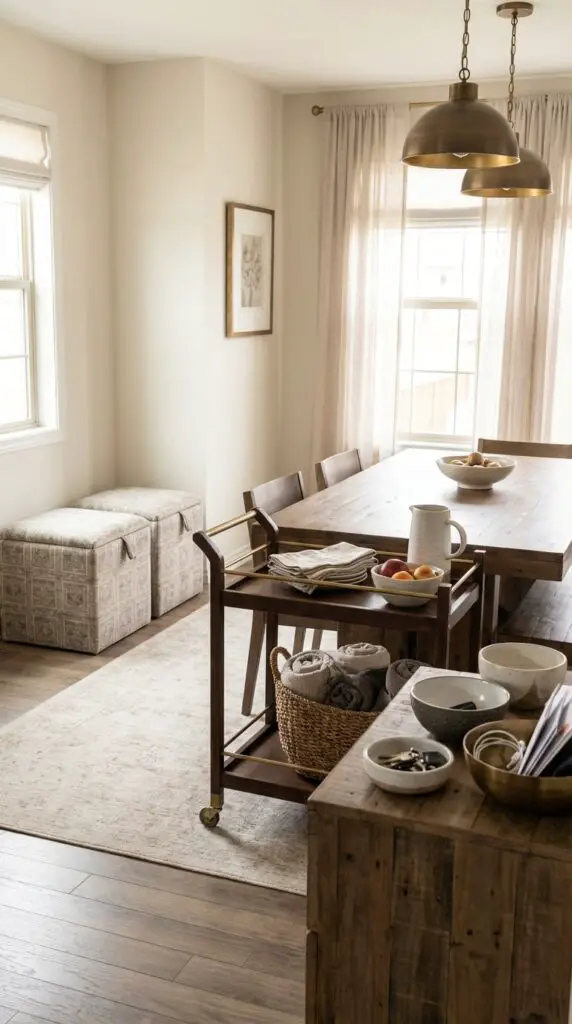
While beautiful dining rooms capture the attention, the most successful spaces combine visual appeal with smart functionality that makes everyday living easier. You’ll maximize your room’s potential when you incorporate multipurpose decorative accessories that work double duty.
Consider stylish storage ottomans that hide linens, decorative bowls that corral keys, or refined serving carts that display dishes while providing extra surface space. When you employ modular furniture options, you’re creating flexibility for different occasions. Choose expandable tables, stackable chairs, or moveable console pieces that adapt to your needs without sacrificing style or overwhelming your space.
Create a Command Station for Family Organization
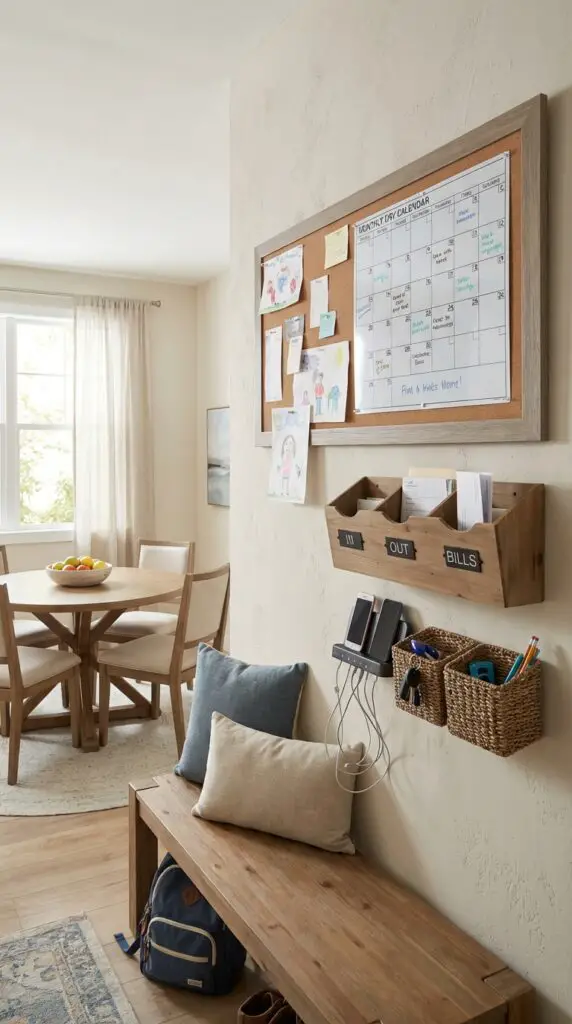
Since busy families need centralized organization more than ever, converting part of your dining room into a command station creates an efficient hub for daily coordination. Your dedicated command station metamorphosizes chaotic schedules into streamlined family management through strategic placement of organizational tools.
Install a large calendar, mail sorter, and charging station along one wall to establish your centralized communication hub. Add cork boards for school notices, alerts, and family announcements. Include small baskets for keys, wallets, and daily essentials that family members grab before heading out. This setup keeps everyone informed and prepared.
Design Around Your Room’s Natural Architecture
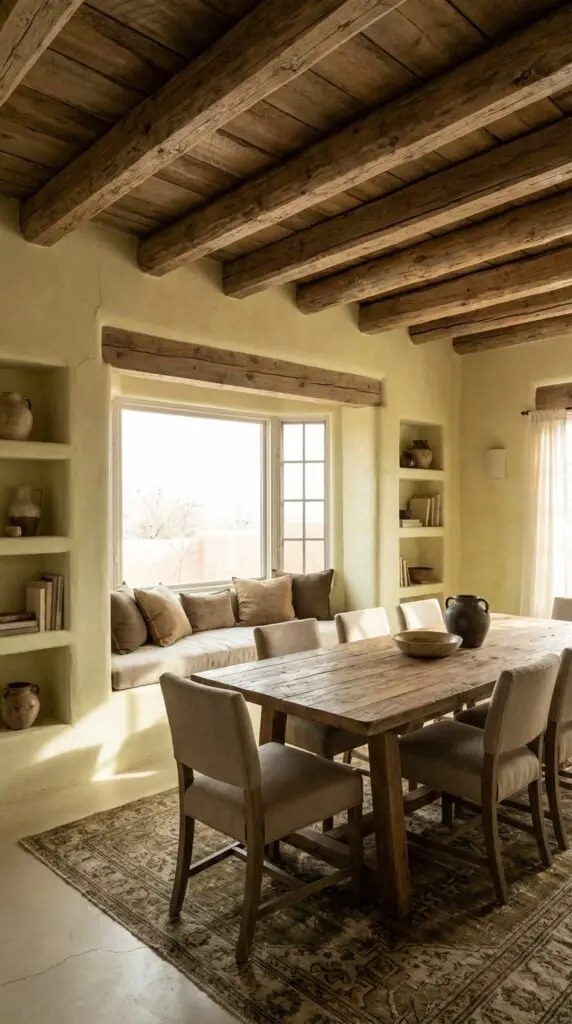
Beyond organizing your family’s daily logistics, your dining room’s existing design/structural features offer a blueprint for creating a space that feels both intentional and harmonious. Focus on architectural elements like crown molding, built-in niches, or exposed beams to guide your furniture placement and décor choices.
Position your dining table to complement these features rather than compete with them. Highlight unique structural features such as bay windows by creating a cozy reading nook or displaying plants. Use columns or archways as natural room dividers, and let coffered ceilings inspire your lighting scheme for maximum visual impact.
Choose Durable Materials That Handle Daily Use
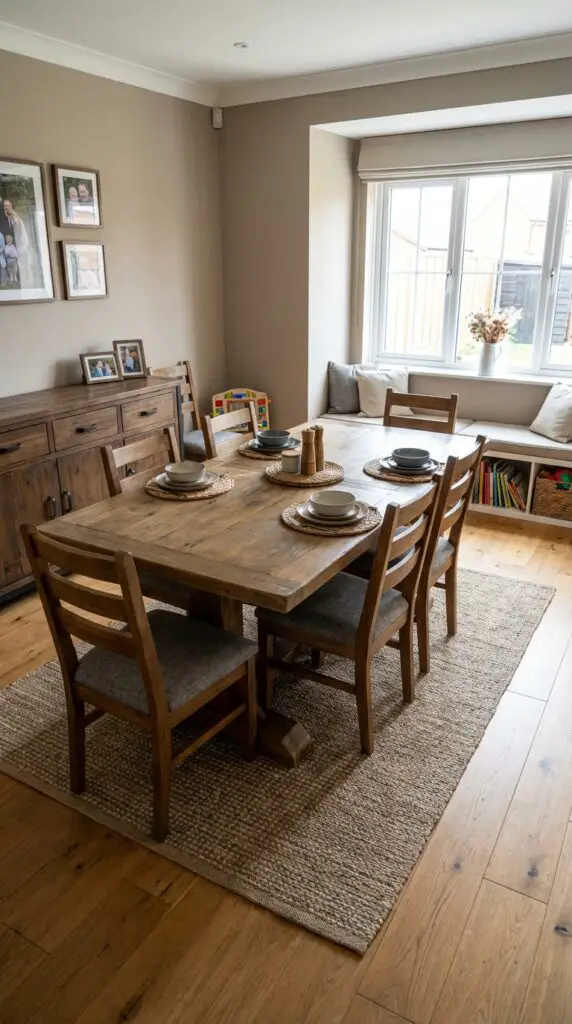
When you’re selecting furniture and materials for your dining room, durability should rank as high as aesthetics on your priority list. Your dining space endures daily spills, scratches, and heavy use, so smart material choices protect your investment while maintaining style.
Consider weatherproof tabletops made from sealed wood, quartz, or laminate that resist water damage and heat marks. Choose stain resistant upholstery in performance fabrics or leather alternatives that clean easily with simple wipes.
Select chairs with reinforced joints and solid construction that won’t wobble after years of use, ensuring your dining room remains both beautiful and functional.
Style Your Space for Easy Maintenance and Quick Cleanup
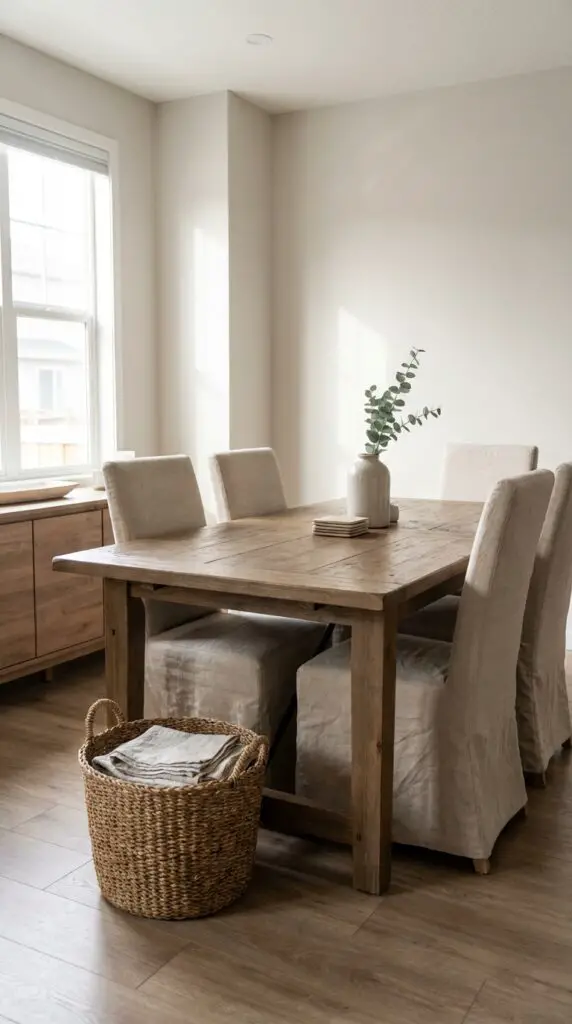
While durable materials form your dining room’s foundation, strategic styling choices can dramatically reduce your daily cleaning burden and streamline maintenance routines. You’ll want to prioritize low maintenance surfaces like sealed wood tables and wipeable chair covers that resist stains and spills.
Create simple cleaning strategies by minimizing decorative objects that collect dust. Choose machine-washable placemats over intricate table runners, and select furniture with smooth edges rather than ornate carvings. Position storage baskets near the table for quick toy and paper pickup. These smart styling decisions give you more time to enjoy meals rather than cleaning up afterward.
Conclusion
You’ve now got nine proven strategies to alter your dining room into a space that’s both beautiful and highly functional. Start with one or two ideas that address your biggest challenges, then gradually incorporate additional elements. Remember, the best dining rooms aren’t just pretty—they’re designed for real life. With thoughtful planning and smart choices, you’ll create a room that works perfectly for your family’s daily needs.