15 Minimalist Home Office Ideas That Keep You Calm and Focused
Organize your workspace with these 15 minimalist home office ideas that eliminate distractions and boost focus—but one surprising element changes everything.
You’ve likely experienced that overwhelming feeling when your cluttered workspace makes it nearly impossible to concentrate on important tasks. Creating a minimalist home office isn’t just about following design trends—it’s about building an environment that actively supports your mental clarity and productivity. The right combination of clean lines, strategic storage, and thoughtful design choices can metamorphosize even the smallest space into a powerful productivity hub that actually helps you think better.
Create a Dedicated Workspace With Clean Lines and Simple Furniture
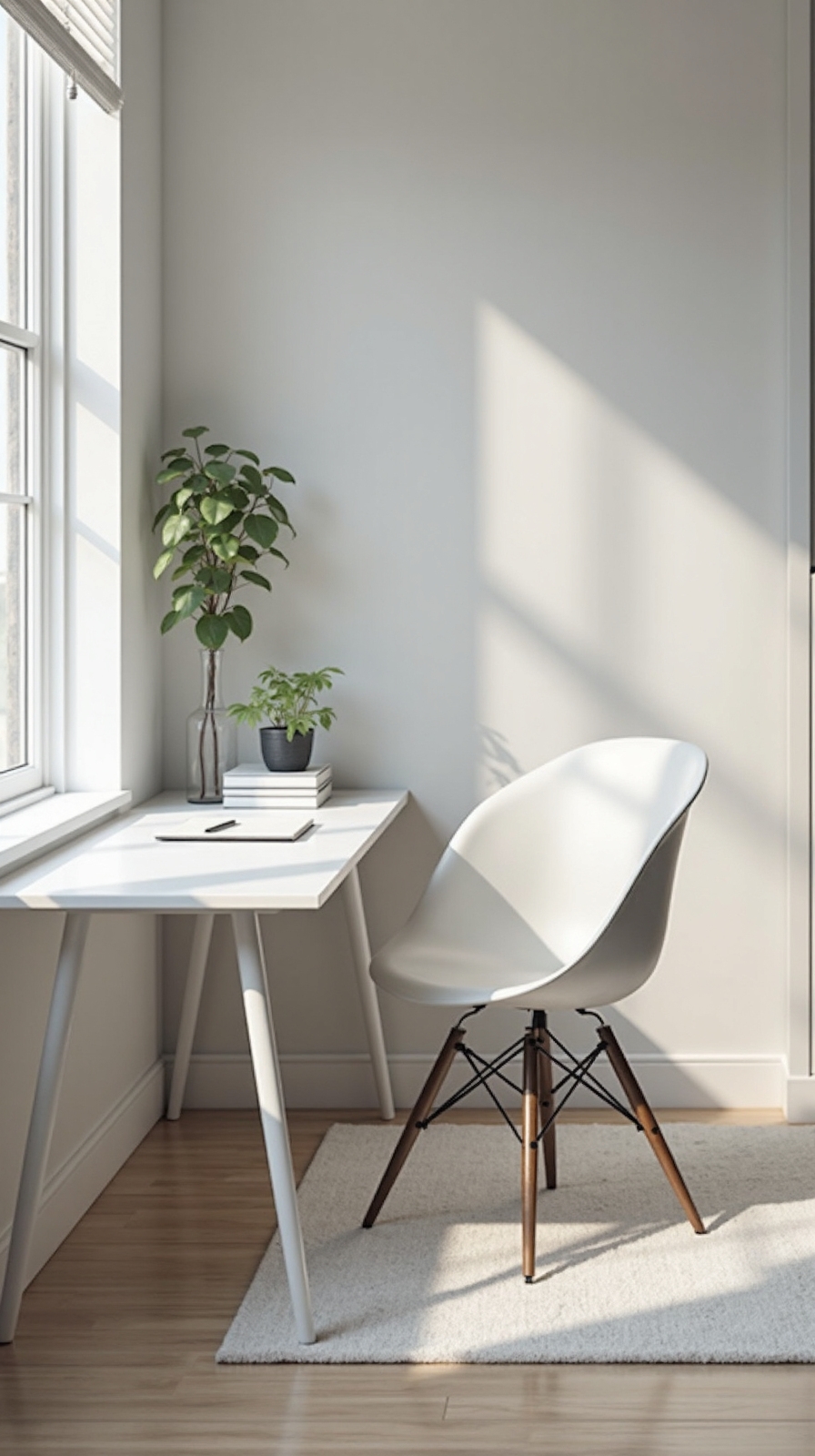
When establishing your minimalist home office, you’ll want to prioritize clean geometric shapes and streamlined furniture pieces that eliminate visual clutter. Choose a simple desk with straight edges and minimal hardware to create your foundation. A sleek wooden or metal surface provides both functionality and visual appeal without overwhelming your space.
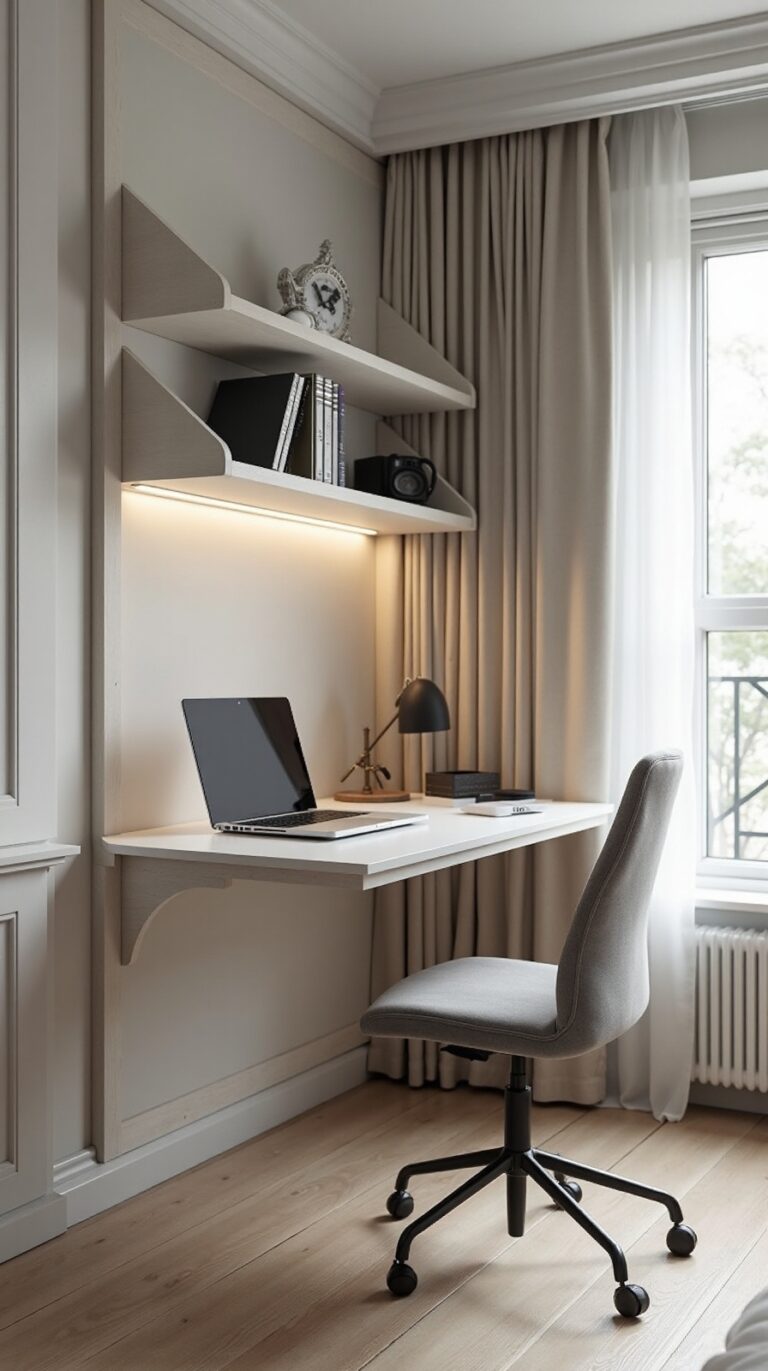
Your streamlined layout should include only essential items: a comfortable chair, adequate lighting, and necessary technology. Select furniture with built-in storage to maintain uncluttered surfaces throughout your workday. Consider floating shelves or wall-mounted desks to maximize floor space and create an airy feel.
Focus on pieces that serve multiple purposes, like a desk with integrated drawers or a storage ottoman that doubles as seating. This approach gives you the freedom to work efficiently while maintaining the peaceful atmosphere you need for sustained productivity.
Embrace a Neutral Color Palette for Mental Clarity
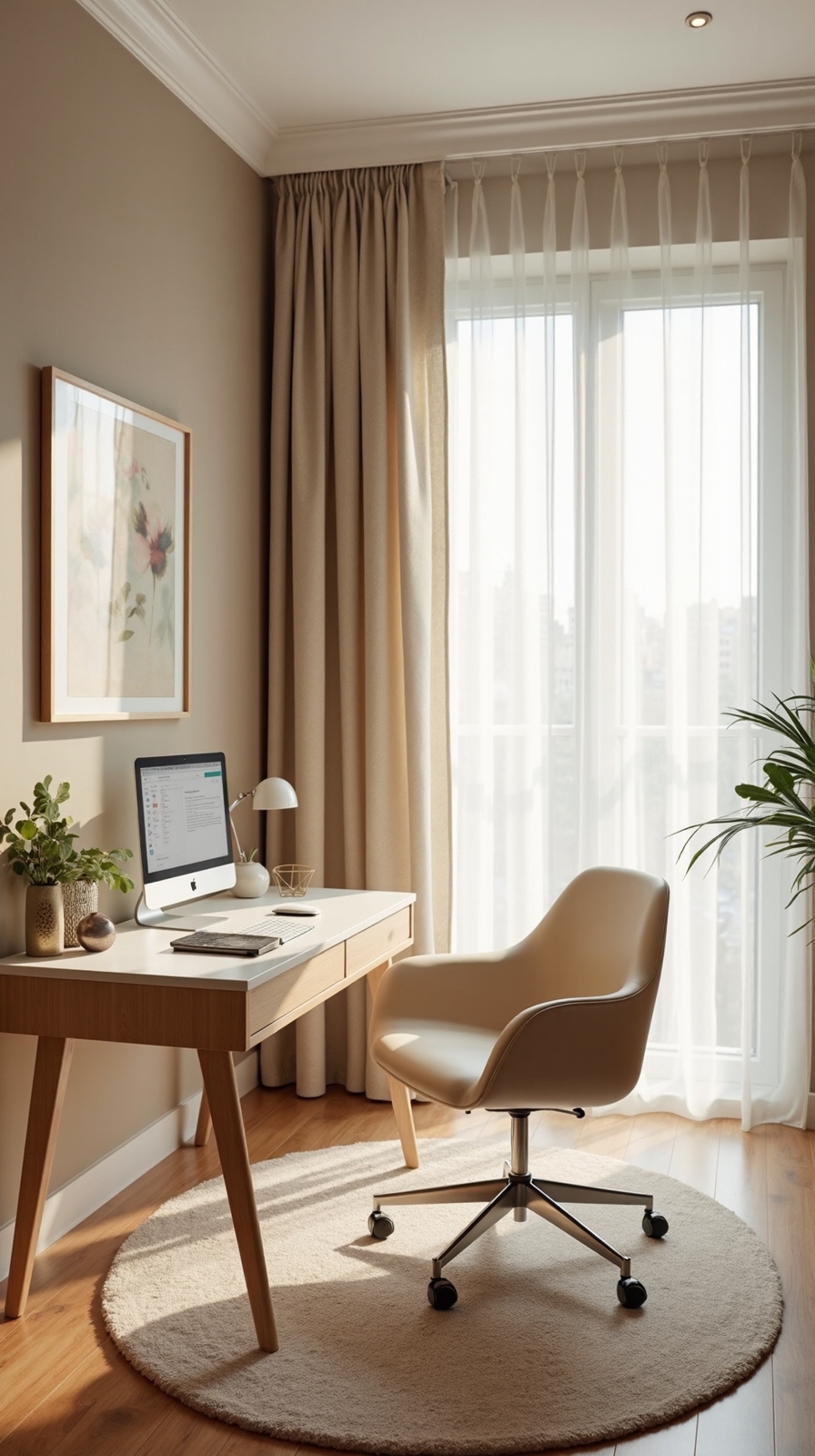
Although bold colors might seem energizing, neutral tones actually enhance your focus and reduce mental fatigue in your minimalist home office. Whites, grays, and beiges create a calming foundation that won’t compete for your attention during important tasks.
Soothing earth tones like warm taupe, soft sage, or muted cream provide gentle visual interest without overwhelming your senses. These colors naturally complement intentional minimalism by creating cohesive spaces that feel both professional and peaceful.
You’ll find that neutral palettes make your workspace feel larger and more organized. Consider painting walls in light gray or off-white, then adding depth through natural wood tones or stone textures. This approach gives you the freedom to concentrate on what matters most while maintaining a sophisticated, distraction-free environment.
Maximize Natural Light While Minimizing Window Treatments
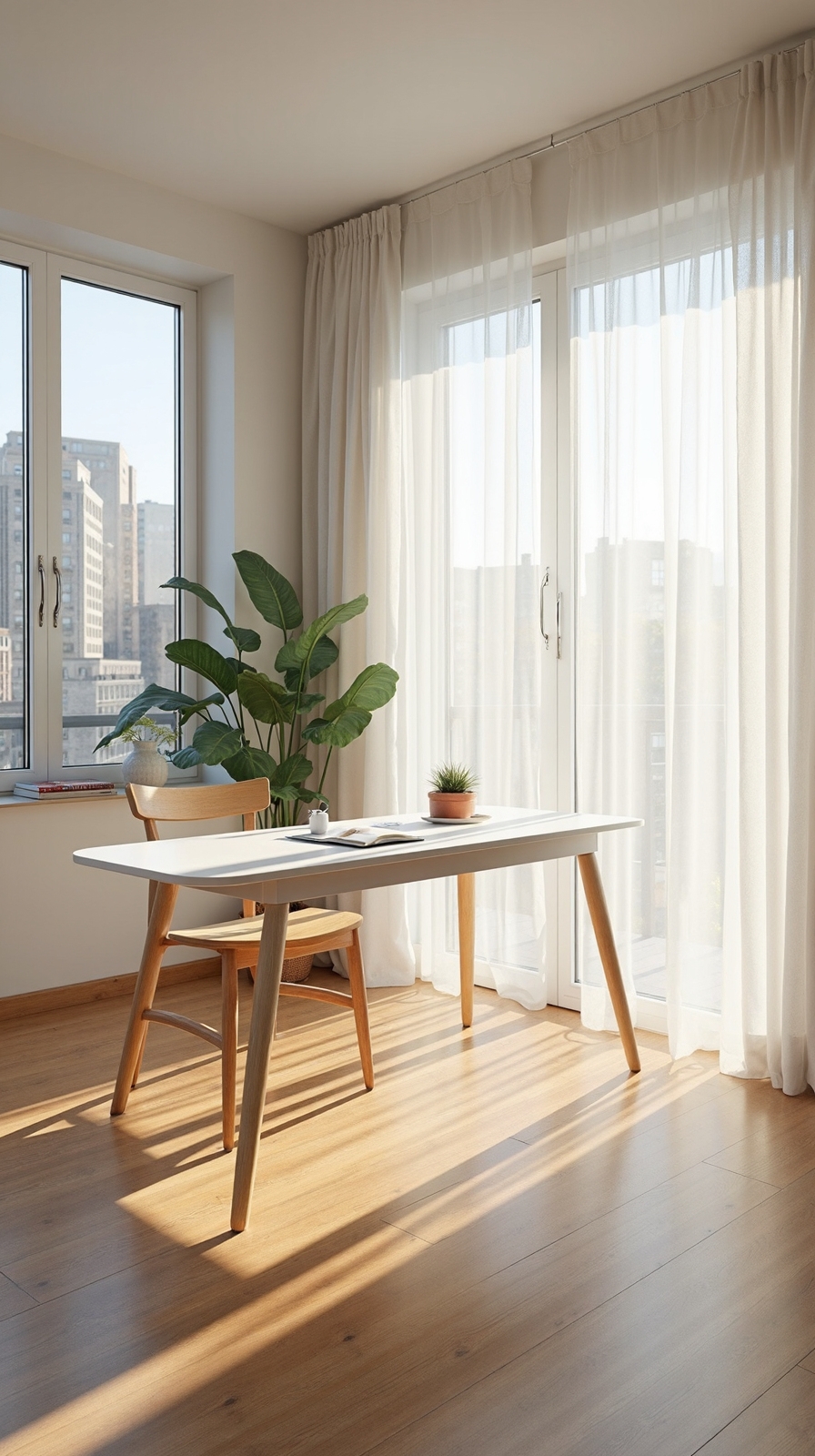
Natural light enhances your minimalist office into an invigorating workspace that amplifies productivity while decreasing your reliance on artificial lighting. Position your desk perpendicular to windows to reduce screen glare while capturing optimal daylight throughout your workday. Remove heavy drapes and bulky blinds that block precious sunlight from entering your space.
When privacy becomes necessary, use sheer curtains that filter light gently without creating darkness or visual clutter. These translucent treatments maintain your connection to the outdoors while preserving the clean aesthetic you’ve worked to achieve.
Install smart lighting systems that automatically adjust brightness based on available natural light, seamlessly shifting from day to evening. This technology eliminates the guesswork of manual adjustments while supporting your circadian rhythm and maintaining consistent illumination for focused work.
Choose Multi-Functional Storage Solutions That Hide Clutter
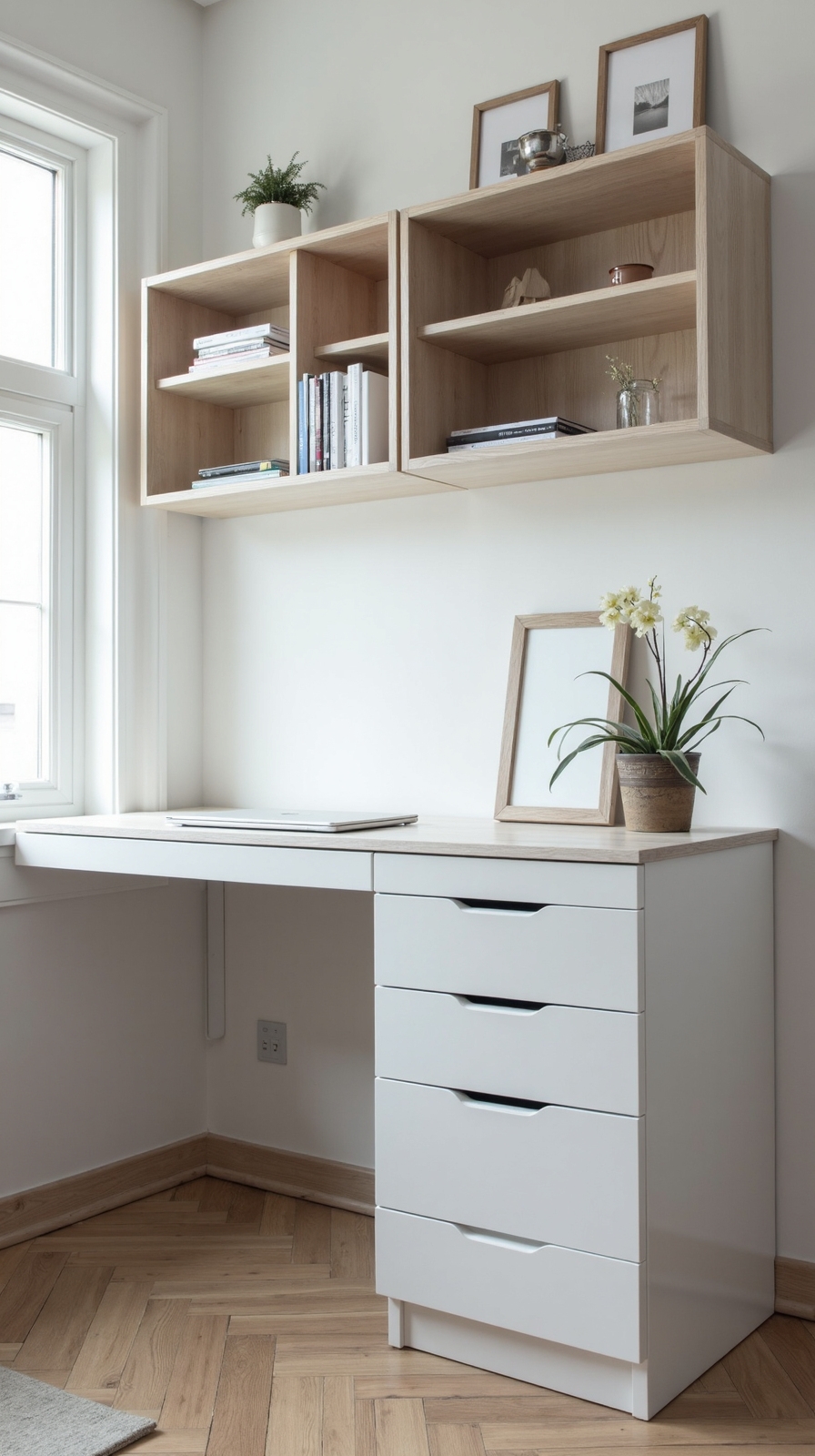
Since clutter accumulates quickly in any workspace, selecting storage solutions that serve multiple purposes becomes essential for maintaining your minimalist office’s clean appearance. You’ll want pieces that work harder so you don’t have to.
Modular shelving units offer the flexibility you crave while keeping essentials within reach. Stack them vertically for books and supplies, then reconfigure as your needs change. Choose units with doors or fabric bins to conceal visual distractions.
Invest in furniture that doubles as discreet file storage. Ottoman storage cubes provide seating for guests while hiding important documents inside. Desk pedestals with filing capabilities keep paperwork organized without adding bulk to your space. Wall-mounted cabinets free up floor space while storing office supplies behind closed doors, maintaining that clean aesthetic you’re after.
Invest in One Statement Piece of Quality Furniture
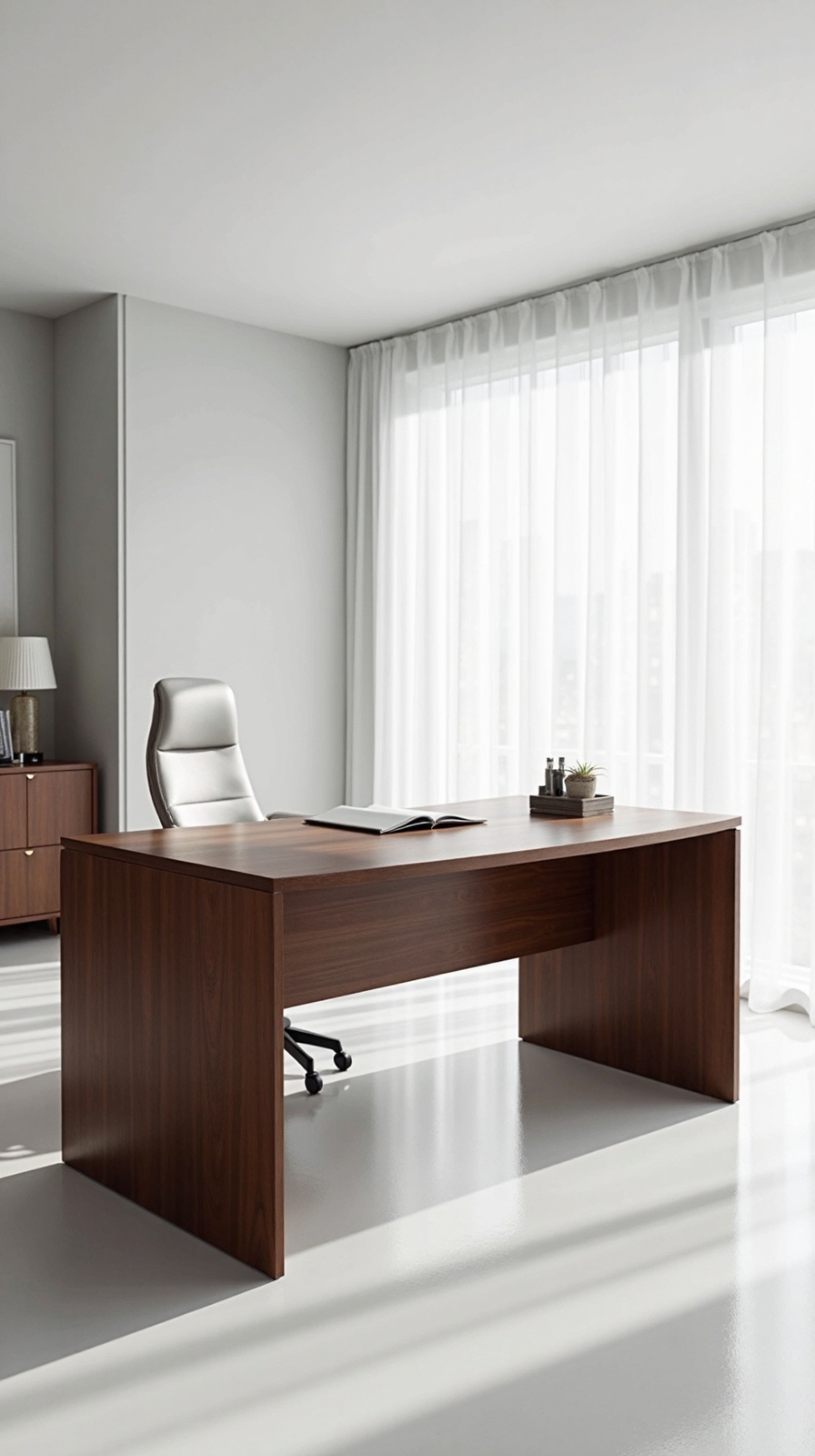
When you’re building a minimalist home office, selecting one exceptional piece of furniture creates a focal point that defines your entire workspace. This approach liberates you from the burden of coordinating multiple pieces while establishing your office’s character.
Choose furniture with quality craftsmanship that’ll withstand daily use and maintain its appeal for years. A solid wood executive desk, an ergonomic leather chair, or a sleek standing desk converter can serve as your statement piece. Look for timeless design elements that won’t feel outdated as trends change.
Your statement piece should reflect your work style and personality while serving multiple functions. A beautiful wooden desk with built-in storage eliminates the need for additional filing cabinets. This strategic investment creates a workspace that feels intentional, professional, and uniquely yours.
Implement a Paper-Free Digital Organization System
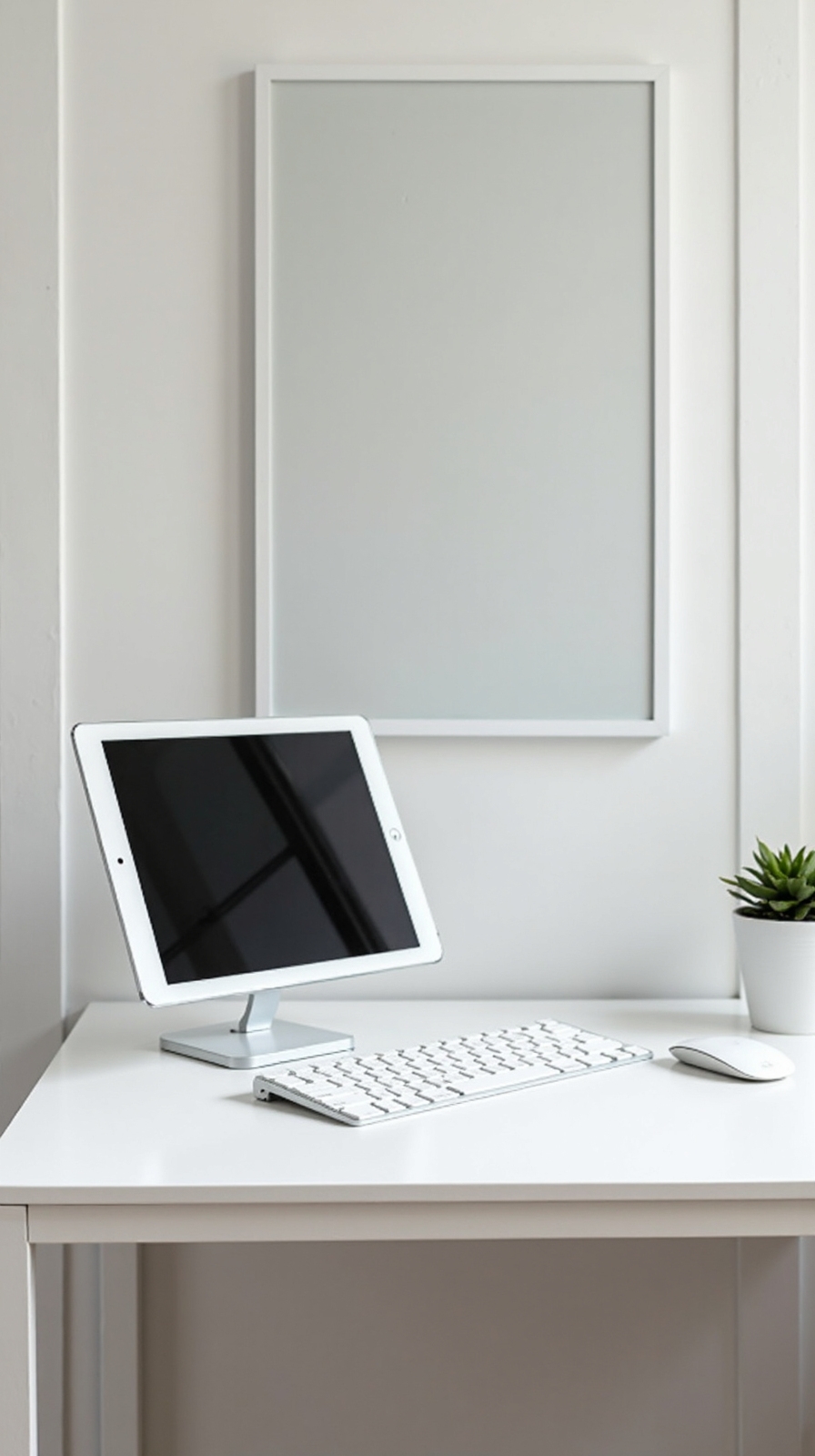
How dramatically could you alter your workspace by eliminating paper clutter entirely? A paperless filing system modifies your office into a serene, organized environment where you can focus on what matters most.
Start by scanning important documents and storing them in cloud-based folders with clear naming conventions. Use electronic note taking tools like Notion, Evernote, or Obsidian to capture ideas, meeting notes, and project details instantly. These digital platforms let you search, tag, and organize information faster than traditional filing cabinets.
Set up automated systems for bills, receipts, and contracts through apps like Adobe Scan or CamScanner. Create folder structures that mirror your workflow, making retrieval effortless. You’ll reclaim meaningful desk space while gaining the freedom to access your files from anywhere, anytime.
Select Essential Tech Tools That Serve Multiple Purposes
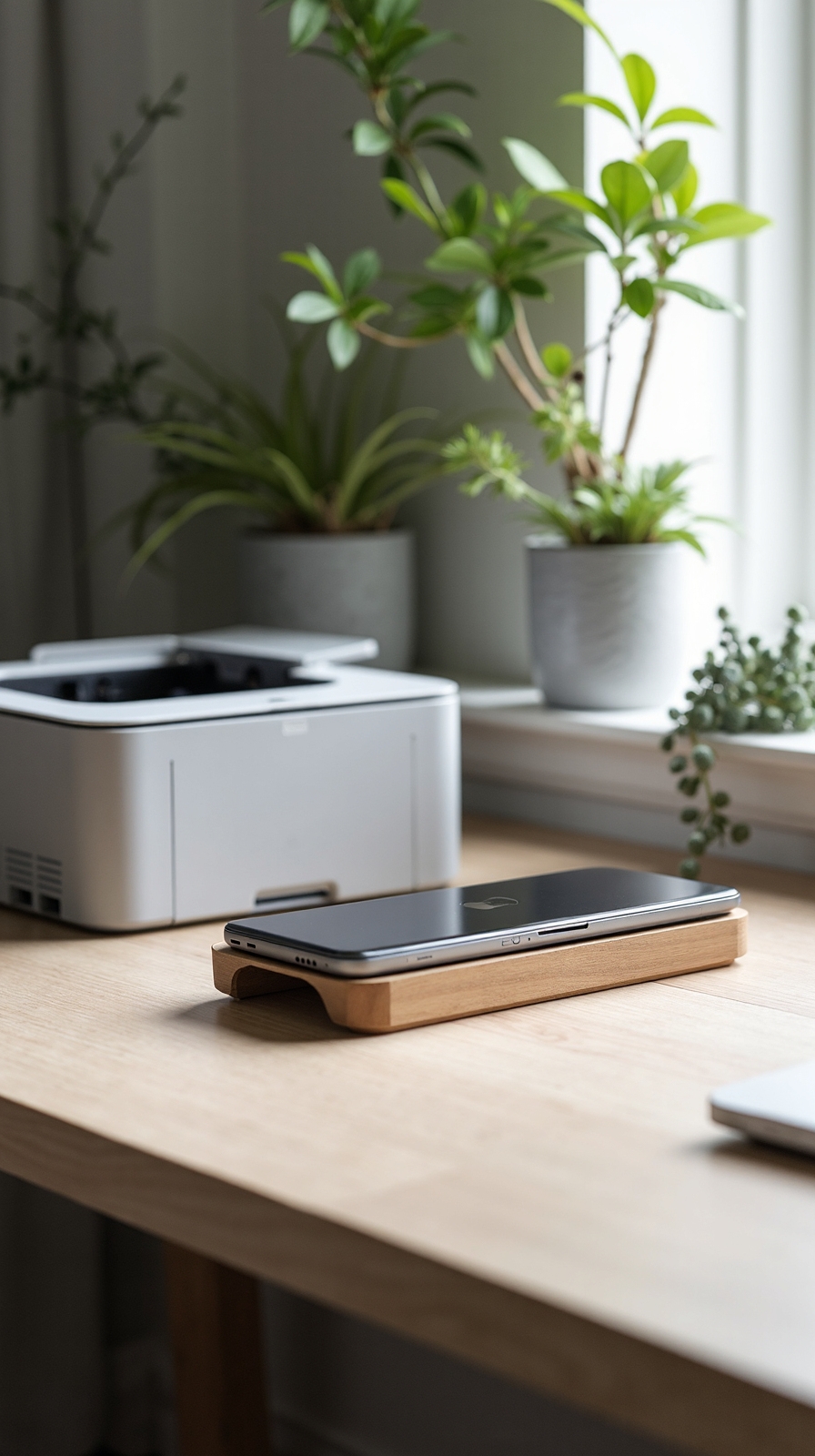
The right multi-functional technology converts your minimalist home office into a productivity powerhouse without creating visual chaos. You’ll eliminate device clutter by choosing tools that handle multiple tasks seamlessly.
Start with a laptop that doubles as your desktop workstation when connected to a monitor. This setup reduces your hardware footprint while maintaining full functionality. Choose remote collaboration tools like Slack or Microsoft Teams that combine messaging, video calls, and file sharing in one platform.
Invest in cloud based productivity apps such as Google Workspace or Notion, which merge document creation, project management, and storage capabilities. A wireless charging pad eliminates cable mess while powering multiple devices.
Select a quality all-in-one printer that scans, copies, and prints when needed. These strategic choices create an efficient workspace that supports your freedom to work anywhere.
Add a Single Plant for Natural Energy Without Overwhelming the Space
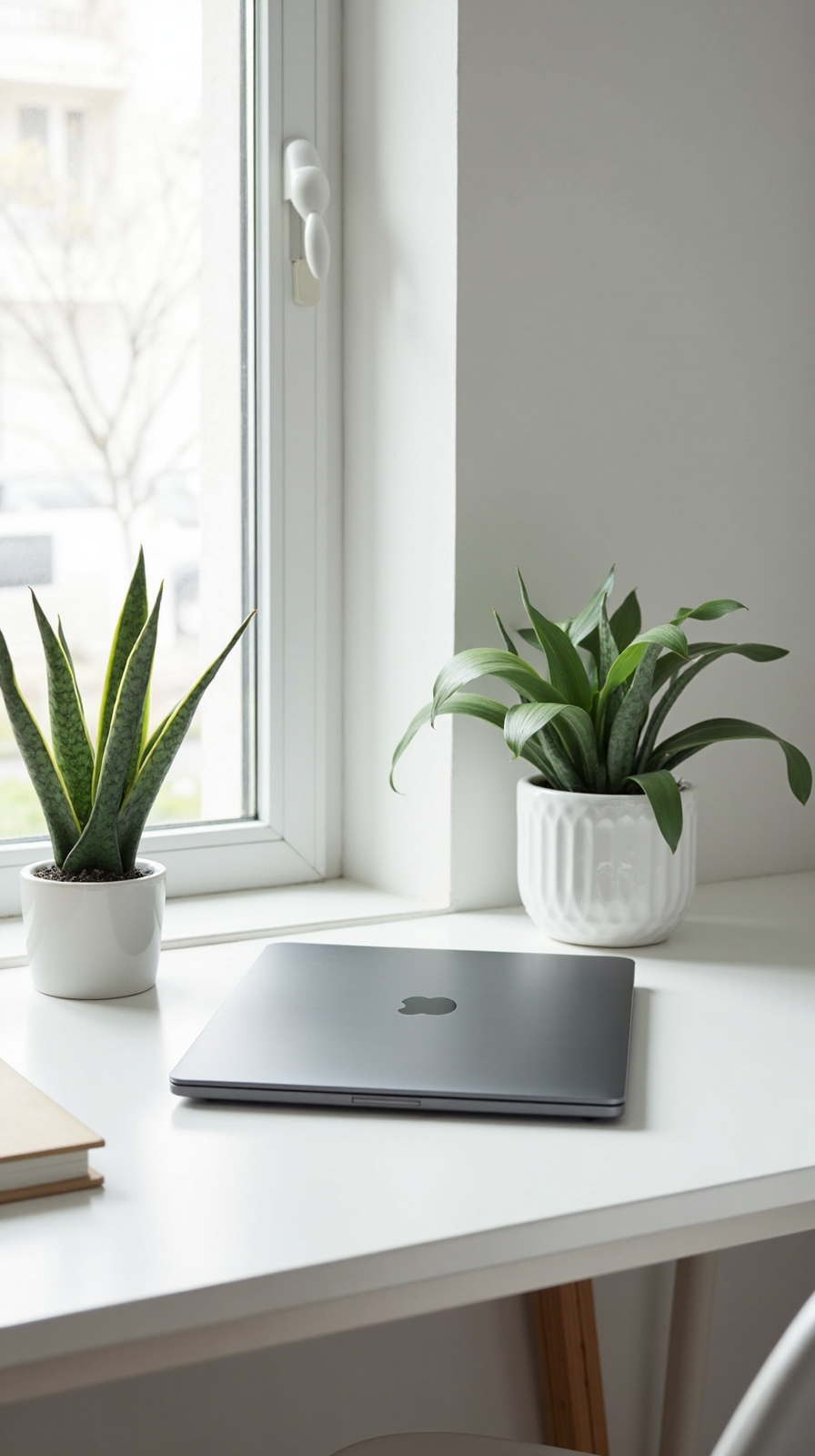
Adding greenery to your minimalist home office creates an instant connection to nature while maintaining the clean aesthetic you’ve carefully cultivated. A single, well-chosen plant alters your workspace without cluttering it.
Choose plants that introduce air purifying qualities while requiring minimal maintenance. Snake plants, pothos, or ZZ plants thrive in various lighting conditions and complement minimal design perfectly. These hardy options won’t demand constant attention, giving you the freedom to focus on your work.
Position your plant strategically on a desk corner, floating shelf, or floor beside your workspace. Select a simple ceramic or concrete planter that matches your office’s color palette. This single natural element softens hard lines while adding oxygen and visual interest to your environment without overwhelming your carefully curated space.
Design a Cable Management System That Keeps Wires Hidden
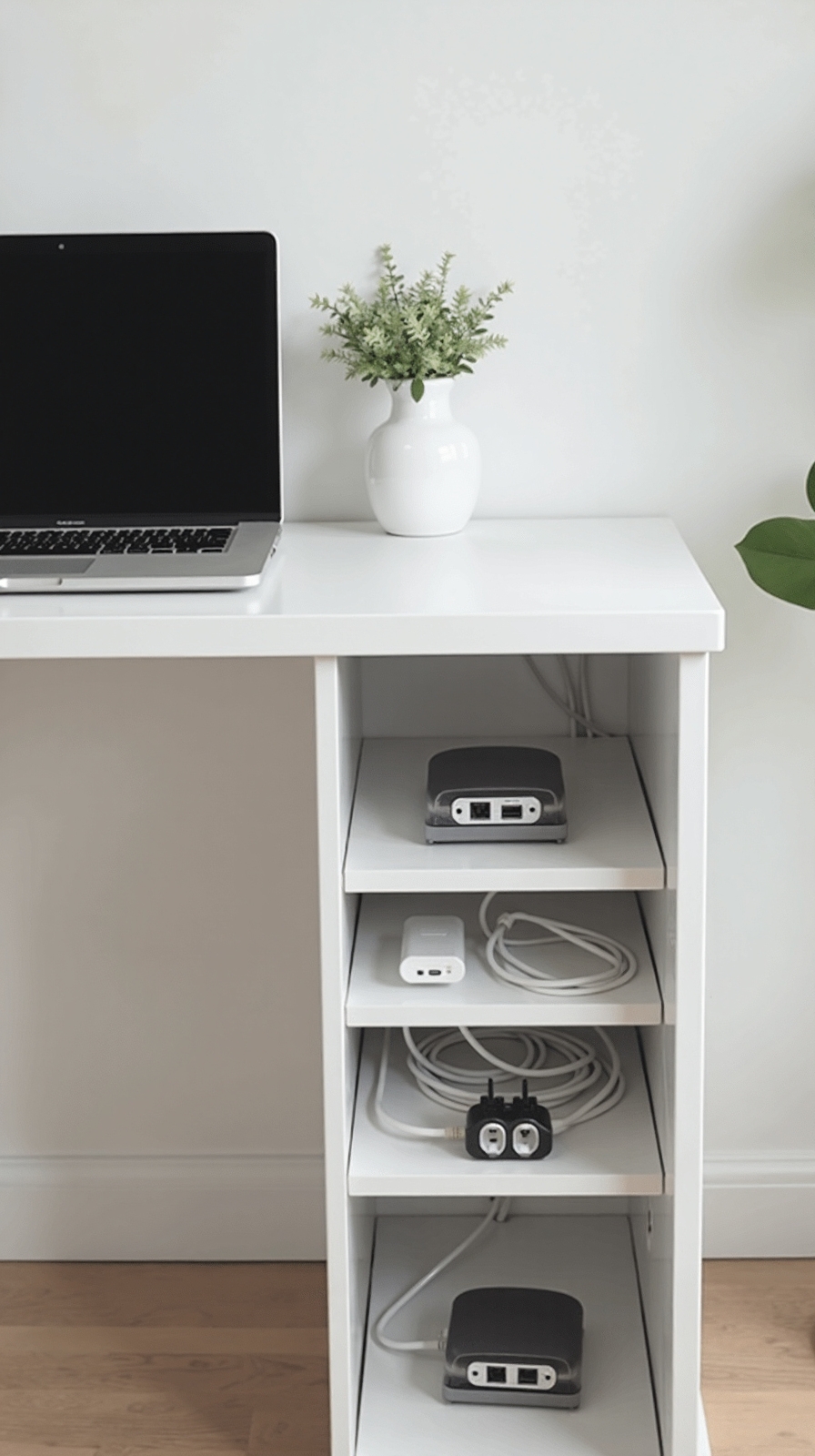
When cables snake across your desk and tangle behind your workspace, they instantly destroy the clean lines that define minimalist design. You’ll regain visual freedom by implementing smart cable containment systems that eliminate wire chaos completely.
Start with concealed wire trays mounted underneath your desk surface to route power cables and charging cords out of sight. These trays guide cables along predetermined paths while maintaining easy access for adjustments. Install adhesive cable clips along desk edges to secure individual wires without permanent modifications.
Consider investing in a dedicated cable management box that houses power strips and excess cord lengths. This approach uncovers messy wire tangles into organized, hidden systems that preserve your workspace’s clean aesthetic. You’ll notice that proper cable organization enhances both visual appeal and functional efficiency in your minimalist office environment.
Use Wall-Mounted Shelves to Free Up Floor Space
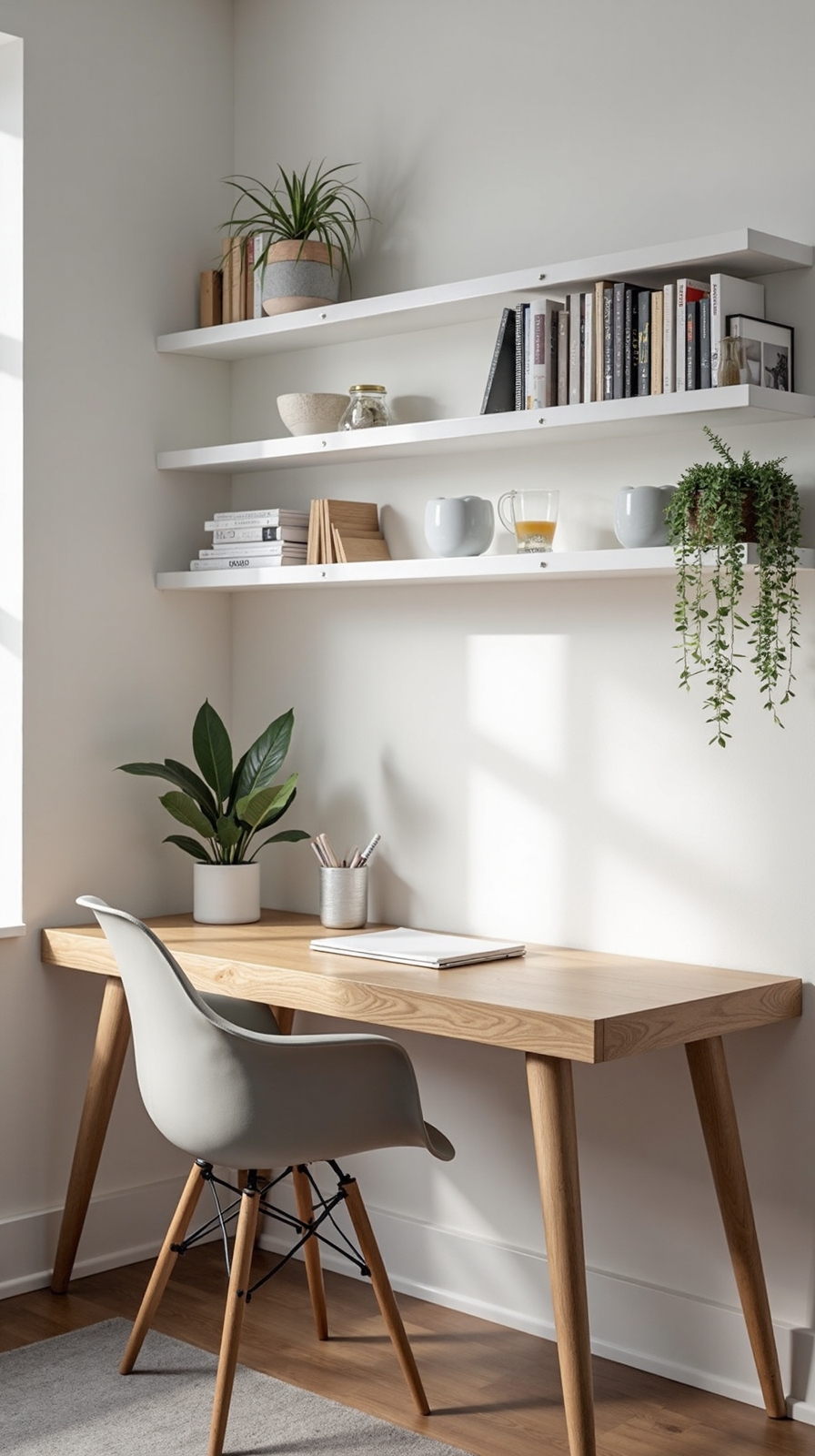
While floor-based storage solutions consume precious square footage, wall-mounted shelves redirect your organizational strategy upward to maximize every inch of available space. You’ll uncover that floating wall units create clean lines while providing essential storage for books, supplies, and decorative elements that reflect your personality.
Consider installing recessed shelving between wall studs to achieve seamless integration that doesn’t protrude into your workspace. These built-in solutions offer depth without sacrificing room movement, giving you freedom to arrange furniture without obstacles.
Position floating shelves at varying heights to create visual interest while maintaining functionality. Place frequently used items within arm’s reach and reserve higher shelves for reference materials or personal touches that inspire creativity without cluttering your immediate work environment.
Create Visual Breathing Room With Strategic White Space
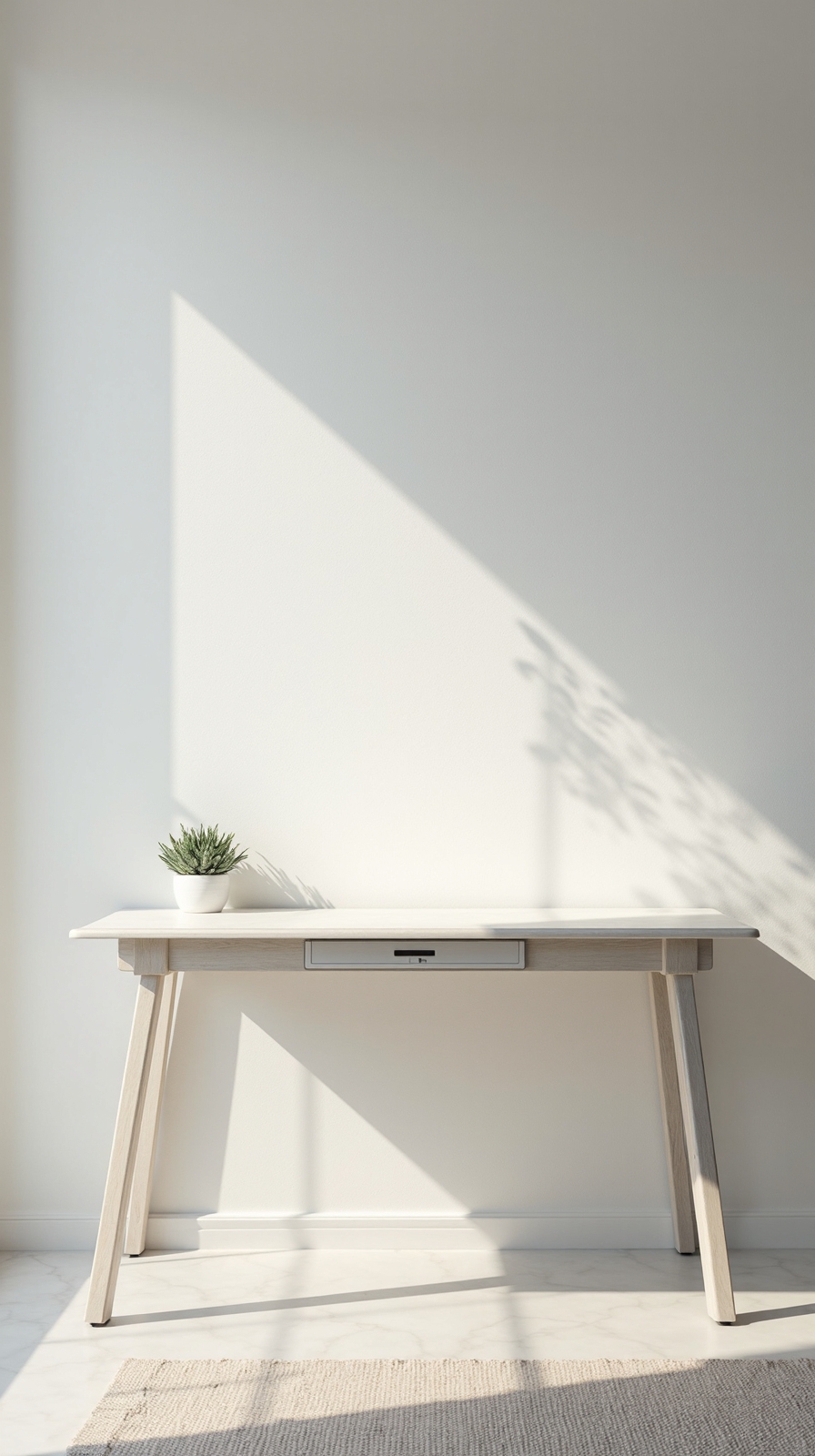
Strategic white space functions as your home office’s visual reset button, allowing your eyes to rest and your mind to focus without distraction. This calming visual balance alters cluttered workspaces into serene productivity zones where you can think clearly and work efficiently.
Start by clearing at least 30% of your desk surface, keeping only essential daily items within reach. Leave generous gaps between wall decorations, spacing them 12-18 inches apart to prevent visual overcrowding. Choose furniture with clean lines and avoid cramming pieces together in tight arrangements.
Mindful spatial arrangement means resisting the urge to fill every corner or surface. Empty wall sections aren’t wasted space—they’re intentional design choices that give your workspace room to breathe and your creativity freedom to flourish.
Choose Ergonomic Seating That Complements Your Minimal Aesthetic
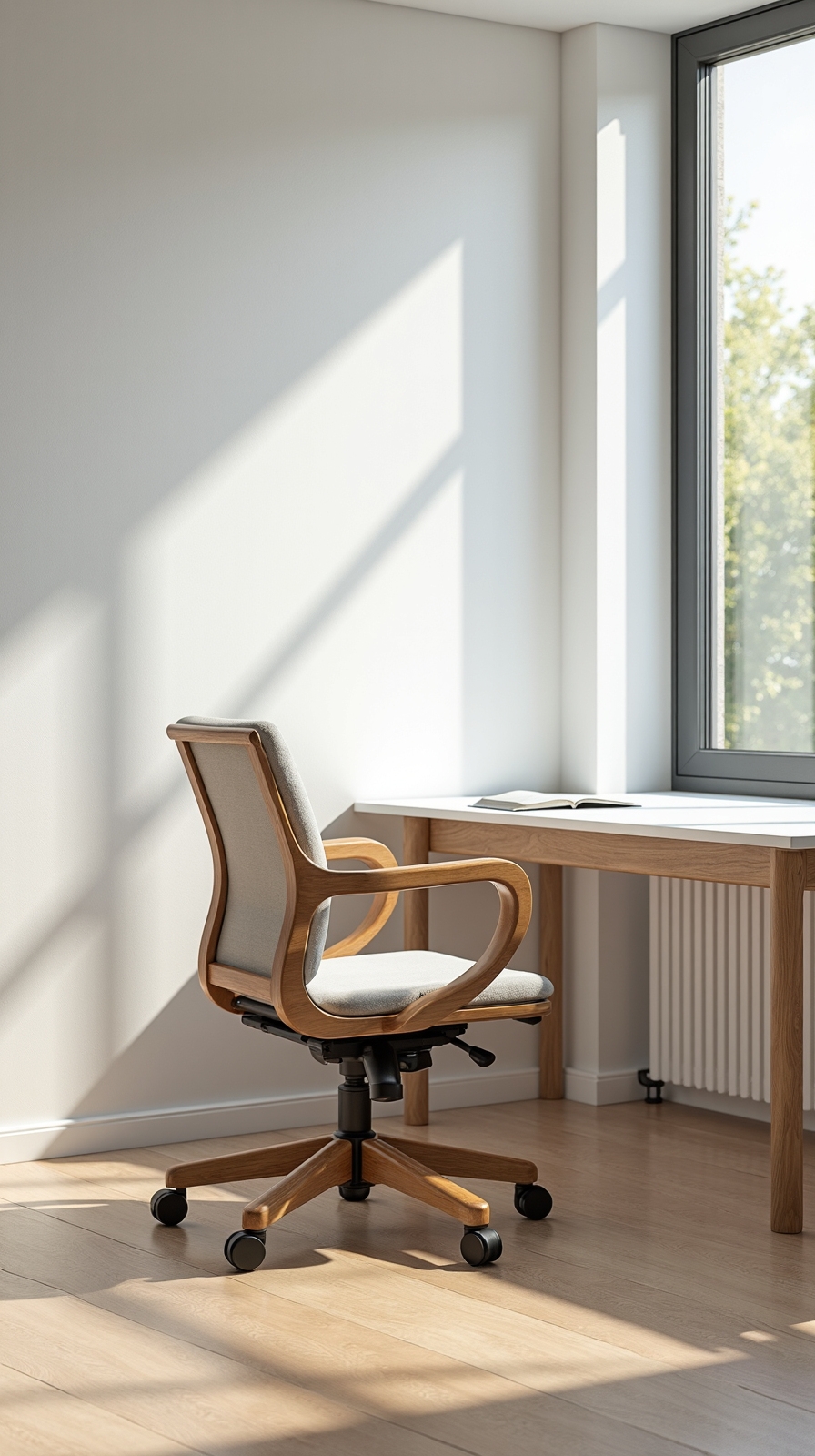
Your chair serves as the foundation of comfort and productivity in your minimalist home office, making ergonomic support essential without compromising your clean aesthetic vision.
Look for chairs with sleek lines and neutral colors that blend seamlessly into your simplified workspace. Key ergonomic chair features include adjustable seat height, armrest positioning, and tilt mechanisms that support natural movement throughout your workday.
Prioritize adjustable lumbar support to maintain proper spine alignment during long work sessions. Choose materials like mesh or leather in black, white, or gray tones that won’t disrupt your visual harmony.
Consider investing in a high-quality ergonomic chair with minimal design elements—clean geometric shapes work perfectly. The right chair eliminates distractions while supporting your body, allowing you to focus entirely on your creative freedom and professional goals.
Establish Daily Decluttering Habits to Maintain Order
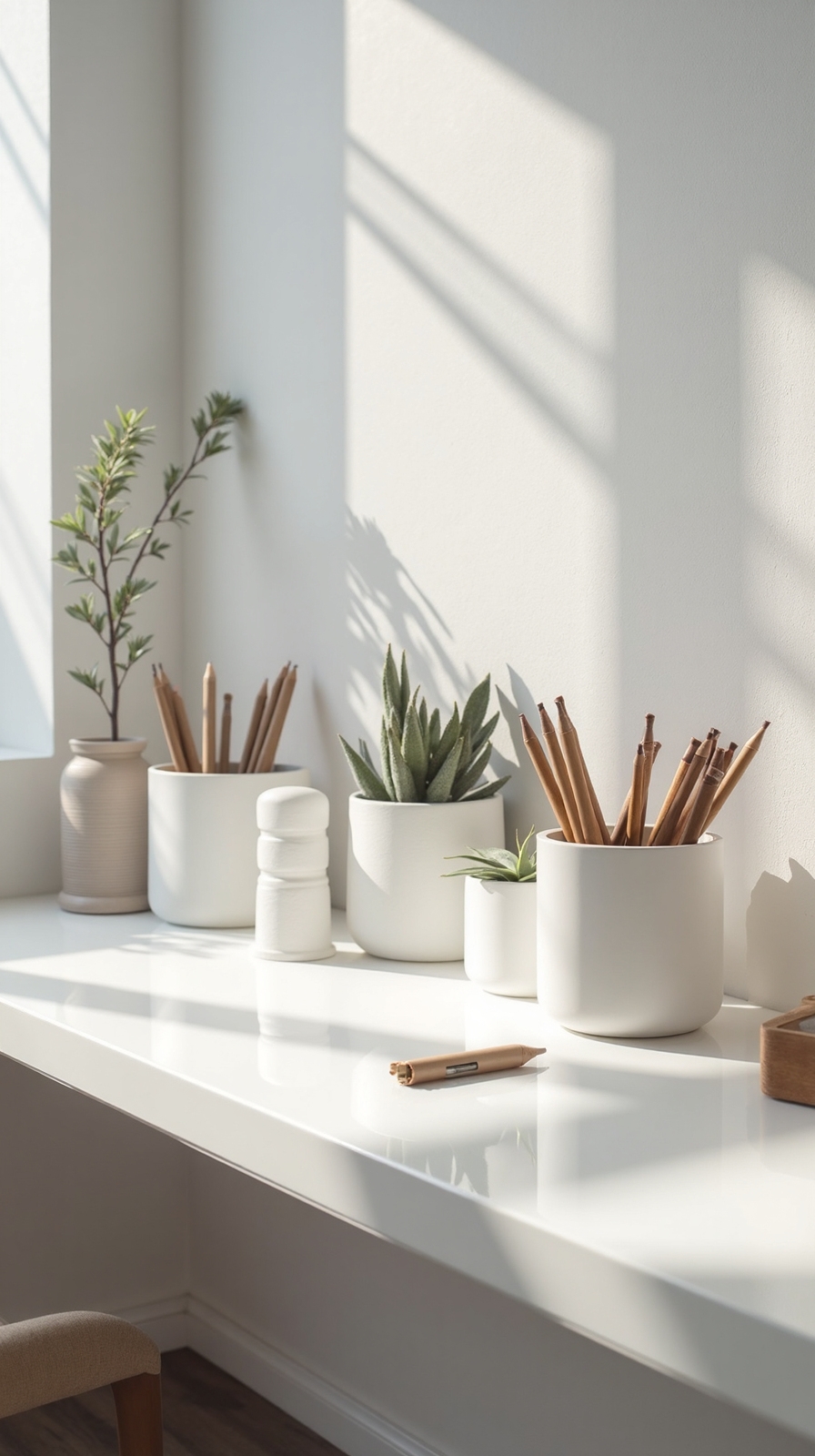
Since clutter accumulates gradually in any workspace, establishing consistent daily habits prevents overwhelming buildup that can derail your minimalist home office goals. You’ll maintain the freedom and clarity you desire by implementing simple, systematic approaches to organization.
Develop consistent decluttering routine by dedicating five minutes at day’s end to reset your space. Clear your desk surface, file important documents, and return items to designated homes. This brief investment protects your productive environment from chaos.
Schedule regular decluttering sessions weekly to address deeper organizational needs. Review paperwork, assess digital files, and evaluate whether items still serve your current projects. These focused sessions catch accumulated clutter before it overwhelms your streamlined workspace.
Create accountability by linking decluttering to existing habits like checking email or shutting down your computer, making maintenance effortless and automatic.
Incorporate Soft Textures Through Quality Materials
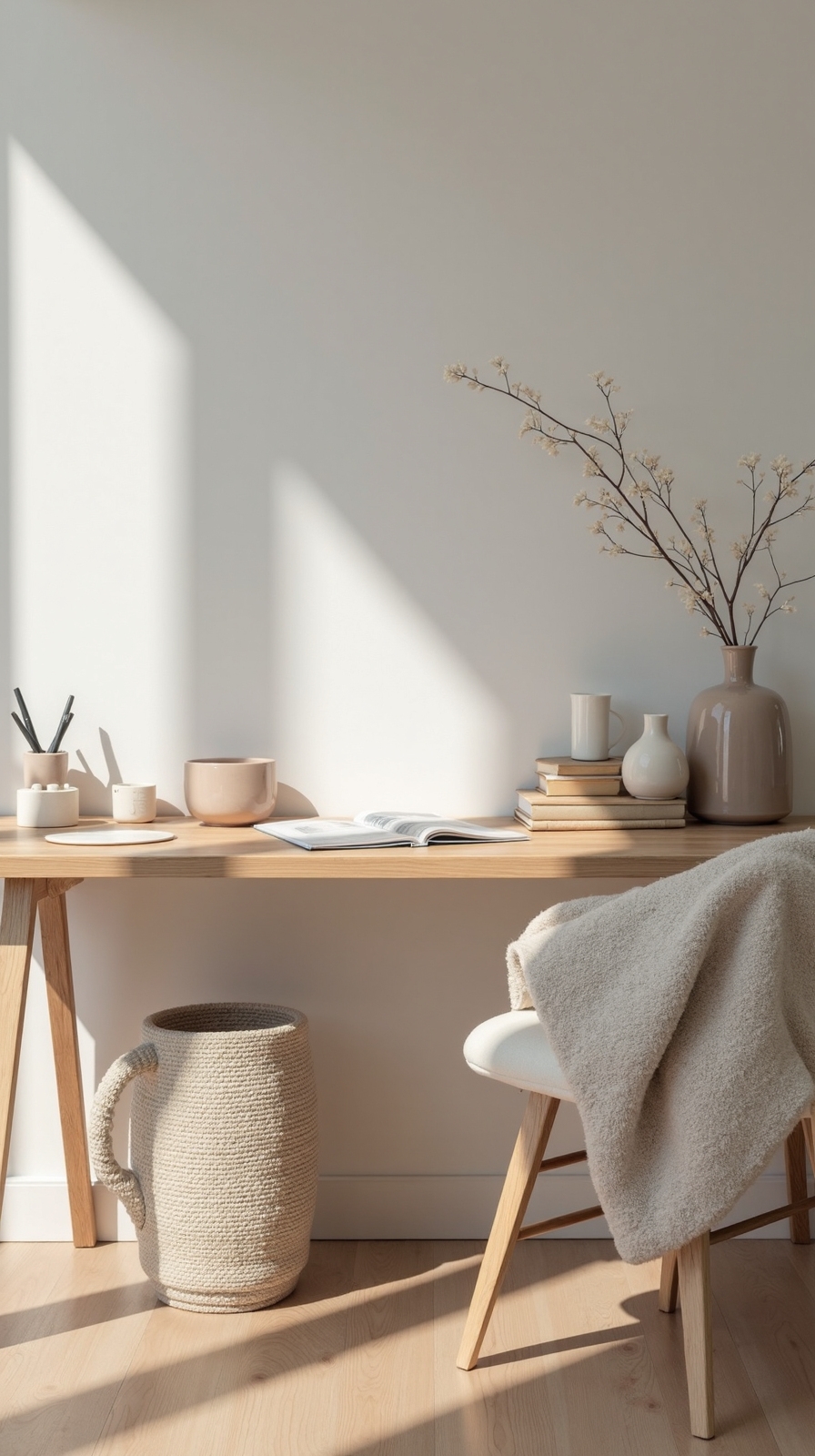
While minimalist design emphasizes clean lines and simplicity, introducing carefully selected soft textures alters your home office from stark to sophisticated without compromising your streamlined aesthetic.
You’ll transition your workspace by strategically placing lush fabrics that serve dual purposes. A cashmere throw draped over your chair back provides warmth during long work sessions while adding visual interest. Choose soothing textures like bamboo desk mats or wool area rugs that ground your space without overwhelming it.
Focus on quality over quantity when selecting materials. A single sheepskin rug beneath your desk creates comfort underfoot, while linen curtains soften harsh window light. These textural elements reduce stress and improve focus by creating a more inviting environment that supports your need for both productivity and personal freedom.
Position Your Desk for Optimal Focus and Flow
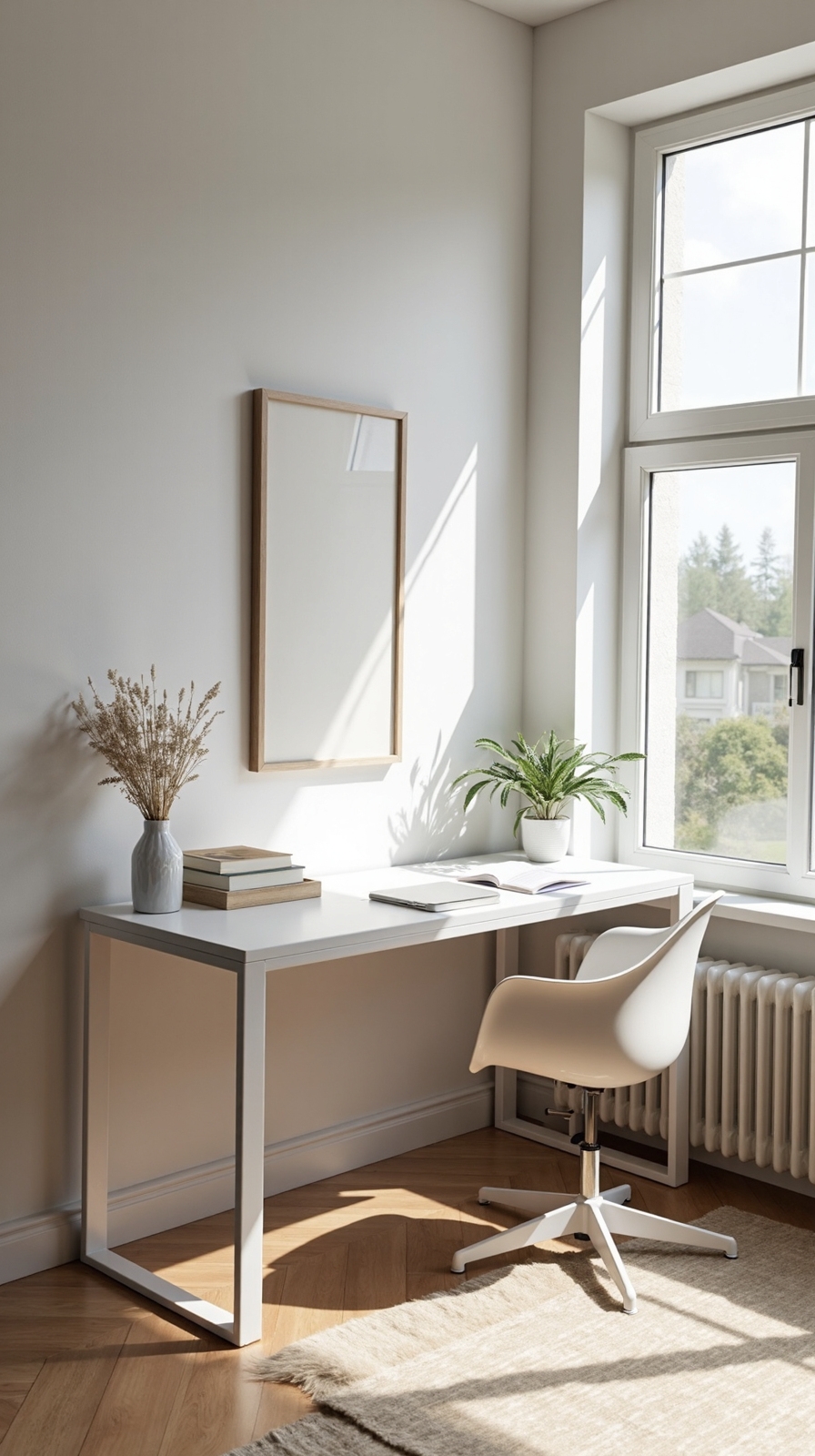
Strategic desk placement creates the foundation for a productive minimalist workspace that maximizes both mental clarity and physical comfort. You’ll want to position your desk perpendicular to windows, allowing natural light to illuminate your work without creating screen glare that disrupts concentration.
Consider your natural workflow when determining desk orientation. Place your dominant hand toward open space, giving you freedom to move comfortably while writing or using tools. Face your desk toward the room’s entrance when possible—this positioning provides psychological security and prevents distracting interruptions from behind.
Distance yourself from high-traffic areas to maintain focus throughout your workday. Create clear pathways around your desk, ensuring you can move freely without obstacles. This thoughtful desk placement supports both physical movement and mental flow, essential elements for sustained productivity in your minimalist office environment.
Conclusion
You’ve got all the tools to create a minimalist home office that enhances your productivity and peace of mind. Start with one or two changes, like decluttering your desk or adding better lighting. Remember, minimalism isn’t about perfection—it’s about creating a space that works for you. Take your time implementing these ideas, and you’ll soon enjoy a calmer, more focused workspace that supports your best work every day.