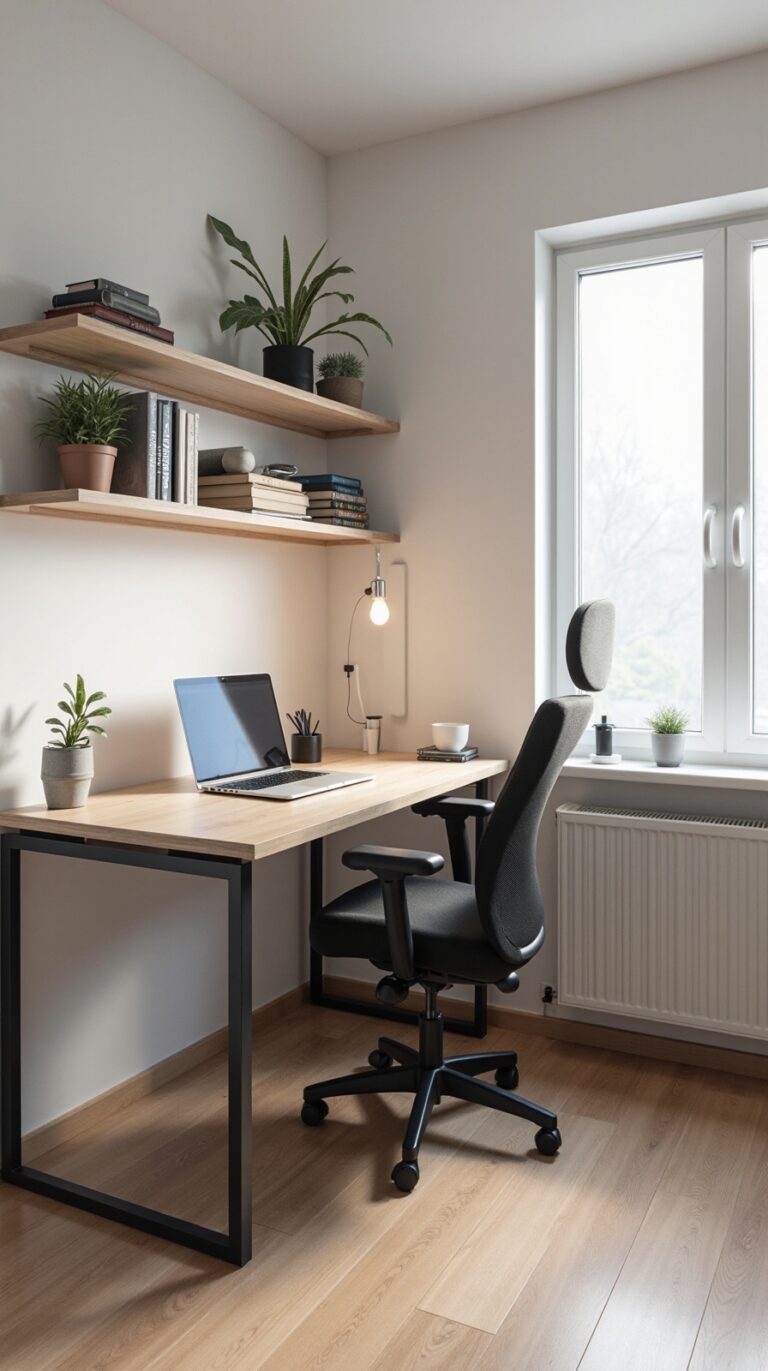
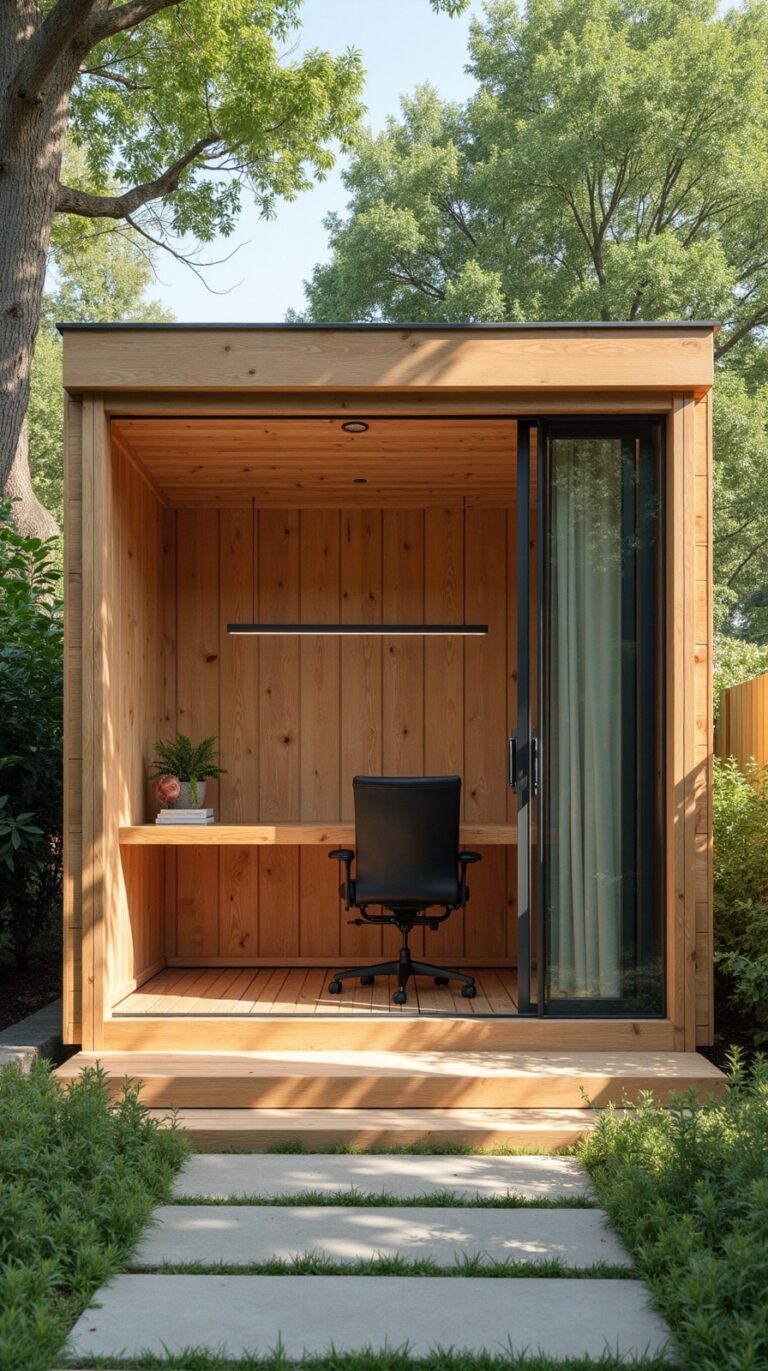
14 Narrow Home Office Ideas That Make Every Inch Count
Unlock genius narrow home office solutions that transform cramped spaces into productivity powerhouses—discover which forgotten corner could become your perfect workspace.
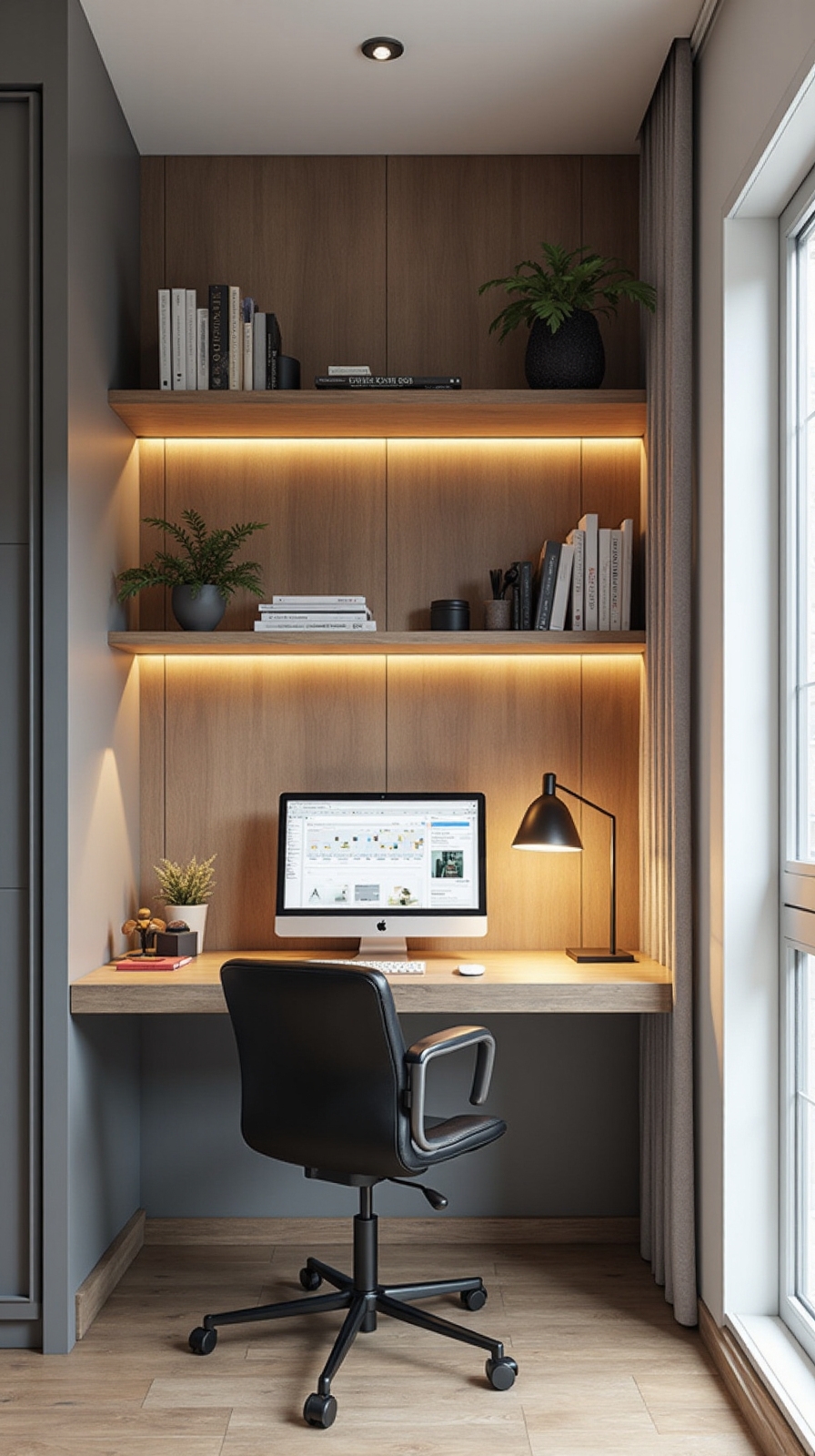
You don’t need a sprawling room to create an efficient home office that enhances your productivity. Whether you’re working with a cramped apartment or simply lack dedicated space, smart design strategies can revamp even the narrowest areas into functional workstations. From converting forgotten closets into command centers to installing clever fold-down desks, these space-maximizing solutions will show you exactly how to squeeze professional-grade functionality from every available square foot in your home.
Transform a Closet Into a Hidden Command Center
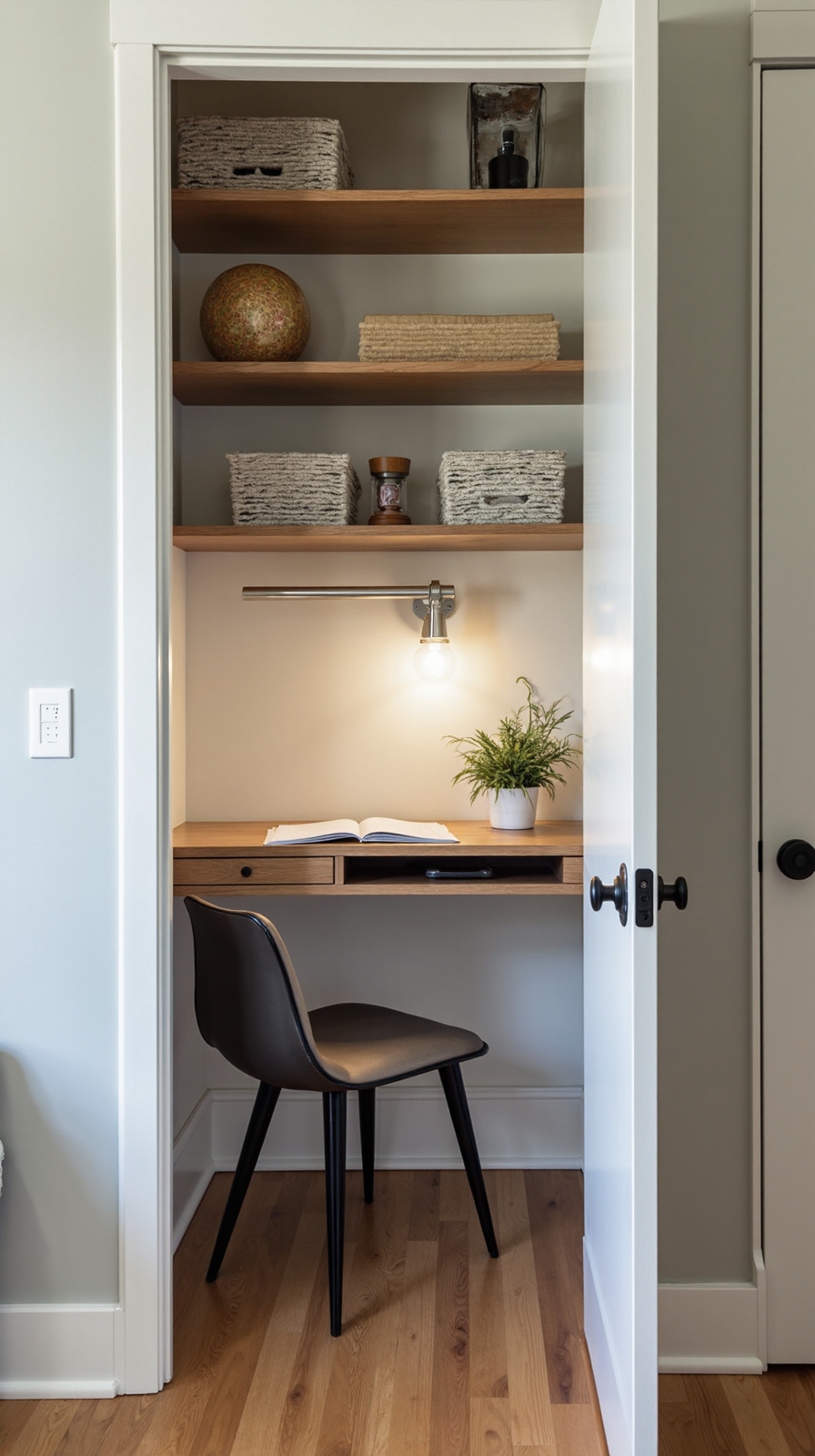
When you’re working with limited square footage, converting an unused closet creates a surprisingly functional workspace that disappears behind closed doors. This transformation gives you complete control over your work environment while maintaining your home’s aesthetic appeal.
Start by installing a compact desk that fits your closet’s width perfectly. Employ wall mounted organizers above and beside your workspace to maximize vertical storage without cluttering your desktop. These organizers hold supplies, files, and equipment within easy reach.
Conceal storage compartments behind decorative panels or small doors to keep personal items hidden yet accessible. Add proper lighting with LED strips or small pendant lights to create an inviting atmosphere. Install power outlets and cable management systems to keep technology organized and functional for seamless work sessions.
Install a Floating Corner Desk to Maximize Floor Space
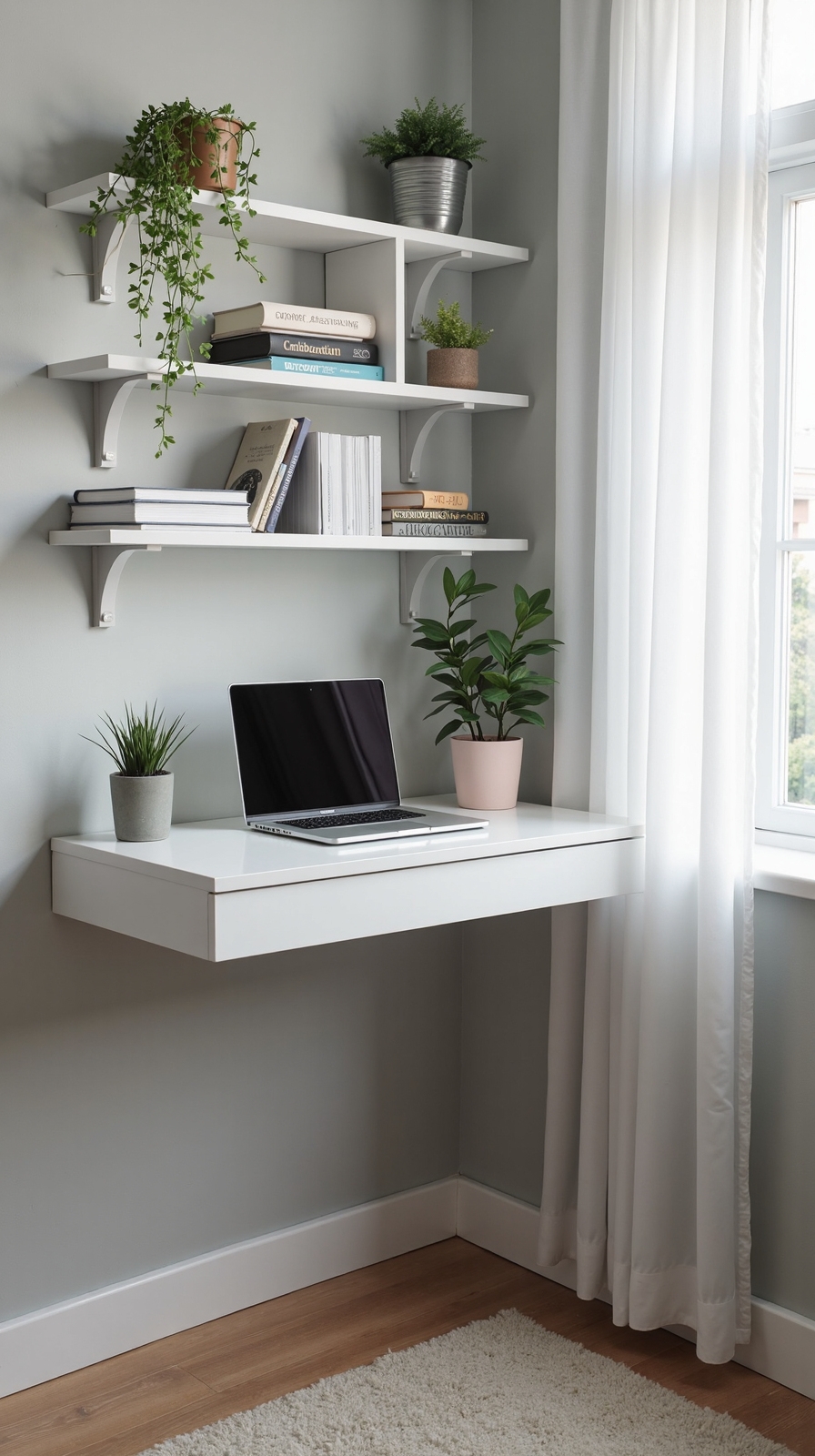
While closet conversions work wonderfully for concealed workspaces, corner floating desks offer an equally smart solution that keeps your floor area completely open. You’ll gain freedom to move around without bumping into desk legs or bulky furniture bases.
Mount your floating desk 29-30 inches from the floor for ideal comfort. Leverage modular desk components like adjustable keyboard trays and monitor arms to customize your setup. This approach lets you reconfigure elements as your needs change.
Corner installations make dead space productive while maintaining your room’s openness. Incorporate ergonomic adjustability through height-adjustable monitor mounts and tilting keyboard platforms. You can easily add or remove components without major renovations.
Choose sturdy wall anchors rated for your desk’s weight plus equipment. This creates a clean, modern workspace that doesn’t crowd your narrow room.
Create a Fold-Down Wall-Mounted Workspace
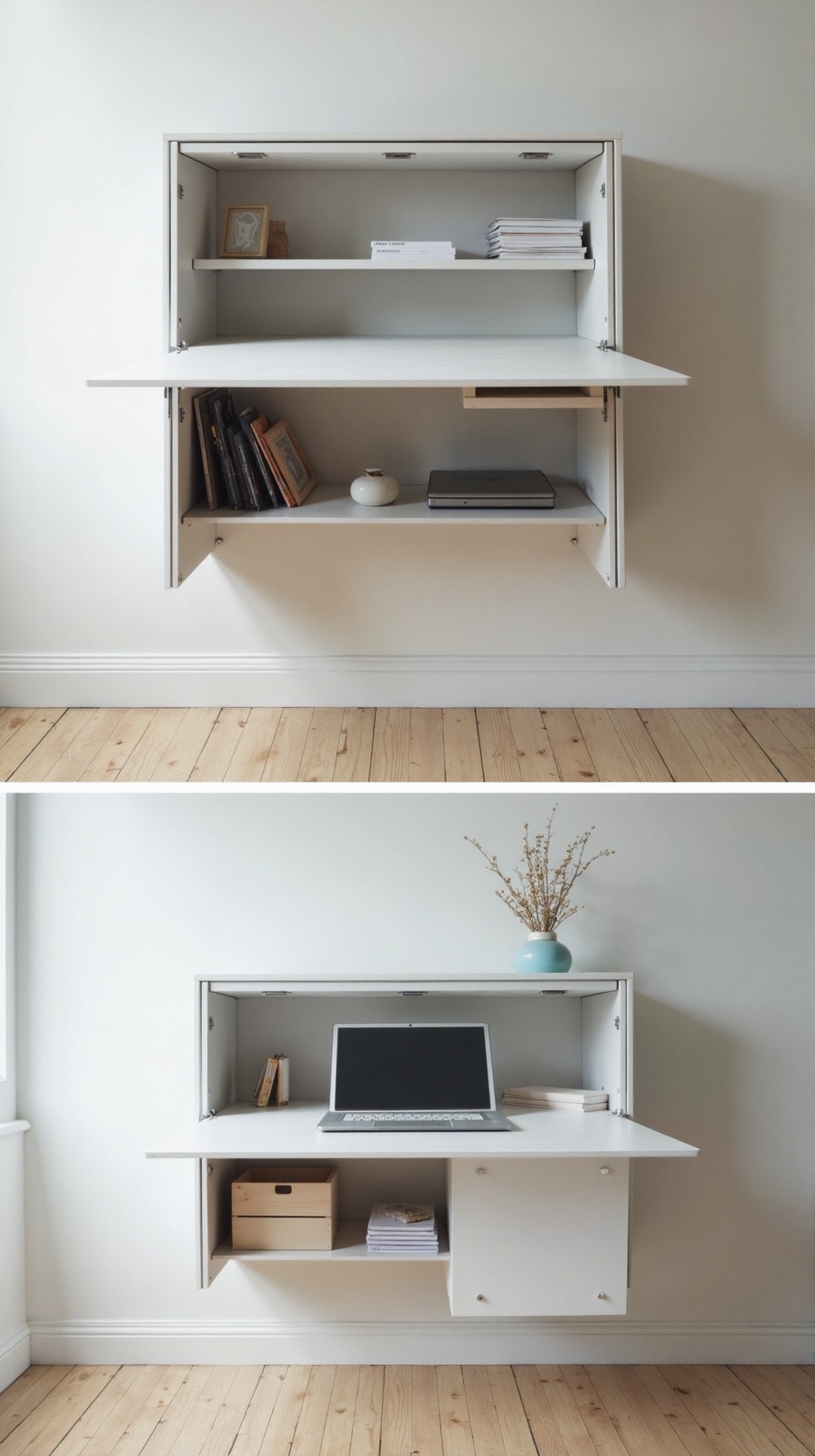
Space-saving fold-down desks convert any narrow wall into a functional office that vanishes when you’re finished working. You’ll gain complete control over your space by installing a fold down table surface that drops down when needed and tucks away seamlessly when not in use.
Mount the desk at standing or sitting height based on your preferred work style. Choose models with built-in compartments or pair them with wall mounted storage units positioned directly above the workspace. This combination keeps essential supplies within arm’s reach while maintaining your room’s clean appearance.
Consider installing a fold-down desk in hallways, bedrooms, or kitchen nooks where permanent furniture won’t fit. You’ll create an instant office anywhere without sacrificing your home’s open feel or flexibility.
Convert Underneath the Stairs Into an Office Nook
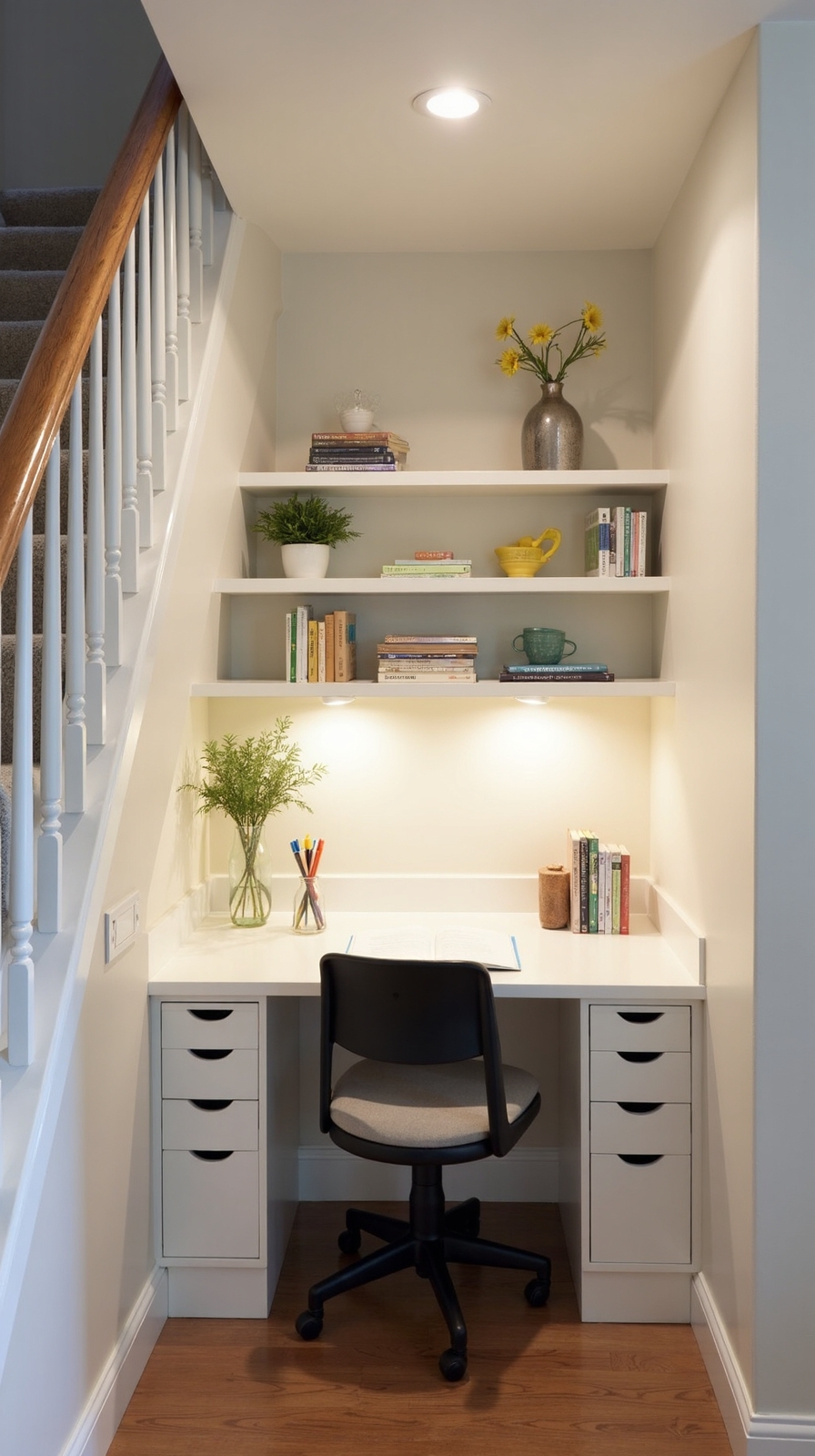
The unused area beneath your staircase offers one of the most overlooked opportunities to establish a compact home office in tight quarters. You’ll uncover this awkward space transforms into your personal productivity haven with strategic planning and smart design choices.
Start by measuring the available height and depth to determine your workspace dimensions. Most under-stair areas provide sufficient room for a desk, chair, and essential storage solutions. You can create a hidden staircase nook by installing a sliding door or curtain panel for privacy during important calls.
Consider hiring a carpenter to integrate a built in work cabinet that maximizes vertical storage while maintaining the space’s functionality. Add adequate lighting through LED strips or a compact desk lamp to eliminate shadows and create an inviting atmosphere for focused work.
Design a Narrow Hallway Workstation
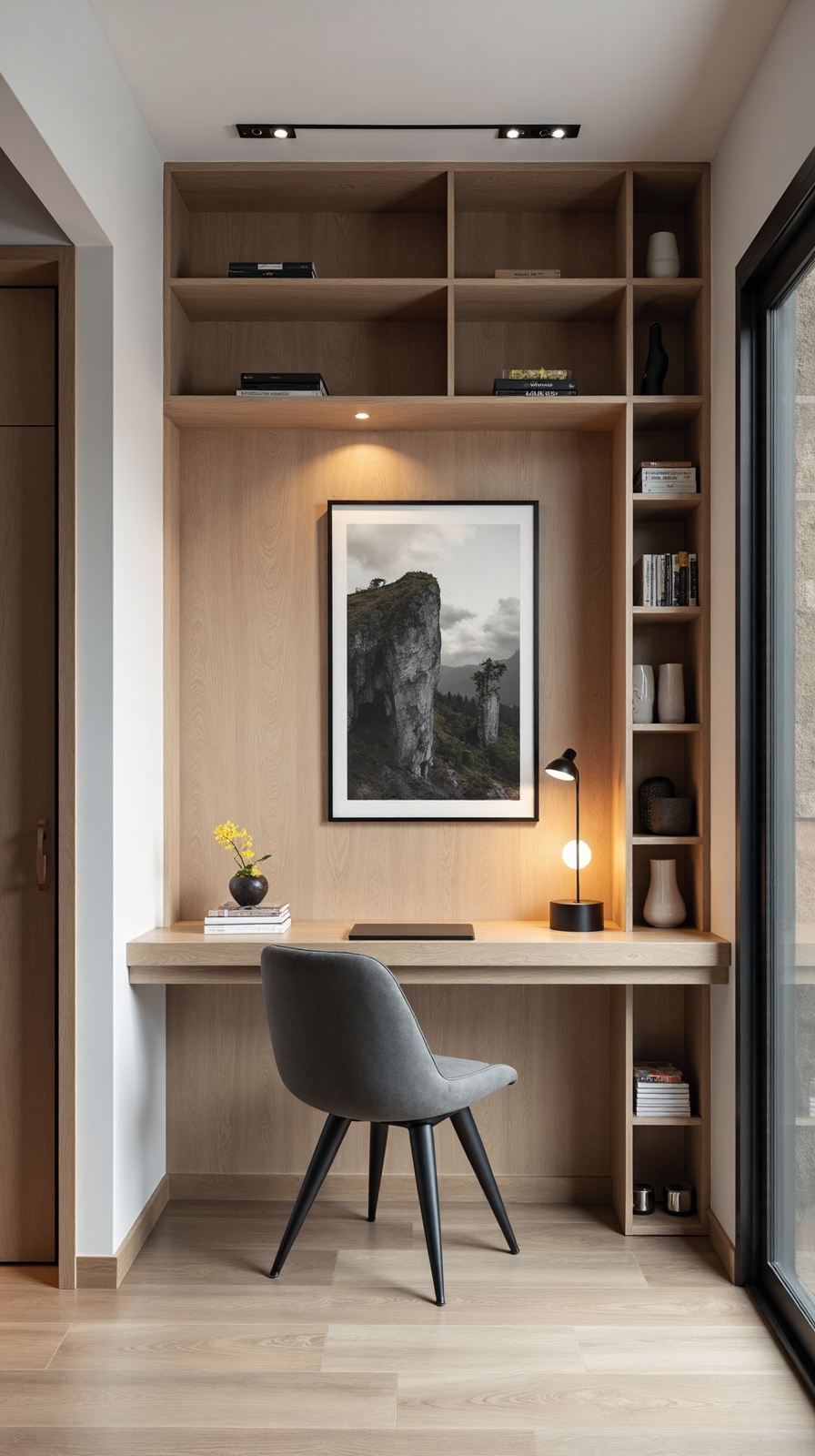
Long, narrow hallways present untapped potential for creating functional workspace solutions that don’t compromise your home’s traffic flow. You’ll convert dead space into productive territory while maintaining clear pathways for daily movement.
Install a floating desk partition along one wall to create your workspace without blocking natural light or foot traffic. Choose slim profiles that extend 12-18 inches from the wall, providing adequate work surface while preserving walkway width. Position the desk at standard height (29-30 inches) for comfortable use.
Maximize vertical storage with wall-mounted shelves above your workspace for books, supplies, and decorative elements. Add under desk storage drawers beneath your floating surface to keep essentials organized and accessible. You’ll create a streamlined office that feels intentional rather than cramped, giving you workspace freedom without sacrificing home functionality.
Build a Murphy Desk That Disappears When Not in Use
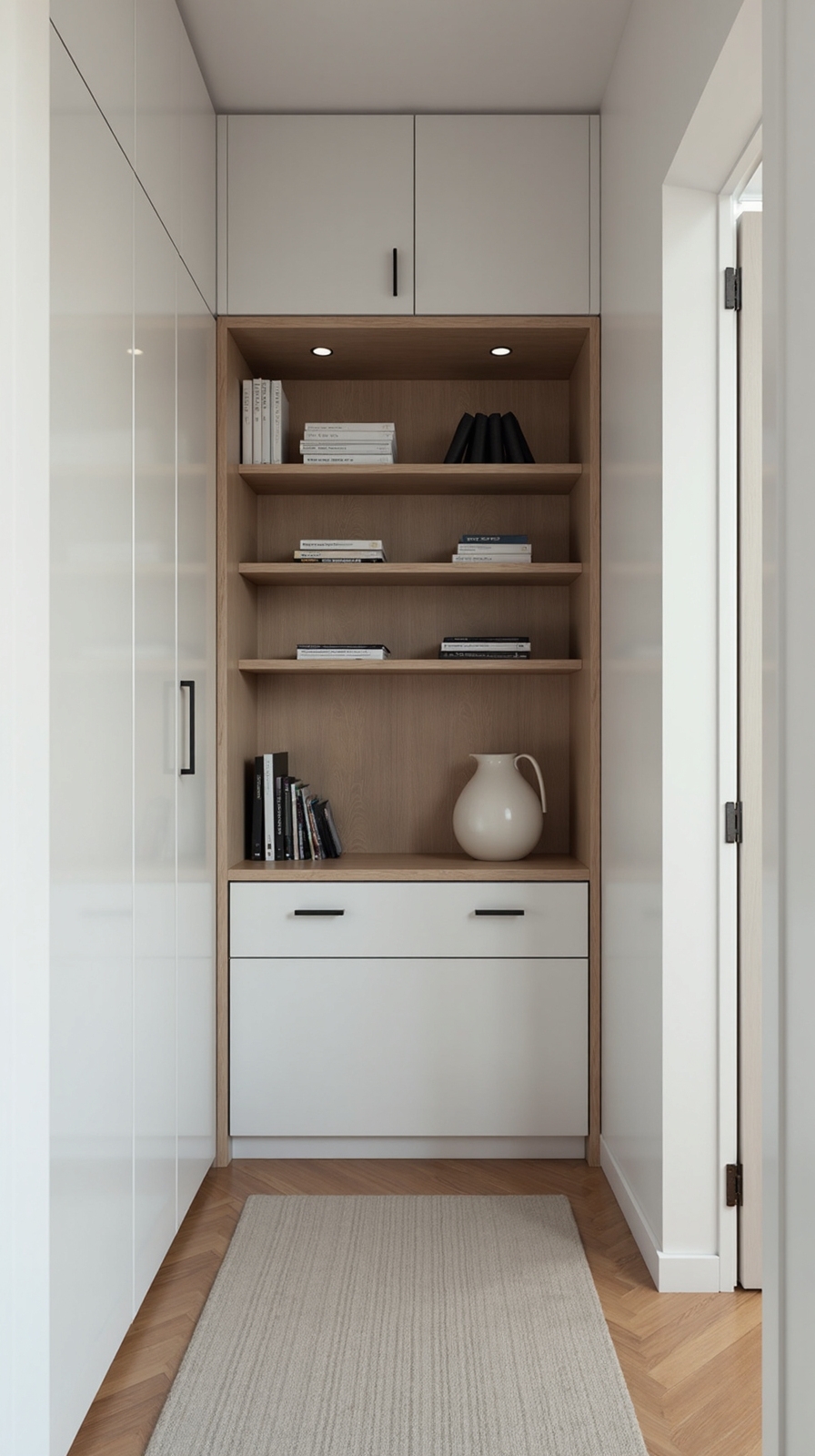
When you’re working with extremely limited square footage, a Murphy desk offers the perfect solution for creating workspace that vanishes completely after hours. This fold-down design alters any wall into an instant office, then disappears to restore your living space.
Install space saving hinges that support 50-75 pounds, ensuring smooth operation and durability. Mount the desk at standing or sitting height based on your preferences. You’ll need sturdy wall anchors and proper framing support for safety.
Add minimal storage units like narrow shelves or small cubbies above the fold-down surface for essential supplies. Consider built-in cord management to keep cables organized when the desk folds up. This solution works perfectly in bedrooms, living rooms, or tight corridors where permanent furniture isn’t practical.
Utilize a Window Sill as an Ultra-Compact Desk Surface

Although it might seem unconventional, altering your window sill into a compact workspace creates an efficient desk solution that maximizes natural light while harnessing otherwise wasted space. You’ll transform this underused area into a productive zone that doesn’t compromise your room’s flow.
First, measure your window sill’s depth and width to determine workspace dimensions. Install a custom wood or laminate extension if you need additional surface area. You can leverage natural light streaming through the window to reduce eye strain and enhance your mood during work sessions.
Next, incorporate floating shelves above or beside the window to store essential supplies within arm’s reach. Add a compact desk lamp for evening work, and consider a small cushion or ergonomic seat pad for extended sitting periods.
Turn a Room Divider Into a Dual-Purpose Office Wall
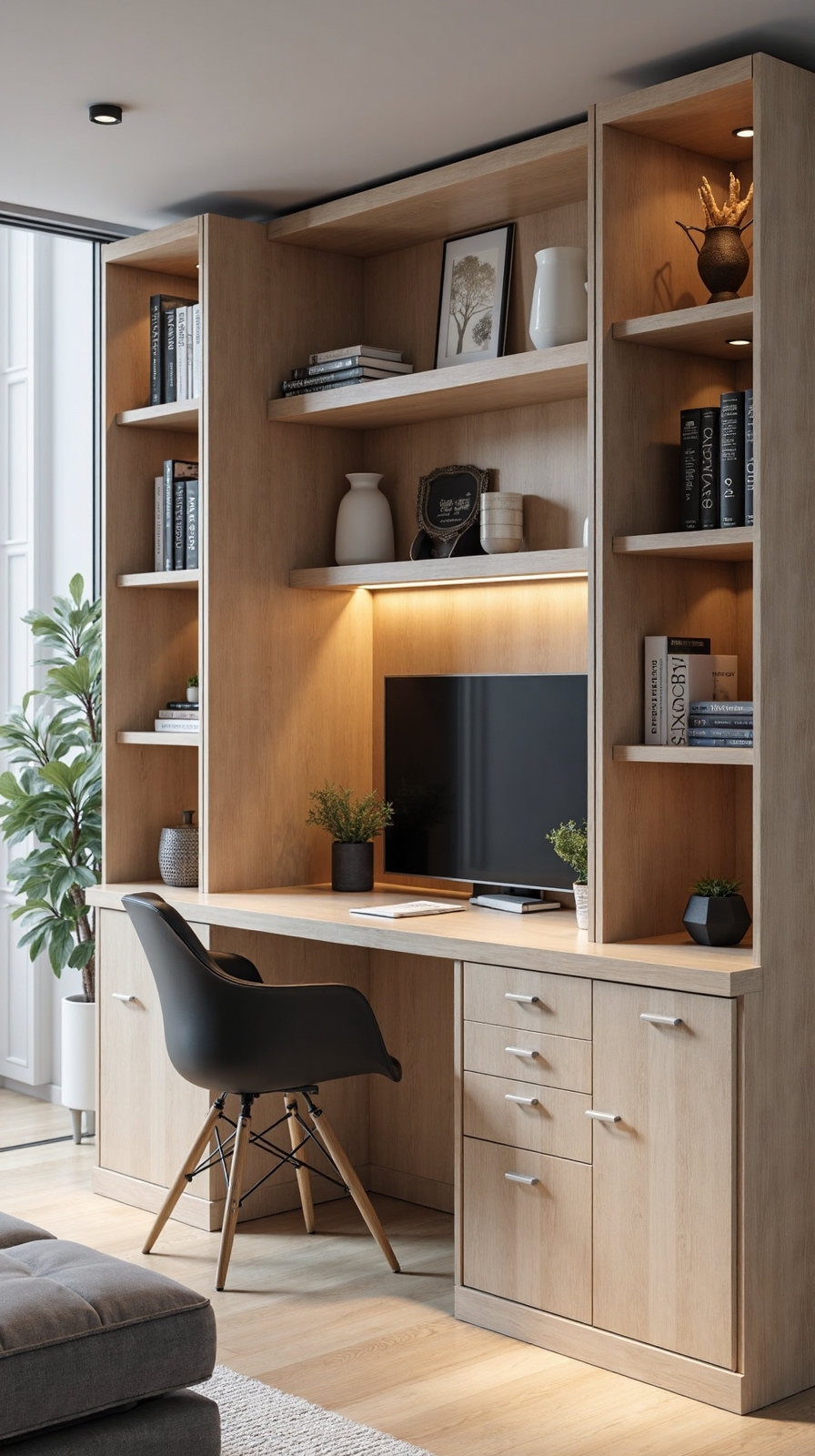
You can maximize your narrow space by installing a room divider that serves as both a privacy screen and a functional office wall. This dual-purpose solution creates distinct zones while providing essential workspace features without consuming extra floor space.
Choose a room divider with built-in storage compartments and attachment points for office accessories. Install pegboard organization panels on one side to hold tools, supplies, and equipment within easy reach. Add corner shelving units at the divider’s ends to maximize vertical storage potential.
Consider modular systems that let you customize height and width based on your specific needs. These flexible dividers can incorporate whiteboards, cork boards, or magnetic surfaces for enhanced productivity. You’ll create a dedicated workspace that feels separate from your living area while maintaining an open, uncluttered environment.
Maximize Vertical Storage With Floor-To-Ceiling Shelving
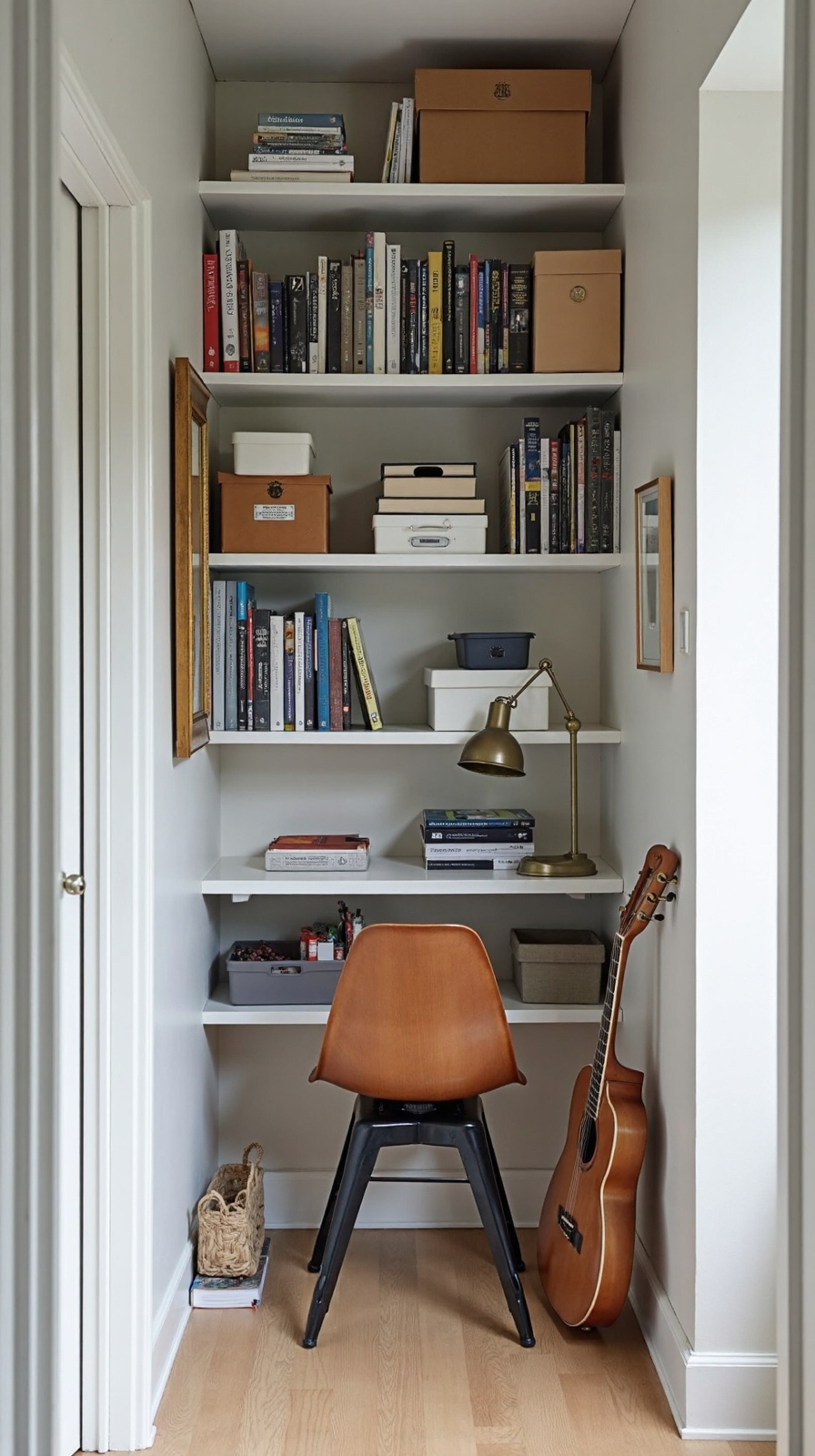
Floor-to-ceiling shelving alters your narrow office’s vertical real estate into a powerhouse storage solution that keeps supplies organized and surfaces clear. You’ll convert cramped quarters into an efficient workspace that doesn’t sacrifice functionality for freedom.
Install floating shelves at varying heights to create visual interest while accommodating different storage needs. Place frequently used items within arm’s reach and store seasonal supplies higher up. Corner storage units maximize those awkward spaces that typically go unused, giving you additional room for books, binders, and office equipment.
Consider adjustable shelving systems that adapt as your needs change. You can reconfigure sections without reinstalling entire units, maintaining the flexibility you crave. Mix open shelving with closed storage to balance accessibility with a clean appearance that won’t overwhelm your narrow space.
Create a Sliding Desk System That Tucks Away
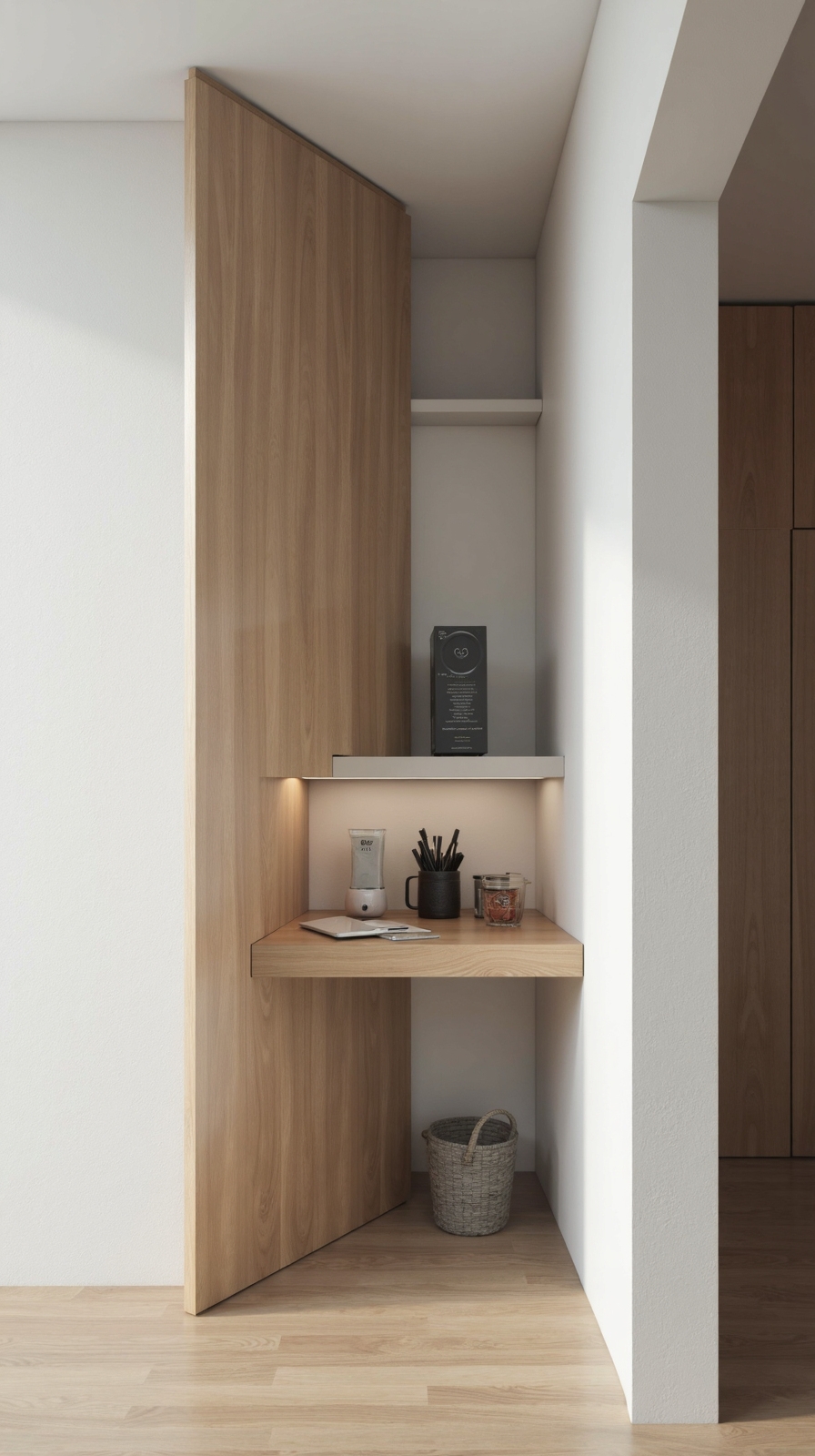
When space becomes your biggest constraint, a sliding desk system converts your narrow office into a flexible workspace that vanishes when you don’t need it. You’ll install a retractable desk mechanism that pulls out from a wall cabinet or concealed compartment, giving you instant access to your work surface.
Mount a space saving desk track system along your wall to create smooth, effortless movement. The track supports your desk while allowing it to slide completely out of sight when closed. You can customize the depth based on your specific needs – whether you need room for a laptop or full desktop setup.
This solution alters any narrow hallway or closet into a functional office that disappears entirely, preserving your home’s aesthetic while maximizing productivity.
Transform an Awkward Alcove Into a Productive Zone
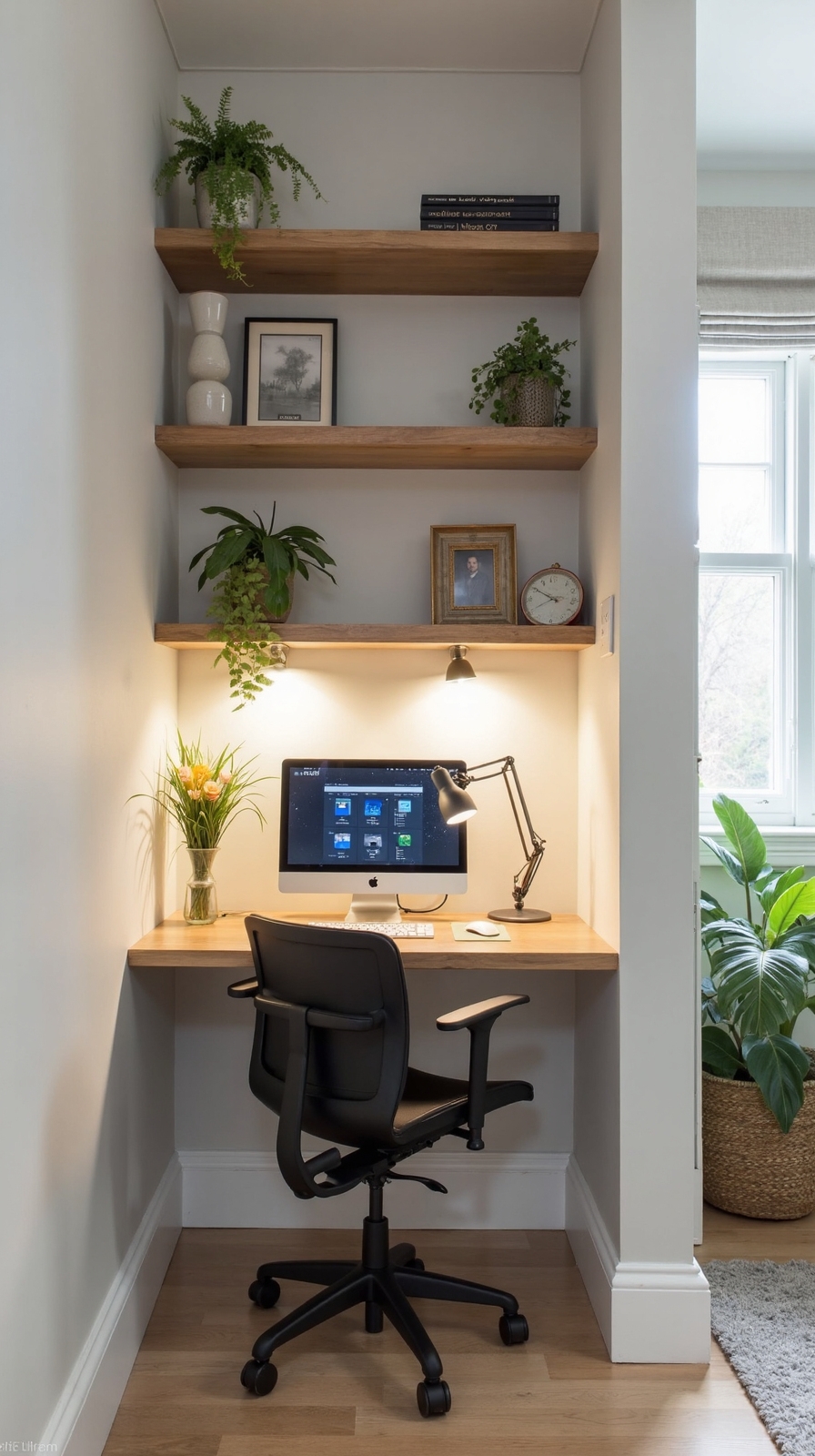
That forgotten nook beneath your staircase or between structural walls holds untapped potential as your dedicated home office sanctuary. These compact spaces often feature unique angles and dimensions that traditional furniture can’t accommodate effectively.
Start by measuring your alcove’s exact dimensions, including any sloped ceilings or irregular corners. Custom solutions work best here. Add built-in shelving that follows your space’s natural contours, maximizing vertical storage while maintaining visual flow.
Employ hidden storage compartments beneath the desktop for cables, supplies, and documents you don’t access daily. Consider installing pull-out drawers that slide completely into the wall.
Proper lighting transforms cramped quarters into inviting workspaces. Add LED strip lighting under shelves and a focused task light above your workspace.
Design a Multi-Level Workspace Using Wall-Mounted Platforms
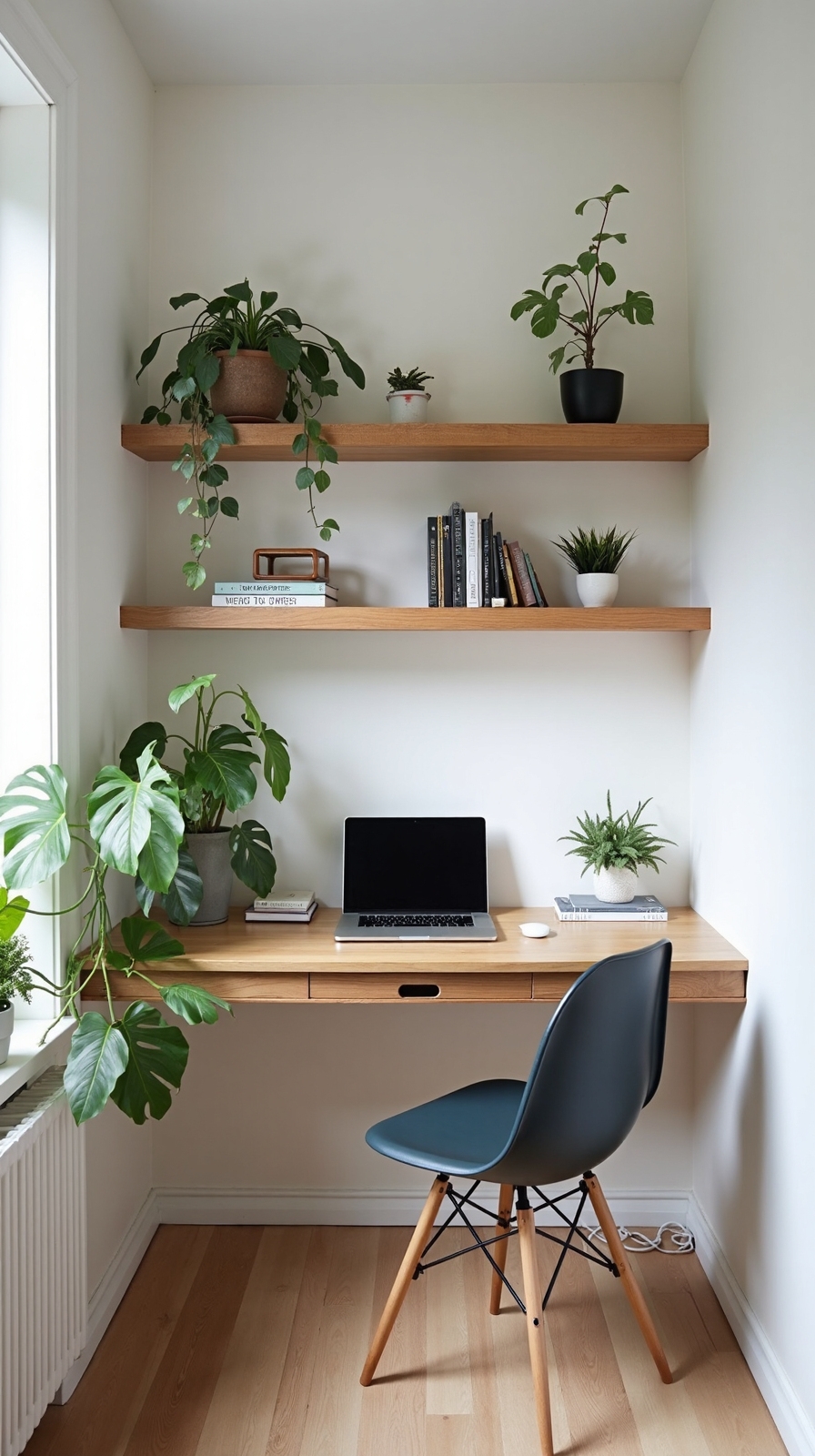
While vertical storage typically means adding shelves, creating distinct workspace levels opens entirely new possibilities for your narrow office layout. You’ll maximize every square foot by installing wall-mounted platforms at different heights throughout your space.
Start with a primary desk surface mounted 29-30 inches from the floor for comfortable typing and writing tasks. Add a secondary platform 12-15 inches above for your monitor, creating better ergonomics while freeing desktop real estate. Install a third level near ceiling height for storage bins and archived materials.
These multi level storage solutions work exceptionally well in narrow spaces because they don’t compete for precious floor area. Space saving shelving systems with floating brackets maintain clean lines while supporting substantial weight. You’ll uncover this approach transforms cramped quarters into an efficient, organized workspace that adapts to your changing needs.
Convert a Narrow Balcony Into an Indoor-Outdoor Office
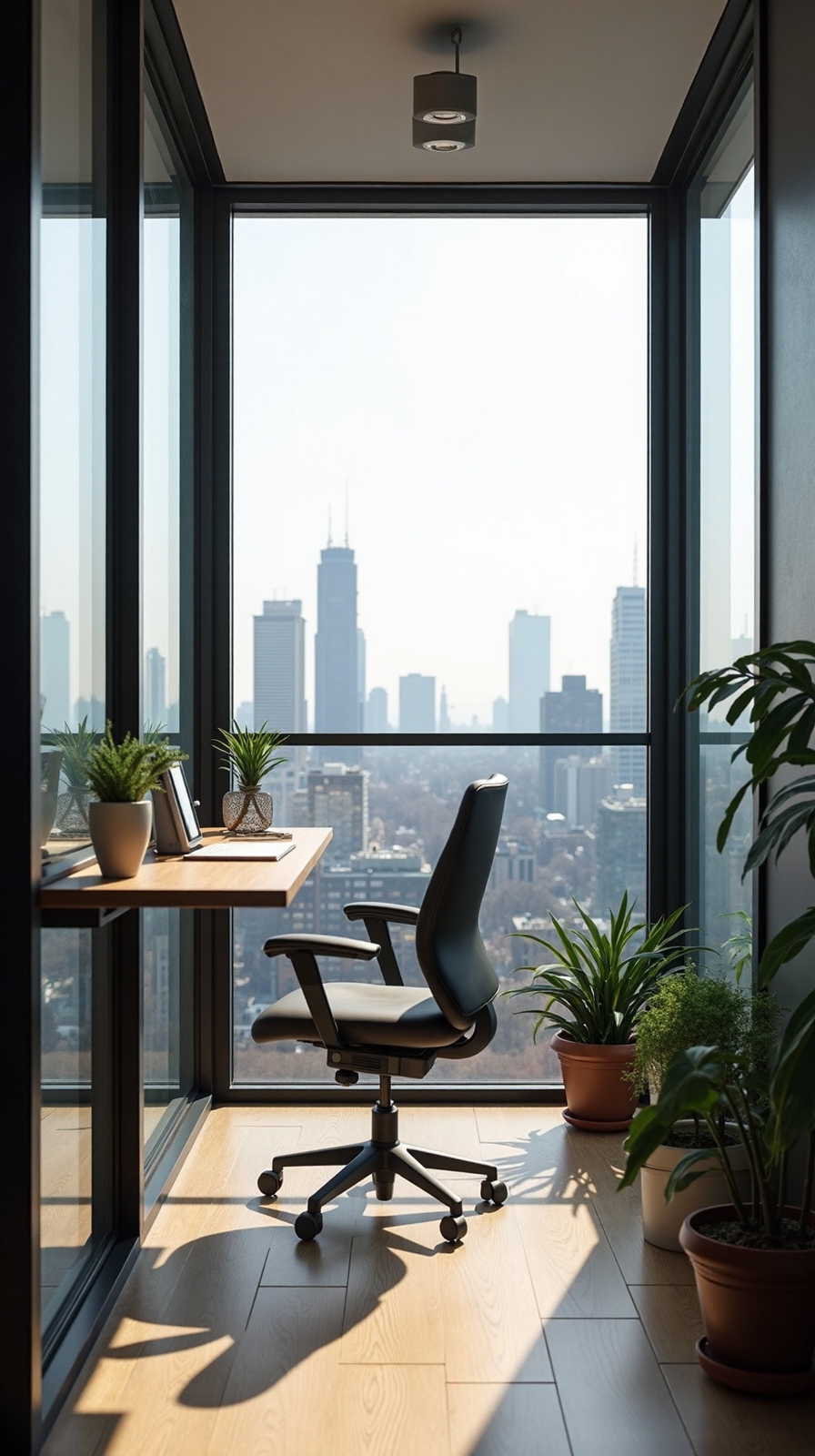
Something magical happens when you convert an unused balcony into your personal workspace sanctuary. You’ll break free from traditional office constraints while creating a productive environment that breathes with natural energy.
Start by weatherproofing your balcony with proper flooring and wind barriers. Install a compact desk against the longest wall, then employ a foldable screen for privacy when neighbors or weather become distracting. This portable solution gives you control over your workspace boundaries.
Incorporate natural light through windows and glass doors to reduce eye strain during long work sessions. Add outdoor-rated furniture that withstands temperature changes while maintaining comfort. Consider rolling storage carts that move easily between indoor and outdoor spaces.
Position plants strategically to create natural sound barriers and improve air quality, reshaping your narrow balcony into an inspiring productivity haven.
Build a Custom Desk That Fits Between Existing Furniture
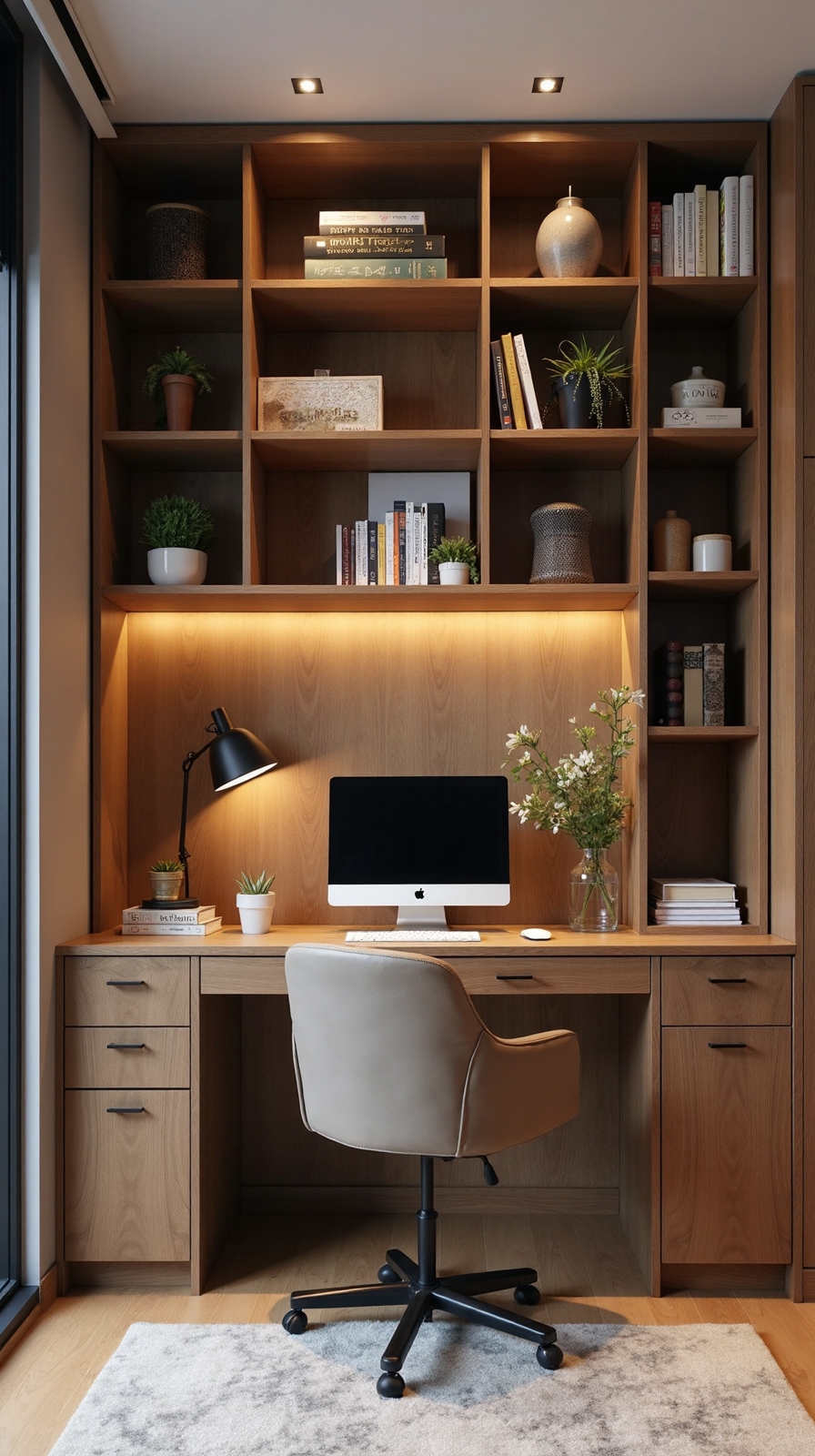
Moving from outdoor spaces to indoor solutions, you can maximize your narrow room’s potential by designing a desk that slots perfectly between your existing furniture pieces. Measure the exact gap between your bookshelf and dresser, then create a workspace that uses every available inch.
Start by building a simple tabletop that spans the distance, securing it with brackets attached to adjacent furniture. Add custom shelving options above and below for storage without consuming floor space. Install integrated lighting solutions underneath upper shelves to eliminate shadows on your work surface.
This approach converts dead space into productive area while maintaining your room’s flow. You’ll create a seamless workspace that doesn’t compete with existing pieces but enhances your room’s functionality instead.
Conclusion
You don’t need a sprawling space to create an efficient home office. These narrow workspace solutions prove that smart design trumps square footage every time. By utilizing vertical storage, wall-mounted desks, and hidden compartments, you’ll convert underused areas into productive zones. Start with one idea that fits your space and budget, then expand as needed. Your compact office can be just as functional as any traditional workspace.