12 Open Dining Room Ideas That Flow Beautifully
Transform your open dining room into a perfectly defined space with these 12 designer tricks that create beautiful flow without sacrificing openness.
You’ve probably struggled to make your open dining room feel intentional rather than like a floating island in your living space. The key lies in creating visual boundaries and flow without sacrificing the airy openness you love. Smart furniture placement, strategic lighting choices, and thoughtful color coordination can alter your dining area into a defined yet connected zone. These twelve designer-approved techniques will help you achieve that perfect balance between separation and seamless integration.
Create Distinct Zones With Furniture Placement
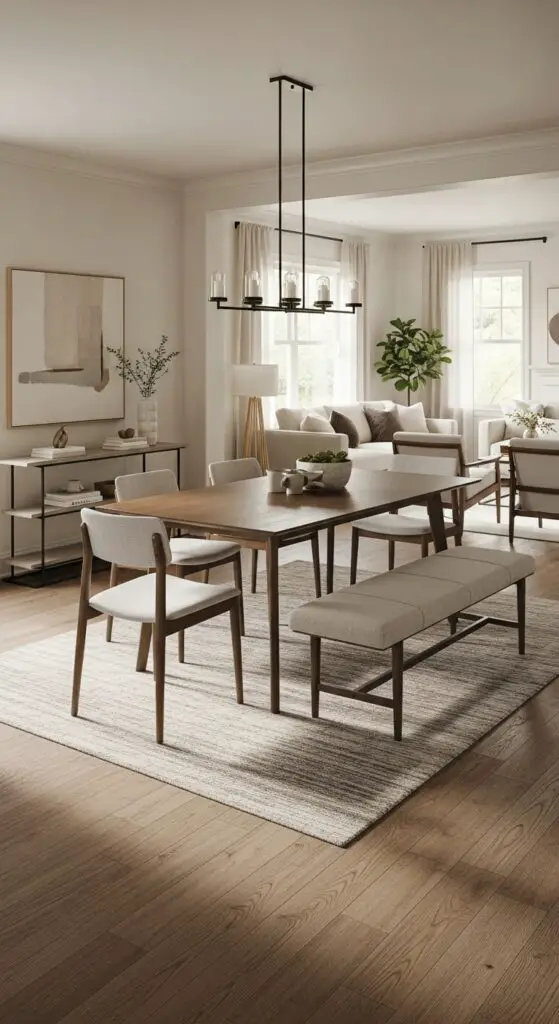
Strategic furniture placement alters your open dining space into clearly defined areas that serve different purposes without sacrificing the room’s flowing layout. You’ll define intimate gathering zones by positioning your dining table as an anchor point, then arranging seating to create natural conversation circles.
Place a console table or bookshelf perpendicular to walls to establish boundaries without blocking sightlines. Consider adding stylish partitions to further separate your dining area from adjacent spaces while maintaining an open feel. Incorporate flexible seating arrangements using moveable ottomans, benches, and lightweight chairs that adapt to different occasions. This approach gives you the freedom to reconfigure spaces instantly while maintaining visual cohesion throughout your open floor plan.
Use Rugs To Define Your Dining Space
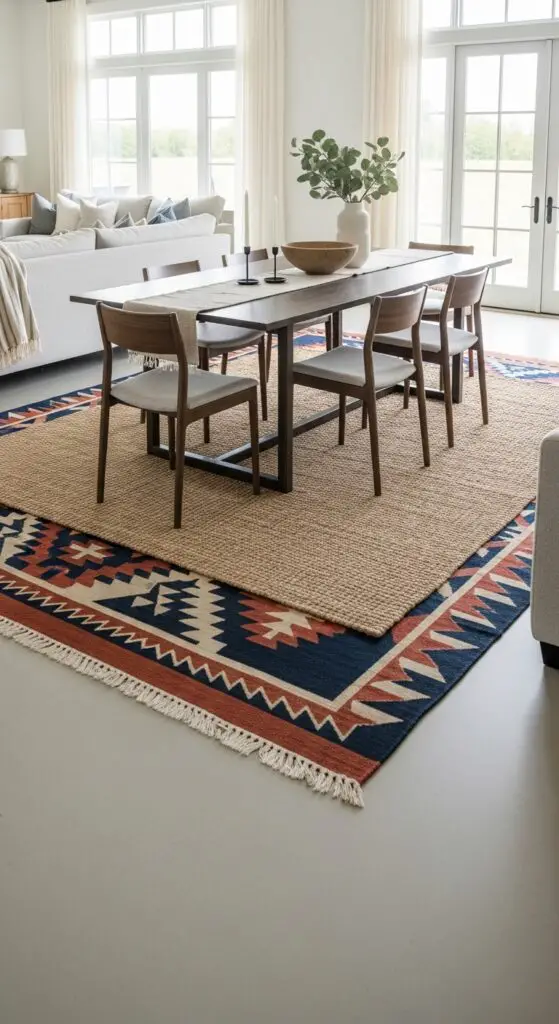
While furniture placement creates physical boundaries, rugs serve as powerful visual anchors that instantly establish your dining area’s footprint within an open floor plan.
Choose a rug that extends at least 24 inches beyond your dining table’s edges, allowing chairs to remain on the surface when pulled out. Layer textures with area rugs by combining different materials like jute underneath wool or silk.
Bold geometric patterns create dramatic focal points, while neutral tones offer versatility. The right dining room rug not only anchors your furniture but adds essential comfort underfoot for extended dinner gatherings. Highlight rug patterns through furniture placement by positioning your table to showcase the design’s center medallion or directional elements for maximum visual impact.
Choose A Statement Light Fixture As Your Anchor
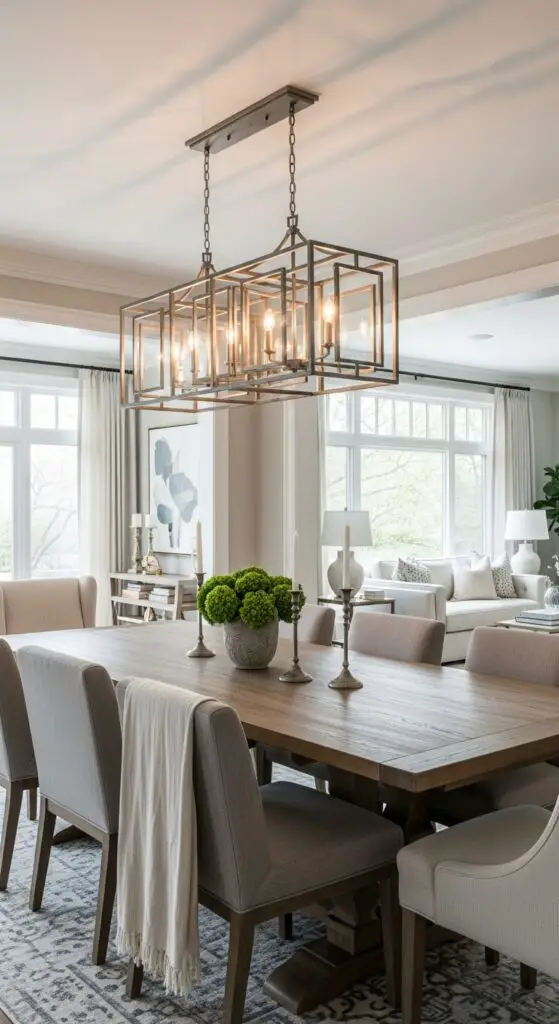
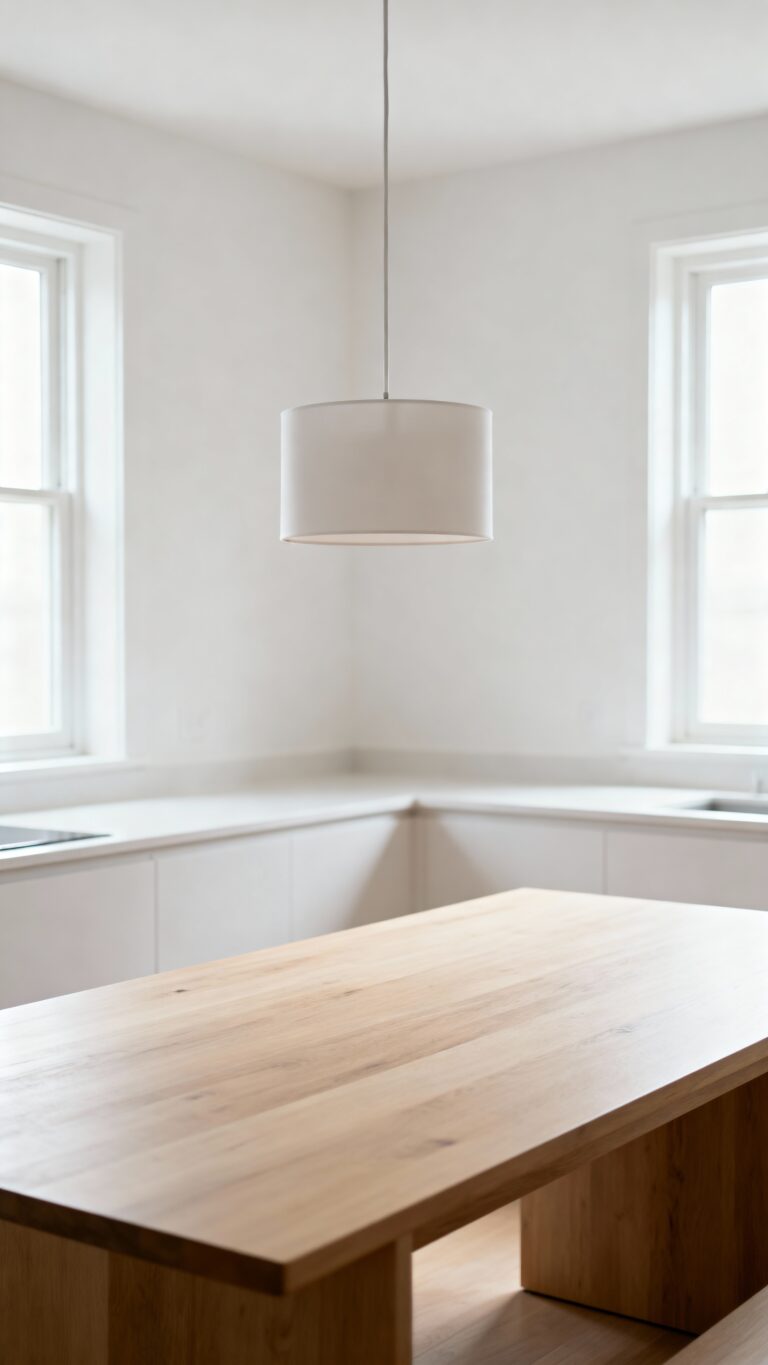
A striking chandelier or pendant light alters your open dining space into a clearly defined zone while serving as the room’s crowning design element. You’ll create instant visual boundaries without physical barriers that restrict movement or conversation flow.
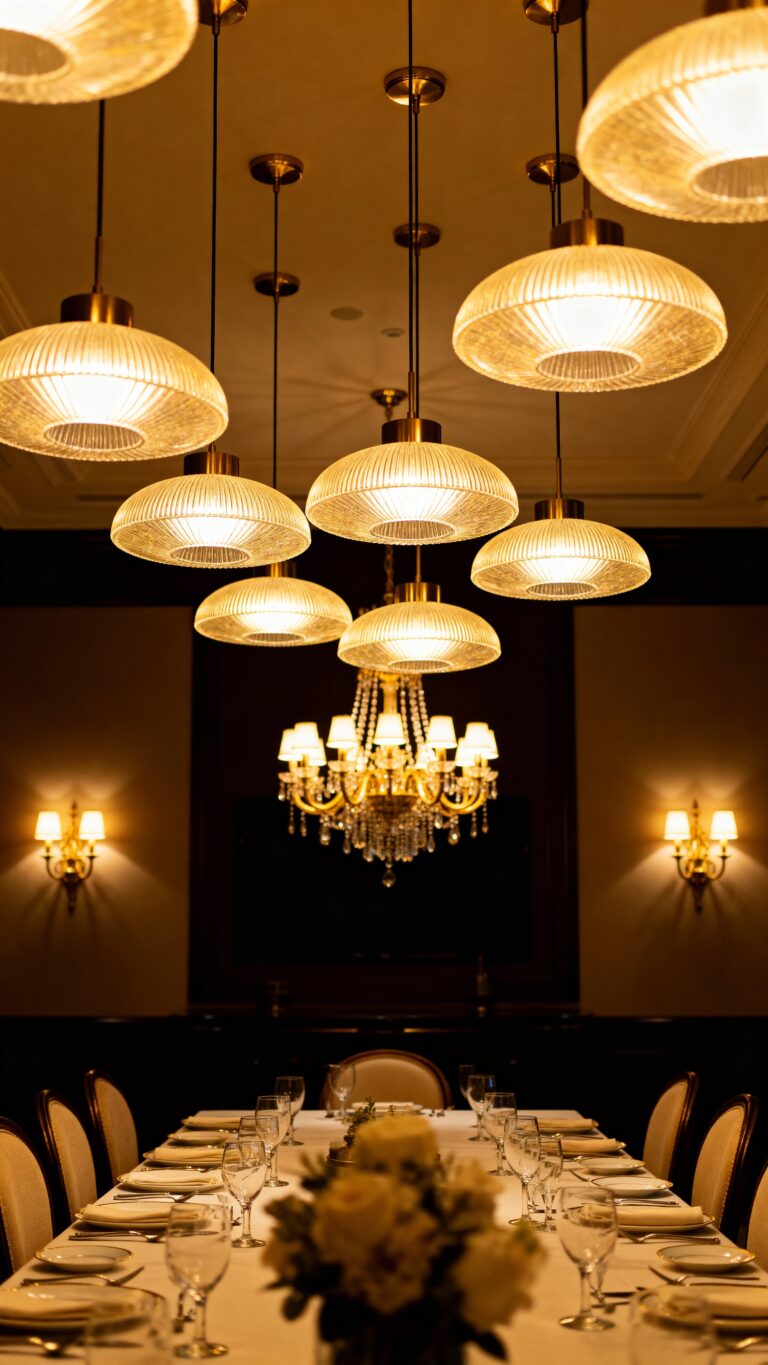
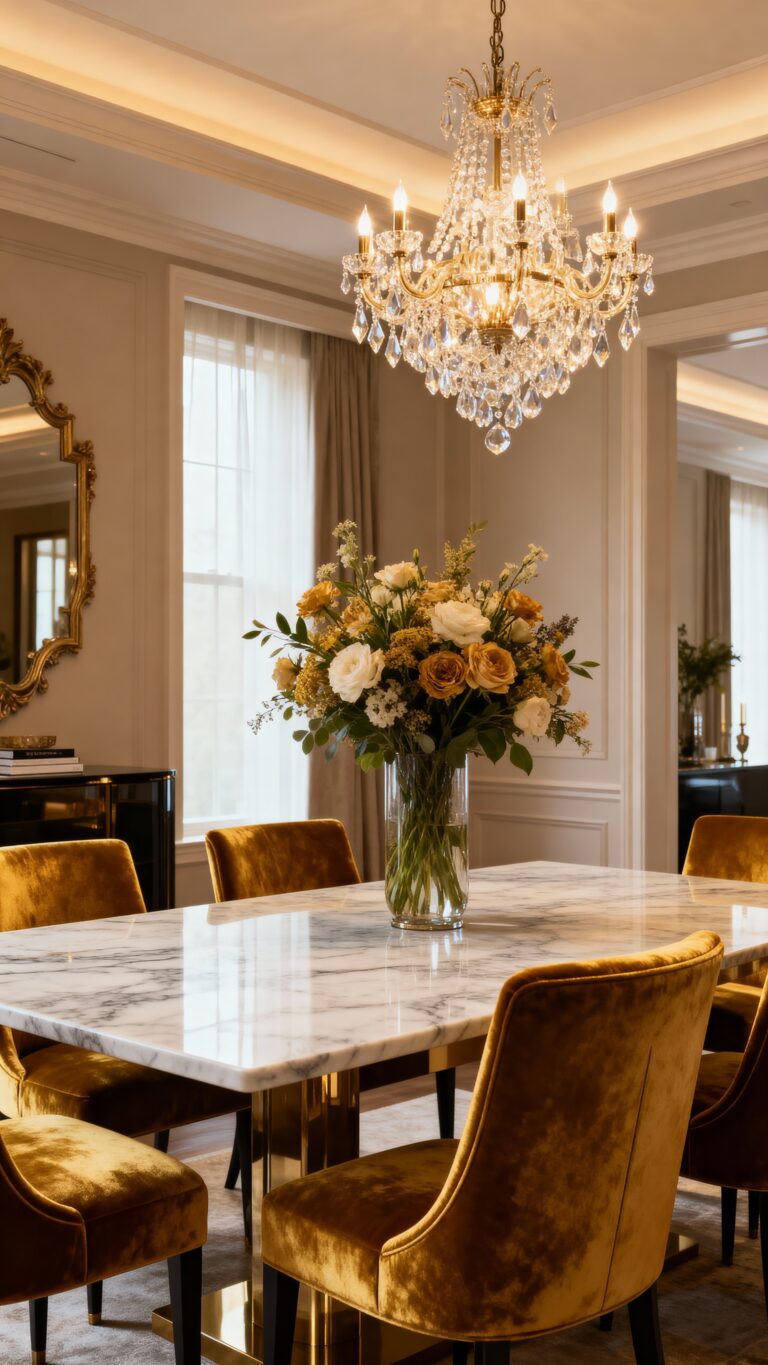
Pendant light styles range from sleek modern clusters to rustic farmhouse fixtures that hang at varying heights. Dramatic chandelier options include oversized crystal pieces, industrial metal designs, or contemporary geometric shapes that command attention. These captivating chandelier designs transform your dining room ceiling into a stunning focal point that enhances the entire space.
Position your fixture directly above your dining table, ensuring it’s proportional to your space. This anchoring technique draws the eye upward and establishes your dining area’s presence within the larger room.
Design A Cohesive Color Palette Across Zones
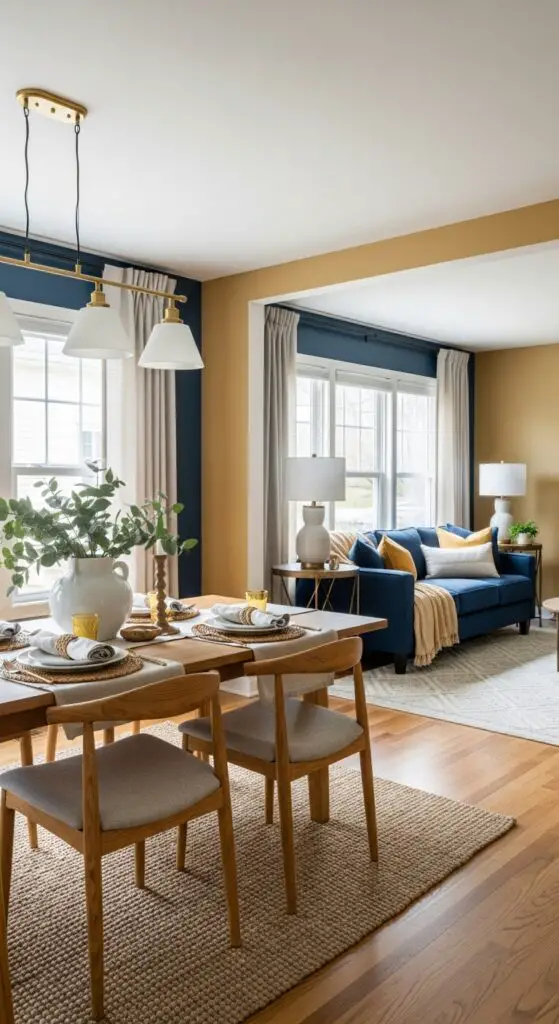
Color coordination alters your open floor plan from a collection of separate areas into one harmonious living space that flows naturally from room to room. You’ll create visual unity by selecting three main colors that repeat throughout each zone. Coordinate complementary hues like navy and warm gold, or sage green with cream accents.
Incorporate textural elements such as woven rugs, linen curtains, and wood furniture to add depth without disrupting your palette. Consider introducing stylish wallpaper patterns as an accent wall to enhance the mood and visual interest of your dining zone while maintaining your cohesive color scheme. Use the 60-30-10 rule: dominant neutral (60%), secondary color (30%), and bold accent (10%) distributed across your dining, living, and kitchen areas.
Add Visual Weight With A Dining Room Accent Wall
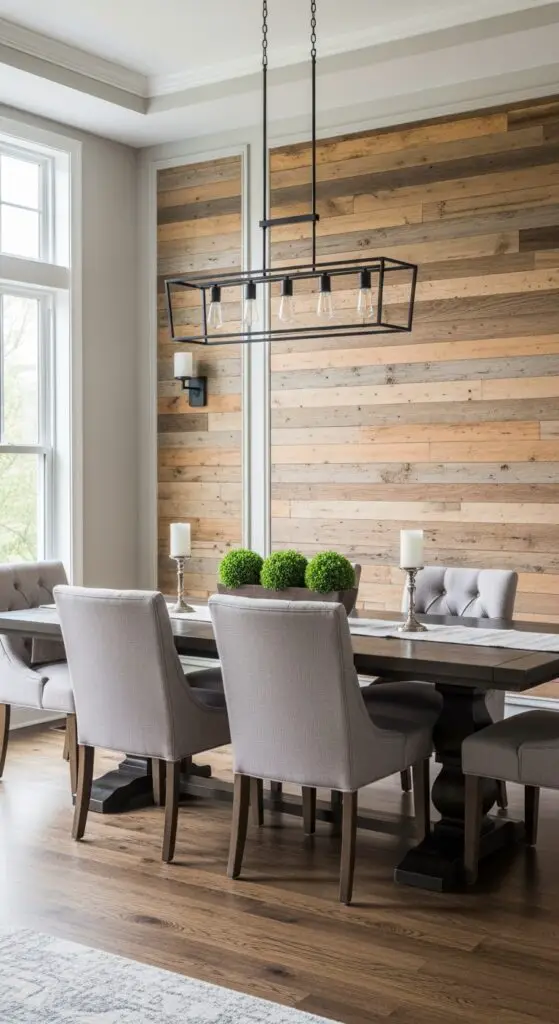
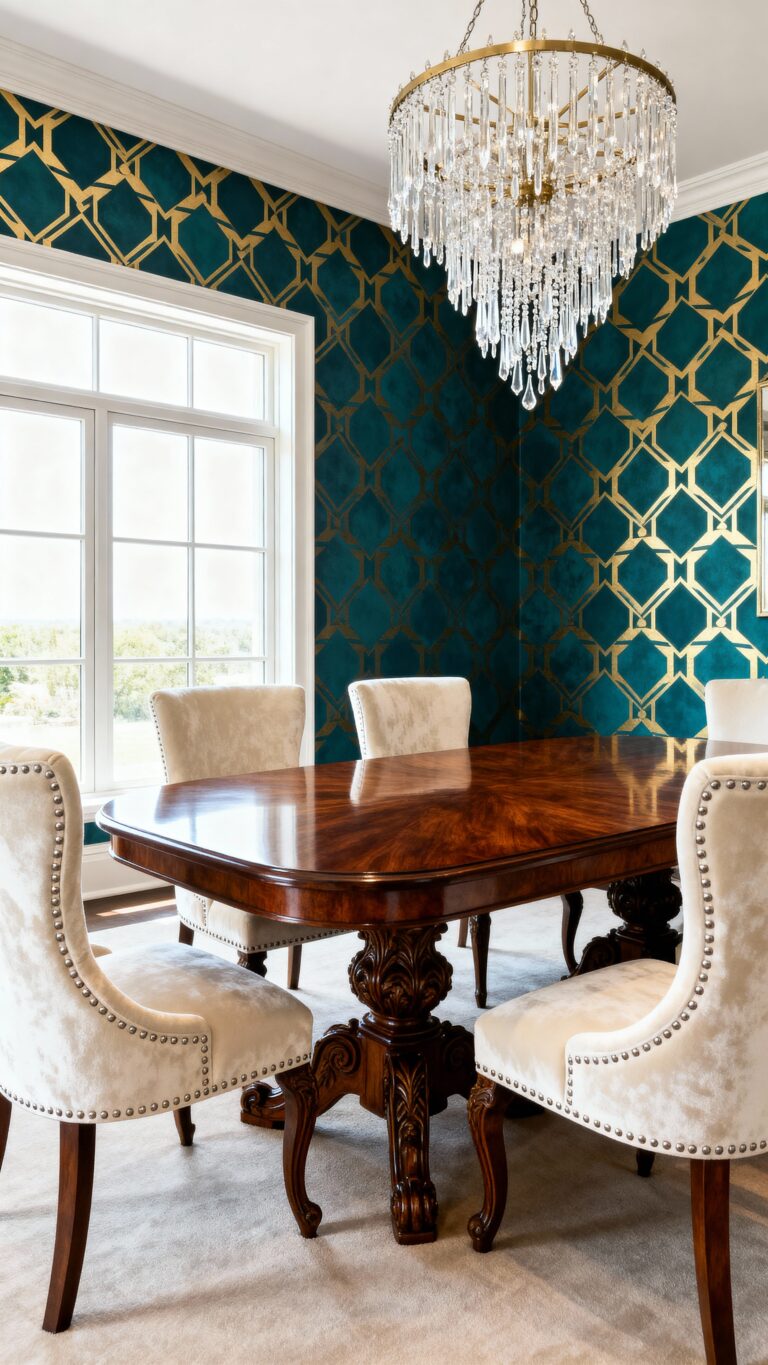
Beyond establishing a unified color scheme throughout your open floor plan, strategic accent walls can define your dining space and create the visual anchor it needs to stand out. You’ll uncover that accent wall patterns like geometric designs or botanical motifs instantly draw attention without overwhelming adjacent areas.
Consider accent wall textures such as reclaimed wood, stone veneer, or textured wallpaper to add depth and character. These elements create a focal point that naturally separates your dining zone from surrounding spaces while maintaining flow throughout your home’s open layout. Incorporating refined molding designs along the edges of your accent wall can provide a polished and sophisticated finish that elevates the entire dining area.
Position Your Dining Table For Natural Traffic Flow
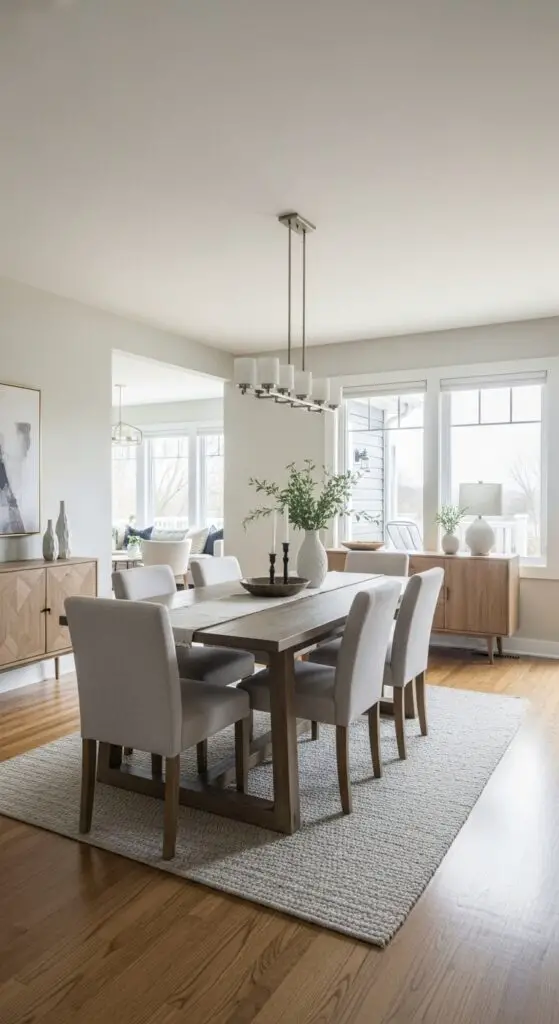
When you’re planning your open dining room layout, your table placement becomes the cornerstone that either enhances or disrupts your home’s natural flow patterns. Consider furniture arrangement that creates clear pathways around your dining area, allowing family and guests to move freely between spaces without obstacles.
Position your table to maximize sightlines throughout your open floor plan, connecting the dining area visually with adjacent rooms. Leave at least 36 inches between your table and walls or other furniture pieces. This spacing guarantees chairs can be pulled out comfortably while maintaining smooth traffic flow between your kitchen, living room, and dining zones.
For homes with spacious layouts, grand dining room designs can accommodate larger seating arrangements while still maintaining these essential flow principles.
Layer Different Types Of Lighting For Ambiance
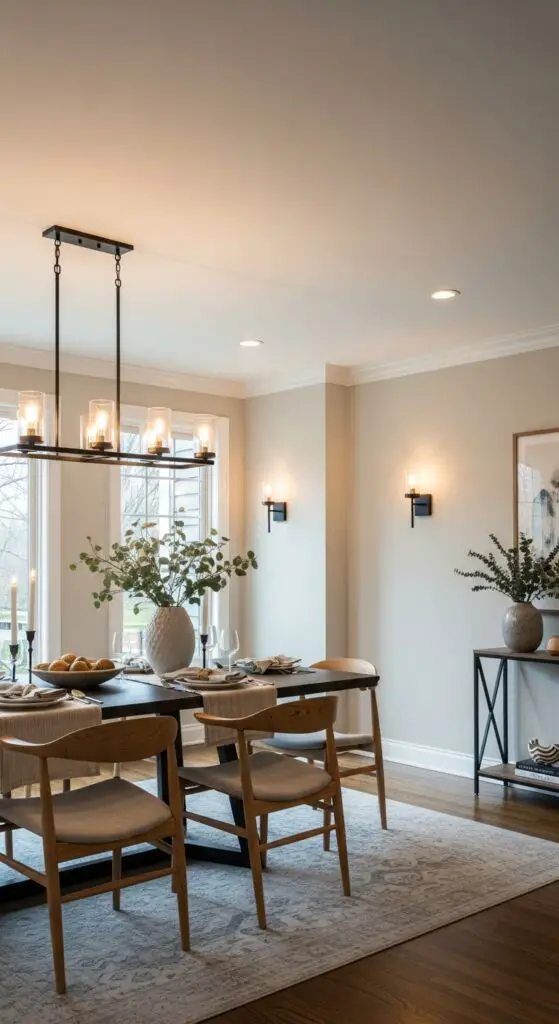
Three distinct lighting layers evolve your open dining room from a basic eating space into a versatile area that adjusts to every occasion. Ambient lighting provides overall illumination through ceiling fixtures or recessed lights that brighten the entire space.
Incorporate task lighting over the dining table using pendant lights or chandeliers to create focused illumination for meals and activities. Accent lighting adds visual interest through wall sconces, table lamps, or LED strips that highlight structural elements.
Use dimmers to control lighting levels throughout the day, allowing you to shift from bright family dinners to intimate evening gatherings effortlessly.
Use Open Shelving To Maintain Sight Lines
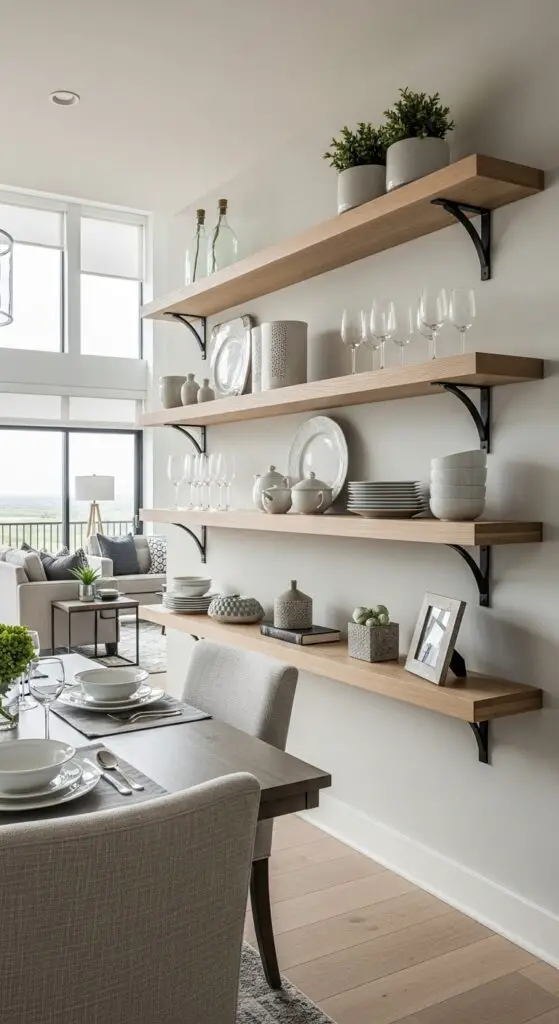
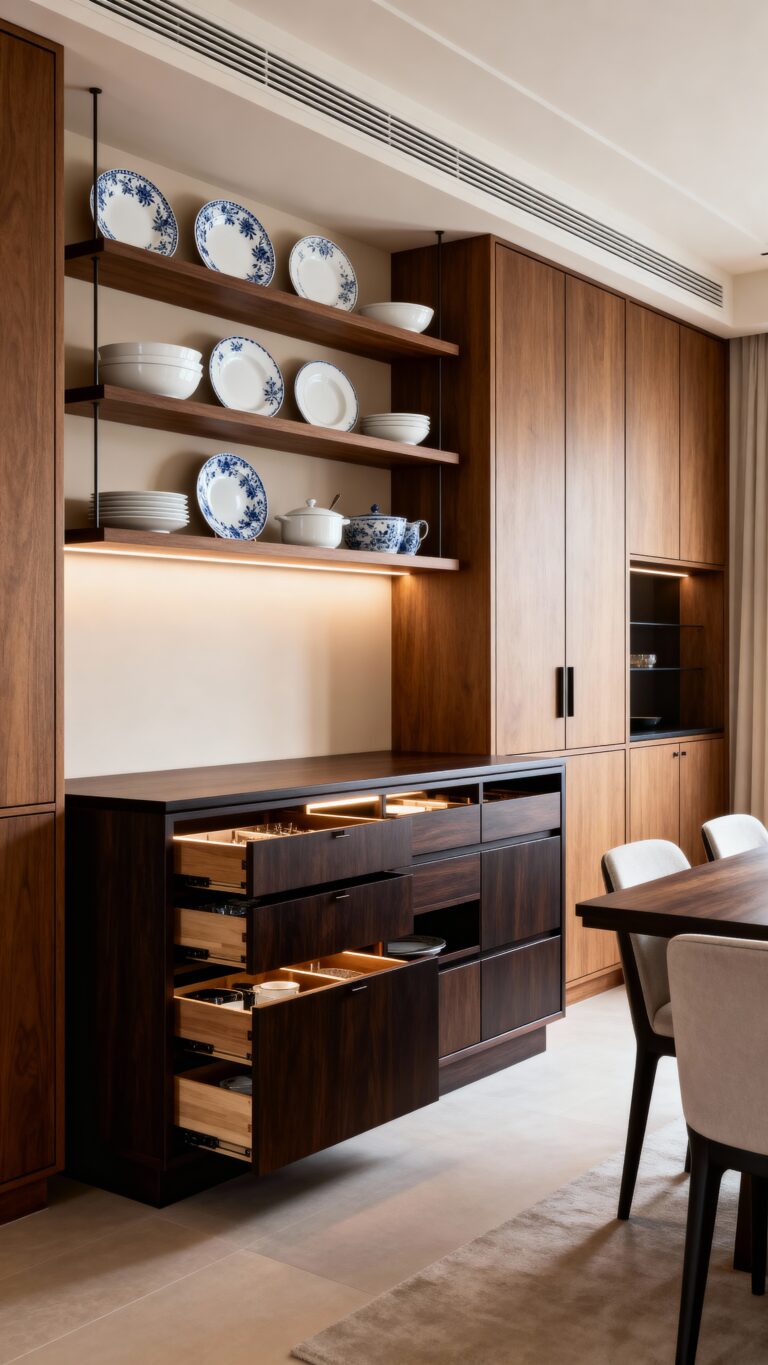
Open shelving alters storage into a design feature while preserving the spacious feel that makes open dining rooms so appealing. You’ll create unobstructed views throughout your space while displaying dinnerware, glassware, and decorative pieces that reflect your personal style.
Incorporate floating shelves along walls to eliminate bulky furniture that blocks natural light flow. These sleek installations maintain clean lines while offering practical storage solutions. Maximize vertical storage by installing shelves at varying heights, creating visual interest without overwhelming the room.
Choose materials that complement your dining room’s aesthetic—reclaimed wood for warmth or metal brackets for industrial appeal.
Create Height Variation With Bar Seating Options
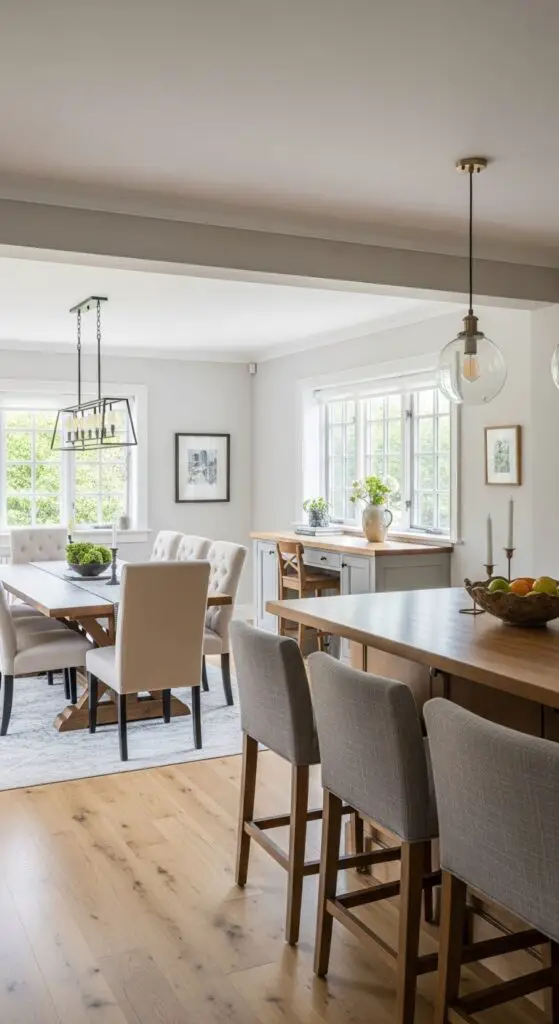
Adding bar seating to your open dining room alters flat floor plans into versatile spaces with visual depth and improved functionality. You’ll create energetic layers that break up monotonous horizontal lines while maximizing your square footage efficiently.
Install a kitchen island with overhang space for bar stools with backs, ensuring 24-inch clearance for comfortable leg room. Consider elevated seating platforms near windows or room changes to establish distinct zones without walls. Counter-height tables paired with stylish bar stools offer casual dining alternatives that encourage mingling.
These vertical elements draw eyes upward, making ceilings appear higher while maintaining your desired open-concept flow throughout.
Choose Multi-Functional Furniture For Flexibility
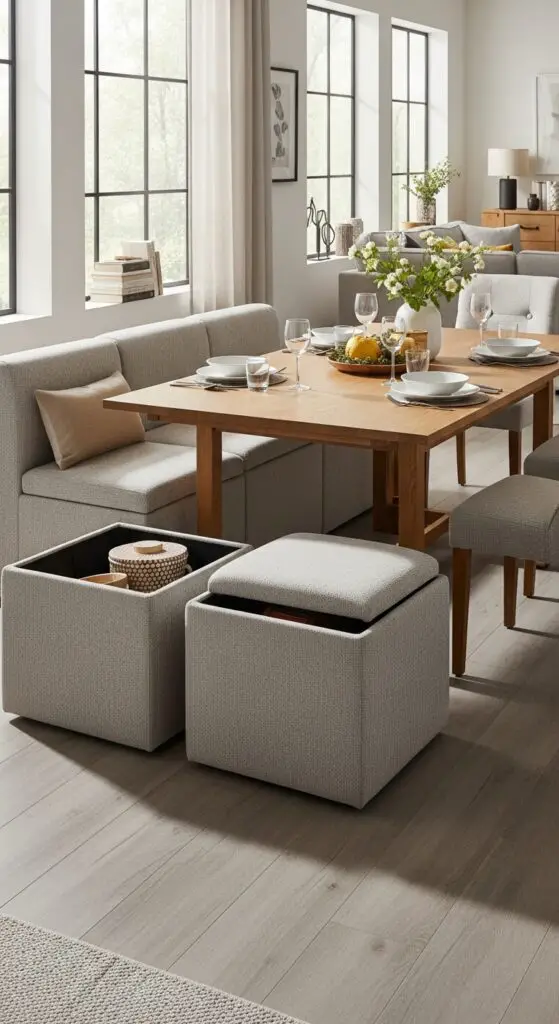
When you select furniture pieces that serve multiple purposes, you’ll modify your open dining room into a versatile space that adjusts to your varying needs throughout the day. Modular seating options let you reconfigure arrangements for intimate dinners or larger gatherings effortlessly.
Consider ottomans with hidden compartments that function as extra seating, footrests, or side tables when needed.
Install customizable storage solutions like built-in benches with lift-up seats for linens and tableware. Choose expandable dining tables that accommodate both daily meals and special occasions. These smart choices maximize your space while maintaining the open flow you desire.
Add Greenery To Soften Hard Lines And Corners
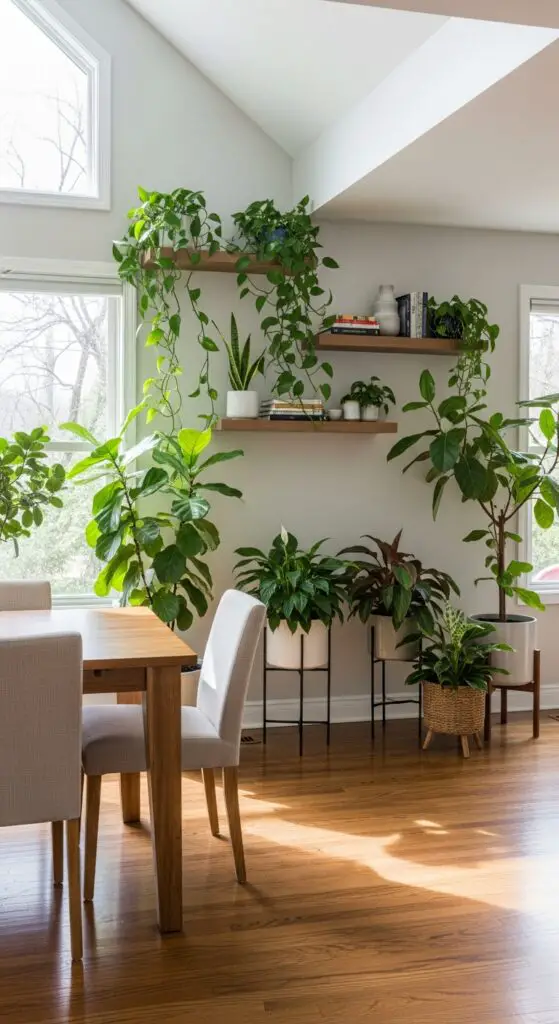
Plants breathe life into your open dining room while creating natural boundaries that define spaces without walls. Incorporate potted plants strategically around your dining area to establish visual zones that feel organic and welcoming.
Large floor plants like fiddle leaf figs or snake plants anchor corners effectively, while medium-sized specimens on plant stands add vertical interest. Display trailing vines from floating shelves or hanging planters to soften angular structural elements.
Consider herbs on your dining table for both beauty and functionality. Mix different plant heights and textures to create depth while maintaining your space’s open, unrestricted flow throughout.
Balance Open Space With Cozy Conversation Areas
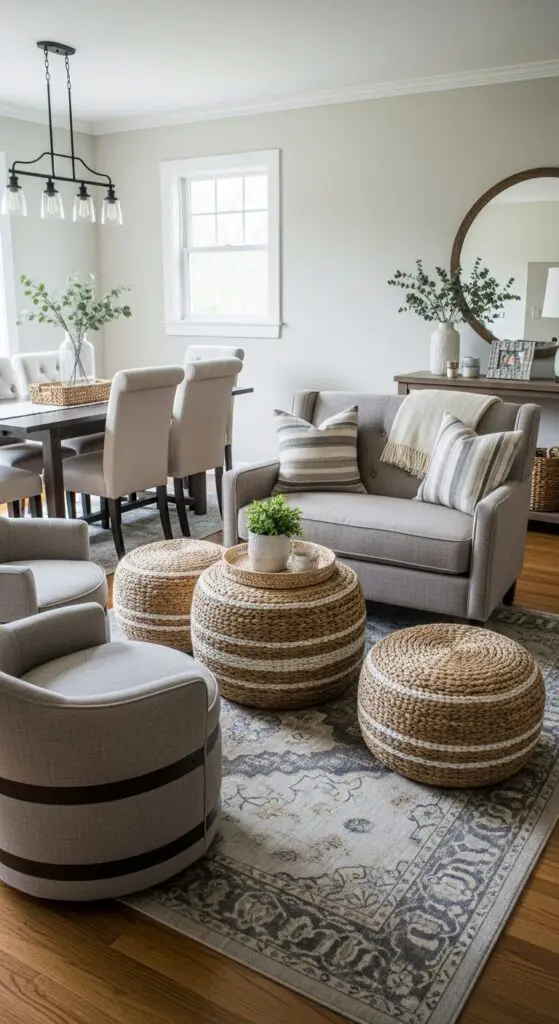
Although open dining rooms offer visual spaciousness, you’ll want to create intimate zones that encourage meaningful conversation and connection. Position a comfortable loveseat or armchair near your dining table to establish a natural gathering spot.
Incorporate curved furniture pieces like round ottomans or barrel chairs that soften angular room layouts while promoting face-to-face interaction. Mix textures for visual interest by layering woven baskets, plush cushions, and smooth wood surfaces throughout your conversation areas.
These thoughtfully arranged zones allow you to maintain your room’s open feel while providing cozy retreats where family and guests naturally gravitate toward deeper, more personal discussions.
Conclusion
You’ve got all the tools to modify your open dining room into a stunning, functional space. Start with one focal element—whether it’s a bold light fixture or strategic furniture placement—then build your design around it. Remember, successful open-concept dining rooms balance definition with flow. Take your time implementing these ideas, and you’ll create a space that’s both beautifully cohesive and perfectly suited for memorable meals.