11 Minimalist Dining Room Ideas That Feel Calm and Clutter-Free
Imagine transforming your chaotic dining space into a serene sanctuary with these 11 minimalist ideas that will revolutionize your meals.
You’ve probably noticed how chaotic dining spaces can make even the most delicious meals feel stressful. That’s where minimalist design alters your dining room into a peaceful retreat that actually enhances your eating experience. By focusing on essential elements like neutral colors, clean-lined furniture, and strategic lighting, you’ll create a space that feels both sophisticated and welcoming. The key lies in understanding which specific choices will give you maximum impact while maintaining that coveted clutter-free atmosphere that makes every meal feel like a special occasion.
Embrace a Neutral Color Palette With Warm Undertones
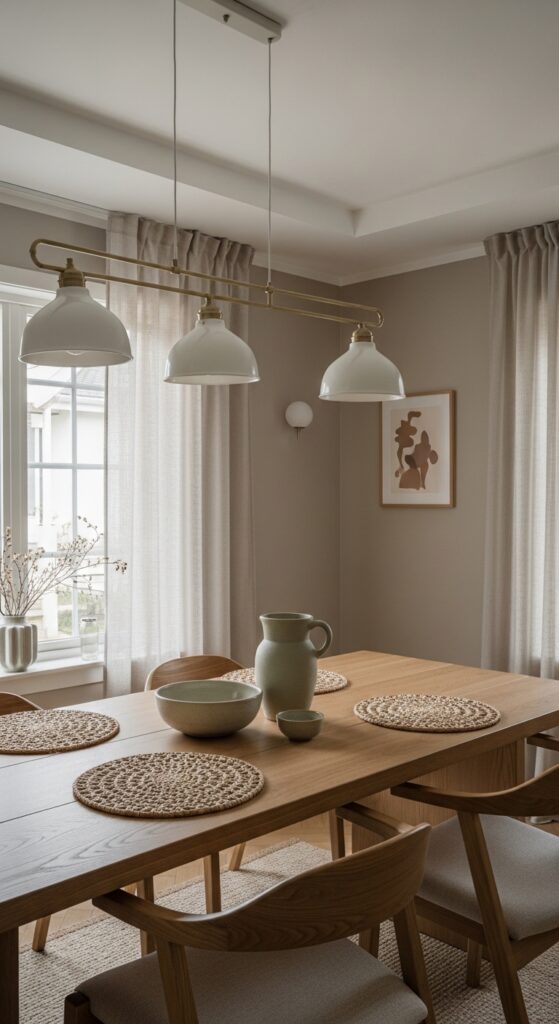
When designing a minimalist dining room, neutral colors with warm undertones create the perfect foundation for a serene yet inviting space. You’ll find that soft beiges, warm grays, and creamy whites provide endless decorating freedom while maintaining visual calm.
Incorporate organic textures through natural wood furniture, woven placemats, or linen curtains to add depth without overwhelming the senses. Beige dining rooms naturally foster a cozy and inviting atmosphere that promotes relaxation during meals. Employ soothing color accents like muted sage green or dusty rose through small accessories or artwork. These gentle hues complement your neutral base while creating subtle visual interest.
This approach allows you to easily refresh your space whenever inspiration strikes.
[affiai keyword=”neutral dining room decor warm undertones” template=”carousel” count=”3″]
Choose a Statement Dining Table With Clean Lines
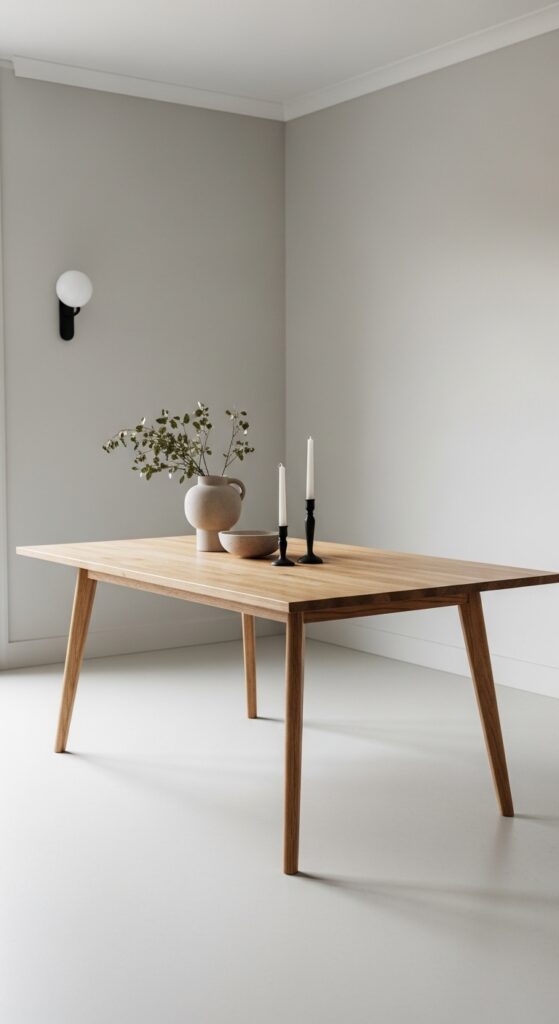
Your dining table serves as the centerpiece that anchors your entire minimalist design scheme and sets the tone for the space. Opt for a rectangular shape with sleek, unadorned legs that won’t compete for visual attention in your room. You’ll want to emphasize the tabletop material by selecting natural wood, marble, or concrete that speaks to your aesthetic preferences.
Look for tables without ornate details or decorative elements that can create visual clutter. Clean-lined designs with simple geometries work best, allowing the table’s proportions and materials to shine while maintaining that serene, uncluttered atmosphere you’re creating. When working with limited square footage, a rectangular table can actually help maximize your available space while maintaining the streamlined aesthetic essential to minimalist design.
[affiai keyword=”minimalist rectangular dining table clean lines” template=”carousel” count=”3″]
Select Minimalist Dining Chairs That Prioritize Comfort
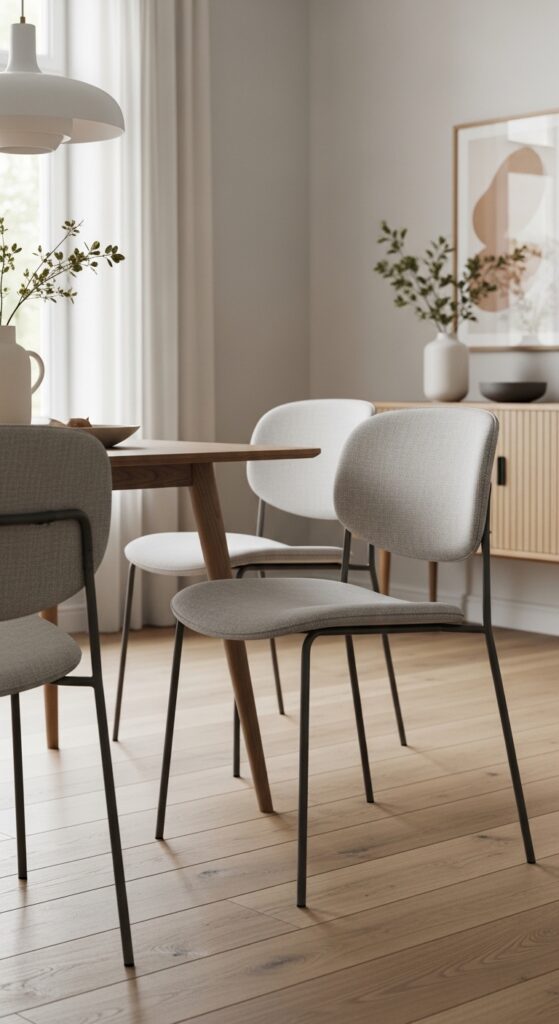
Comfort becomes your top priority when selecting dining chairs that complement your minimalist aesthetic without sacrificing the enjoyment of long meals and conversations. Avoid bulky chair designs that overwhelm your space and disrupt the clean visual flow you’ve carefully established.
Instead, select slim seating silhouettes that maintain proper support through thoughtful engineering and quality materials. Look for chairs with ergonomic curves, breathable upholstery, and sturdy construction that’ll withstand daily use.
Consider materials like molded plywood, sleek metal frames, or upholstered seats in neutral tones. Browse through various modern minimalist to classic upholstered options to find the perfect balance for your space. You’ll uncover that minimalist doesn’t mean uncomfortable—the best designs merge form and function seamlessly.
[affiai keyword=”minimalist dining chairs comfortable ergonomic” template=”carousel” count=”3″]
Add Strategic Lighting Without Visual Clutter
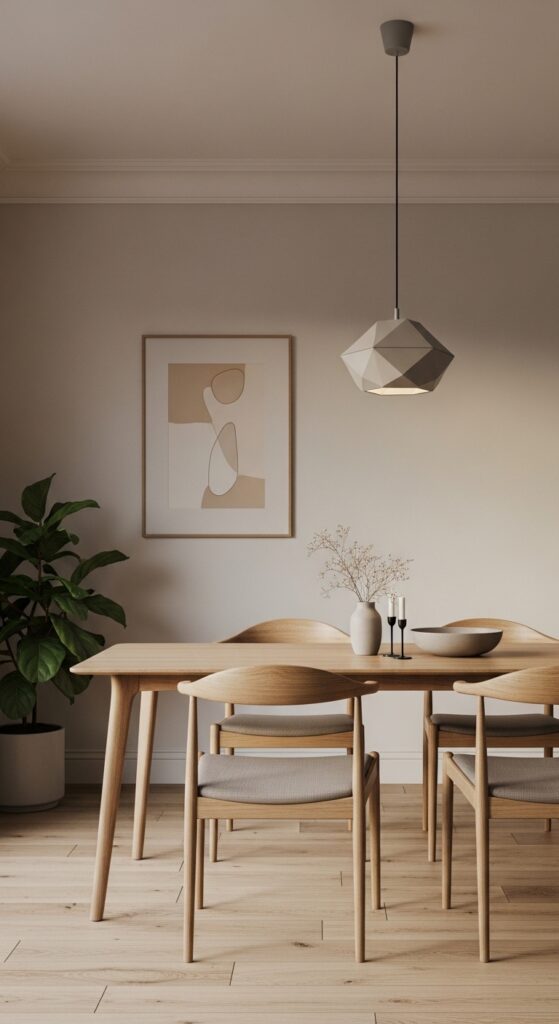
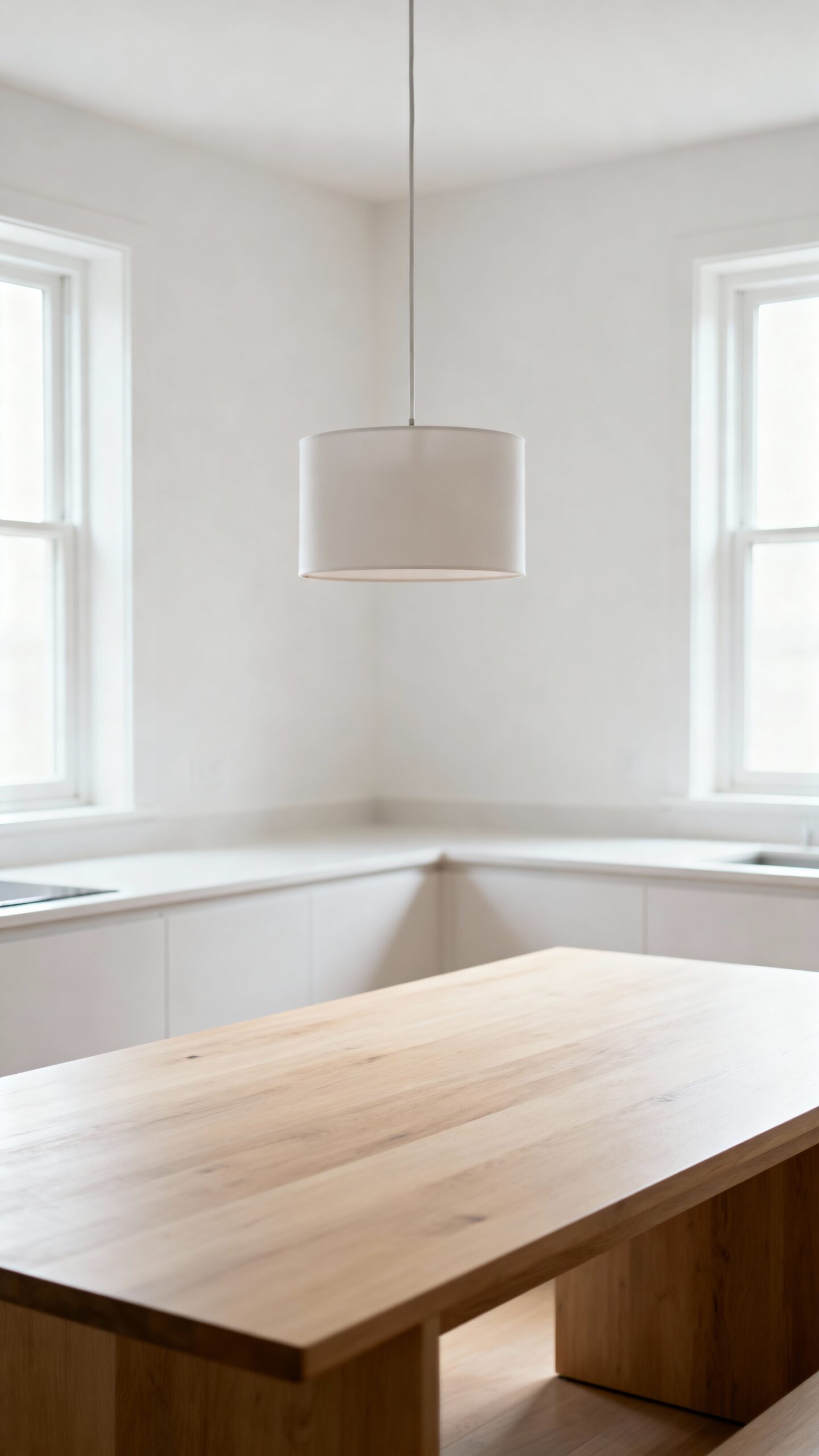
Pendant lighting options work beautifully above your dining table when you choose simple geometric shapes in neutral finishes. Select fixtures with clean lines and minimal ornamentation—think sleek cylinders or understated spheres that complement rather than compete with your minimalist design philosophy while creating focused task lighting. For those seeking a more elevated look, consider smaller-scale chandeliers that add luxury without overwhelming your intimate dining space.
[affiai keyword=”minimalist pendant lights dining room geometric” template=”carousel” count=”3″]
Incorporate Natural Materials for Warmth and Texture
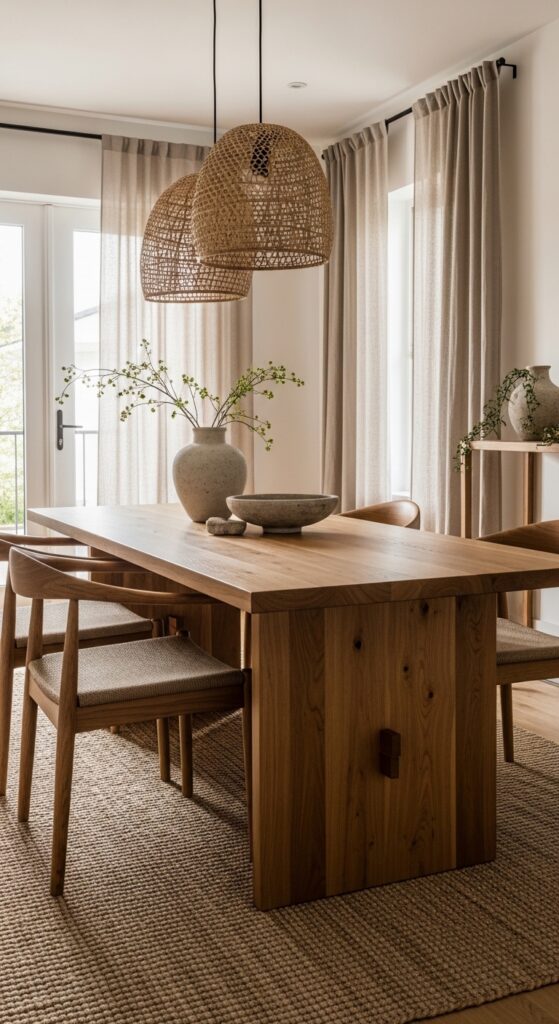
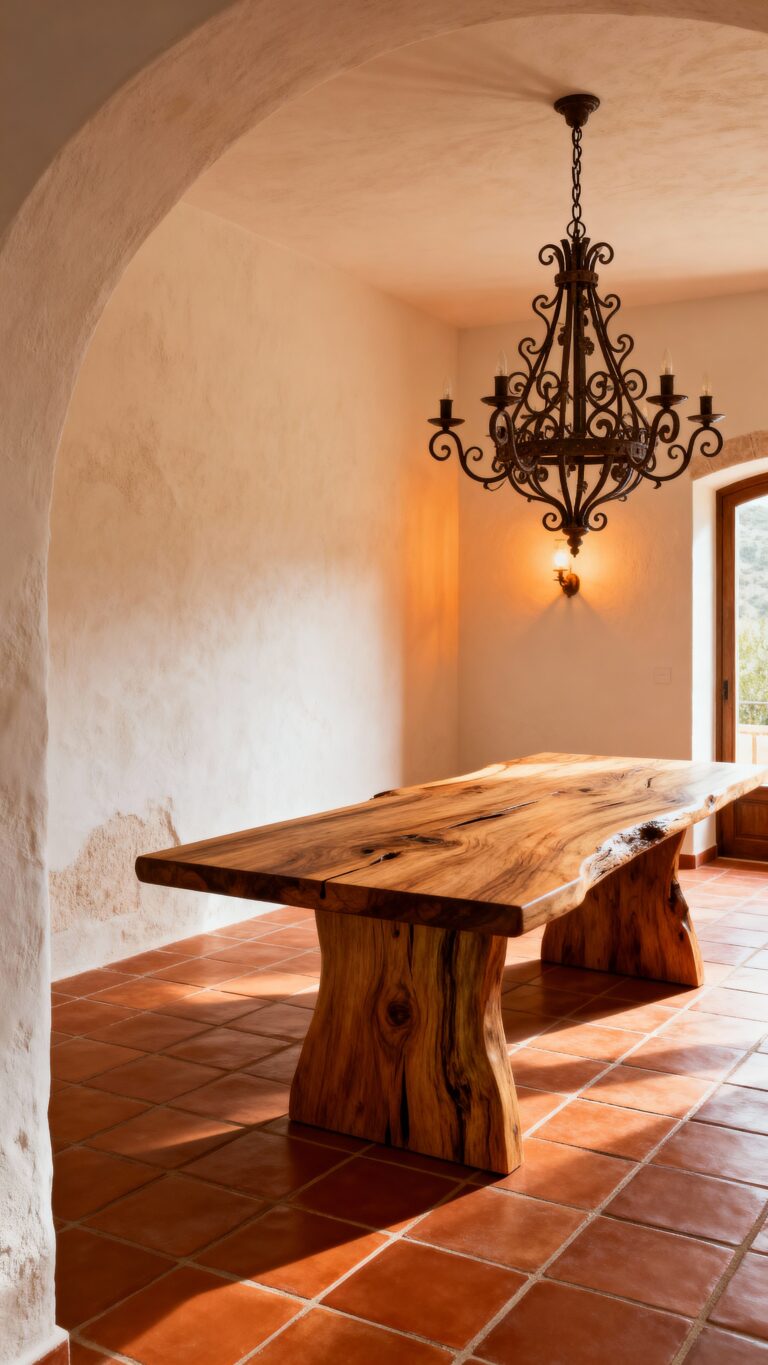
While minimalist design often emphasizes clean lines and sparse decoration, natural materials bring essential warmth and tactile interest to your dining space without compromising the streamlined aesthetic. Incorporate natural wood accents through a live-edge dining table, floating shelves, or sleek wooden chairs that showcase the grain’s inherent beauty.
Layer textural elements by adding a jute rug beneath your table, linen curtains for soft window treatments, or stone placemats that provide visual weight. These organic materials create depth and prevent your dining room from feeling sterile while maintaining the clean, uncluttered foundation you’re seeking. Consider a pedestal table for an especially clean look that eliminates the visual clutter of four legs while still providing the natural warmth of wood.
[affiai keyword=”natural wood dining table minimalist design” template=”carousel” count=”3″]
Use Built-in Storage to Hide Dining Essentials
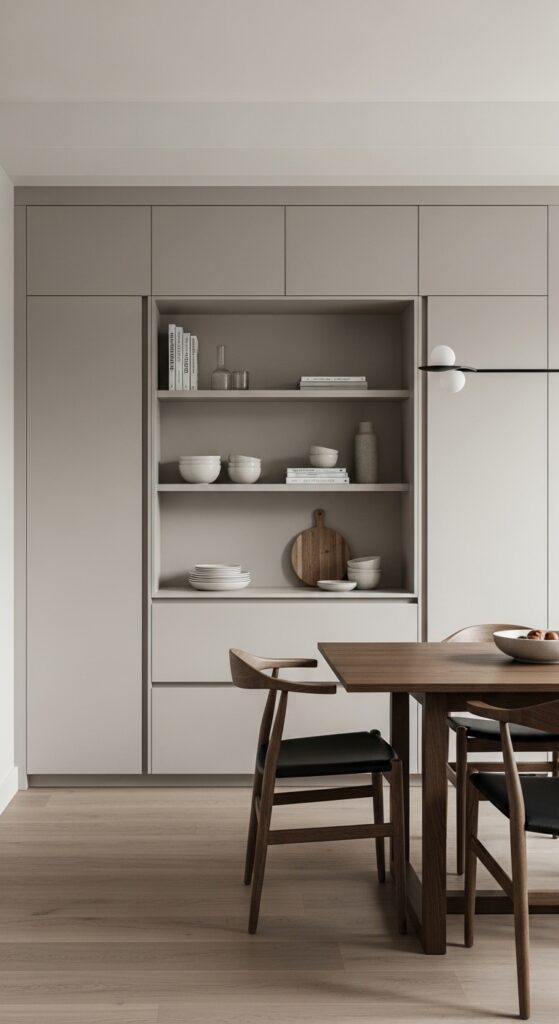
Built-in storage solutions remodel cluttered dining rooms into serene, functional spaces by seamlessly concealing dishes, linens, and serving pieces within your walls.
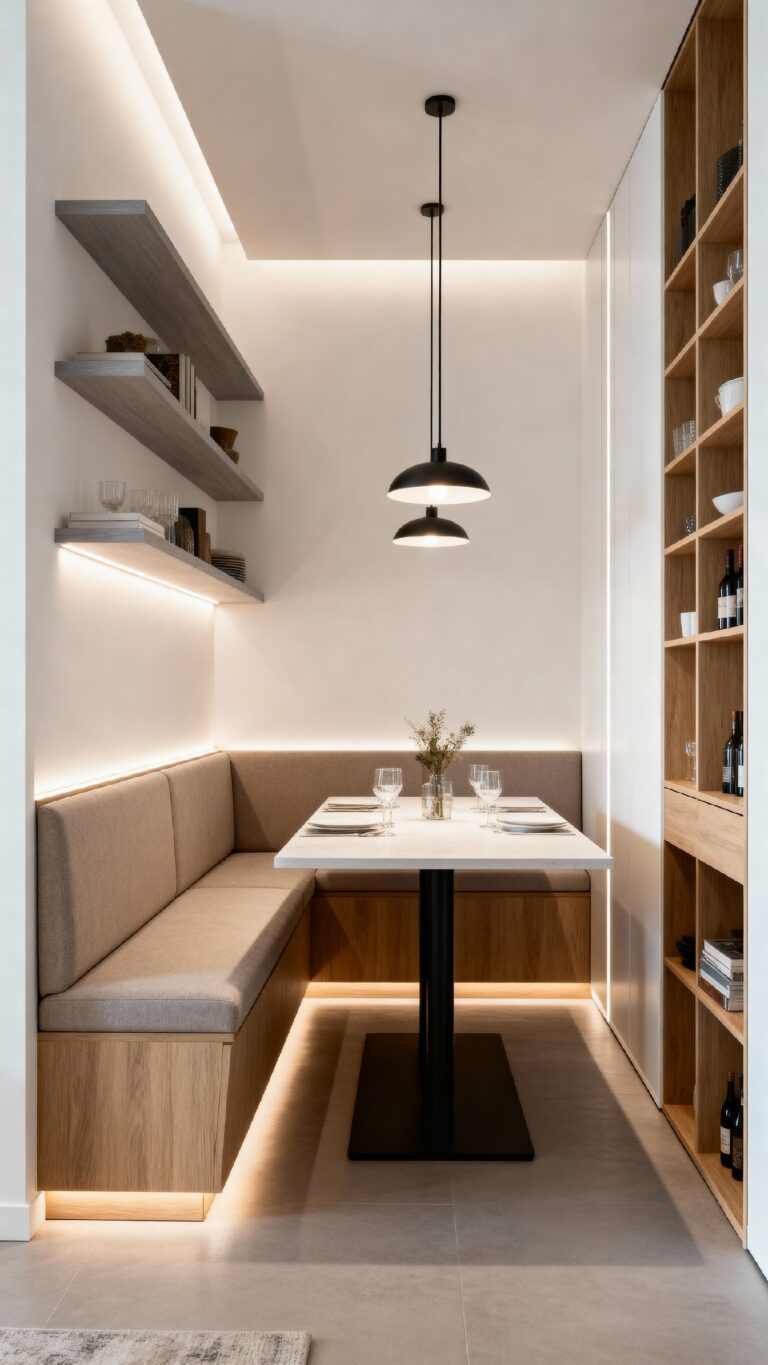
You’ll transform chaos into calm by installing built in cabinet storage that disappears into your room’s architecture. Consider floor-to-ceiling units with closed doors to hide everyday essentials while maintaining clean lines.
Balance concealed storage with streamlined display shelving for your most beautiful pieces. Install shallow cabinets behind dining banquettes or create recessed niches in unused wall spaces.
These integrated solutions eliminate bulky furniture while maximizing your room’s square footage and visual flow.
Choose cabinet designs that complement your dining room’s aesthetic while providing dedicated compartments for fine china and glassware.
[affiai keyword=”built in dining room storage cabinets” template=”carousel” count=”3″]
Create a Focal Point With One Bold Art Piece
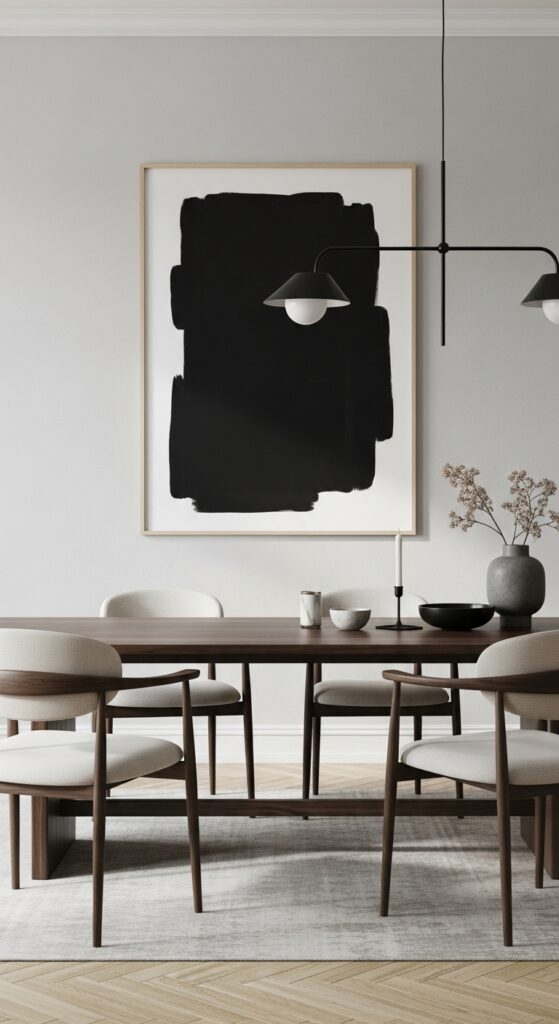
A single statement piece alters your minimalist dining room from stark to stunning by commanding attention and establishing visual hierarchy. Choose large scale artwork that harmonizes with your personal style—whether it’s an abstract painting, photography, or sculptural piece.
Strategic focal point placement matters tremendously for maximum impact. Position your art at eye level on the wall behind your dining table, creating natural conversation flow. This approach eliminates guesswork about decorating multiple walls while maintaining clean lines. Your bold piece becomes the room’s anchor, proving that minimalism doesn’t mean sacrificing personality or visual interest.
[affiai keyword=”large statement wall art dining room” template=”carousel” count=”3″]
Keep Window Treatments Simple and Functional
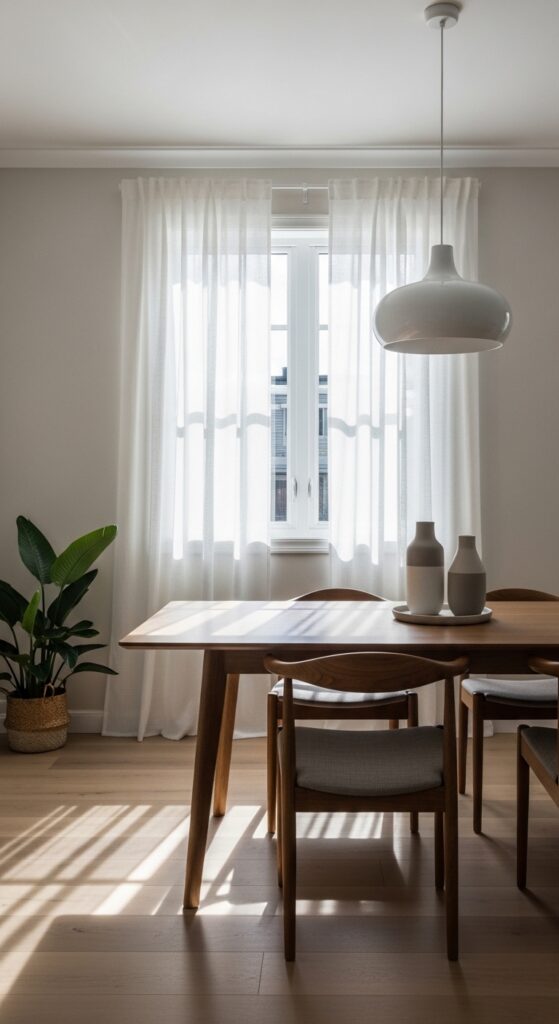
Because minimalist dining rooms thrive on clean lines and uncluttered spaces, your window treatments should enhance natural light while maintaining designer simplicity. Choose sheer curtains in neutral tones like white or cream to filter sunlight gently without blocking your view. These lightweight fabrics create an airy atmosphere while preserving privacy during daytime meals.
Alternatively, wooden blinds offer excellent light control with their horizontal slats that you can adjust throughout the day. Select natural wood finishes that complement your dining furniture, or choose painted options in crisp white for a contemporary look that won’t compete with your room’s focal points.
[affiai keyword=”minimalist dining room window treatments” template=”carousel” count=”3″]
Style Your Table With Minimal, High-Quality Accessories
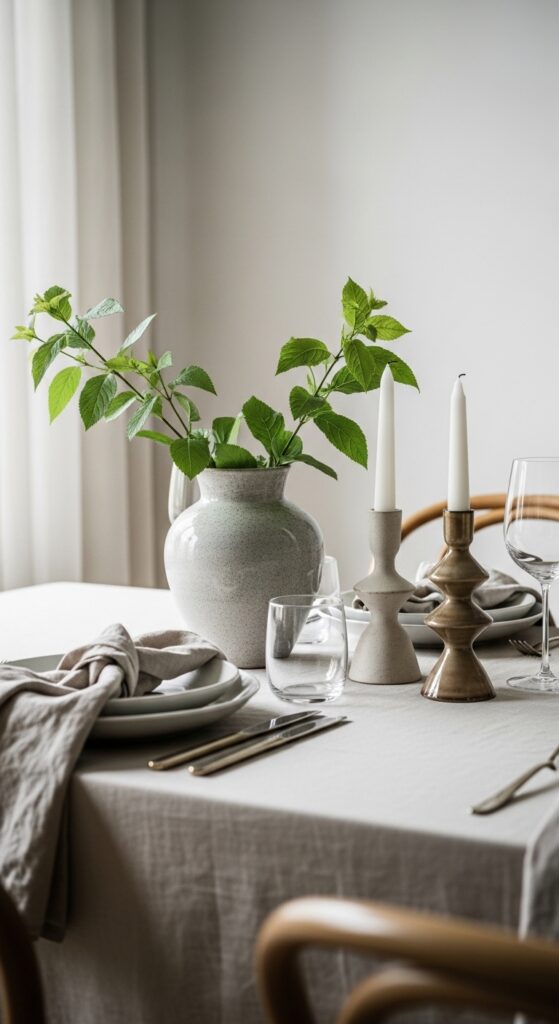
Convert your dining table into a stunning focal point by selecting just a few carefully chosen accessories that emphasize quality over quantity. Use minimal tabletop decor like a single statement centerpiece, refined candlesticks, or a sleek serving tray. These pieces should serve both aesthetic and functional purposes without overwhelming your space.
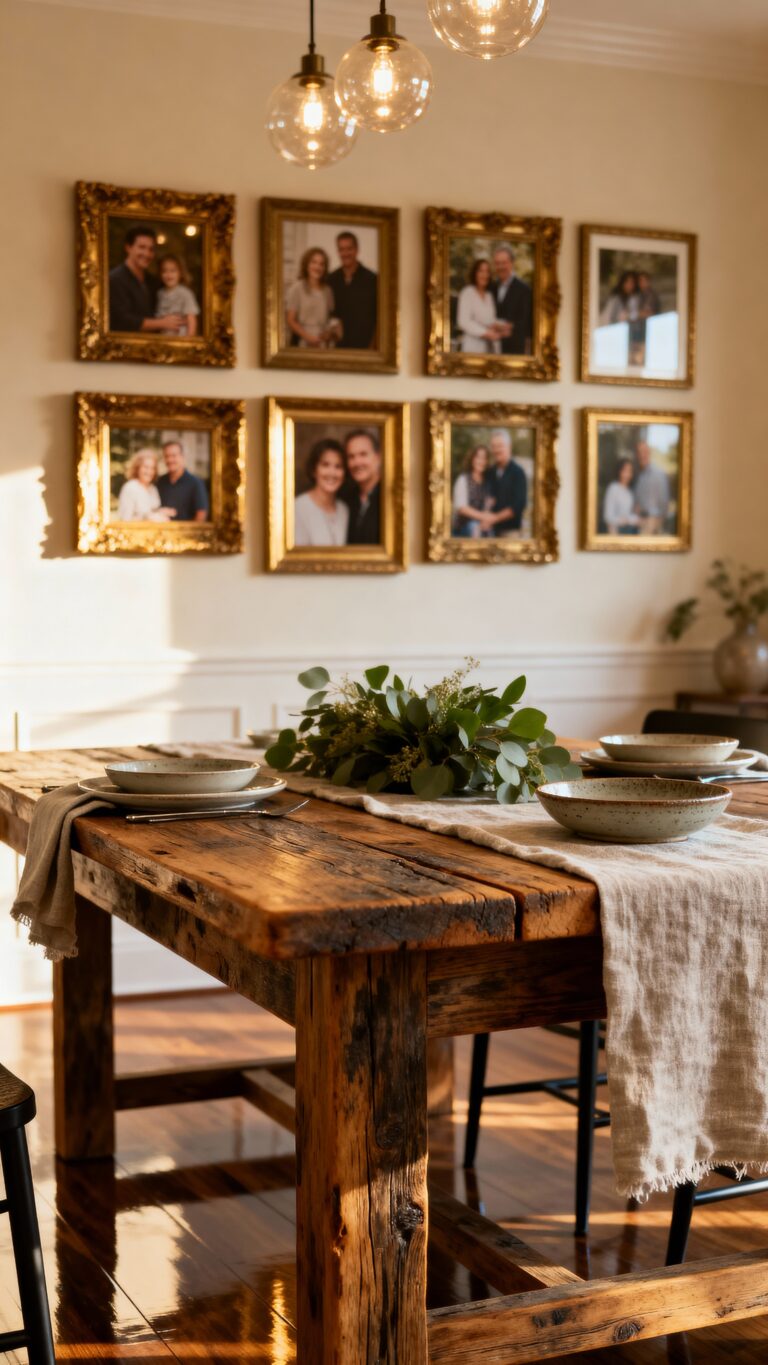
Incorporate natural textures through wooden bowls, linen table runners, or ceramic vases with fresh greenery. Choose accessories in neutral tones that complement your existing color palette. Remember, each piece should earn its place on your table by adding beauty while maintaining the clean, uncluttered aesthetic that defines minimalist design.
[affiai keyword=”minimalist dining table accessories centerpiece candlesticks” template=”carousel” count=”3″]
Design an Open Floor Plan That Flows Seamlessly
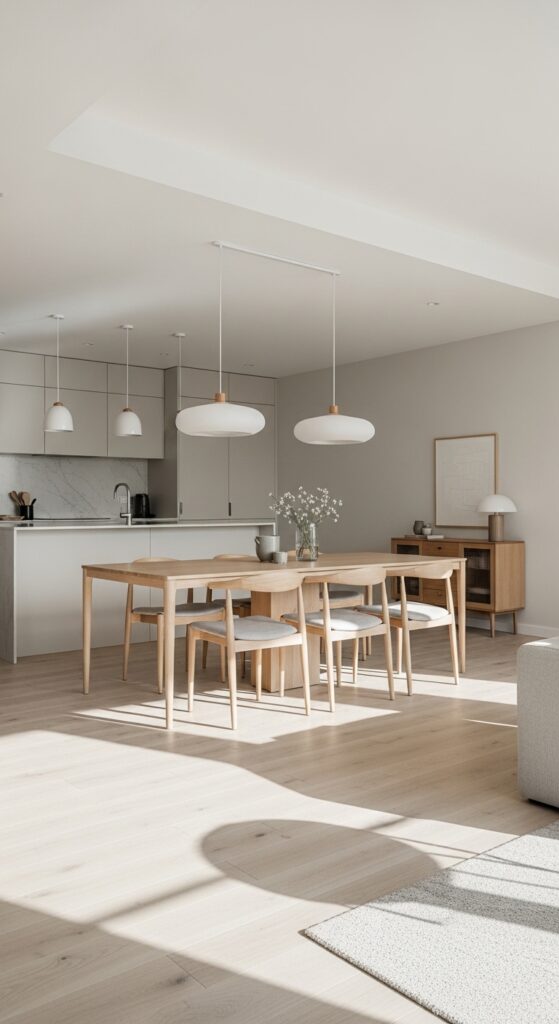
Beyond perfecting your table’s presentation, creating a cohesive open floor plan amplifies the minimalist dining experience by connecting your eating area with adjacent living spaces. You’ll achieve this seamless flow through intentional room zoning that defines each area without rigid barriers. Position your dining table to naturally bridge kitchen and living zones while maintaining clear pathways between spaces.
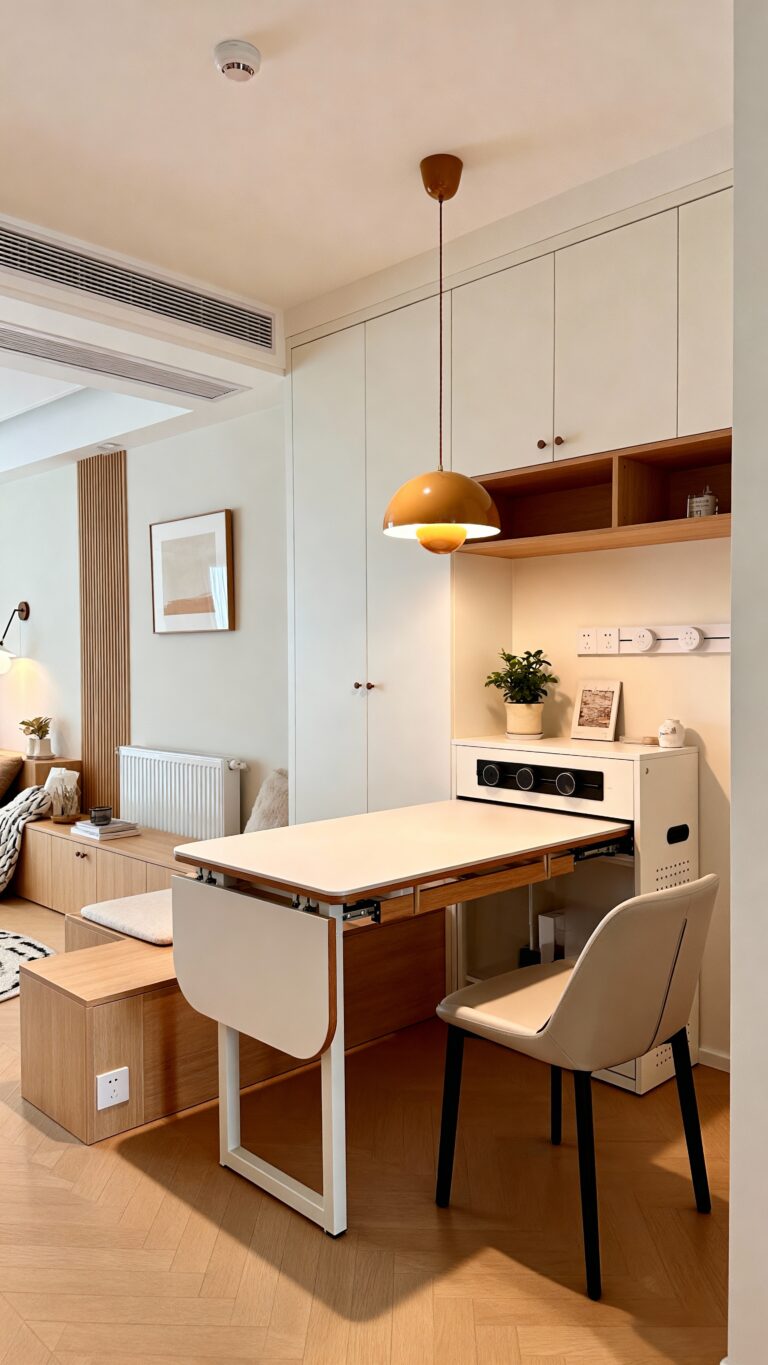
Embrace modular furniture arrangements that adapt to your lifestyle needs. Choose pieces that serve multiple purposes, like benches offering both seating and storage. Keep sight lines unobstructed by selecting low-profile furniture that doesn’t interrupt visual connections between rooms, creating one unified, breathable space.
[affiai keyword=”modular dining furniture open floor plan” template=”carousel” count=”3″]
Maintain Your Minimalist Dining Room Long-Term
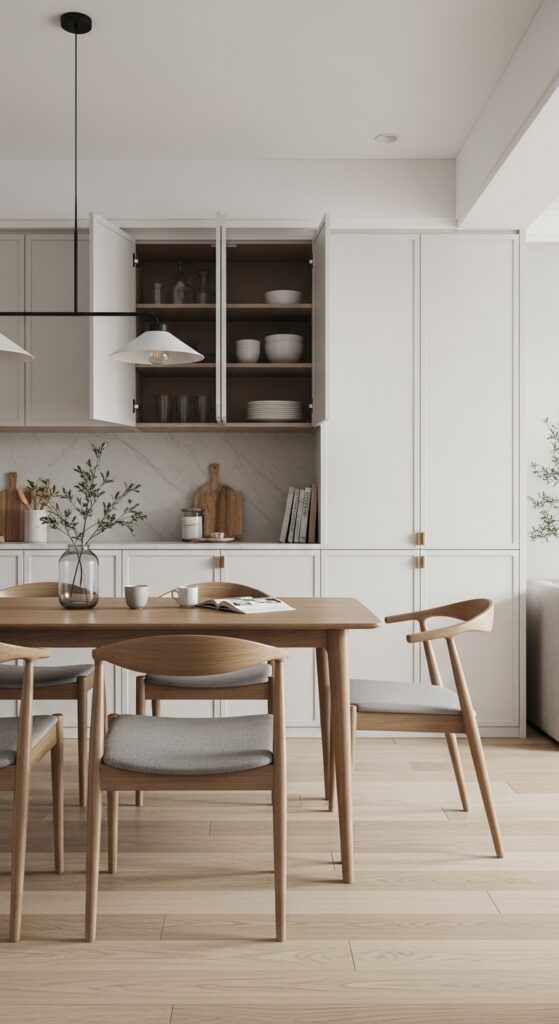
While achieving a minimalist dining room requires careful planning, maintaining its clean aesthetic demands consistent daily habits and strategic organizational systems. You’ll need to maintain decluttering habit by clearing surfaces immediately after meals and removing items that don’t belong.
Establish designated homes for everything through smart storage choices. Invest in conceal storage solutions like built-in cabinets or furniture with hidden compartments to keep dining essentials organized yet invisible. Schedule weekly 10-minute reviews to identify accumulating clutter before it overwhelms your space.
These simple practices protect your investment in minimalist design while preserving the peaceful atmosphere you’ve created.
[affiai keyword=”minimalist dining room storage solutions” template=”carousel” count=”3″]
Conclusion
You’ll uncover that creating a minimalist dining room doesn’t mean sacrificing warmth or functionality. By focusing on neutral colors, clean-lined furniture, and strategic lighting, you’ll build a space that feels both serene and inviting. Remember to choose quality over quantity when selecting accessories, and maintain your uncluttered aesthetic through regular organization. Your minimalist dining room will become a peaceful retreat that encourages meaningful conversations and memorable meals.