15 Hassle-Free Patio Drainage Ideas for Hassle-Free Yard Design
Solve your patio’s standing water problems with these 15 clever drainage solutions that transform soggy outdoor spaces into functional, beautiful yards.
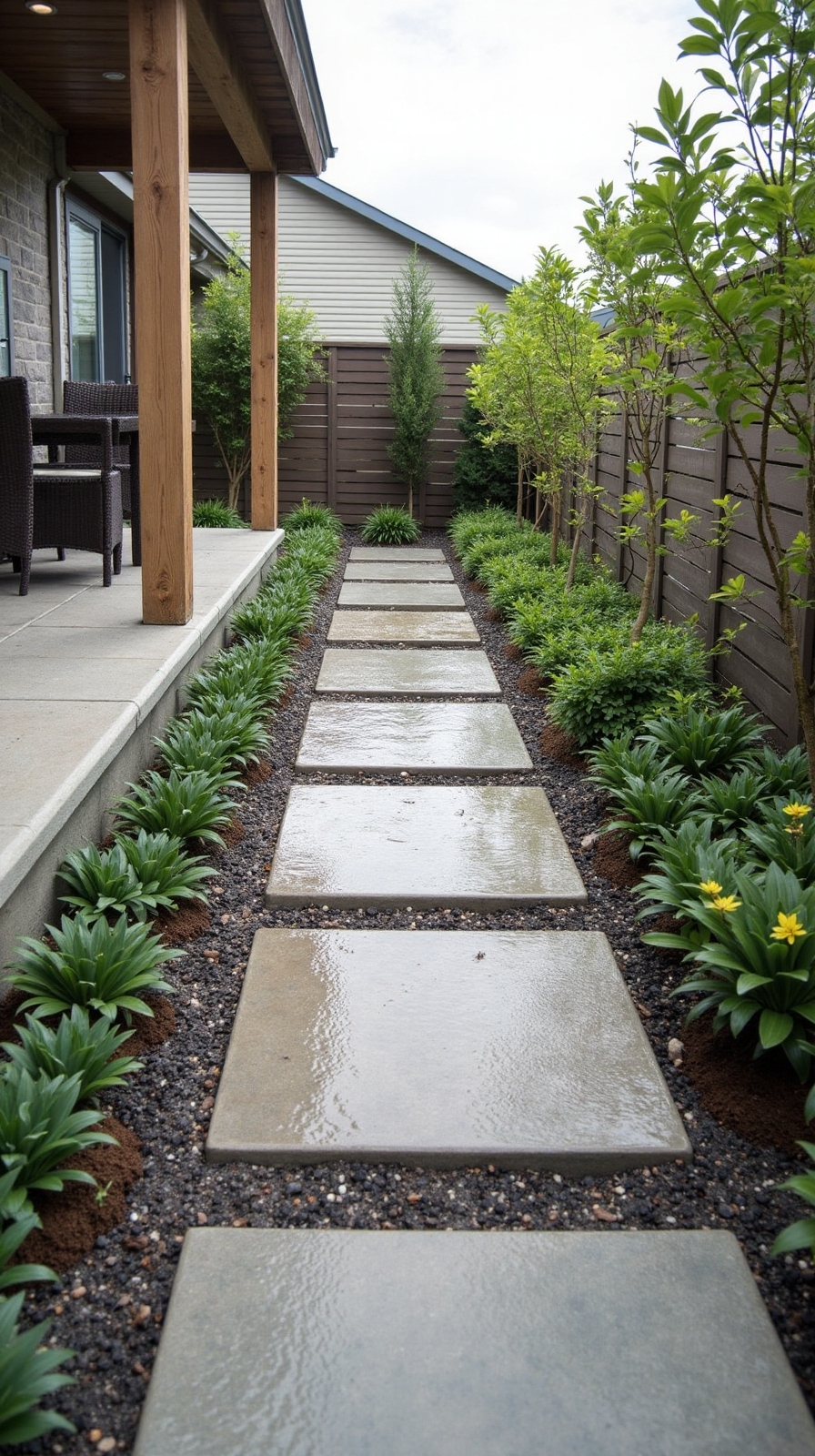
You’ve probably experienced that sinking feeling when you uncover standing water pooling around your beautiful patio after every rainstorm. Poor drainage doesn’t just create muddy messes—it can damage your foundation, kill plants, and turn your outdoor oasis into an unusable swamp. The good news? You can alter your problematic patio into a water-smart terrain using simple, cost-effective drainage solutions that’ll protect your investment while enhancing your yard’s appeal and functionality.
Install Permeable Pavers for Natural Water Absorption
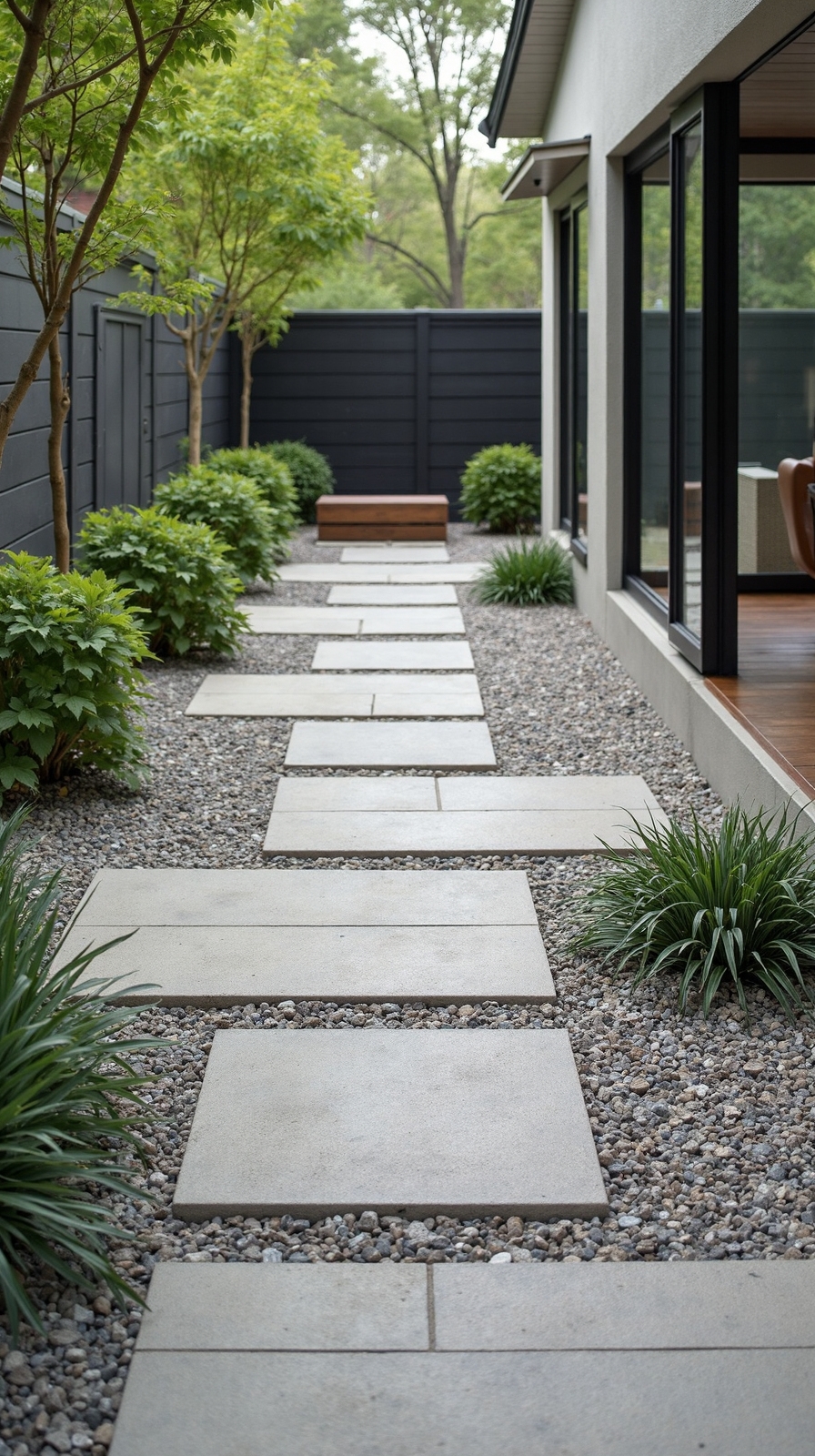
When you’re dealing with standing water on your patio, permeable pavers offer a sophisticated solution that combines functionality with visual appeal. These innovative porous materials allow rainwater to filter naturally through gaps between stones, eliminating puddles while maintaining your outdoor space’s beauty.
You’ll find permeable pavers work exceptionally well in raised patio design, where traditional drainage methods prove challenging. Installation involves creating a gravel base that promotes water flow beneath the surface. This eco-friendly approach reduces runoff, protects your foundation, and gives you the freedom to enjoy your patio regardless of weather conditions. Concrete patios can also benefit from permeable solutions, creating durable outdoor spaces that effectively manage water drainage.
Create a French Drain System Around Your Patio Perimeter
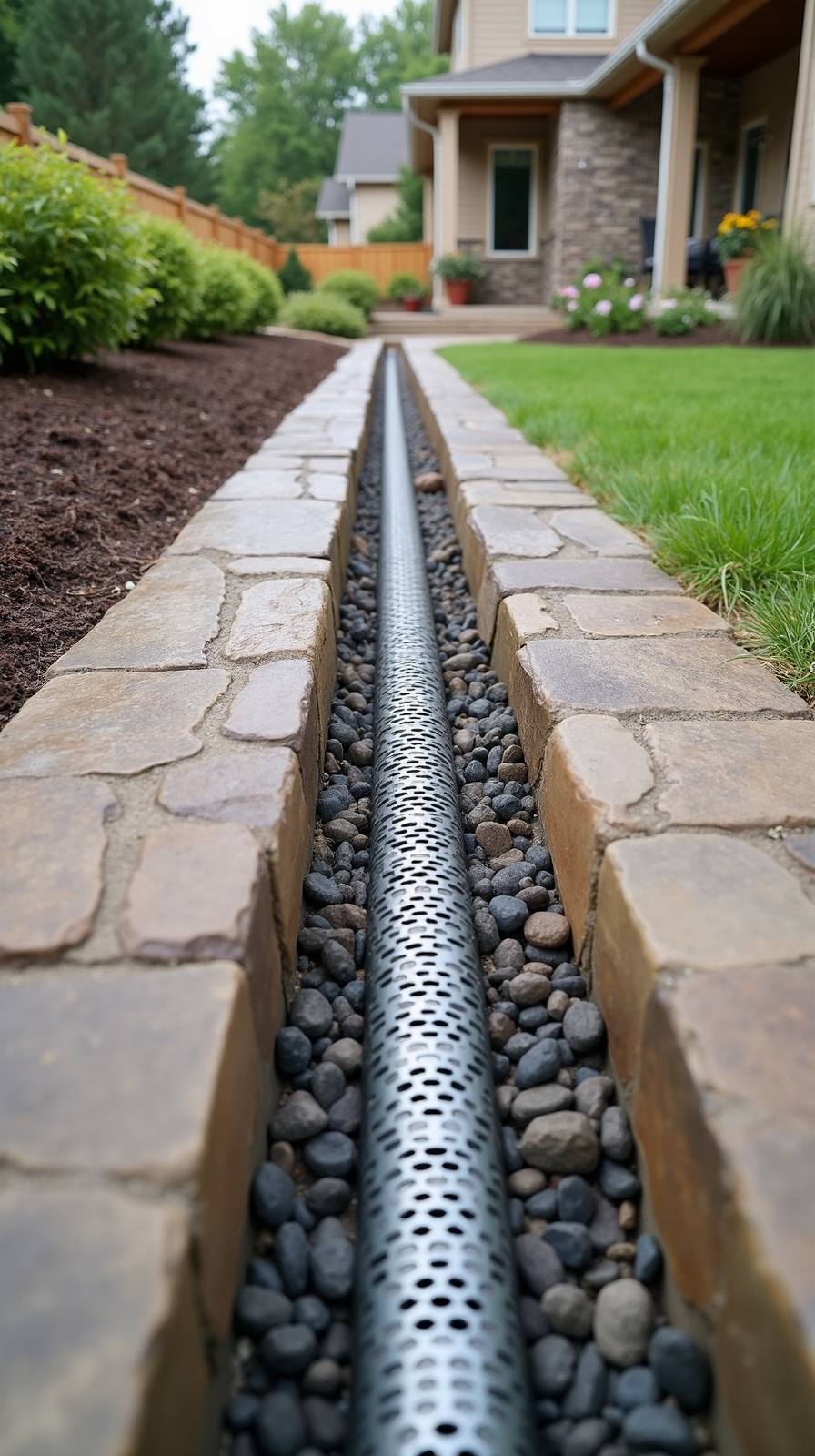
Although French drains require more initial effort than surface solutions, they’ll alter your patio’s water management by intercepting moisture before it reaches your outdoor living space. You’ll dig a shallow trench around your patio’s perimeter, then fill it with graded gravel and perforated pipe. Connect underground downspout extensions to direct roof water away from your foundation.
Consider adding integrated drainage channels where your patio meets landscaping for seamless water collection. For an affordable setup, you can incorporate decorative gravel that complements your patio design while maintaining excellent drainage functionality. This underground system gives you complete control over water flow, protecting your investment while maintaining your yard’s natural appearance and your freedom to enjoy outdoor spaces.
Build Strategic Gravel Channels for Effective Water Redirection
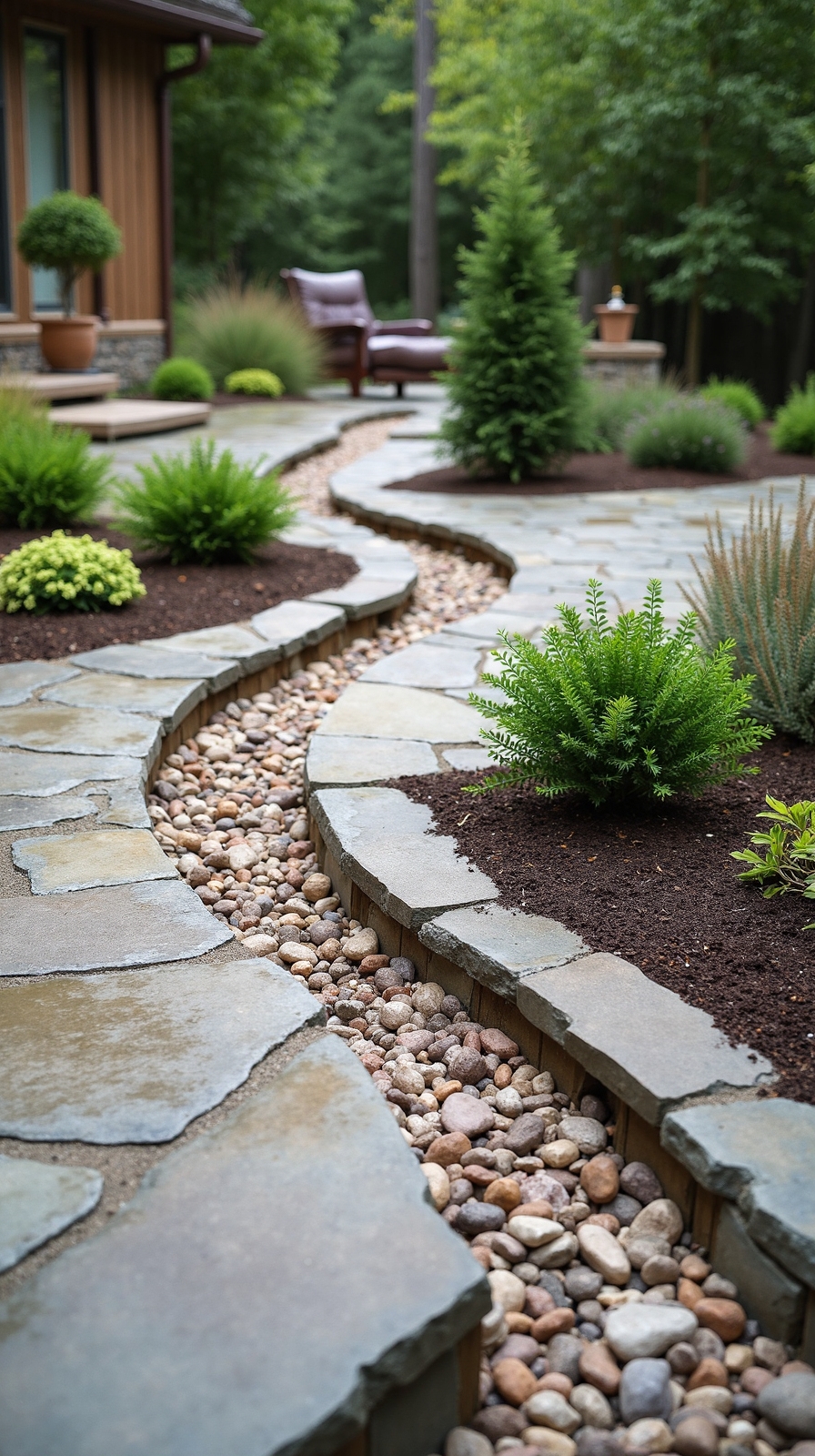
Strategic gravel channels offer you a simple yet powerful drainage solution that redirects water away from your patio using natural gravity flow. You’ll create these channels by digging shallow trenches that slope away from your outdoor space at a 1-2% grade.
First, use fabric beneath your gravel to prevent weeds while allowing water penetration. Next, incorporate swales—natural depressions that guide water flow—into your channel design for maximum effectiveness.
Fill trenches with coarse gravel or river rock, creating attractive pathways that blend seamlessly with your terrain while efficiently managing water runoff during heavy rainfall. Consider pairing this drainage system with a concrete slab patio for a clean, budget-friendly outdoor design that handles water management effectively.
Add a Dry Creek Bed Feature for Stylish Drainage Solutions
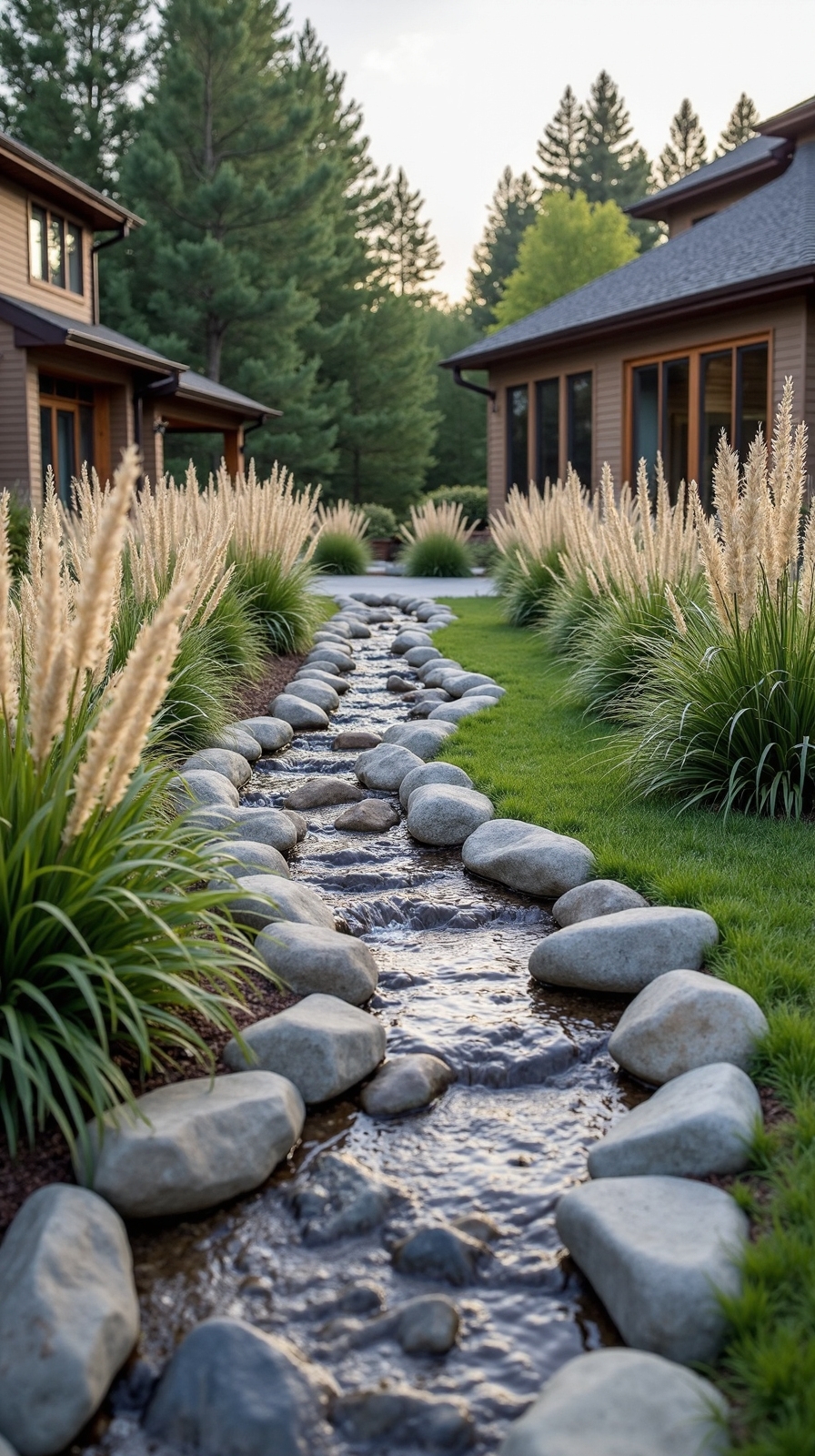
Dry creek beds frequently alter ordinary drainage problems into arresting landscape elements that naturally direct water while enhancing your patio’s visual appeal. You’ll create meandering slopes that guide runoff away from your outdoor space while mimicking nature’s own water pathways.
Start by digging a shallow channel that follows your yard’s natural contours, then line it with landscape fabric. Layer larger stones along the edges and fill the center with smaller river rocks. Position natural rock formations strategically to slow water flow and prevent erosion.
This solution metamorphoses necessary drainage into an alluring focal point that complements your patio design. Consider incorporating natural stone elements that echo your main patio materials to create a cohesive outdoor aesthetic.
Implement Proper Patio Grading and Slope Techniques
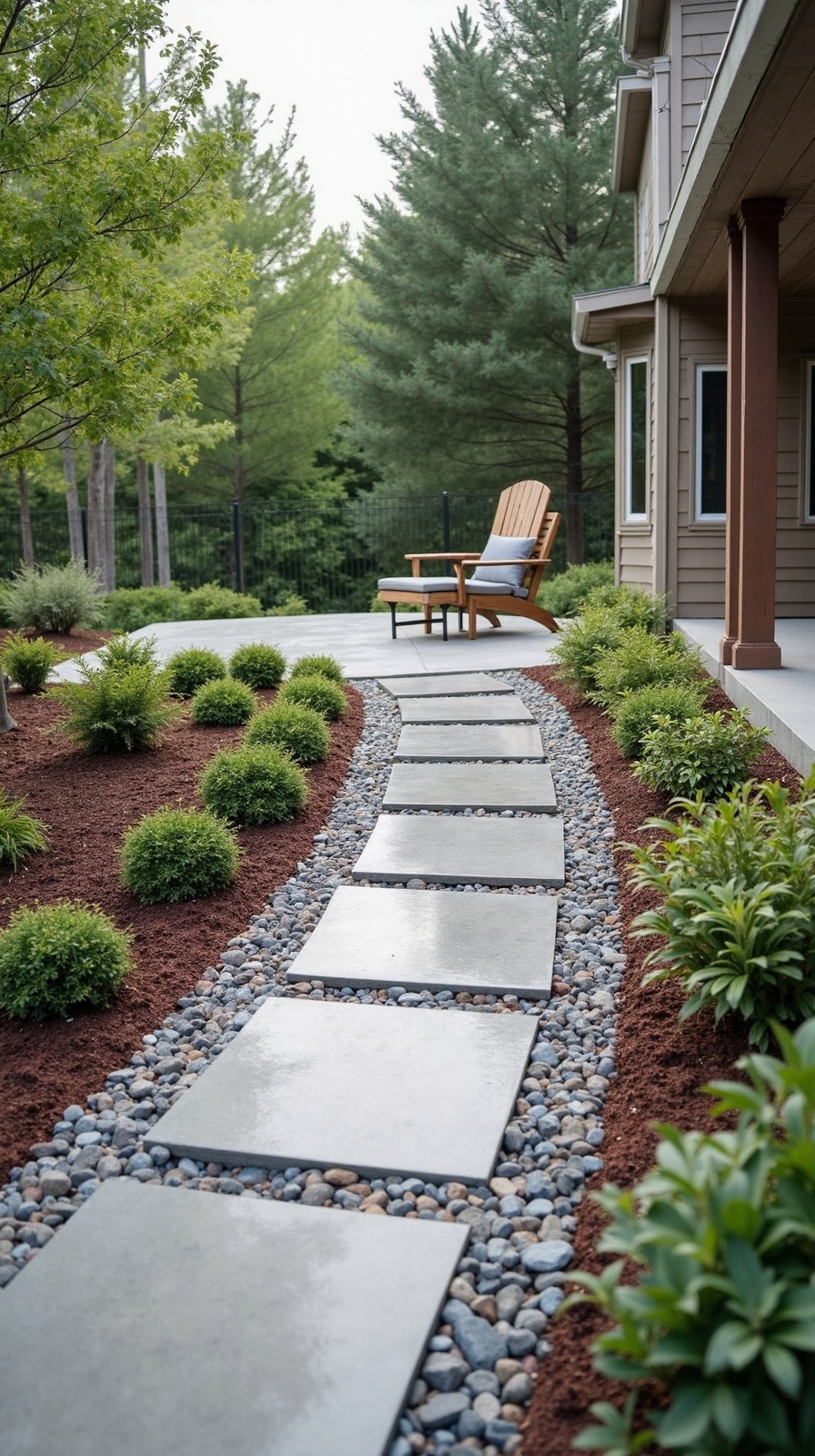
Proper patio grading creates the foundation for effective water management by establishing controlled slopes that direct moisture away from your outdoor living space. You’ll want to achieve a gentle 1-2% grade that moves water naturally without creating uncomfortable walking surfaces or pooling issues.
Landscape grading techniques involve careful soil preparation and precise measurements to guarantee consistent drainage patterns. Start by marking high and low points, then use a level to verify your slope calculations across the entire patio area. Consider how different flooring materials like tile, stone, and wood will interact with your drainage system during the planning phase.
Proper slope maintenance requires periodic inspections and minor adjustments to safeguard the long-term effectiveness of your drainage system.
Use Drainage Matting Under Patio Surfaces
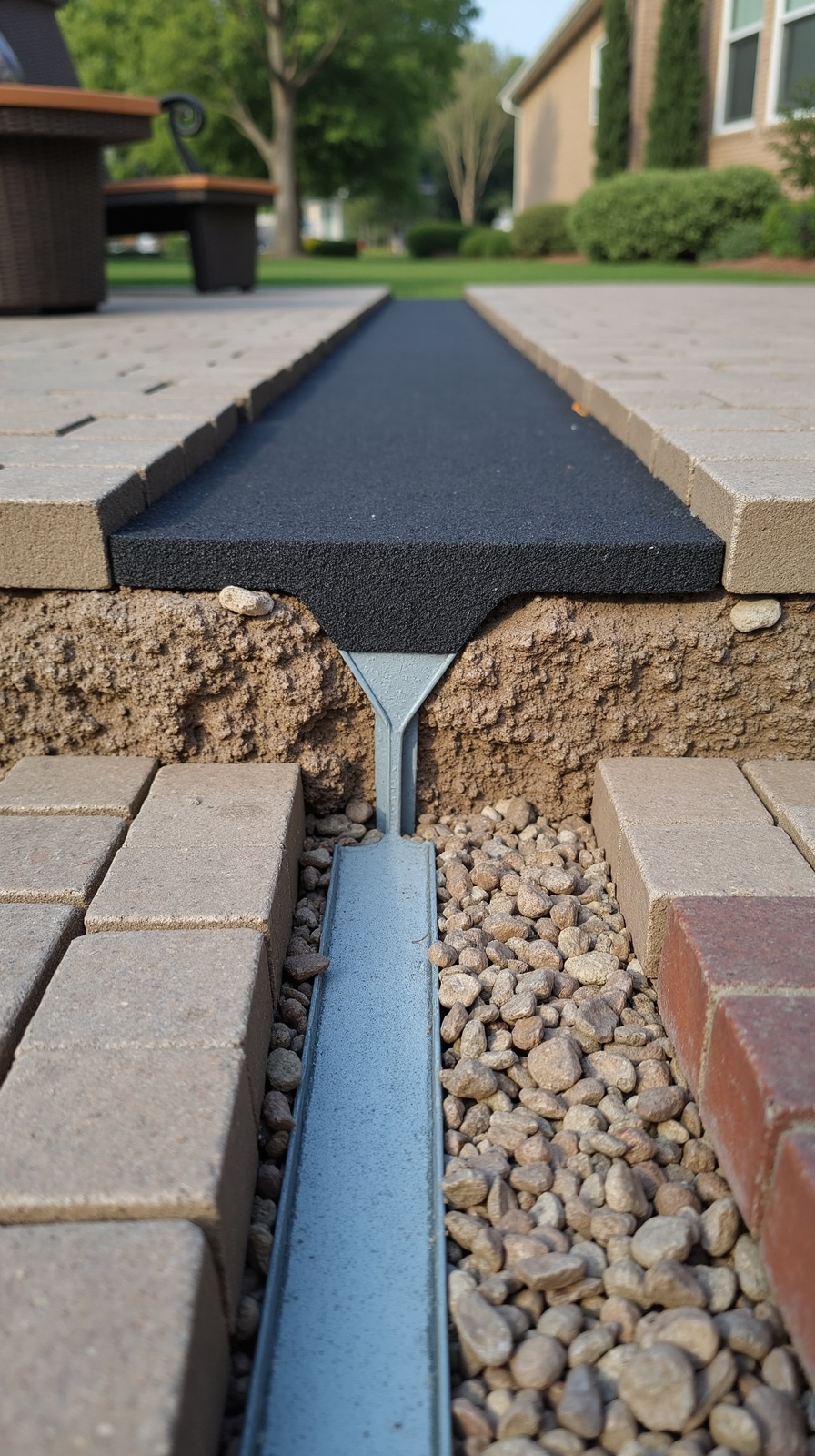
When installing patio surfaces over problematic soil conditions, drainage matting creates an essential barrier that prevents water accumulation beneath your hardscape materials. This specialized underlayment allows water to flow freely while supporting your chosen surface material effectively.
You’ll find drainage matting particularly beneficial when you use artificial turf or permeable pavers in areas with clay or compacted soil. The matting’s dimpled design creates airspace that channels water away from your patio’s foundation. Pea gravel offers another excellent drainage solution with its naturally permeable surface that complements flexible patio designs.
For maximum effectiveness, consider trench drains along patio edges to complement your matting system, ensuring complete water management throughout your outdoor living space.
Install Channel Drains Along Patio Edges
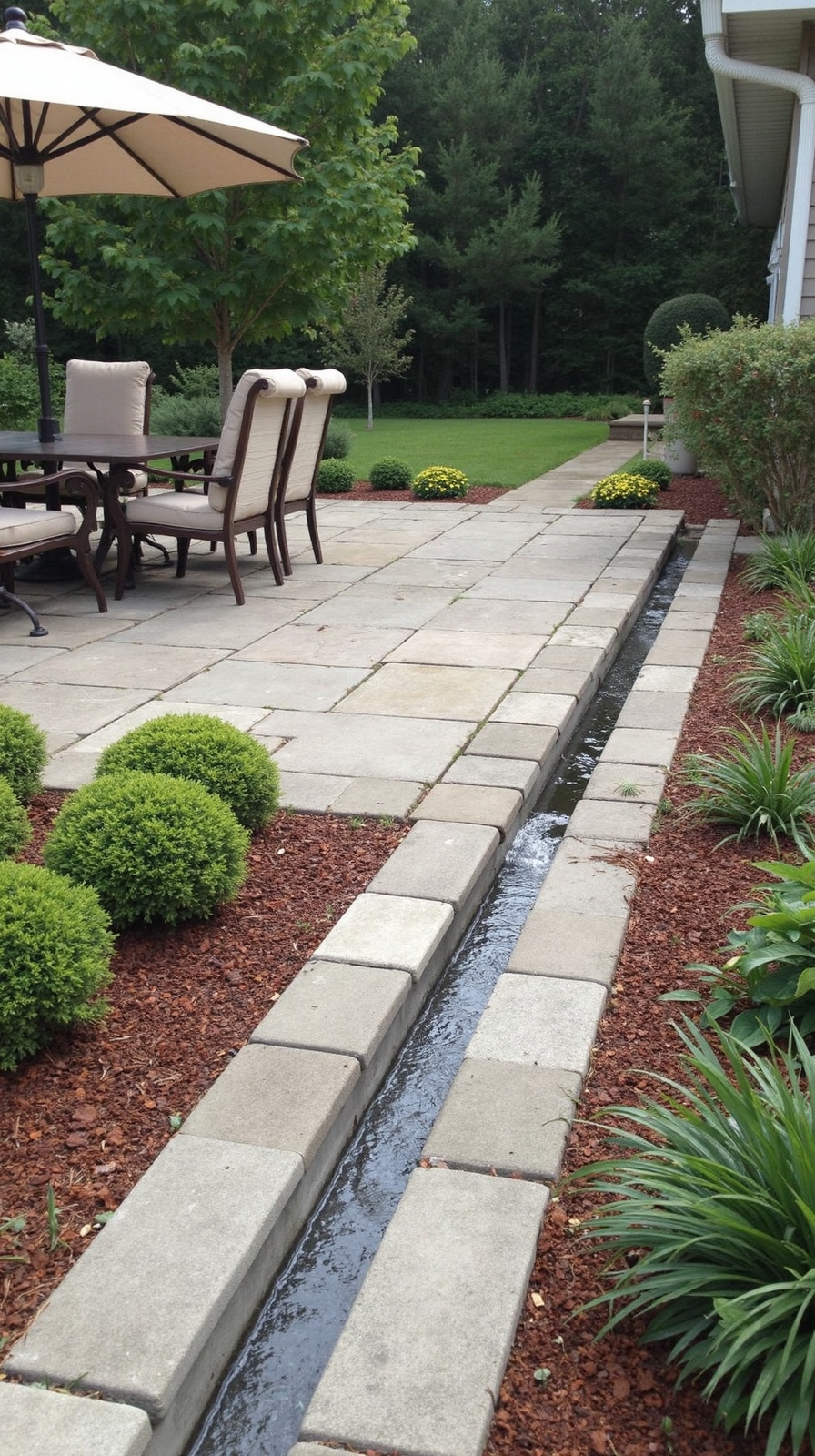
Channel drains along your patio’s perimeter create a highly effective water management system that captures runoff before it can pool or cause structural damage. You’ll install hidden drainage by digging shallow trenches around your patio’s edges, then positioning linear drain channels that blend seamlessly with your design.
When you integrate drainage channels properly, they’ll intercept water flowing off your patio surface and direct it toward designated outlets or storm drains. This proactive approach gives you complete control over water flow, preventing erosion and foundation issues while maintaining your outdoor space’s aesthetic appeal and functionality year-round. Consider using concrete pavers around your drainage channels to create a cohesive look that complements your patio’s overall design while providing durable, weather-resistant flooring.
Create Rain Gardens Near Your Outdoor Living Space
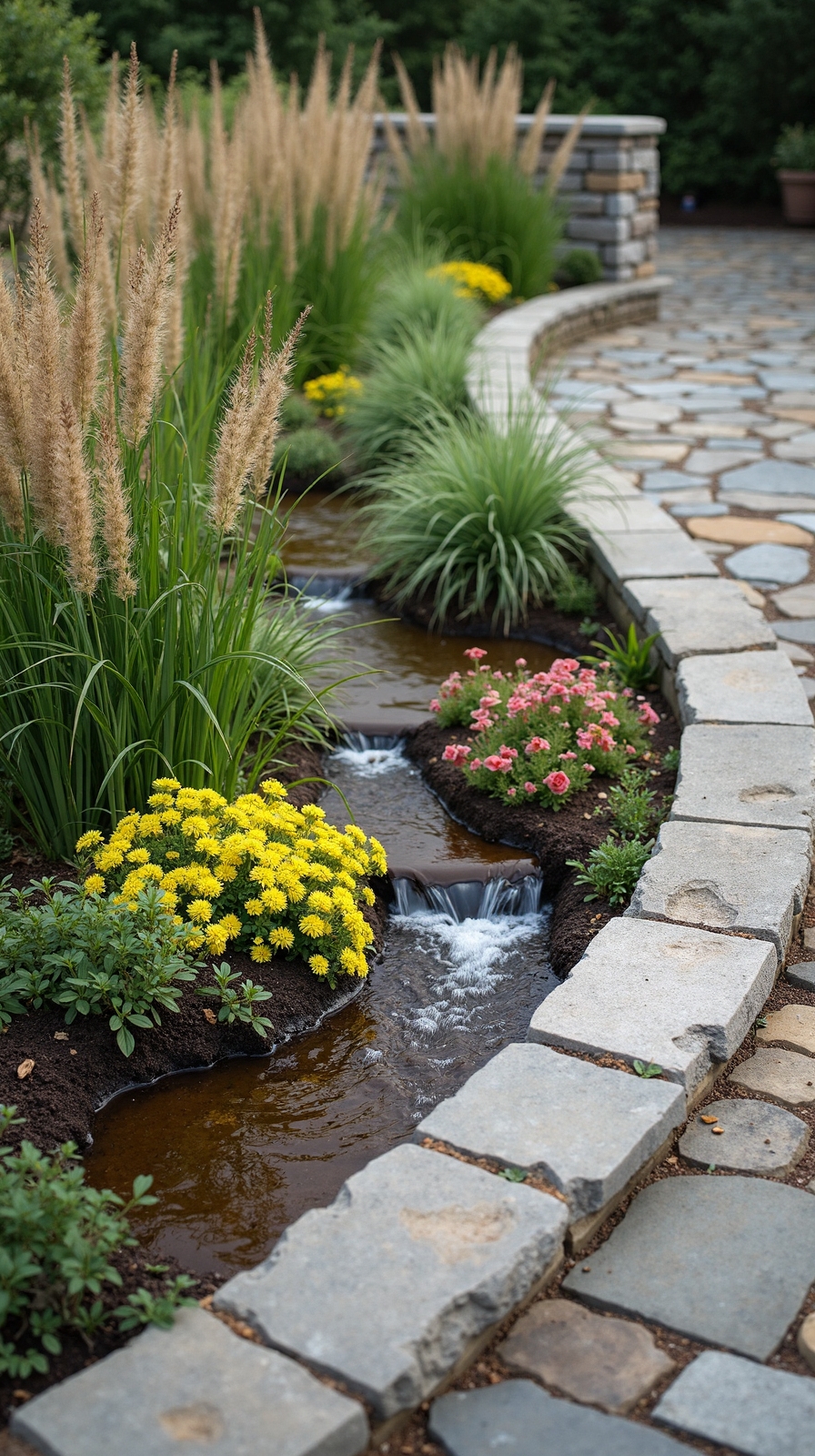
Rain gardens offer a natural complement to channel drainage systems by converting excess water into an attractive scenic feature that benefits your entire property. You’ll create these shallow depressions 15-30 feet away from your patio, allowing runoff to collect and slowly infiltrate the soil.
Careful native plant selection secures your rain garden thrives without constant watering or fertilizing. Choose drought-tolerant perennials like black-eyed Susan, purple coneflower, and ornamental grasses that handle both wet and dry conditions. These patio garden ideas transform your outdoor space by adding natural greenery while managing water runoff effectively.
Rain garden maintenance stays minimal once established—simply remove weeds occasionally and add mulch annually to maintain your beautiful, functional water management system.
Add Decorative Catch Basins for Water Collection
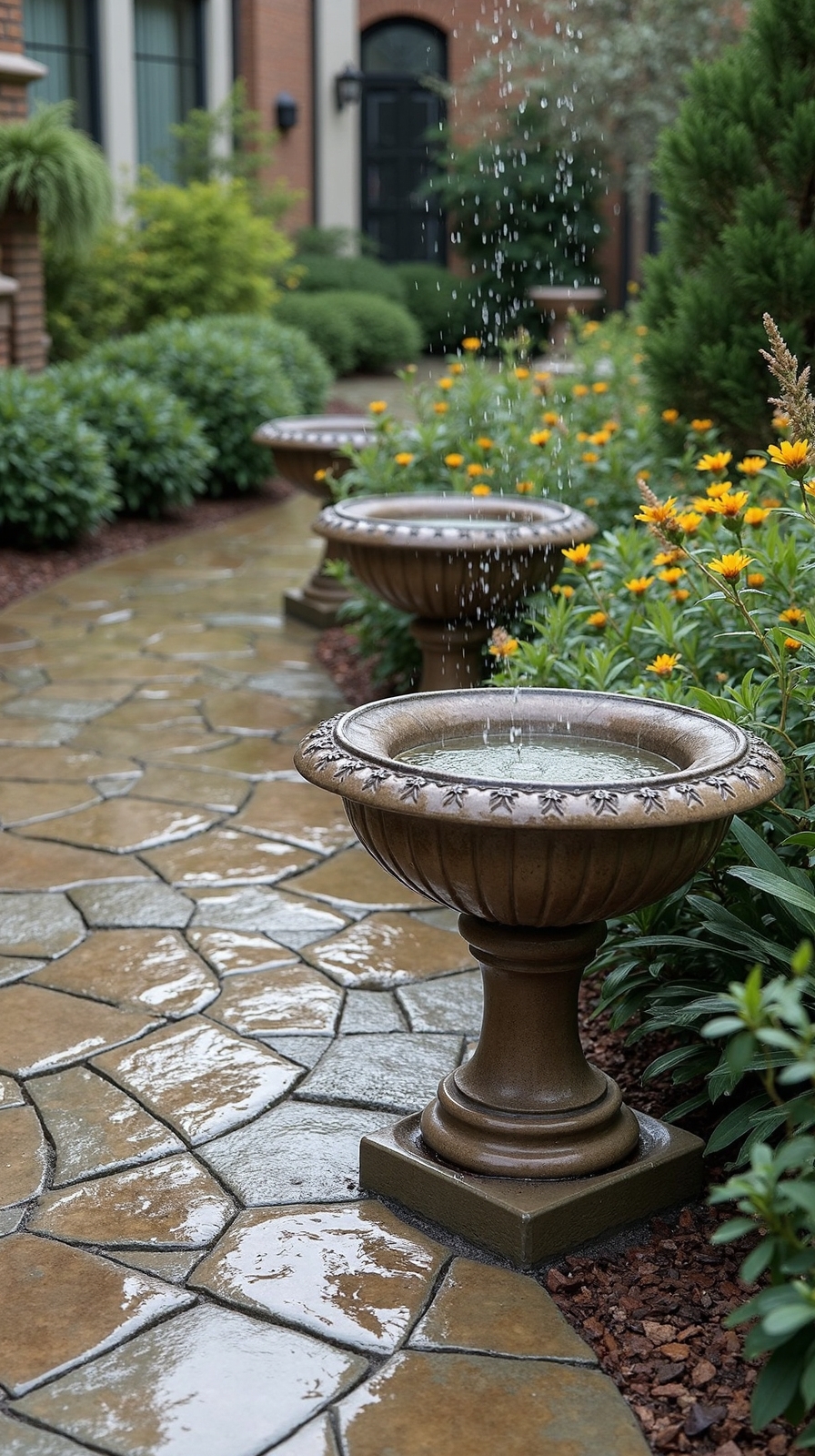
Why settle for unsightly drainage solutions when decorative catch basins can modify water collection into a scenic landscape feature? You’ll transform functional necessity into artistic expression while maintaining complete control over your outdoor space’s aesthetic.
Choose ornate metal grates with intricate patterns that complement your patio’s design style. Position decorative planters strategically around catchment basins to disguise their utilitarian purpose while adding lively color and texture.
Install decorative stone surrounds or mosaic tiles around basin edges for seamless integration. You can select from various materials including cast iron, brass, or powder-coated steel that resist weather damage while enhancing your patio’s visual appeal.
Build Retaining Walls With Built-In Drainage Systems
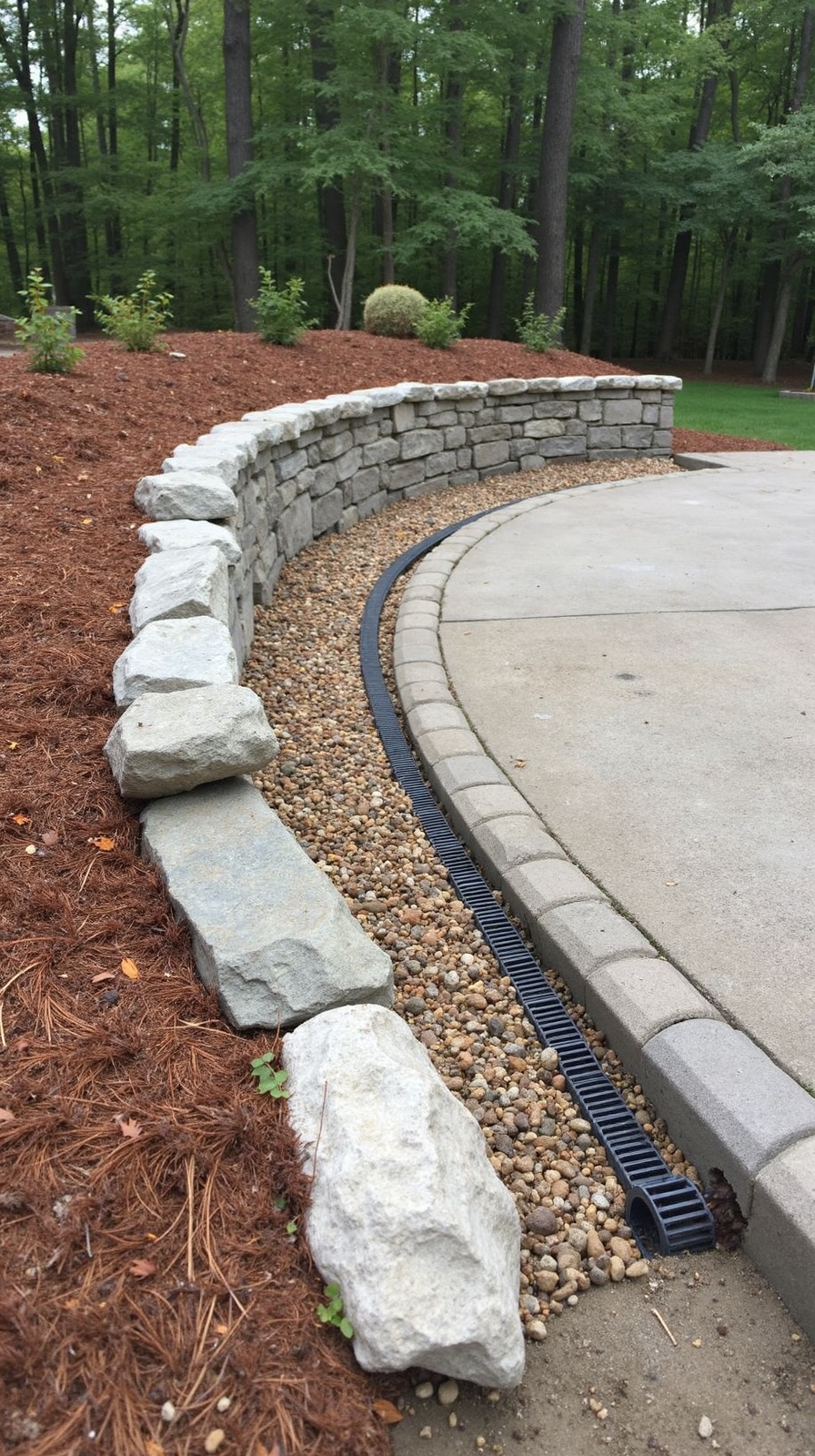
Retaining walls serve double duty when you incorporate built-in drainage systems that prevent water accumulation behind the structure while creating attractive terraced levels for your patio area. You’ll eliminate standing water issues while gaining functional outdoor space that works with your terrain’s natural slope.
Build gabion walls filled with stones to create permeable barriers that naturally filter water through rock layers. Install weep holes every six feet along traditional concrete or block walls to release trapped moisture. Incorporate drainage cells behind solid retaining walls to collect and redirect water flow toward designated drainage areas, protecting your patio investment.
Install Underground Drainage Pipes and Systems
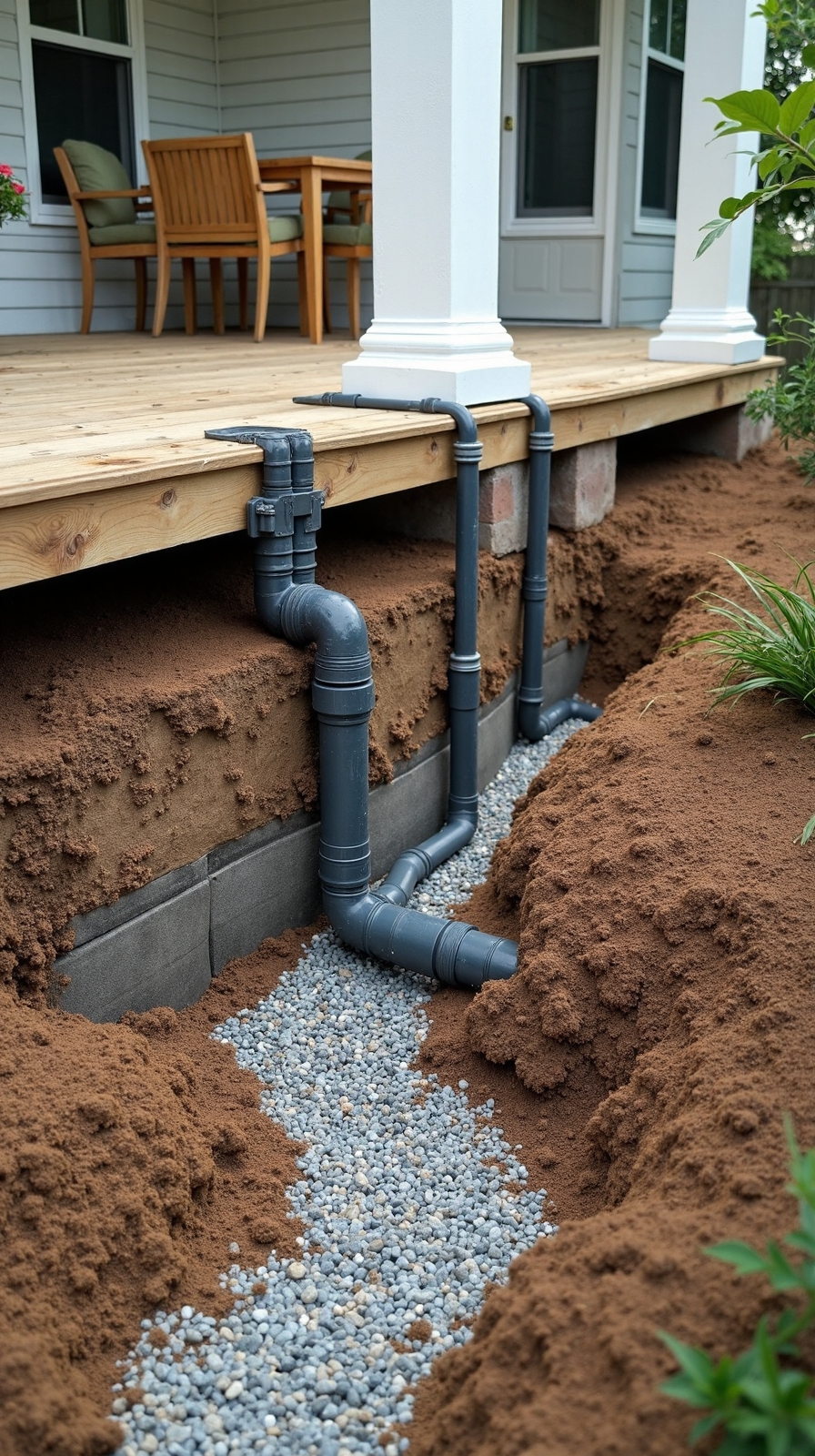
When surface-level solutions aren’t enough to handle your patio’s water problems, underground drainage pipes create the permanent infrastructure needed to redirect water away from problem areas. You’ll dig trenches following your desired drainage path, then install perforated pipes that collect and channel excess water.
Guarantee proper slope by maintaining at least a 1% grade throughout the system—this assures water flows efficiently toward your chosen outlet. Smart backfill material selection matters tremendously; use graded gravel around pipes before adding soil layers.
This underground approach gives you complete control over water movement while preserving your patio’s surface appearance.
Use Raised Patio Design for Improved Water Flow
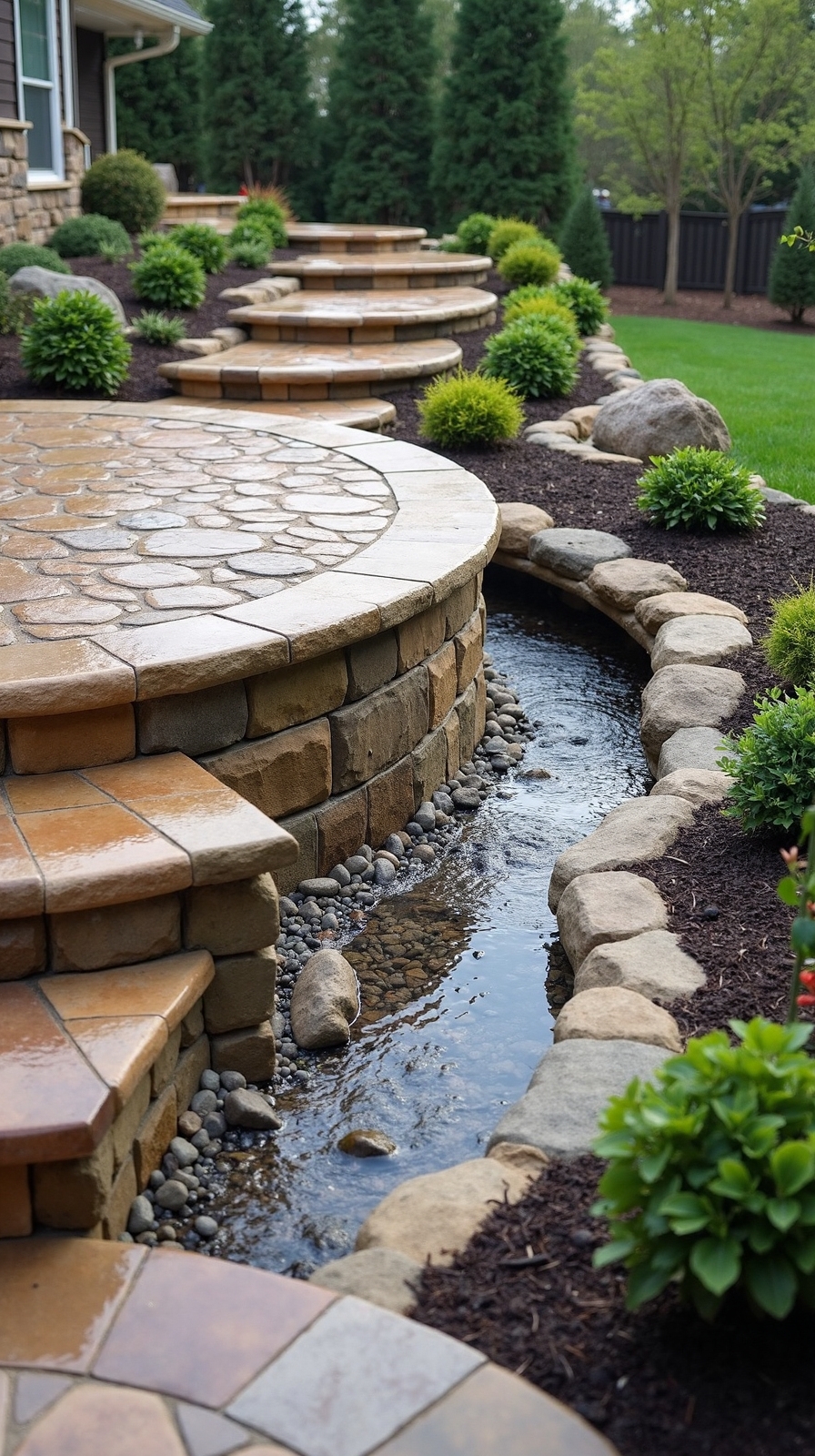
Building your patio above ground level automatically creates natural drainage advantages that work with gravity rather than against it. You’ll eliminate standing water problems while gaining design flexibility that alters your outdoor space.
Elevated patio design offers multiple drainage benefits. Water naturally flows away from raised surfaces, preventing pooling around seating areas. You can incorporate slope directly into your construction, directing runoff toward designated drainage points.
Raised patio construction works with various materials including concrete, pavers, and decking. Consider building 6-12 inches above grade for ideal results. You’ll create natural boundaries while ensuring water flows freely underneath your elevated entertainment area.
Add Strategic Landscaping for Natural Water Management
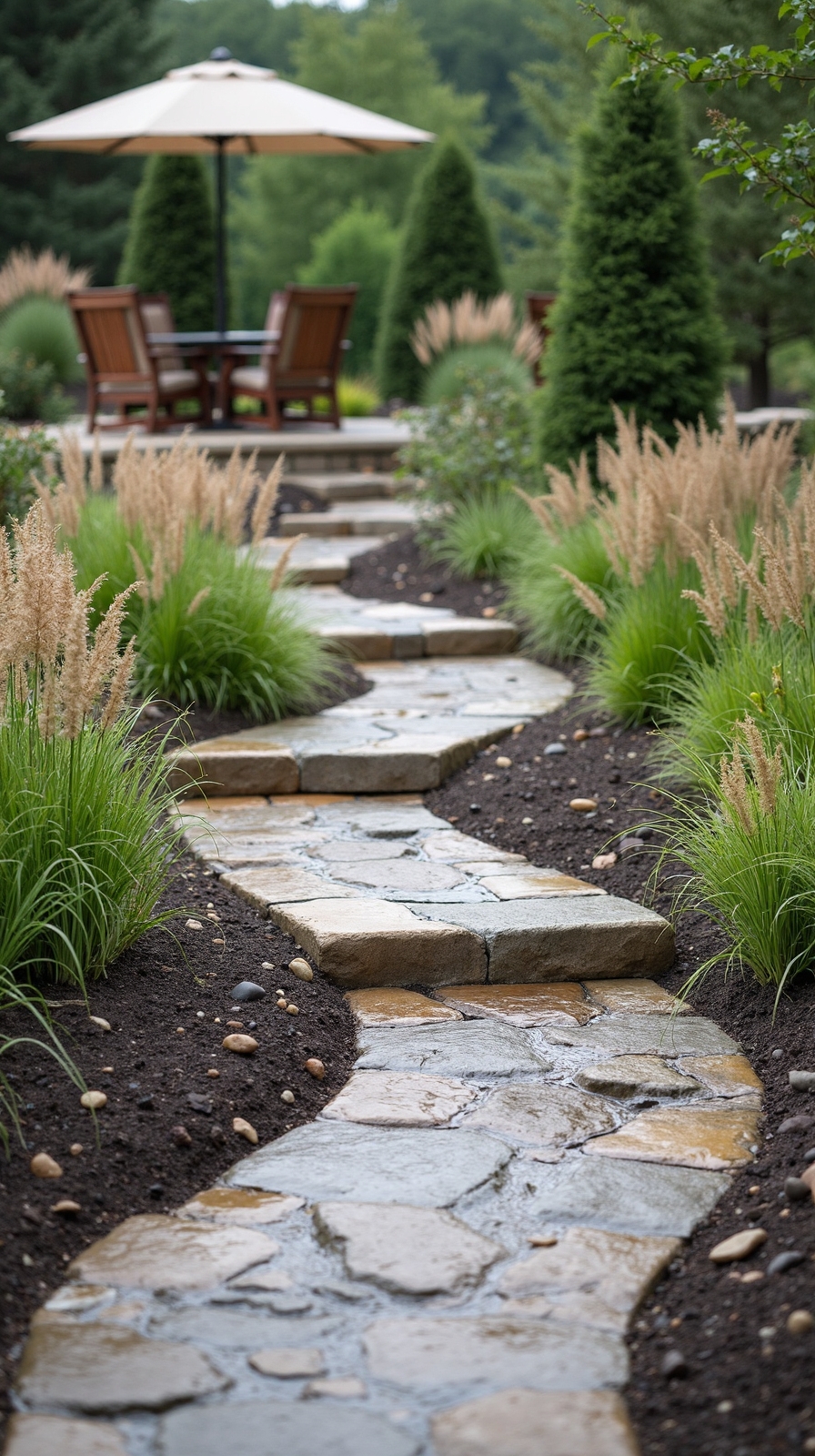
Strategic reconfiguration revamps your patio’s drainage challenges into natural water management solutions that enhance both function and beauty. You’ll maximize seasonal plantings by creating rain gardens with deep-rooted perennials that absorb excess water during spring storms while providing colorful blooms throughout summer.
Integrate native species like black-eyed susans and switchgrass, which naturally thrive in your local climate without requiring constant maintenance. Position these plants in slight depressions around your patio’s perimeter to capture runoff effectively. This approach transforms drainage problems into attractive landscape elements that work year-round, giving you the freedom to enjoy your outdoor space regardless of weather conditions.
Install Outdoor Floor Drains in Problem Areas
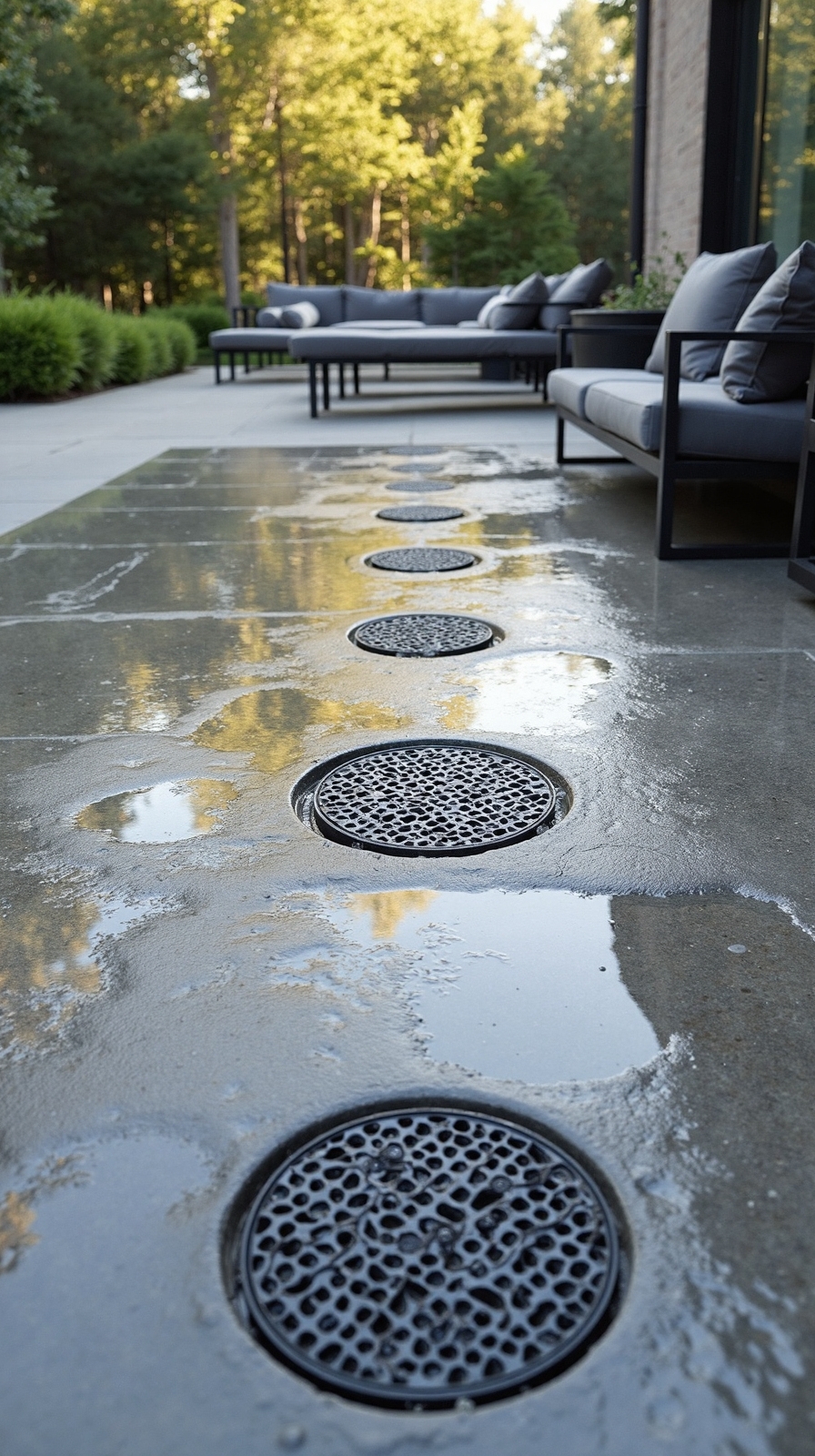
Although strategic landscaping manages much of your water management needs, persistent pooling in specific patio areas requires direct drainage solutions through professionally installed floor drains.
You’ll want to employ trench drains along patio edges where water consistently accumulates despite proper grading. These linear drainage systems capture runoff before it reaches your outdoor living spaces.
For lower-lying patio sections, install sump pumps connected to collection basins that automatically remove excess water during heavy rainfall. Professional installation guarantees proper positioning and electrical connections, giving you dependable drainage that works independently of weather conditions and safeguards your investment.
Create Multi-Level Terracing for Effective Water Control
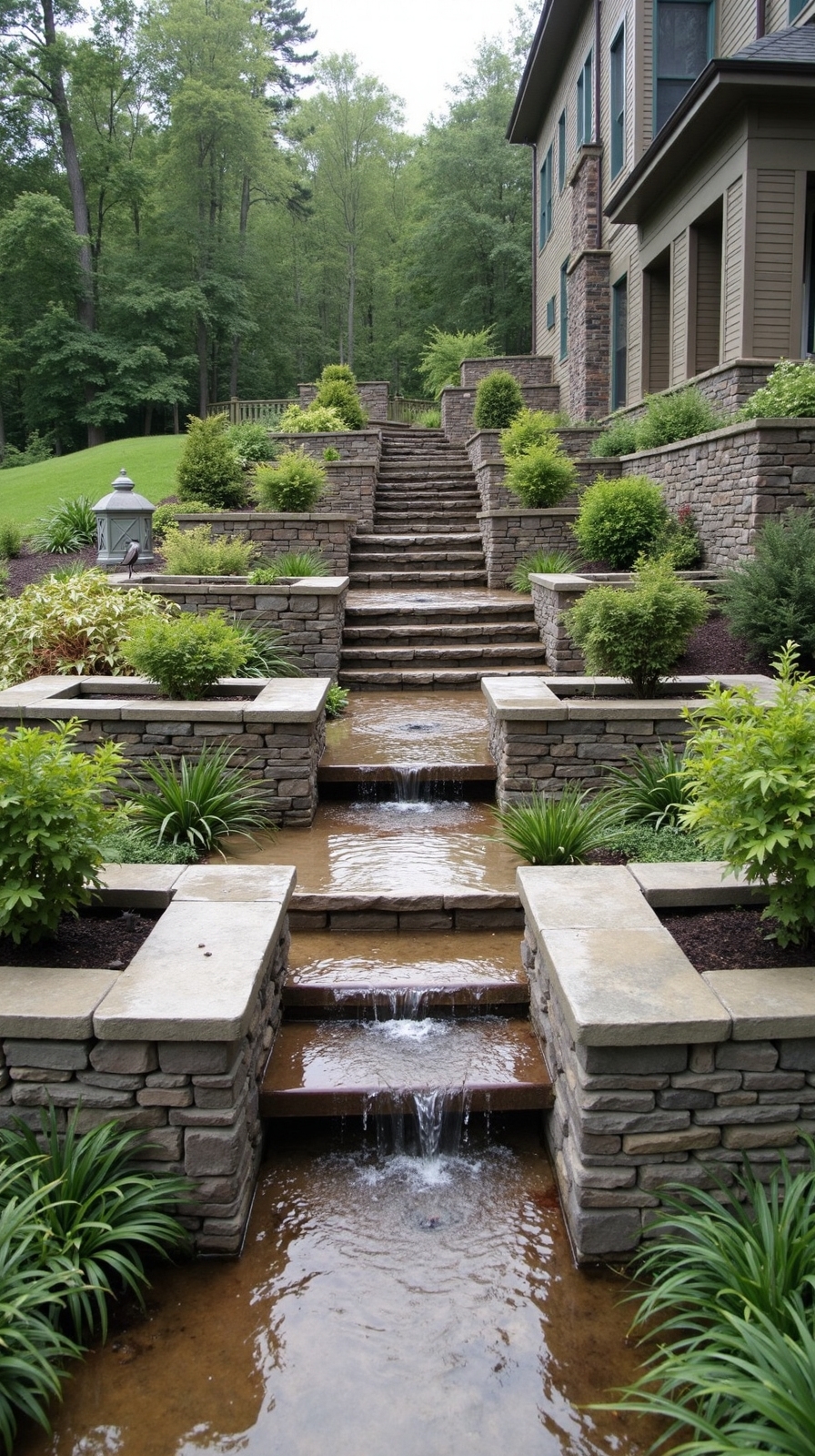
Multiple levels of terracing convert sloped patios into functional drainage systems that naturally direct water away from your home’s foundation. You’ll create stepped platforms that catch runoff and channel it safely downhill, preventing erosion and pooling issues.
Multi tier terracing works by building retaining walls at different elevations, forming natural water breaks. Each level collects excess water before releasing it to the next tier below. You can incorporate staggered planting levels between terraces to enhance water absorption and add visual appeal.
This approach gives you complete control over water flow while maximizing your outdoor living space effectively.
Conclusion
You’ve now got fifteen proven drainage solutions that’ll alter your patio into a water-smart outdoor space. Pick the methods that match your budget, yard layout, and maintenance preferences. Start with simple grading adjustments, then add features like permeable pavers or French drains as needed. Remember, combining multiple techniques often works best. With proper planning and execution, you’ll enjoy a beautiful, functional patio that handles water runoff effortlessly for years to come.