15 Small Home Office Ideas That Make the Most of Limited Space
Working with limited space doesn’t mean sacrificing productivity—discover ingenious home office solutions that transform even the tiniest corners into efficient workspaces.
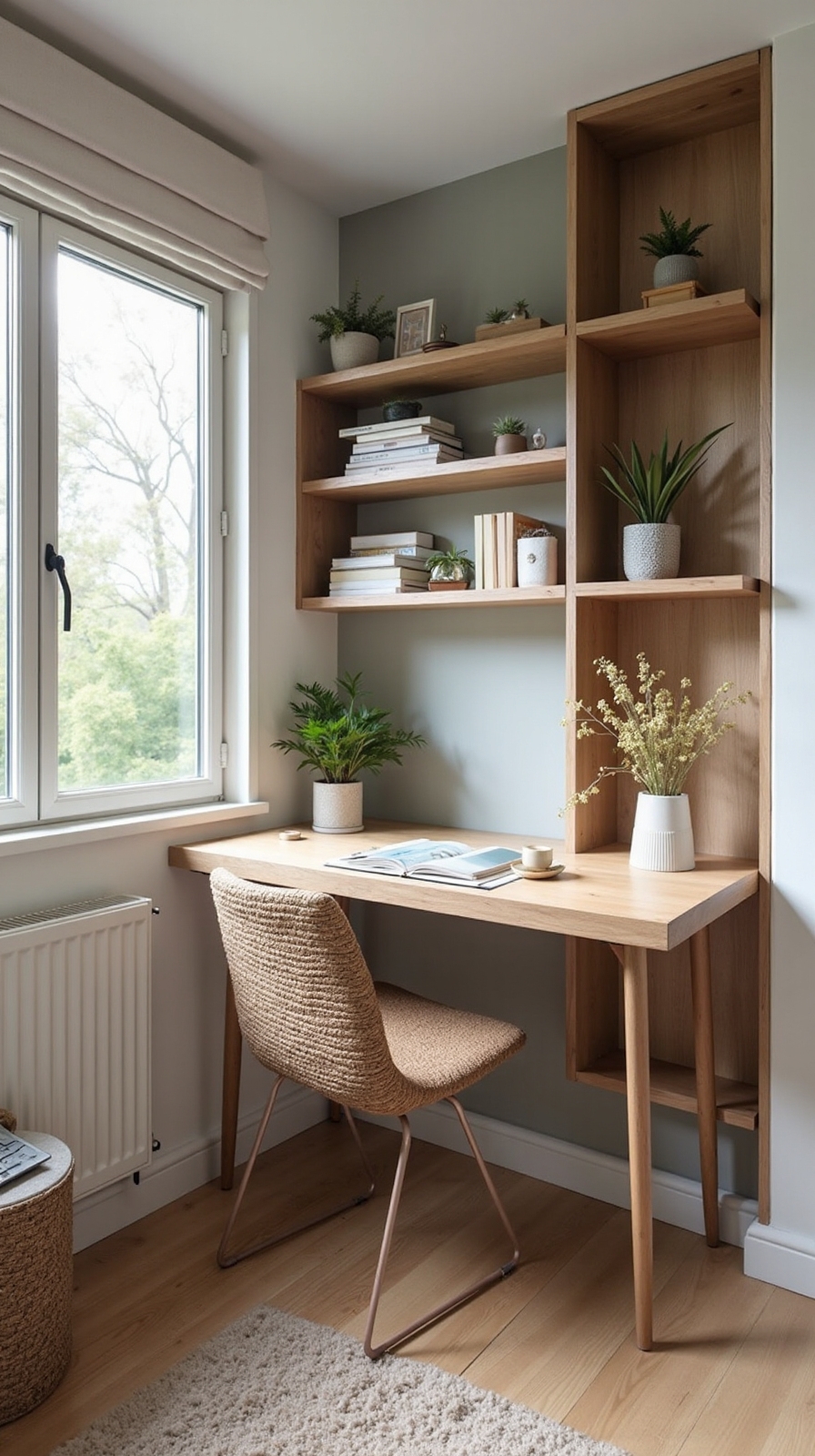
You don’t need a dedicated room to create an efficient home office that enhances your productivity. Whether you’re working with a tiny apartment, cramped house, or simply want to maximize every square foot, smart design choices can convert overlooked spaces into functional work areas. From hidden closet nooks to fold-away desks, these creative solutions prove that limited space doesn’t mean limited possibilities—and some might surprise you with their ingenious simplicity.
Transform a Closet Into a Hidden Office Nook
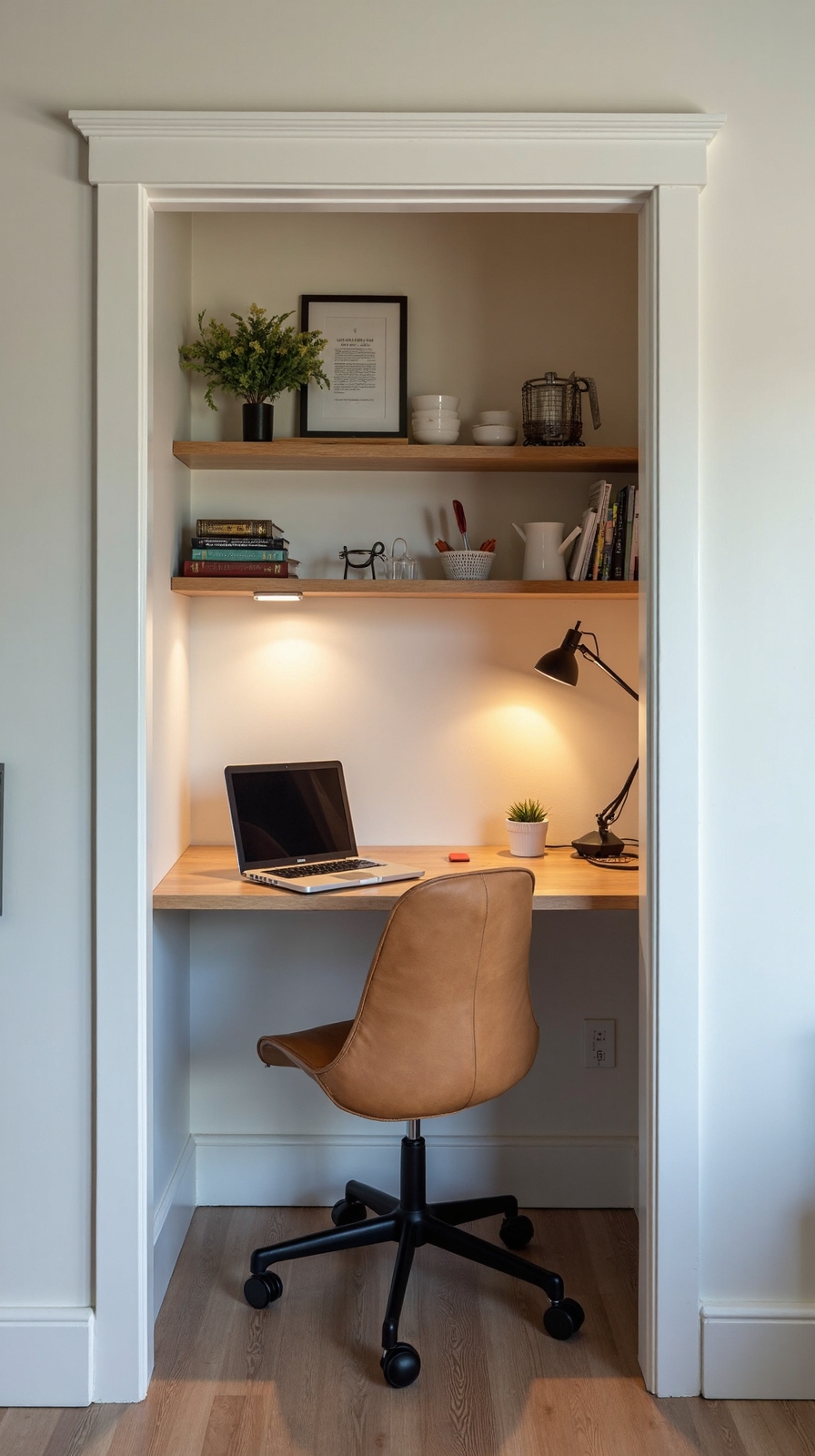
Where can you find the perfect home office space when square footage is at a premium? Your closet holds untapped potential as a private workspace that disappears behind closed doors.
Start by clearing out unnecessary items and installing a narrow desk or floating shelf at elbow height. You’ll want to repurpose existing storage by converting upper shelves into organized supply stations for documents and office materials.
Lighting becomes essential in this compact environment. Add task lighting with a small desk lamp or battery-powered LED strips mounted under shelves to eliminate shadows and reduce eye strain.
Install a comfortable chair that slides completely under the desk when not in use. Consider adding a small bulletin board or magnetic organizer to the back wall for important prompts and inspiration.
Create a Fold-Down Wall Desk for Instant Workspace
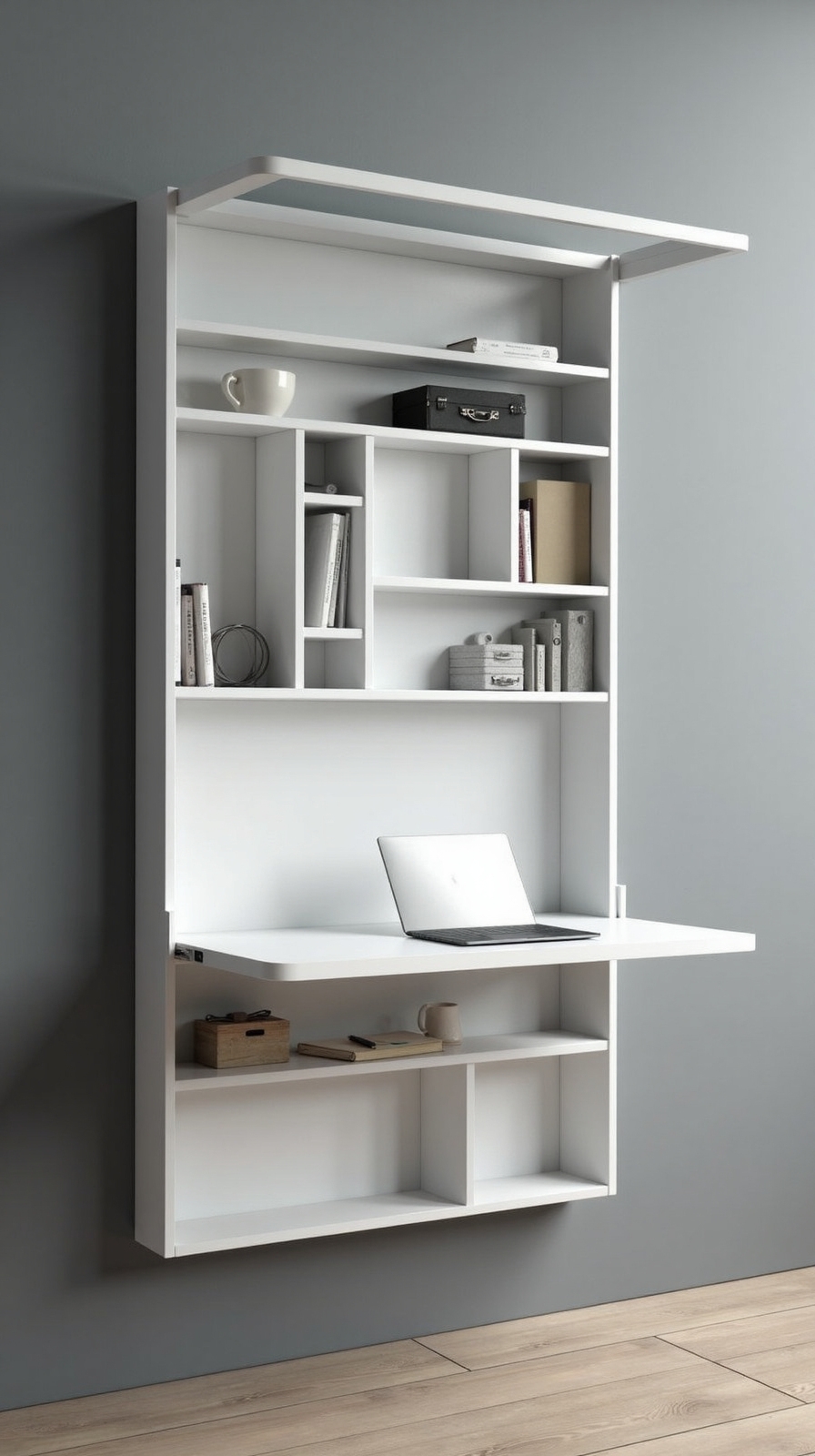
When floor space is non-negotiable, a fold-down wall desk converts any vertical surface into an instant office that disappears when you’re done working. This space saving design alters hallways, bedrooms, or kitchens into productive workspaces without permanent commitment.
Mount a sturdy fold down shelf at standing or sitting height, depending on your preference. Choose models with built-in storage compartments for supplies and cables. Position it near electrical outlets to avoid extension cord clutter across your living space.
Install proper wall anchors rated for your desk’s weight capacity plus equipment load. Consider adding a small bulletin board or magnetic strip above for quick reference materials. You’ll maintain your room’s original function while gaining workspace freedom. When meetings end, simply fold it up and reclaim your living area completely.
Utilize Under-Stair Space for a Compact Work Area
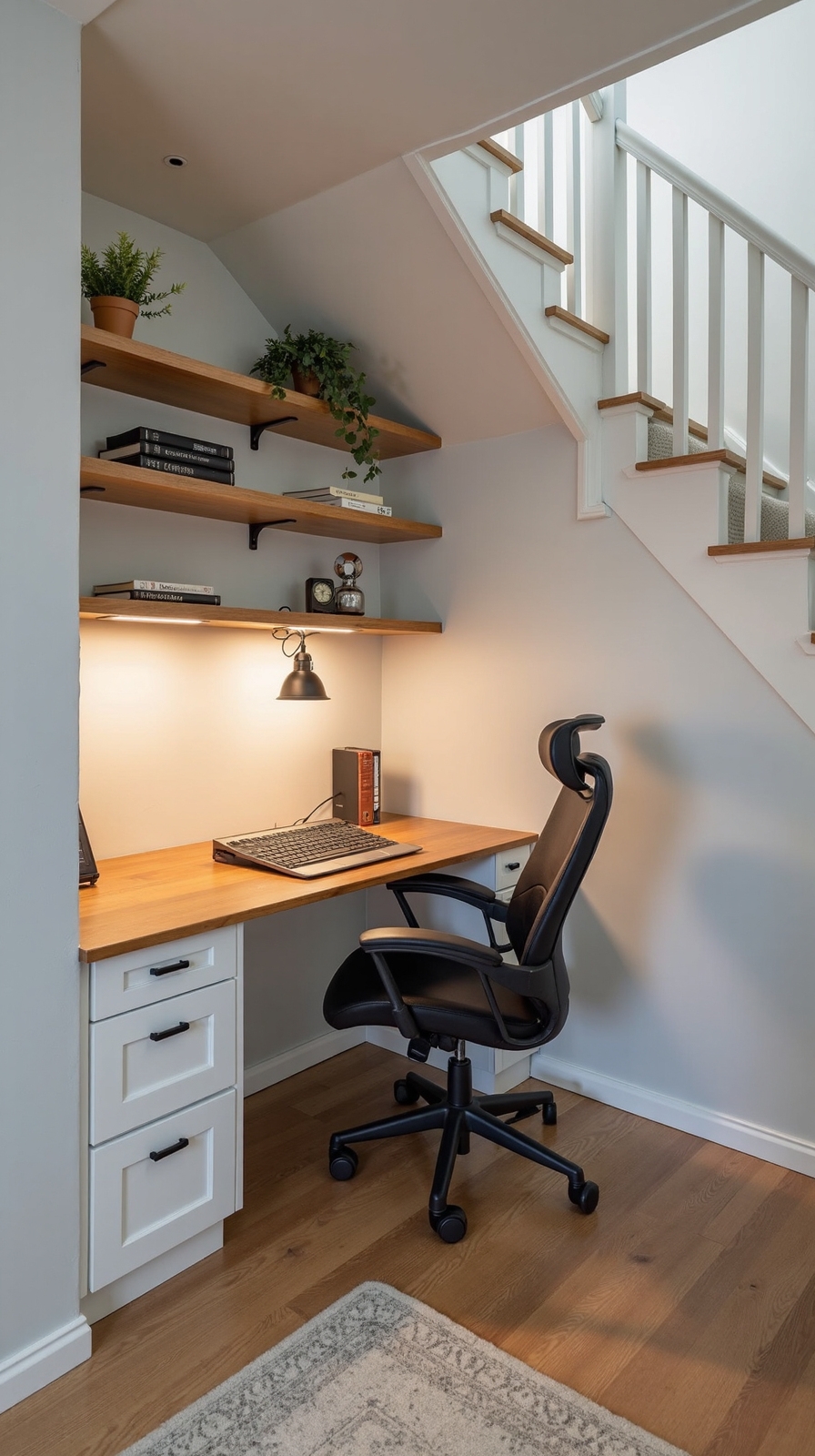
Beyond wall-mounted solutions, that awkward triangular space beneath your staircase offers untapped potential for a cozy home office retreat. You’ll repurpose this forgotten area into your personal productivity zone with strategic planning and clever design choices.
Start by measuring the height clearance to determine your workspace dimensions. Install a compact desk that fits the sloped ceiling, ensuring you can sit comfortably without bumping your head. Employ shelving along the walls to maximize vertical storage for books, supplies, and decorative elements that inspire creativity.
Since under-stair spaces typically lack natural light, you’ll need to incorporate lighting through multiple sources. Add overhead recessed lights, a focused desk lamp, and ambient LED strips beneath shelves. This layered approach creates a bright, inviting atmosphere that’ll keep you energized throughout your workday.
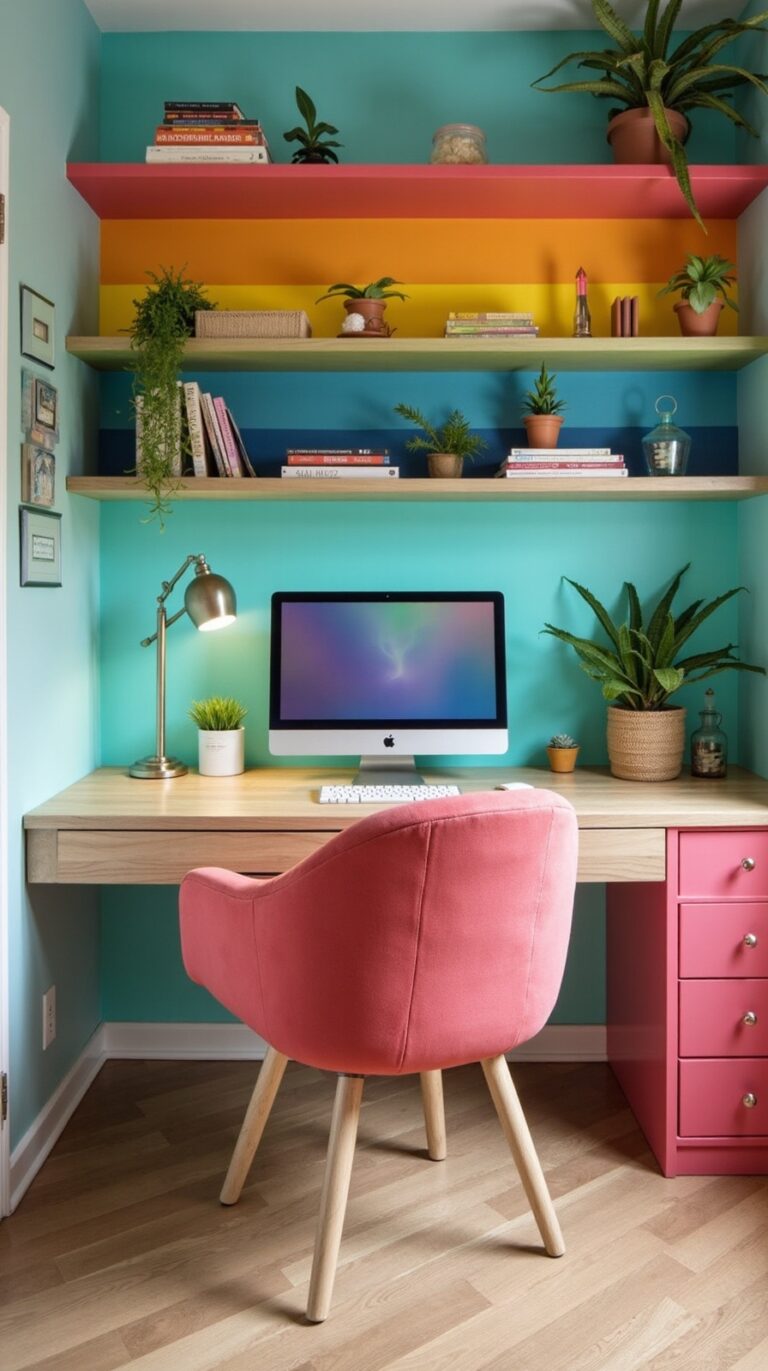
Convert a Corner With Floating Shelves and a Corner Desk
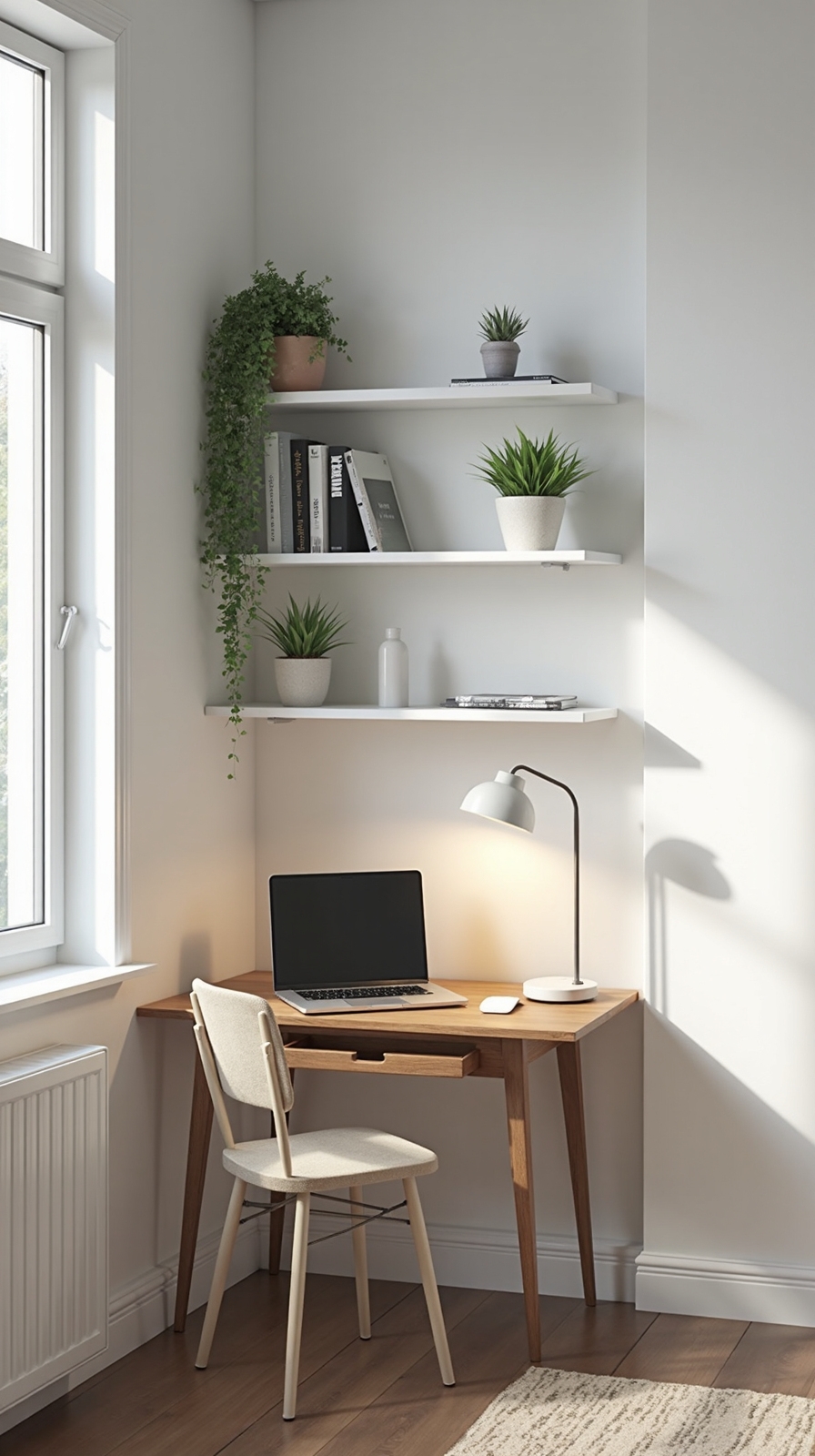
Although corners often become neglected spaces filled with clutter, they’re actually prime real estate for creating an efficient home office setup. You’ll maximize your square footage while maintaining the flexibility to work on your own terms.
Start by installing floating shelves at varying heights to create visual interest and ample storage. Position your corner desk strategically to take advantage of natural light from two windows if possible. This L-shaped configuration gives you dedicated zones for different tasks without feeling cramped.
Consider creative lighting options like under-shelf LED strips or a sleek desk lamp to eliminate shadows. Implement efficient cable management using cord clips along shelf edges and desk-mounted cable trays. You’ll keep your workspace clean and professional while preserving easy access to all your devices.
Design a Murphy Desk That Disappears When Not in Use
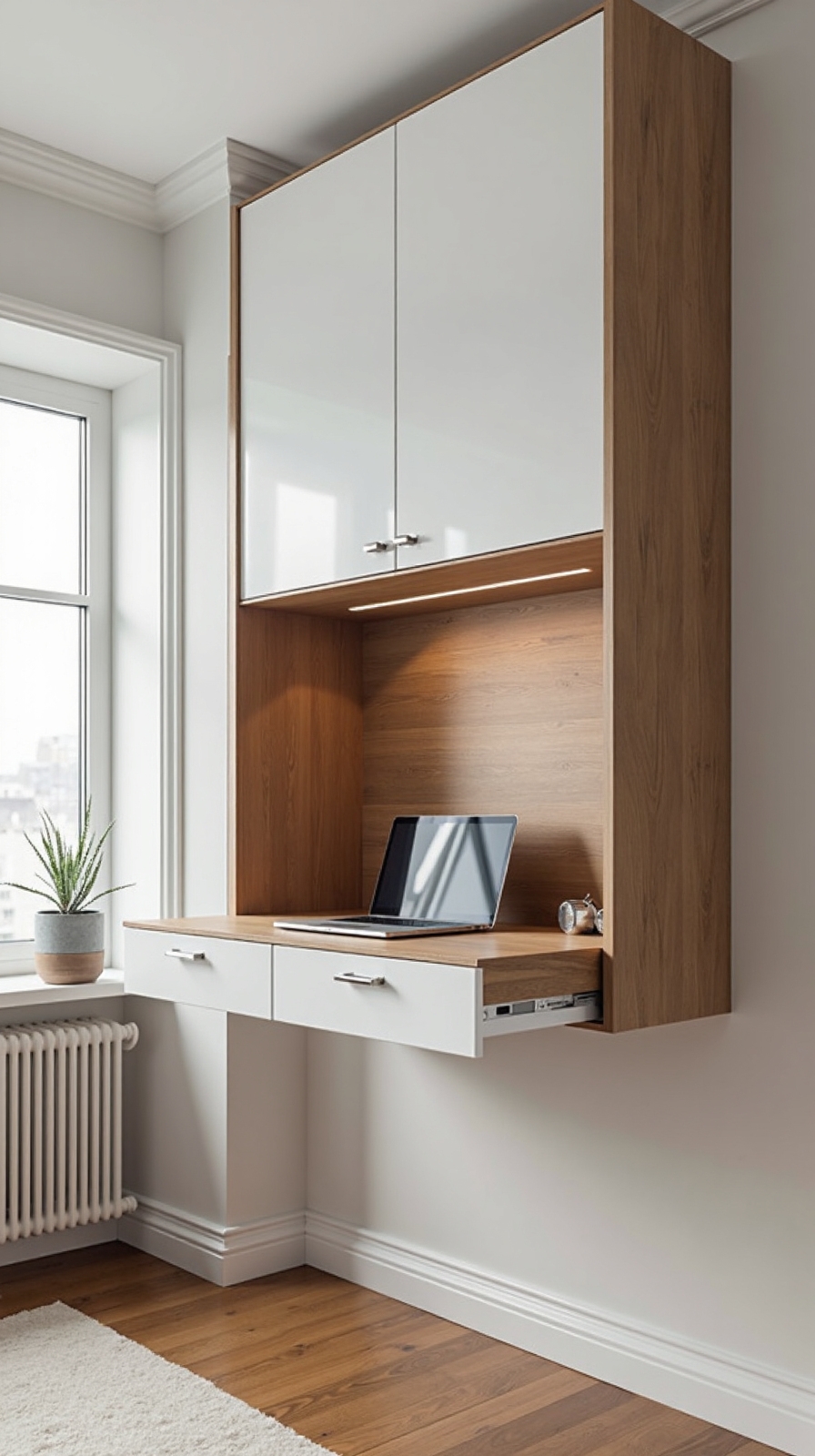
If you’re working with extremely limited space, a Murphy desk offers the perfect solution by converting any wall into a functional workspace that vanishes completely when your workday ends. This space saving design alters unused vertical areas into productive zones without sacrificing your living space’s aesthetic appeal.
Modern Murphy desks feature discreet storage solutions that keep essential supplies organized behind closed doors. You’ll find built-in compartments for laptops, documents, and office supplies that remain hidden when the desk folds up. Many designs include corkboards or whiteboards on the interior surface for enhanced functionality.
Installation requires sturdy wall mounting to support the desk’s weight when extended. Choose models with smooth folding mechanisms and secure locking systems. When closed, your Murphy desk resembles decorative wall art or cabinetry, maintaining your room’s clean appearance.
Repurpose a Kitchen Island as a Multi-Functional Work Station
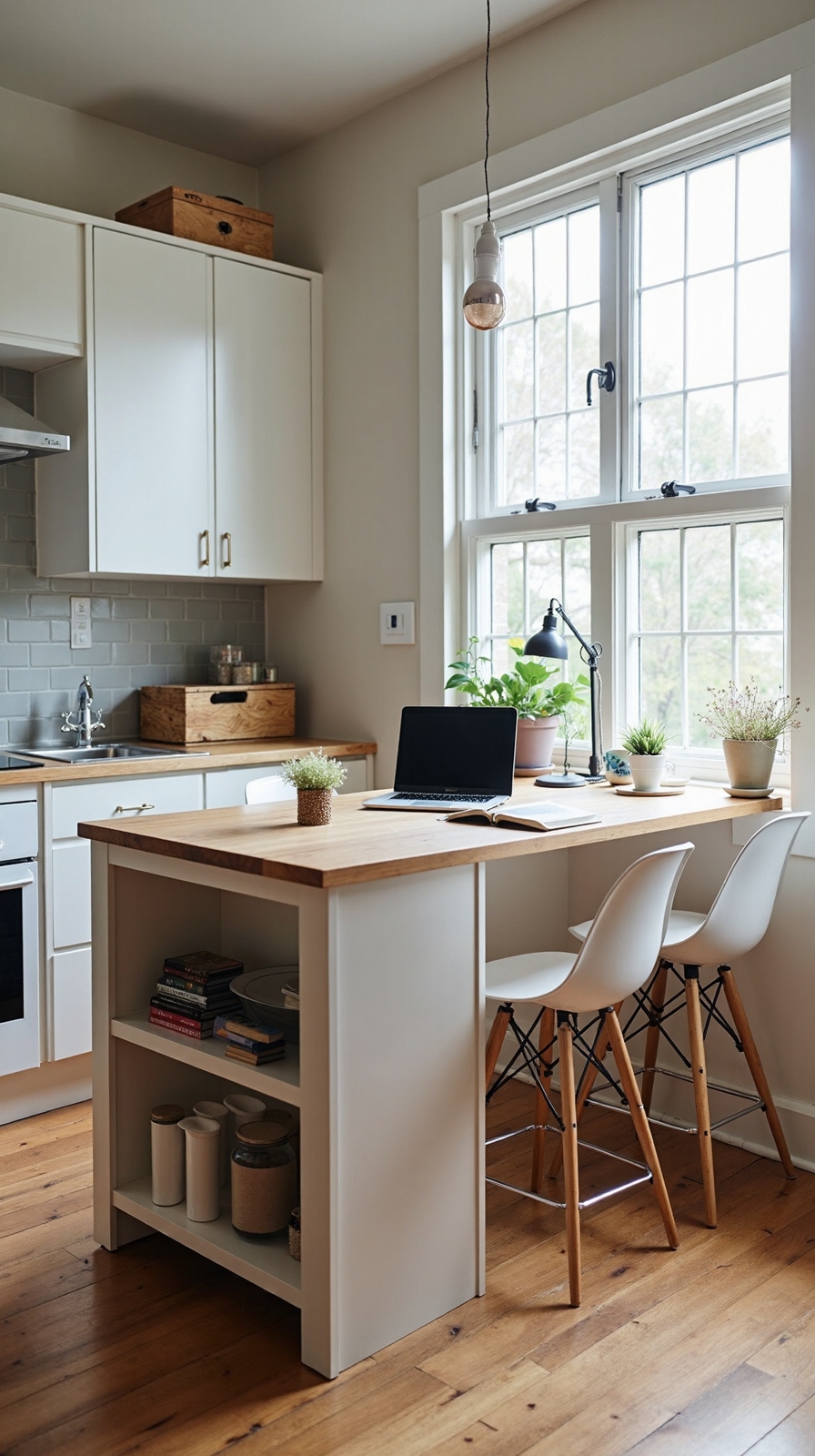
While wall-mounted solutions maximize vertical space, repurposing a kitchen island creates an impressive multi-functional workspace that serves double duty in your home. You’ll convert your existing island into a productivity powerhouse without sacrificing your freedom to move around your space.
Start by clearing one side of your island to establish your primary work zone. Use kitchen counter extension leaves or pull-out surfaces to expand your workspace when needed. Install power strips inside drawers to keep charging cables organized yet accessible.
Incorporate adjustable shelving on the island’s sides to store office supplies, books, and equipment. Add rolling storage carts underneath that slide out when you’re working and tuck away during meal prep. This flexible setup lets you seamlessly shift between cooking and working throughout your day.
Build Vertical Storage Solutions to Maximize Wall Space
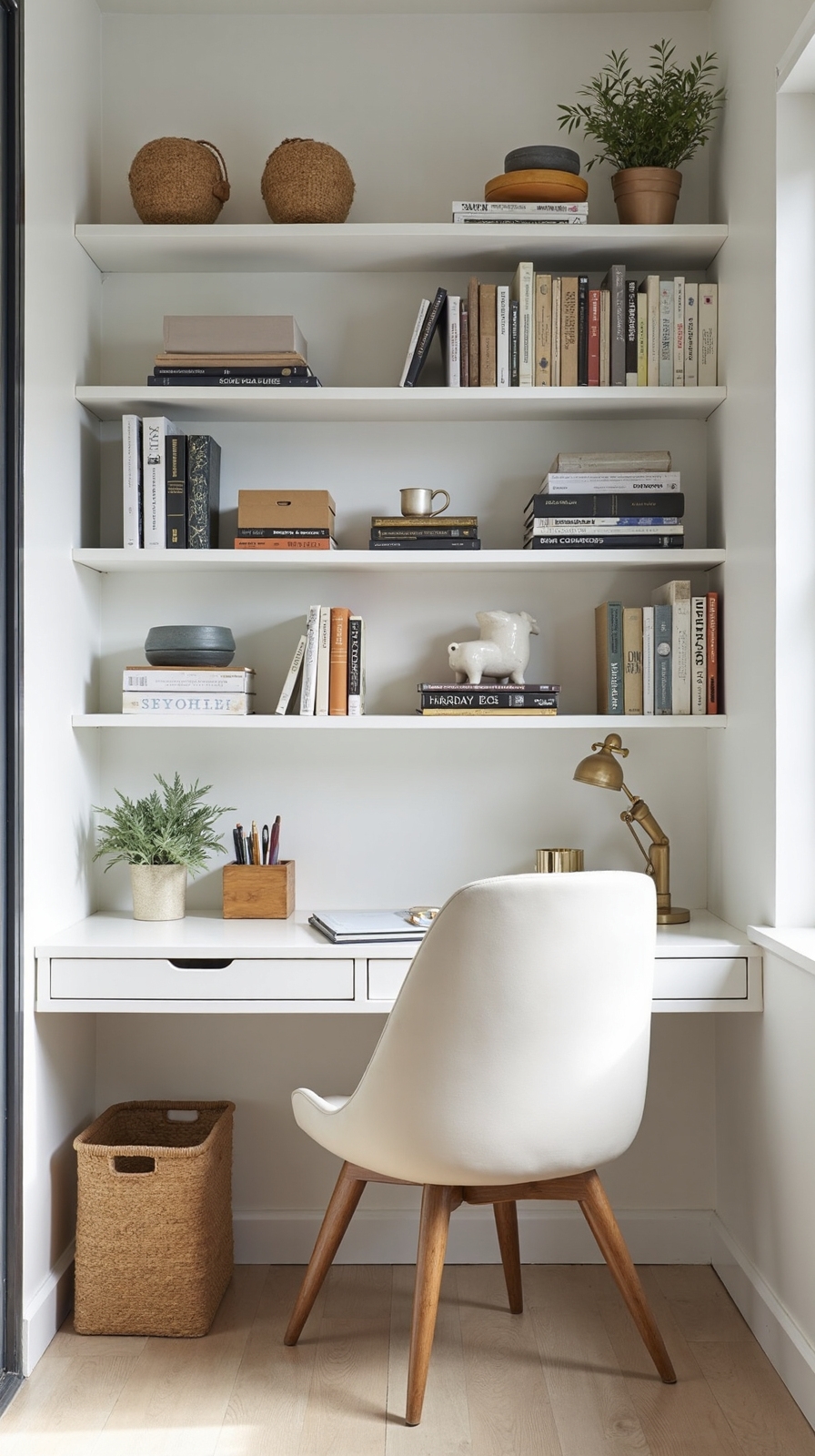
When you’re working with limited floor space, altering your walls into organized storage systems creates room for essential office supplies without cluttering your workspace. Floating shelves offer flexible positioning options that adapt to your changing needs while maintaining a clean, professional appearance.
Install modular storage units that combine shelving, cubbies, and hanging compartments to maximize every square inch. You’ll create designated spots for books, binders, and decorative items that inspire productivity. Consider adding wall-mounted file holders and magnetic boards to keep important documents within easy reach.
Start with one wall section and gradually expand your vertical storage as your office grows. This approach gives you the freedom to customize your space without overwhelming your budget or timeline.
Use a Room Divider to Create a Separate Office Zone
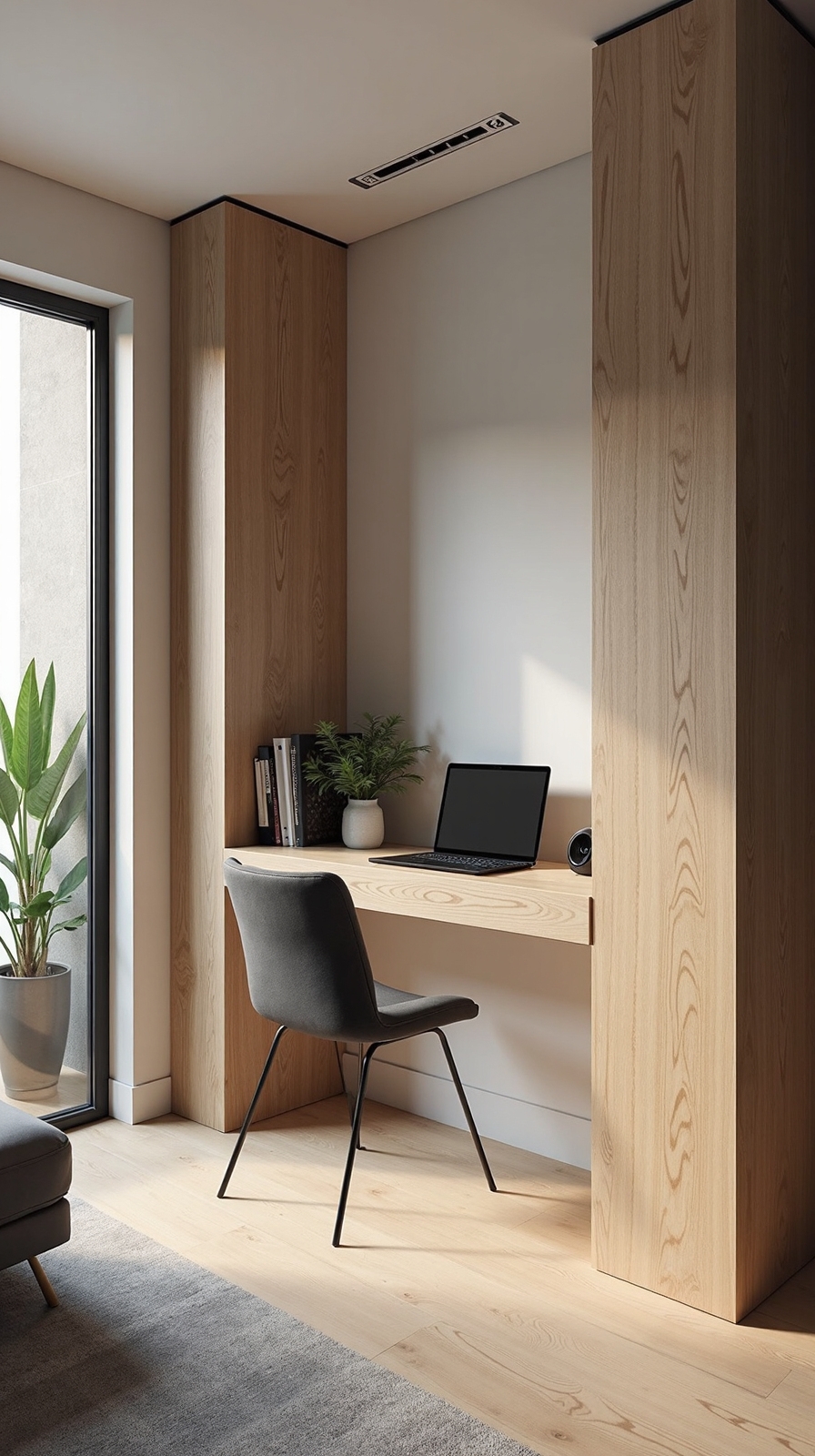
Creating a dedicated office zone within a shared living space becomes achievable through strategic room divider placement that establishes clear boundaries between work and personal areas. A strategically placed divider shifts any corner into your private workspace without permanent renovations.
Room divider styles offer numerous options to match your aesthetic preferences and functional needs. Folding screens provide flexibility, allowing you to expand or contract your office space as required. Bookshelf dividers serve dual purposes by creating separation while offering additional storage for office supplies and personal items.
Consider tall plants as natural dividers that improve air quality while defining your workspace. Curtain panels mounted on ceiling tracks offer budget-friendly solutions you can easily adjust throughout the day. These dividers help you mentally move between work and relaxation modes.
Install a Window Seat With Built-In Storage and Work Surface
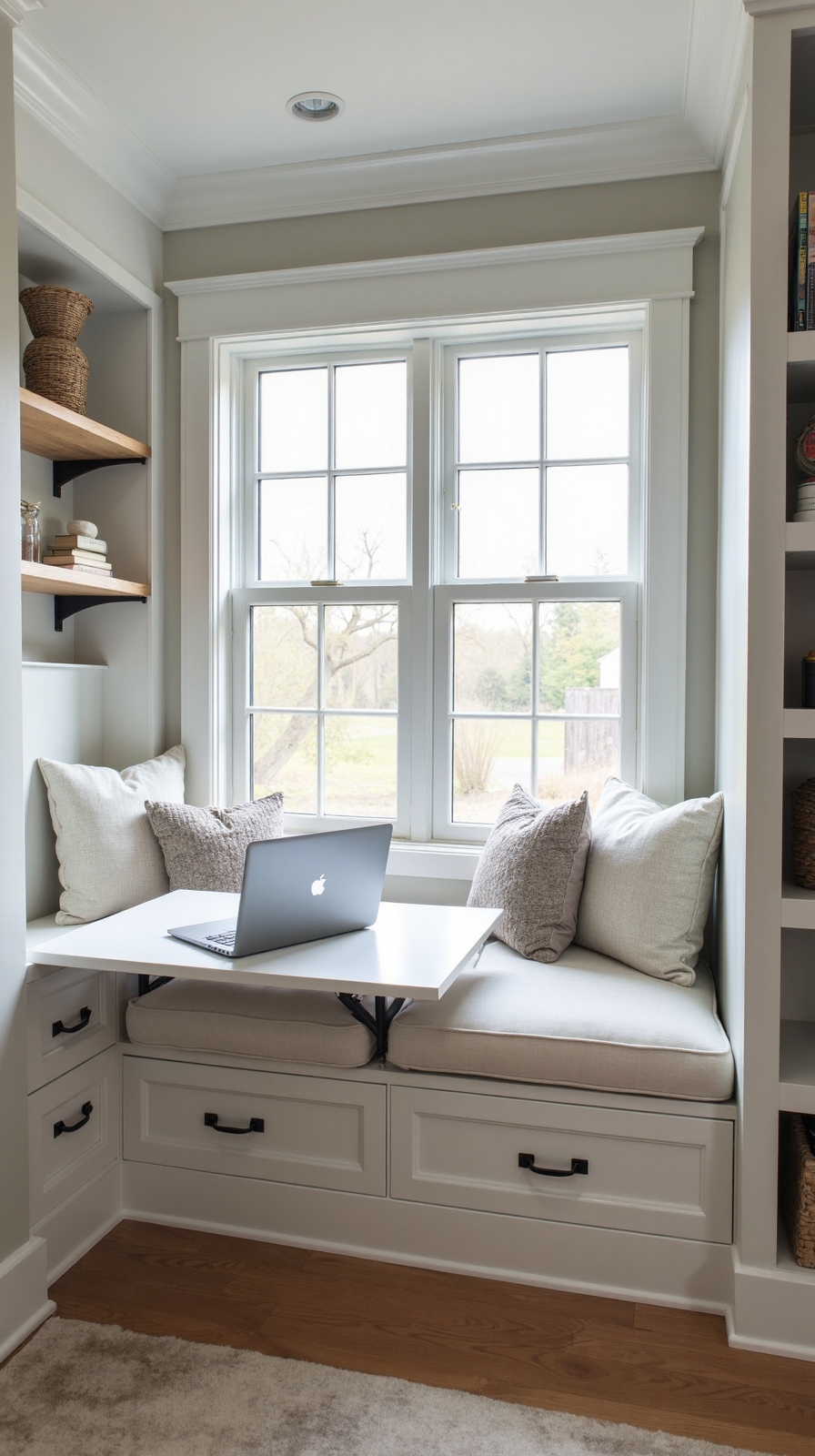
Built-in window seats alter underutilized window areas into productive workspaces that combine comfort, storage, and natural lighting in one compact solution. You’ll maximize every square inch while creating a cozy retreat that doesn’t feel confined to traditional desk setups.
Design your window seat with a hinged top that reveals concealed storage for office supplies, files, and equipment you don’t use daily. Install electrical outlets along the wall to power laptops and devices without visible cord clutter.
Add built in lighting underneath the seat or along the window frame to supplement natural light during evening work sessions. Consider cushions that provide comfort for extended periods while maintaining the professional appearance you want. This dual-purpose furniture gives you workspace flexibility without sacrificing your home’s aesthetic appeal.
Transform a Bedroom Alcove Into a Dual-Purpose Space
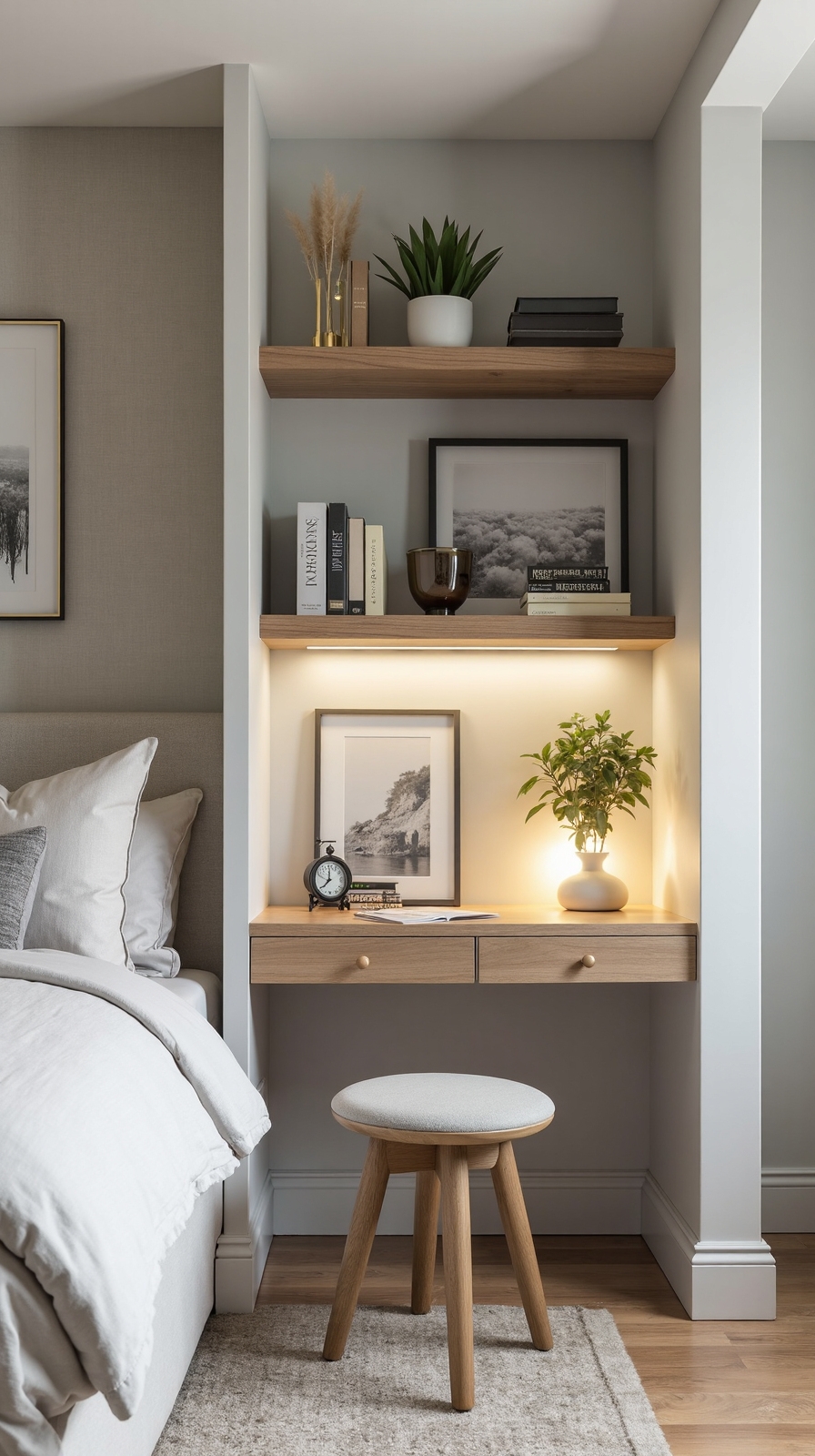
Bedroom alcoves often present untapped potential for creating intimate workspaces that seamlessly blend productivity with personal comfort. You’ll find these naturally defined spaces offer perfect boundaries between rest and work areas without requiring major renovations.
Start by measuring your alcove’s dimensions to determine ideal desk placement and storage solutions. Incorporate shelving along the walls to maximize vertical space while keeping essential supplies within arm’s reach. Floating shelves work particularly well in narrow alcoves where floor space is limited.
Utilize dual purpose furnishings like ottoman storage seats that provide seating for guests while hiding office supplies. A fold-down desk attached to the wall saves precious square footage when you’re not working. Add task lighting and a small bulletin board to complete your productive sanctuary.
Create a Mobile Office Cart That Moves Where You Need It
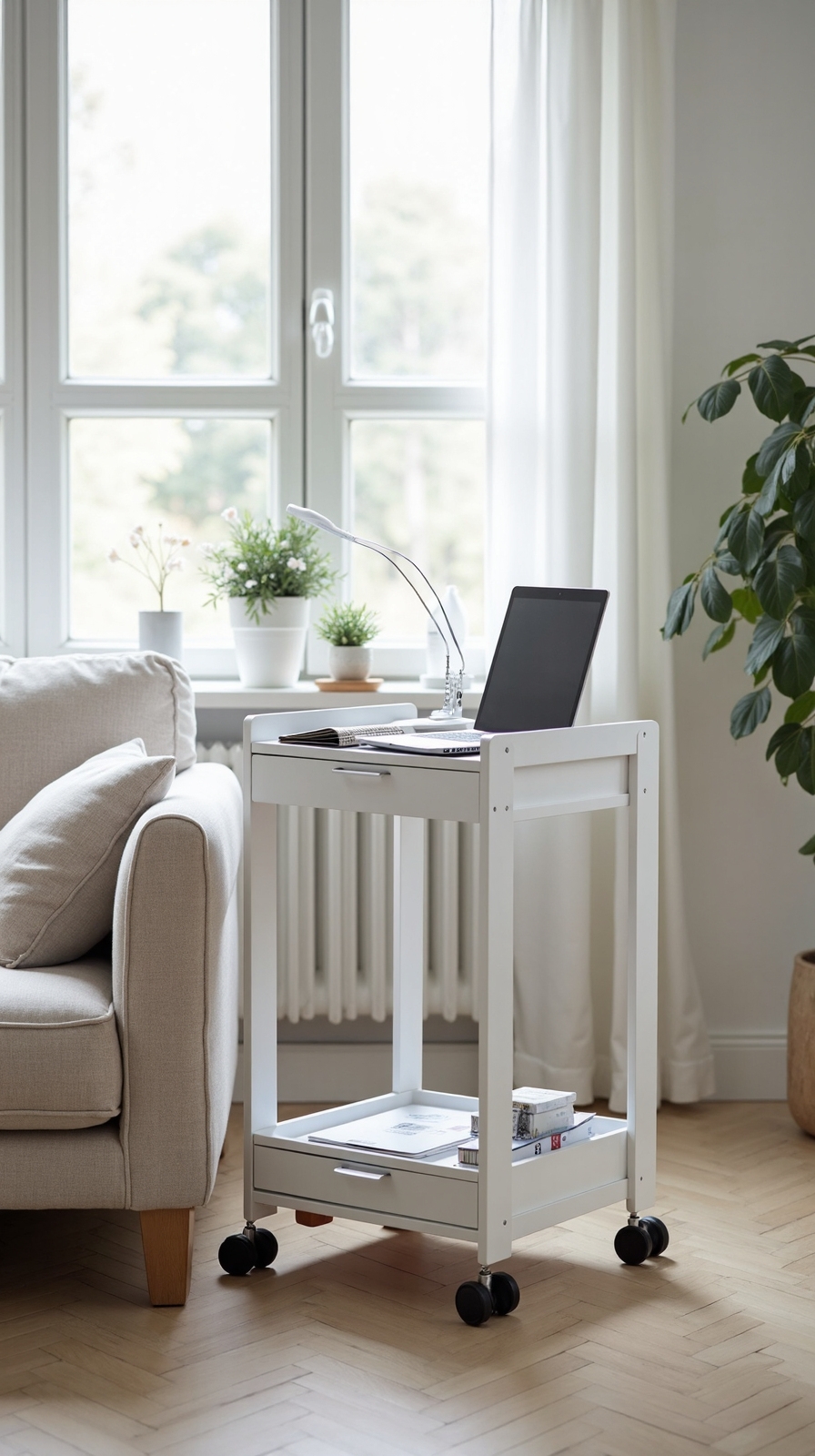
When you need flexibility in your workspace arrangement, a mobile office cart becomes your ultimate productivity companion that adapts to any room or situation. You’ll convert any corner into an instant workspace while maintaining the freedom to relocate whenever inspiration strikes.
Choose carts with multiple tiers to maximize vertical storage for laptops, supplies, and documents. Look for designs featuring mobile file storage drawers that keep important papers organized and accessible. Hidden caster wheels provide smooth movement across different floor surfaces while maintaining a sleek, professional appearance when stationary.
Position your cart near natural light during morning tasks, then roll it to a quieter area for focused afternoon work. You’ll appreciate having everything at your fingertips without being tied to one location permanently.
Utilize the Space Above Your Bed With a Loft Office Setup
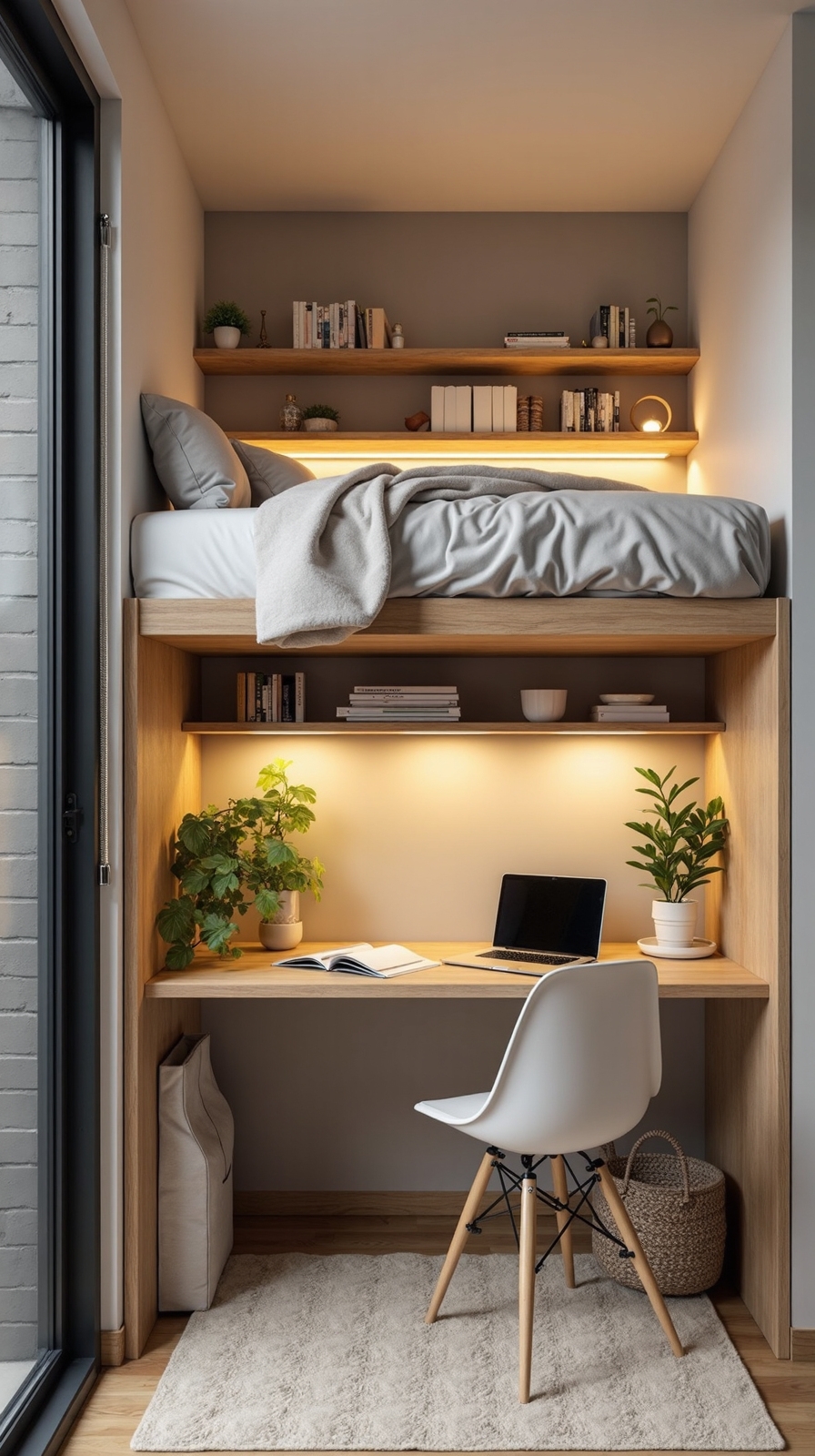
Looking up reveals an often-overlooked opportunity to convert your bedroom’s vertical real estate into a highly functional workspace that doesn’t sacrifice precious floor area. This elevated setup transforms dead space into your personal command center while maintaining your room’s dual purpose.
Strategic desk placement becomes vital when designing your loft office. Position your workspace perpendicular to the bed’s length, guaranteeing adequate headroom and natural light access from nearby windows. Install sturdy support brackets capable of holding your equipment and daily work materials safely.
Ergonomic considerations require careful planning in elevated spaces. Your monitor should sit at eye level to prevent neck strain, while your feet need proper support on a footrest. Guarantee you’ve got sufficient ceiling clearance to sit comfortably without hunching over, maintaining proper posture throughout your workday.
Convert a Narrow Hallway Into a Linear Workspace
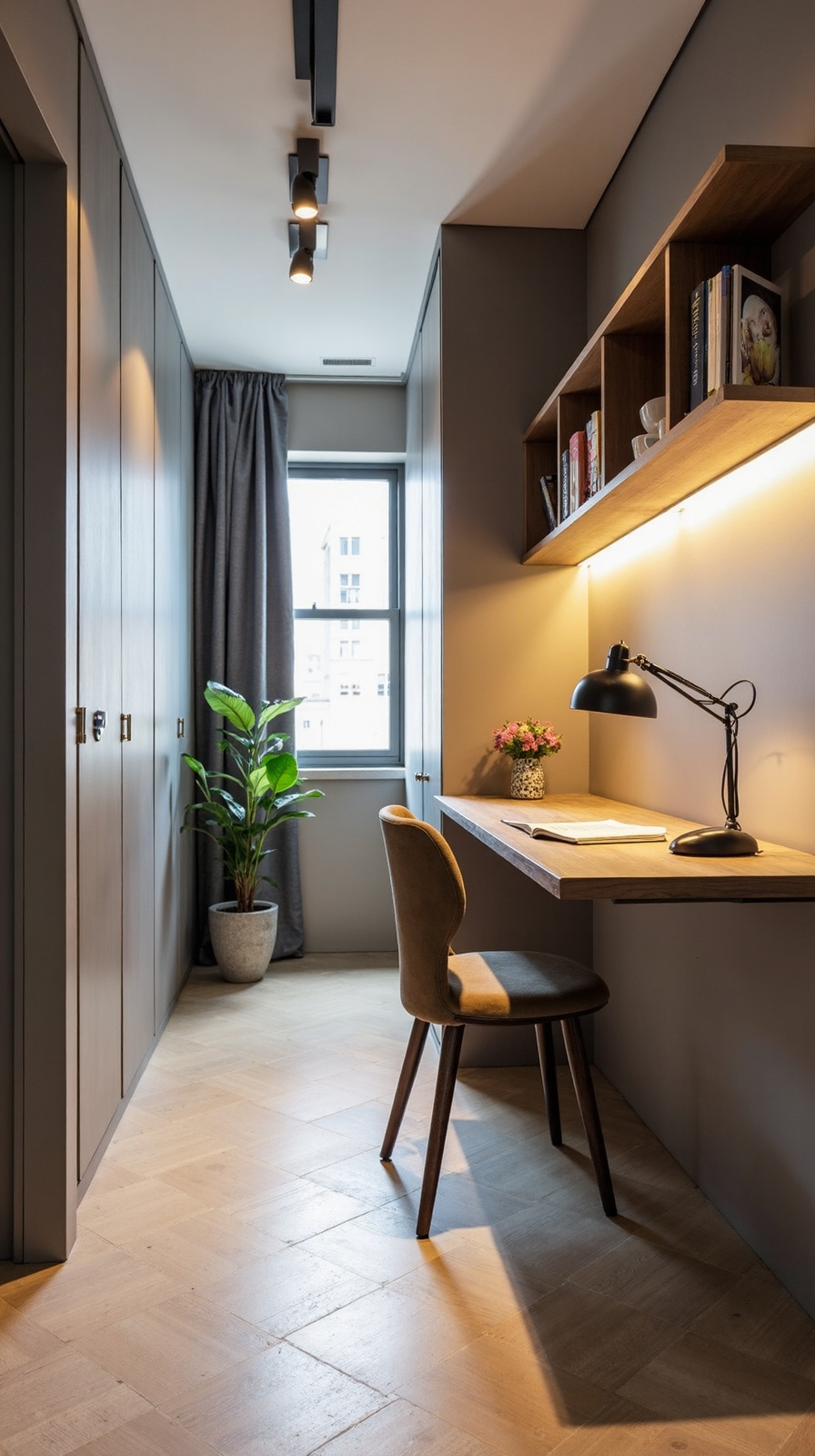
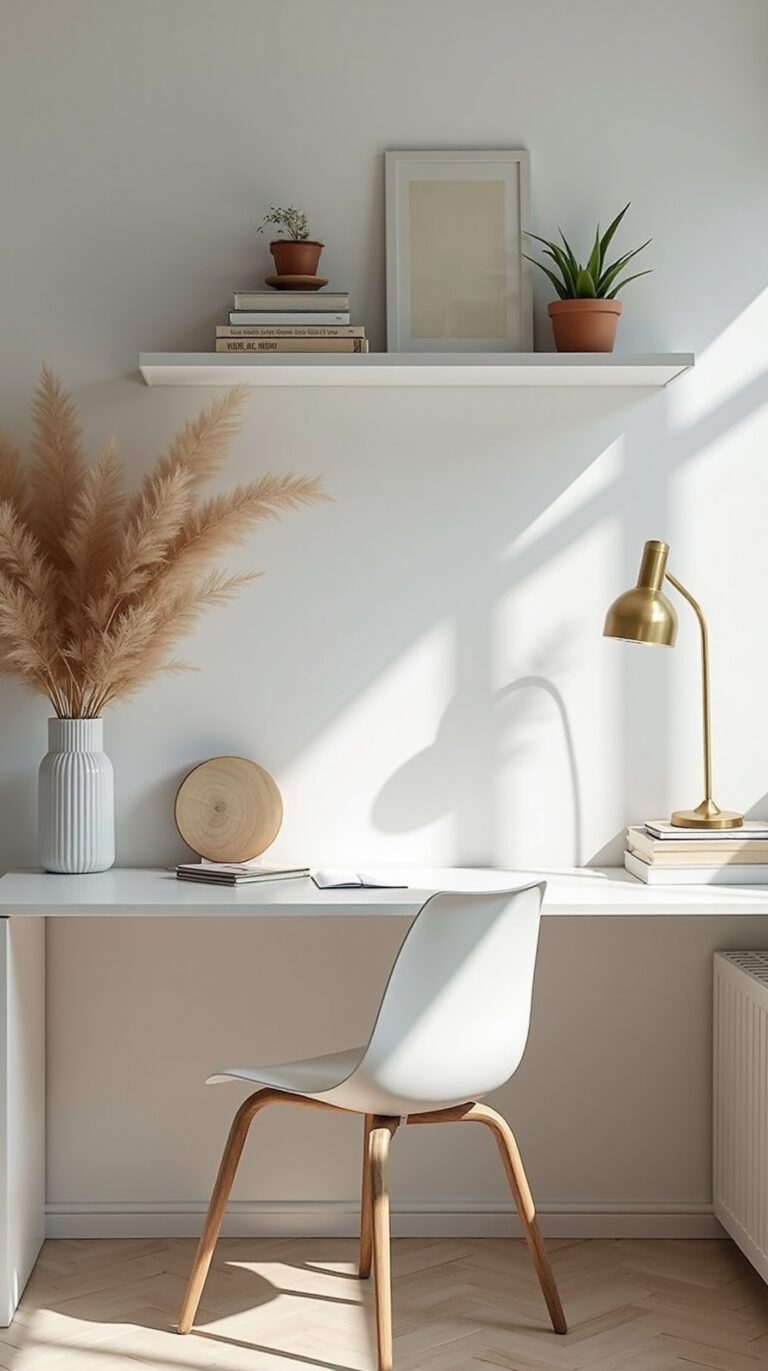
Although narrow hallways might seem unsuitable for workspace conversion, these shifting areas offer surprising potential for creating efficient linear offices that maximize every inch. You’ll alter dead space into productive territory by installing a floating desk along one wall, keeping the pathway clear for movement.
Utilize narrow shelves mounted at varying heights to store supplies without overwhelming the corridor. This approach keeps essentials within arm’s reach while maintaining visual flow. You can optimize vertical space by installing floor-to-ceiling storage units that house everything from files to decorative elements.
Consider adding a fold-down desk that disappears when you’re not working, preserving the hallway’s primary function. Strategic lighting underneath shelves illuminates your workspace while creating ambient corridor lighting for daily transit.
Design a Balcony or Patio Office for Outdoor Productivity
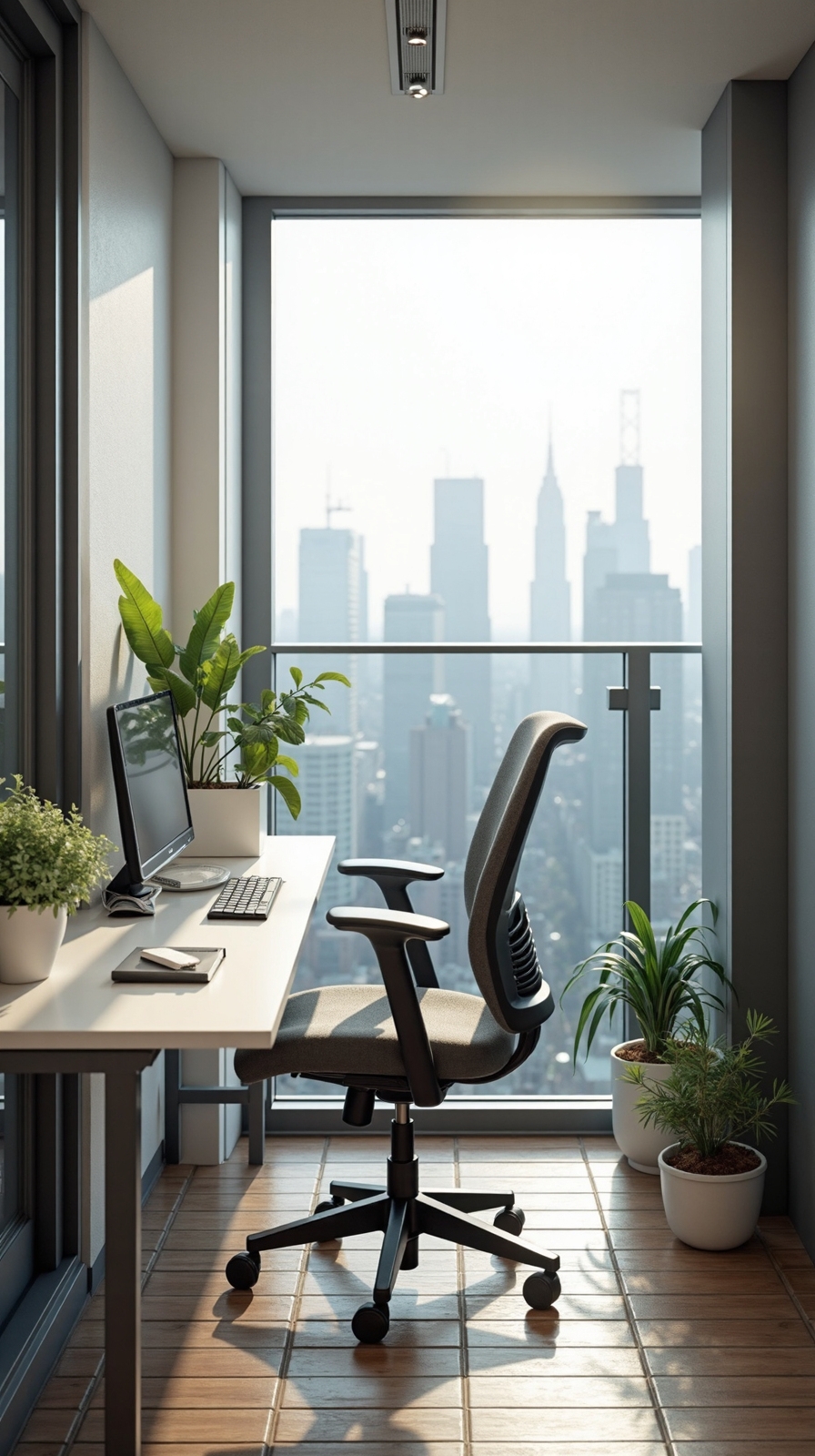
Revitalize your balcony or patio into an invigorating outdoor office where natural light and fresh breeze stimulate your creativity and concentration throughout the workday. Start by selecting weather-resistant furniture that doubles as storage for supplies and equipment. Install a compact desk or folding table that won’t overwhelm your limited square footage.
Create cozy outdoor seating with cushioned chairs or a small bench that encourages longer work sessions. Add an outdoor rug to define your workspace boundaries and provide comfort underfoot. Incorporate nature inspired decor like potted plants, bamboo screens, or wooden accents to enhance the calming atmosphere.
Consider portable shade solutions such as umbrellas or retractable awnings to protect against harsh sunlight. You’ll need weatherproof storage containers to safeguard electronics and documents from unexpected weather changes.
Maximize Studio Apartment Living With Multi-Level Furniture Solutions
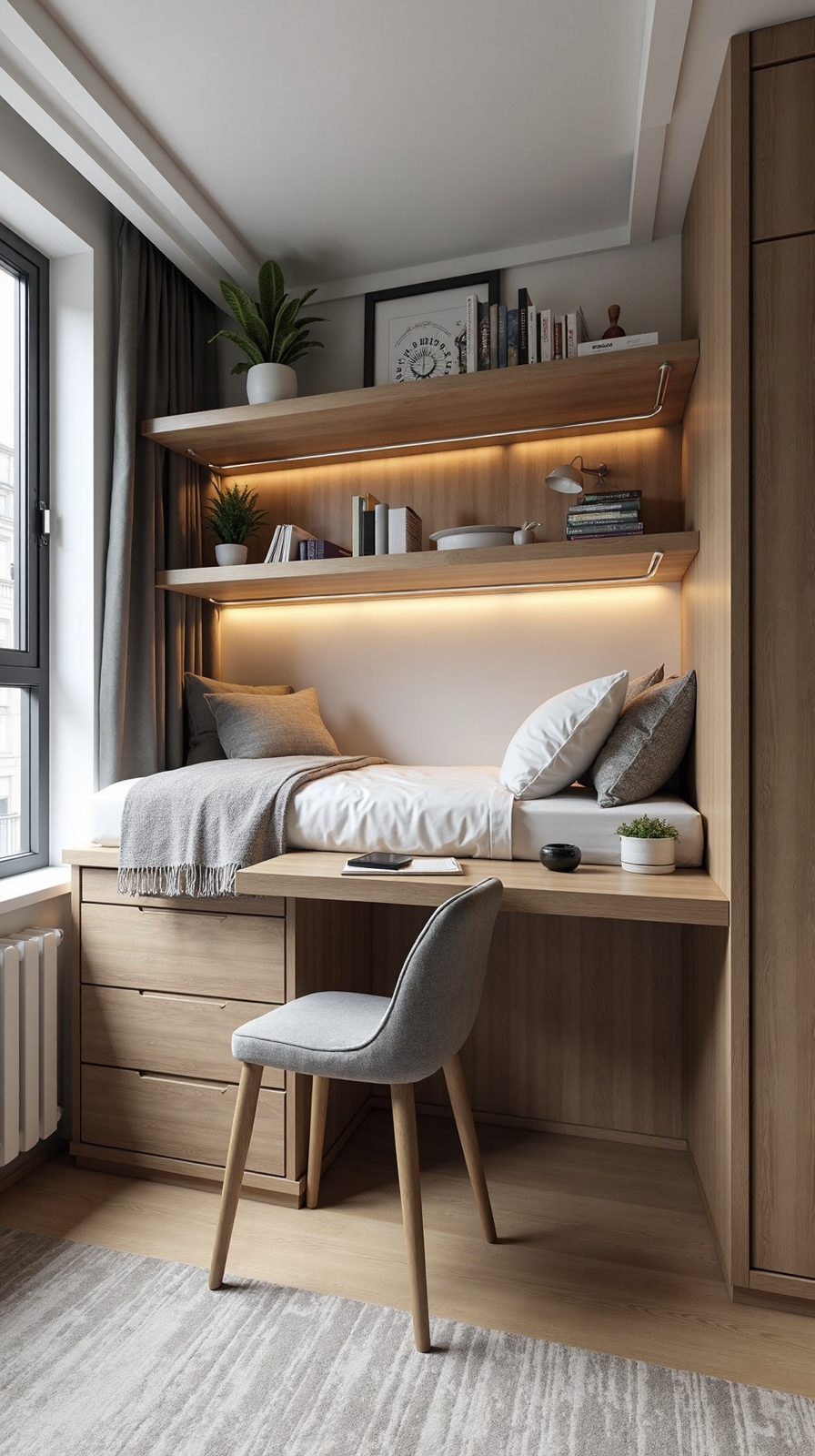
Studio apartments present unique challenges when you’re trying to establish a productive home office within extremely limited square footage. Multi purpose shelving units become your best allies, serving as room dividers while providing storage and display areas. You’ll create distinct zones without sacrificing openness or natural light flow.
Loft beds with built-in desks underneath maximize vertical space brilliantly. These space saving workstations reconfigure sleeping areas into dual-function zones, freeing up floor space for living activities. Wall-mounted fold-down desks offer another clever solution, disappearing when you’re not working.
Stackable furniture pieces adapt to your changing needs throughout the day. Modular storage cubes function as seating, filing cabinets, or side tables. You’ll maintain the flexibility essential for studio living while establishing professional boundaries that enhance your productivity and mental clarity.
Conclusion
You’ve uncovered nine creative ways to alter unused spaces into productive work areas without compromising your home’s functionality. Whether you select a concealed closet office or an outdoor balcony setup, each solution optimizes every square foot available. Begin with one idea that suits your space and budget, then gradually add storage and organizational elements. Your ideal small home office is within reach—you merely need to think creatively about the space you already possess.