15 Spring Garden Decor Ideas That Celebrate Nature
Liven up your spring garden with 15 nature-inspired decor ideas that transform ordinary outdoor spaces into wildlife havens using simple, budget-friendly materials.
I’ve uncovered that altering your outdoor area into a nature-celebrating haven doesn’t necessitate costly materials or complex installations. By incorporating elements like living moss walls, natural wind chimes, and bird-friendly zones, you’ll create an inviting garden that works harmoniously with the environment around you. These fifteen thoughtful approaches will help you design spaces that attract wildlife, provide year-round interest, and make your spring garden feel like a natural extension of the terrain that surrounds it.
Create a Living Wall With Moss and Branches
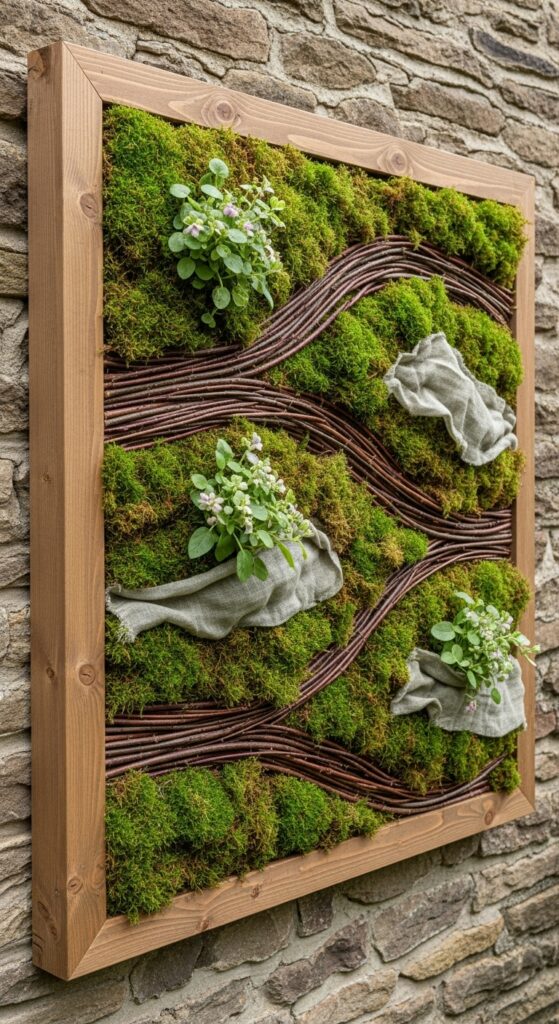
Several homeowners uncover that creating a living wall metamorphoses any indoor or outdoor space into a lively spring sanctuary. I’ll show you how to build yours using simple materials and techniques.
Start by securing a wooden frame or wire mesh to your chosen wall surface. Gather fresh moss from your yard or purchase sphagnum moss from garden centers. Create natural moss arrangements by pressing sections firmly into frame crevices, ensuring good soil contact.
Next, add sustainable branch sculptures by weaving sturdy twigs horizontally through your moss base. This creates visual depth while providing structure for climbing plants or hanging decorations. Incorporate soft tones throughout your living wall by selecting plants with muted greens and pale flowering varieties that complement the natural wood elements.
Design Colorful Flower Arranging Stations
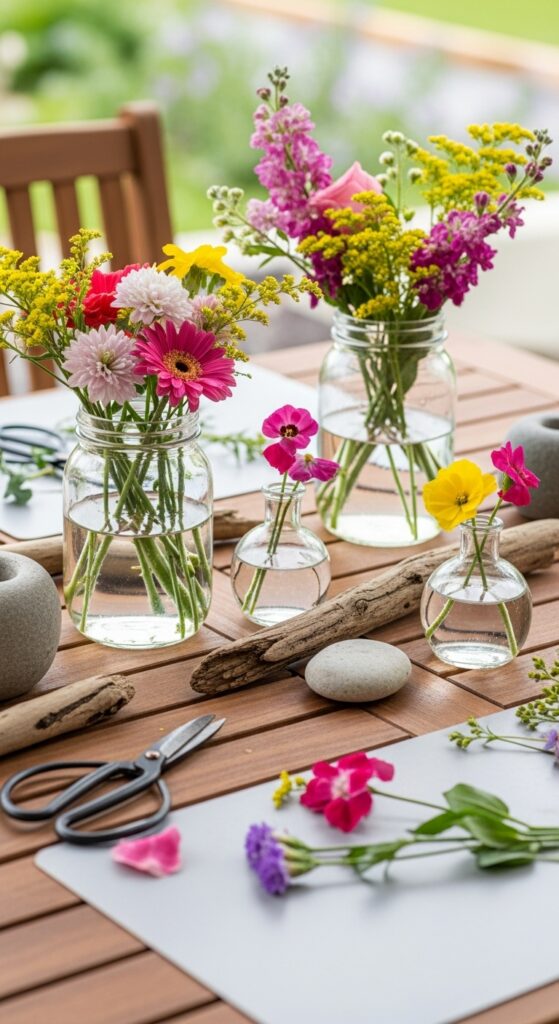
While living walls bring vertical beauty to your space, establishing dedicated flower arranging stations adds another layer of interactive spring charm throughout your home. I’ll show you how to create functional workstations that encourage spontaneous creativity with fresh blooms.
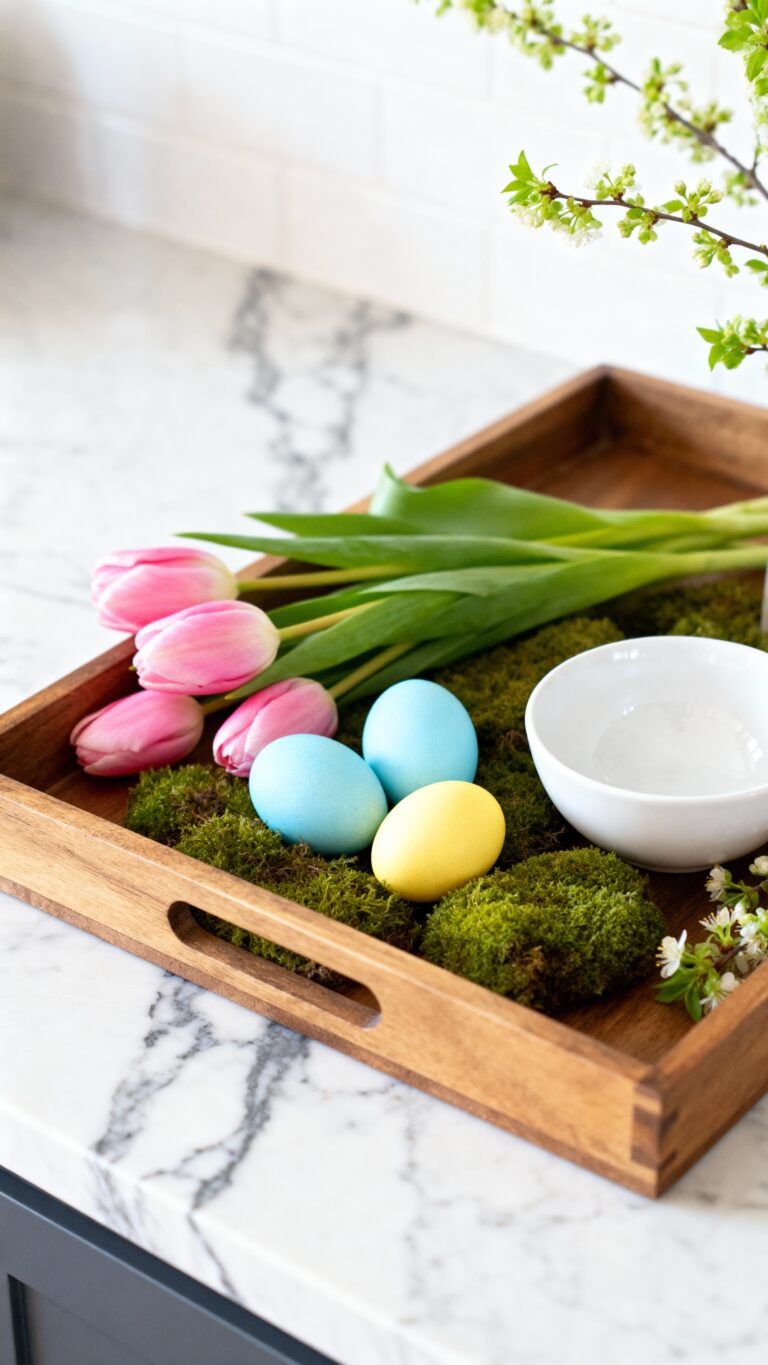
Choose accessible locations like kitchen counters or side tables where you’ll naturally gather flowers. Stock each station with essential tools: sharp scissors, small vases, and water containers. Display seasonal blooms in mason jars to inspire colorful floral arrangements. Add natural elements like river stones or driftwood to complement your nature inspired centerpieces and maintain that organic garden aesthetic. Consider incorporating spring tray decor to organize your arranging supplies while adding elegant style to tabletops and console surfaces.
Build Bird-Friendly Feeding and Nesting Areas
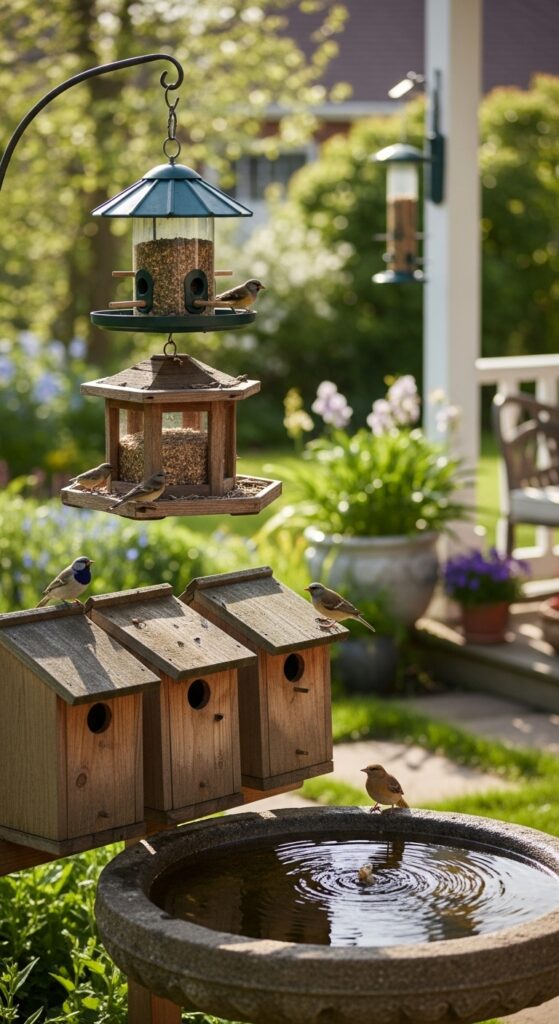
Creating bird-friendly spaces alters your garden into a lively sanctuary that attracts colorful visitors throughout the spring season. I’ll help you establish feeding stations that welcome various species while enhancing your outdoor aesthetic.
First, provide bird feeders at different heights to accommodate ground-feeders like sparrows and tree-dwellers like finches. Position feeders near natural cover but away from dense shrubs where predators might hide.
Next, construct bird baths with shallow edges and textured surfaces for secure footing. Place them in open areas where birds can spot approaching threats while drinking.
Add nesting boxes facing southeast to catch morning warmth while avoiding harsh afternoon sun. Enhance your bird sanctuary with cozy accents like decorative signs and spring flowers that complement your feeding stations while creating an inviting porch atmosphere.
Craft Wind Chimes From Natural Materials
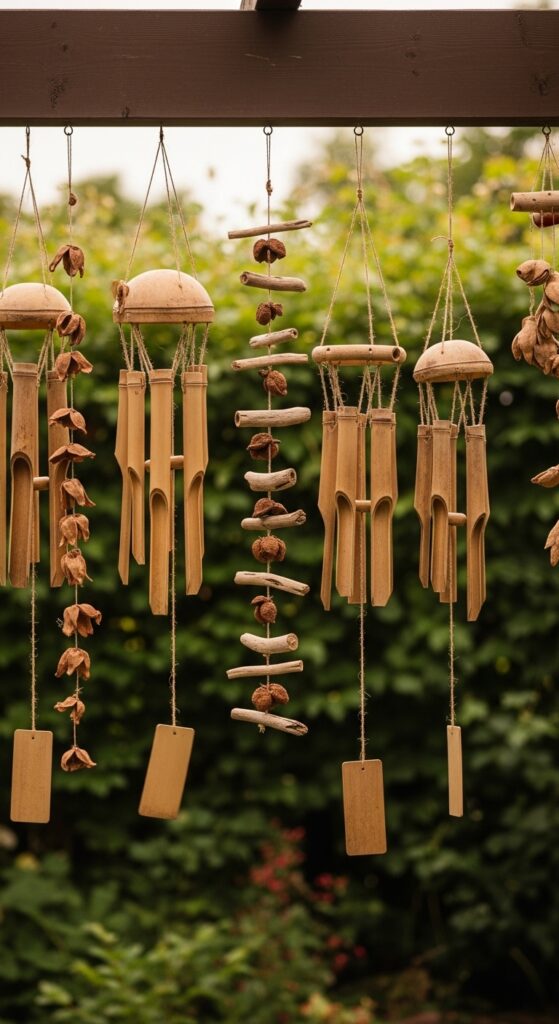
Three simple materials from your garden can convert into melodious wind chimes that add gentle sounds to your outdoor space. I’ll show you how foraged natural elements create beautiful, sustainable decorations that harmonize with nature’s rhythms.
Start by collecting hollow bamboo segments, driftwood pieces, or dried seed pods from your property. These biodegradable chime components produce soft, organic tones when they gently collide in spring breezes.
Drill small holes through each piece, then thread them onto natural twine at varying lengths. Hang your creation from sturdy branches or pergolas where air currents can activate the chimes, bringing peaceful melodies to your garden sanctuary. These handmade wind chimes perfectly complement other spring décor elements throughout your patio and yard spaces.
Install Rustic Twig and Branch Archways
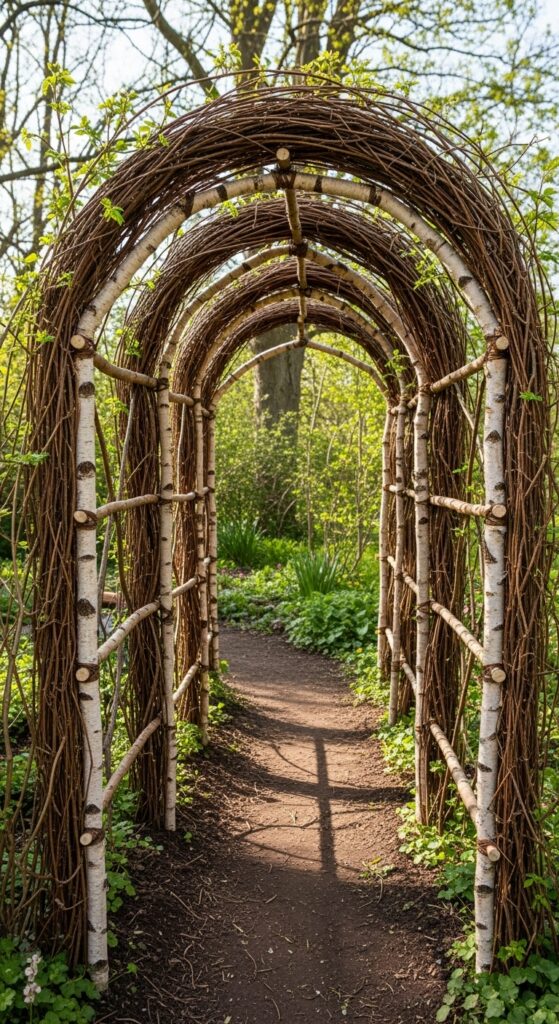
Two sturdy vertical posts form the foundation for a charming entrance that alters any garden pathway into an enchanting walkway. I’ll show you how natural branch archways convert ordinary spaces into magical garden rooms.
Start by selecting two matching posts, then secure them eighteen inches deep. Weave flexible branches horizontally between posts, creating your custom twig structures. I recommend using willow or birch for durability and visual appeal.
Layer different branch thicknesses for texture and stability. You’ll uncover these rustic installations frame garden views beautifully while providing climbing support for vines and flowering plants throughout spring’s growing season. These natural elements perfectly complement vintage garden accessories and weathered containers for an authentic spring aesthetic.
Arrange Seasonal Container Gardens by Color
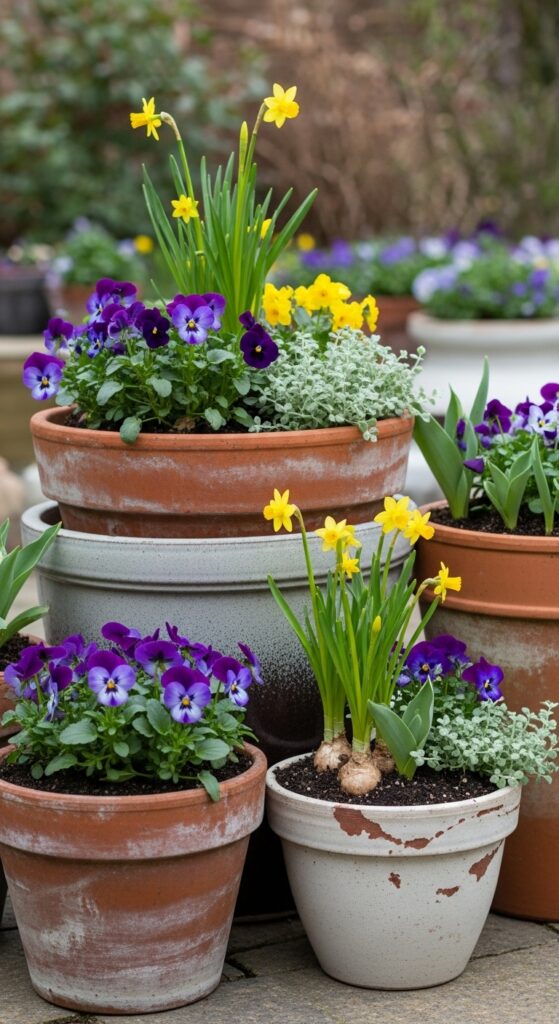
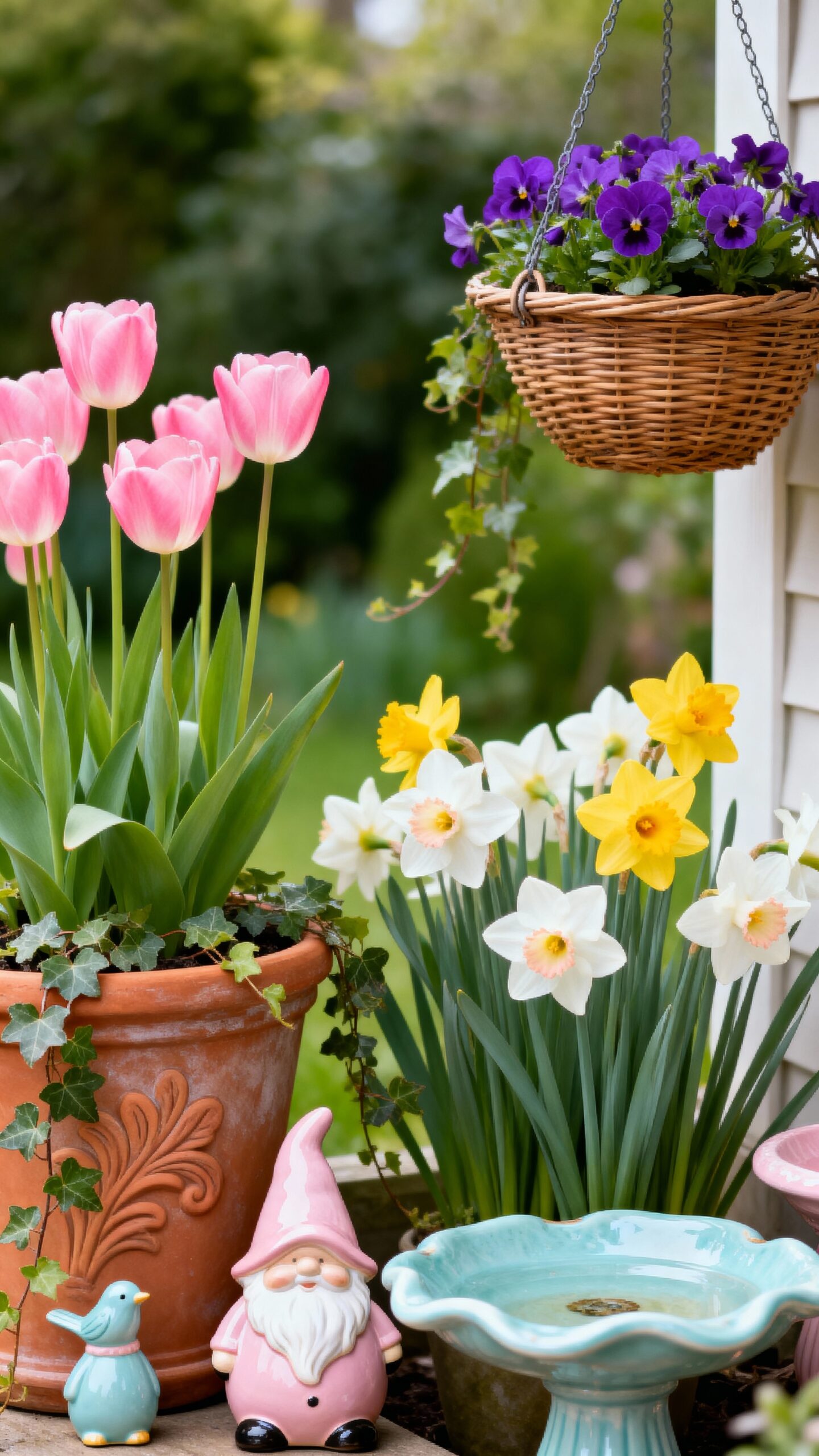
While color coordination alters ordinary potted plants into stunning visual displays, strategic placement amplifies their impact throughout your spring garden spaces. I recommend you coordinate complementary hues like purple pansies with yellow daffodils for eye-catching contrast.
Layer different container sizes by placing larger pots as focal points, then surrounding them with medium and small vessels. Choose three-color palettes maximum to avoid overwhelming your design. Position cool blues and purples in shadier areas, while warm oranges and reds thrive in sunny spots. These bright spring colors naturally enhance your home’s cheerful atmosphere when viewed from indoor spaces.
This systematic approach metamorphoses random containers into cohesive garden statements that celebrate spring’s natural beauty.
Make Stone and Pebble Garden Pathways
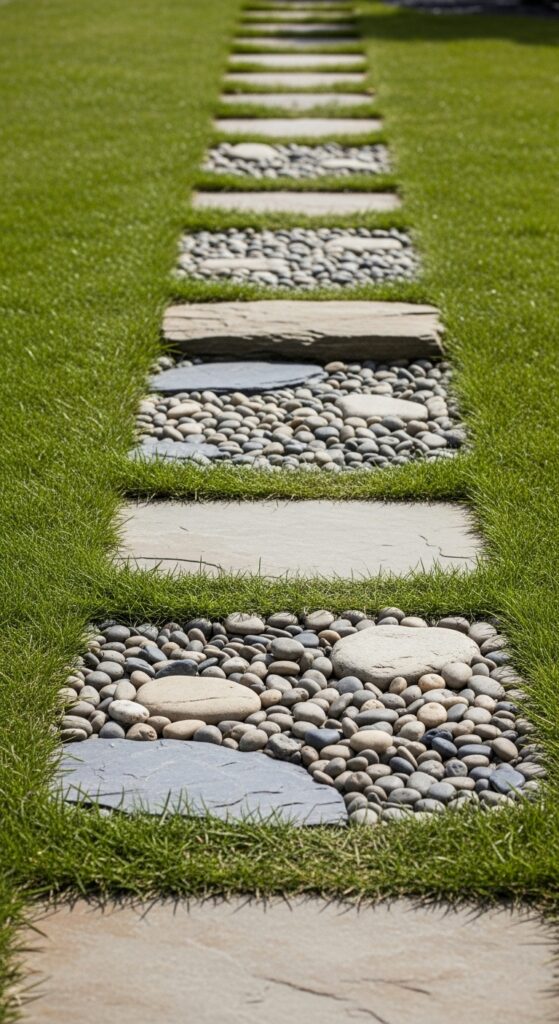
Stone and pebble walkways create natural changes between garden areas while adding texture and visual appeal to your spring scenery. I recommend starting with flat stepping stones spaced 18-24 inches apart for comfortable walking.
Fill gaps with river rocks or crushed gravel that complements your environment’s color palette. Add textured mulches around pathway edges to define borders and prevent weed growth. Small pebbles work perfectly between larger stones, creating interesting patterns while improving drainage.
You can incorporate natural stone accents like fieldstone or slate for varied heights and surfaces. This approach gives you design freedom while maintaining functionality throughout your garden space.
Hang Macrame Plant Holders Throughout Your Space
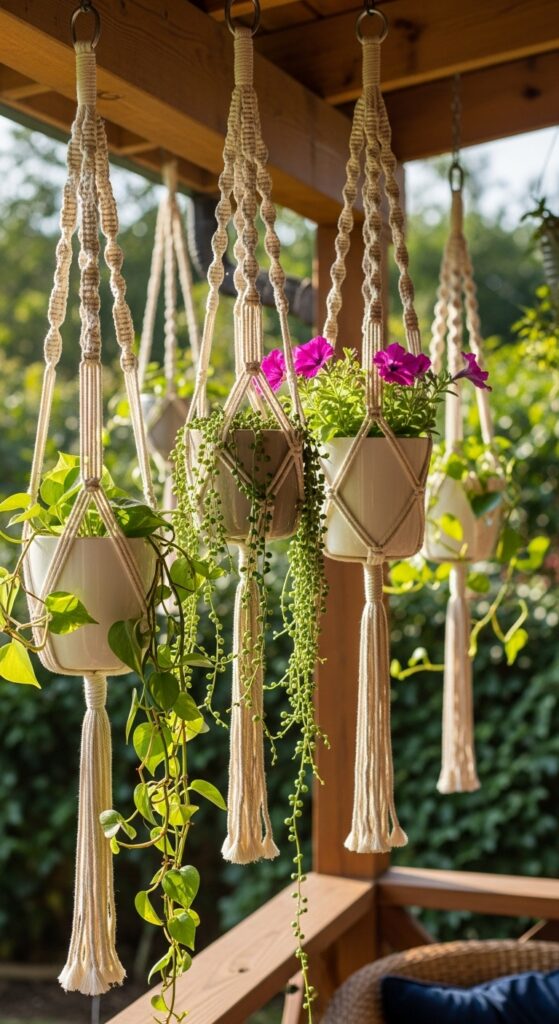
After establishing beautiful ground-level pathways, you can draw attention upward by incorporating macrame plant holders that showcase trailing and cascading plants at eye level. I recommend choosing holders in natural cream or beige tones that complement your garden’s organic aesthetic.
You’ll want to incorporate woven textures by selecting pieces with intricate knot patterns and varying cord thicknesses. Leverage hanging baskets filled with pothos, string of pearls, or trailing petunias for maximum visual impact. Position these holders at different heights throughout your porch, pergola, or tree branches to create versatile layers that alter your space into a bohemian sanctuary.
Create Butterfly Gardens With Native Spring Flowers
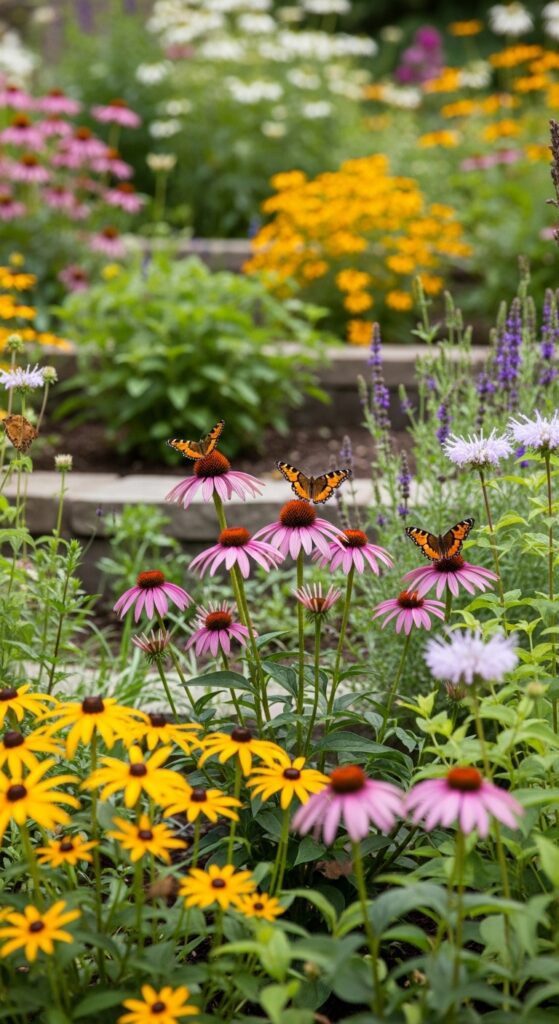
Since butterflies rely on native flowers for both nectar and host plants for their larvae, designing a dedicated butterfly garden alters your outdoor setting into a thriving ecosystem. I recommend selecting regional species like black-eyed Susan, purple coneflower, and wild bergamot for consistent blooms throughout spring and summer.
When you incorporate native pollinator plants, you’ll create sustainable food sources that require minimal maintenance while supporting local wildlife populations. Plan for a butterfly host garden by including specific plants like milkweed for monarchs and parsley for swallowtails, ensuring complete lifecycle support within your decorative scenery.
Build Raised Herb Gardens Using Reclaimed Wood
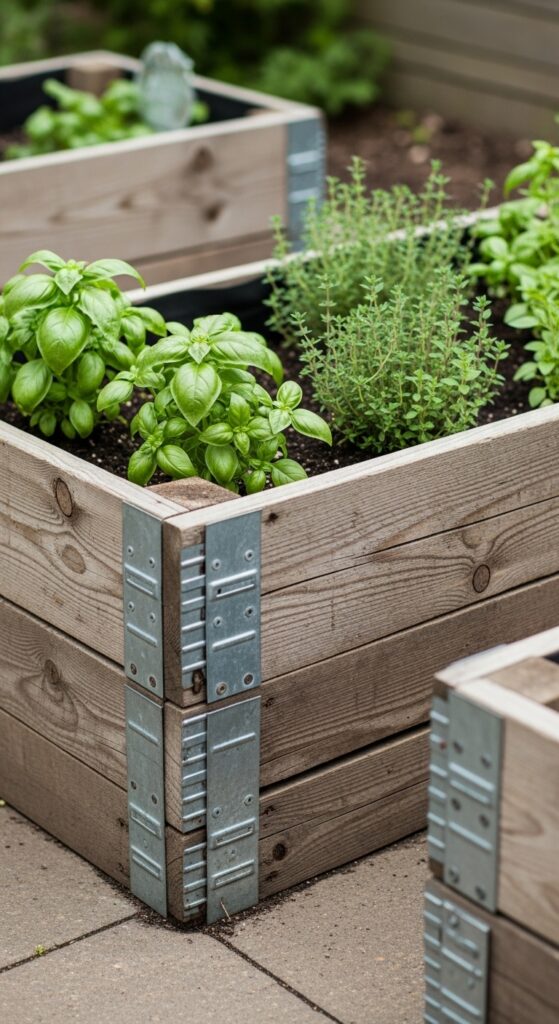
Building raised herb gardens from reclaimed wood combines practical gardening benefits with sustainable material choices that enhance your spring garden’s visual appeal. I recommend using old fence boards or shipping pallets to construct these eco-friendly planters.
You’ll create better drainage while reducing waste from landfills. Start with simple rectangular boxes, then experiment with vertical herb towers for compact spaces. These upcycled container plantings work perfectly for basil, thyme, and oregano.
Sand rough edges and apply food-safe sealant to protect the wood. Position your raised beds where they’ll receive six hours of daily sunlight for ideal herb growth.
Design Water Features With Natural Stone
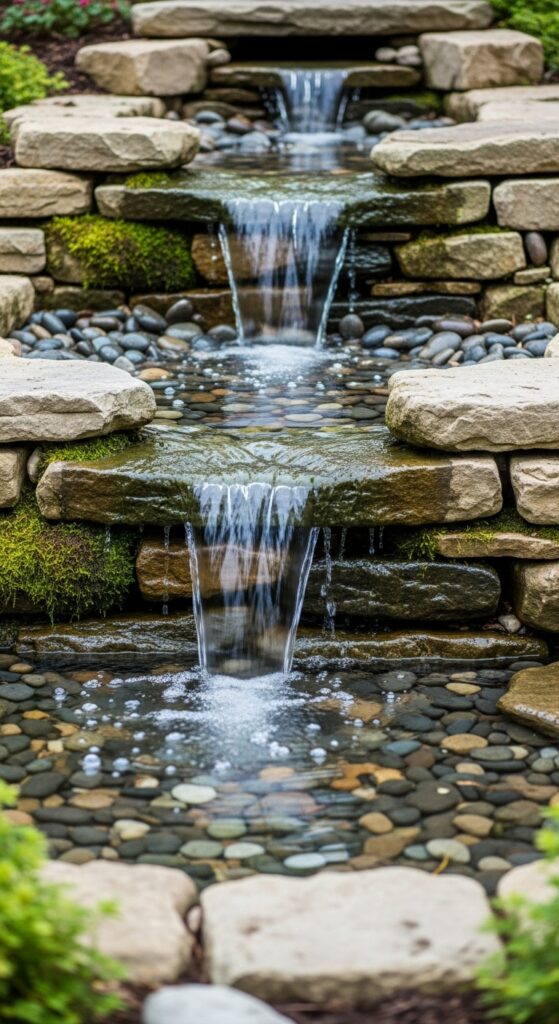
Natural stone water features bring the soothing sounds of flowing water into your spring garden while creating stunning focal points that complement your sustainable gardening efforts. I recommend you incorporate weathered stone like fieldstone or river rock for authentic appeal that blends seamlessly with nature.
You can employ natural water sources by connecting features to existing drainage systems or rainwater collection setups. Simple designs like stone-lined pools or cascading rock fountains work beautifully without overwhelming your space. These features attract beneficial wildlife while reducing stress and creating peaceful outdoor retreats you’ll enjoy throughout the growing season.
Craft Garden Markers From Driftwood and Shells
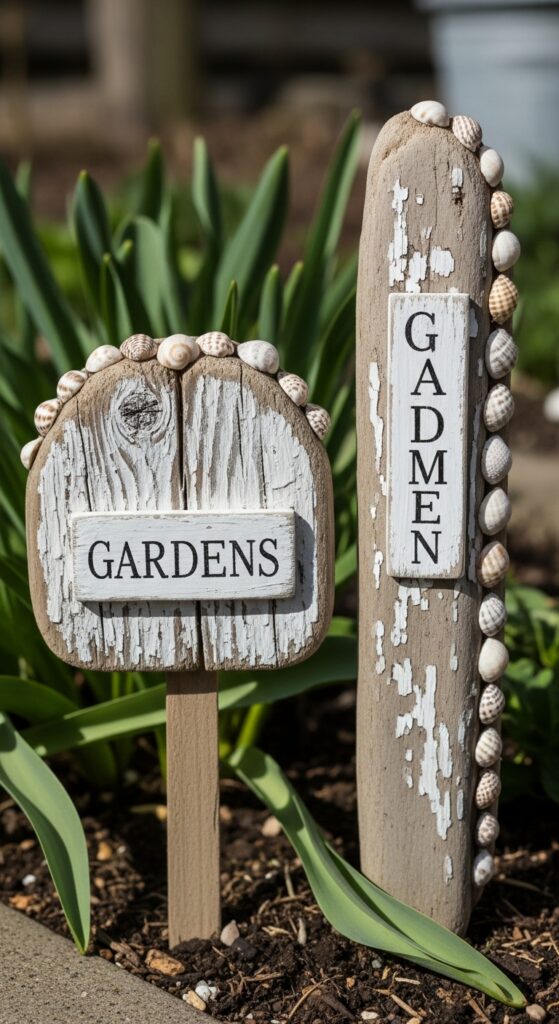
When you convert driftwood and shells into personalized garden markers, you’ll create charming plant labels that perfectly capture the coastal spring aesthetic. I’ll show you how the weathered driftwood texture provides an ideal surface for painted plant names or carved lettering.
Start by cleaning your collected pieces thoroughly, then sand smooth writing areas while preserving natural character. Paint plant names using weather-resistant outdoor paint, or attach small shells with marine adhesive to create decorative borders.
The intricate seashell patterns add visual interest while maintaining functionality. These handcrafted markers withstand seasonal changes while bringing beachside tranquility to your garden space.
Install Fairy Gardens in Unexpected Corners
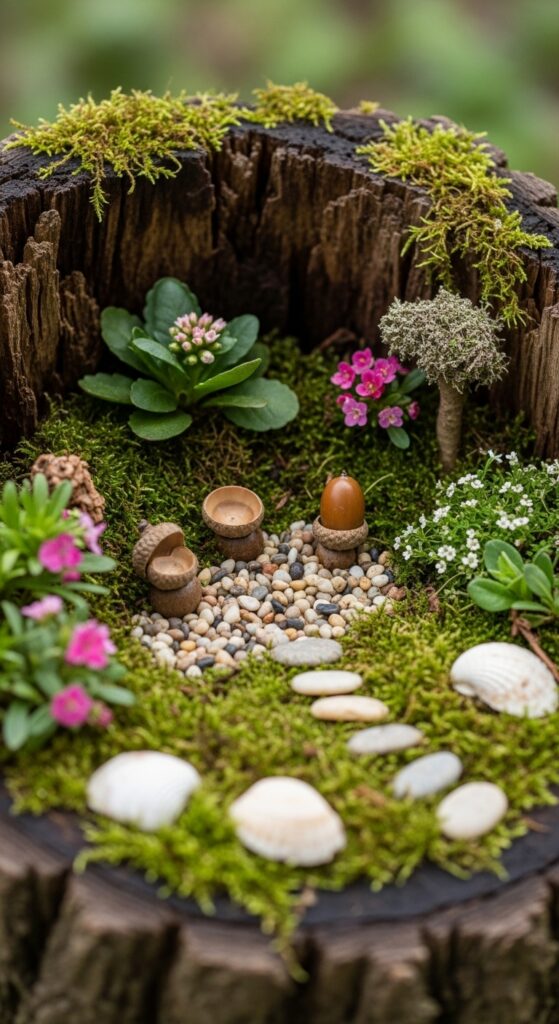
Tucking away miniature fairy gardens in overlooked spaces alters forgotten corners into enchanting focal points that surprise and delight visitors. I recommend choosing containers like weathered wheelbarrows, hollow tree stumps, or vintage planters that complement your garden’s natural aesthetic.
Start by layering small succulents, moss, and tiny flowering plants to explore miniature landscapes within your chosen vessel. Next, incorporate fanciful trinkets such as pebble pathways, acorn caps as fairy tables, or shell fragments as stepping stones.
Position these magical displays near garden benches, beneath established shrubs, or alongside fence lines where they’ll create captivating discoveries for wandering guests.
Create Outdoor Art With Painted Rocks and Logs
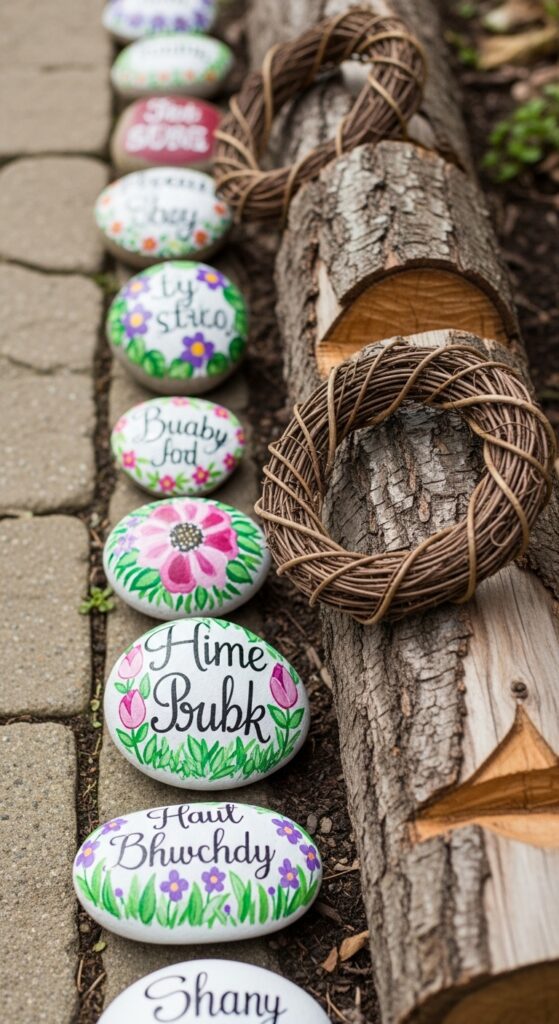
Since painted rocks and logs cost virtually nothing while providing maximum visual impact, they’re perfect for adding personalized artistic touches throughout your spring garden. I recommend gathering smooth stones and weathered branches from your property to convert into unique decorative pieces.
Paint rocks with bright florals, inspirational words, or fanciful designs using outdoor acrylic paints. Position them along pathways or nestle them between plants for charming surprises.
Alter logs into carved wooden sculptures or use them as bases for natural material wreaths made from twigs and dried flowers.
Build Cozy Seating Areas Using Natural Materials
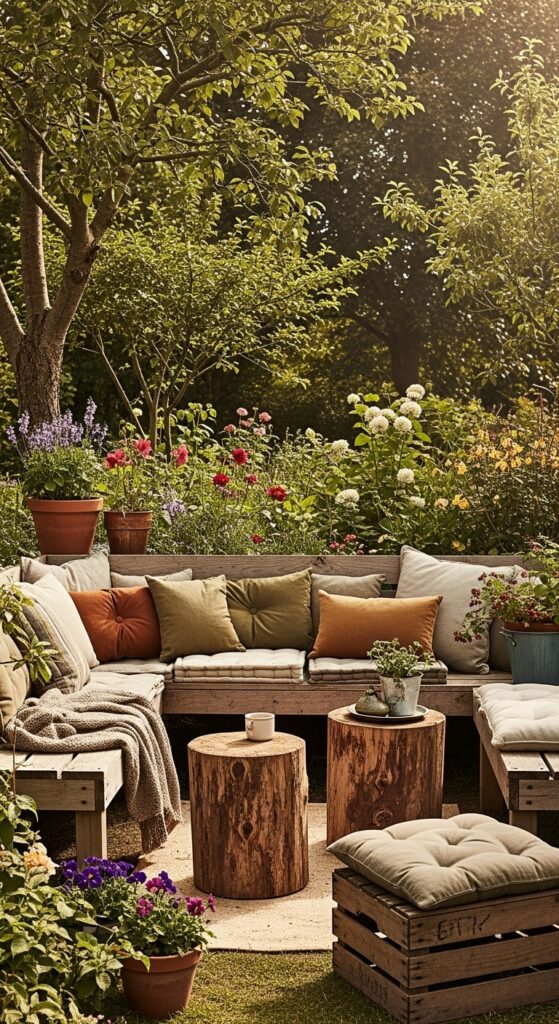
Natural seating areas alter your garden into an inviting outdoor retreat where you can relax and enjoy your spring blooms. Using natural textures like weathered wood and river stones creates authentic charm that complements your plantings perfectly.
Consider incorporating repurposed furnishings such as old tree stumps as rustic stools or salvaged wooden crates as benches. I recommend arranging these pieces around existing trees or alongside flower beds for natural integration. Add soft cushions in earthy tones to enhance comfort while maintaining the organic aesthetic. You’ll create a peaceful sanctuary that encourages lingering conversations and quiet moments among nature’s beauty.
Conclusion
You’ve uncovered fifteen natural ways to metamorphose your garden into a spring retreat that glorifies the season’s splendor. I urge you to commence with one or two endeavors that captivate you the most, then gradually incorporate more components throughout the season. Remember, the optimal garden decor functions harmoniously with your existing terrain while alluring wildlife and generating serene outdoor areas you’ll relish for years to come.