14 Family Dining Room Ideas Made for Together Moments
Smart dining room designs create versatile family spaces that seamlessly transition from homework sessions to holiday feasts, making every moment memorable.
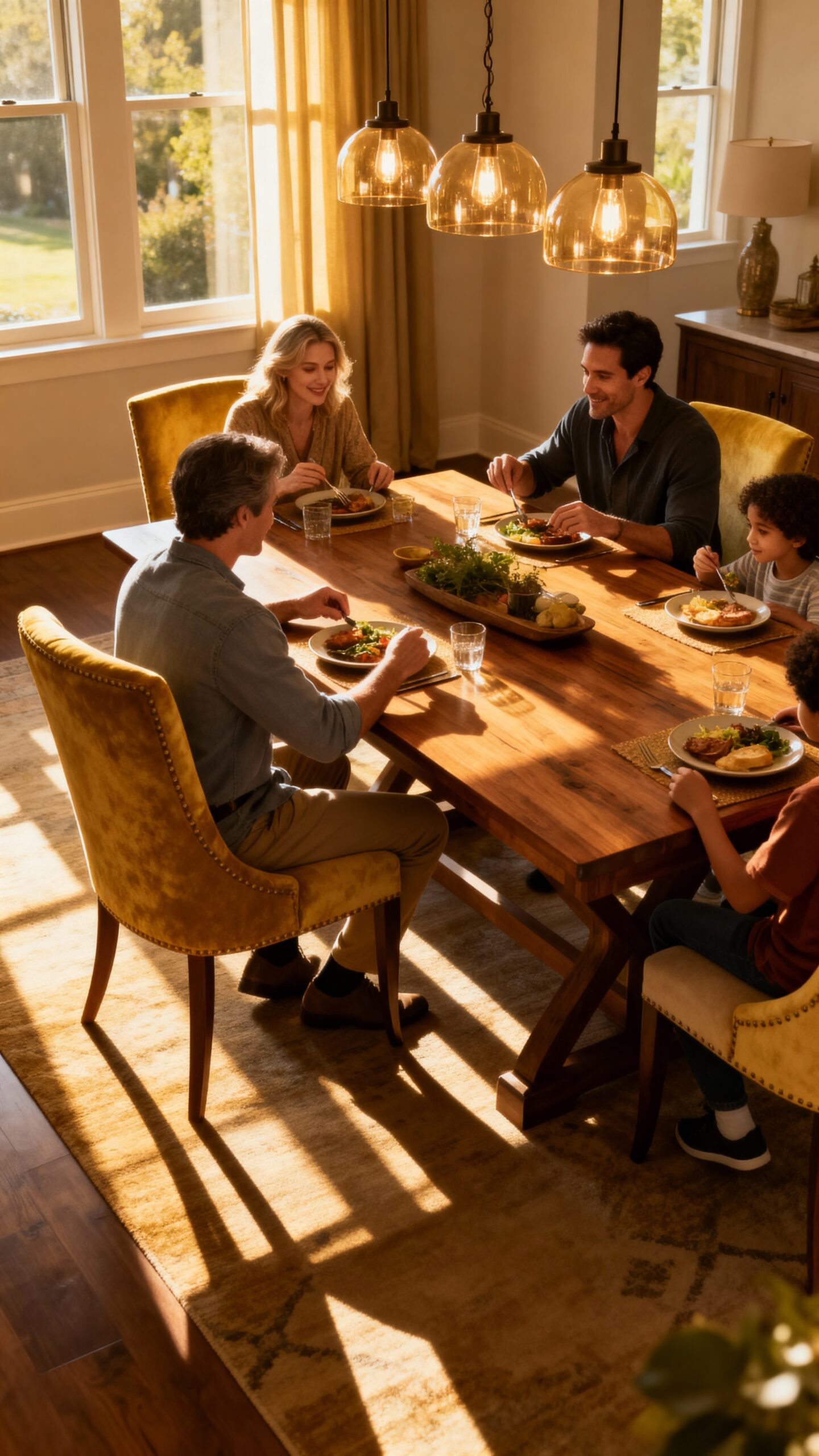
Your dining room serves as command central for family life, hosting everything from rushed breakfast routines to celebratory holiday feasts. You need a space that adapts seamlessly to homework sessions, intimate dinners, and boisterous game nights without missing a beat. Smart design choices can alter your dining area into a flexible hub that grows alongside your family’s changing needs. These fourteen strategic ideas will help you create a room that truly works for every stage of family life.
Create a Flexible Layout That Grows With Your Family
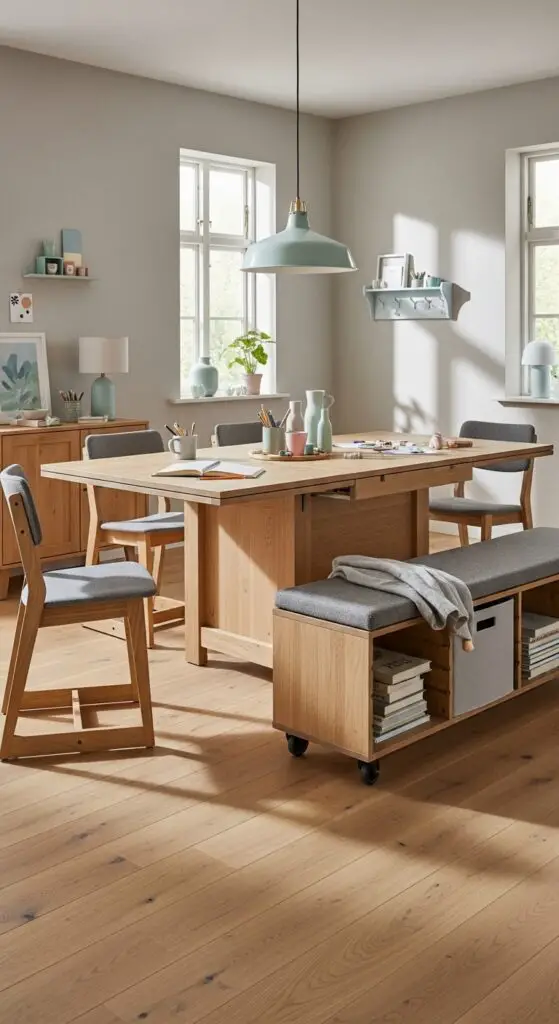
When designing your family dining room, you’ll want to prioritize adaptability over rigid furniture arrangements that can’t evolve with your household’s changing needs. Choose modular furniture options like expandable tables and stackable chairs that accommodate everything from intimate family meals to holiday gatherings.
Invest in multipurpose storage solutions such as bench seating with hidden compartments or buffets that double as homework stations. Consider furniture pieces on wheels that you can easily reconfigure for different occasions. For families working with limited square footage, compact dining tables offer space-saving solutions that still provide comfortable seating for daily meals. This flexible approach lets you alter your space from formal dining to craft corner without major renovations or expensive replacements.
Choose a Dining Table That Handles Daily Life and Special Occasions
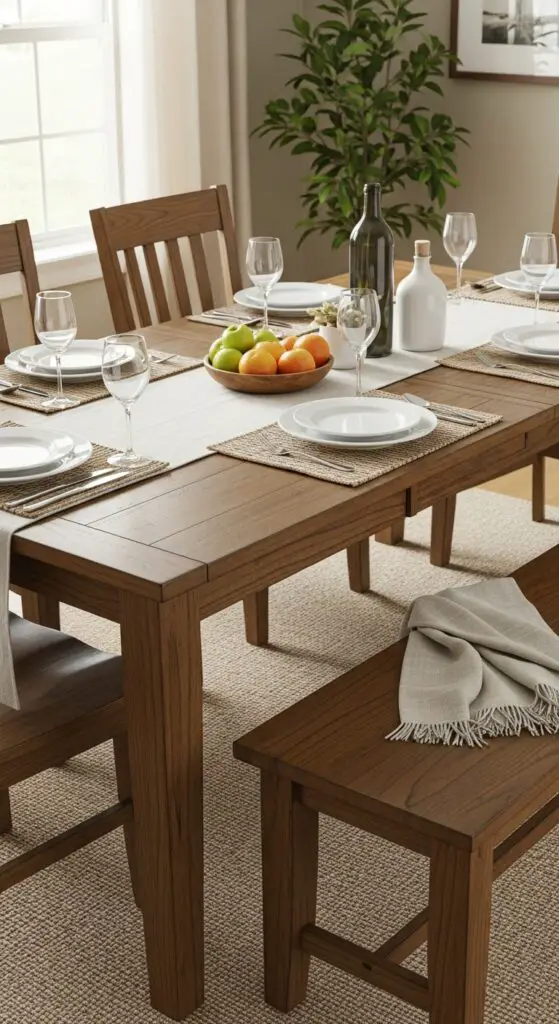
The dining table serves as your family’s command center, hosting everything from rushed breakfast routines to elaborate birthday celebrations throughout the year. You’ll want a multipurpose table extension that adapts to your changing needs without sacrificing style or functionality.
Consider a classic wood finish that withstands daily wear while maintaining its refined appearance through countless family meals. Extension tables offer the perfect solution, accommodating intimate weeknight dinners for four and expanding effortlessly for holiday gatherings of twelve or more.
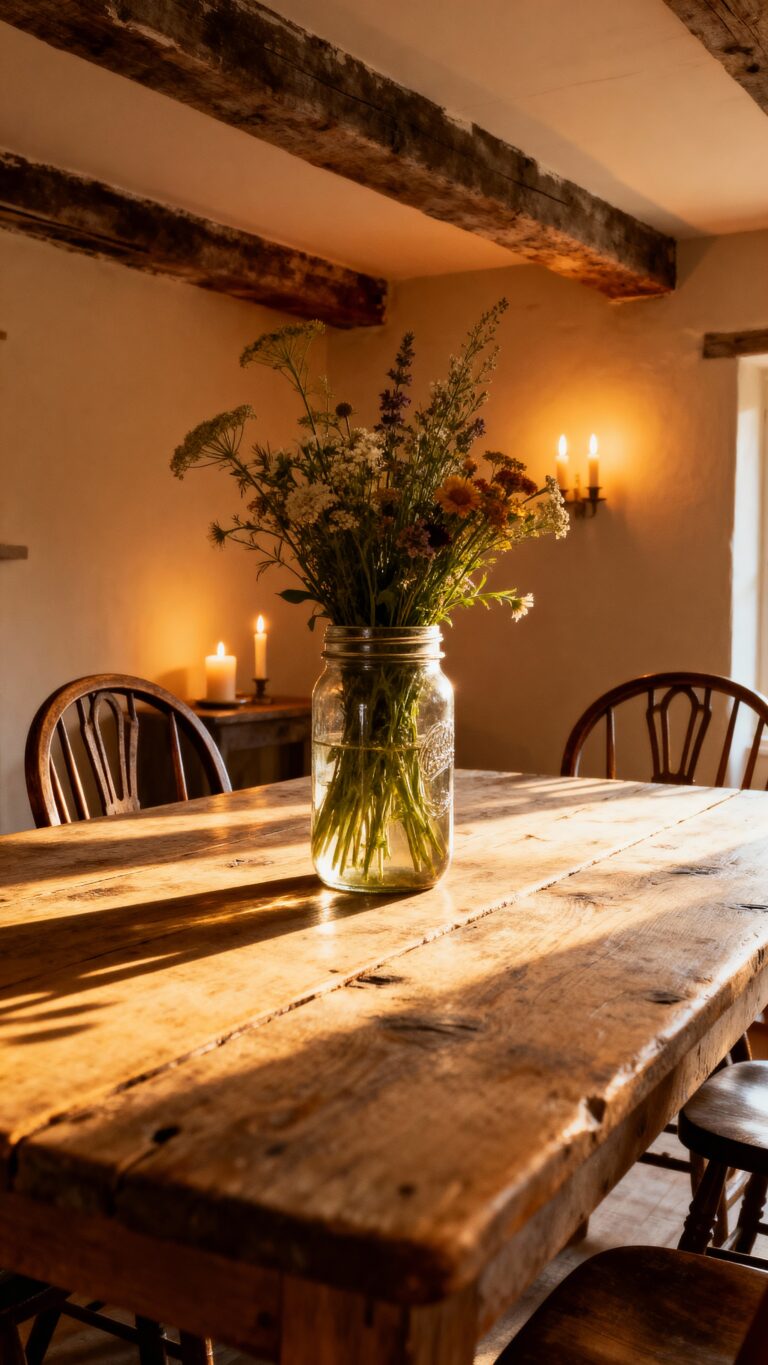
Look for sturdy construction with smooth extension mechanisms that won’t require professional assistance to operate during busy entertaining moments. For larger families or frequent entertainers, harvest tables provide generous surface area and rustic charm that works beautifully in both casual and formal settings.
Design Kid-Friendly Seating That Adults Actually Want to Use
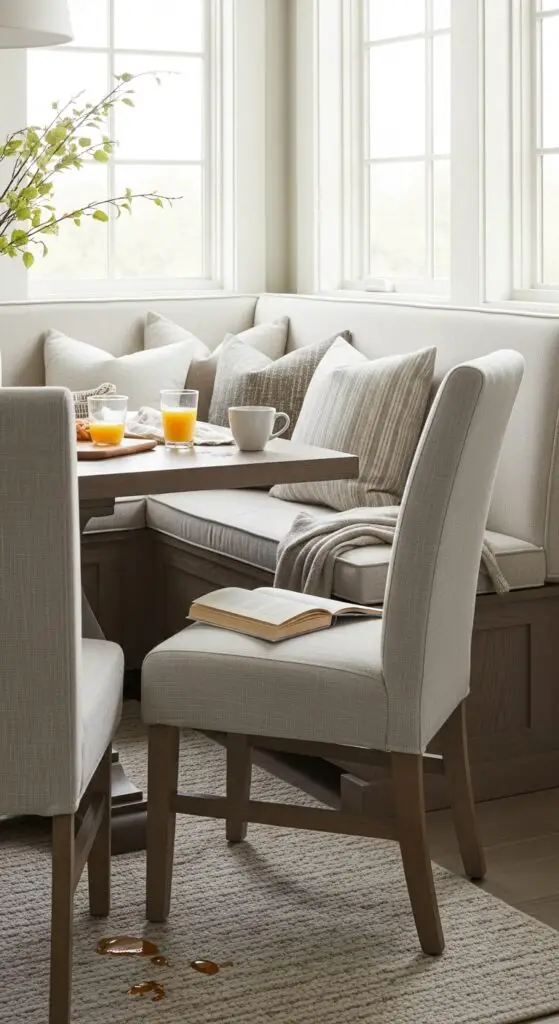
Finding seating that satisfies both your children’s needs and your design preferences requires strategic choices that blend durability with sophisticated style. Cozy bench seating works perfectly for families, offering flexible seating arrangements while creating an inviting atmosphere. You can easily squeeze in extra kids during playdates or gatherings. For compact dining rooms, bench seating provides an ideal solution that maximizes your available space while maintaining comfort.
Choose durable fabric choices like performance textiles that resist stains and spills without sacrificing elegance. Leather and faux leather options wipe clean instantly while maintaining their sophisticated appearance. Consider upholstered chairs with washable slipcovers that let you refresh your dining room’s look seasonally while protecting your investment from daily wear.
Layer Your Lighting for Homework, Dinners, and Everything Between
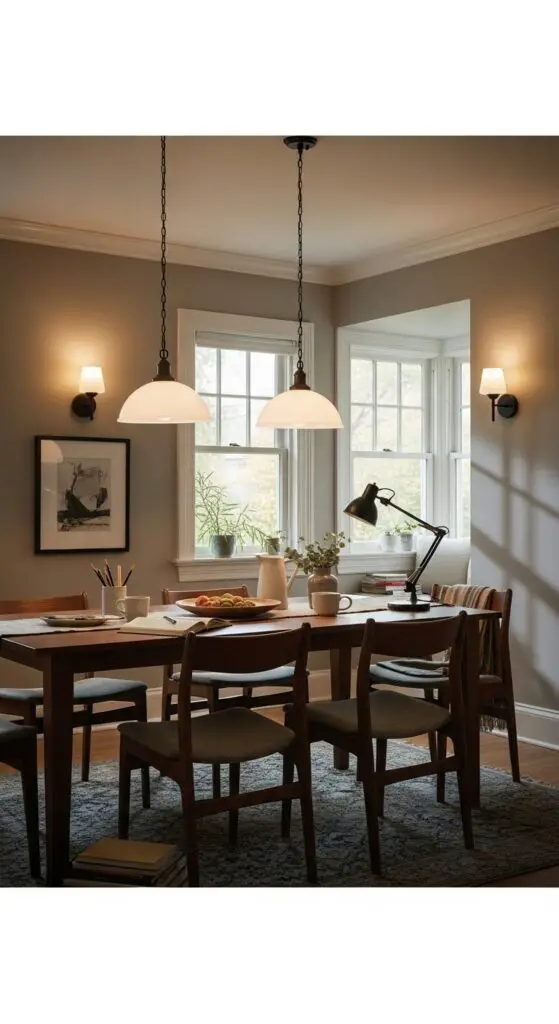
Because family dining rooms serve multiple purposes throughout the day, you’ll need different lighting levels to accommodate everything from morning homework sessions to intimate evening dinners. Install dimmer switches on your overhead fixture to adjust brightness based on activities.
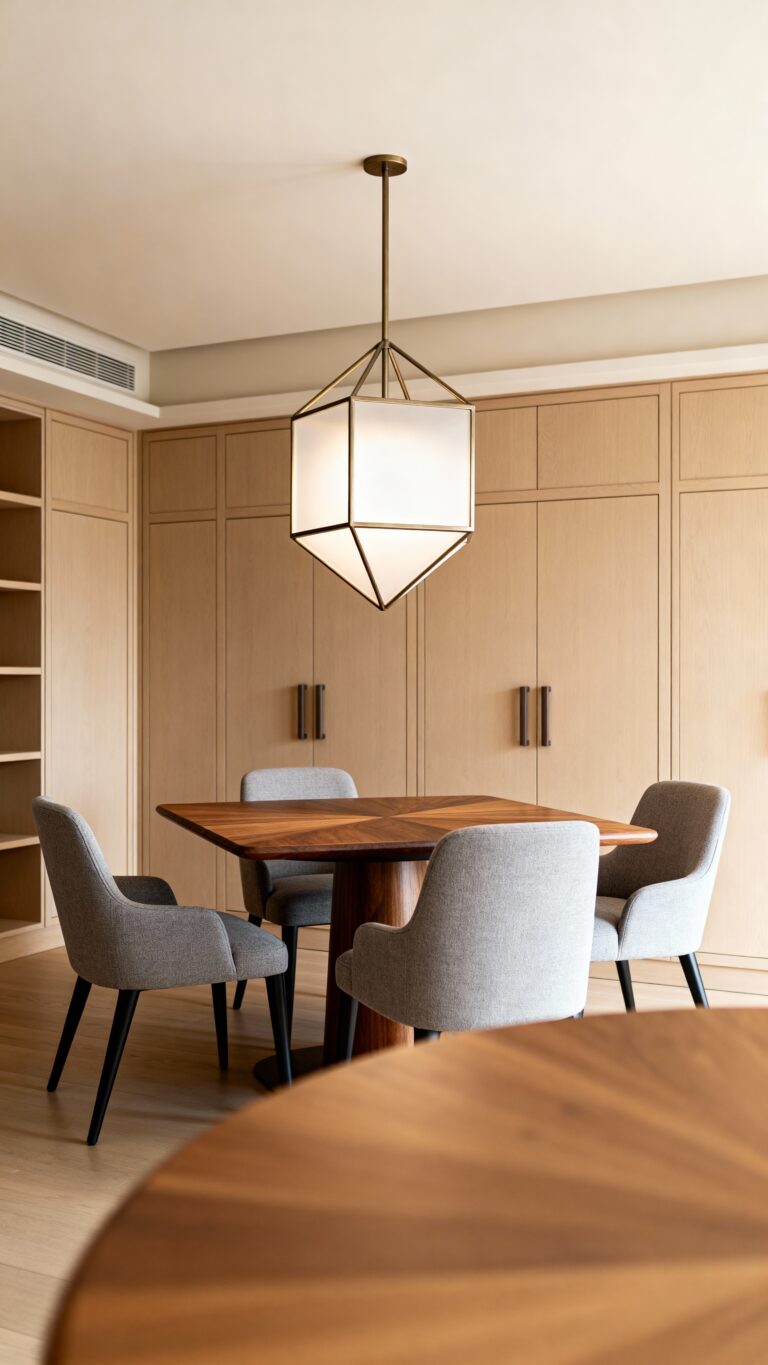
Add task lighting like pendant lights over the table or a desk lamp in the corner for focused work. Incorporate accent lighting through wall sconces or a buffet lamp to create warm ambiance during meals. Pendant lights create focused illumination while sconces provide gentle background lighting that enhances the overall atmosphere. This three-layer approach gives you complete control over your room’s atmosphere, letting you seamlessly shift from productive study time to relaxed family gatherings.
Build Smart Storage That Keeps Family Chaos Under Control
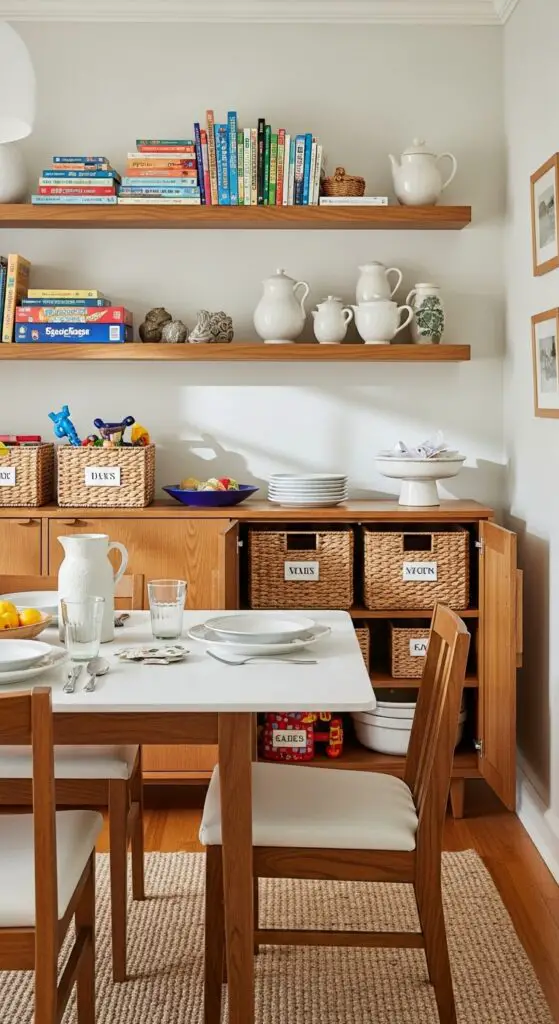
Family dining rooms can quickly become cluttered battlegrounds where homework papers mix with mail, craft supplies overtake serving dishes, and everyday essentials disappear into mysterious corners. You’ll regain control by implementing storage solutions that work with your family’s natural habits.
Install floating shelves for books and games, add a credenza with hidden compartments for electronics, and designate specific zones for different activities. Organizational systems like labeled baskets and drawer dividers keep everything accessible yet tidy.
Choose furniture with dual purposes—benches with storage, expandable tables with built-in drawers—that adapt to your family’s changing needs. Compact dining rooms benefit from vertical storage options that maximize wall space while maintaining an open, welcoming atmosphere.
Pick Durable Materials That Look Good Despite Real Life
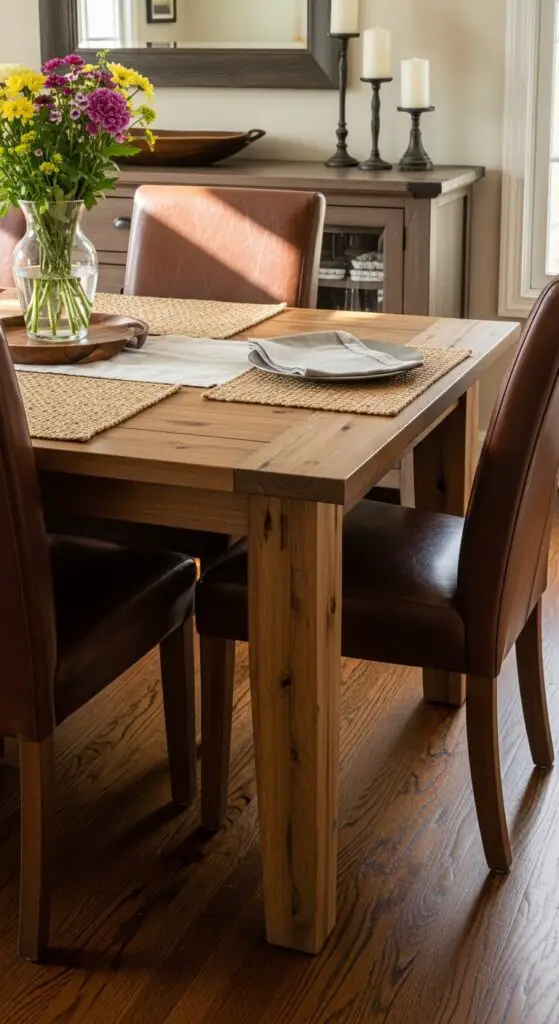
Real life happens in dining rooms, and your material choices should accept that reality rather than fight against it. Choose durable textures like leather chairs that improve with age and solid wood tables that handle daily wear gracefully.
Long lasting finishes such as sealed hardwood floors resist spills and scratches while maintaining their appeal. For areas prone to heavy traffic and spills, tile flooring offers exceptional durability while contributing to your dining space’s overall aesthetic.
Consider performance fabrics for dining chairs that repel stains yet feel comfortable during long family meals. Select metal accents with powder-coated finishes that won’t chip easily. Stone or quartz surfaces provide beauty with minimal maintenance requirements, giving you freedom to focus on creating memories rather than constant upkeep.
Add a Reading Nook or Play Corner for Multi-Generational Comfort
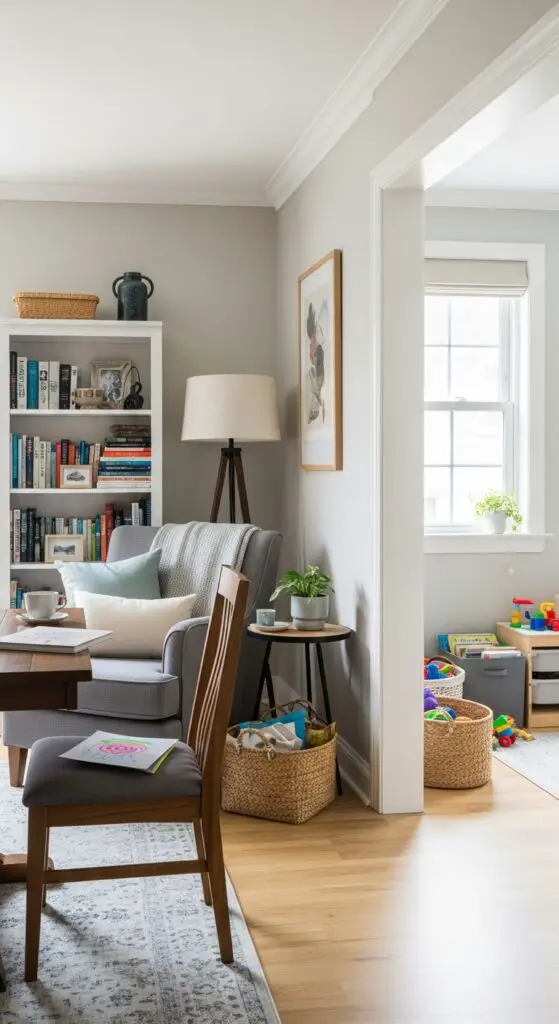
Beyond selecting sturdy materials for your main dining area, you’ll want to designate spaces that accommodate different family members’ needs throughout the day. Create a cozy reading nook by placing a comfortable chair with good lighting near a bookshelf in one corner. Add soft cushions and a small side table for drinks or snacks during quiet moments.
For younger family members, establish a play corner with storage baskets for toys and games. These dedicated zones enable multi generational activities while keeping your dining room functional for meals, homework, and family gatherings throughout different times of day.
Use Color Psychology to Encourage Conversation and Appetite
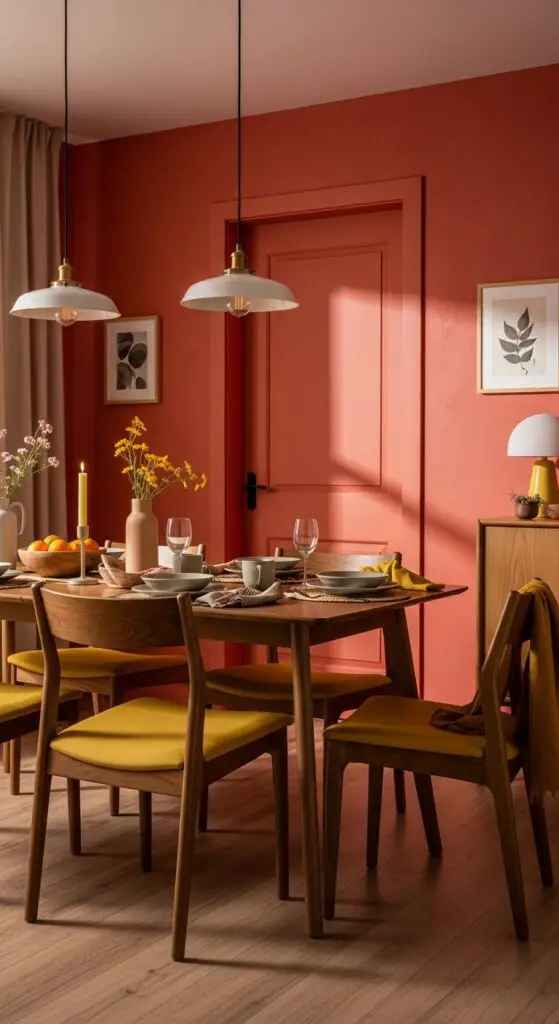
Certain colors naturally stimulate conversation and enhance your family’s appetite, making your dining room a more inviting gathering space. Warm reds and oranges are proven appetite-boosting colors that encourage lively discussion while creating an energetic atmosphere.
Deep terracotta or coral walls make everyone feel more sociable and engaged during meals. You’ll also want to ponder soft yellows, which promote happiness and openness between family members. Pair these lively shades with mood lighting through dimmable fixtures or warm-toned bulbs. Cool blues and harsh fluorescents can actually suppress appetite, so avoid them in favor of colors that naturally draw people together.
Create Tech-Free Zones That Actually Work for Modern Families
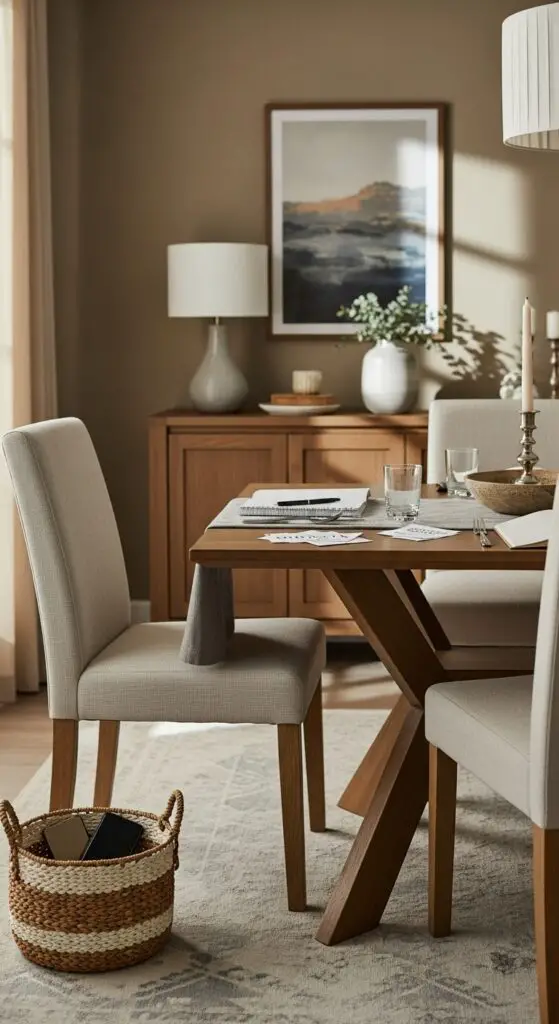
Most families struggle with device distractions during dinner, but establishing a successful tech-free dining zone requires strategic planning rather than simple rules. You’ll need to unplug from devices by creating a designated charging station outside the dining room, making technology physically unavailable during meals.
Place a decorative basket near your dining room entrance where everyone deposits phones before sitting down. This simple boundary helps cultivate mindful presence naturally. Replace digital entertainment with conversation starters like “highs and lows” or interesting questions displayed in a small jar. You’ll uncover deeper family connections emerge when screens disappear.
Design Around Your Family’s Unique Dining Rhythms and Schedules
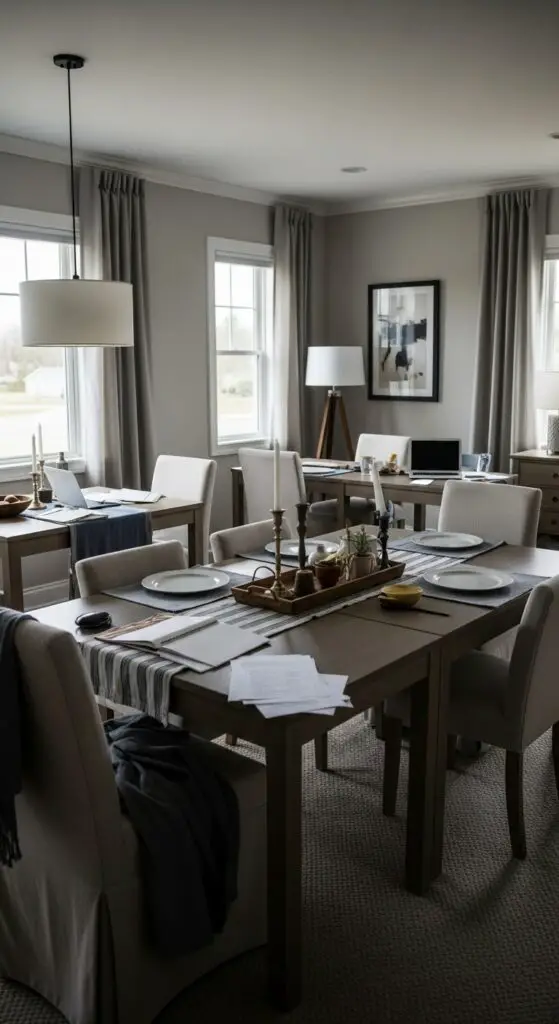
How often does your family actually eat together at the same time each day? If you’re honest, it’s probably less than you’d like. Your dining room should consider daily routine needs, working with your reality instead of against it.
Design a flexible space that can accommodate flexible mealtimes throughout the day. Install dimmable lighting for early morning breakfasts and late evening dinners. Choose comfortable seating that works for quick snacks and leisurely meals alike.
Create designated spots for homework, laptops, and reading materials so your dining room serves multiple purposes beyond traditional mealtimes.
Incorporate Memory-Making Elements That Tell Your Family’s Story
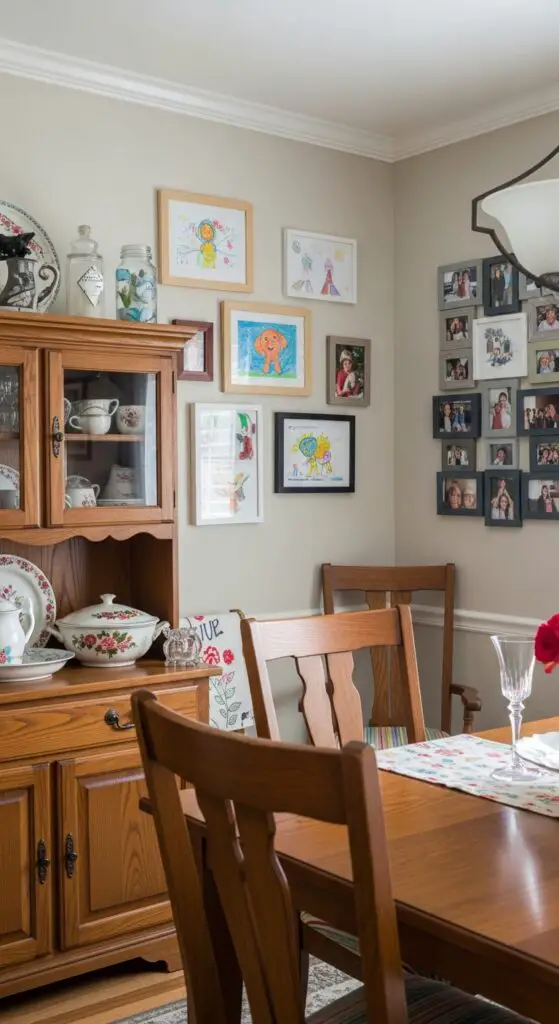
Something magical happens when your dining room becomes a canvas for your family’s most treasured moments and milestones. Alter your space by displaying personal mementos that spark conversation and connection. Frame children’s artwork, showcase travel souvenirs, or create a photo gallery featuring special celebrations and everyday joys.
Family heirlooms deserve prominent placement in your dining area. Position grandmother’s china cabinet, display inherited serving pieces, or hang vintage family portraits. These meaningful touches create conversation starters while honoring your heritage.
Consider rotating seasonal displays or creating designated spaces for new memories, allowing your dining room to morph naturally with your family’s growing story.
Plan for Accessibility as Kids and Grandparents Join the Table
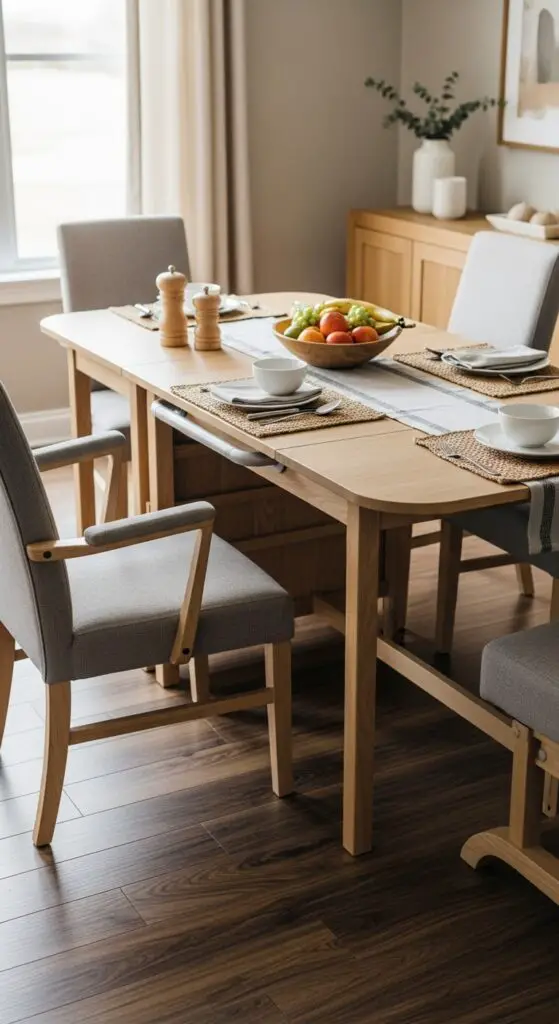
Beyond creating a space rich with family memories, your dining room must accommodate family members across all ages and mobility levels. Choose inclusive seating options like chairs with armrests for elderly relatives and adjustable-height stools for growing children.
Install adaptable table surfaces that extend or adjust to wheelchair accessibility requirements. Position furniture with wide walkways—at least 36 inches—for safe traversal. Consider adding grab bars near seating areas and selecting tables with rounded edges to prevent injuries.
These thoughtful modifications guarantee everyone enjoys comfortable, dignified participation in family meals without compromising your room’s aesthetic appeal or functionality.
Balance Open Concept Flow With Intimate Dining Atmosphere
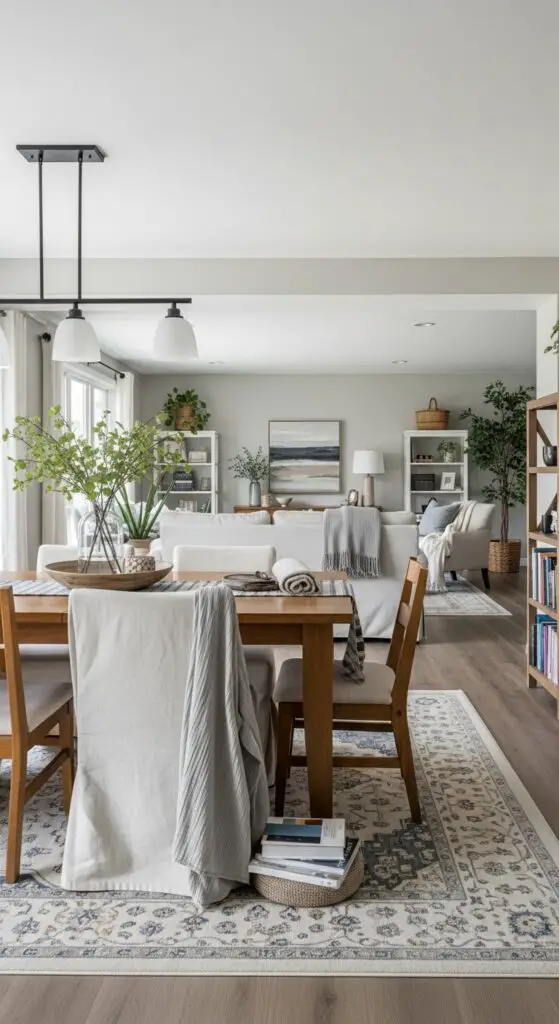
While open concept layouts create spacious, connected homes, they can make your dining room feel too exposed for intimate family gatherings. You’ll want to establish intentional flow patterns that guide movement naturally while preserving privacy during meals. Consider positioning furniture like bookshelves or console tables to create subtle boundaries without blocking sightlines completely.
Design cohesive visual interest by using area rugs to define your dining zone and pendant lighting to draw focus downward. Strategic placement of tall plants or decorative screens can soften passages between spaces. These elements maintain your home’s airy feel while creating the cozy atmosphere your family deserves.
Add Seasonal Flexibility for Holidays and Growing Guest Lists
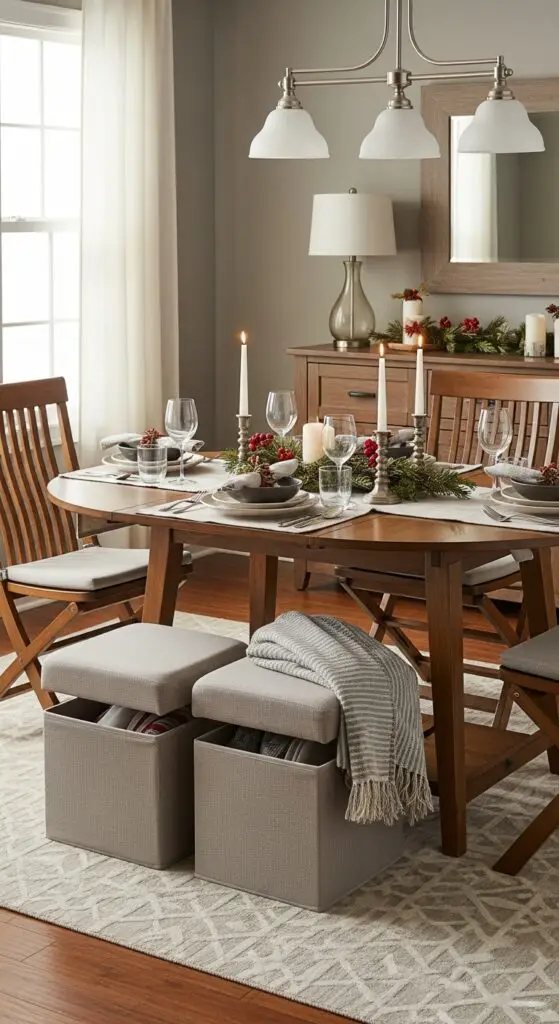
As holidays approach and your guest list expands, your dining room needs smart solutions that adapt to changing crowd sizes without requiring major furniture overhauls.
You’ll want seasonal storage solutions that keep extra dinnerware, linens, and decorative pieces organized yet accessible. Consider investing in an extendable dining table or folding chairs that disappear when not needed.
Adjustable table settings become your secret weapon—use round tables for intimate gatherings and configure them into longer arrangements for larger celebrations. Storage ottomans and sideboards provide hidden space for holiday essentials while maintaining your room’s everyday functionality and visual appeal.
Conclusion
You’ve got all the tools to create a dining room that works beautifully for your family’s daily rhythms and special celebrations. Start with one flexible element—maybe an expandable table or modular seating—then gradually add smart storage and lighting layers. Remember, the best family dining rooms aren’t perfect; they’re functional spaces that adapt as your family grows and creates countless memories together.