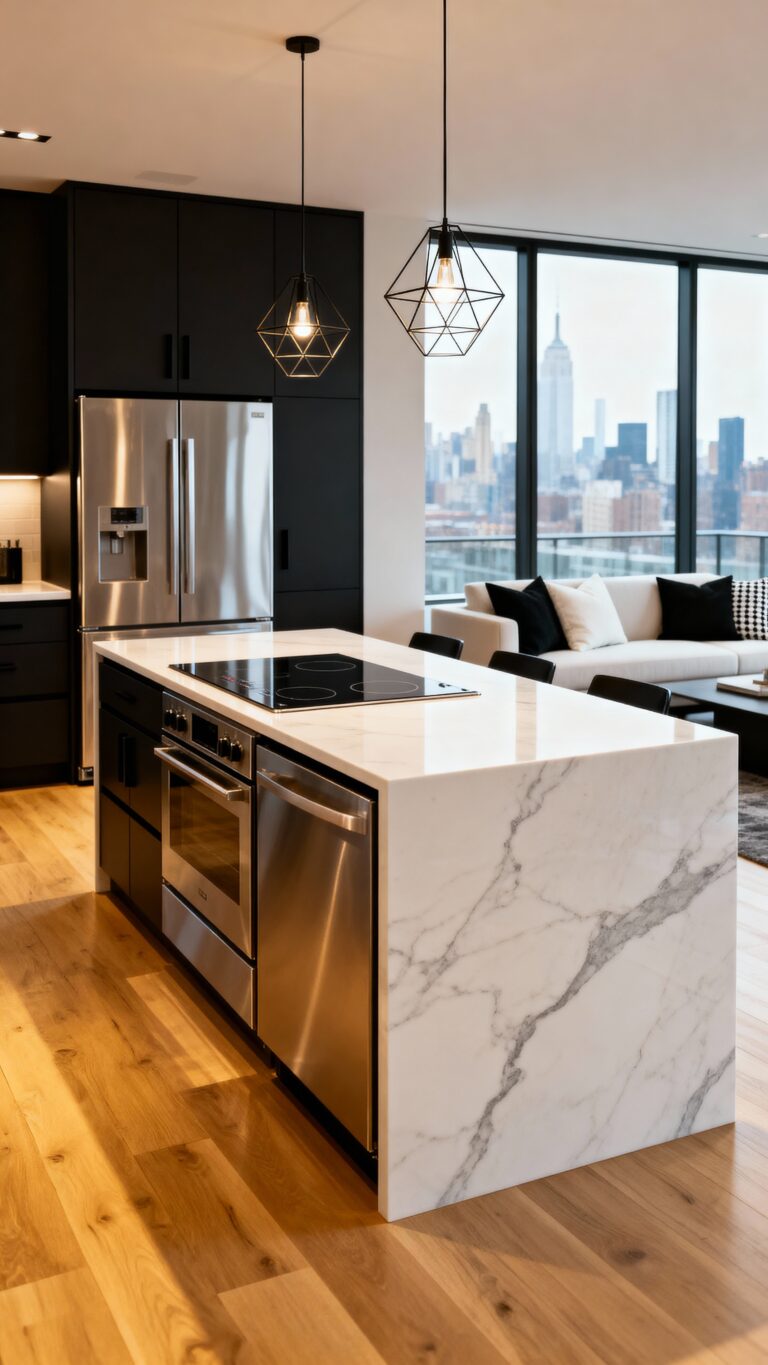
13 Open Kitchen Ideas With Living Room for a Connected Home Feel
Discover 13 brilliant open kitchen and living room layouts that transform cramped spaces into flowing, connected havens your family will never want to leave.
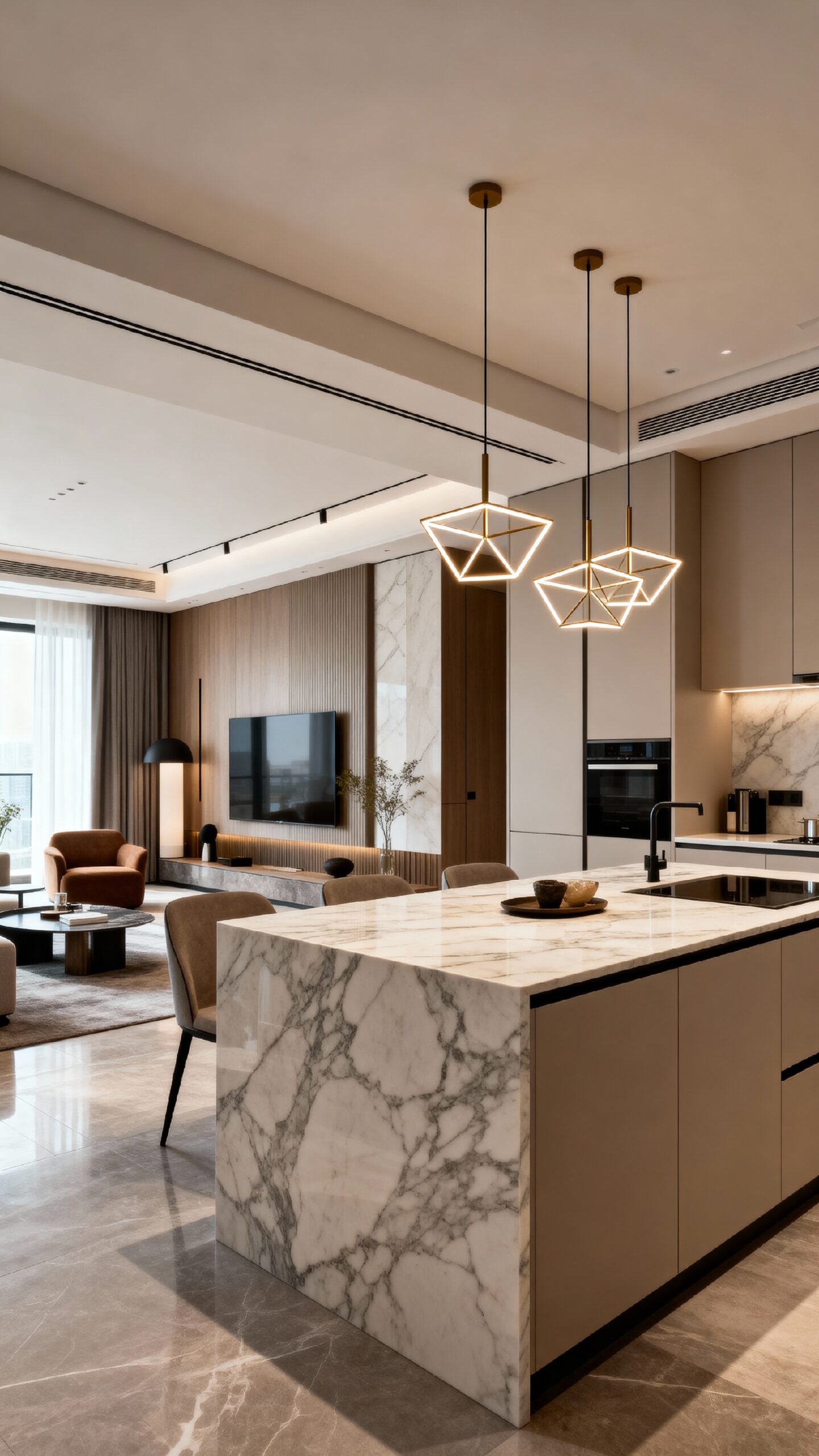
You’re looking at your closed-off kitchen and wondering how to create that airy, connected feel you’ve seen in modern homes. Open kitchen designs with living rooms aren’t just trendy—they’re practical solutions that alter how your family lives and entertains. Whether you’re working with a compact space or a sprawling floor plan, the right layout strategies can dramatically enhance your home’s flow.
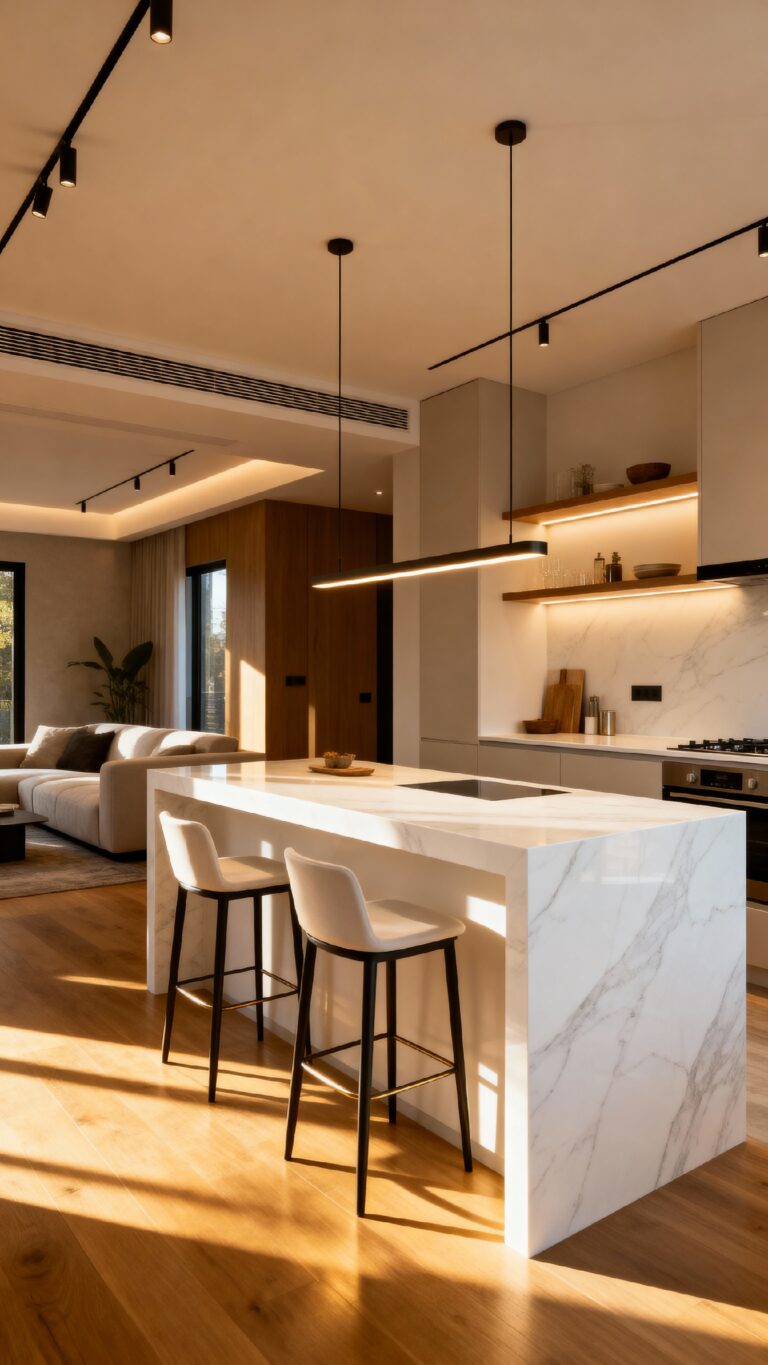
Kitchen Island as a Natural Room Divider
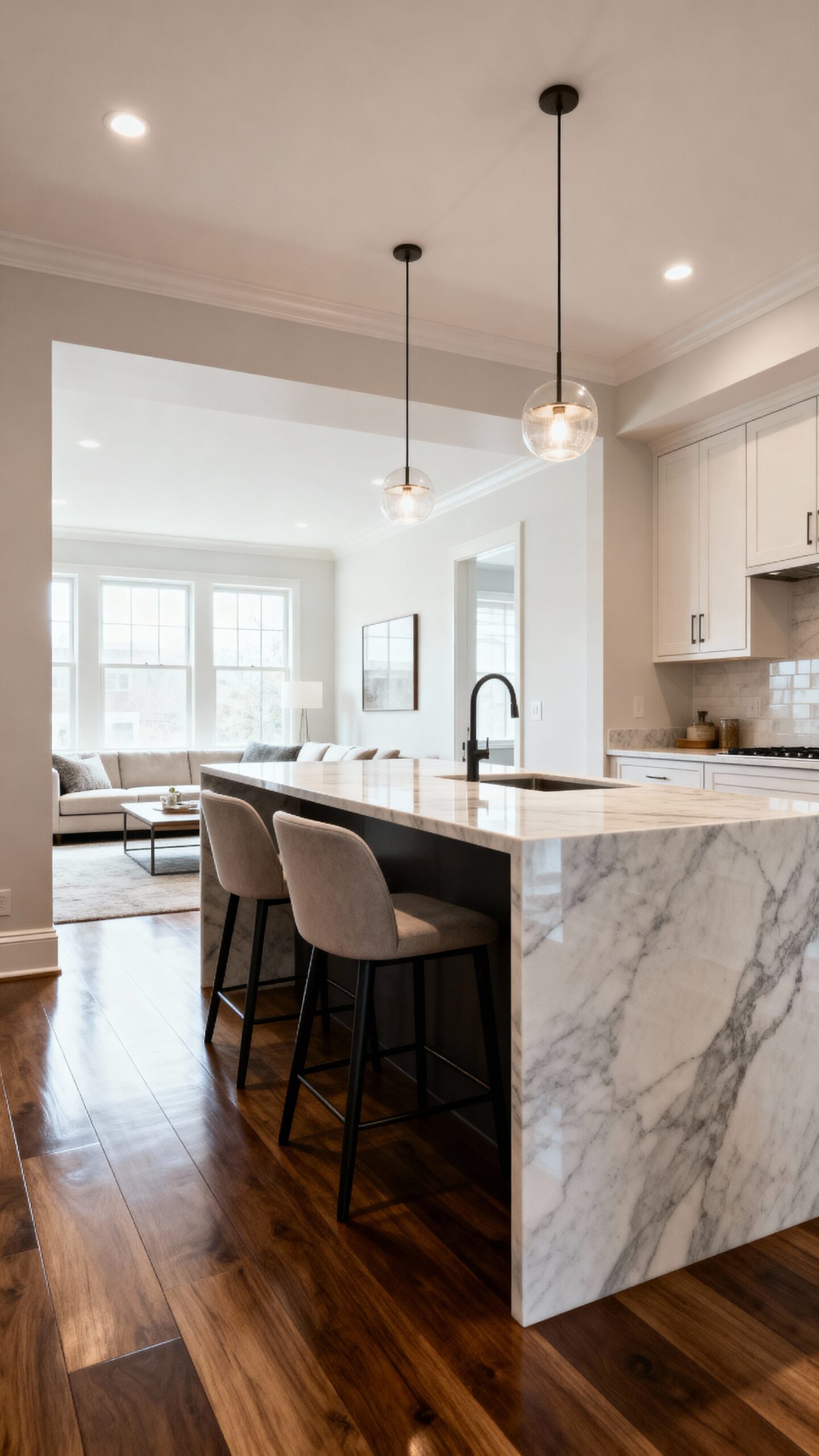
When you’re planning an open-concept space, a kitchen island serves as the perfect natural divider between your cooking and living areas. You’ll create distinct zones while maintaining visual flow throughout your home.
A movable kitchen island gives you flexibility to reconfigure your layout whenever you want a fresh outlook or need extra space for entertaining.
Consider designing a multi purpose island station that includes seating, storage, and prep space. You can incorporate features like built-in wine storage, breakfast bar seating, or even a secondary sink to maximize functionality and create your ideal connected living experience. These functional island designs seamlessly blend cooking capabilities with socializing opportunities for the modern connected home.
[affiai keyword=”kitchen island room divider open concept” template=”carousel” count=”3″]
L-Shaped Layout for Seamless Flow
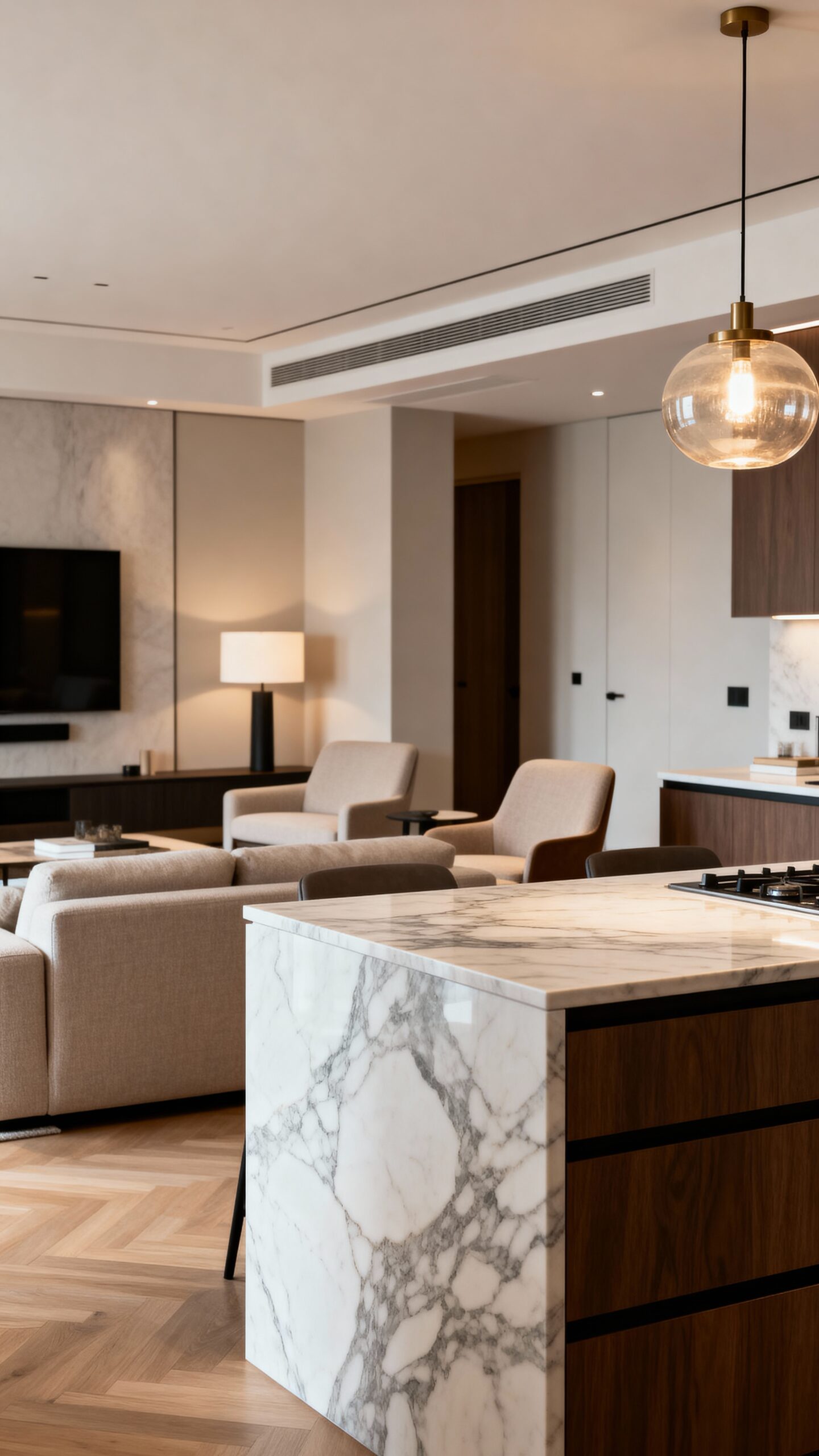
Because L-shaped kitchen layouts naturally wrap around a corner, they’re perfectly designed to create seamless shifts between your cooking and living spaces. This angled placement opens up sightlines while maintaining distinct functional zones throughout your home.
You’ll maximize your floor plan’s potential through strategic zoning that separates cooking tasks from relaxation areas. Position your sink and stove along one leg of the L, while dedicating the shorter section to prep work or casual dining.
This configuration creates natural traffic patterns that won’t disrupt your cooking workflow. You’ll enjoy unobstructed views of your living room while preparing meals. Consider adding smart partition ideas that define the kitchen area without blocking the natural light flow between spaces.
[affiai keyword=”L shaped kitchen cabinets and countertops” template=”carousel” count=”3″]
Peninsula Design to Define Spaces
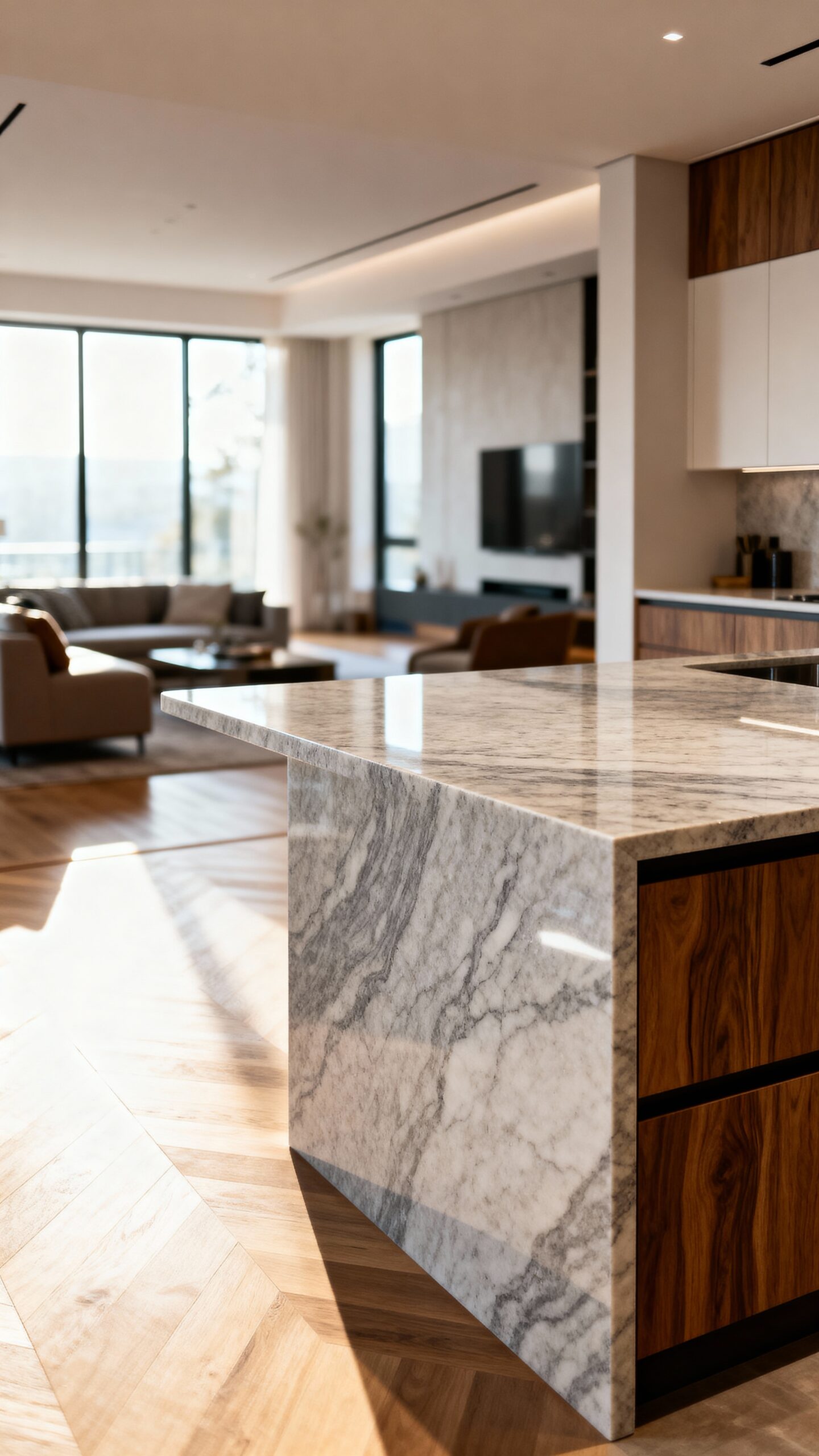
A peninsula extension creates the perfect bridge between your kitchen and living room by adding a partial wall or counter that defines each space without blocking visual connection. You’ll gain precious counter space while maintaining an open feel that encourages interaction between rooms.
Consider installing a raised breakfast bar on your extended peninsula countertop to create casual dining options and additional storage underneath. This design allows you to prep meals while chatting with guests in the living area.
The peninsula acts as a natural boundary that organizes your space without sacrificing the freedom of movement you crave. Enhance the functionality by incorporating open kitchen shelves above the peninsula to display decorative items while keeping essentials within easy reach.
[affiai keyword=”kitchen peninsula countertop breakfast bar design” template=”carousel” count=”3″]
Matching Color Palettes Throughout Both Areas
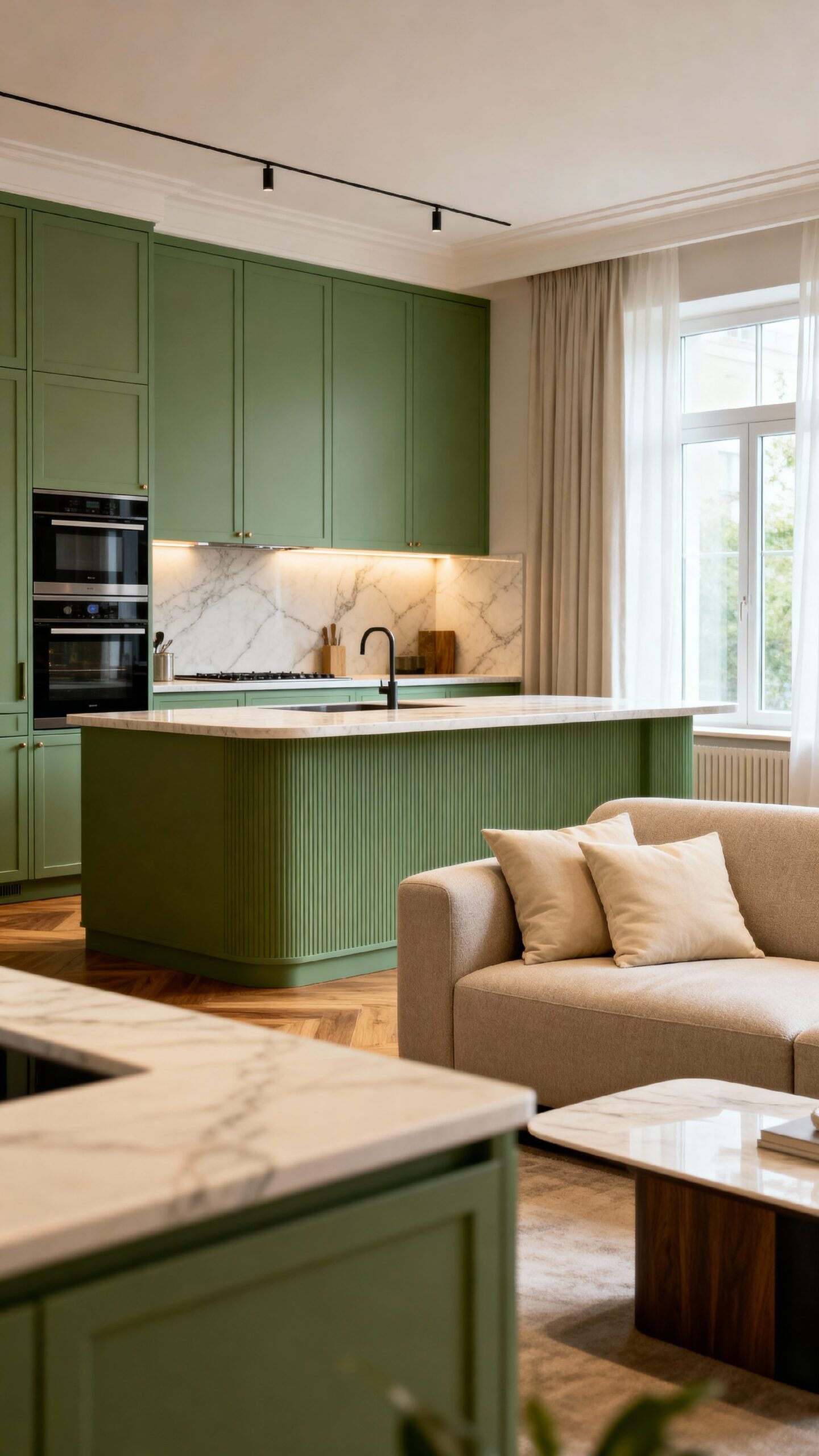
Since your open kitchen and living room share visual space, creating a cohesive color palette strengthens the connection between both areas while establishing a unified design flow. Choose one dominant neutral shade for walls and larger furniture pieces, then add complementary accent colors through textiles, artwork, and decorative accessories.
You’ll achieve seamless color shifts by repeating the same three-to-four hues throughout both spaces in varying proportions. Consider using your kitchen’s backsplash color in living room throw pillows, or echo your sofa’s tone in kitchen bar stools to create visual bridges that unify your open-concept layout. These stylish open kitchen designs work particularly well in modern and spacious homes where the visual flow between areas is most important.
[affiai keyword=”open concept kitchen living room color palette” template=”carousel” count=”3″]
Consistent Flooring to Unite the Space
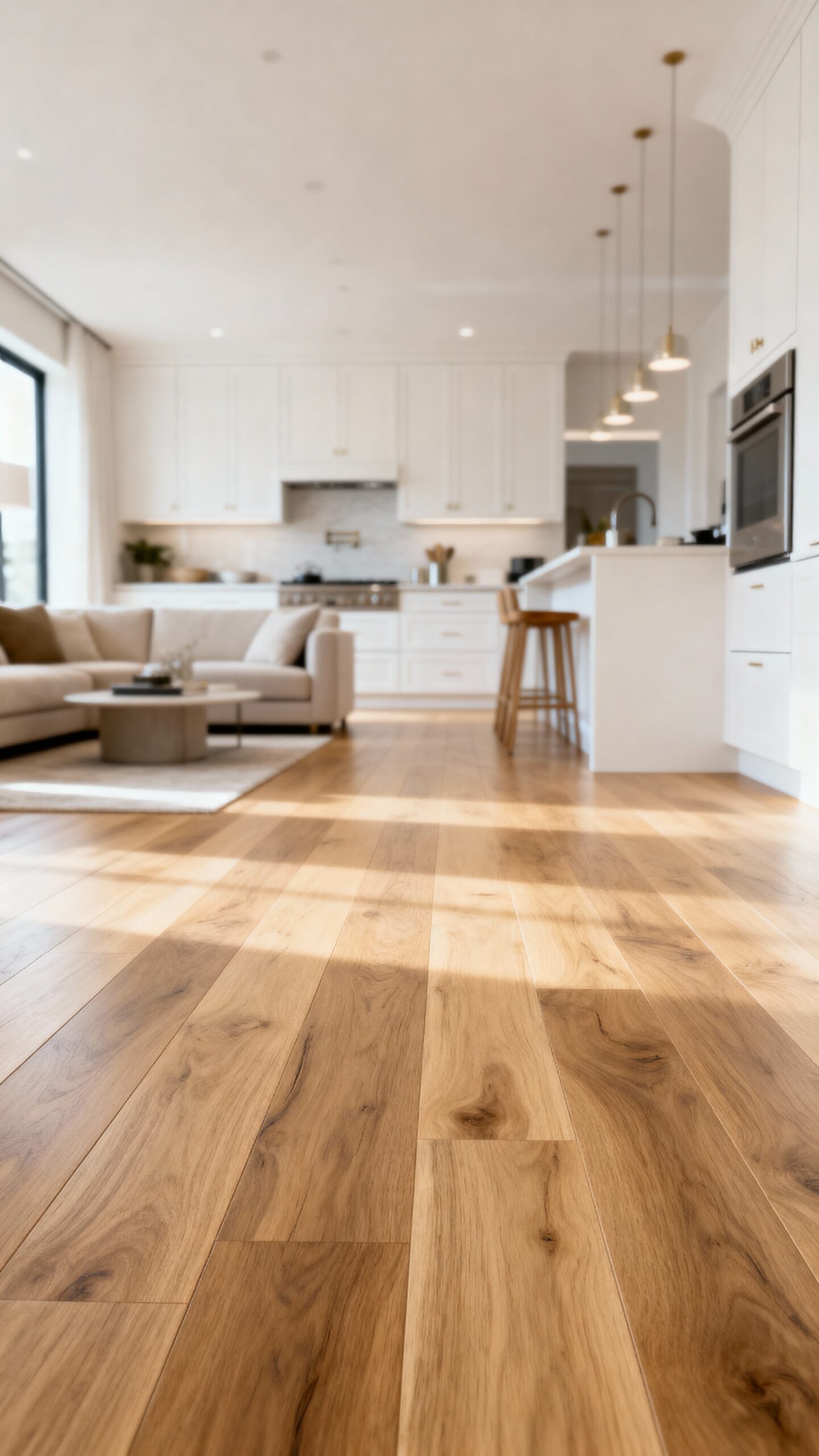
When you install the same flooring material throughout your open kitchen and living room, you create an uninterrupted visual foundation that makes both spaces feel larger and more connected.
You’ll maximize this effect by choosing durable materials like luxury vinyl or ceramic tile that handle kitchen spills while complementing living room furniture. Consider incorporating hardwood flooring patterns that run lengthwise through both areas to enhance the sense of flow.
Add visual interest with subtle textural tile accents near kitchen work zones while maintaining the primary flooring elsewhere. This approach gives you design freedom without sacrificing the unified appearance. Additionally, incorporating open cabinet storage throughout the connected space helps maintain visual continuity while providing practical organization solutions.
[AFFIAI KEYWORD=”luxury vinyl plank flooring open concept kitchen” TEMPLATE=”carousel” COUNT=”3″]
Two-Tone Cabinetry for Visual Interest
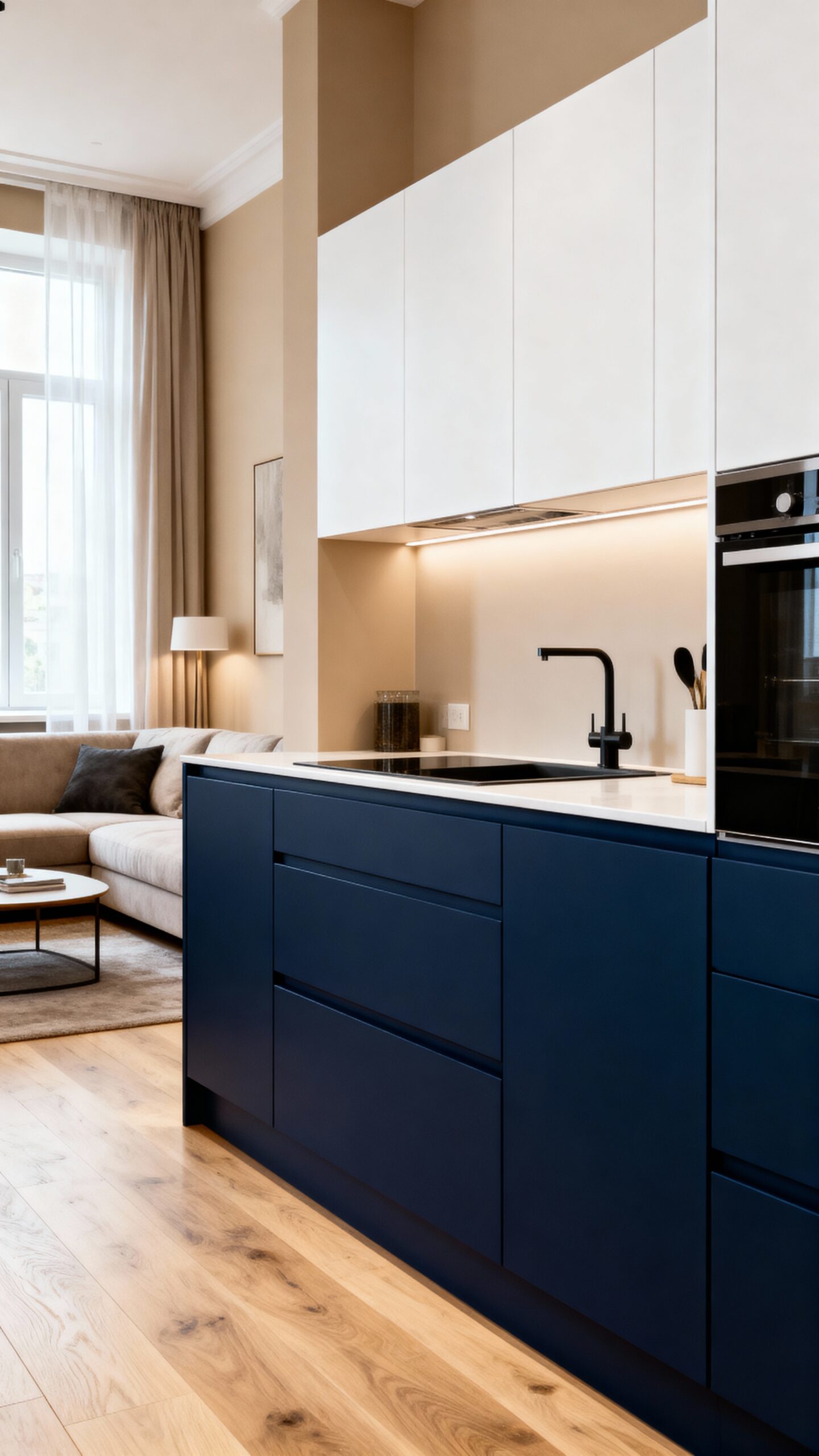
Two-tone cabinetry alters your open kitchen into a sophisticated focal point that naturally defines different zones within your combined living space. You’ll create stunning visual contrast by pairing light upper cabinets with darker lower ones, or mixing warm wood tones with crisp white finishes.
Contrasting cabinet colors work beautifully when you choose shades from the same color family or complementary palettes. Navy and cream, charcoal and sage, or natural oak with painted white deliver striking results.
Complementary hardware finishes tie everything together—brass handles on darker cabinets with brushed nickel on lighter ones creates depth while maintaining cohesion throughout your space. This approach helps achieve a sleek look that seamlessly connects your kitchen with the adjacent living areas.
[affiai keyword=”two tone kitchen cabinets” template=”carousel” count=”3″]
Open Shelving to Maintain Sight Lines
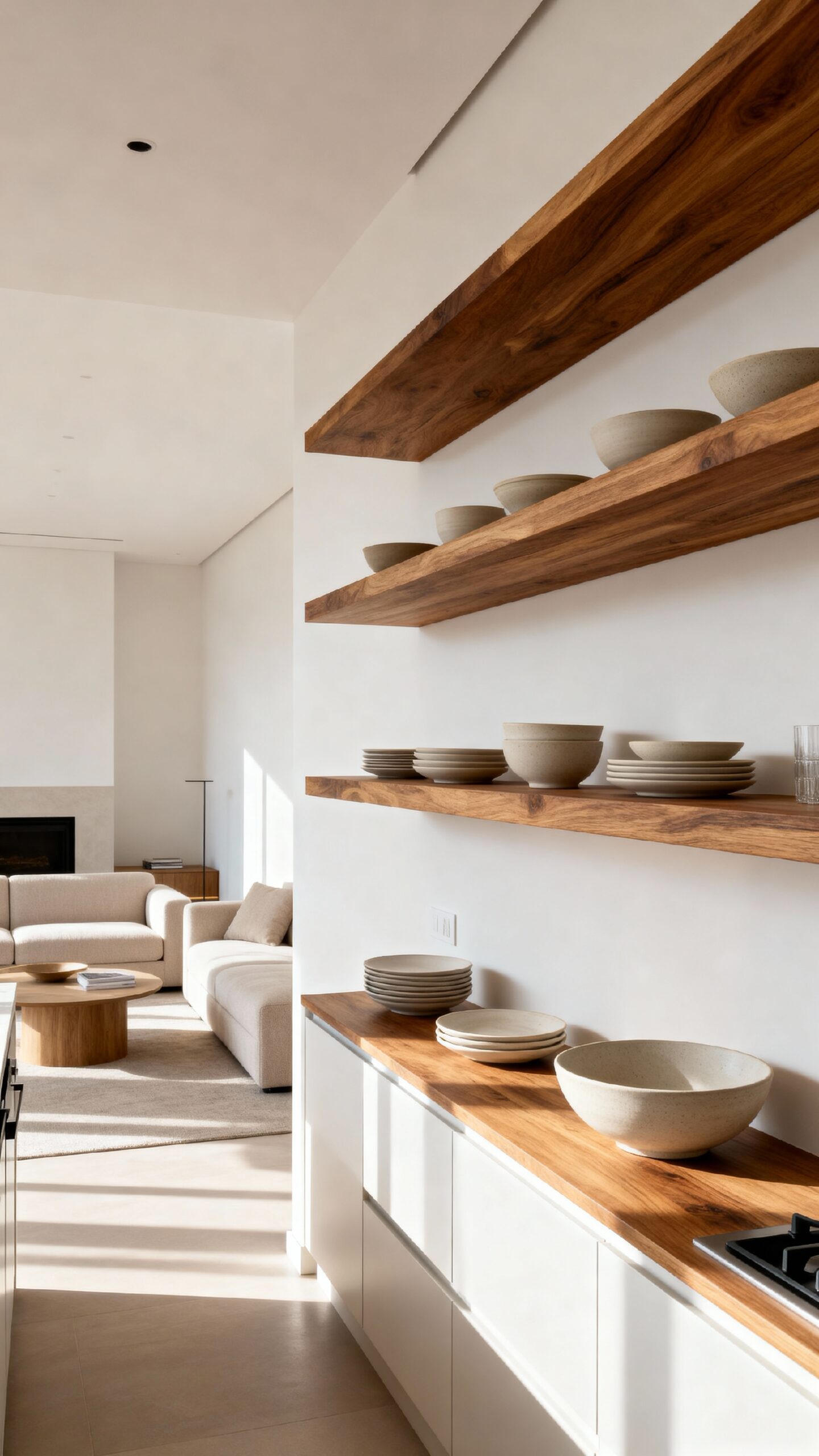
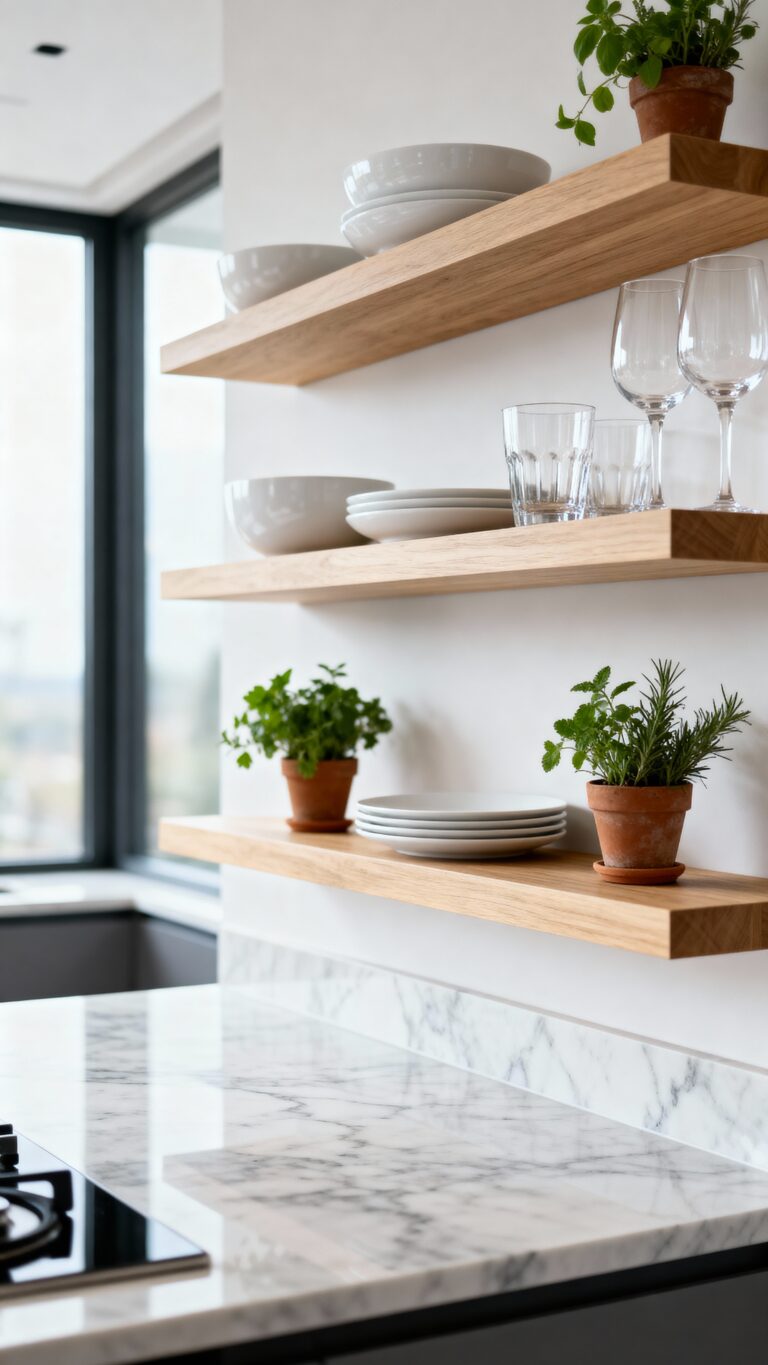
Open shelving replaces traditional upper cabinets to create unobstructed views between your kitchen and living areas while maintaining essential storage functionality. You’ll achieve open sightlines that make both spaces feel larger and more connected.
Install floating shelves at strategic heights to display dishes, glassware, and decorative items without blocking visual flow. This approach maximizes visibility throughout your home’s main gathering spaces.
Choose materials like reclaimed wood or sleek metal that complement your design aesthetic. Keep displays organized and curated to maintain the clean, airy feel that makes open-concept living so appealing and liberating.
[affiai keyword=”floating shelves kitchen open concept” template=”carousel” count=”3″]
Bar Seating for Casual Dining Integration
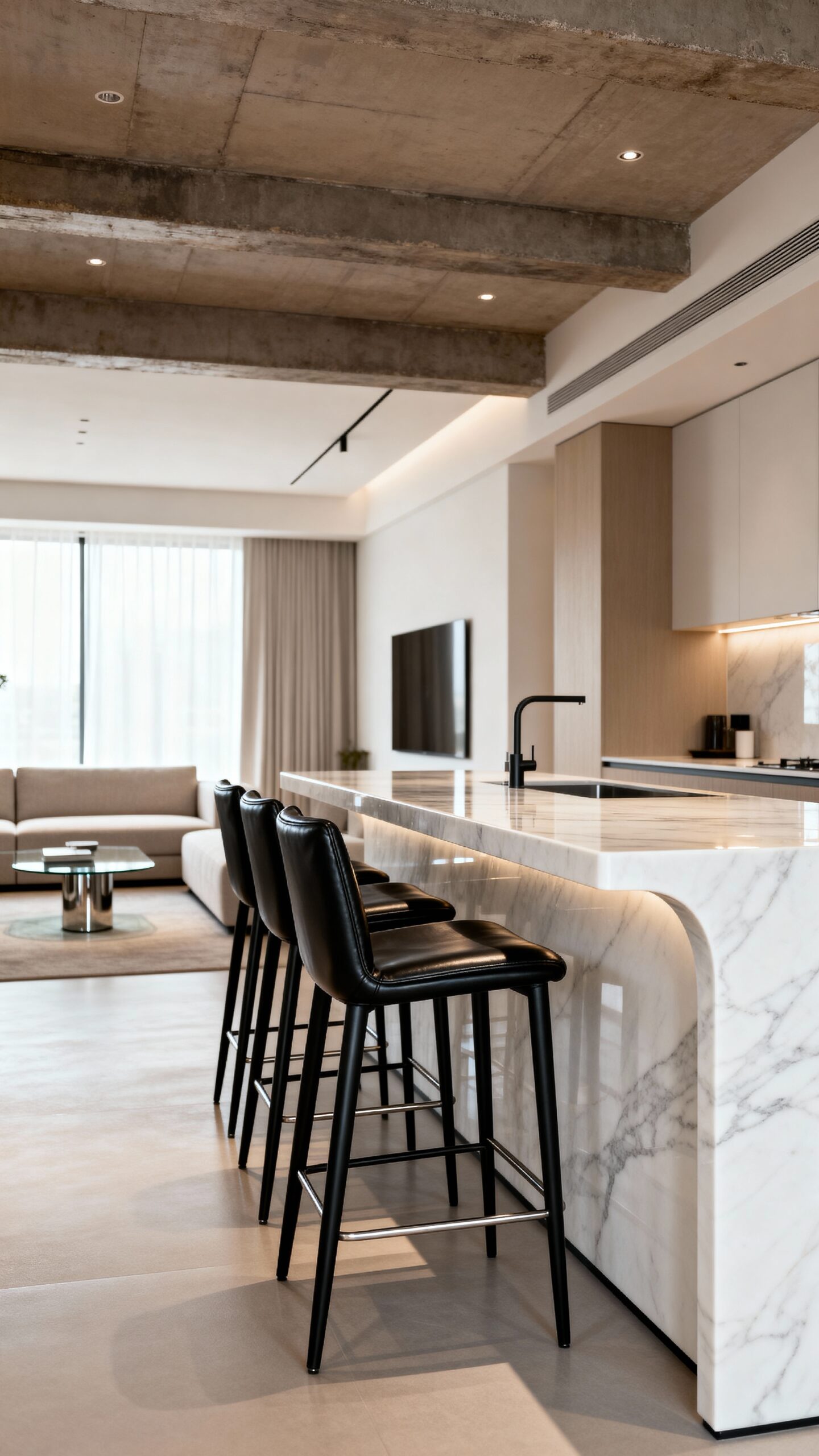
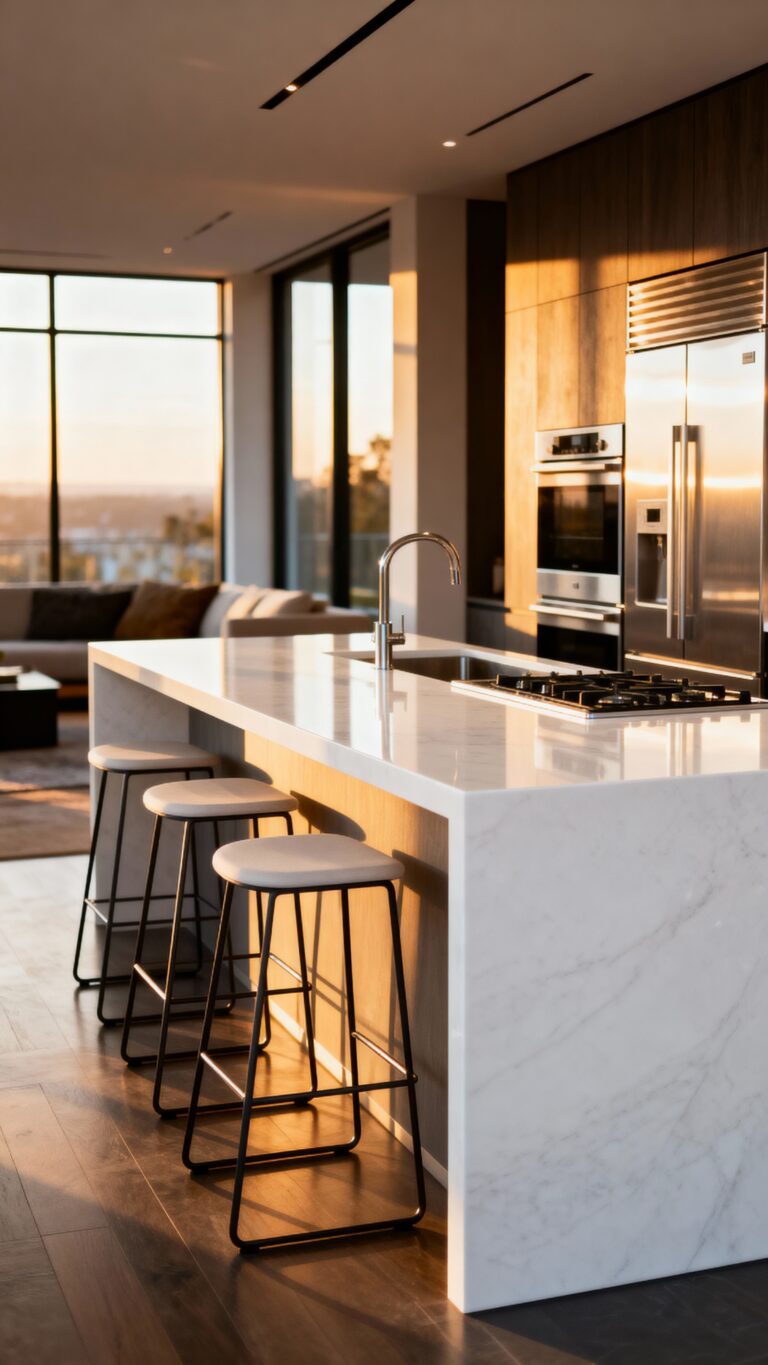
Bar seating bridges the gap between your kitchen workspace and living area, creating a natural gathering spot that encourages conversation and connection. You’ll find that comfortable bar stools alter your kitchen island or peninsula into a social hub where family and friends naturally congregate.
Choose versatile counter seating that complements both spaces while serving multiple functions. Swivel stools allow easy conversation flow between kitchen and living room. Consider backless options to maintain visual openness, or select low-back designs that won’t obstruct sight lines. Position seating strategically so guests can interact with the cook while staying connected to living room activities.
[affiai keyword=”kitchen island bar stools swivel counter height” template=”carousel” count=”3″]
Statement Lighting to Define Zones
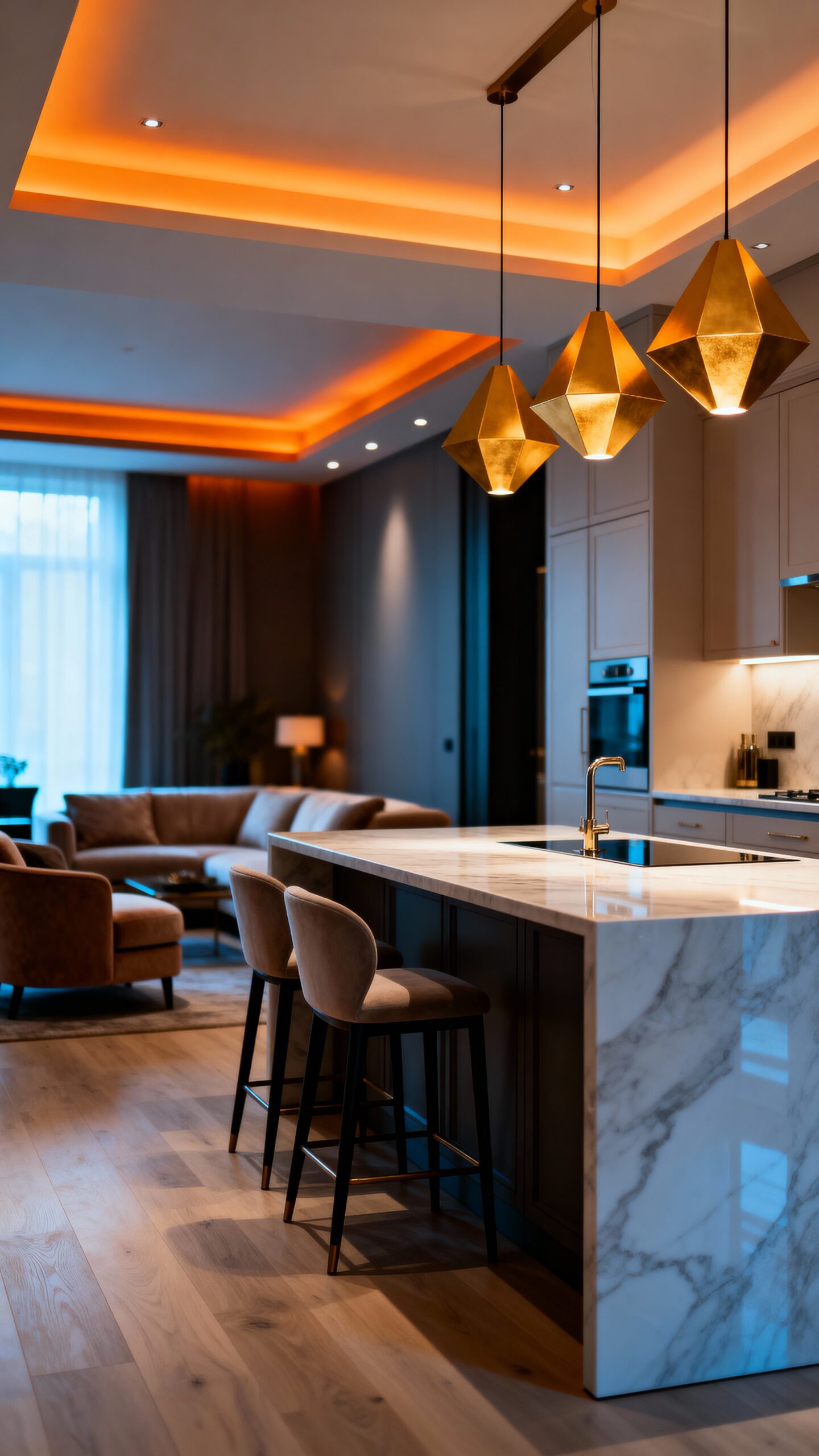
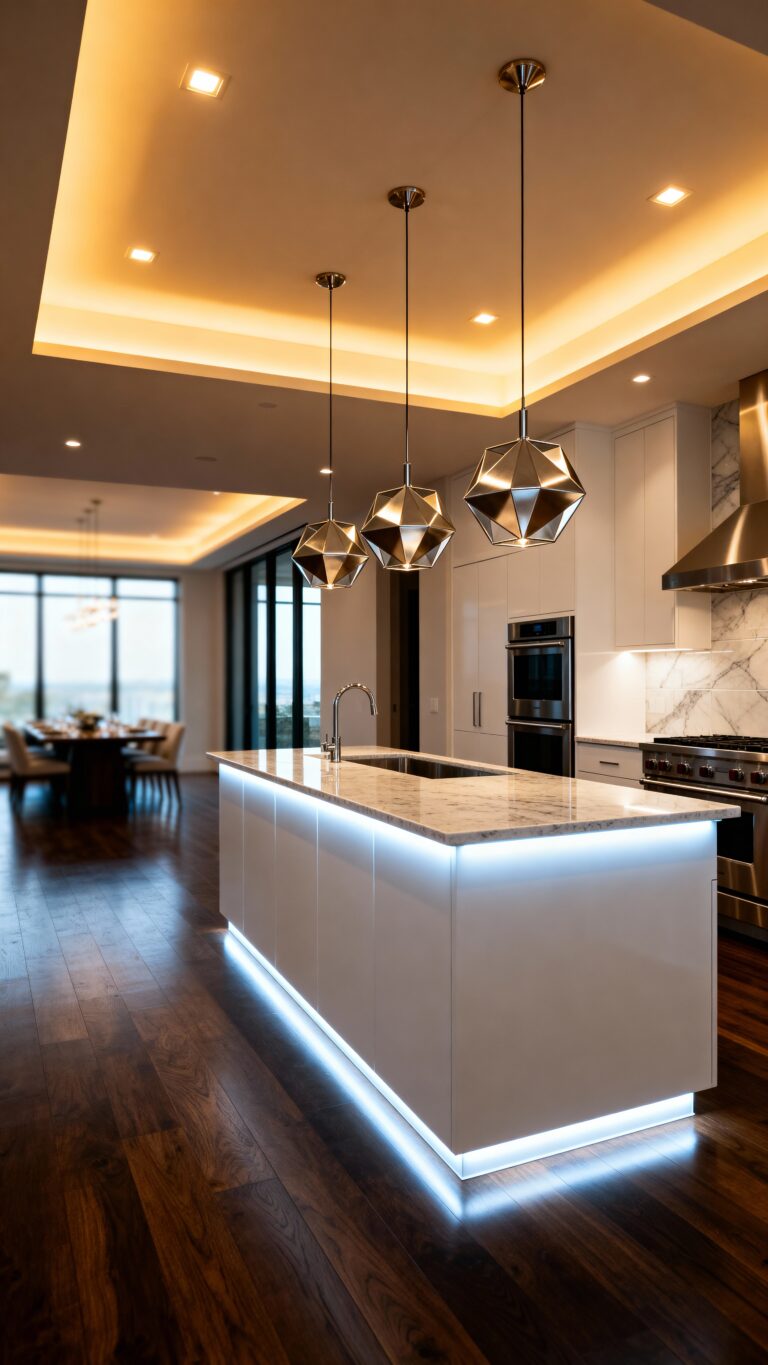
Strategic lighting placement creates distinct zones within your open kitchen-living room layout while maintaining the unified flow between spaces. Pendant lighting over your kitchen island establishes a clear cooking and prep boundary while adding visual interest. You’ll want to hang fixtures 30-36 inches above countertops for ideal task illumination.
Recessed lighting throughout the ceiling provides ambient brightness without competing with your decorative fixtures. Install dimmers on all circuits so you can adjust brightness levels for different activities.
Consider oversized chandeliers or sculptural fixtures above dining areas to anchor conversation spaces and create intimate gathering spots within your expansive open floor plan.
[affiai keyword=”pendant lighting kitchen island fixtures” template=”carousel” count=”3″]
Built-In Banquette Seating Solutions
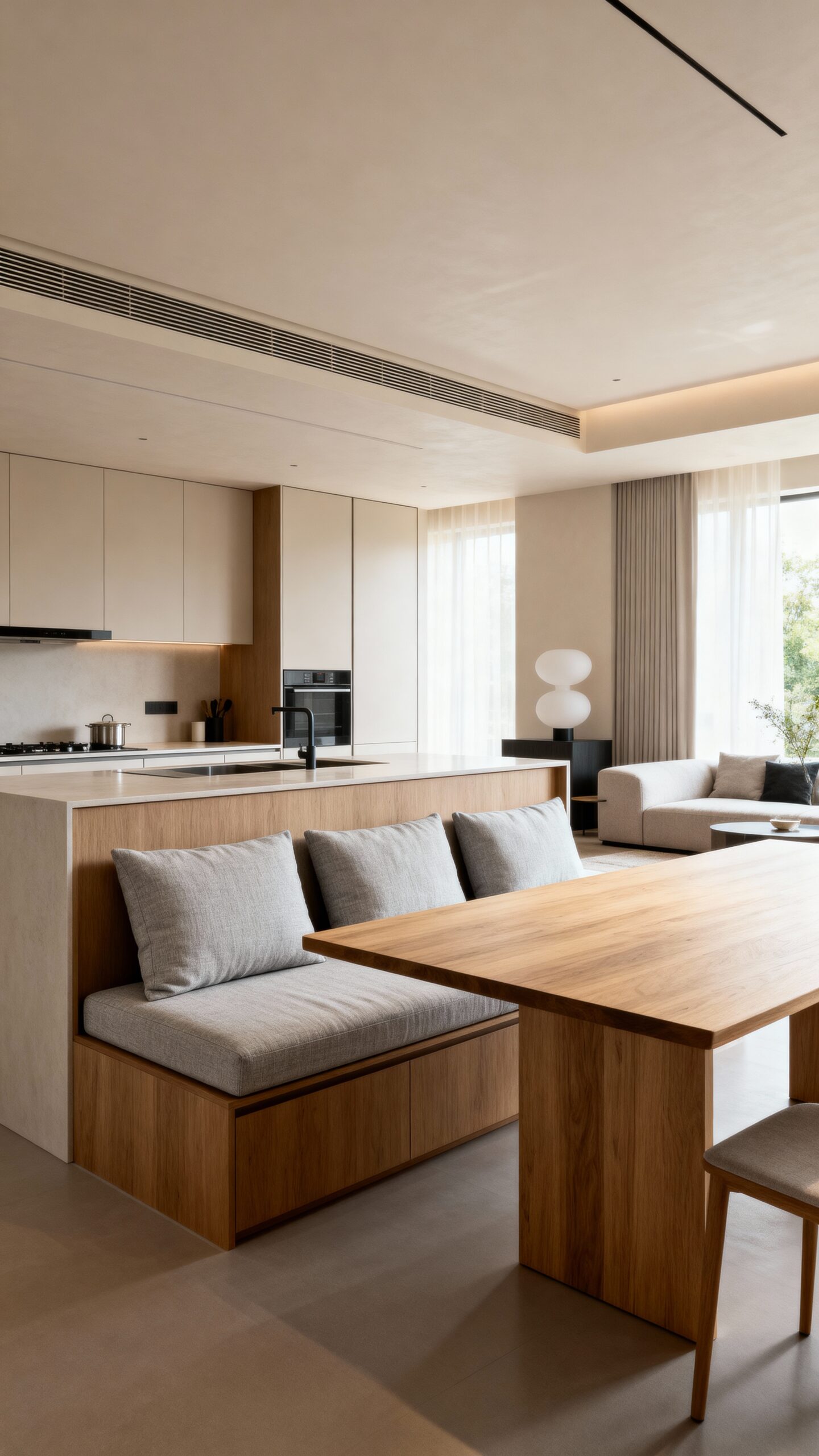
When you’re working with limited square footage, built-in banquette seating maximizes your open kitchen-living room space while creating cozy dining areas that feel intentionally designed. You’ll enhance awkward corners into functional breakfast nooks that don’t compromise your floor plan’s flow.
Custom built in cabinetry beneath your seating adds precious storage for linens, dishes, or seasonal items you don’t use daily. Raised banquette seating creates visual separation between your kitchen and living areas without blocking sightlines. You can customize cushions and fabrics to match your décor while maintaining the streamlined look that makes open-concept spaces feel cohesive and purposeful.
[affiai keyword=”built in banquette seating with storage” template=”carousel” count=”3″]
Multi-Level Countertops for Functionality
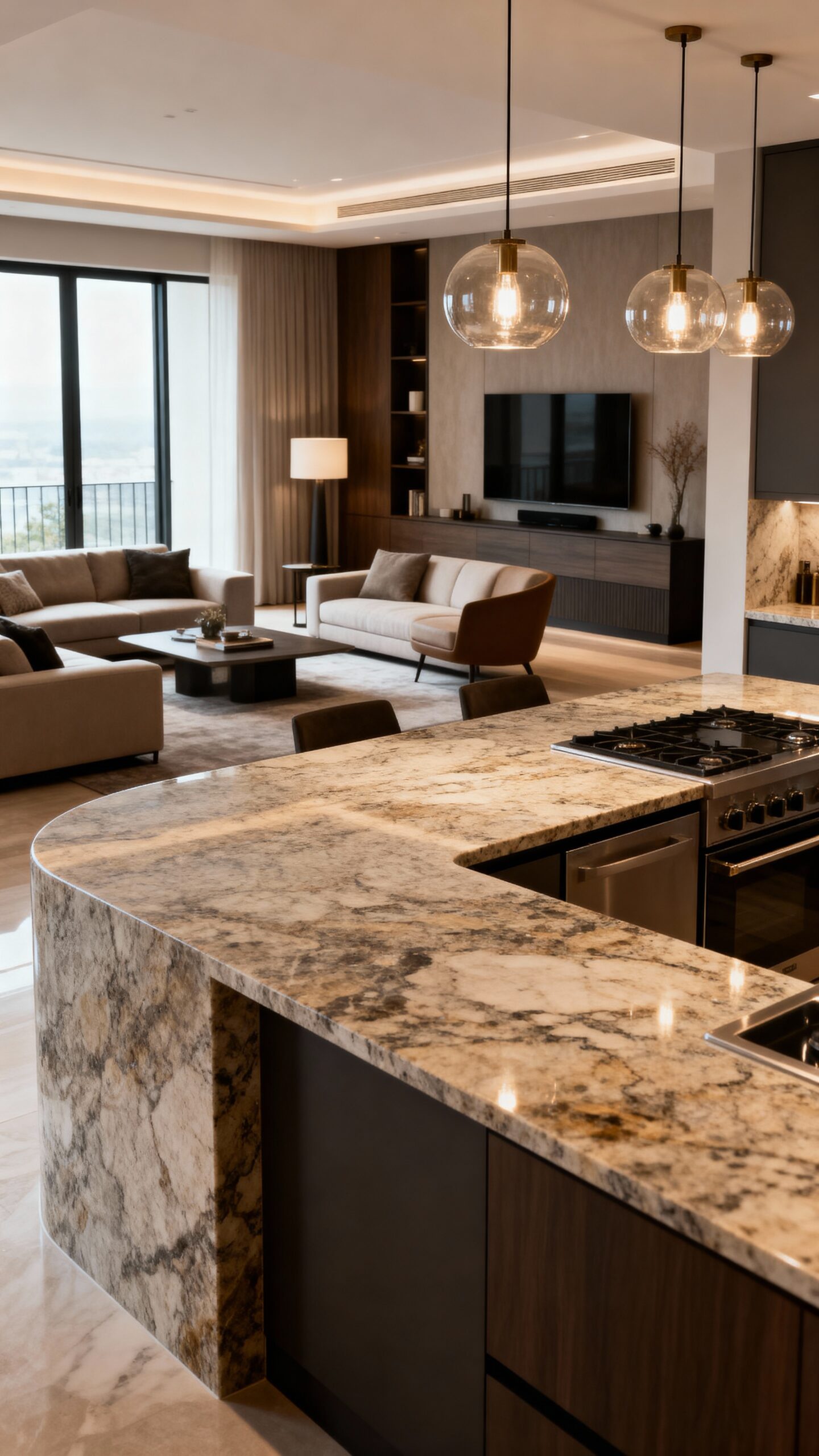
Multi-level countertops convert your open kitchen into a highly functional workspace that seamlessly integrates with your living area while serving multiple purposes throughout your day.
Tiered countertops create distinct zones for different activities—you’ll prepare meals on the lower level while guests enjoy drinks at the raised workspace areas. This design maximizes your freedom to multitask efficiently, allowing simultaneous cooking and socializing.
Install bar-height sections for casual dining and standard-height areas for food prep. You’ll appreciate how these varying heights naturally separate messy cooking tasks from clean entertainment spaces, maintaining an organized flow between your kitchen and living room.
[affiai keyword=”multi level tiered kitchen countertops” template=”carousel” count=”3″]
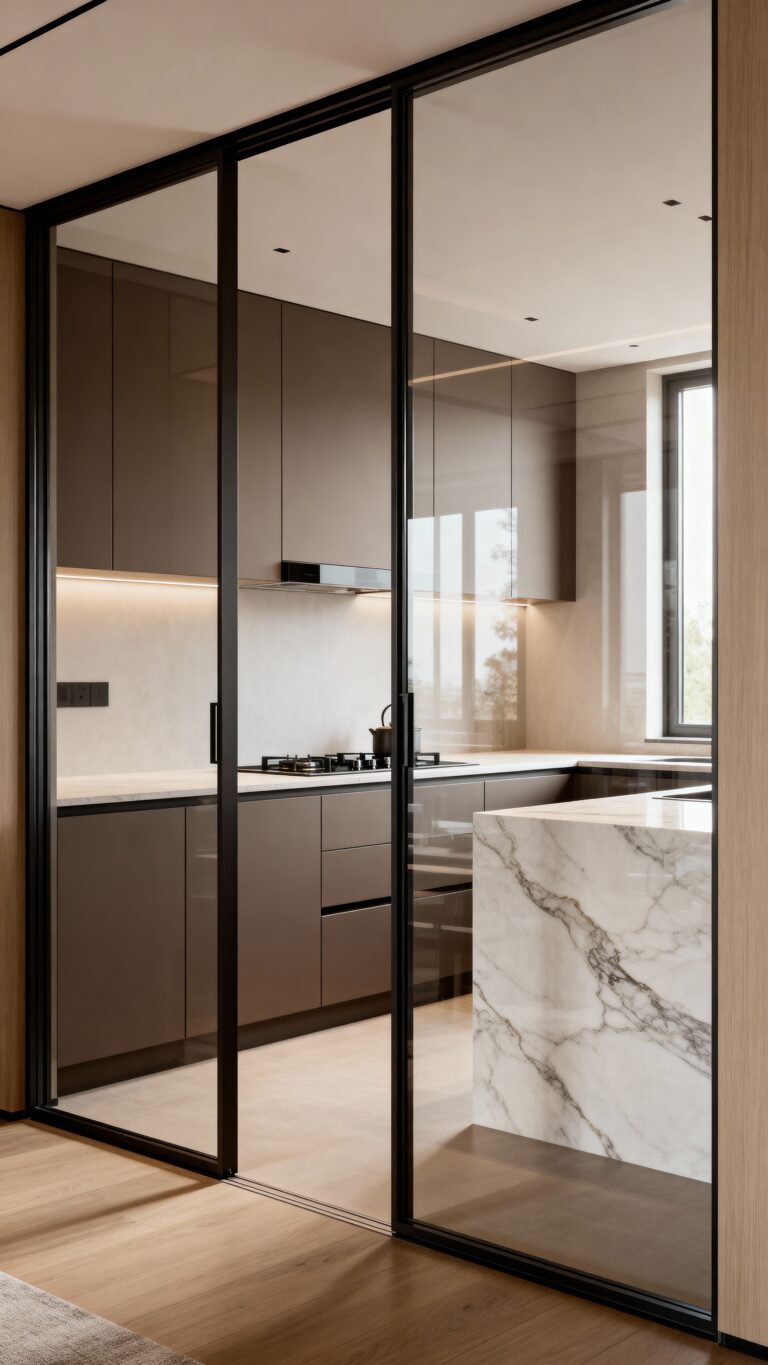
Glass Partition Walls for Subtle Separation
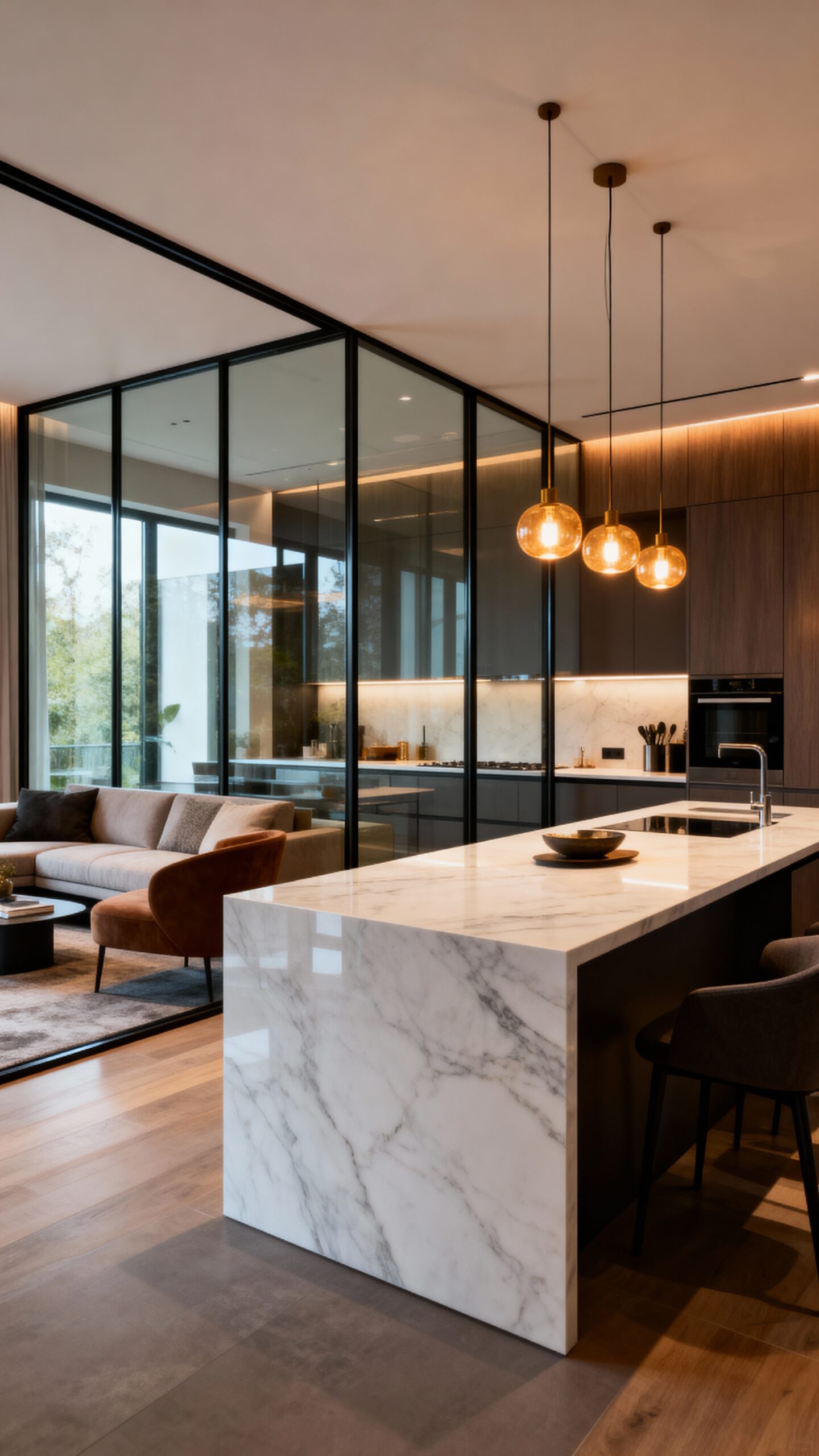
Glass partition walls offer a sophisticated solution for maintaining visual connection between your kitchen and living room while addressing practical concerns like cooking odors and noise control. You’ll appreciate how these transparent barriers create defined spaces without sacrificing your home’s open feel.
Consider installing sliding glass doors that glide smoothly along ceiling tracks, allowing you to close off your kitchen during meal preparation and open it completely for entertaining. Movable room dividers with frosted or clear glass panels provide ultimate flexibility, letting you reconfigure your space based on daily needs while preserving natural light flow throughout both areas.
[affiai keyword=”glass partition walls room dividers” template=”carousel” count=”3″]
Coordinated Design Elements Across Spaces
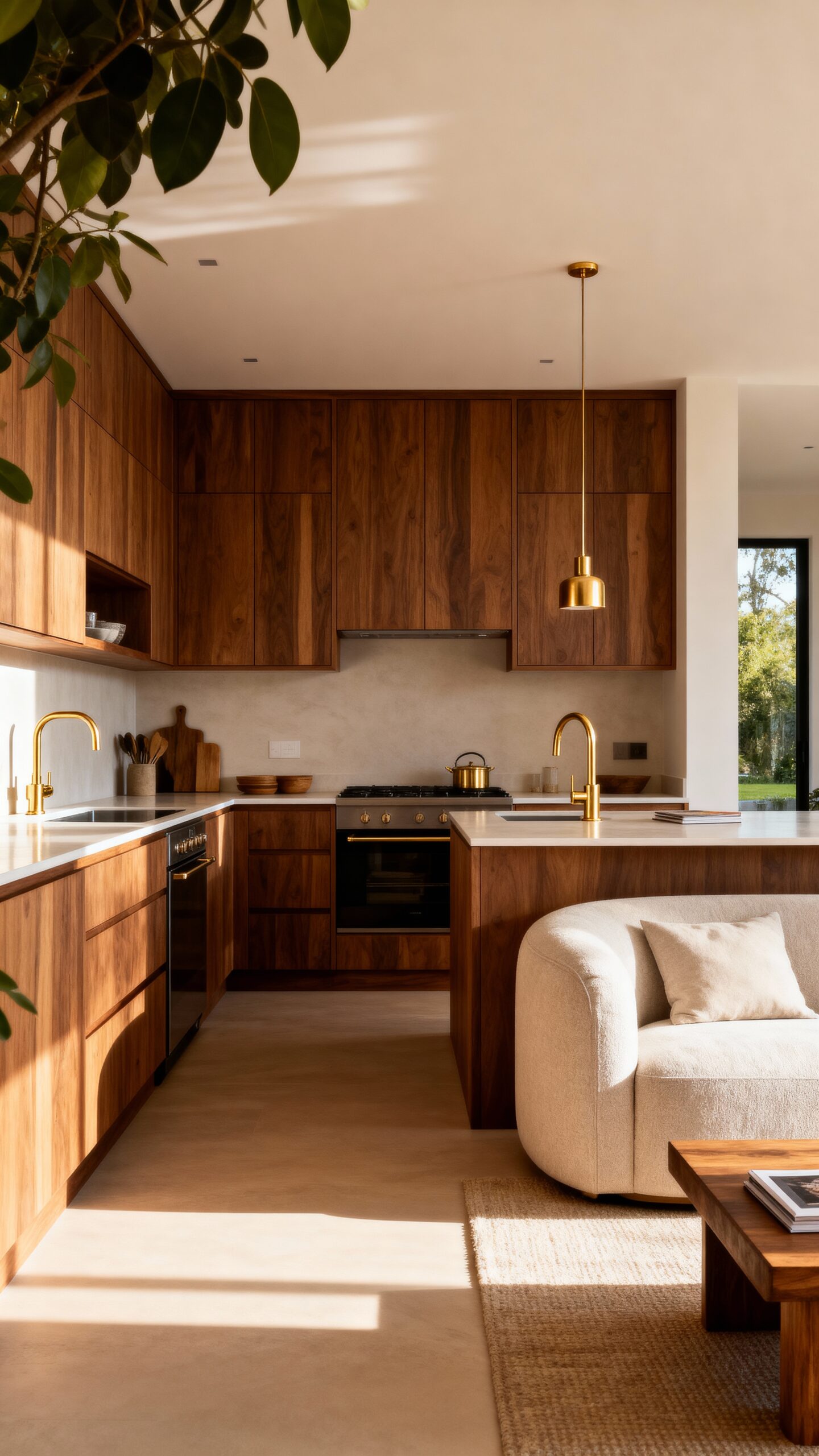
Cohesion creates the magic that converts separate kitchen and living areas into one harmonious, well-designed space. You’ll achieve this unity through balanced material textures that flow seamlessly between zones. Consider matching wood tones in your kitchen island and coffee table, or echoing stone countertops in your fireplace surround.
Thoughtful furniture placement reinforces this connection by creating natural sight lines and conversation areas. Position your sofa to face the kitchen, allowing easy interaction during meal prep. Choose complementary color palettes, repeating accent hues in both spaces through artwork, cushions, and decorative accessories for visual continuity.
[affiai keyword=”coordinated home decor kitchen living room design” template=”carousel” count=”3″]
Conclusion
You’ll modify your home into a connected, functional space by implementing these open kitchen strategies. Choose designs that match your lifestyle needs, whether it’s a multifunctional island or seamless L-shaped layout. Remember that consistent colors, flooring, and lighting create visual unity between spaces. Start with one element like coordinated design materials, then gradually add features that enhance both cooking efficiency and social interaction throughout your living areas.