11 Very Small Bedroom Ideas for Kids That Work
Maximize your child’s tiny bedroom with these 11 genius space-saving ideas that transform cramped quarters into organized, functional havens.
You’re facing the challenge of designing a functional kids’ bedroom in a cramped space, but don’t let square footage limitations discourage you. Smart storage solutions, vertical thinking, and multi-functional furniture can alter even the tiniest room into an organized, comfortable haven for your child. These fourteen proven strategies will show you how to maximize every inch while creating a space that grows with your family’s needs and keeps clutter at bay.
Install Floating Shelves Instead of Bulky Bookcases
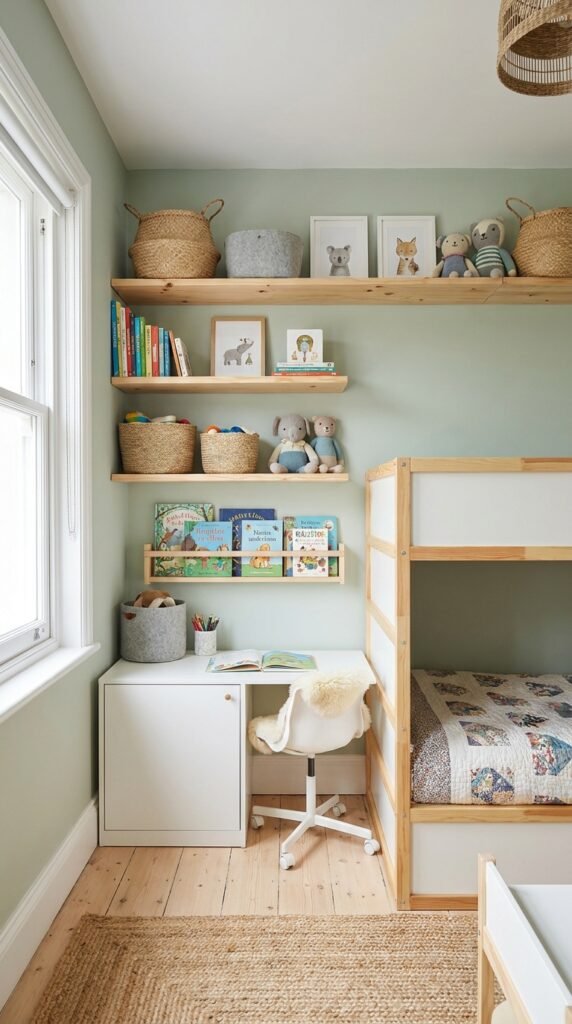
Floating shelves revolutionize small bedroom storage by providing essential book and display space without consuming precious floor area that bulky bookcases typically monopolize. You’ll maximize vertical wall space while maintaining the room’s open feel, giving your child freedom to move and play comfortably.
Wall mounted shelving creates clean lines that make rooms appear larger than traditional furniture pieces. Install multiple shelves at varying heights to accommodate different book sizes and decorative items your child treasures. You can position them above space saving desks to create efficient study zones without cramming furniture together.
Choose lightweight materials like pine or engineered wood that won’t strain wall anchors. Mount shelves securely into wall studs for safety, especially when children might climb or pull on them during play. These versatile shelves also function as display spaces for toys, combining storage and decoration in one efficient solution.
Select Multi-Purpose Furniture That Does Double Duty
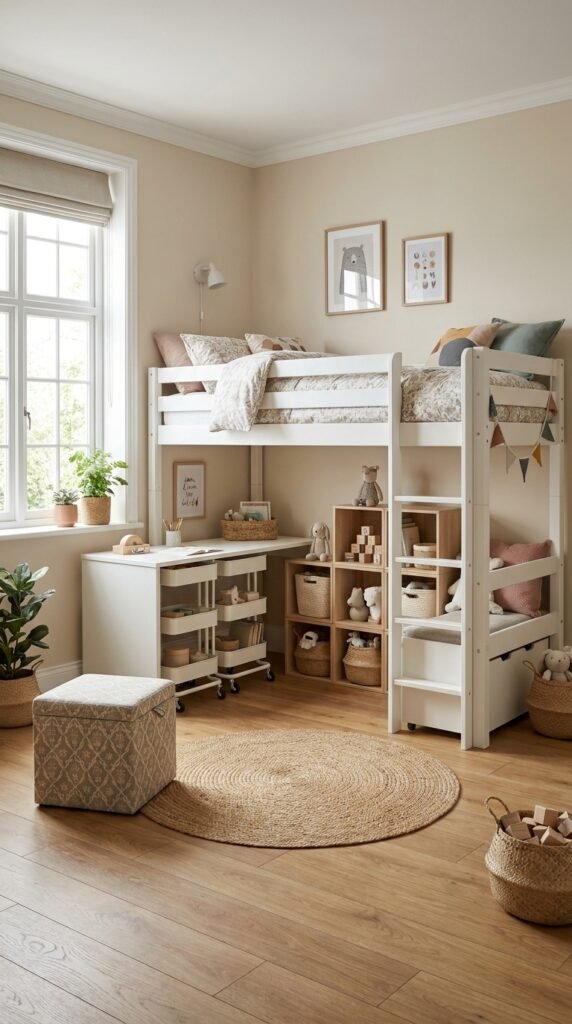
When square footage becomes precious, multi-purpose furniture alters cramped kids’ bedrooms into functional spaces that serve multiple needs simultaneously. You’ll maximize every inch by choosing pieces that work overtime in your child’s room.
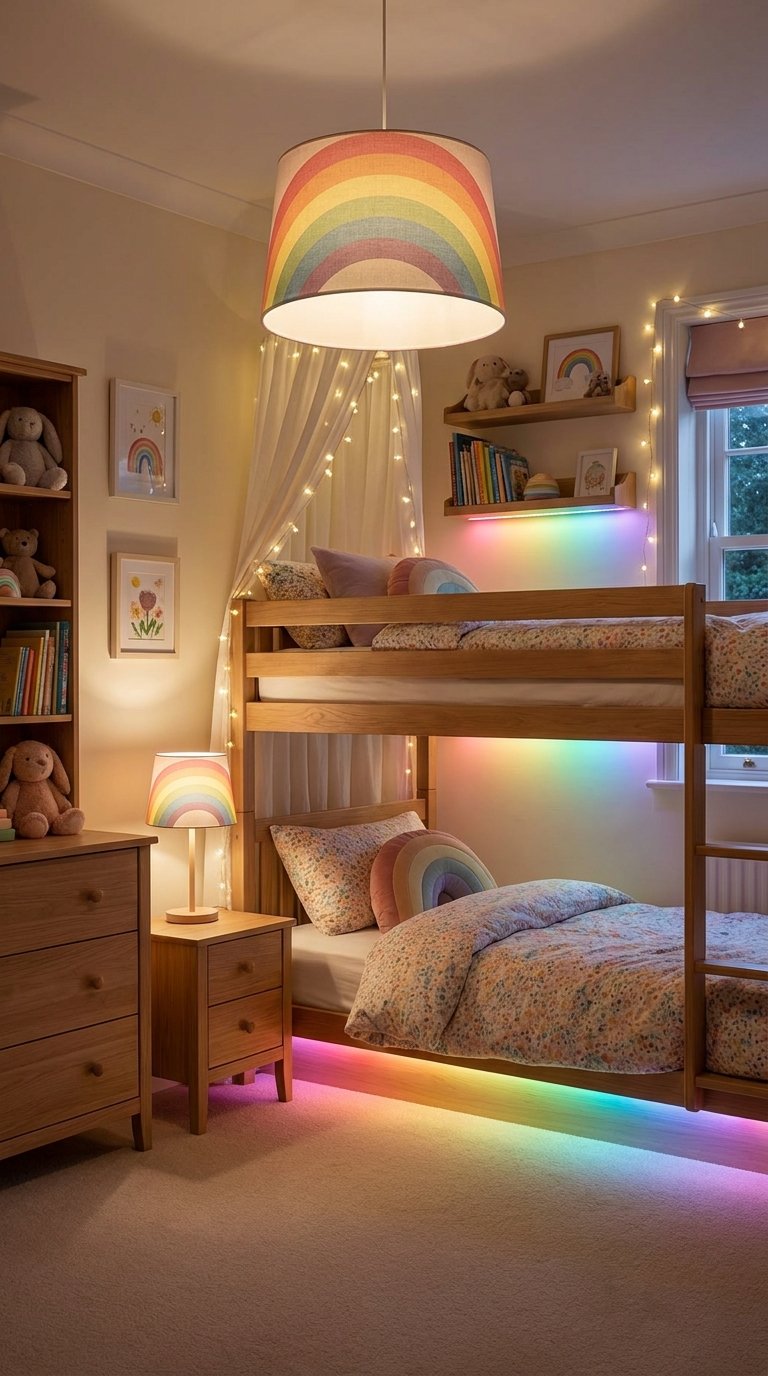
Storage ottomans provide seating while hiding toys, books, and games inside their compartments. Loft beds create instant floor space underneath for desks, play areas, or additional storage solutions. You can employ modular furniture systems that adapt as your child grows, rearranging components to meet changing needs.
Incorporate multifunctional pieces like daybeds that serve as couches during play time and comfortable sleeping spaces at night. Rolling carts work as nightstands, craft stations, or homework organizers depending on daily requirements. These smart furniture choices convert limitations into opportunities for creative room design.
Implementing effective storage hacks alongside your multi-purpose furniture selections will further enhance your small space organization strategy and help maintain a clutter-free environment.
Create a Cozy Reading Nook in Unused Corners
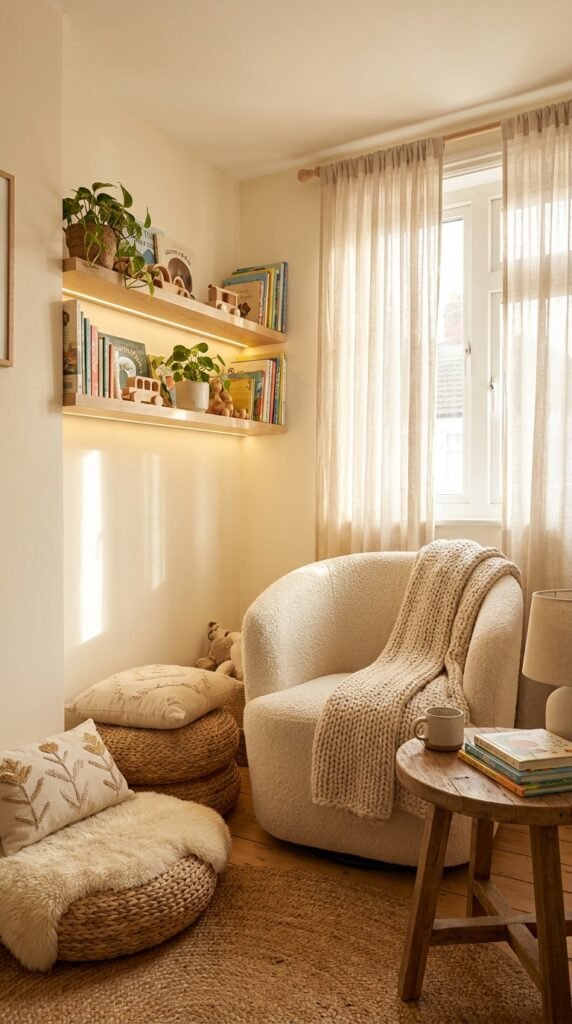
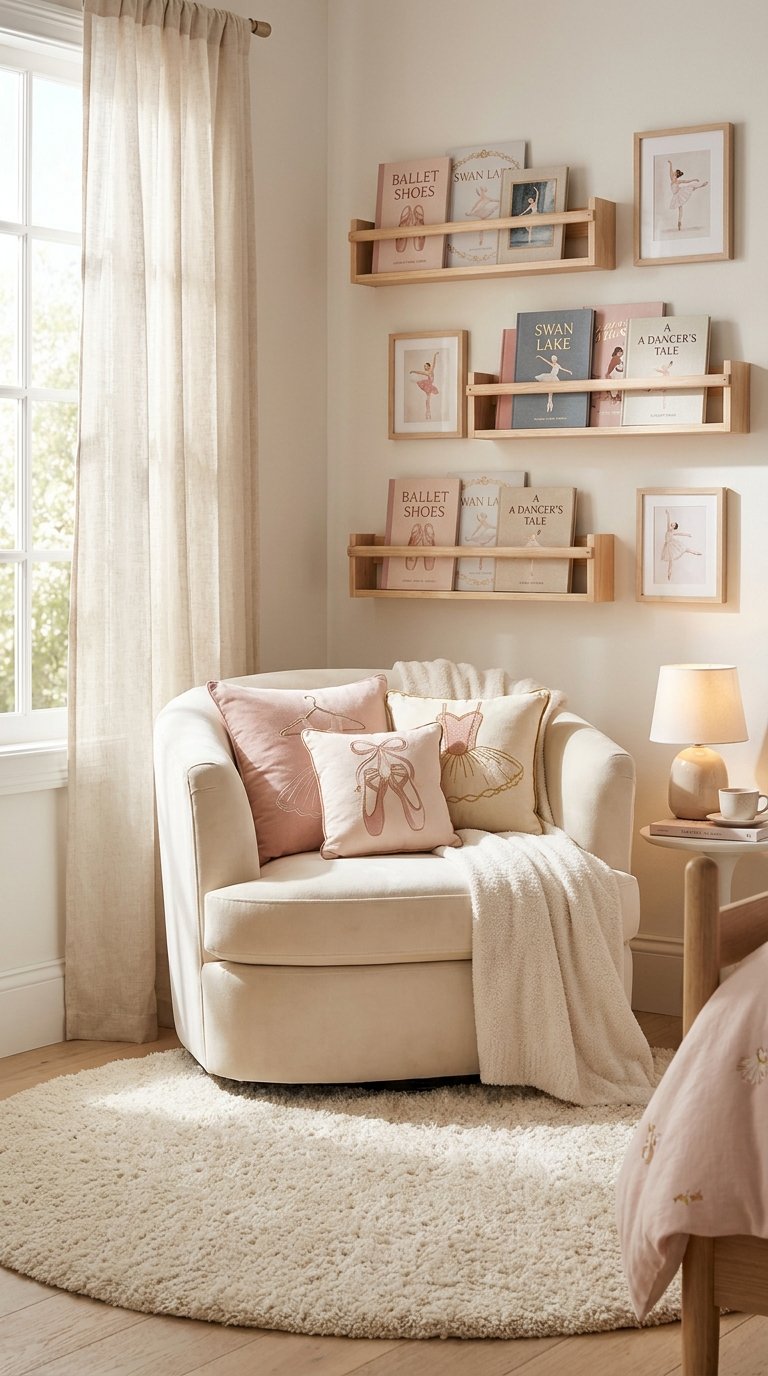
Corners often represent untapped potential in small bedrooms, offering perfect spots to establish intimate reading spaces that encourage your child’s love for books. Cultivate these overlooked areas by positioning a small cozy reading chair alongside built-in corner shelving or floating book displays.
Consider natural lighting placement when designing your nook—corners near windows provide excellent illumination for daytime reading sessions. Add battery-operated LED strip lights underneath shelves for evening stories without overwhelming the room’s electrical system.
Enhance comfort with washable floor cushions, soft throw blankets, and a small side table for drinks or bookmarks. Wall-mounted reading lights save precious floor space while providing focused illumination. This dedicated literary retreat gives your child ownership over their special corner, promoting independence and creating positive associations with reading time.
Hang Organizers on the Back of the Door
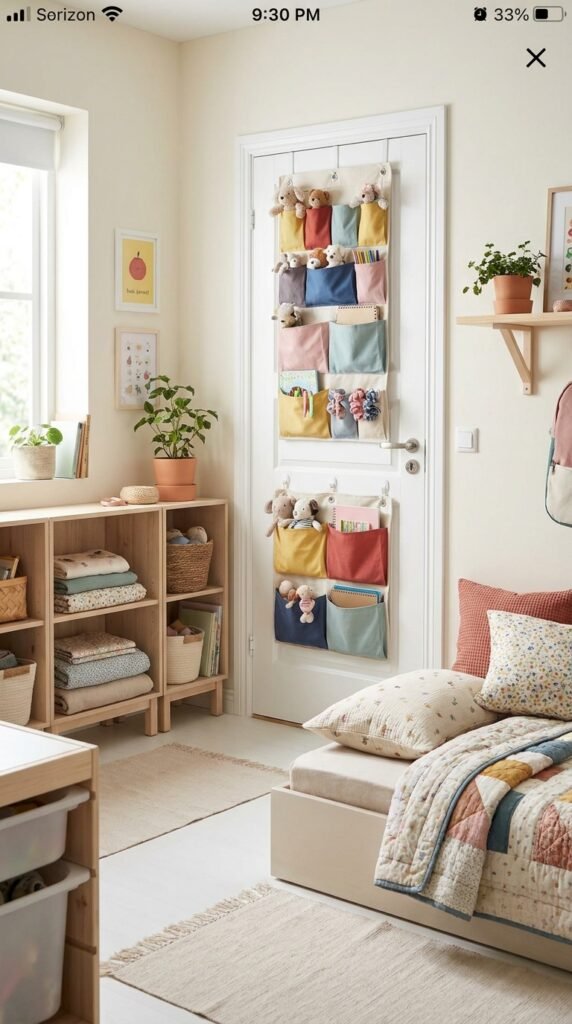
Why overlook one of your room’s most precious vertical storage opportunities when the back of your bedroom door offers instant organization potential? You’ll convert this forgotten space into a functional storage powerhouse that keeps essentials within easy reach.
Over the door pockets work perfectly for storing shoes, toys, school supplies, and accessories without requiring any permanent installation. Choose clear plastic versions so your child can quickly identify contents, or select colorful fabric options that match the room’s decor.
Wall mounted organizers provide additional flexibility when you want something more permanent. Install hooks, small shelves, or mesh organizers directly onto the door’s surface. These solutions maximize every square inch while maintaining your room’s open feel and functionality.
Choose Light Colors to Make the Room Feel Larger
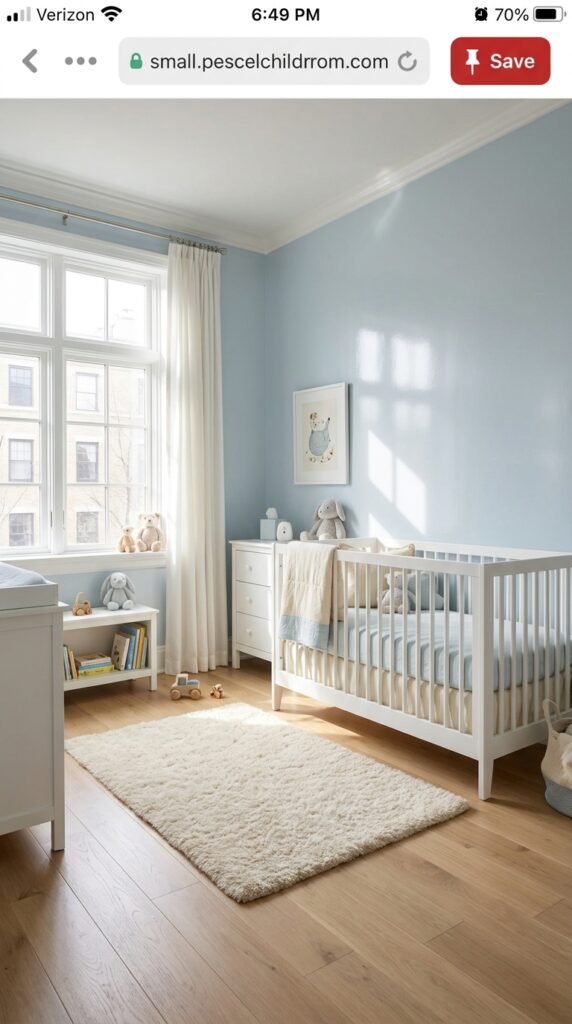
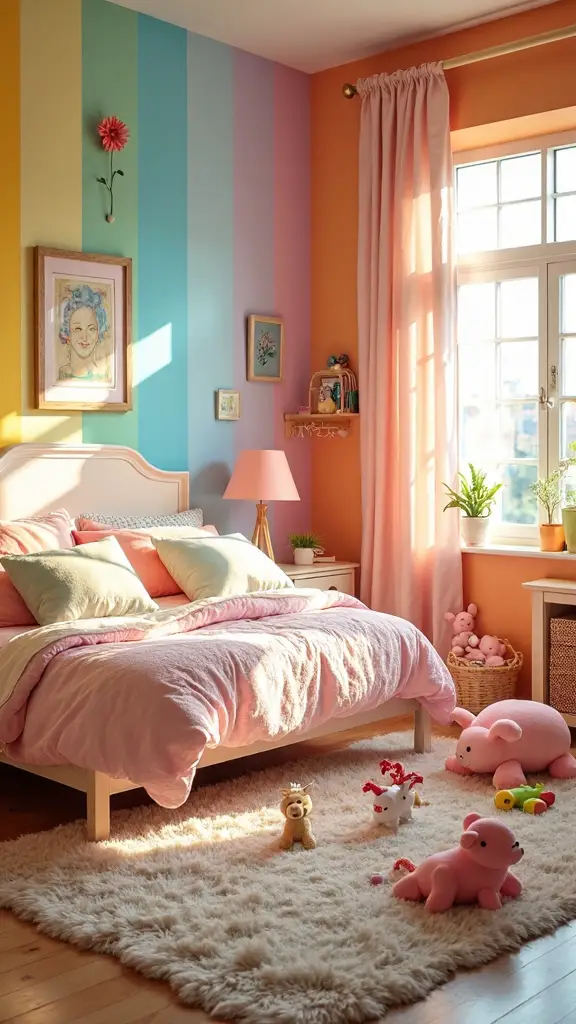
Light colors possess an almost magical ability to alter your cramped child’s bedroom into a space that feels markedly more open and airy. When you use calming pastel shades like soft blues, gentle greens, or warm creams on walls, you’ll instantly create visual breathing room that darker colors simply can’t provide.
You’ll maximize this effect when you incorporate light reflecting surfaces throughout the room. Choose glossy or semi-gloss paint finishes that bounce natural light around the space. Add mirrors strategically near windows to amplify sunlight and create depth illusions. Select furniture in white or light wood tones to maintain the expansive feeling.
Consider painting the ceiling a shade lighter than your walls to draw the eye upward, making the room feel taller and more spacious than its actual dimensions.
Use Mirrors to Reflect Light and Create Depth
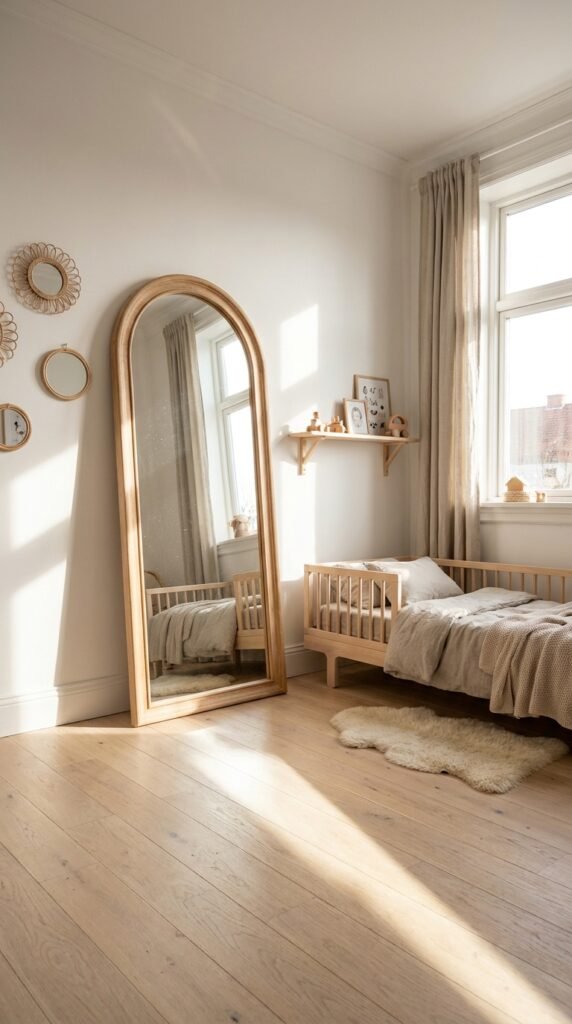
Several carefully positioned mirrors can alter your child’s tiny bedroom by doubling the visual impact of available light and creating convincing illusions of expanded space. You’ll observe that a large mirror placed opposite a window reflects natural daylight throughout the room, instantly brightening dark corners.
Utilize reflective surfaces beyond traditional wall mirrors by incorporating mirrored closet doors, decorative mirror tiles, or even metallic picture frames. These elements bounce light in multiple directions, making cramped quarters feel surprisingly spacious.
Position mirrors to reflect your strategically placed lighting fixtures, amplifying their effectiveness after sunset. A mirror behind a bedside lamp creates ambient lighting that feels warm and welcoming. You can also place smaller mirrors near play areas to reflect overhead lighting, ensuring your child has adequate illumination for activities while maintaining the room’s open, airy atmosphere.
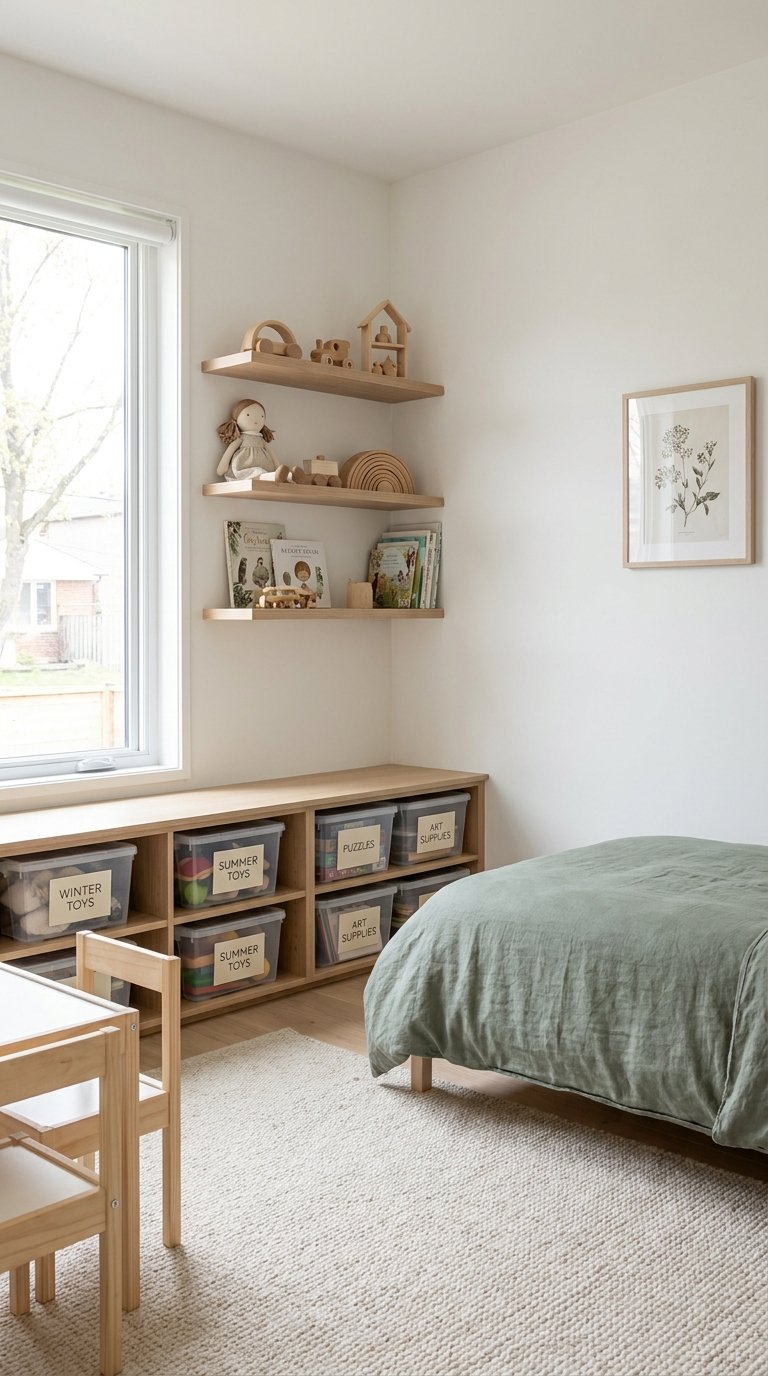
Install Built-In Storage Benches Along Walls
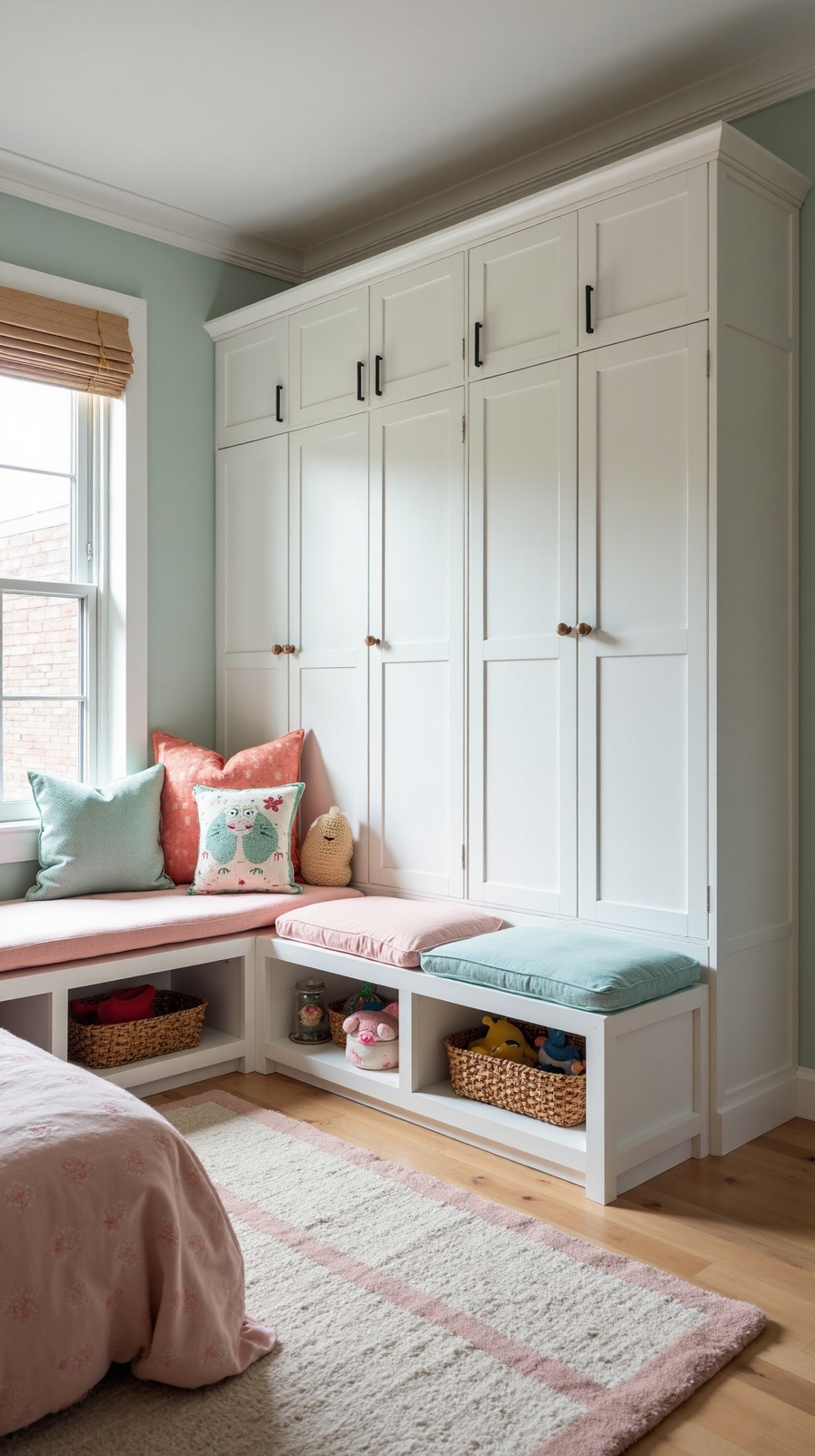
When you convert wall space into functional seating and storage, built-in benches become powerful space-saving solutions that work double-duty in cramped bedrooms. You’ll maximize every inch while creating comfortable spots for reading, playing, or putting on shoes.
Design your bench with lift-up seats that reveal hidden compartments for toys, clothes, or seasonal items. Position it beneath windows to create a cozy reading nook, or install it along any available wall space. You can integrate built in bookshelves above the bench to store favorite stories and school supplies within easy reach.
Consider custom cabinetry that matches your child’s specific needs and room dimensions. Add colorful cushions and throw pillows to make the space inviting. This solution eliminates the need for separate chairs while providing essential storage that keeps clutter off the floor.
Consider a Murphy Bed or Daybed With Storage
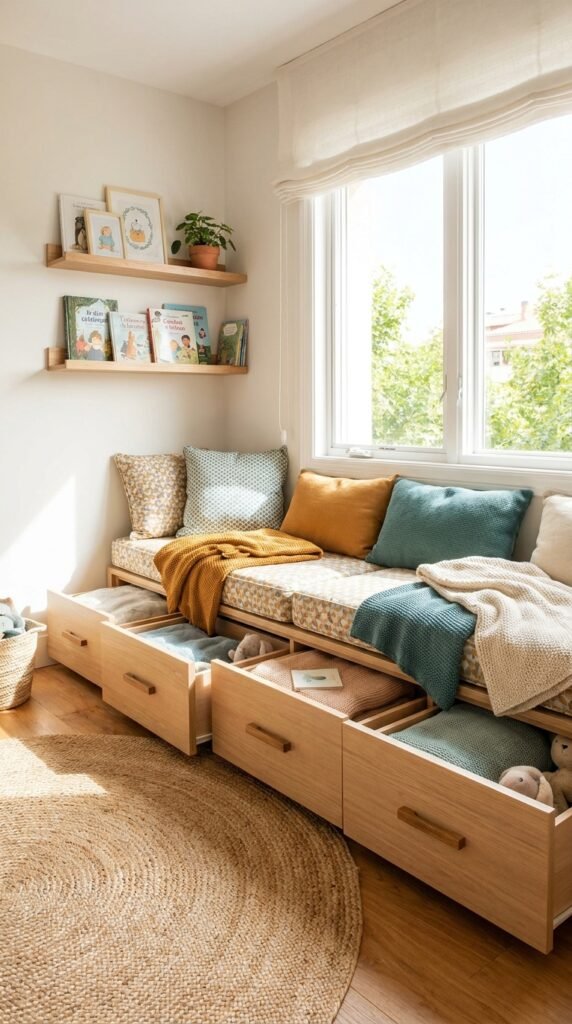
Since floor space is at such a premium in tiny bedrooms, adaptable furniture like Murphy beds and storage daybeds can instantly reclaim precious square footage during daytime hours. Space saving murphy beds fold completely into the wall, converting your child’s bedroom into a spacious play area by day. You’ll find modern versions that incorporate desks or shelving units, maximizing every vertical inch available.
Dual purpose daybeds with storage offer another brilliant solution for small spaces. These versatile pieces function as seating during the day and comfortable beds at night. Look for models with built-in drawers underneath or lift-up mattress platforms that reveal hidden compartments. You can store toys, clothes, or bedding inside while maintaining a clean, uncluttered appearance that gives your child room to breathe and play freely.
Use the Space Under Stairs for Play Areas
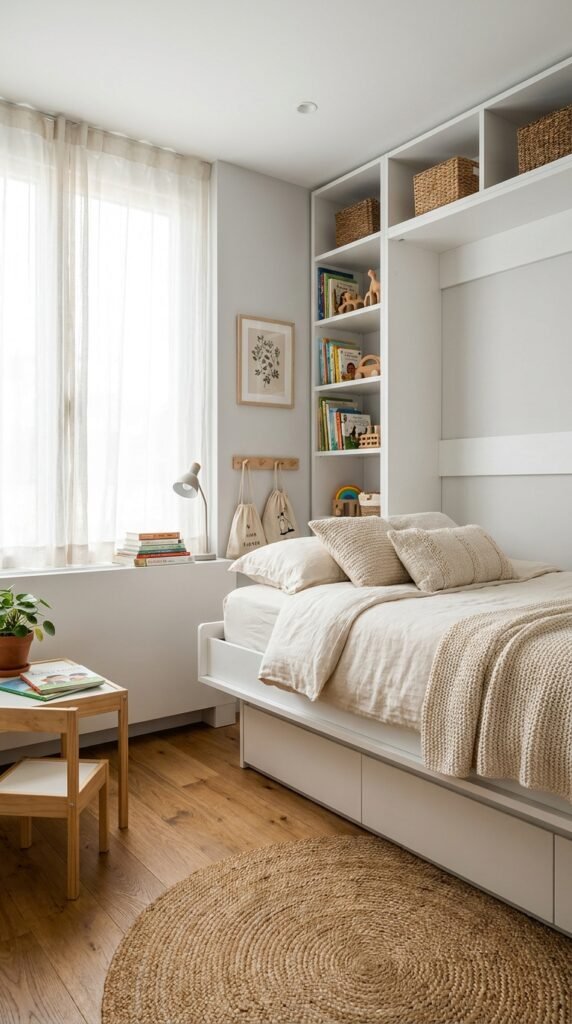
Beyond traditional furniture solutions, you can redesign overlooked structural elements into functional play zones that don’t compete for bedroom floor space. Alter the area beneath your staircase into an under stair play nook that serves multiple purposes while maximizing every square foot available.
Install cushioned seating along the angled walls to create a cozy built in reading nook where your child can escape with favorite books. Add battery-operated LED strip lights for proper illumination without electrical complications. Consider removable storage bins that slide easily under the lowest section for toys and art supplies.
Paint the space in bright, cheerful colors to make it feel welcoming rather than cramped. You’ll create an imaginative hideaway that encourages independent play while freeing up precious bedroom space for essential furniture.
Choose Compact Desks That Fold Away When Not Needed
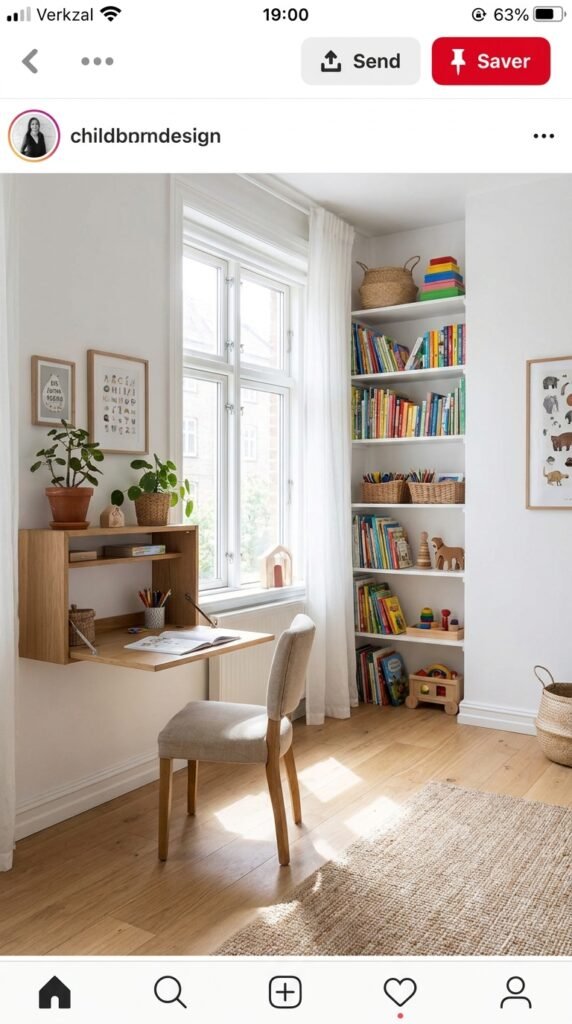
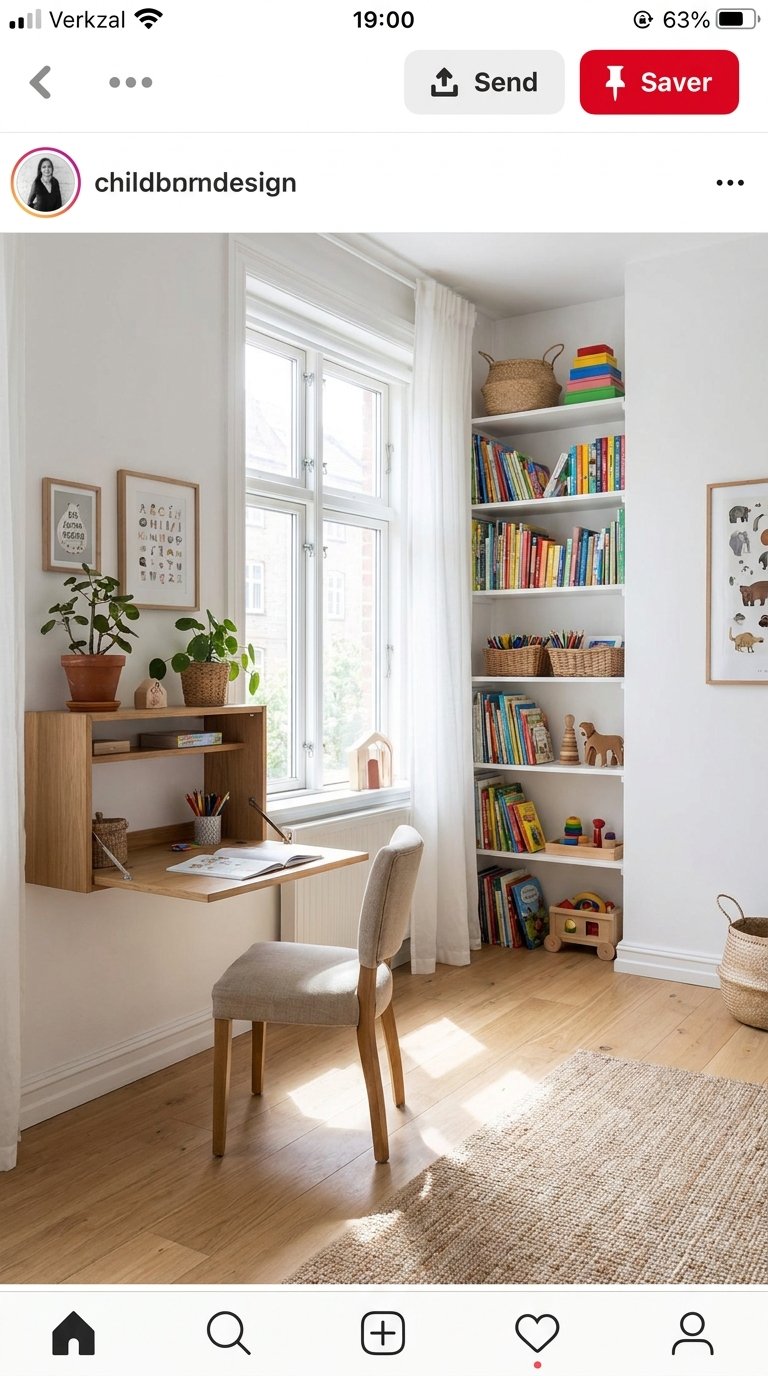
As your child grows and homework becomes a daily necessity, a dedicated workspace becomes essential without sacrificing precious floor space in an already cramped bedroom. Compact folding desks offer the perfect solution, converting from functional workstations into slim storage pieces within seconds.
Wall-mounted options provide maximum floor clearance while providing sturdy writing surfaces. You’ll find models that fold completely flat against the wall, appearing more like decorative panels than furniture. Consider mounted wall desks with built-in storage compartments for supplies and books.
Freestanding compact folding desks work well near windows or corners, doubling as nightstands when folded. Look for designs with adjustable heights that’ll grow with your child. These space-saving solutions guarantee homework time doesn’t overwhelm your small bedroom’s layout.
Create Zones With Curtains or Room Dividers
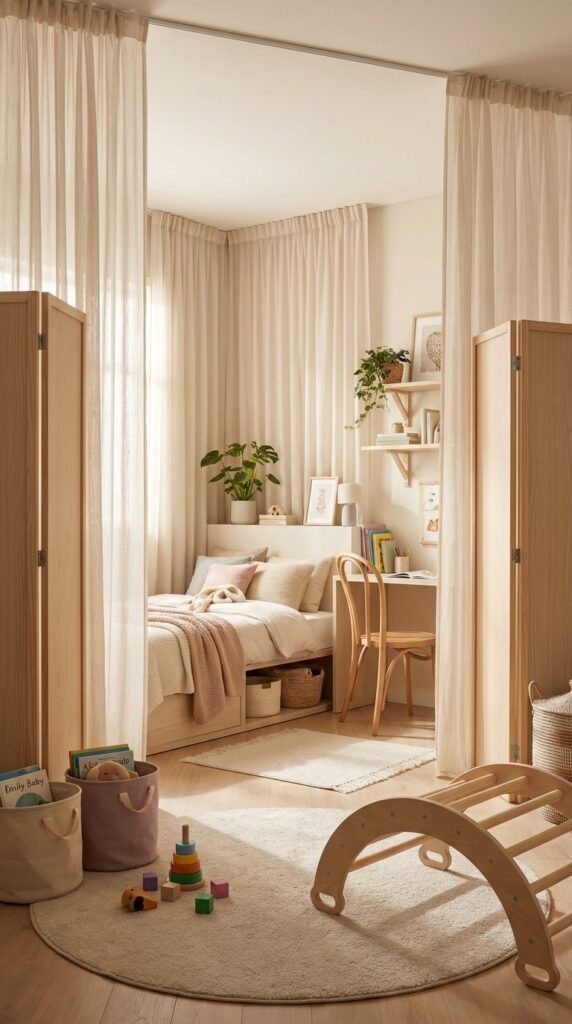
Dividing a tiny bedroom into distinct functional areas converts chaotic clutter into organized, purposeful spaces that work harder for your child. You’ll maximize every square foot while giving your kid the independence they crave.
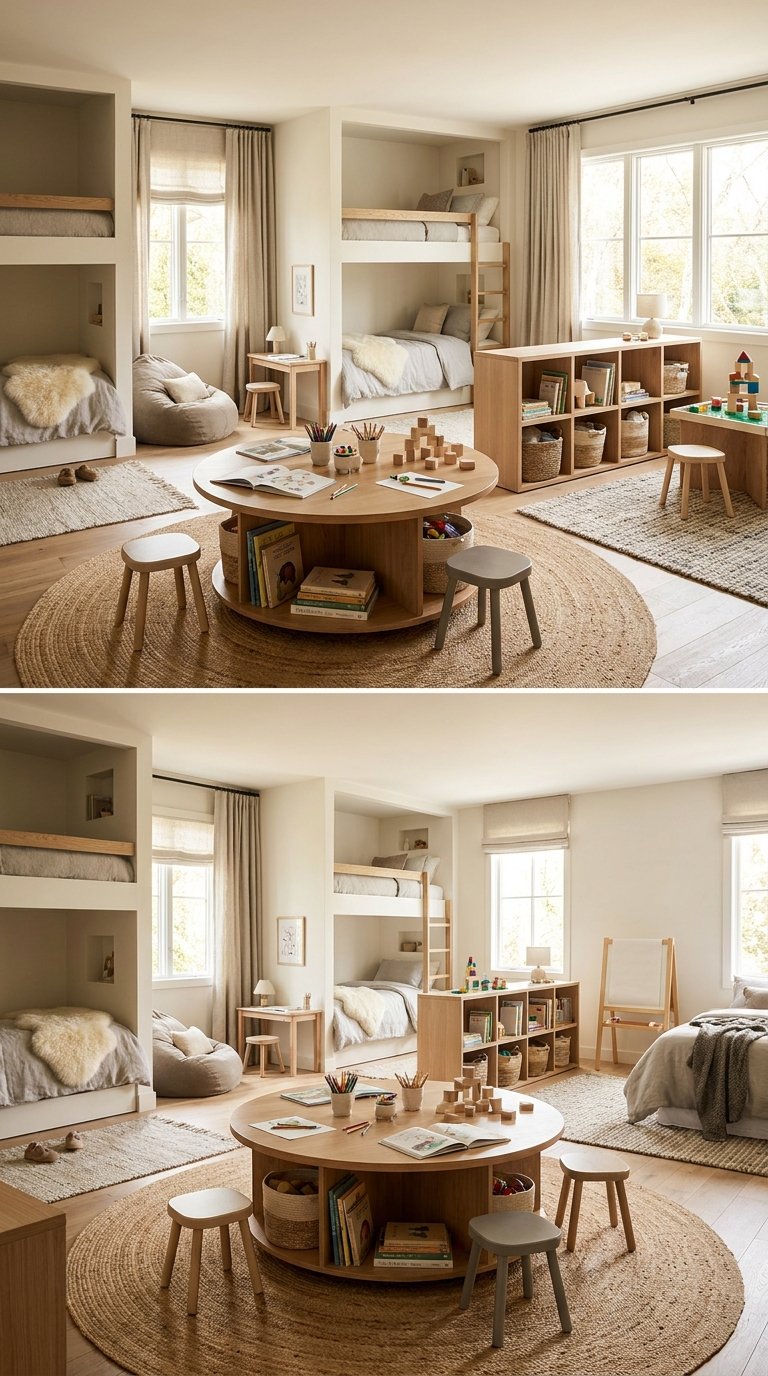
Use sheer curtains to create semi-private zones that maintain visual flow while defining separate areas for sleeping, studying, and playing. Mount ceiling tracks or tension rods to easily adjust boundaries as needs change. This approach won’t overwhelm the space with heavy barriers.
Incorporate movable room dividers to reconfigure the space whenever your child wants a fresh layout. Folding screens, bookshelf units on wheels, or fabric panels provide flexible solutions that adapt to growing needs. Your child can rearrange zones independently, creating their ideal environment for homework, relaxation, or creative projects.
Conclusion
You’ll uncover that altering your child’s small bedroom doesn’t require costly renovations or major structural changes. By implementing these space-saving strategies, you’re creating an organized, functional environment that grows with your child. Start with one or two solutions that fit your budget and needs, then gradually add more elements. Your child’s compact bedroom can become their favorite retreat with smart planning and creative storage solutions.