15 Chic Minimalist Living Room Ideas That Prove Less Is More
Sleek minimalist living room designs reveal how strategic furniture choices and clever storage solutions create surprisingly sophisticated spaces that maximize both style and serenity.
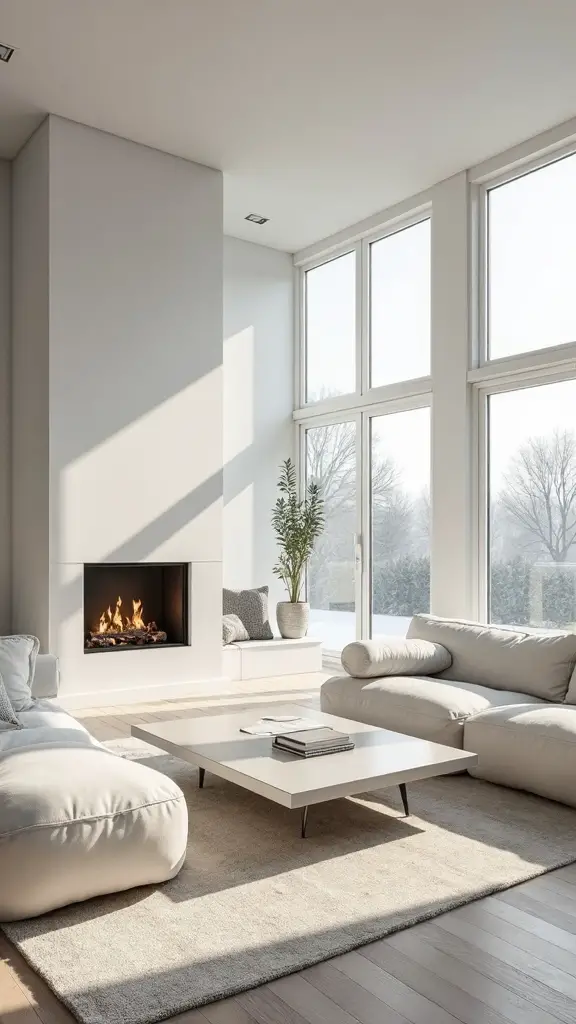
You’ve probably noticed how the most captivating living rooms often feature the fewest items, creating spaces that feel both refined and tranquil. Minimalist design isn’t about bare rooms or stark white walls—it’s about making purposeful choices that amplify impact while reducing visual clutter. When you command these 15 tactical approaches, you’ll uncover how meticulously chosen furniture, thoughtful lighting, and clever storage can remodel your space into something surprisingly graceful.
Embrace a Monochromatic Color Scheme
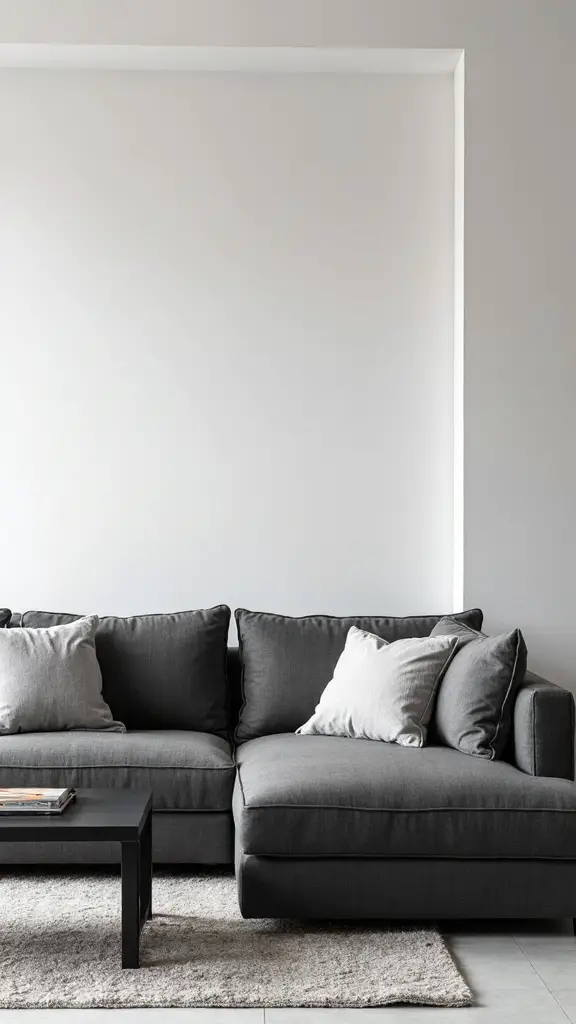
Why complicate your space with multiple colors when a single hue can create stunning visual harmony? You’ll uncover that monochromatic design liberates you from decision fatigue while establishing sophisticated elegance throughout your living room.
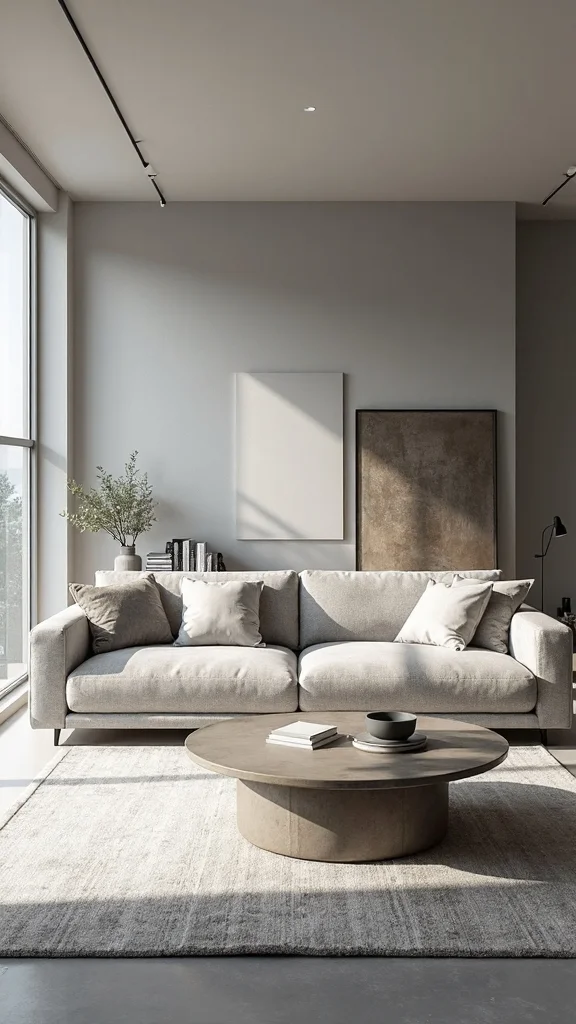
Focus on tonal palette variations within your chosen color family to maintain visual interest without overwhelming chaos. Layer different shades of white, gray, or beige across walls, furniture, and accessories for depth.
Master monochrome texture contrast by mixing materials like smooth leather sofas with rough linen pillows or glossy ceramics alongside matte wood surfaces. This approach creates multifaceted visual layers while preserving the calming simplicity you crave.
Consider incorporating neutral minimalist designs that emphasize the timeless appeal of beige, white, and gray combinations for a truly cohesive aesthetic.
Choose Statement Furniture With Clean Lines
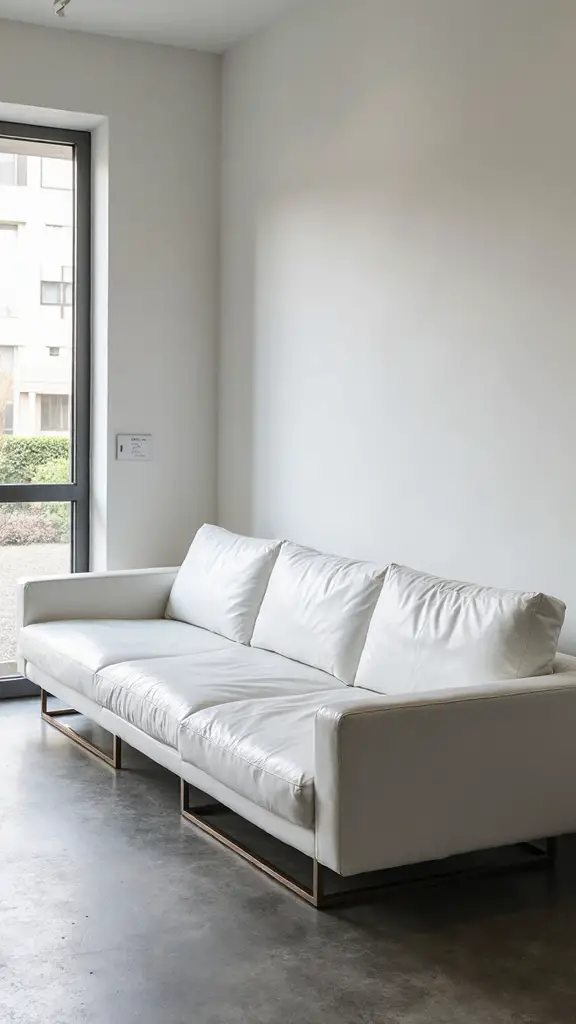
When selecting furniture for your minimalist living room, prioritize pieces that feature geometric shapes and uncluttered silhouettes to anchor your space with purposeful design. You’ll want furniture that makes deliberate statements without overwhelming your carefully curated environment.
Focus on sleek silhouettes that emphasize function over ornate details. A streamlined sofa with straight edges and tapered legs creates visual interest while maintaining simplicity. Choose coffee tables with bold geometric shapes like perfect circles or sharp rectangles.
Select pieces made from quality materials like solid wood, metal, or leather that’ll stand the test of time. When choosing minimalist sofas, ensure they balance both aesthetic appeal and comfort to create the perfect centerpiece for your modern living space. Remember, fewer high-quality items create more impact than multiple mediocre pieces cluttering your serene space.
Maximize Natural Light With Sheer Window Treatments
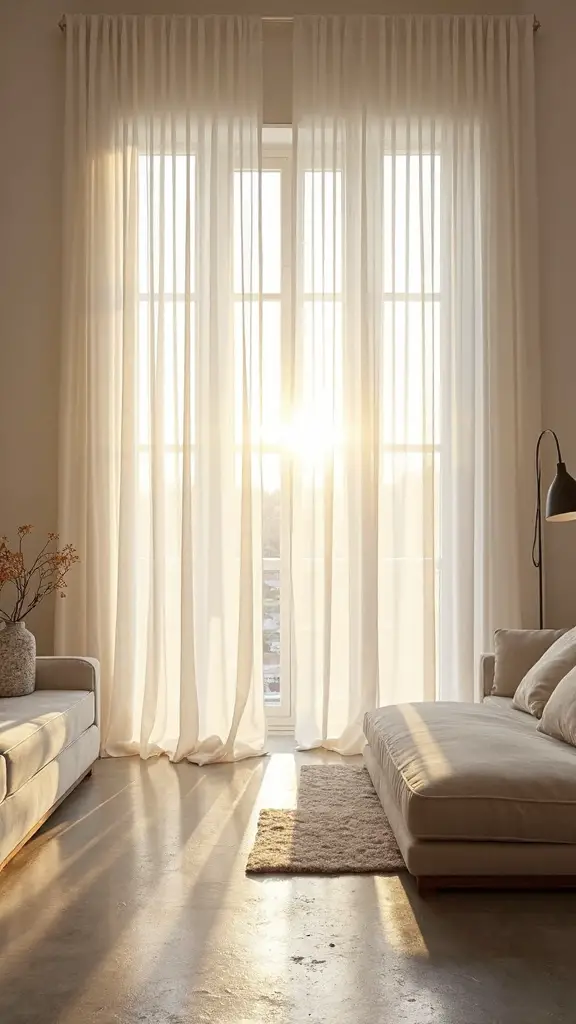
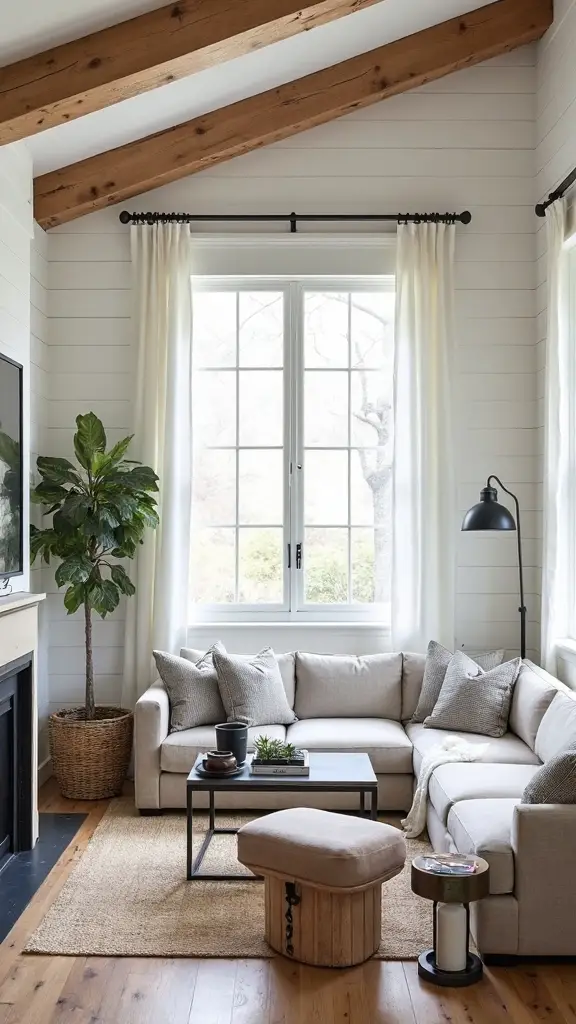
Natural light alters your minimalist living room into an airy sanctuary, and sheer window treatments offer the perfect solution for maximizing brightness while maintain privacy. You’ll enhance interior visibility while creating an open, uncluttered atmosphere that minimalist design demands.
Choose lightweight fabrics like linen or cotton voile that filter harsh sunlight without blocking essential illumination. White or cream sheers work best, reflecting light throughout your space while preserving clean lines.
Install treatments slightly wider than your window frame to create visual expansion. This technique makes windows appear larger and floods your room with natural light, eliminating the need for excessive artificial lighting during daytime hours. Pairing these treatments with large windows creates the ultimate minimalist environment that emphasizes openness and natural illumination.
Create Visual Interest Through Texture Layering
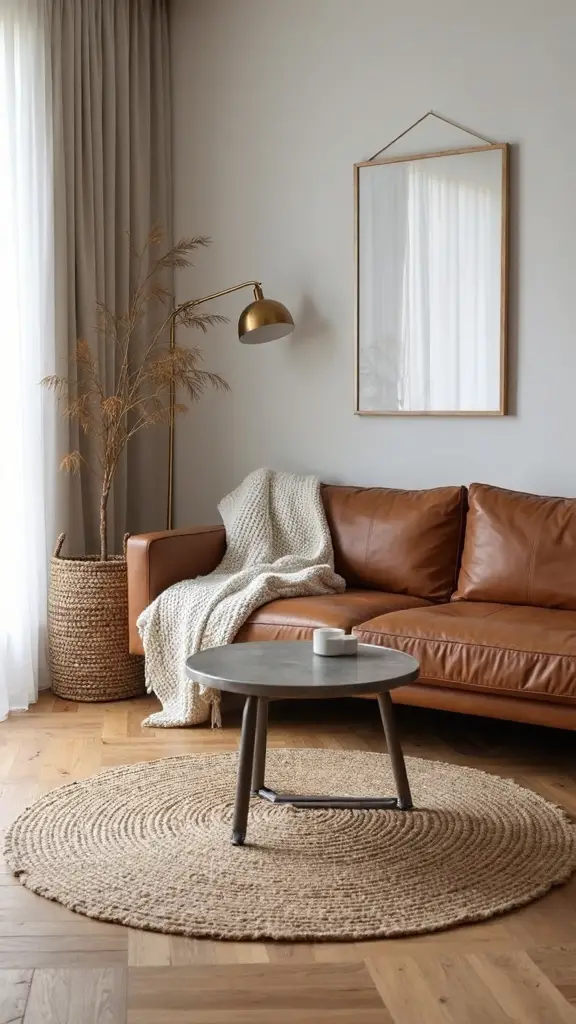
Three key textures can alter your stark minimalist space into a visually engaging room without compromising its clean aesthetic. You’ll achieve sophisticated depth by incorporating plush velvet accents through a single statement cushion or sleek ottoman. Layer varied textures in fabrics by combining smooth linen throws with chunky knit blankets, creating tactile contrast that invites touch. Add natural wood grain through floating shelves or a simple coffee table to introduce organic warmth. These textural elements work together to eliminate visual monotony while maintaining your space’s uncluttered essence, proving you don’t need excessive decoration to create captivating interior design. Consider incorporating warm tones alongside these natural materials to enhance the earthy minimalist foundation of your living space.
Invest in Multi-Functional Storage Solutions
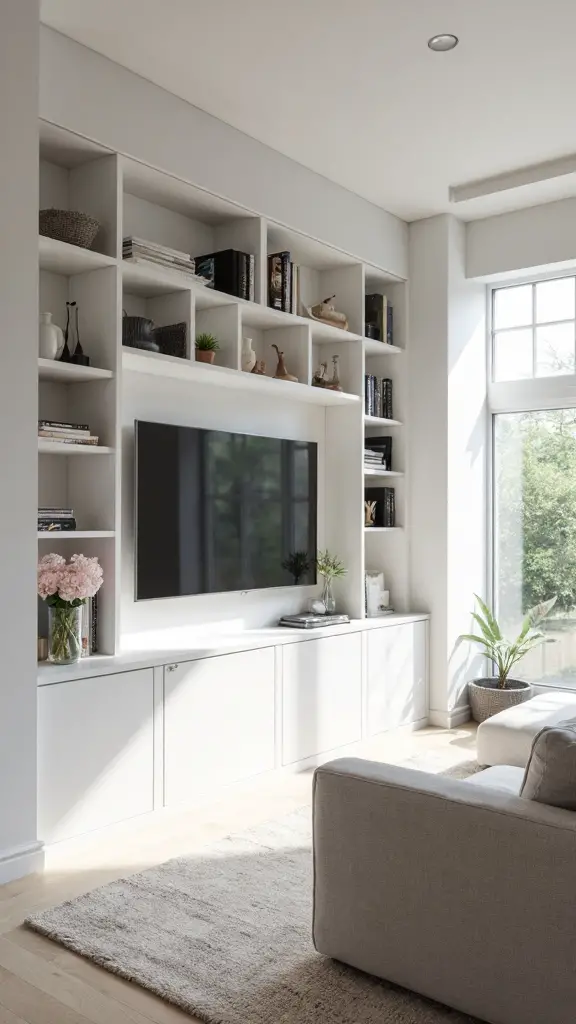
Smart storage solutions serve dual purposes in minimalist living rooms, helping you maintain clean lines while maximizing functionality. You’ll uncover freedom from clutter when you choose furniture that works harder for your space.
Multipurpose storage ottomans offer comfortable seating while concealing blankets, magazines, or electronics inside their hidden compartments. Position these versatile pieces strategically around your room for extra seating during gatherings.
Consider coffee tables with creative storage compartments, floating shelves with built-in drawers, or TV stands featuring multiple storage zones. These solutions eliminate the need for additional furniture pieces, keeping your minimalist aesthetic intact while providing ample organization options.
IKEA furniture pieces excel at combining storage functionality with clean, minimalist design to create the perfect foundation for your simplified living space.
Display One Bold Piece of Artwork
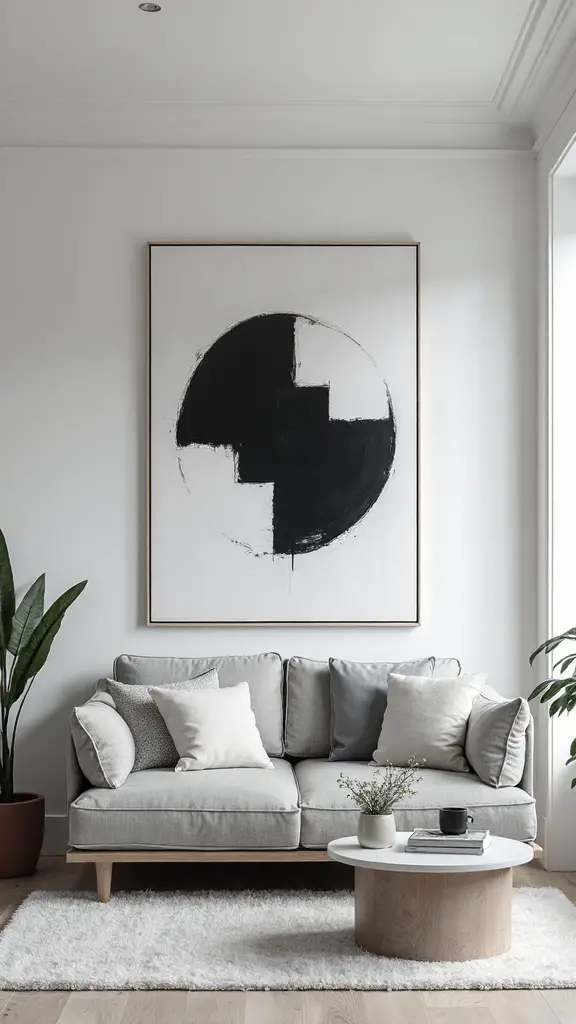
While minimalist spaces thrive on simplicity, a single statement artwork can alter your living room into an enthralling focal point without overwhelming the clean aesthetic. You’ll want to select captivating focal artwork that speaks to your personality while maintaining the room’s serene atmosphere. Choose pieces with bold colors or striking geometric patterns that contrast beautifully against neutral walls. When you frame artwork creatively, consider sleek black frames or natural wood options that complement your existing furniture. Position your chosen piece at eye level on the largest uninterrupted wall space, allowing it to command attention effortlessly.
Keep Surfaces Clutter-Free and Purposeful
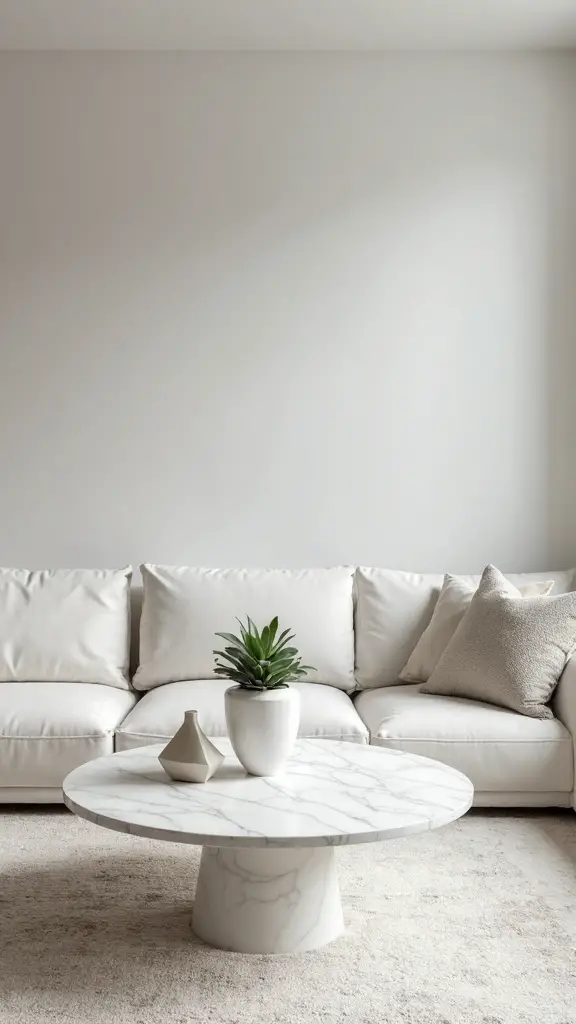
Just as your statement artwork commands attention through its singular presence, your furniture surfaces should encapsulate the same principle of intentional minimalism. Alter your coffee table, side tables, and shelves into breathing spaces that showcase only essential items.
Declutter surfaces routinely by removing unnecessary objects and storing them in designated areas. Keep only items you actively use—a single book, one decorative object, or a small plant. Maintain surface cleanliness through daily five-minute tidying sessions that reset your space.
This approach creates visual calm while giving your chosen pieces room to shine, proving that purposeful placement beats abundant decoration.
Use Negative Space as a Design Element
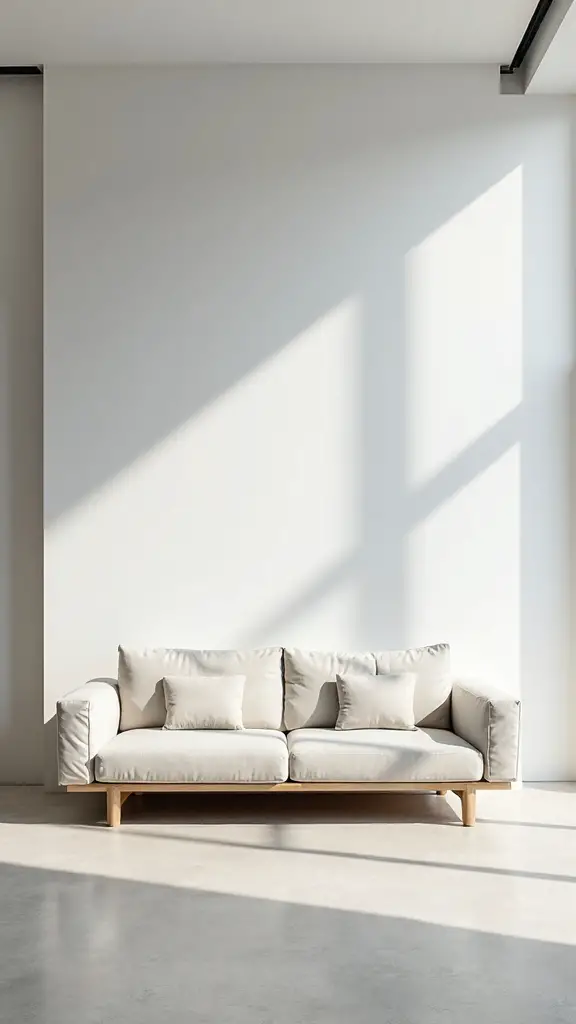
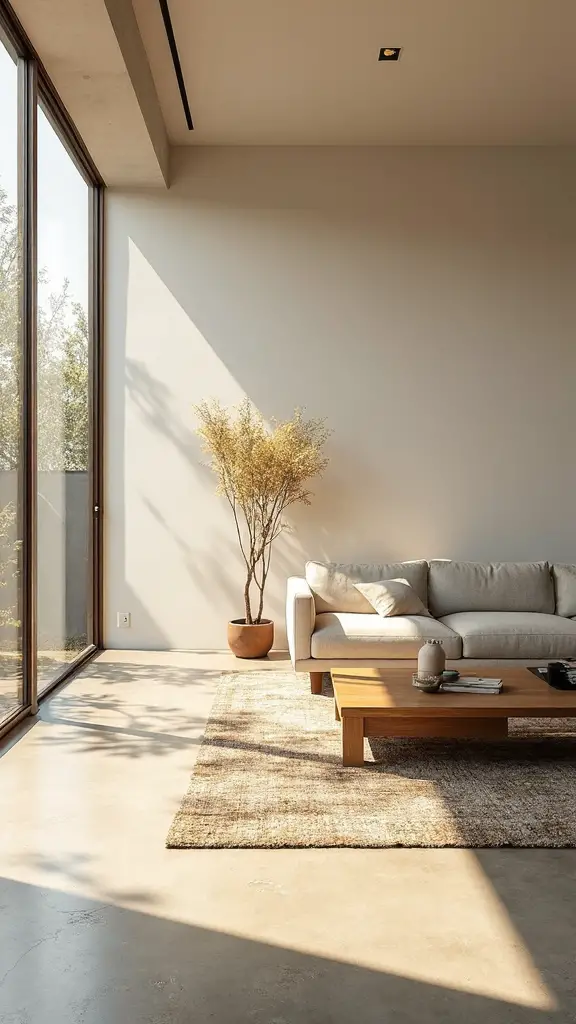
When you adopt negative space—the empty areas around and between objects—you alter silence into one of your room’s most powerful design tools. This breathing room creates visual balance and lets your carefully chosen pieces shine without competing for attention.
Utilize empty corners strategically by leaving them bare instead of filling them with unnecessary furniture or décor. You’ll uncover how this approach draws the eye naturally around your space, creating flow and movement.
Enhance minimalist aesthetics by positioning a single statement piece against an expansive blank wall, allowing both elements to complement each other perfectly through thoughtful contrast.
Select Low-Profile Seating Arrangements
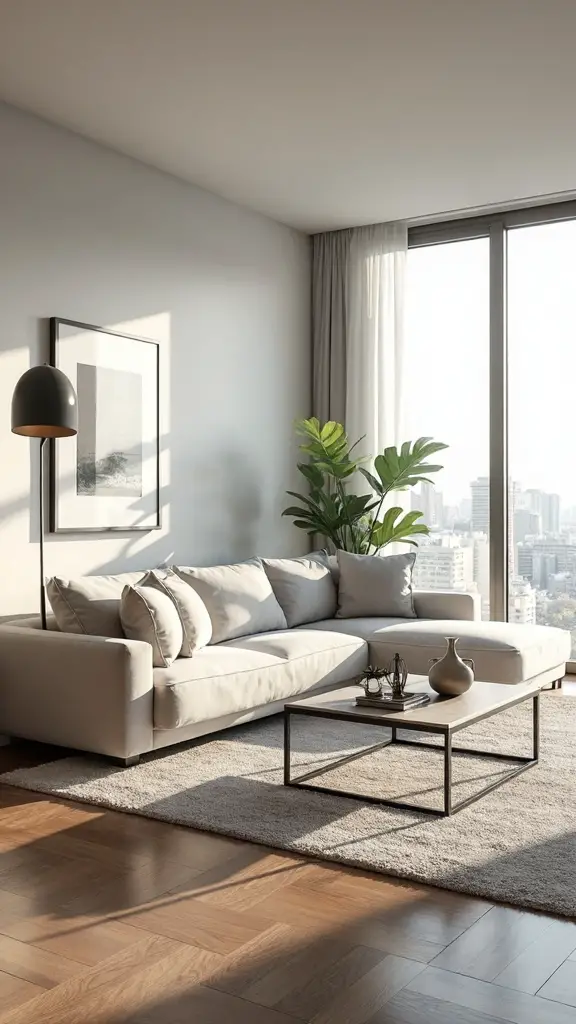
Low-profile seating alters your living room by creating an illusion of expansive space while maintaining the clean lines essential to minimalist design. You’ll uncover that sleek sofas and chairs positioned closer to the ground naturally draw the eye upward, making ceilings appear higher.
Consider modular seating configurations that adapt to your changing needs without cluttering your space. These flexible pieces move easily and reconfigure for different occasions. Space saving accent chairs with slim profiles provide additional seating without overwhelming your room’s visual balance. Choose pieces with exposed legs to enhance the airy feeling that defines successful minimalist interiors.
Incorporate Natural Materials and Finishes
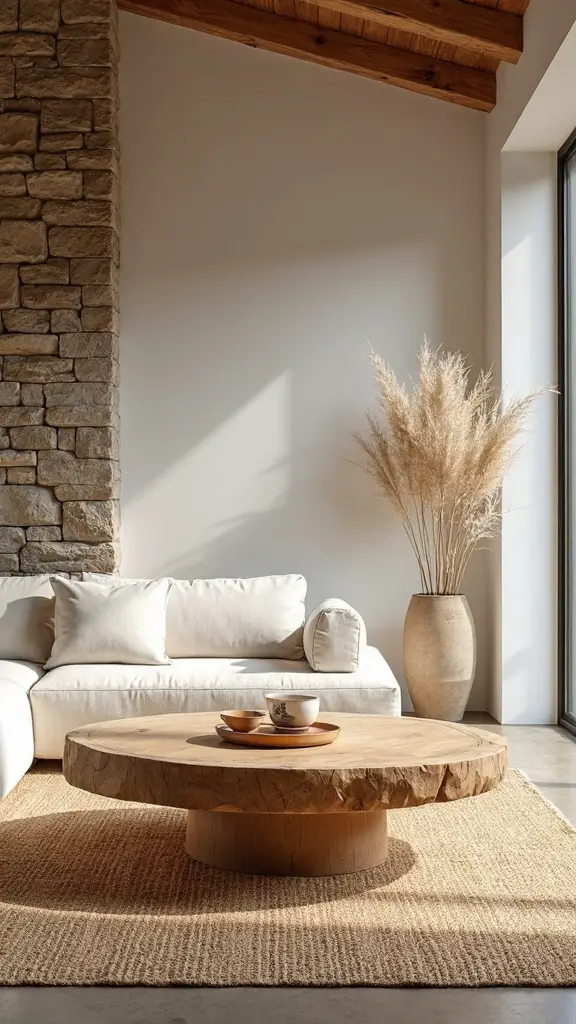
Natural materials alter your minimalist living room into a warm, inviting space that connects you with the outdoors while maintaining clean simplicity. Incorporate organic wood textures through sleek dining tables, floating shelves, or accent walls that add depth without overwhelming your design. Choose light oak, bamboo, or reclaimed pine for authentic character.
Utilize natural fiber furnishings like jute rugs, linen curtains, and cotton throw pillows to create texture while staying true to minimalist principles. Stone accents, ceramic pottery, and woven baskets provide organic elements that feel grounding. These materials bring life to sterile spaces while preserving the uncluttered aesthetic you’re seeking.
Limit Decorative Accessories to Three Key Pieces
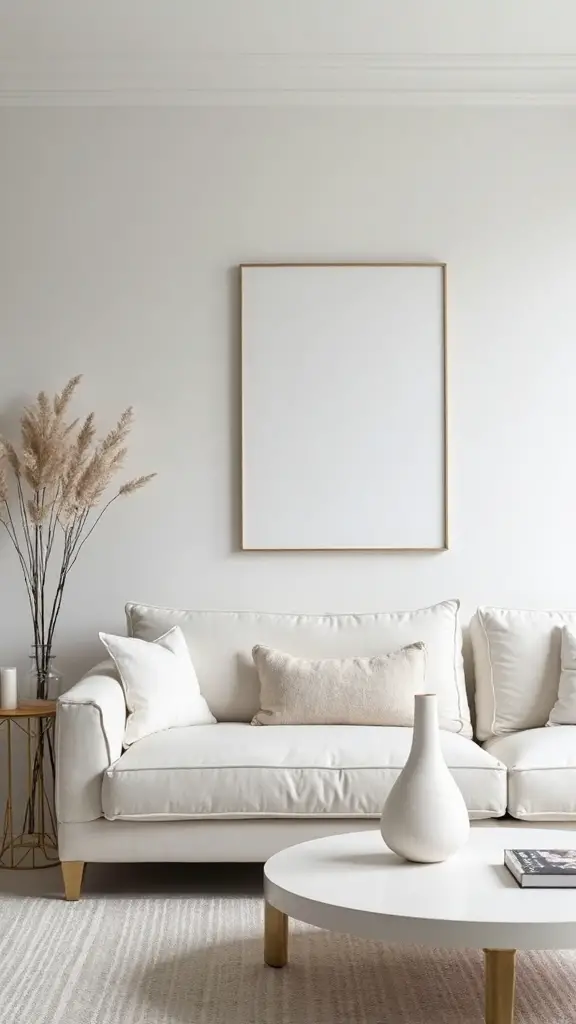
While natural materials provide the foundation for your minimalist living room, strategic accessory placement completes the refined look you’re after. Choose three statement pieces that reflect your personality while maintaining visual harmony throughout the space.
Select accessories that balance accessories visually across different heights and textures. Place one large artwork above your sofa, add a sculptural vase on your coffee table, and position a floor lamp in the corner.
This curated approach helps you minimize tabletop clutter while creating intentional focal points. Each piece should serve a purpose or bring you genuine joy, eliminating the visual noise that distracts from your room’s clean aesthetic.
Choose Built-In Shelving Over Standalone Units
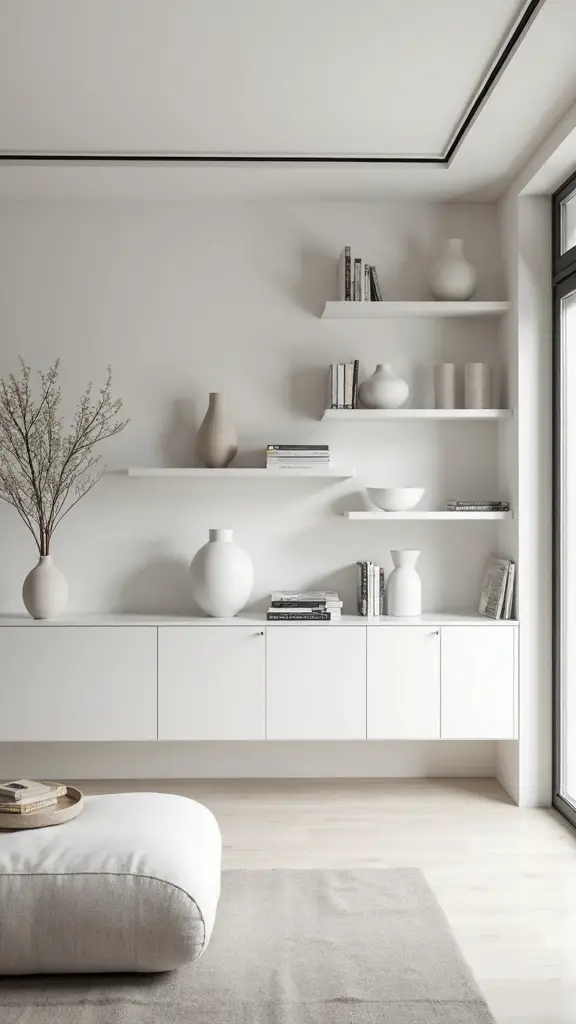
Built-in shelving creates seamless storage solutions that enhance your minimalist living room’s clean lines and uncluttered appearance. These permanent fixtures eliminate visual bulk while maximizing your space’s potential without overwhelming the room’s aesthetic.
Strategic built in shelving placement along walls or within alcoves converts dead space into functional storage areas. Consider built in shelving dimensions that complement your room’s proportions – typically 8-12 inches deep for books and decorative items.
You’ll appreciate how built-ins eliminate furniture gaps that collect dust and create visual chaos. They’re custom-fitted to your exact specifications, ensuring every inch serves a purpose while maintaining that coveted minimalist simplicity.
Add Warmth With a Single Cozy Throw
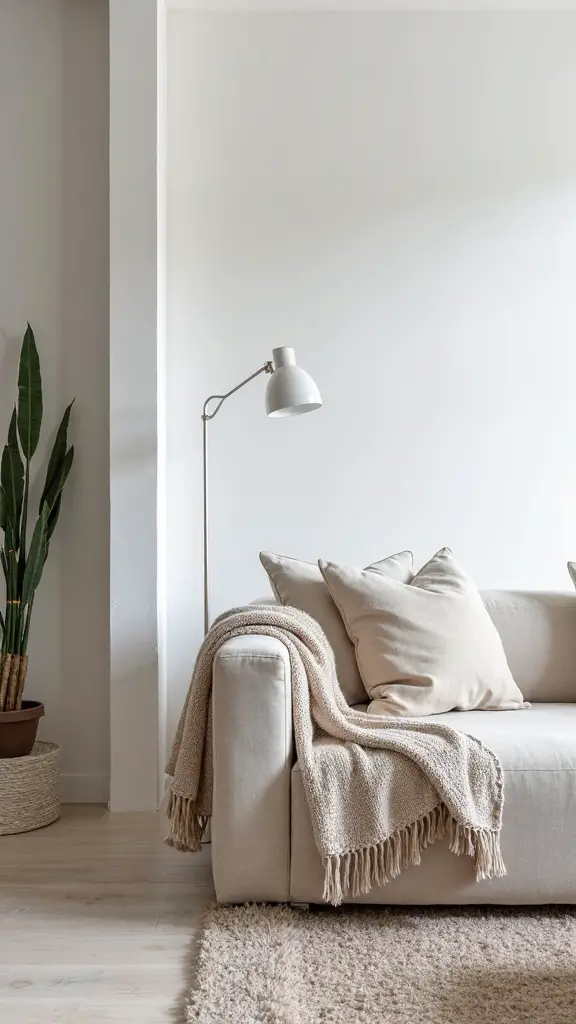
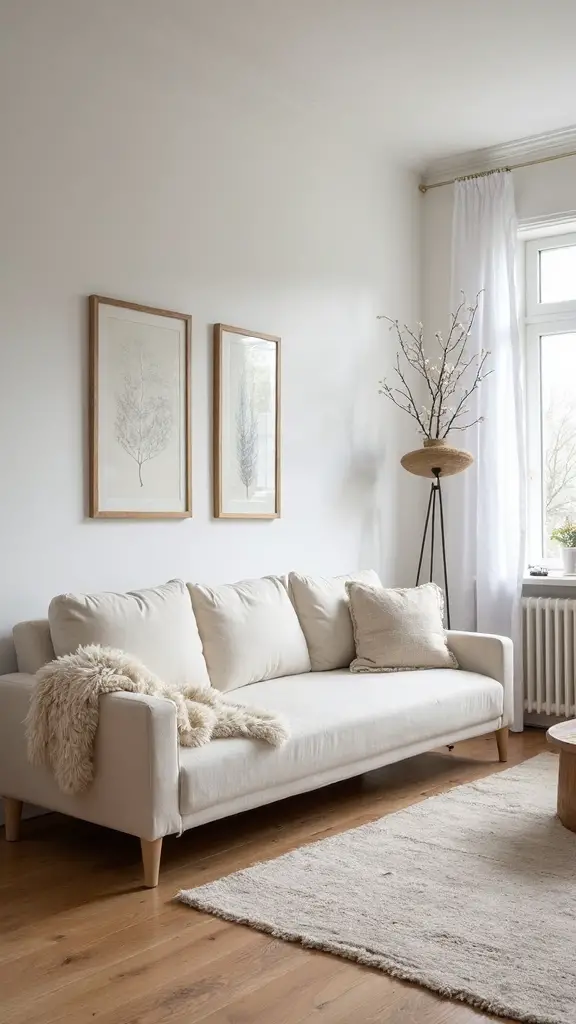
A single cozy throw becomes your minimalist living room’s perfect compromise between comfort and visual restraint. Choose one high-quality blanket in a neutral tone that complements your existing color palette. Strategic cozy blanket placement matters—drape it casually over your sofa’s corner or fold it neatly across the arm for instant accessibility. Select throws with subtle texture like chunky knit, linen weave, or soft cashmere to add visual interest without overwhelming your space. Pair with one or two textured throw pillows for cohesive layering. This approach maintains your room’s clean aesthetic while creating an inviting atmosphere that welcomes relaxation.
Focus on Quality Over Quantity in Furniture Selection
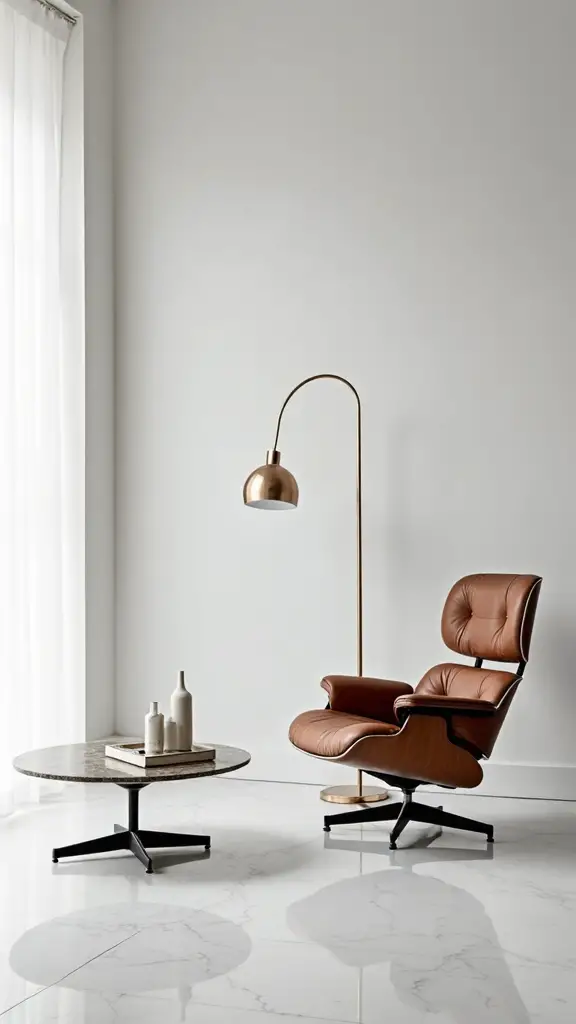
Just as your cozy throw demonstrates the power of choosing one perfect piece, your furniture selection should follow the same mindful approach throughout your minimalist living room. You’ll uncover freedom when you invest in fewer, better pieces that serve multiple purposes and stand the test of time.
Focus on high quality fabrics like linen or wool that age beautifully and resist wear. Prioritize durable furniture construction with solid wood frames and reinforced joints over particle board alternatives. Choose a statement sofa, versatile coffee table, and storage ottoman that eliminate clutter while maximizing functionality and style.
Create Zones Without Visual Barriers
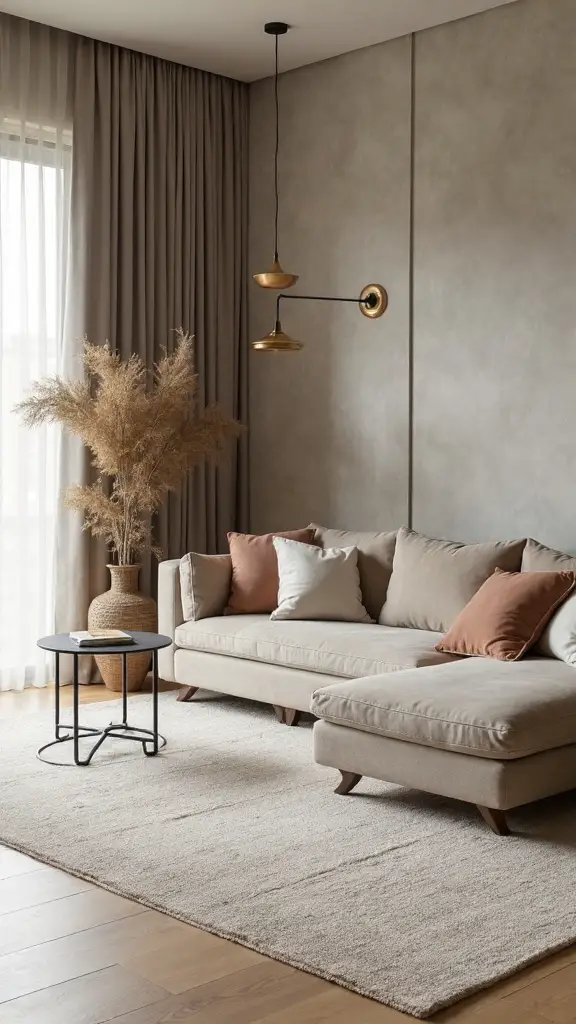
While traditional room dividers can make your space feel cramped and closed off, you can create distinct functional zones using strategic furniture placement and visual cues instead. You’ll establish defined spaces by angling your sofa toward a reading corner or positioning a console table behind seating areas. Employ furniture positioning to naturally separate your entertainment zone from workspace—place a bookshelf perpendicular to walls or use area rugs to define boundaries. Floor lamps and pendant lights also help delineate zones without blocking sightlines. This approach maintains your room’s open, airy feel while giving each area its own clear purpose.
Conclusion
You’ve uncovered that minimalist living rooms thrive on intentional choices rather than empty spaces. By selecting quality pieces with clean lines, embracing monochromatic palettes, and incorporating smart storage solutions, you’ll create a sophisticated sanctuary that feels both spacious and inviting. Remember, successful minimalism isn’t about having less—it’s about choosing better. Start with one element today, and you’ll promptly see how thoughtful design alters your living space into a serene, functional retreat.