12 Japanese Minimalist Living Room Designs That Bring Peaceful Zen Vibes
Calm your mind instantly with these 12 Japanese minimalist living room designs that transform chaotic spaces into tranquil zen retreats.
You’ll uncover how Japanese minimalist design metamorphoses chaotic spaces into tranquil retreats that calm your mind instantly. These twelve carefully curated living room concepts blend traditional elements like tatami mats and shoji screens with modern functionality. Each design prioritizes natural materials, strategic lighting, and purposeful simplicity to create your personal zen sanctuary. From floor seating arrangements to built-in storage solutions, these spaces prove that less truly becomes more when you understand the essential principles that make each element work harmoniously together.
The Tatami Mat Foundation Living Room
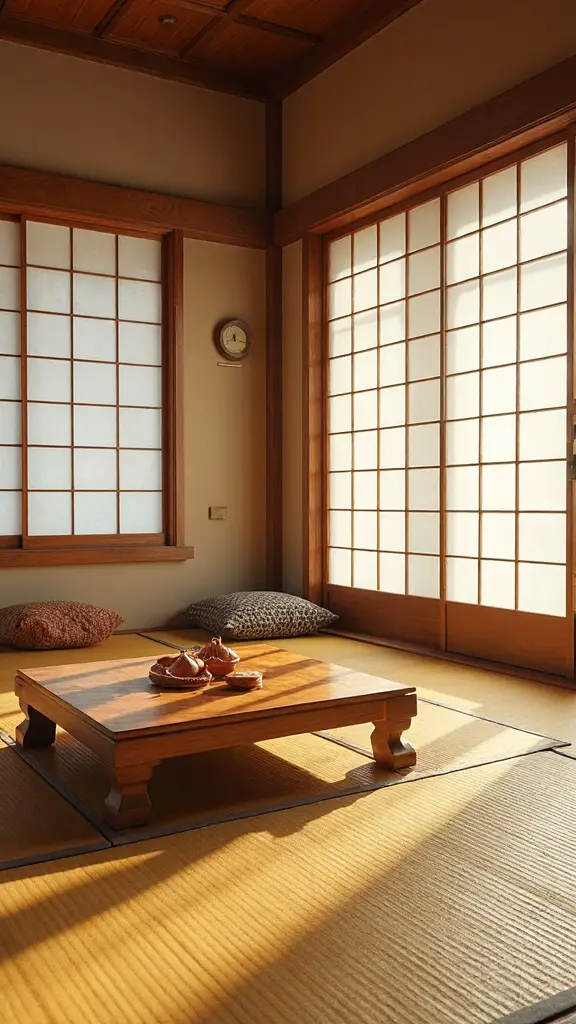
At the heart of authentic Japanese minimalist design, tatami mats create a natural foundation that alters your living space into a serene retreat. These woven rice straw mats establish clean lines and geometric patterns that guide your room’s entire aesthetic. You’ll position low-profile furniture directly on the tatami surface, embracing minimalist furniture placement that keeps everything close to the ground. Consider incorporating a futon bedding arrangement that doubles as seating during the day, then unfolds for nighttime rest. This flexible approach maximizes your space while maintaining the uncluttered, peaceful atmosphere that defines traditional Japanese interior design. For those seeking to blend styles, you can incorporate rustic comfort elements that complement the tatami foundation while preserving the minimalist aesthetic.
Natural Wood and Stone Harmony Design
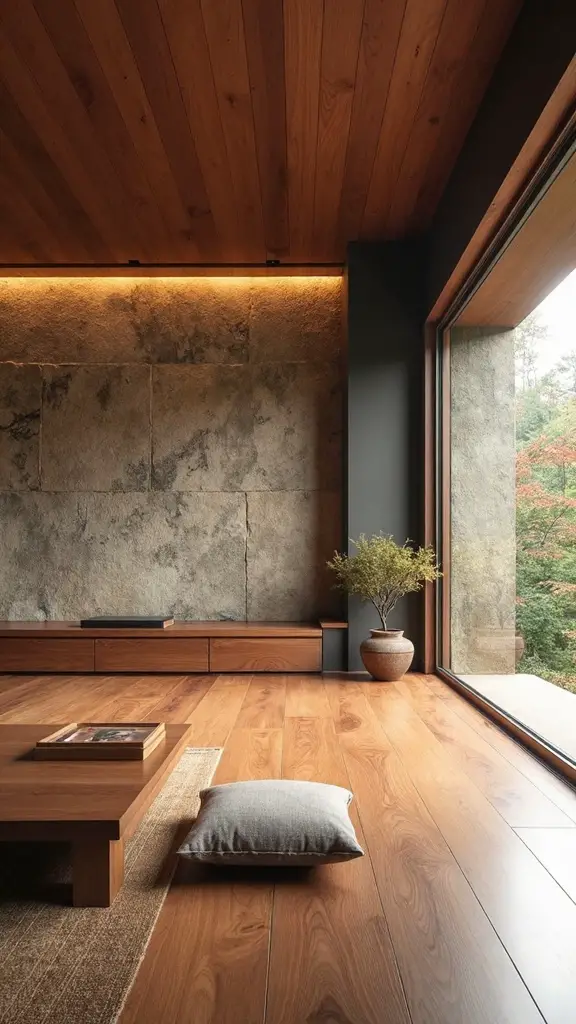
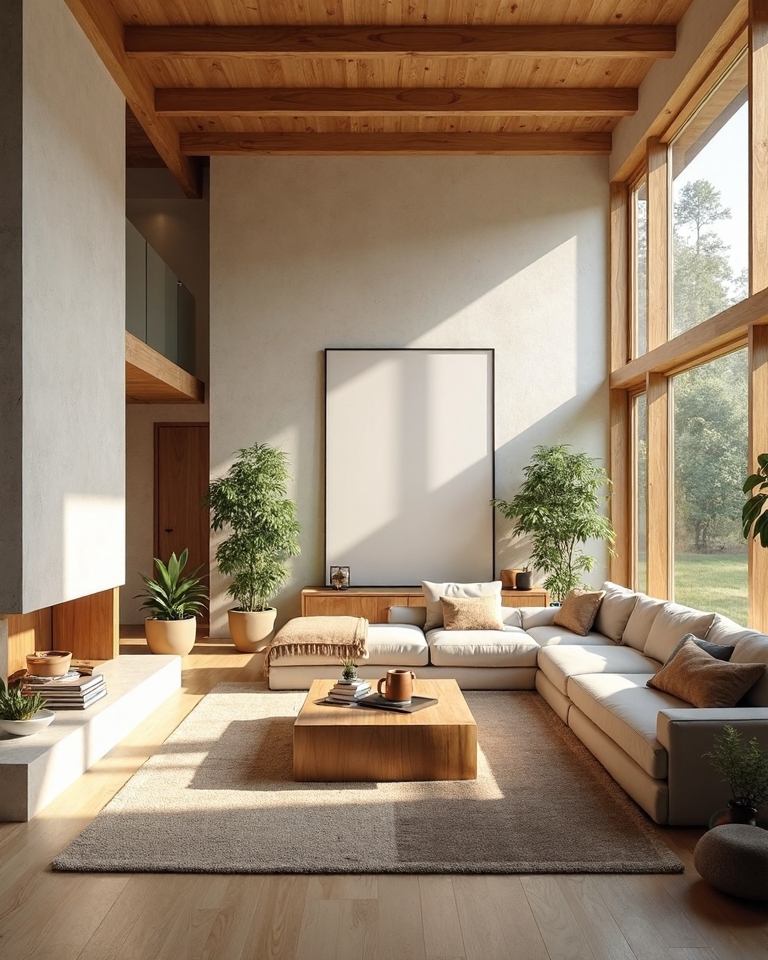
When you combine natural wood and stone elements, you’ll create a harmonious balance that encapsulates the essence of Japanese minimalist design. Choose light cedar or bamboo flooring paired with smooth river stones as accent walls or feature panels. You’ll find that compact coffee table accents made from reclaimed wood complement stone surfaces beautifully, creating visual texture without overwhelming your space. Consider adding an integrated stone hearth element as your room’s focal point, surrounded by clean wooden lines. This pairing naturally reduces visual clutter while maintaining warmth, letting you escape conventional design rules and adopt serene, unstructured living. Position these natural elements near large windows to maximize the interplay between your organic materials and the abundant daylight streaming in.
Shoji Screen Room Divider Elegance
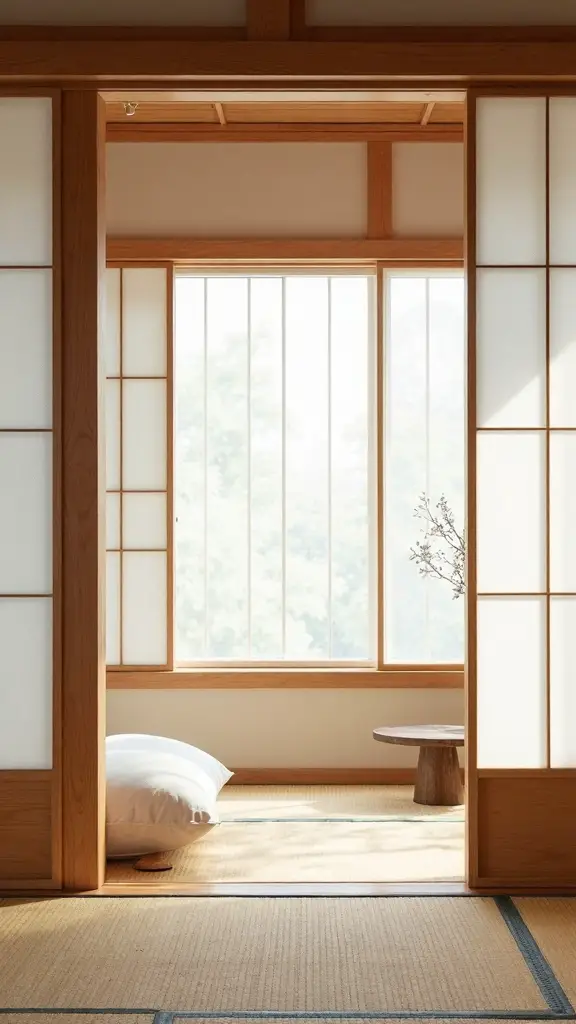
Since traditional Japanese interiors have relied on flexible spatial boundaries for centuries, shoji screens offer you a sophisticated solution for dividing your minimalist living room without sacrificing openness. These paper screens translucent division creates gentle separation while maintaining visual flow throughout your space. You’ll appreciate how shoji sliding panel versatility allows instant room reconfiguration based on your daily needs. Mount them on tracks for effortless movement, or use freestanding versions for ultimate flexibility. The soft, diffused light filtering through rice paper alters harsh overhead lighting into warm, ambient illumination that enhances your zen atmosphere beautifully. Like Scandinavian design principles, this approach prioritizes natural light as a central element to create an inviting and serene living environment.
Floor Seating Meditation Space
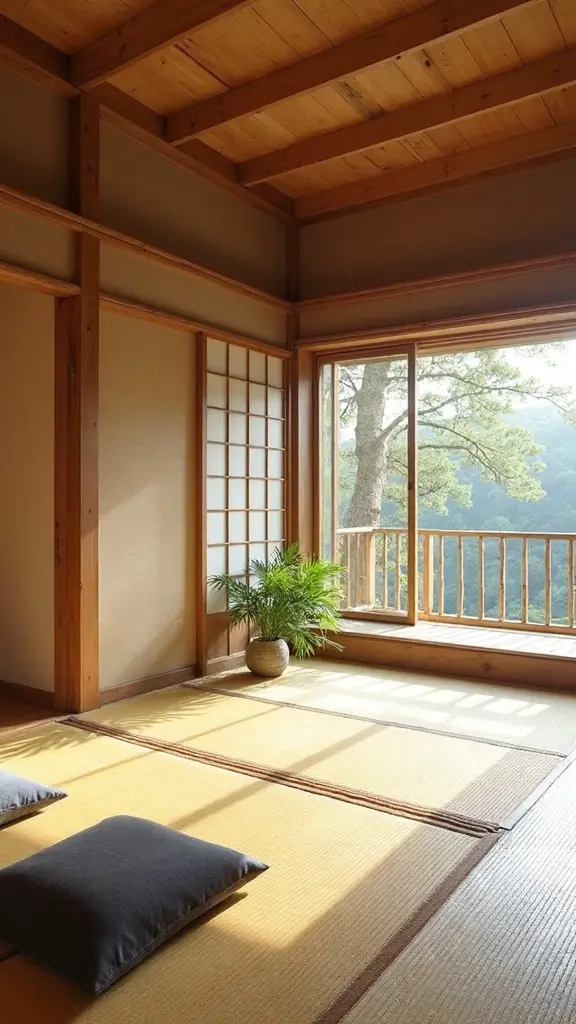
Floor seating arrangements naturally complement shoji screens by creating an integrated meditation zone that encapsulates traditional Japanese living principles. You’ll uncover that floor cushions positioned strategically around your space encourage mindful posture and deeper contemplation. Choose meditation pillows in neutral tones like beige, gray, or soft white to maintain visual harmony. Arrange seating elements in geometric patterns or gentle curves that promote natural conversation flow. You can easily store cushions in built-in alcoves when not needed, preserving your room’s clean aesthetic. This flexible approach lets you alter any corner into a peaceful retreat for daily meditation practice. Incorporating natural textures like jute or linen cushion covers adds warmth while maintaining the serene minimalist foundation.
Monochromatic Earth Tone Sanctuary
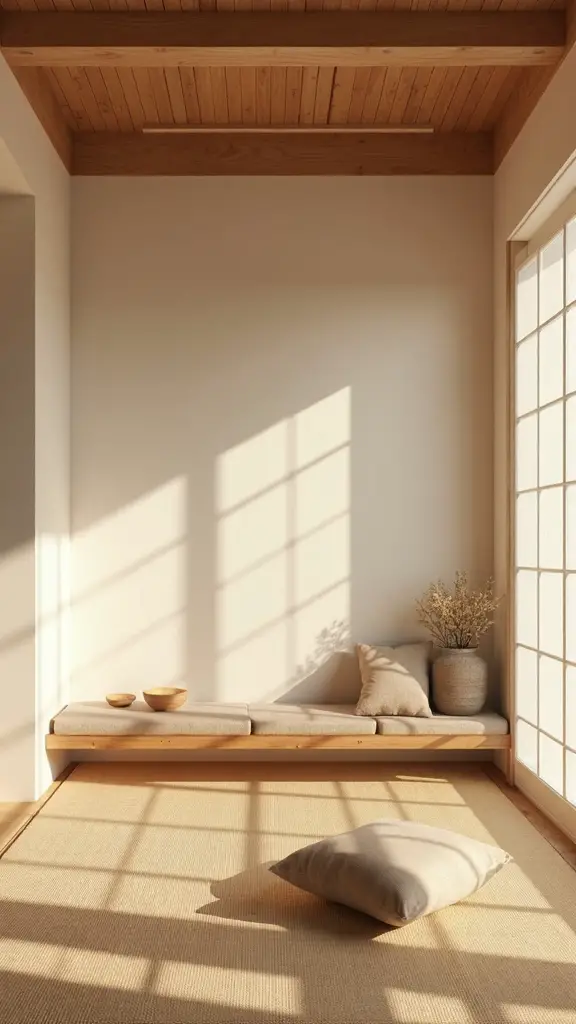
Natural earth tones create a cohesive sanctuary that embodies the essence of Japanese minimalism through carefully curated monochromatic palettes. You’ll find freedom in warm beiges, soft taupes, and muted browns that flow seamlessly throughout your space. Layer organic texture accents like woven jute rugs, bamboo side tables, and linen cushions to add visual interest without disrupting harmony. Choose minimalist art installations featuring single calligraphy strokes or abstract nature prints in matching earth tones. This approach eliminates decision fatigue while creating a serene environment where every element supports tranquility. You’ve crafted a space that breathes calmness through intentional color restraint. Incorporate wood textures through low platform furniture or floating shelves to enhance the natural material palette while maintaining clean lines.
Floating Furniture Minimalist Layout
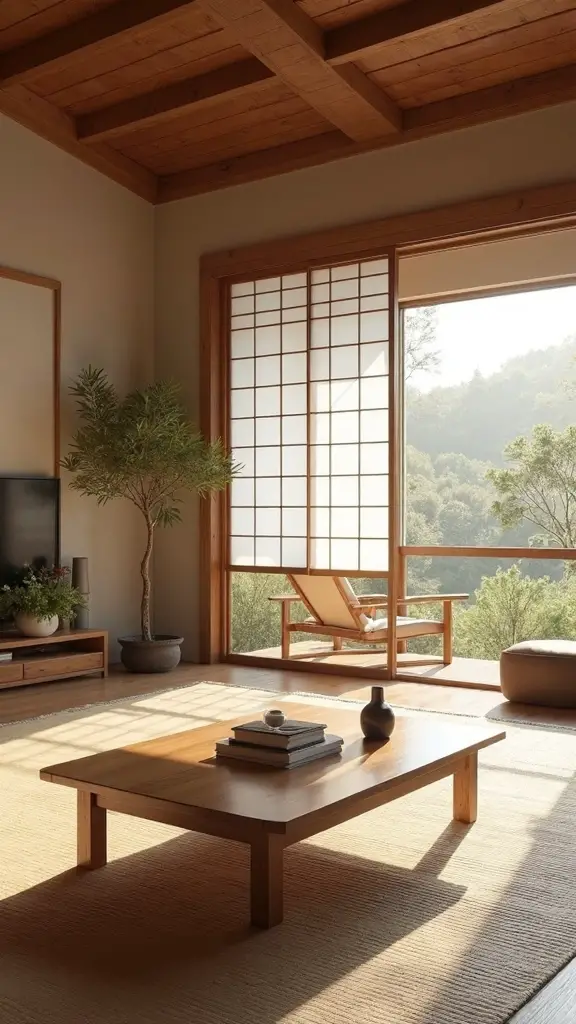
While traditional furniture sits heavily on the ground, floating pieces create an airy foundation that transforms your Japanese minimalist living room into a spacious retreat. Wall-mounted TV consoles and suspended seating free up precious floor space, letting you move freely throughout your sanctuary. You’ll uncover that recessed shelving simplicity eliminates visual clutter while maintaining essential storage needs. Choose multifunctional coffee table designs that appear to hover above the ground, featuring hidden compartments for remote controls and books. This heightened approach literally lifts your spirits, creating an unobstructed flow that embodies the Japanese principle of ma—meaningful empty space.
Indoor Garden Integration Living Area
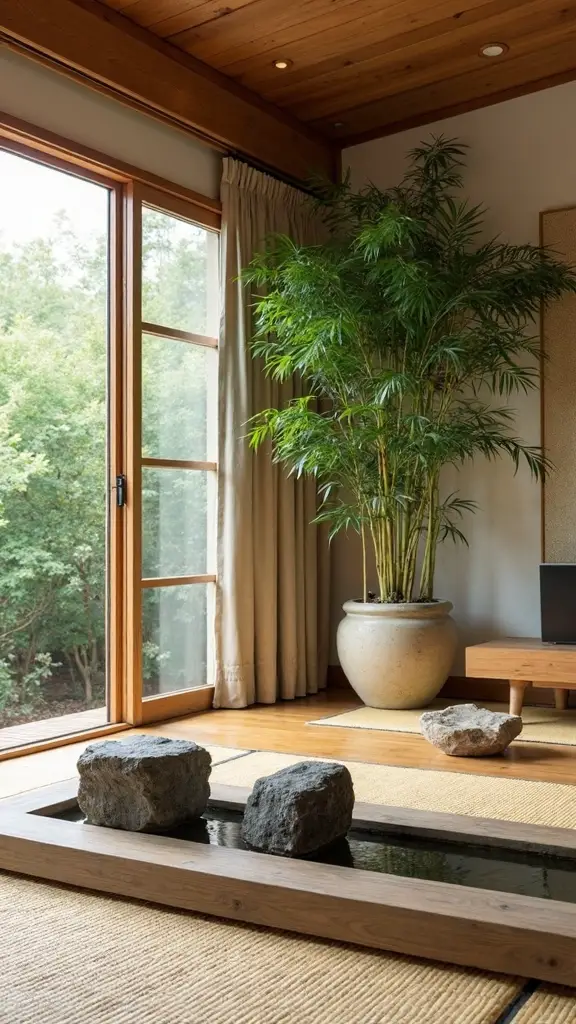
Several strategic plant placements can alter your Japanese minimalist living room into a serene indoor garden that breathes life into clean lines. Choose low-maintenance plants like snake plants, peace lilies, or bamboo that complement your space’s zen aesthetic. Install cascading planters along windowsills or shelving units to create flowing green accents without cluttering surfaces. A vertical greenery display against one accent wall maximizes your plant collection while preserving floor space. Position larger floor plants in corners to soften harsh angles and frame seating areas naturally, creating peaceful boundaries that enhance your room’s tranquil atmosphere.
Paper Lantern Soft Lighting Ambiance
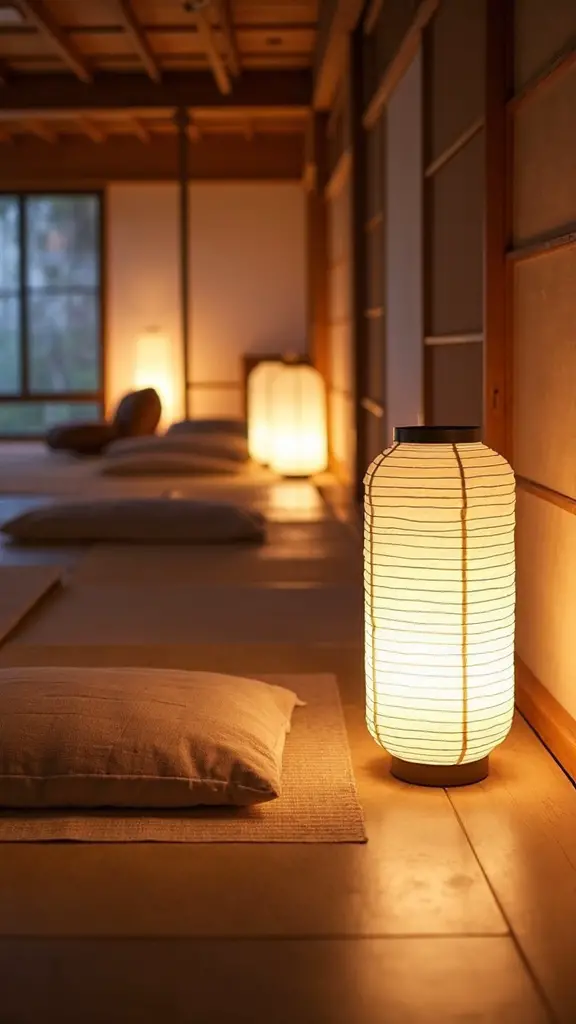
Paper lanterns create an ethereal glow that alters your Japanese minimalist living room into a sanctuary of calm illumination. Strategic paper lantern placement reconfigures harsh overhead lighting into gentle, diffused radiance that promotes relaxation and tranquility.
Position lanterns at varying heights to create visual depth while maintaining clean lines. Corner placement eliminates shadows without cluttering your space. Consider pendant-style lanterns above seating areas or floor-standing versions near reading nooks.
Soft lighting control becomes effortless with dimmable options or multiple smaller lanterns. You’ll achieve perfect ambiance for meditation, reading, or entertaining. Choose neutral whites or warm yellows to complement your minimalist aesthetic and enhance the zen atmosphere.
Built-In Storage Wall System
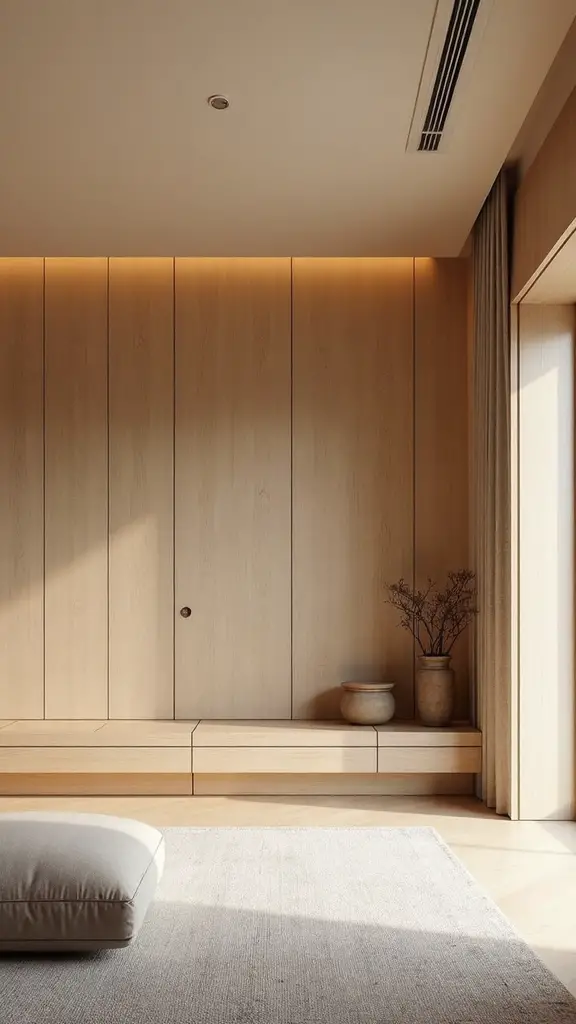
Built-in storage wall systems alter your Japanese minimalist living room by eliminating visual clutter while maximizing functional space. These seamless solutions integrate directly into your walls, creating clean lines that enhance the zen aesthetic you’re seeking.
Consider custom cabinetry solutions that blend with your room’s natural materials like light wood or bamboo finishes. Built in storage shelving works perfectly for organizing books, ceramics, and personal items behind closed doors. You’ll maintain the uncluttered appearance essential to Japanese design while gaining practical storage that doesn’t compromise your living space’s peaceful flow and balanced proportions.
Zen Tea Corner Retreat
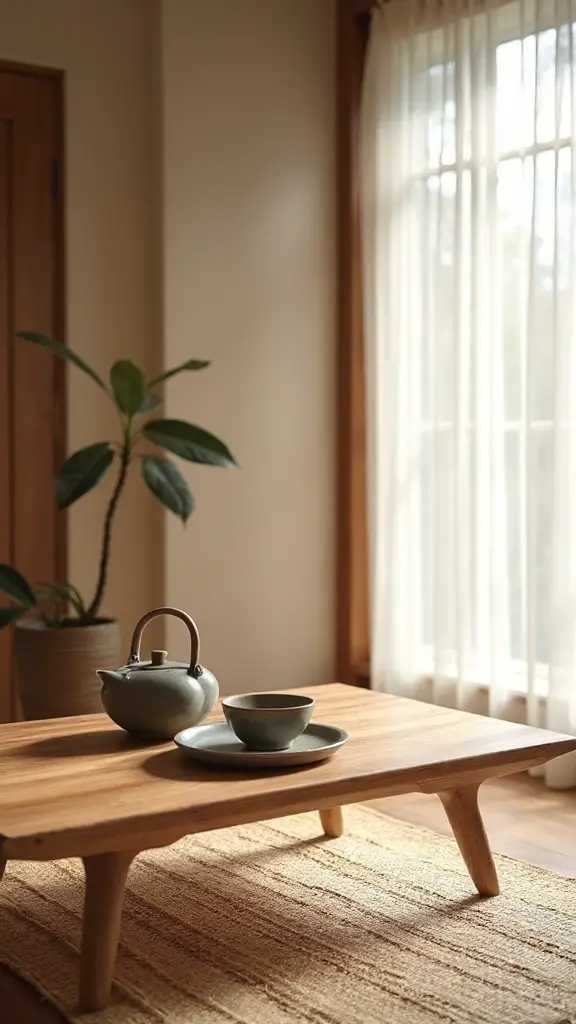
Creating a dedicated tea corner converts your minimalist living room into a meditative sanctuary where daily rituals become moments of mindful reflection. You’ll want to position a low wooden table near natural light, paired with comfortable floor cushions for authentic seating. Keep essential items within reach: a simple tea set, bamboo whisk for matcha tea presentation, and quality loose-leaf varieties. Add a small shelf for your incense ceremony experience supplies, including holders and natural scents like sandalwood. This intimate space becomes your daily escape from life’s demands, offering freedom through intentional simplicity and peaceful contemplation.
Large Window Natural Light Focus
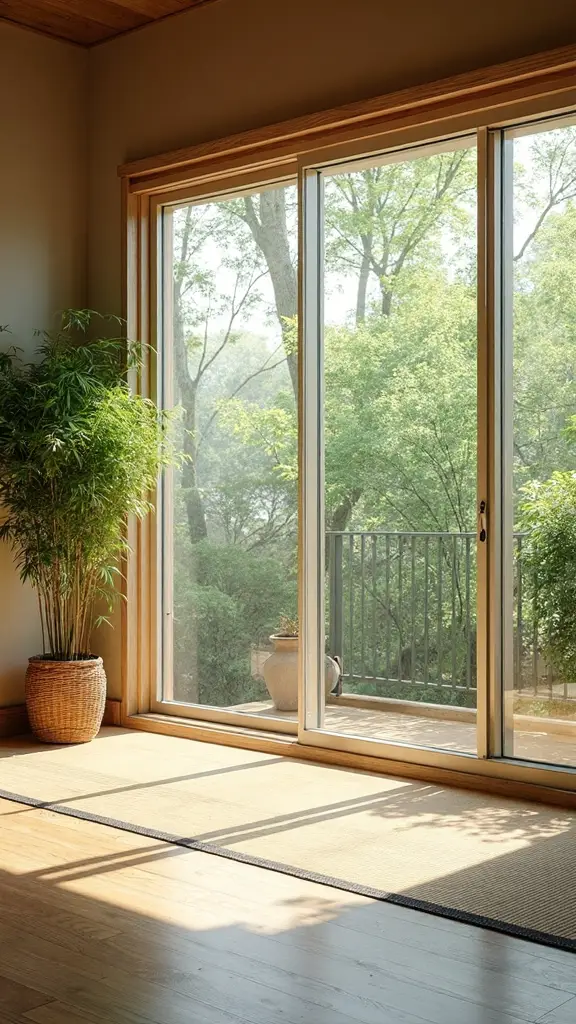
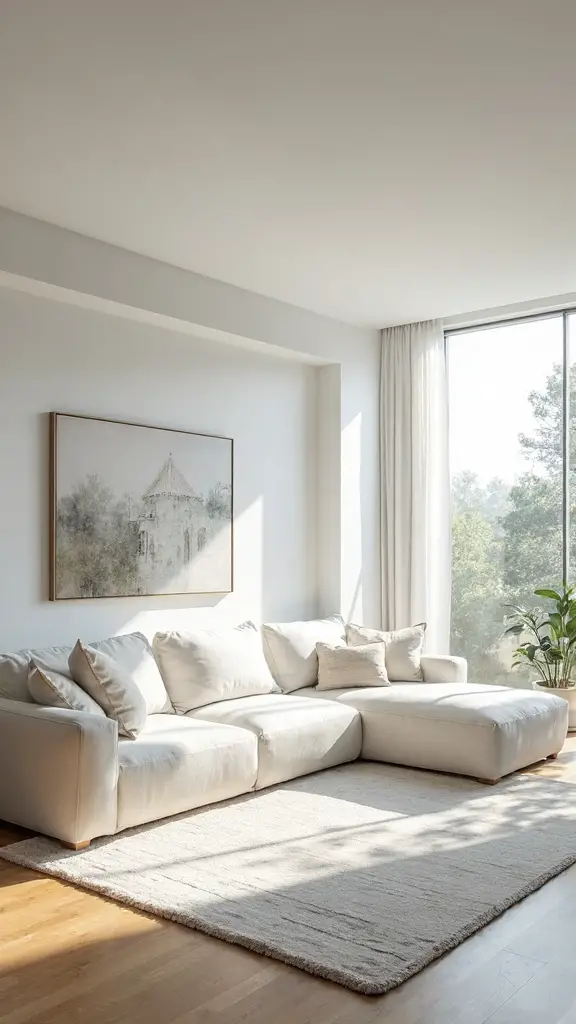
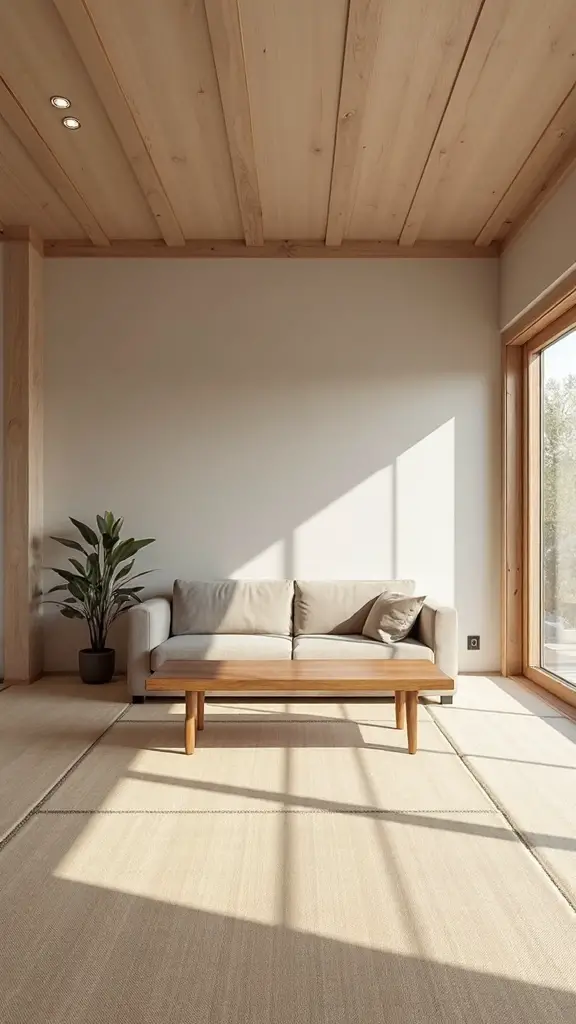
When maximizing natural light becomes your primary design strategy, large windows alter your minimalist living room into an airy sanctuary that connects indoor and outdoor spaces seamlessly. You’ll want to position your seating perpendicular to windows rather than blocking the light source. Large window placement works best on south-facing walls for consistent daylight throughout the day. Install sheer curtains or bamboo blinds for natural light filtering while maintaining privacy. Keep window sills completely clear of decorations to maximize light penetration. Choose light-colored flooring and walls to reflect sunlight deeper into your space, creating that coveted bright, open atmosphere.
Neutral Textile Layered Comfort Zone

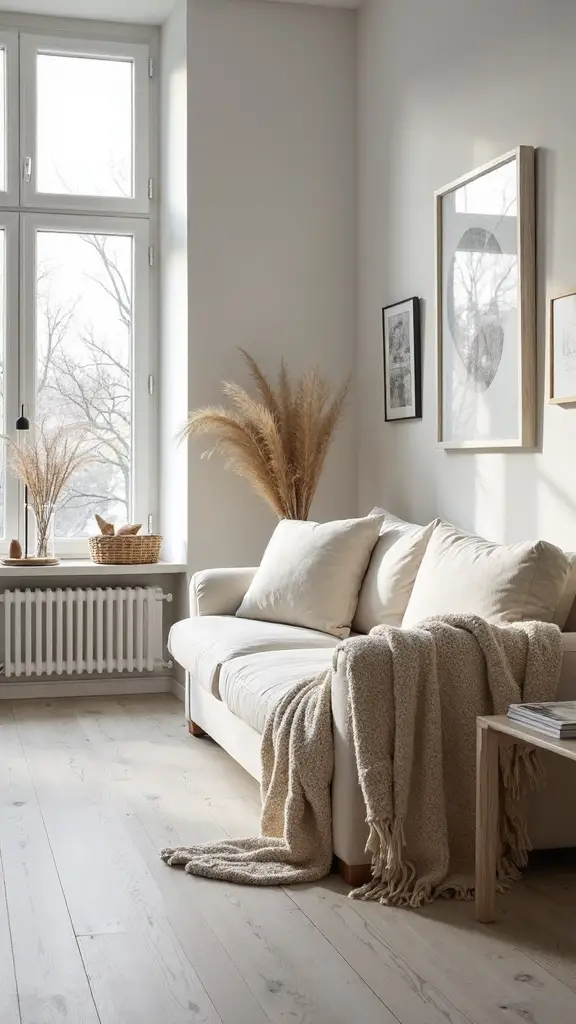
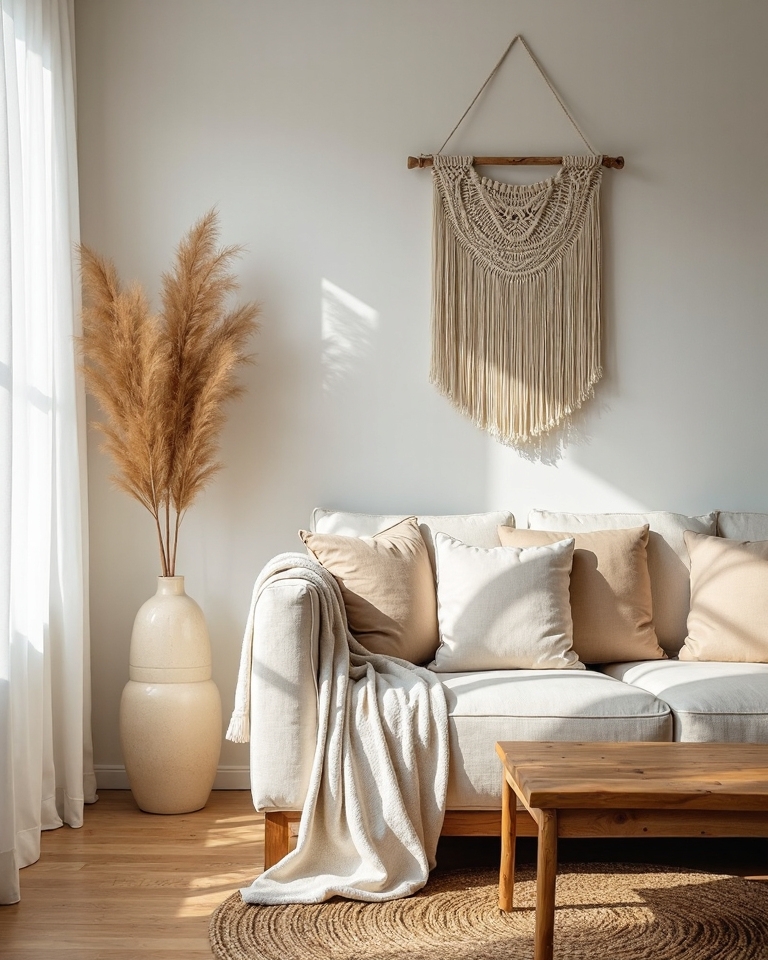
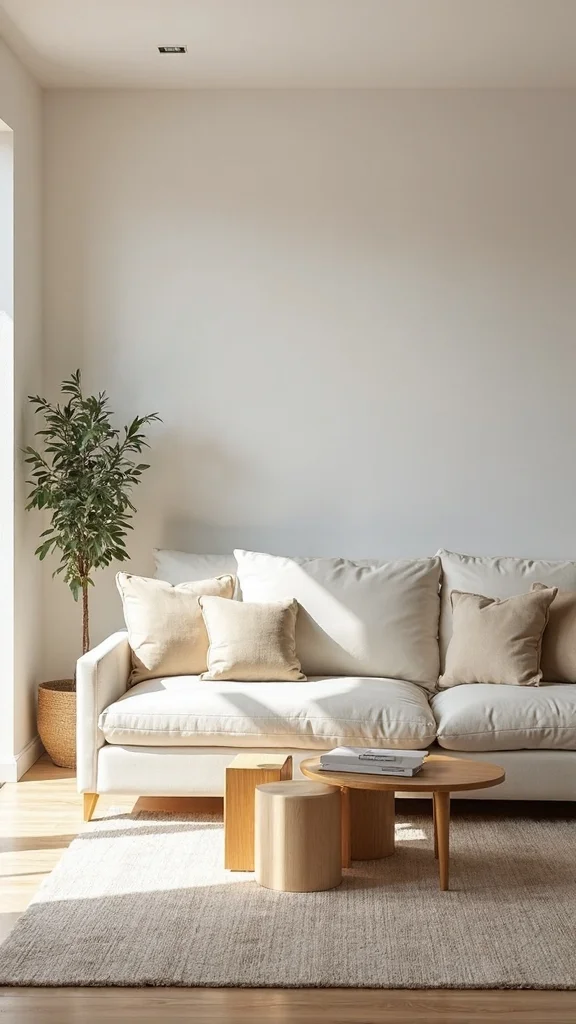
Japanese minimalist design thrives on the strategic use of neutral textiles that create warmth without overwhelming your carefully curated space. Layer cozy blankets in soft beiges, warm grays, and muted whites across your seating areas to invite relaxation while maintaining visual simplicity. Choose natural fabrics like linen, cotton, and wool that feel authentic to touch.
Add plush pillows in varying textures but similar tones to create depth without chaos. You’ll want to limit your color palette to three neutral shades maximum. This approach lets you build a comfort zone that feels both luxurious and uncluttered.
Conclusion
You’ve uncovered how Japanese minimalist design metamorphoses living spaces into peaceful retreats through natural materials and thoughtful simplicity. Start with one element—tatami mats, shoji screens, or floor cushions—then gradually build your zen sanctuary. Remember, authentic Japanese minimalism isn’t about emptiness; it’s about creating intentional spaces that promote mindfulness and tranquility. Your living room can become a daily escape from modern chaos through these timeless design principles.